
Reviewed · CASABLANCA TOURS
10 Day Desert Tour From Casablanca via the Imperial Cities
Morocco rewards travelers who keep moving. This 10-day route links Casablanca, Rabat, Chefchaouen, Fez, the Merzouga desert, the Dades Valley, and Marrakech in one long sweep through the country. I like the strong mix of city culture and open-country scenery, especially the blue streets of Chefchaouen and the camel ride into Erg Chebbi at sunset.
I also like that the tour includes guided visits in Fez and Marrakech, plus nine nights in riads, four-star hotels, or a luxury desert camp. The main caution is simple: you will spend many hours in the vehicle, particularly between Fez and Merzouga and again between the desert and Marrakech. This is a sightseeing road trip, not a slow holiday.
The price is $1,394.61 per person. That is a serious sum, but it covers transport, fuel, a professional driver, accommodation, breakfasts, three dinners, city tours, camel rides at sunset and sunrise, and sandboarding. With a maximum group size of 14, this is a practical way to cover a large portion of Morocco without arranging every hotel and transfer yourself.
In This Review
- Five things to know before booking
- Casablanca begins with Hassan II Mosque
- Rabat’s monuments and Chefchaouen’s blue lanes
- Volubilis and the old city of Fez
- Crossing the Middle Atlas to Merzouga
- Erg Chebbi, Khamlia, and a night in the dunes
- Rissani, Erfoud, and the Dades Gorges
- From Dades through the Valley of Roses to Marrakech
- Marrakech monuments, gardens, and Jemaa el Fna
- What the $1,394.61 price really covers
- Guides, group size, and the pace of the road
- Who should book this Morocco circuit?
- FAQ
- Where does the tour start?
- How long is the tour?
- What cities and regions are included?
- Is a camel ride included?
- Is desert camping included?
- Are meals included?
- What is not included in the tour price?
- Should you book it?
Five things to know before booking
- The route covers Morocco’s major contrasts: Casablanca’s oceanfront mosque, Rabat’s monuments, Chefchaouen’s blue medina, Fez’s old city, the Sahara, and Marrakech.
- The Merzouga section is the emotional high point: you visit desert communities, hear Gnawa music in Khamlia, ride camels across the dunes, and sleep in a luxury tent.
- Fez and Marrakech include guided sightseeing: this gives you help with major monuments, old-city lanes, palaces, gardens, and souks.
- Long drives are part of the bargain: several days are listed at six or seven hours, and road time can feel tiring after repeated early starts.
- The tour is best for active sightseers: it suits you if you want many major sites in one trip and do not mind changing hotels often.
Casablanca begins with Hassan II Mosque
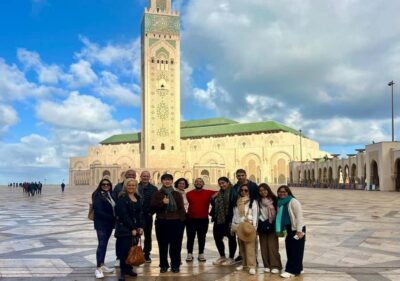
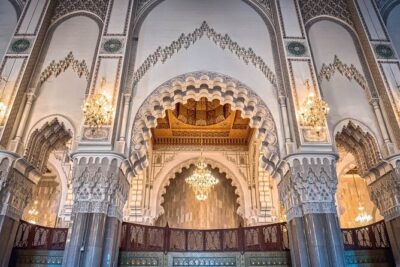
Your arrival day starts with airport pickup and a hotel transfer. Before settling in, the route includes Hassan II Mosque, one of Morocco’s most imposing buildings and one of the largest mosques in the world.
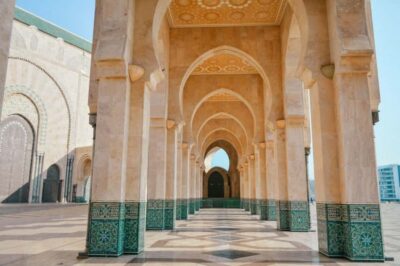
The mosque gives Casablanca a powerful opening scene. It sits by the Atlantic and combines monumental scale with detailed Moroccan design. The tour description does not include an entrance ticket, so plan to check the current visiting arrangements and any admission cost separately.
You have an overnight in Casablanca, but this is not a full city stay. The schedule is designed to begin the wider circuit quickly, so I would treat Casablanca as an introduction rather than a thorough visit. The city’s old souks, modern streets, and coastal setting deserve more time if you are especially interested in urban Morocco.
A few more Casablanca runs to hold up against each other
- From Marrakech: Casablanca Tour with Hassan II Mosque Visit
★ 4.7 · 4,756 reviews - Casablanca: Hassan II Mosque Premium Tour with Entry Ticket
★ 4.5 · 2,971 reviews - Casablanca City Tour with Hassan II mosque ticket
★ 5.0 · 2,480 reviews
Rabat’s monuments and Chefchaouen’s blue lanes
Day two starts with Rabat, Morocco’s capital. The itinerary includes the Kasbah of the Oudaias, Hassan Tower, and the mausoleum of Mohammed V.
These sites give you a useful dose of royal and religious architecture before the trip heads north. Hassan Tower is an unfinished 12th-century minaret, while the mausoleum is known for its formal design and national importance. The Kasbah of the Oudaias adds narrow streets and a more intimate feel.
After Rabat, you continue to Chefchaouen, known for its blue-painted buildings. This is one of the most photogenic stops on the route, but the appeal is not only visual. Wandering the medina lets you slow down after the first transfer-heavy days and notice doors, stairways, walls, and small shops at close range.
You spend the night in Chefchaouen, which is important. An evening and morning here give you a better chance to enjoy the town without treating it as a rushed photo stop. Wear comfortable shoes, since the blue streets are narrow and often uneven.
Volubilis and the old city of Fez
After breakfast on day three, the vehicle heads toward Fez via Volubilis, an ancient Roman site. The ruins offer a sharp change from the Moroccan medinas. You can walk among old stone remains and see traces of Roman settlement in a rural setting before continuing to Fez.
The listed drive and visit take about six hours, with arrival in Fez around 4 p.m. You then spend the night in a riad. A riad stay matters here because it places you closer to the traditional style of Moroccan lodging, with rooms arranged around an interior courtyard.
Day four is devoted to Fez. The guided tour begins in the old medina, a UNESCO World Heritage Site surrounded by ramparts and filled with narrow streets. The scale can be confusing, so having an English-speaking guide is useful. You can concentrate on the buildings and crafts instead of constantly checking your route.
The program includes the Bou Inania and Attarine madrasas, the Karaouine Mosque, and the Nejjarine marble fountain. It also visits the Marinid tomb ruins, the decorated Bab Boujloud gate, the royal palace, and the souks.
Fez is one of the places where the guide makes a real difference. The medina is not simply a shopping area. Its lanes connect religious schools, fountains, workshops, gates, and old public spaces. You will see handmade jewelry, leather goods, copperwork, and pottery. The tour includes a lunch break at a Moroccan restaurant, but lunch itself is not covered in the package.
One detail to watch: the day is described as a full city tour, yet the stop is listed as three hours. Ask for the exact timing when you book or at the start of the tour, since Fez deserves enough time for the main sights without feeling hurried.
Crossing the Middle Atlas to Merzouga
Day five is the first major road day. Pickup is set for 8 a.m., and the route crosses the Middle Atlas toward Merzouga, a journey of roughly 350 kilometers through changing scenery.
The route passes Ifrane, often called Moroccan Switzerland because of its building style, and Azrou, associated with Berber culture. It then continues through the Ziz Valley and past Midelt and Erfoud.
This is a day for looking out the window and accepting the rhythm of the road. The scenery shifts from mountain towns to broad valleys and drier country. From Erfoud, the vehicle takes a desert track toward Merzouga, where you sleep in a hotel near the desert entrance.
The schedule lists about six hours, though road conditions and stops can affect the day. Bring water, keep a light layer handy, and keep essentials in a small day bag rather than buried in your main luggage. The tour includes fuel and a comfortable vehicle, which removes much of the planning burden, but it cannot shorten the distances.
Same city gate, a very different afternoon:
- Casablanca: City Tour with Hassan II Mosque Entry Ticket
★ 4.6 · 1,137 reviews - Private Tour of Casablanca with Hassan II Mosque Entry Ticket
★ 5.0 · 1,102 reviews - Marrakech Day Trip with Camel Ride from Casablanca
★ 5.0 · 740 reviews - Casablanca: Hassan II Mosque & City Highlights Tour
★ 4.5 · 573 reviews
Erg Chebbi, Khamlia, and a night in the dunes
Day six is the most activity-filled desert day. You visit nomadic villages and oases, cross the Erg Chebbi dunes, and go to Khamlia, a village known for Gnawa music.
The Khamlia stop adds cultural depth to the desert visit. Gnawa music has roots in the history of people brought from sub-Saharan Africa, and the performance offers more than a quick photograph among the dunes. It gives you a chance to hear a living musical tradition connected to Morocco’s past.
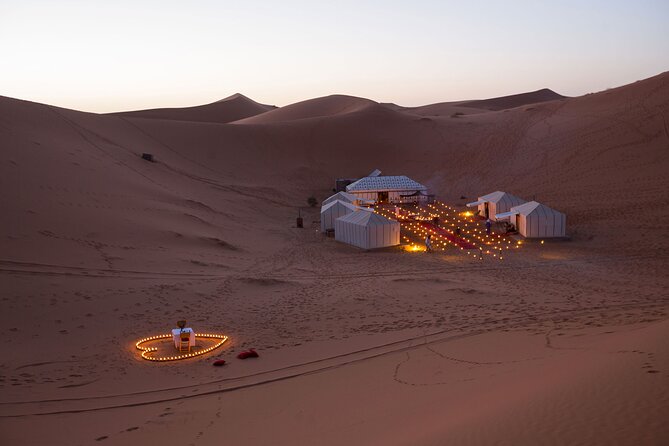
At sunset, you return to the hotel area to take camels into the dunes. The package includes one camel per person, with rides planned for both sunset and sunrise. Sandboarding is also included.
The camel ride is a memorable way to enter the desert camp, but it can be physically uncomfortable. Sitting on a camel for a long period may leave you sore, so loose clothing and a small amount of personal padding can help. You should also expect the desert to feel very different after dark, with temperature changes and limited lighting.
Dinner and overnight accommodation are provided at the luxury desert camp. The camp is described as a luxury tent setup, giving you a more comfortable version of desert camping while keeping the main appeal: sleeping among the dunes rather than returning to town.
Rissani, Erfoud, and the Dades Gorges
The route leaves Merzouga on day seven and heads toward Boulmane Dades. At Rissani, you visit the animal market and souk. This is a useful stop because it shows a working commercial side of southern Morocco rather than only its scenic attractions.
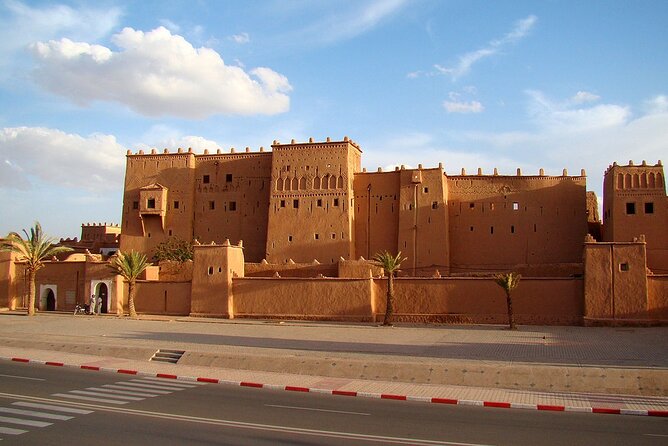
The road then follows the Ziz Valley toward Erfoud. Here, the tour includes a visit to a fossil quarry and a look at how fossils are turned into tables, washbasins, and decorative objects. This can be an interesting craft stop, but remember that shopping opportunities often appear alongside demonstrations. You are free to admire the work without buying anything.
The day ends at the Dades Gorges, with dinner and an overnight hotel stay. The drive is listed at about six hours, so the gorge visit may feel like a reward after a long transfer.
From Dades through the Valley of Roses to Marrakech
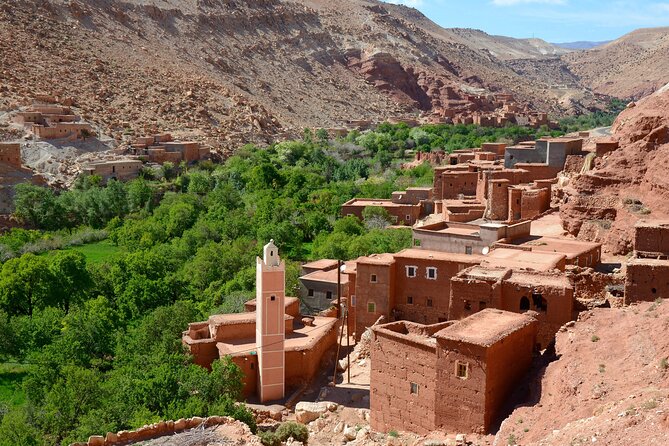
Day eight begins with the Dades Gorges themselves. The road follows a valley fed by the Dades River, passing green oases before the valley tightens between tall limestone walls.
The route then continues through the Amgoun mountain area, the Valley of the Roses, and the palm grove of Skoura, known for its kasbahs. About 12 kilometers of the journey is described as a track, which adds a rougher road section to an already demanding day.
You arrive in Marrakech in the afternoon and transfer to your hotel. The day is listed at about seven hours, making it one of the longest stretches of the trip. I would not plan an important independent activity for the evening. You may prefer a quiet meal, a shower, and an early night.
Marrakech monuments, gardens, and Jemaa el Fna
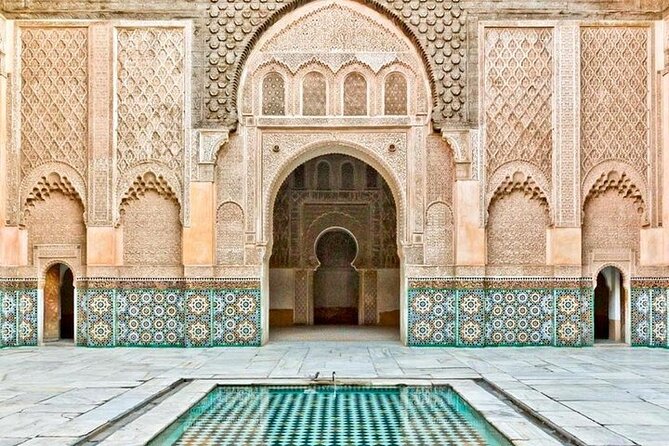
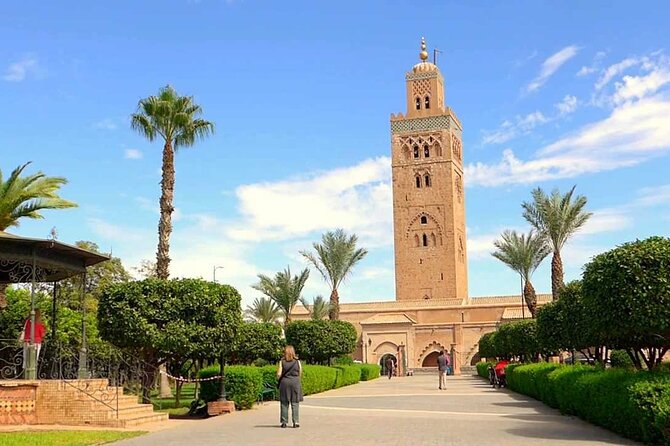
Day nine brings a guided sightseeing tour of Marrakech. The route includes the Saadian Tombs, Bahia Palace, Ben Youssef Madrasa, and the Koutoubia Minaret.
Each stop shows a different part of the city. The Saadian Tombs are known for their carved decoration, Bahia Palace for its courtyards and ornament, and Ben Youssef for its religious-school architecture. Koutoubia’s minaret is one of Marrakech’s defining markers and helps you get your bearings around the old city.
Lunch is planned at Ksar El Hamra, but lunch is not included in the overall price. The afternoon includes Majorelle Garden, followed by Jemaa el Fna. The square changes character as the day goes on, with performers, musicians, storytellers, and food stalls drawing people into its open space.
The sightseeing portion is listed at about three hours. That is enough for a broad introduction, but not enough for every corner of Marrakech. If you want extended time in the souks, museums, or gardens, you will need to arrange extra time on your own.
The final transfer depends on your flight. You may be taken to Casablanca Airport in the evening, or spend the night in Marrakech and transfer to the airport on day ten. Confirm this point carefully when matching the tour to your flight schedule.
What the $1,394.61 price really covers
The price makes sense if you value convenience and broad coverage. You are paying for a private or small-group style road circuit with a maximum of 14 people, a vehicle, fuel, a professional driver, nine nights of accommodation, city tours, desert activities, breakfasts, and three dinners.
The most valuable inclusions are the long-distance transport and desert arrangements. Organizing Casablanca to Chefchaouen, Fez, Merzouga, Dades, Marrakech, and an airport transfer separately would take time and coordination. Here, the route is already joined together.
Several costs remain outside the package:
- Lunches
- Dinners in Casablanca, Fez, and Marrakech
- Monument entrance fees
- Drinks
- Tips
- Personal expenses
- A 4×4 desert tour
The separate 4×4 option matters. The desert program includes camel rides, sandboarding, villages, oases, and Khamlia, but a 4×4 desert excursion is not part of the base price. If you want that added, budget for it before departure.
Food receives mixed praise in the supplied comments. Some people found it acceptable, while others wanted better meals. I would view the included dinners as practical tour meals rather than a central reason to book. You should also budget for drinks, since those begin at about one euro and rise from there.
Guides, group size, and the pace of the road
The strongest personal praise centers on the staff, especially Hassan Amiri and Yassine. They are repeatedly described as friendly, attentive, and good at keeping the group comfortable during long drives. Hassan is also praised for being approachable and making the trip feel easy for people from different countries.
That matters on a route with this much time in a vehicle. A kind driver and clear communication can change the mood of an exhausting day. The tour allows up to 14 people, so you get more company and shared energy than on a private trip, but less control over every stop.
The overall pace is brisk. You change locations often, and the itinerary tries to cover Morocco’s major attractions in ten days. I would choose this format if you want a first look at many regions. I would not choose it if your priority is long, unplanned stays in one medina or several free days at the beach.
The camel rides can also be tiring. One person specifically found the ride painful, while others considered sunrise and sunset in the desert the highlight of the trip. That difference is easy to understand: the scenery is special, but the ride itself is not a cushioned chair.
Who should book this Morocco circuit?
I would recommend it to first-time visitors who want a structured route and do not want to handle Morocco’s long intercity transfers alone. It is also a strong fit for friends, couples, and solo visitors who enjoy meeting a small group and seeing major sites in quick succession.
You should be comfortable with early starts, long drives, changing hotels, uneven medina streets, and a basic level of physical effort during the camel ride. If those conditions sound manageable, the tour gives you a lot: imperial architecture, Roman ruins, mountain roads, desert music, dunes, kasbah country, and Marrakech’s famous evening square.
The cancellation terms are useful for planning. You can cancel up to 24 hours before the start time for a full refund. Changes or cancellations within 24 hours are not accepted for a refund.
FAQ
Where does the tour start?
The tour starts in Casablanca, with airport pickup offered. The stated start time is 7:00 a.m., although day one includes airport pickup and a visit to Hassan II Mosque.
How long is the tour?
The experience lasts approximately 10 days and includes nine nights of accommodation.
What cities and regions are included?
The route includes Casablanca, Rabat, Chefchaouen, Fez, Merzouga, Rissani, Erfoud, the Dades Gorges, the Valley of the Roses, Skoura, and Marrakech.
Is a camel ride included?
Yes. Camel rides are included for both sunset and sunrise, with one camel per person.
Is desert camping included?
Yes. One night is included at a luxury desert camp in a luxury tent.
Are meals included?
Breakfast is included for 10 mornings, and three dinners are included. Lunches and dinners in Casablanca, Fez, and Marrakech are not included.
What is not included in the tour price?
Monument entrance fees, drinks, tips, personal expenses, lunches, several dinners, and the optional 4×4 desert tour are not included.
Should you book it?
Book this tour if you want Morocco’s biggest sights in one organized route and you are willing to trade leisure for coverage. The blue medina of Chefchaouen, Fez’s old city, the camel ride into Erg Chebbi, Gnawa music, Dades Gorge, and Marrakech’s monuments make a strong 10-day package.
Skip it if long road days frustrate you or if you want a slow, deeply local stay in just one or two places. For the right kind of visitor, the price buys much more than transportation: it buys a clear route through Morocco’s cities, mountains, desert, and southern valleys, with Hassan Amiri, Yassine, and the wider team helping keep the demanding schedule on track.
Just listed around Casablanca
- Your Private Casablanca Transfer★ 5.0 · 52 reviews
- Casablanca Airport Transfer from hotel in Casablanca★ 5.0 · 18 reviews
- Exclusive tour of Casablanca with access to the Hassan II Mosque★ 5.0 · 205 reviews
- Amazing airport pickup/ drop off in Casablanca/ safe&easy★ 5.0 · 218 reviews
- Sunset Camel Ride in the Palm Grove Of Marrakech★ 5.0 · 34 reviews
- 14 Days From Casablanca- Morocco Grand Tour★ 5.0 · 24 reviews
- Private full day trip to chefchaouen from Casablanca with lunch★ 5.0 · 20 reviews
- Marrakeck City tour from Casablanca all the day around trip★ 5.0 · 35 reviews
Casablanca Tours, compared.
Hassan II Mosque Premium Tour with Entry Ticket
Read our review →
Private Tour of Casablanca with Hassan II Mosque Entry Ticket
Read our review →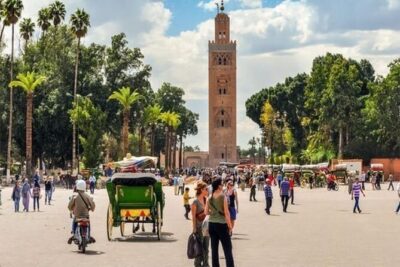
Marrakech Day Trip with Camel Ride from Casablanca
Read our review →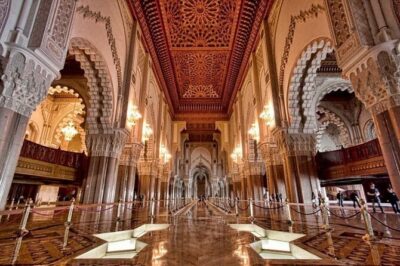
Casablanca Layover Tour with Round-Trip Airport Transfer
Read our review →Browse the lists this tour appears in