
Reviewed · DESERT TOURS FROM MARRAKECH
4-Day Guided Desert Tour from Marrakech
Sahara roads reward patient explorers. This four-day tour links Ait Ben Haddou, Ouarzazate, Zagora, Merzouga, and Todra Gorge without asking you to plan every transfer yourself. I like the broad mix of mountain roads, kasbahs, palm valleys, fossil country, and desert nights. I also like that the route includes both a camel ride and an air-conditioned vehicle, so you get the classic Sahara experience without spending four days in a rough ride.
The main tradeoff is time. You cover huge distances, and some days put you in the vehicle for hours. The Zagora stop also feels less essential than Merzouga for some visitors, but it gives you an early taste of the desert and breaks up the long run east.
In This Review
- Key points to know before booking
- What this Marrakech to Sahara tour really covers
- Day 1: Tizi n’Tichka, Ait Ben Haddou, and the road to Zagora
- Is Zagora worth including?
- Day 2: Erfoud, fossils, and the Merzouga dunes
- Day 3: Leaving Merzouga for Todra Gorge
- Day 4: The Dades Valley and the return across the Atlas
- The guide can make or break the long drives
- Food, rooms, and what to pack
- Who will enjoy this tour most?
- Should you book the four-day Sahara route?
- FAQ
- How long is the desert tour from Marrakech?
- What places does the tour visit?
- Is a camel ride included?
- Are meals included?
- Where do you sleep during the tour?
- Is transportation included?
- Is this a private tour?
- Can I cancel for a full refund?
Key points to know before booking
- Two desert areas in four days: Zagora comes first, followed by the larger Erg Chebbi dunes near Merzouga.
- Ait Ben Haddou appears twice in the route: You visit it on the way out and again during the return portion, alongside Kasbah Taourirt.
- A camel ride leads to a Berber camp: The Merzouga evening includes dunes, sunset, drums, dinner, and an overnight stay in a nomad-style tent.
- The scenery changes constantly: Cross the High Atlas at the 2,260-meter Tizi n’Tichka pass, then follow the Draa and Dades valleys.
- The price covers important basics: Transportation, insurance, three breakfasts, three dinners, accommodations, and the camel ride are included.
- Guide quality matters: Drivers and guides named in past bookings include Abdelhak, Ayoub, Khalid, Mounir, Oussama, Yassine, Ameni, Badr, and others, with most praise going to their care and safe driving.
What this Marrakech to Sahara tour really covers
At $488.52 per person, this is not a cheap day trip. It is a four-day route with three nights away from Marrakech, accommodation, several meals, a private group arrangement, and long-distance transport in an air-conditioned vehicle.
That price can make sense if you value convenience. You do not need to arrange separate transport to Ouarzazate, Zagora, Merzouga, and Todra Gorge, and you avoid the headache of matching buses, taxis, hotels, and desert transfers. The package also includes the main desert activity, a camel ride to camp.
The cost does not cover lunch, drinks, or personal spending. Plan for these extras each day. The tour begins at 7:00 a.m., and the first and fourth days involve especially long road sections, so this is better for people who want to see a lot rather than sit in one place.
The activity is private, meaning only your group participates. That is useful for families, couples, and solo visitors who prefer not to be tied to a large coach group. It also gives you a better chance to discuss breaks and photo stops with your driver, although the route still has fixed distances and overnight arrangements.
More desert runs leaving Marrakech:
- 3 Days Desert Tour From Marrakech To Merzouga Dunes & Camel Trek
★ 5.0 · 10,125 reviews - 3-Day Marrakech to Merzouga Desert Tour: Camel Rides & Overnights
★ 5.0 · 8,734 reviews - Marrakech Desert Quad and Camel ride, Lunch, and Poolside
★ 5.0 · 3,446 reviews
Day 1: Tizi n’Tichka, Ait Ben Haddou, and the road to Zagora
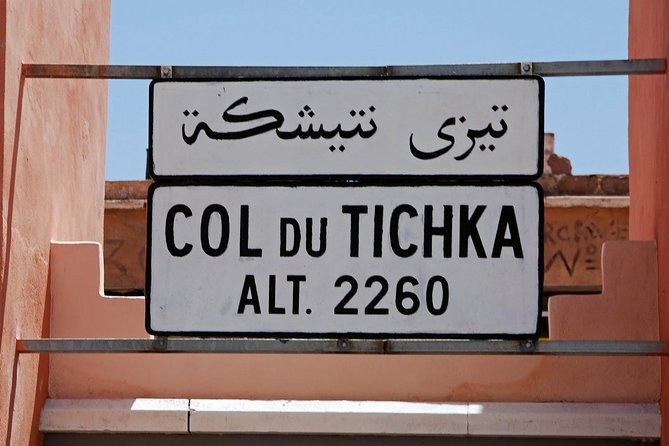
The first morning starts early in Marrakech. You cross the High Atlas through the Tizi n’Tichka pass, reaching about 2,260 meters. The road is a major part of the experience. The city quickly gives way to high mountain scenery, winding bends, and broad views across southern Morocco.
Road conditions and weather can affect this crossing. One past departure had to change its route and overnight plan because of heavy snow in the Atlas Mountains. That is a useful reminder: this is a real mountain crossing, not just a scenic drive. Your guide may need to adjust the plan for safety.
Ait Ben Haddou is the day’s big cultural stop. This fortified earthen village is made up of kasbahs and ksours, with narrow lanes and tightly grouped clay buildings. It is also a UNESCO World Heritage site and has been used as a setting for many film productions.
Give yourself time to look beyond the famous views. The value here is not only taking a photo from outside. The settlement shows how defensive villages were built from local earth, with homes and communal spaces gathered inside a fortified structure. The approach can feel more atmospheric than the individual buildings, as the village rises against the dry hills.
Lunch follows in or near Ouarzazate, then you visit Kasbah Taourirt and the city area. Taourirt gives you another look at southern Moroccan architecture, this time in an urban setting. Ouarzazate is often treated as a quick stop on the way to the desert, but it helps explain the region’s role as a crossroads between the Atlas and the Sahara.
The route then continues toward Agdz, the gateway to the Draa Valley. The scenery shifts again, with palm groves and dry, almost lunar-looking stretches of land. The Draa Valley is known for its chain of palm-filled oases, and this is one of the most rewarding sections for anyone interested in how people live in a dry region.
You spend the first night in Zagora, with dinner and an overnight stay at a camp. The schedule gives you a quick introduction to desert camping before the larger Merzouga experience on day two.
Is Zagora worth including?
Zagora is the most debatable part of the route. It is closer to Marrakech than Merzouga and offers a useful first night on the road, but it does not provide the same sweeping dunes that many people picture when they think of the Sahara.
I see Zagora as a practical stop rather than the tour’s grand finale. The Draa Valley, palm groves, and pre-Saharan setting give it real value, especially if you want to understand the gradual change from mountain country to desert. But if your only goal is dramatic sand dunes, Merzouga is the stronger stop.
The overnight camp is described as a comfort bivouac with dinner and breakfast. Comfort levels can vary, so pack with flexibility. Nights in the desert can be cold, even when daytime temperatures feel pleasant. One past account specifically noted cold nights and less impressive stopover hotels, so a warm layer is a wise part of your luggage.
Day 2: Erfoud, fossils, and the Merzouga dunes
After breakfast, the route heads east through Berber villages and the towns of Tinjdad, Jorf, and Erfoud. This is another long driving day, but the changing scenery gives the road a purpose. The route passes through the Tafilalet oasis, one of the key green areas on the edge of the Sahara.
Erfoud is associated with fossils and desert geology. The stop helps you see the region as more than a sea of sand. Stone, dry riverbeds, palms, and scattered settlements all form part of the story of southeastern Morocco. The tour information allows time around Erfoud and the fossil area, though the exact presentation may depend on the day’s timing.
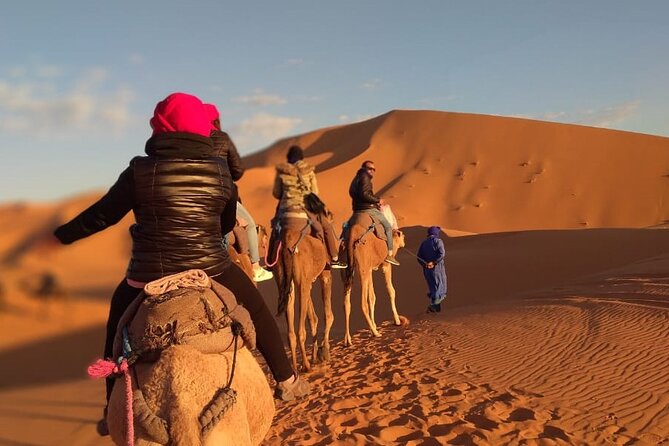
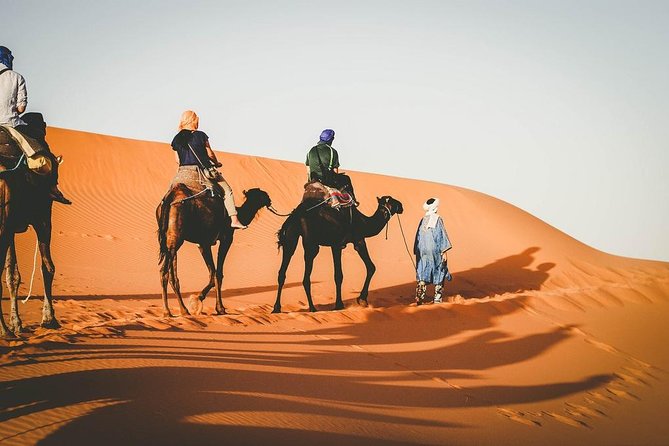
You then continue to Merzouga, the gateway to the Erg Chebbi dunes. This is the section many people are waiting for. After a short rest, you mount a camel and cross the dunes toward a nomadic Berber camp.
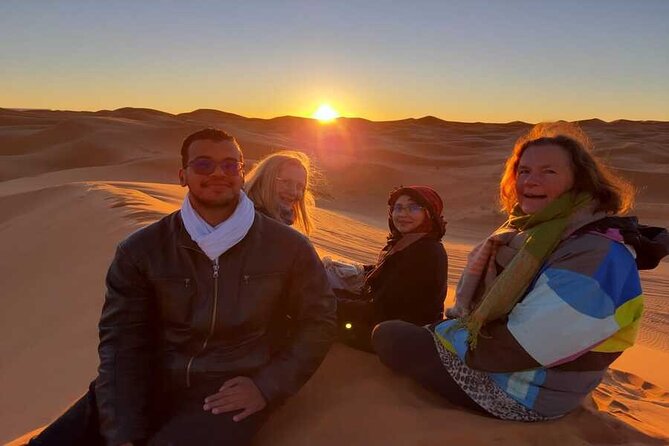
The camel ride is not a quick photo stop beside a vehicle. It is the link between the road and the camp, and the slow pace lets the desert take over. From the top of a high dune, you can watch the sunset and look across the sand in several directions. The light changes quickly, so keep your camera ready and bring water for the ride.
At camp, dinner and evening music are part of the plan. Drums in the desert can feel simple and direct, which is exactly the point. This is an overnight experience, not just a sunset excursion followed by a drive back to a hotel.
The camp is described as a comfort bivouac, but do not assume a hotel room in the dunes. Conditions can be basic or more comfortable depending on the camp setup and season. Ask the operator what bedding and bathroom arrangements apply to your departure, especially if you care strongly about comfort.
A few more Marrakech runs to hold up against each other
- From Marrakech 4 Days Tour To Morocco Sahara Desert
★ 5.0 · 553 reviews - From Marrakech: Merzouga 4 Day Luxury Tour w/ Optional Quad
★ 4.8 · 332 reviews - From Marrakesh: 4-Day Private Atlas Mountains & Desert Tour
★ 4.8 · 197 reviews - 4 Days Desert Tour From Marrakech to Fes via Merzouga Dunes
★ 5.0 · 169 reviews
Day 3: Leaving Merzouga for Todra Gorge
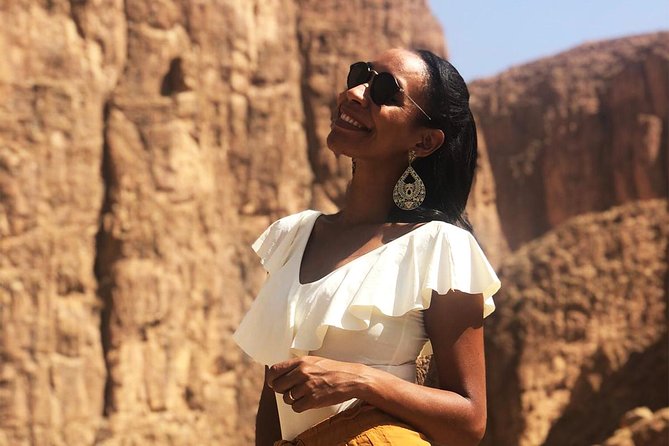
Day three shifts from sand to rock. You travel toward Tinerhir and the Todra Gorge, with the route passing through high, narrow cliffs. Todra is one of the visual highlights of the trip: tall rock walls close around the road and create a sharp contrast with the open dunes.
The gorge is more than a quick roadside photograph. The cliffs give the area a strong sense of scale, and the road through the gorge makes the stop memorable even for people who are not serious hikers. The schedule allows several hours in the Todra area, followed by lunch and free time.
Accommodation that night is a comfortable riad or guesthouse, with dinner included. After the desert camp, a fixed room and a slower evening can be welcome. Breakfast and dinner are covered, but lunch and drinks remain your responsibility.
This day is a good example of why the tour works as a four-day route. You are not seeing only sand. You move through several distinct parts of southern Morocco, from oasis country to canyon walls, while keeping the same transport and guide.
Day 4: The Dades Valley and the return across the Atlas
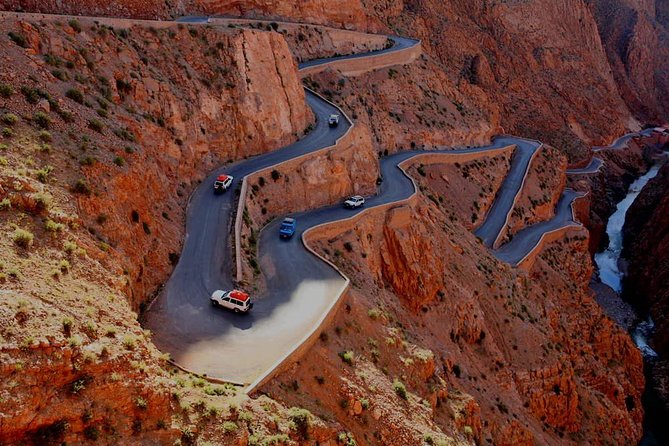
The final morning continues through the Todgha Gorge area before following the Dades Valley toward Ouarzazate. The Dades Valley is often called the road of a thousand kasbahs, a name that points to the clay villages, fortified homes, and ksours spread through the valley.
The word thousand should not be taken as a literal count. What matters is the repeated pattern of earthen buildings and dry hills, with pockets of green where water allows farming. This is a fine stretch for watching village life and architecture from the road, though the long drive means you will spend more time looking through the vehicle window than walking around.
The route returns to Ouarzazate for lunch and further visits to Kasbah Taourirt and Ait Ben Haddou. Seeing these places during the return section may feel repetitive if the first day’s stops were extensive. It can also be useful because the second visit gives you another chance to explore a site you rushed through after the early Atlas crossing.
The final run to Marrakech crosses the Tizi n’Tichka again and aims to arrive toward the end of the afternoon. That timing can shift with traffic, weather, road work, and the length of earlier stops. Do not schedule a tight evening flight or an important reservation immediately after the tour unless you have plenty of room.
The guide can make or break the long drives
The most praised part of this experience is the human service. Guides and drivers such as Ayoub, Khalid, Mounir, Oussama, Yassine, Abdelhak, Ameni, and Badr have been singled out for safe driving, patience, friendliness, and care.
That matters here more than it would on a short city tour. You spend many hours together, and a calm driver changes the whole mood of the trip. Mounir, in particular, was praised for helping with water and napkins, adapting when snow affected the Atlas route, and arranging a way for a delayed group to reconnect with the main party.
There is also a less flattering side. One booking described a guide who drove but gave little explanation, smoked during breaks, and seemed more interested in taking photos than guiding. Another account raised a serious complaint about inappropriate behavior from a driver, while the company disputed that account. These reports appear to be exceptions among generally positive experiences, but they are worth keeping in mind.
The practical lesson is simple: confirm who your driver or guide will be, and make your expectations clear at the start. If you want historical explanations at Ait Ben Haddou or Taourirt, say so. The quality of the experience depends not only on the vehicle, but also on whether your driver acts as a real guide.
Food, rooms, and what to pack
The package includes three breakfasts and three dinners. Lunches and drinks are not included, so budget for them separately. This arrangement is common on long Moroccan road tours because it leaves you some choice during the day, but it means the advertised price is not your total spend.
Accommodation includes a desert bivouac and a riad or guesthouse. The first night is described as a comfortable camp in Zagora, and the Merzouga night is a nomad-style tent. The third night is in a comfortable guesthouse, with dinner and breakfast.
Pack light, since you will move between several overnight locations. Bring:
- Warm clothing for the desert night
- Comfortable shoes for Ait Ben Haddou and the gorge
- Sun protection and a refillable water bottle
- A small overnight bag for the camp
- Cash for lunches, drinks, and personal purchases
The tour allows service animals, and most people can participate. No special fitness level is stated, but you should be comfortable with camel mounting, walking on uneven ground, and long hours seated in a vehicle.
Who will enjoy this tour most?
I would choose this route if you have limited time in Morocco and want a broad introduction to the south. It suits couples, families, solo visitors, and small private groups who value having transport and accommodation arranged.
Families can benefit from the range of sights. Children may remember the camel ride and desert camp most, while adults get the kasbahs, valleys, mountains, and gorge. A family of two adults and three children previously completed the three-night route and described it as a particularly memorable holiday, though parents should be ready for long road days.
Solo visitors may also appreciate the private format and the extra support from a reliable guide. One solo woman specifically valued the care and sense of safety provided by her guide Abdelhak. Still, private does not mean leisurely. The schedule remains busy.
I would hesitate if you dislike long drives, need luxury at every overnight stop, or want several full days in the dunes. In that case, a shorter Marrakech trip or a longer Sahara stay may suit you better.
Should you book the four-day Sahara route?
Book it if you want the major southern Morocco sights in one organized trip and accept that distance is part of the deal. The strongest reasons are the private vehicle, the route variety, the Merzouga camel ride, included dinners and breakfasts, and the chance to travel with a driver who can adjust to road conditions.
Think twice if Zagora feels like an unnecessary detour or if four days sounds too compressed. The Merzouga night is the emotional high point, while Ait Ben Haddou, the Atlas crossing, and Todra Gorge give the trip its wider appeal.
At $488.52 per person, the value is best for someone who wants convenience and a full route rather than the lowest possible fare. Free cancellation is available up to 24 hours before the 7:00 a.m. start, which gives you some protection if plans change.
FAQ
How long is the desert tour from Marrakech?
The tour lasts approximately four days and begins at 7:00 a.m. on the first day.
What places does the tour visit?
The route includes Ouarzazate, Ait Ben Haddou, Kasbah Taourirt, Agdz, Zagora, Erfoud, Merzouga, Tinerhir, Todra Gorge, and the Draa and Dades valleys.
Is a camel ride included?
Yes. A camel ride in Merzouga is included, taking you across the dunes toward a Berber camp.
Are meals included?
Three breakfasts and three dinners are included. Lunches, drinks, and personal expenses are not included.
Where do you sleep during the tour?
You spend nights in a comfort bivouac in Zagora, a nomad-style tent in the Merzouga desert, and a comfortable riad or guesthouse near Todra and Tinerhir.
Is transportation included?
Yes. Transportation is provided in an air-conditioned vehicle described as comfortable and luxurious, and transportation insurance is included.
Is this a private tour?
Yes. Only your group participates in the private activity.
Can I cancel for a full refund?
You can cancel for a full refund if you do so at least 24 hours before the experience begins. Cancellations or changes made less than 24 hours before the start time are not accepted for a refund.
Just listed around Marrakech
- Marrakech To Merzouga Tour★ 5.0 · 37 reviews
- 4 Days Desert Safari Tour from Marrakech to Merzouga★ 5.0 · 145 reviews
- 3 Days Tour From Marrakech To Merzouga – Best Marrakech Tours★ 5.0 · 61 reviews
- 4 Days Desert Tour From Marrakech to Fes via Merzouga Dunes★ 5.0 · 169 reviews
- 4 Day Sahara Desert Trip From Marrakech: Marrakesh – Sahara Desert – Marrakesh★ 5.0 · 18 reviews
- Private 4-Day Desert Tour from Marrakech to Zagora & Merzouga★ 5.0 · 28 reviews
- Marrakech to Merzouga: 4 Day Adventure with 2 Nights in Desert★ 5.0 · 162 reviews
- 4 Days Morocco Desert Tour From Marrakech★ 4.0 · 17 reviews
Desert Tours from Marrakech, compared.
3 Days Desert Tour From Marrakech To Merzouga Dunes & Camel Trek
Read our review →
3-Day Marrakech to Merzouga Desert Tour: Camel Rides & Overnights
Read our review →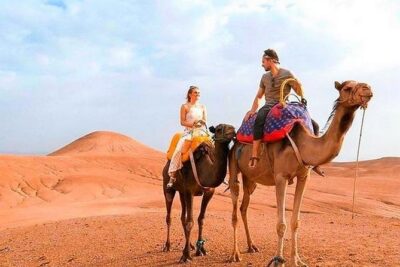
Marrakech Desert Quad and Camel ride, Lunch, and Poolside
Read our review →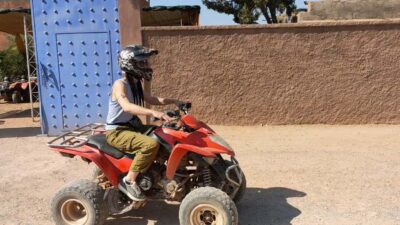
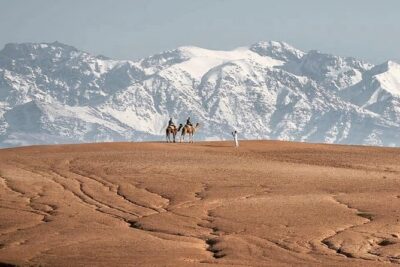
Marrakech Desert Tour & Sunset Camel Ride with Dinner Show
Read our review →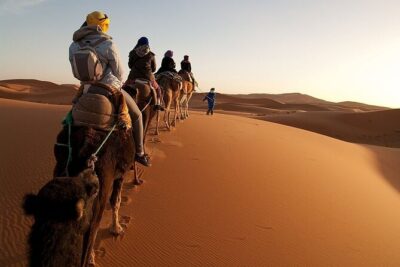
Marrakech to Merzouga Desert 3-Day via the High Atlas Mountains
Read our review →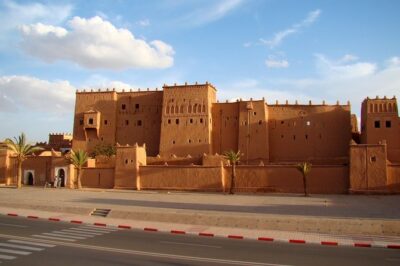
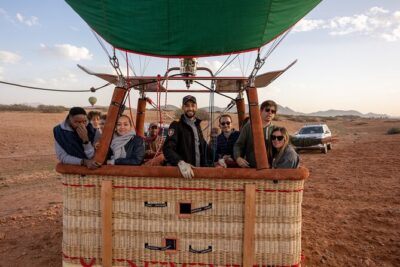
Air ballooning: Marrakech Desert and Atlas Views
Read our review →Browse the lists this tour appears in