
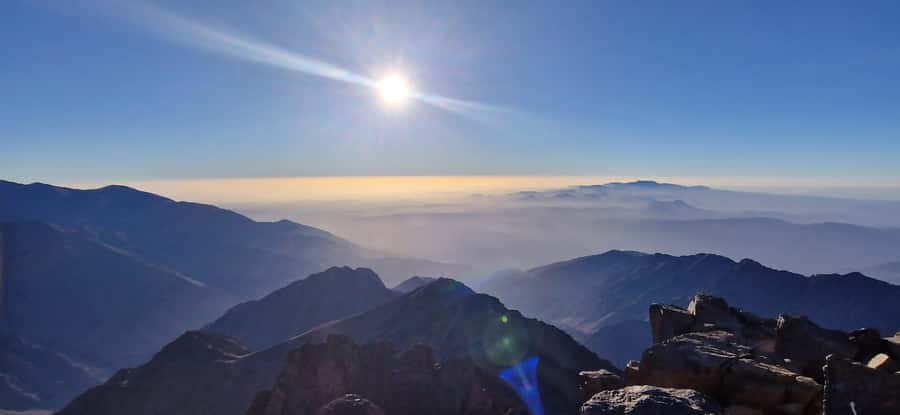
Reviewed · ATLAS MOUNTAINS TOURS
Climb Toubkal: 2-Day Atlas Trek with Local Berber Guide
Reach North Africa’s highest point. This two-day Mount Toubkal trek pairs a demanding summit climb with Berber villages, home-style meals, and local guiding, rather than treating the Atlas Mountains as a quick photo stop. I like the personal feel of going with a guide such as Hussein, who has helped hikers with different abilities reach the top. I also like that a mule carries heavy bags, leaving you with a lighter daypack. The main drawback is clear: this is a hard mountain trip, not a casual walk, and the second day can mean around 8.5 hours on foot.
You start in Imlil, about 90 minutes from Marrakech, and climb to the Toubkal Refuge at 3,200 meters before making the summit attempt. Fast weather changes, cold nights, thin air, and a long descent all deserve respect. In winter, crampons are required on snowy sections, and even in warmer months you need sturdy boots, warm clothing, sun protection, and a solid level of fitness.
In This Review
- Key points before you book
- From Marrakech to Imlil, the right mountain start
- Day one: Imlil to the Toubkal Refuge
- Day two: a dark start and a steep climb
- The descent is where many people feel the effort
- What the Berber element adds
- Price and what $193 really covers
- Fitness, weather, and equipment
- Who will enjoy this Toubkal trek most
- Should you book the two-day Toubkal climb?
- FAQ
- How high is Mount Toubkal?
- How long is the Mount Toubkal trek?
- Where does the trek begin?
- Is pickup from Marrakech included?
- Is a local guide included?
- Are meals included?
- Does a mule carry luggage?
- Where do you sleep?
- Do I need to bring climbing equipment?
- Is the trek suitable for children or people with low fitness?
Key points before you book
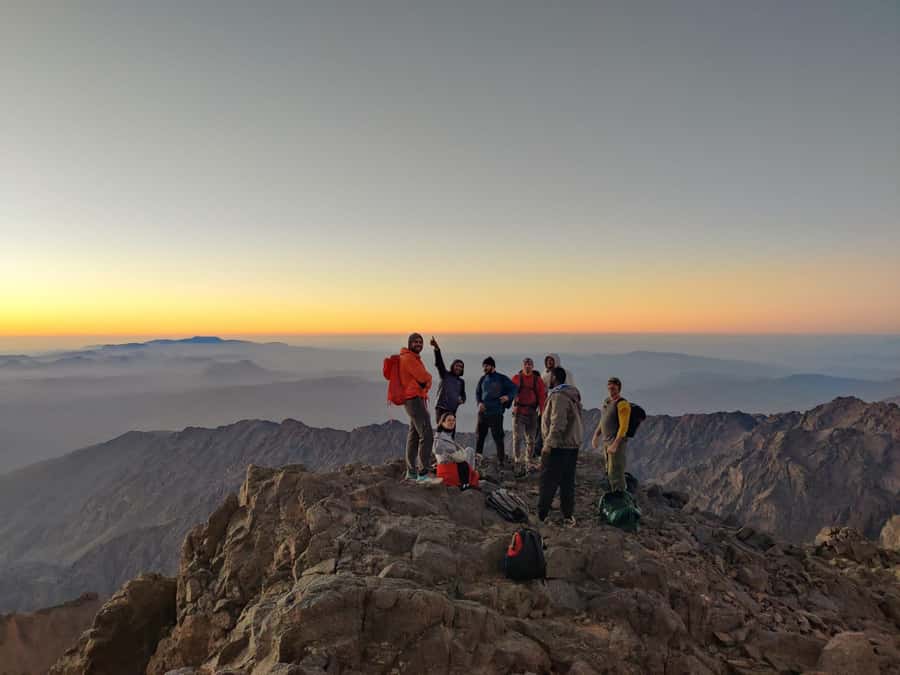
- Summit height: Mount Toubkal reaches 4,167 meters, or 13,671 feet, the highest point in North Africa.
- Two very different days: Day one leads from Imlil to the refuge. Day two starts early, climbs to the summit, then returns to Imlil.
- A guide who does more than lead: Hussein is praised for pacing, safety, encouragement, and explanations of Berber culture.
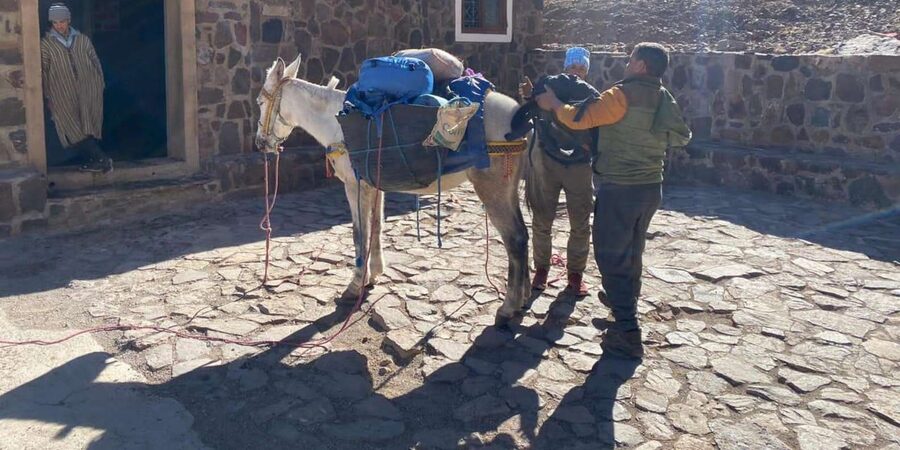
- Heavy bags are handled: A mule carries luggage, though you still need a daypack with water, layers, snacks, and personal gear.
- The refuge is basic: You get an overnight stay and meals, but sleep may be noisy and fitful. Earplugs are a smart addition.
- The price is strong value: At $193 per person, the package includes Marrakech pickup, transport, guiding, meals, mule support, refuge lodging, and the summit attempt.
From Marrakech to Imlil, the right mountain start
The trip begins with pickup from your hotel or riad in Marrakech, or from the nearest practical meeting point if a vehicle cannot reach your door. Transport is by private car or van, and the drive to Imlil takes about 90 minutes.
Imlil is the trailhead village and the place where you meet your local guide and mule team. It is also where you can sort out rented equipment before walking higher. Large luggage can remain in Imlil or be carried by mule for the trek, so you do not need to haul your full Morocco suitcase up the mountain.
This practical start matters. You can arrive from Marrakech without arranging a separate taxi, and you begin the hike with the group, guide, and gear in place. Still, pickup times are not stated, so you should check the start time and meeting details when booking.
The trip is offered with guides speaking English, French, Arabic, or Spanish. Hussein has been praised for speaking good English and for making people feel safe, even when the group includes hikers moving at different speeds. The company describes the outings as personal and small-group, though one group had 10 people with two guides. Group size can therefore vary.
More Berber village visits near Marrakech:
- Berber villages : Atlas Mountains Day Hike from Marrakech
★ 5.0 · 14,007 reviews - Marrakech: Balloon Flight, Berber Breakfast & Certificate
★ 4.8 · 8,164 reviews - Marrakech: Majorelle Garden, YSL, and Berber Museum Entry
★ 4.6 · 5,168 reviews
Day one: Imlil to the Toubkal Refuge
The first day takes you through valleys, terraced fields, highland scenery, and traditional Berber villages. The route gives you a gradual introduction to the Atlas Mountains before the ground becomes rougher and the climb grows steeper.
This is one of the best parts of the trip for anyone interested in more than reaching a summit. Your guide can explain local customs, village life, and Berber traditions as you walk. One particularly useful feature is the chance to stop for local food and mint tea in a village setting, rather than relying only on snacks brought from Marrakech.
Lunch is provided, as are all meals during the trek. Meals described on the route include substantial dishes such as beef, along with healthy food and mint tea. Dietary needs can be accommodated, but you should tell the operator in advance. A cook may accompany the group and prepare meals along the way, depending on the arrangement for your trek.
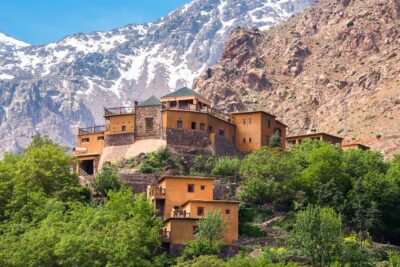
The route becomes harder after lunch. You continue upward toward the refuge, with broad views of peaks and valleys opening around you. The stone Toubkal Refuge sits at roughly 3,200 meters, a major gain from Imlil and the first point where altitude becomes a real concern.
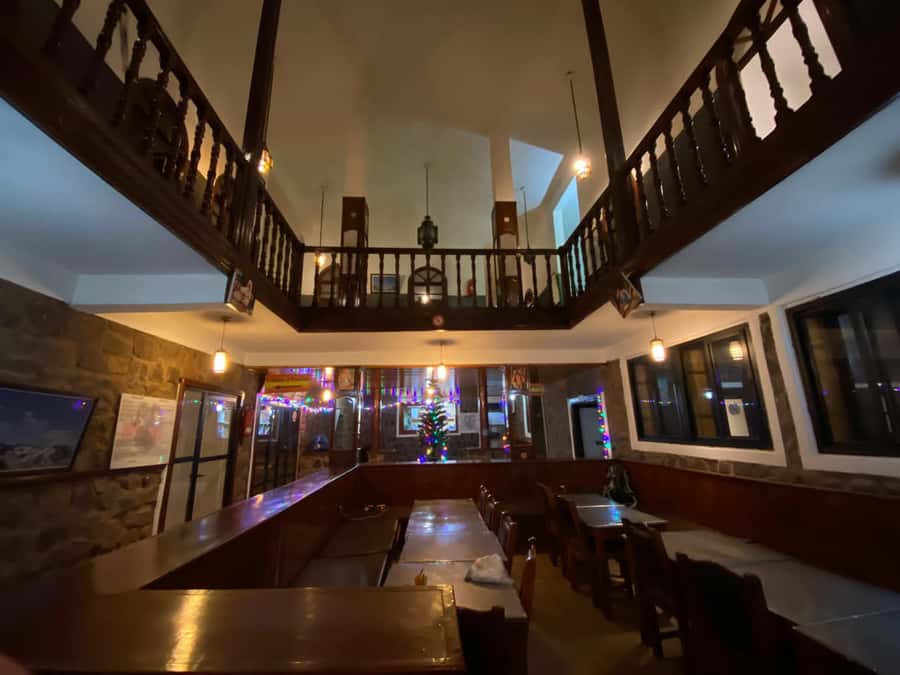
At the refuge, you have dinner and settle into a bunkroom. A hot shower has been available for some groups, but you should think of the accommodation as functional mountain lodging, not a comfortable hotel. The building can be noisy, and one useful tip is to bring earplugs. Sleep may be short because the summit departure often comes around 3 or 4 in the morning.
The overnight stay is included, along with the base camp visit. That saves you from having to arrange a separate refuge booking, meals, or mule support. It also places you close to the summit route, making the early start possible.
Day two: a dark start and a steep climb
Summit morning begins early, often around 3 a.m. After breakfast, you set off before sunrise. A headlamp is important, and if you forget one, rental options may be available locally. It is better to arrange one before leaving the refuge rather than count on finding one at the last moment.
The climb from the refuge to Toubkal’s summit is rocky and steep. Snow may cover sections of the route depending on the season. Winter conditions require crampons, and warm clothing is essential at this height. One report recorded a wind-chill temperature of minus 30 degrees Celsius at the top, so do not judge mountain conditions by the warmth of Marrakech.
The pace should be steady rather than rushed. This is where Hussein’s style seems especially valuable. He has helped slower hikers reach the summit, offered encouragement, and adjusted his approach for groups with different ability levels. That does not make the climb easy, but it can turn a discouraging morning into a manageable one.
Plan on several hours for the ascent. One group reached the summit around 6:50 a.m. after starting at about 4 a.m. Others have described roughly 1,000 meters of climbing in the dark. Timing depends on pace, weather, rest breaks, and trail conditions.
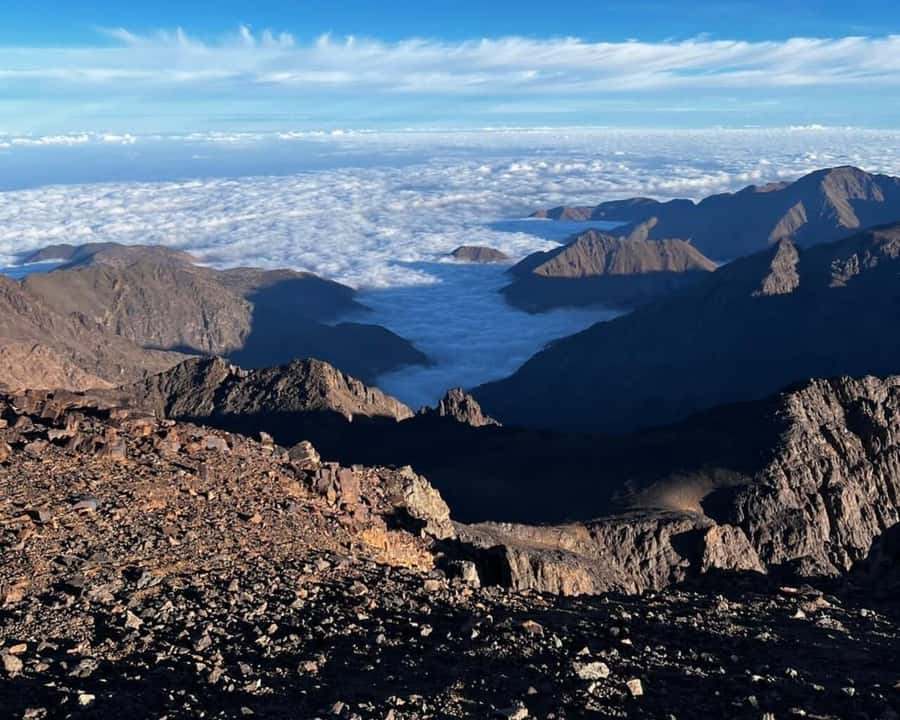
At 4,167 meters, the summit gives you wide views across the Atlas peaks and valleys. The reward is not just the height. You have climbed from a village trailhead through changing scenery, spent a night in a mountain refuge, and reached the highest point in North Africa under your own power.
Take your summit photos, eat something, and enjoy the view, but remember that the day is only partly done. The descent is long and can be hard on knees and tired legs.
The descent is where many people feel the effort
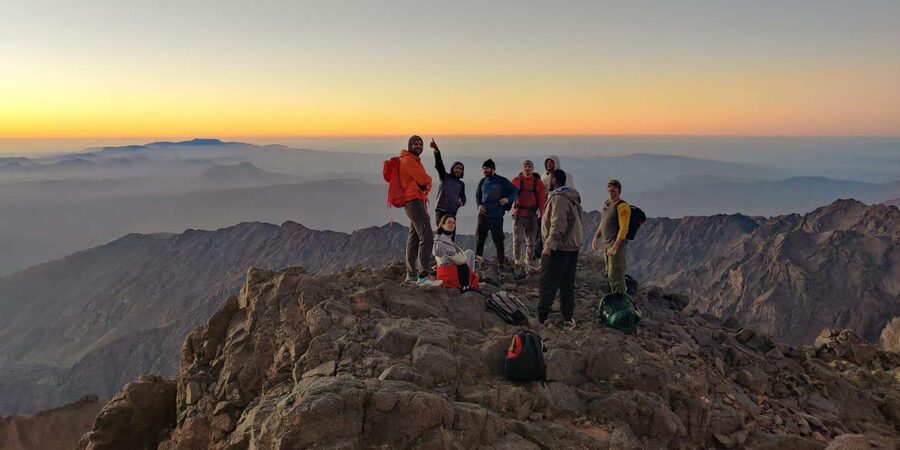
You return by the same route toward the refuge, stopping for lunch before continuing down to Imlil. The full second day can take around 8.5 hours, with about 2,500 meters of descent. That downhill distance is easy to underestimate when you are focused on the summit.
A hiker who feels strong on the ascent may still find the return tiring. Poles can help, and your daypack should remain light. Let the mule carry larger bags, but keep water, snacks, sunscreen, sunglasses, extra layers, and personal essentials with you.
The descent also changes the character of the scenery. In the morning, you may be watching the trail by headlamp and moving through cold rocky ground. Later, the valleys and villages reappear, and the return to Imlil feels like a genuine arrival rather than a simple end point.
From Imlil, transport takes you back to Marrakech. The package includes pickup and transport, so you do not need to arrange your own return ride after a very long day on foot.
More days up in the Atlas:
- Marrakech: Atlas Mountains, Ourika Valley, Waterfall & Lunch
★ 4.8 · 15,834 reviews - Marrakesh: Ourika Waterfalls, Atlas Mountains, Guide + Lunch
★ 4.9 · 9,986 reviews - From Marrakech: Atlas Mountains Full-Day Hiking Trip w Lunch
★ 4.8 · 7,417 reviews - Marrakech: Atlas Mountains & Agafay Desert Tour w Camel Ride
★ 4.8 · 5,080 reviews
What the Berber element adds
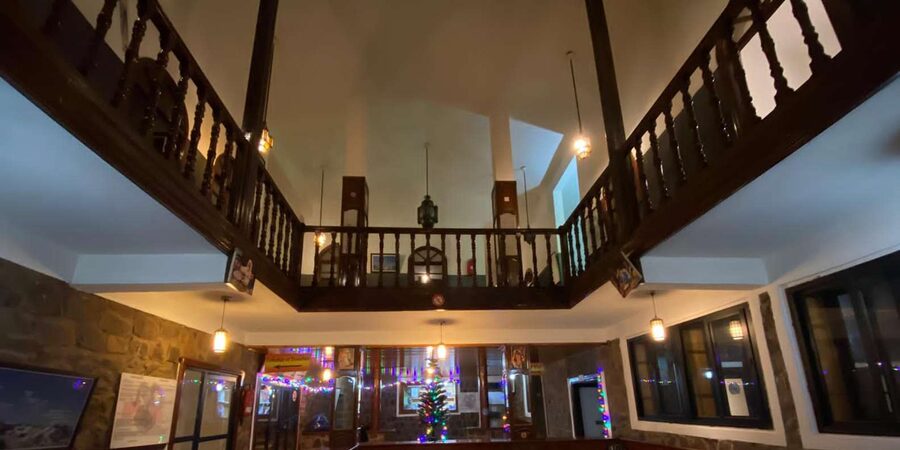
The local connection is a major reason to choose this trip. The guide is not simply there to point toward the summit. Hussein has been praised for discussing Moroccan and Berber culture, explaining traditions, and helping hikers understand the communities along the trail.
Village visits and local meals give the route more meaning. You see terraced fields, stone homes, mountain paths, and everyday life in places that are not reached by standard Marrakech sightseeing tours. The experience remains a mountain climb, but it also gives you context for the people who live in the Atlas valleys.
The homestay language in the description should be read carefully. The overnight accommodation specifically described for the summit route is the Toubkal Refuge, not necessarily a village homestay. Ask the operator if a traditional homestay is part of your exact arrangement. The cultural contact is clear, but the sleeping location may depend on the itinerary.
Price and what $193 really covers
At $193 per person, this is a useful package for a two-day summit attempt. You receive Marrakech pickup, transport, a local guide, meals, mule support, an overnight refuge stay, a base camp visit, and the summit climb.
The mule is not a minor extra. Carrying a heavy pack for two days would make the climb harder, especially during the long ascent and descent on day two. The guide is also a large part of the value. A good local guide can help with route decisions, pace, weather awareness, language, and safety.
Equipment is not included, but it can be rented locally. That can keep costs down if you are visiting Morocco without full winter trekking gear. You should still budget time to check boots, crampons, sleeping bags, poles, and headlamps before setting out.
One price warning is worth noting. A booking made through a larger mountain-tour company may cost much more than arranging a similar trip with a local Berber guide. The important question is not simply the cheapest rate. Check who is providing the guide, what transport and meals are included, and whether mule support and refuge lodging are part of the total.
Fitness, weather, and equipment
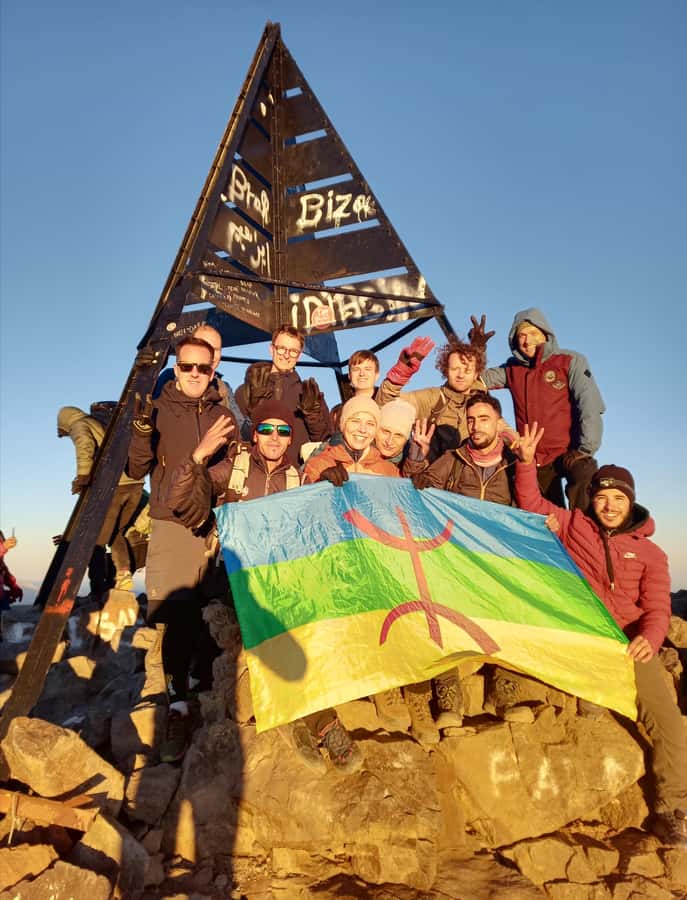
This trek is suitable for fit hikers who are comfortable with long days and steep ground. It is not suitable for children under seven, people with a low level of fitness, or people over 70 according to the stated restrictions.
You should be prepared for:
- Sturdy hiking boots
- Warm layers and clothes that can get dirty
- Hiking trousers and a sun hat
- Sunglasses, sunscreen, and a water bottle
- A daypack and snacks
- Trekking poles
- A sleeping bag
- A headlamp
- Crampons in winter
The weather can change quickly in the mountains. Conditions at Imlil and conditions near the summit may feel like two different trips. Listen to your guide if the weather turns bad. Alternative options may be offered when conditions make the summit unsafe.
Altitude is another concern. The itinerary reaches 3,200 meters on the first day and 4,167 meters on the second. You may feel the reduced air, especially while climbing before sunrise. Move steadily, drink water, and tell your guide if you feel unwell.
Who will enjoy this Toubkal trek most
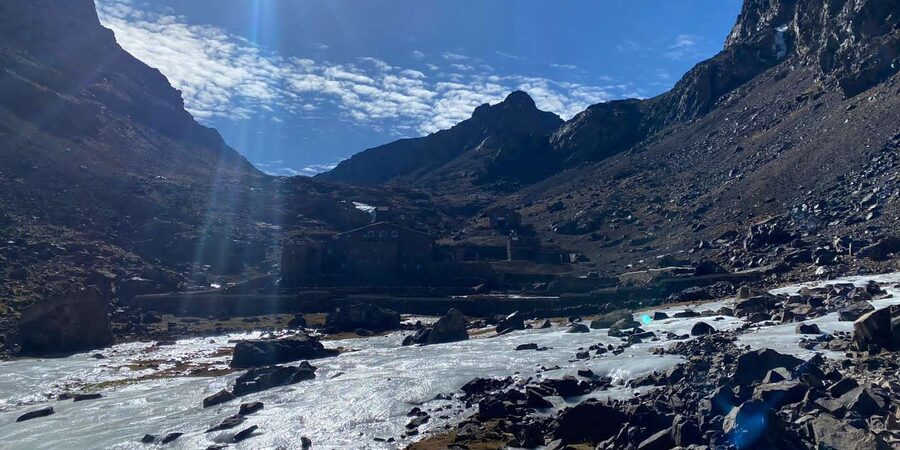
I would choose this trip if you want a real physical challenge and prefer local guiding to a polished sightseeing package. It suits hikers who value cultural contact, simple accommodation, shared meals, and dramatic scenery.
It is also a good choice if you want a two-day plan from Marrakech without arranging every separate piece yourself. Pickup, transport, meals, mule support, and the refuge are already part of the setup.
I would hesitate if you dislike early starts, shared mountain lodging, cold conditions, or long descents. A summit is never guaranteed by a booking. Weather, snow, fitness, and pacing all matter.
The trek can work for a mixed-ability group when the guide is attentive. Hussein has helped slow hikers reach the top and kept larger groups organized. Still, you should be honest about your fitness before joining. Encouragement helps, but it cannot replace preparation.
Should you book the two-day Toubkal climb?
Book it if reaching North Africa’s highest peak appeals to you and you are ready for a demanding mountain trip. The strongest reasons are the local Berber guide, included mule support, substantial meals, Marrakech transport, and the chance to spend time in villages and the high Atlas rather than simply viewing the mountains from below.
At $193, the package offers good value, especially for someone who would otherwise need to arrange a guide, transport, refuge, meals, and luggage support separately. Just arrive prepared. Bring warm layers, proper boots, sun protection, a headlamp, and winter crampons when needed. Pack earplugs too.
If you want a relaxed Atlas Mountains day trip, choose something easier. If you want a serious two-day effort led by someone such as Hussein, with a strong cultural side and a meaningful summit goal, this is a compelling choice.
FAQ
How high is Mount Toubkal?
Mount Toubkal is 4,167 meters high, or 13,671 feet. It is the highest mountain in North Africa.
How long is the Mount Toubkal trek?
The trek lasts two days. Day one runs from Imlil to the Toubkal Refuge, and day two includes the summit attempt and the descent back to Imlil.
Where does the trek begin?
The trek begins in Imlil, a Berber village about 90 minutes from Marrakech.
Is pickup from Marrakech included?
Yes. Pickup from your hotel or riad in Marrakech is included, with a private car or van arranged to meet you at the nearest practical pickup point.
Is a local guide included?
Yes. A local guide is included. Guide languages listed are English, French, Arabic, and Spanish.
Are meals included?
Yes. All meals during the trek are included. Local food and mint tea are part of the mountain experience, and dietary requirements can be catered for when arranged in advance.
Does a mule carry luggage?
Yes. A mule carries bags during the trek. Larger luggage can also be stored in Imlil or left with the mule for the duration of the climb.
Where do you sleep?
The overnight stay is at the Toubkal Refuge at about 3,200 meters. The accommodation is basic, and shared bunkrooms may be noisy.
Do I need to bring climbing equipment?
Equipment is not included, but gear can be rented locally. You should bring sturdy hiking boots, warm clothing, sun protection, a daypack, and personal gear. Crampons are required in winter when snow covers the summit route.
Is the trek suitable for children or people with low fitness?
The trek is not suitable for children under seven, people with a low level of fitness, or people over 70. The climb and descent are strenuous, especially on the second day.
More 2-Day Experiences in Marrakech
- From Marrakech: 2-Day Sahara Tour to Zagora & Ait Ben Haddou
★ 4.4 · 1,925 reviews - From Marrakech: 2-Days luxurious experience to Zagora Desert
★ 4.9 · 1,502 reviews - From Marrakech: Zagora 2-Day Desert Safari with Food & Camp
★ 4.5 · 1,137 reviews - Mt Toubkal Ascent Express Trek 2 Days 1 Nights
★ 4.7 · 962 reviews
More Hiking & Trekking in Marrakech
- From Marrakech: Ouzoud Waterfalls Guided Hike and Boat Trip
★ 4.7 · 33,630 reviews - 3 Days Desert Tour From Marrakech To Merzouga Dunes & Camel Trek
★ 5.0 · 10,125 reviews - Marrakech: Ourika Valley Trip with Waterfall Hike
★ 4.6 · 6,792 reviews - Marrakech: Ourika Valley Trip with Waterfall Hike & Lunch
★ 4.9 · 5,303 reviews
Just listed around Marrakech
- 3 Days To Merzouga Desert★ 5.0 · 19 reviews
- 3 Days Shared Sahara Desert Tour From Marrakech★ 5.0 · 78 reviews
- 1 night Camel Treking in Merzouga Desert Luxury Camp★ 5.0 · 132 reviews
- 3 Days Sahara Desert Trips From Marrakesh★ 5.0 · 176 reviews
- 3 Days Sahara Tour from Marrakech to Merzouga Dunes★ 5.0 · 29 reviews
- trip of your dreams in 3 days and 2 nights in the desert★ 5.0 · 36 reviews
- 3 Days Private Tour to Merzouga Desert from Marrakech★ 5.0 · 77 reviews
- 3 Day Sahara Desert Tour From Marrakech★ 5.0 · 49 reviews
Atlas Mountains Tours, compared.
Atlas Mountains, Ourika Valley, Waterfall & Lunch
Read our review →
Berber villages : Atlas Mountains Day Hike from Marrakech
Read our review →
Ourika Waterfalls, Atlas Mountains, Guide + Lunch
Read our review →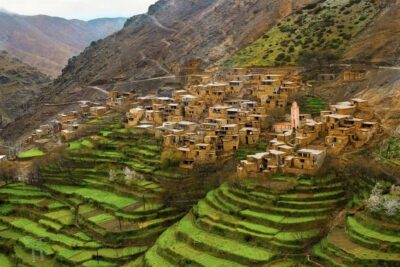
Atlas Mountains & Agafay Desert Tour w Camel Ride
Read our review →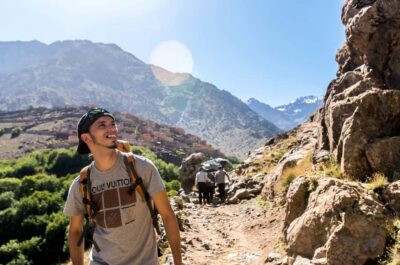
Atlas Mountains, Waterfalls, Ourika Valley +Lunch
Read our review →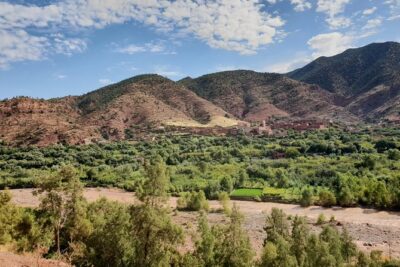
Atlas Mountains & 5 Valleys Tour from Marrakech – All inclusive –
Read our review →Browse the lists this tour appears in