Reviewed · GUIDED
Fes: Medina Guided Tour with Local
Fes is easier to love once someone shows you the way. This walking tour pairs the city’s main sights with the small details you could miss alone. I like the guide’s local connection, especially Mohammed’s easy way with artisans and neighbors. I also like the no-pressure approach to shopping. The main consideration is that the medina has steep, uneven lanes and is not suitable for people with mobility impairments.
For $22 per person, the three-hour half-day tour offers strong value if you are new to Fes. The full-day option adds the Jewish Quarter, King’s Palace, pottery and mosaic work, and hilltop views. Allow extra time for stops, questions, and photographs, since the advertised three hours can sometimes run longer.
In This Review
- Key points at a glance
- Why a local guide helps in Fes El Bali
- From Bab Boujloud to Talaa Kebira
- Bouanania Medersa and the water clock
- Kairaouine and the Andalusian Mosque
- Nejjarine Fountain, museum, and the craft quarters
- Seffarine Square and the sound of copper
- Chaouwara Tannery, the unavoidable classic
- The full-day route beyond the medina
- What the $22 price really buys you
- The guide’s style and what you can ask for
- Who should book this walk
- Should you book the Fes Medina Guided Tour?
- FAQ
- Where does the tour meet?
- Can I be picked up from my hotel?
- How long does the tour last?
- Is the tour private or shared?
- What language does the guide speak?
- Are entrance fees included?
- Are food and drinks included?
- Is the tour suitable for people with mobility impairments?
Key points at a glance
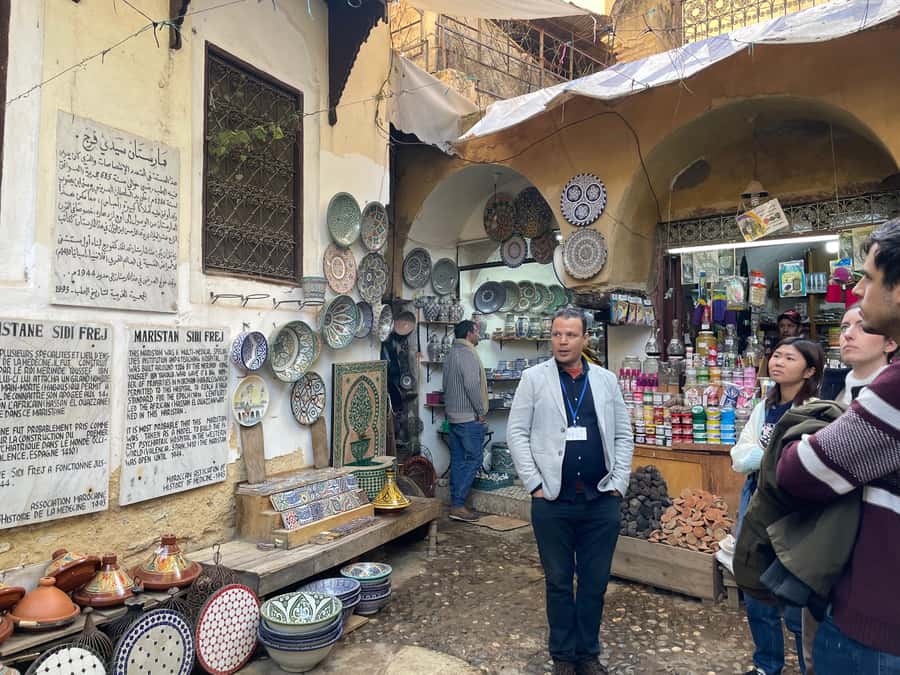
- Start at Bab Boujloud: The Blue Gate provides an easy, memorable entrance into Fes El Bali.
- A true local connection: Mohammed grew up in Fes and guides with the familiarity of someone who knows the medina personally.
- Major sights in one walk: See Bouanania Medersa, Kairaouine Mosque and University, Nejjarine, markets, Seffarine, and Chaouwara Tannery.
- Little shopping pressure: The tour focuses on craft and culture, not pushing you into stores.
- Full-day extras: Visit the Jewish Quarter, King’s Palace, a pottery and mosaic factory, Bab Guissa, and the Marinid Tomb.
- Bring cash: Madrasa and museum admission cost about €4, or roughly 40 to 60 Moroccan dirhams per person according to practical tour advice.
Why a local guide helps in Fes El Bali
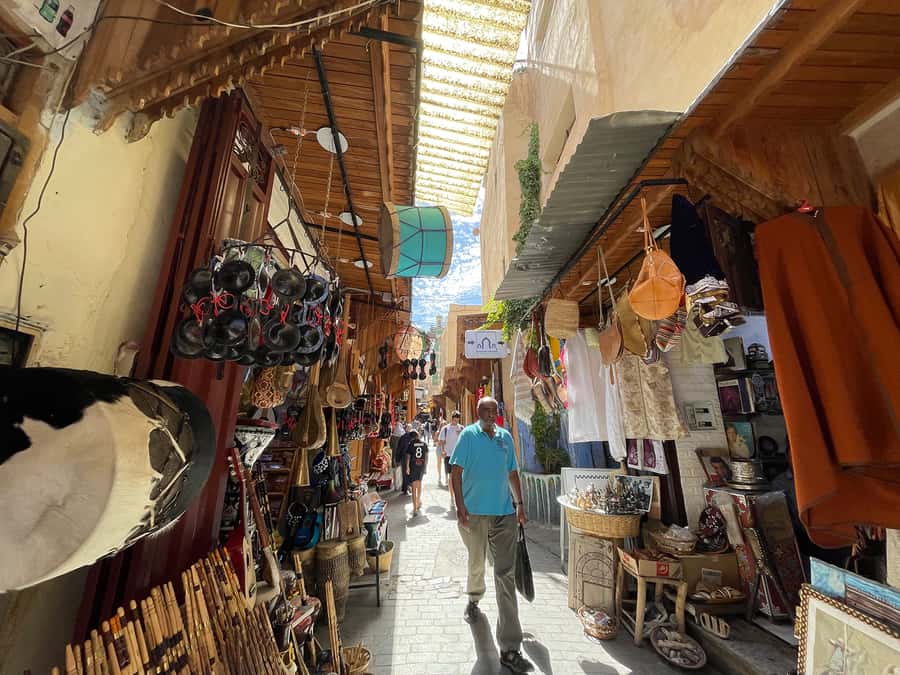
Fes Medina is not a tidy collection of monuments arranged along one obvious route. It is a working old city of narrow lanes, covered passages, workshops, food stalls, souks, mosques, and sudden little squares. You can walk ten minutes and feel completely turned around.
That is the main reason I would book a guide here. Mohammed was born and raised in Fes, and his knowledge goes beyond dates and building names. He can explain how the city functions, point out everyday details, and introduce you to the craft behind the decoration.
The personal connection matters. He is described as friendly, humorous, and familiar with people throughout the medina. That can make the walk feel less like a march between monuments and more like being shown around someone’s hometown.
The tour is offered privately or in a small group. A small group keeps the experience personal, while a private tour gives you more room to set the pace and ask questions. Several people received longer tours than planned, sometimes because the guide kept answering questions or added places that suited their interests.
That flexibility is useful, but do not assume every three-hour booking will become a five-hour outing. Treat any extra time as a pleasant possibility, not part of the guaranteed schedule.
A few more Fez runs to hold up against each other
- Chefchaouen Day Trip from Fez (Shared Group Tour)
★ 4.6 · 2,394 reviews - Fes: Volubilis Roman Ruins, Mouly Idriss, & Meknes Day Trip
★ 4.6 · 2,375 reviews - Fez Medina Guided Tour
★ 4.6 · 2,079 reviews
From Bab Boujloud to Talaa Kebira
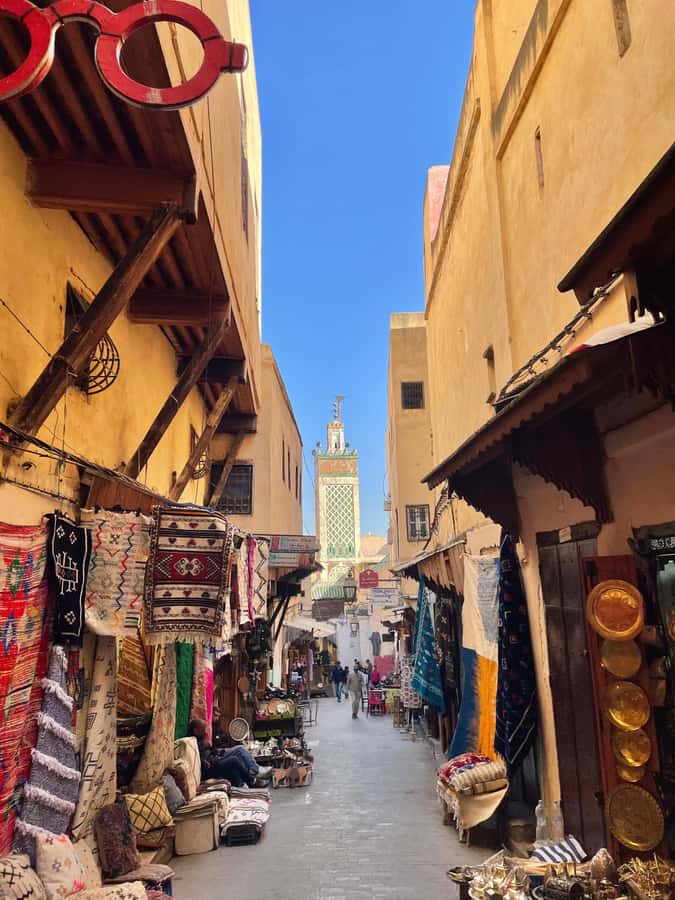
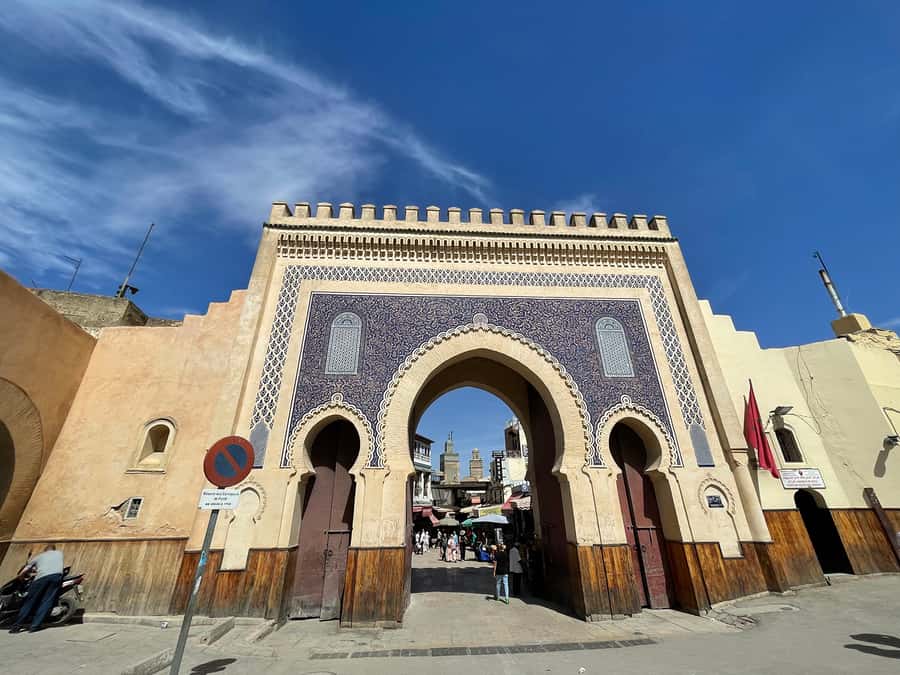
The usual starting point is Bab Boujloud, known as the Blue Gate. It is a sensible place to begin because it gives you a clear reference point before the alleys become more complicated.
From the gate, you enter Talaa Kebira, one of the medina’s main streets. The route passes local souks, herbal shops, and handicraft workshops. This first stretch helps you understand that Fes is not simply an open-air museum. People still work, shop, carry goods, and meet friends here.
You will want comfortable shoes. The route is on foot, and the lanes can be uneven. The medina is also a place where donkeys, handcarts, shopkeepers, and pedestrians share limited space, so you need to stay alert rather than walk with your nose buried in a map.
The meeting point is Dar Sunrise Fes, at house number 10 in an alley beside the Made in M café. From Bab Boujloud, cross the gate, turn into the first street on the left, and walk about three minutes along Talaa Kebira. From Ain Zliten Parking, enter Talaa Kebira and walk uphill for about one minute.
That location is practical, but first-time visitors can still get lost. Save the directions and allow extra time. One couple arrived around ten minutes late after losing their way, and Mohammed waited politely for them.
Bouanania Medersa and the water clock
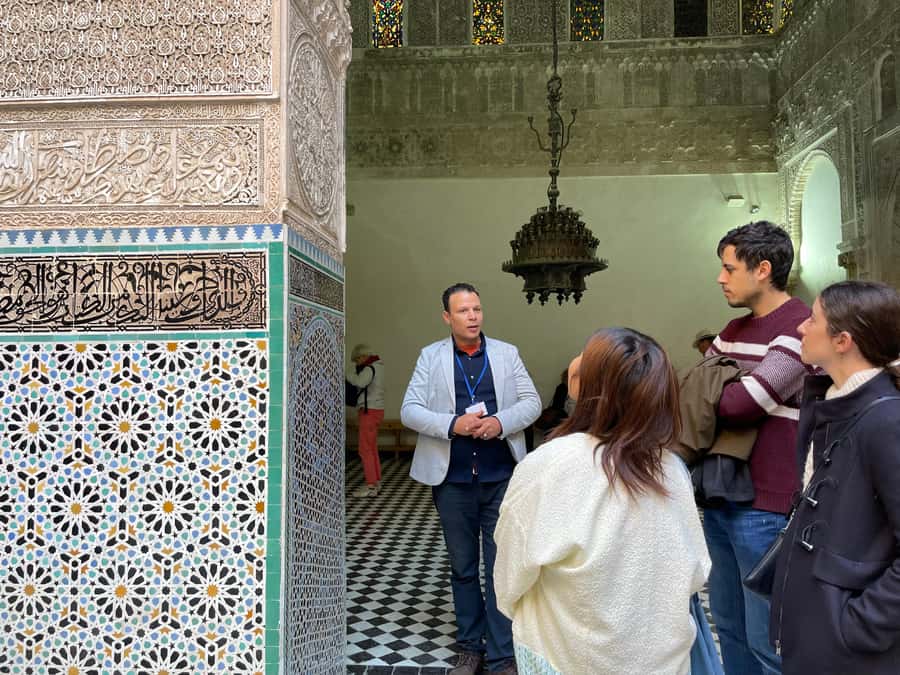
Early in the walk, you stop at the water clock and Bouanania Medersa. These are good first lessons in Fes architecture.
Bouanania Medersa is known for the kind of detailed tile, carved plaster, and woodwork that defines many of the city’s finest buildings. The guide’s background as an artisan makes this part especially worthwhile if you care about workmanship rather than simply taking a quick photograph.
Ask about how the patterns are made and why different materials appear together. Several people found Mohammed particularly strong at explaining mosaic and plaster work. He can connect the decoration to the tools, time, and skill required to produce it.
The entrance fee for the madrasa is not included. The listed cost is €4 for the Madrasa and Museum, though practical advice from the tour suggests bringing around 40 to 60 dirhams per person for entrance tickets. Carry small cash so you are not caught short.
The water clock adds a different kind of interest. It shows how public life in the medina once depended on systems that were practical as well as decorative. Your guide can give the site context that a quick stop alone would not provide.
Kairaouine and the Andalusian Mosque
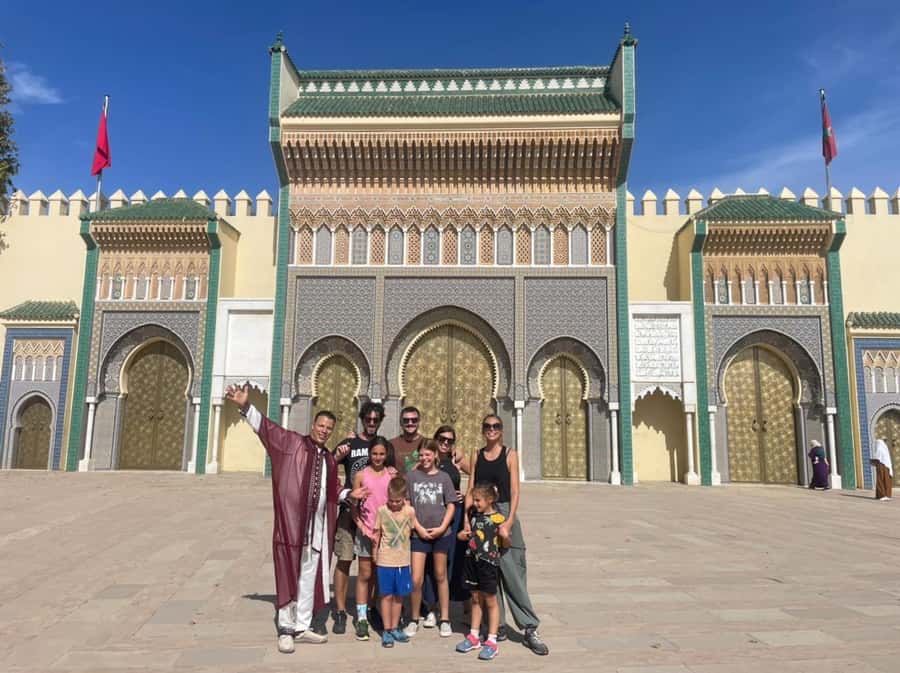
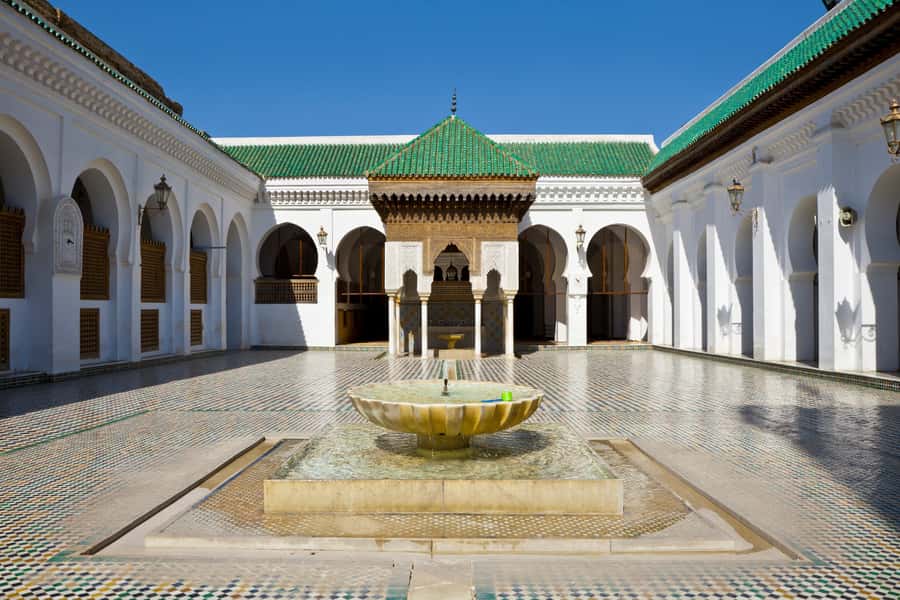
The route continues toward Kairaouine Mosque and University, one of the central landmarks of Fes. Non-Muslim visitors may not be able to enter the mosque’s prayer areas, but the building remains important to see from the surrounding lanes and entrances.
Here, the guide’s explanation is more useful than a simple photo stop. You learn about the institution’s role in Fes and how religious, educational, and commercial life overlap within the medina.
The tour also visits the Andalusian Mosque. Seeing both sites helps you notice the character of different quarters instead of treating the old city as one uniform place.
The pace appears to be relaxed rather than rushed. The guide leaves room for questions and photographs, and the route can be adjusted around your interests. If architecture is your priority, say so early. If daily life and food matter more, make that clear as well.
One benefit of taking this walk near the start of your stay is orientation. After a few hours, streets that first seemed random begin to make more sense. You may still get lost later, but you will have a better mental map.
Same city gate, a very different afternoon:
- Blue City magic: Affordable Day Trip from Fez to Chefchaouen
★ 4.6 · 1,960 reviews - From Fez: Sahara Desert 2-Day Tour with Merzouga Camp Stay
★ 4.8 · 1,716 reviews - Fes: Museum, Al Attarine Madrasa & Tannery and Medina Tour
★ 4.6 · 1,655 reviews - From Fez: Chefchaouen Day Trip with Hotel Pickup
★ 4.6 · 1,534 reviews
Nejjarine Fountain, museum, and the craft quarters
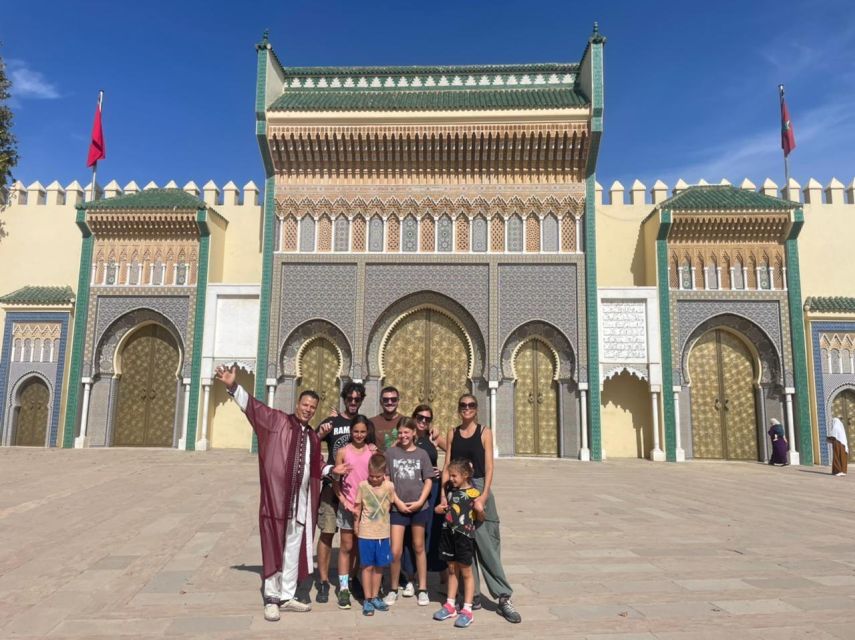
The Nejjarine Fountain is one of the medina’s most recognizable pieces of public decoration. It is a short stop, but it gives you another chance to look closely at tile patterns and carved surfaces.
Nearby, the Nejjarine Museum offers a more formal look at Moroccan woodworking and craft traditions. Museum admission is extra, and you should confirm the current price when booking or at the entrance.
The route then moves through the Henna Souk and Attarin Market. These markets show the commercial side of Fes, with herbs, beauty products, household goods, and handmade items. The experience is not just about buying. It is about seeing how goods are displayed, discussed, and made part of daily life.
This is also the point where a guide’s shopping policy matters. Mohammed’s approach is to explain products and answer questions without steering you toward purchases. Some craft stops may be included so you can see a process, but the emphasis is not on filling your suitcase.
You should still expect normal souk sales tactics. A guide can help you understand prices, explain what you are seeing, and advise you on negotiating if you ask. The tour does not include food or drinks, so stop for water before you become too thirsty to enjoy the details.
Seffarine Square and the sound of copper
Place Seffarine is one of the most atmospheric stops on the route. Here you can watch bronze and copper artisans at work, with the sound of hammering forming part of the experience.
This is a strong example of what makes the tour useful. You can pass a workshop and see only a wall of metal objects. With an explanation, you start to understand the labor behind them and the place of metalwork in Fes craft culture.
The Saffarin Madrasa is also visited. It adds another architectural stop after Bouanania, allowing you to compare decorative details and building styles.
If you enjoy making things, tell Mohammed. Several people valued his explanations of pottery, carving, tilework, and plaster. His interest in craft is not a side note. It shapes the tour and gives the buildings more meaning.
Chaouwara Tannery, the unavoidable classic
Chaouwara Tannery is the largest tannery in Fes and one of the city’s best-known sights. From an upper viewpoint, you can see the working vats and the leather process below.
It is a memorable stop, but it can also be intense. The smells are strong, and shop viewpoints often come with an expectation that you will browse leather goods. This is where a guide who respects your limits is valuable.
You can ask to see the tannery without wanting to shop. The tour’s stated style is no commercial pressure, and several people specifically appreciated not being pushed into stores. Still, it is wise to be clear about your wishes before entering any shop.
The tannery is also a good place to ask about the difference between handmade craft and sales presentation. Fes is proud of its leatherwork, but you should feel free to look, ask questions, and leave without buying.
The full-day route beyond the medina
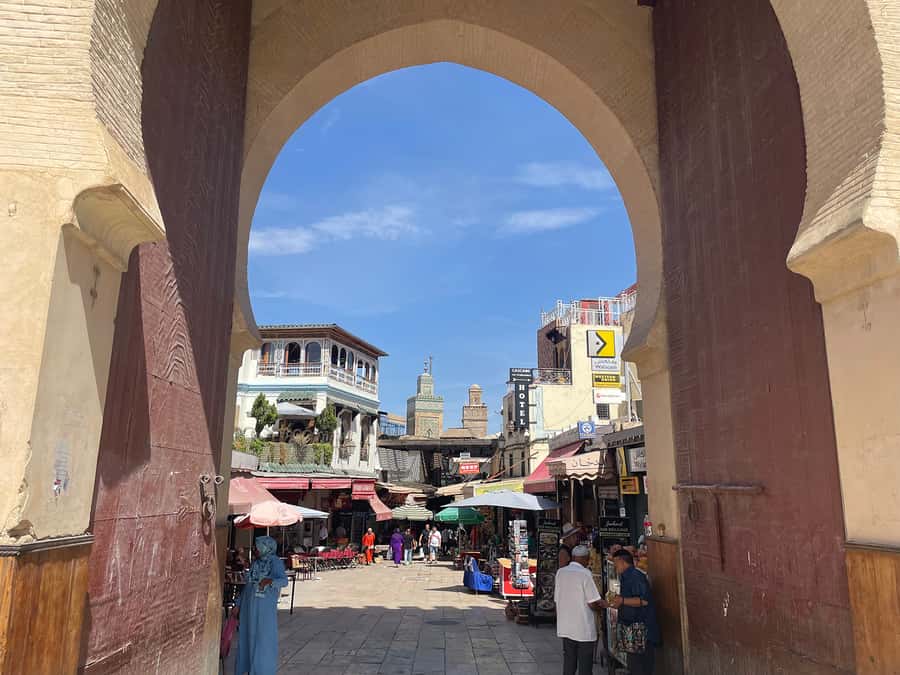
If you choose the full-day tour, the afternoon adds a different side of Fes. After the medina, you head to the Jewish Quarter and the King’s Palace.
The Jewish Quarter gives you a chance to see a part of the city that is not covered by a basic medina loop. The King’s Palace is viewed from outside, since visitors generally see its impressive gates rather than tour the royal interior. This section is useful for understanding the city beyond the souks and religious monuments.
You also visit a factory producing mosaic and pottery. This is an ideal follow-up to the tile and plaster explanations earlier in the day. You can see how color, clay, cutting, shaping, and assembly become finished Moroccan decoration.
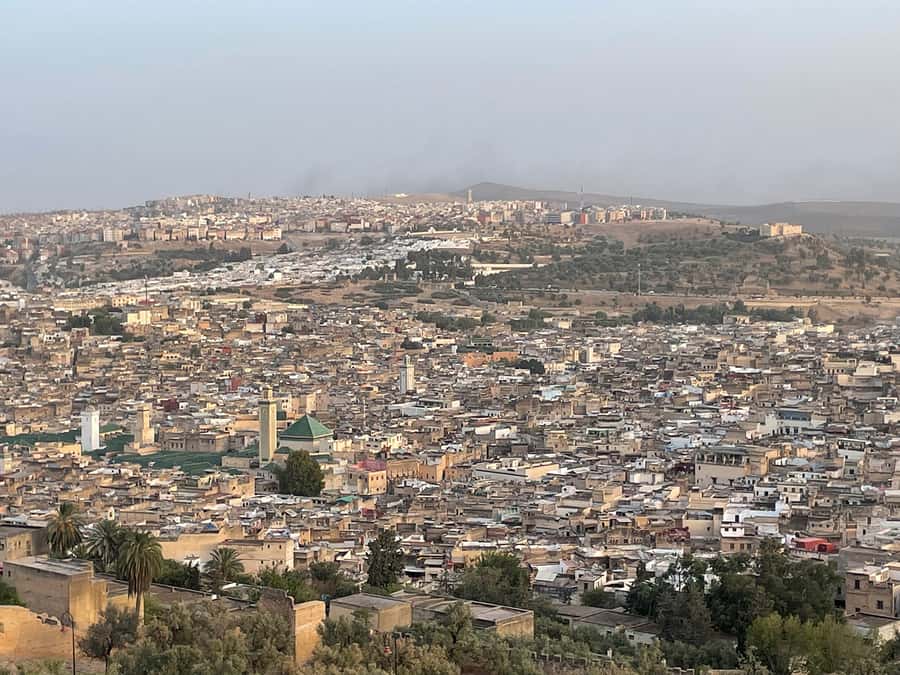
The full-day option then reaches Bab Guissa and the Marinid Tomb for panoramic views of Fes. These viewpoints provide a needed change from the enclosed lanes. From above, the scale and layout of the medina become easier to understand.
The full day suits you if you want context, not just a checklist. It also works well for anyone interested in craft, architecture, urban history, or photography. The tradeoff is stamina. You will be on your feet for much of the day, and the medina route is not designed for people with mobility limitations.
What the $22 price really buys you
At $22 per person, this is a low-cost way to put several major Fes sights into context. Entrance fees are extra, as are food and drinks, but the guide is included.
The value is strongest if you are visiting Fes for the first time. A guide can reduce wrong turns, explain what you are looking at, and help you spend your limited time well. In three hours, you can cover much of the central medina. In practice, the walk may last longer if the schedule allows.
A private tour can be especially good value for a couple or family because you get direct attention without paying for a large organized group. Small groups keep the price reasonable while still allowing questions.
I would not book this expecting a luxury vehicle, hotel-based sightseeing, or a meal package. This is a walking tour led by a local guide. Its value comes from access, explanation, and navigation.
Cancellation is flexible up to 24 hours before the start for a full refund, and you can reserve while paying later. Check the available start times because the exact schedule varies.
The guide’s style and what you can ask for
The strongest praise centers on Mohammed’s warmth, storytelling, English, and willingness to tailor the route. He is described as calm, funny, direct, and deeply attached to Fes.
That style suits you if you prefer conversation over a memorized speech. Ask about family life, local customs, food, architecture, shopping, or how a craft is made. The guide is also happy to recommend restaurants, and several people were directed to local places away from tourist-heavy dining.
You can ask for help with shopping, but do not confuse help with a shopping tour. The advertised approach is to show you the city without taking you from shop to shop. Any artisan visit should have a clear cultural reason.
Photography is welcome, and Mohammed has been praised for taking good photographs. Still, ask before photographing workers or residents. A friendly local introduction does not remove the need for courtesy.
There are occasional references to other guides, including Rachid and a female guide, so the assigned person may not always be Mohammed. If meeting him specifically matters to you, ask the provider before booking.
Who should book this walk
I would recommend it most strongly to:
- First-time visitors to Fes who want to see the main sights without getting lost.
- People interested in tilework, plaster, metal, leather, pottery, and other crafts.
- Visitors who want local stories and daily-life context, not only monument facts.
- Couples, families, and small groups that prefer a personal pace.
- Anyone with only one or two days in Fes.
You may want another option if you have difficulty walking on uneven ground, dislike narrow lanes, or want a tour built around food and drinks. Food is not included, and the route requires steady walking.
The half-day tour is enough for a first orientation and the major medina sights. Choose the full day if the Jewish Quarter, palace gates, pottery, and city views matter to you.
Should you book the Fes Medina Guided Tour?
Yes, if you want an affordable, human introduction to Fes rather than a rushed monument count. The strongest reason to book is the guide’s local knowledge paired with a clear no-pressure attitude toward shopping.
Choose the half day for a practical first look. Choose the full day if you want craft demonstrations, broader city context, and panoramic views. Wear sturdy shoes, carry water and cash, save the meeting-point directions, and tell the guide what interests you before setting off.
For $22, this is a smart first step into Fes, especially when the medina still looks like a maze.
FAQ
Where does the tour meet?
The meeting point is Dar Sunrise Fes, house number 10 in the alley beside the Made in M café on Talaa Kebira. From Bab Boujloud, it is about a three-minute walk after turning left through the gate.
Can I be picked up from my hotel?
Hotel pickup and drop-off are offered for private tours. You need to send the hotel name and address after booking.
How long does the tour last?
The available options last between three and six hours. The half-day medina tour is planned for three hours, while the full-day option includes additional areas outside the medina.
Is the tour private or shared?
Both private tours and small-group options are available. Check the selected option when booking.
What language does the guide speak?
The live tour guide language is English.
Are entrance fees included?
No. Entrance fees for the madrasa and museum are not included. The listed fee is €4, and you should carry about 40 to 60 Moroccan dirhams per person for tickets.
Are food and drinks included?
No. You pay separately for food and drinks.
Is the tour suitable for people with mobility impairments?
No. The experience is not suitable for people with mobility impairments because it is a walking tour through the medina’s narrow and uneven lanes.
Just listed around Fez
- Discover the city of Fes on foot with the best guides★ 5.0 · 27 reviews
- VIP TOUR OF FES- Medina by local guide & Rempart by car-FULL Day★ 5.0 · 74 reviews
- day trip from fez to middle atlas mountain★ 5.0 · 17 reviews
- fes medina guided tour★ 4.5 · 60 reviews
- Fes to Volubilis, Moulay Idriss and Meknes Private Day Trip★ 5.0 · 92 reviews
- Fes to Volubilis, Moulay Idriss and Meknes Private Day Trip★ 4.5 · 26 reviews
- Private Fes Medina Walking Tour★ 5.0 · 25 reviews
- Fes to Chefchaouen Day Trip★ 5.0 · 20 reviews
Guided, compared.
Ouzoud Waterfalls Guided Trip with Boat Ride
Read our review →
Ourika Waterfalls, Atlas Mountains, Guide + Lunch
Read our review →
Ouzoud Waterfalls Guided Day Trip with Boat Ride
Read our review →
ourika valley lunch & guided hike to waterfalls
Read our review →