Reviewed · HALF-DAY
From Agadir: Half-Day Tour to Taroudant
Taroudant keeps Morocco wonderfully close to the ground. This half-day trip from Agadir gives you Souss Valley scenery and a useful first look at a traditional market town, without the long commitment of a full-day excursion. I like the drive past orange, banana, and citrus plantations, and I like the chance to see Taroudant’s red walls, old gates, and silver-filled souks in one outing.
I also like the tour’s local flavor: mint tea, Moroccan pastries, saffron, leather, Argan oil, and a walk through Place Assarag. The main caution is important: the promised brunch and transport arrangements may not always match the plan, so I would confirm both before booking. Some departures have used a taxi rather than a coach or minibus, and the snack stop has not always taken place.
In This Review
- Key points to know before you go
- Why Taroudant makes a good half-day escape from Agadir
- Crossing the Souss Valley toward the High Atlas
- The farm country, Argan trees, and the missing goat stop
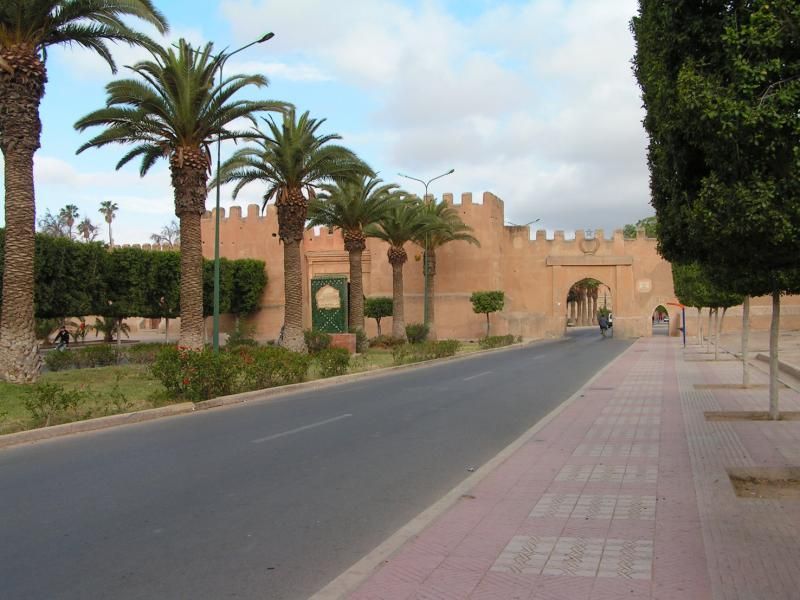
- Meeting Taroudant’s red walls and five gates
- Walking through Place Assarag and the souks
- Brunch, mint tea, and an important food warning
- Guides, timing, and how the day can change
- Is $88 a fair price for this experience?
- Who should book this Taroudant trip?
- Should you book it?
- FAQ
- How long is the Taroudant tour?
- What is included in the tour?
- Is lunch included?
- Is brunch included?
- What can I see in Taroudant?
- What products are sold in the souks?
- What languages are available?
- Where do cruise passengers meet the guide?
Key points to know before you go
- Taroudant is a compact taste of old Morocco: You can see the ramparts, gates, central square, and souks within a half day.
- The drive is part of the experience: The route crosses the fertile Souss Valley, with views toward the High Atlas Mountains and passing plantations.
- The Argan tree stop is not guaranteed: The advertised goat sighting did not happen on every departure.
- The souk visit is guided: Expect silver jewelry, leather, spices, saffron, engraved limestone, and Argan oil.
- Guides can make a big difference: Ilias received especially strong praise for being friendly, flexible, and well informed, while Hishan was praised for safe driving and helpful explanations.
- Confirm the food and vehicle details: Brunch is listed but has been missed, and the stated coach or minibus may be replaced by a taxi.
Why Taroudant makes a good half-day escape from Agadir

Agadir is a modern seaside base, with broad roads, hotels, and a resort feel. Taroudant gives you a different picture of southern Morocco. It is often called Little Marrakesh, a nickname that points to its red walls, old gates, market lanes, and traditional crafts.
I like the scale of this trip. You are not committing to a long day on the road, yet you get beyond the beach district and into the agricultural heart of the Souss region. The town is compact enough to explore on foot, and the main sights fit comfortably into a short visit.
The tour costs $88 per person. That is not a bargain-priced local taxi ride, so value depends on what you receive. If you get hotel pickup, reliable round-trip transport, a good guide, the planned snack, and a well-organized walk through Taroudant, the price can make sense for a convenient introduction. If you only receive a taxi transfer and a short souk visit, the cost feels harder to justify.
That difference makes the exact transport and food arrangements worth checking before you pay.
A few more Agadir runs to hold up against each other
- Half-Day Boat Trip in Agadir: Fishing, Fish BBQ & Swimming
★ 4.4 · 314 reviews - Agadir Half-Day Tour
★ 4.5 · 209 reviews - Agadir: Half-Day Desert Dunes Buggy Safari
★ 4.3 · 76 reviews
Crossing the Souss Valley toward the High Atlas
The road from Agadir is not just dead time between two stops. You pass through the fertile Souss Valley, an important agricultural area known here for banana and citrus plantations. Depending on the route and conditions, you may also see orange groves and other cultivated farmland.
The views toward the High Atlas Mountains add scale to the trip. You move from Agadir’s coastal setting into a broad valley backed by mountains, with farm country replacing hotel blocks. I would keep my camera ready during the drive, but I would also avoid expecting a formal sightseeing stop at every scenic point.
The experience varies with the guide and driver. One highly praised guide, Ilias, was described as flexible and willing to stop at points of interest. Hishan was also praised for explaining Moroccan life during the drive and for providing a safe journey. Those details matter because a good driver-guide can turn a transfer into part of the tour.
On other departures, the transportation has been less polished. Instead of the expected coach or minibus, a taxi has been used, sometimes without a guide present during the pickup. That does not automatically ruin the trip, but it changes the feel from an organized excursion to a transfer followed by a locally arranged visit.
The farm country, Argan trees, and the missing goat stop
The route is meant to include a visit to a Soussi farm, with orange and banana plantations as part of the rural picture. This is one of the more appealing elements for anyone who wants to see how the region looks away from Agadir’s tourist center.
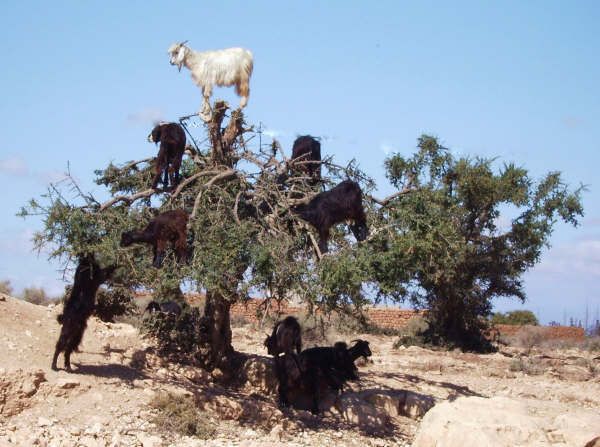
The itinerary also highlights goats climbing into the upper branches of Argan trees. This is a famous southern Morocco sight, and it can be wonderfully odd when you see it. The goats climb into the trees to eat the leaves and fruit, creating one of the region’s most memorable roadside scenes.
I would treat this stop as a possibility rather than a promise. A departure specifically missed the goat and Argan-tree stop, so you should not book the tour solely for that photograph. The same applies to the farm visit if it is especially important to you. Ask what is planned for your date and how long the stop will be.
The wider value is still there. The valley drive lets you see the connection between agriculture, Argan products, and the crafts sold later in Taroudant’s markets.
Meeting Taroudant’s red walls and five gates
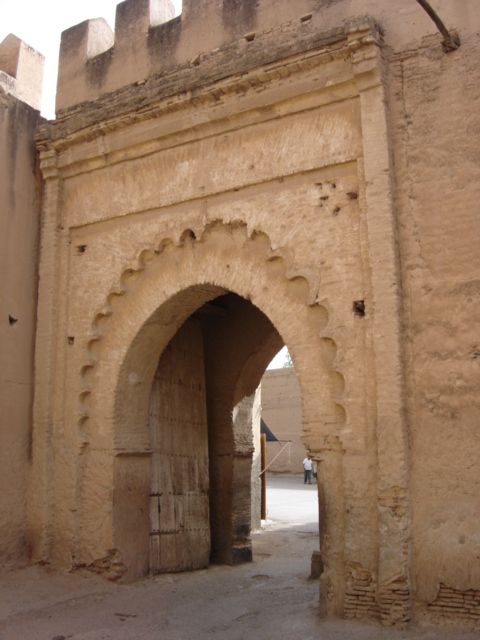
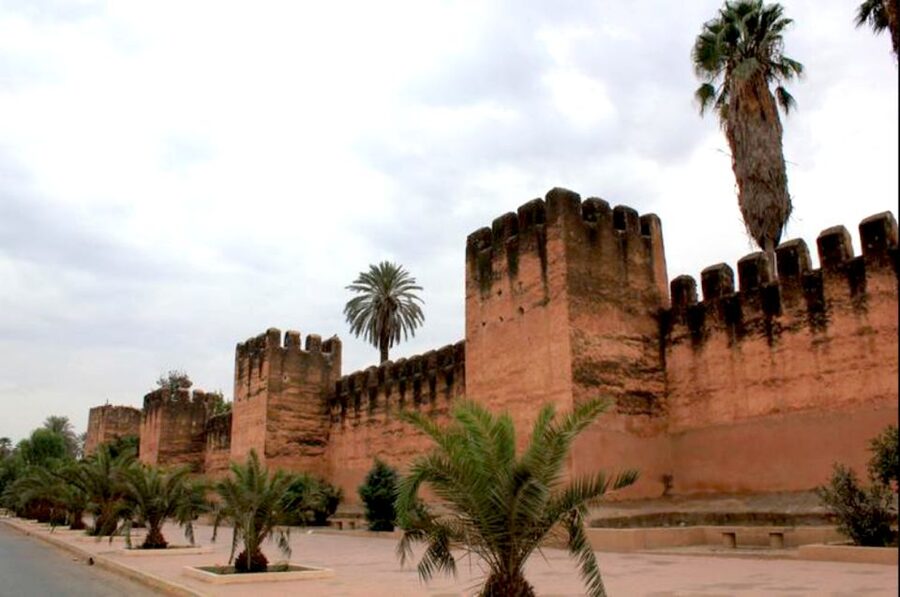
Taroudant’s old defensive walls are the town’s clearest landmark. The red ramparts date to the 11th century, and five monumental gates provide grand entrances through the old town.
The tour may begin with a short stop at one of the main gates, followed by an intramural walk through the old streets. Do not expect a long archaeological visit or a formal museum tour. The appeal is the combination of walls, street life, and the way the old town still functions as a place where people shop and meet.
The ramparts are especially useful for getting your bearings. Once you pass inside, Taroudant becomes a town of lanes, stalls, squares, and small displays rather than a list of isolated monuments. I find that more rewarding than racing from one famous building to another.
You should also keep the time limit in mind. This is a half-day introduction, not a full historical study of Taroudant. A brief gate stop may feel too quick if old architecture is your main reason for coming. If the souks and everyday town life interest you more, the short format works better.
Same city gate, a very different afternoon:
- Agadir or Taghazout: Paradise Valley Atlas Mountains Tour
★ 4.4 · 2,905 reviews - Agadir/Taghazout : Quad Bike Safari Desert
★ 4.8 · 1,496 reviews - From Marrakech: Full-Day Trip to Agadir
★ 4.7 · 1,314 reviews - Agadir/Taghazout: Quad Bike and Sandboarding Tour
★ 4.7 · 1,286 reviews
Walking through Place Assarag and the souks
Place Assarag is the central square and one of the key places to see Taroudant’s public life. From here, the guided walk leads into the market streets and traditional souks.
The shopping area features several products associated with Moroccan craft and agriculture:
- Silver jewelry
- Leather goods
- Engraved limestone
- Saffron and spices
- Argan oil
A guide is useful here, especially if you want to understand what you are seeing rather than simply pass rows of stalls. The walk can also help you get oriented before your free time.
Still, this part needs the right expectations. One departure spent about two hours in the souks at the visitors’ request, while another person found the stall-by-stall walk too long. That tells you something practical: the souk portion can be adjusted in feel, but you should make your preferences clear at the start.
If you want time to browse independently, say so. If you want explanations about silver, saffron, or Argan oil, ask for them. The guide may otherwise keep the pace focused on the market route.
The souks are not simply a shopping stop. They show how Taroudant connects farming, craft, and daily commerce. A bottle of Argan oil, a spice display, or a leather item makes more sense when you have just driven through the valley where some of these products originate.
Brunch, mint tea, and an important food warning
The planned welcome brunch consists of freshly squeezed orange juice, Moroccan pastries, and mint tea. On paper, this is a pleasant introduction to the region’s flavors, and the orange juice fits naturally with the citrus-growing valley.
There is one firm exception: brunch is not available during Ramadan. More broadly, the snack has not appeared on every departure, and at least one local guide was unaware that it was included. The food may therefore be the least dependable part of the experience.
Lunch is not included, and the inclusions and exclusions are somewhat confusing because brunch is described as part of the visit while also appearing among the items not included. I would not leave Agadir without eating something first, especially if you are taking an early departure. Bring money for drinks and any food you want in Taroudant.
The mint tea before leaving is another pleasant touch when it happens. It gives you a short pause after the market walk and fits the rhythm of the day better than a hurried final transfer.
Guides, timing, and how the day can change
The strongest part of this experience is often the guide. Ilias was praised for being friendly, professional, flexible, and willing to shape the visit around personal interests. Hishan received warm praise for his explanations, safe driving, and the personal feel of a departure with only one party.
That flexibility can be a real advantage. You may be able to spend more time at the walls, keep the souk visit shorter, or ask more questions about Moroccan life. The guide’s language may also affect the experience. The tour is offered in English, French, German, Arabic, Spanish, and Italian.
But flexibility also means the schedule may feel less fixed than you expect. One local guide asked how many hours the group wanted to spend in the town, even though the published plan gave the impression of a set program. Discuss the order of stops and the return time when you meet.
The tour is advertised with courtesy hotel pickup and drop-off. Cruise passengers have a special arrangement: take a taxi from the port to Hotel Argana in Agadir, where the guide waits. The activity ends back at the meeting point. If you are arriving by ship, allow time for that separate taxi ride and make sure Hotel Argana is clear in your plans.
Is $88 a fair price for this experience?
At $88, you are paying for convenience as much as sightseeing. The price covers a half-day Taroudant trip, round-trip transportation, and hotel pickup and drop-off. For someone staying in Agadir without a rental car, that can be worthwhile.
The value is strongest when the tour includes a proper vehicle, a capable guide, and the full route through the valley, walls, square, and souks. The personal attention described on some departures makes the cost easier to accept, particularly when a guide such as Ilias or Hishan adds useful context rather than simply leading you from stall to stall.
The value weakens if the vehicle is only a taxi, the guide joins late, the farm and goat stop disappear, and the promised snack is unavailable. A two-hour souk walk can still be worthwhile, but it is a narrower experience than the full countryside and culture visit suggested by the plan.
I would compare this tour with the cost and effort of arranging your own transport. The organized option removes much of the planning, gives you a local guide, and offers hotel pickup. The tradeoff is less control and a price that feels high if several advertised elements are missing.
Who should book this Taroudant trip?
I would recommend it to you if:
- You have only a few days in Agadir.
- You want a first look at traditional southern Moroccan town life.
- You prefer a guided market visit to figuring out the souks alone.
- You want mountain and farm scenery without committing to a full-day trip.
- You value hotel pickup and the chance to ask a local guide questions.
- You are comfortable with a flexible schedule.
I would be more cautious if you are mainly interested in seeing goats in Argan trees, because that stop is not guaranteed. I would also hesitate if the brunch is essential, since it may be unavailable during Ramadan or absent on the day.
Before booking, confirm three things: the vehicle type, whether brunch is operating, and the planned length of the Taroudant visit. Those questions will tell you whether you are buying a full half-day excursion or mostly a transfer and guided souk walk.
Should you book it?
Yes, if you want an easy introduction to Taroudant and you value a guide who can make the town feel personal. The red ramparts, five gates, Place Assarag, agricultural valley, and traditional souks offer a good mix for a short outing.
I would book only after confirming the details that have caused confusion: transport, brunch, and timing. With a strong guide such as Ilias or Hishan, this can be a warm and useful glimpse of Morocco beyond Agadir. Without those details, $88 is a gamble.
FAQ
How long is the Taroudant tour?
It is described as a half-day tour from Agadir.
What is included in the tour?
The tour includes the half-day visit to Taroudant, courtesy hotel pickup and drop-off, and round-trip transportation by coach or minibus.
Is lunch included?
No. Lunch is not included.
Is brunch included?
A welcome brunch of orange juice, Moroccan pastries, and mint tea is described, but it is not available during Ramadan. The snack has also not taken place on every departure, so confirm it before booking.
What can I see in Taroudant?
You can see the 11th-century red ramparts, five monumental gates, Place Assarag, the old streets, and the traditional souks.
What products are sold in the souks?
The souks feature silver jewelry, leather, engraved limestone, saffron, spices, and Argan oil.
What languages are available?
The tour is offered in English, French, German, Arabic, Spanish, and Italian.
Where do cruise passengers meet the guide?
Cruise passengers should take a taxi from the port to Hotel Argana in Agadir, where the guide waits. The activity ends back at the meeting point.
Just listed around Agadir
- Sandboarding guided experience from Agadir&Taghazout★ 5.0 · 39 reviews
- Agadir Jeep Safari Desert Day Trip including Lunch & camel ride★ 5.0 · 24 reviews
- Jeep 4×4 Safari Desert Dunes & Atlantic Ocean with Berber Lunch★ 4.5 · 45 reviews
- boat trip from 9 am to 3 pm fishing & swimming & barbecue & dessert★ 4.0 · 36 reviews
- Agadir airport Transfers to or from agadir hotels★ 5.0 · 66 reviews
- Visit Taroudant and Tiout 1 day From Agadir★ 4.5 · 24 reviews
- Buggy cfmoto 1000 in Agadir★ 4.5 · 40 reviews
- Trip To Croco Park★ 4.5 · 66 reviews
Half-Day, compared.

Half-Day Cooking Class with Local Chef Laila in Marrakech
Read our review →
Highlights of Marrakech: Private Half-Day City Tour
Read our review →
Agafay: Half-Day Rocky Desert Quad & Camel Ride with Lunch
Read our review →