
Reviewed · 3-HOUR EXPERIENCES
Marrakech: 3-Hour Open-Air Moroccan Cooking Course
Moroccan lunch starts at the spice table. This cooking course gives you a hands-on way to understand the country’s food, from ras el hanout and preserved lemon to the sweet and salty balance of a proper tagine. I like the small group size, capped at eight, and the setting inside the elegant 14th-century Riyad El Cadi.
I also like that you eat what you prepare, with lunch served in the peaceful courtyard or on the rooftop. Chef Hassan has earned praise for his friendly instruction, while the staff help make the session relaxed rather than formal. The main point to consider is timing: the experience is advertised as three hours in its title but described elsewhere as a four-hour course, so allow most of a half-day.
In This Review
- Key points at a glance
- Meeting your guide near Jemaa el Fna
- Tea, spices, and the first look at the kitchen
- Making tagine over the fire
- Moroccan salads are part of the lesson
- Lunch in the courtyard or on the roof
- Is $88 a good value?
- The guide makes the difference
- The pace, heat, and practical limits
- Who will enjoy this class most?
- Should you book the Marrakech cooking course?
- FAQ
- How long does the cooking course last?
- Where is pickup arranged?
- What languages are offered?
- What food will I prepare?
- Are vegetarian, vegan, or gluten-free options available?
- Is wine included in the price?
Key points at a glance
- Cook a full Moroccan meal: Prepare a tagine, several Moroccan salads, and other dishes under the head chef’s direction.
- Work in a historic riad: The kitchen and dining areas are set within Riyad El Cadi, a 14th-century property with a courtyard and rooftop.
- Learn the food traditions: See how preserved lemon, rose water, ras el hanout, and fresh ingredients shape Moroccan cooking.
- Keep the group small: With two to eight participants, you should have a fair chance to ask questions and take part in the preparation.
- Finish with a proper meal: Lunch includes your cooked dishes, mineral water, and tea or coffee. Wine and beer are available for an extra charge.
- Choose a suitable menu: Vegetarian, vegan, and gluten-free options can be arranged, and children up to age 13 may join at a reduced price.
Meeting your guide near Jemaa el Fna
The day begins with pickup at Café de France on Jemaa el Fna, generally between 10:45 and 11:00 in the morning. You should call ahead to confirm the exact pickup time. The cooking session begins at 11:00, with a second start time at 16:30 during summer.
This pickup arrangement is useful because Marrakech’s medina can be confusing, especially if you are still learning its lanes. The activity information also gives Riyad El Cadi at 87 Derb Moulay Abdul Kader as the meeting location, so confirm whether you are being collected at Café de France or meeting directly at the riad. That small check can save you from wandering around with a map and a hungry stomach.
An employee guides you from the square to the riad. That transition is part of the appeal. Jemaa el Fna is loud, crowded, and full of movement. Riyad El Cadi offers a much calmer setting once you pass inside. You move quickly from the public theater of the square into a private courtyard where the focus turns to food.
The group size ranges from two to eight people. If only two people book, the session can feel almost like a private lesson. The reviews describe a couple working closely with Chef Hassan, asking questions as they chopped, marinated, added spices, and watched the dishes come together. With eight people, the atmosphere should be more social, though you may share tasks rather than handle every part of every dish.
A few more Marrakech runs to hold up against each other
- Marrakech Monuments & Souks 3-Hour Tour
★ 3.8 · 1,540 reviews - Marrakech: 3H Traditional Hammam & Massage & Hotel Transfer
★ 3.9 · 1,262 reviews - 3h Private Sidecar Ride / Secrets of Marrakech
★ 5.0 · 478 reviews
Tea, spices, and the first look at the kitchen
At the riad, the head chef welcomes you with Moroccan mint tea. This is not just a drink to fill time before the cooking starts. In Morocco, tea is part of the welcome, and the pause gives you a chance to settle in before the practical work begins.
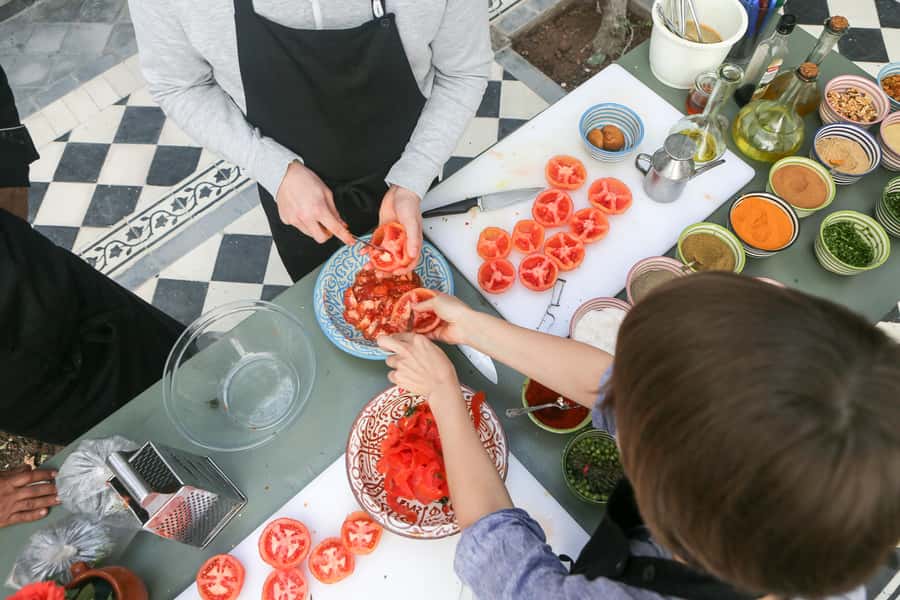
The ingredients are prepared for the class, then the chef explains what you will cook and how the dishes fit into a Moroccan meal. Expect the lesson to focus on ingredients and technique rather than on a long demonstration you simply watch. You should be chopping, mixing, seasoning, and helping with the cooking under instruction.
The course places particular attention on flavors that may be unfamiliar if you mainly cook European or North American food. Preserved lemon brings a salty, sharp citrus note. Rose water adds a floral touch when used carefully. Ras el hanout provides a complex spice blend, but the point is not simply to sprinkle exotic spices into a pot and hope for the best. You learn how Moroccan cooking brings sweet, savory, salty, and aromatic flavors into balance.
That is the real value of a cooking class here. A restaurant meal can show you what Moroccan food tastes like. This course explains why it tastes that way and gives you recipes to try after returning home.
Making tagine over the fire
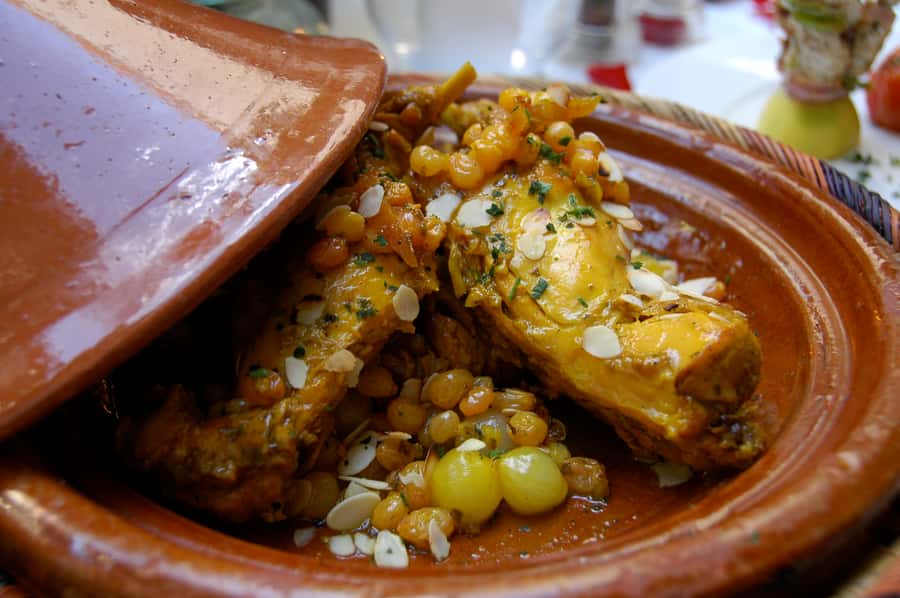
The centerpiece is the tagine, the slow-cooked dish served in a distinctive earthenware pot. The precise menu can vary, but the cooking examples include lamb tagine, chicken with preserved lemons, and a vegetable tagine. The class also includes three Moroccan salads, which usually form the opening course of a Moroccan meal.
The tagine takes time, so you prepare the salads while it cooks over the fire. That rhythm is important. Moroccan cooking is often built around patience, careful seasoning, and letting ingredients soften together. This is not a class where everything is finished in ten minutes and plated before you have learned anything.
The reviews describe participants marinating chicken, preparing a vegetable tagine, chopping ingredients, and adding spices with guidance from Chef Hassan. His style appears to be friendly and encouraging. You should feel free to ask questions, especially if you want to understand how a dish might be adapted for your own kitchen.
The class is suitable for several dietary needs, with vegetarian, vegan, and gluten-free versions available. Tell the provider about your requirements when booking, rather than waiting until the cooking begins. If you are traveling with children, those up to age 13 are welcome at a reduced price, though the minimum booking requires two participants over age 14.
One practical point: the word open-air may suggest a fully outdoor class, but the information describes a courtyard kitchen within the riad. Expect an airy, open courtyard setting rather than a cooking school with a large commercial kitchen.
Moroccan salads are part of the lesson
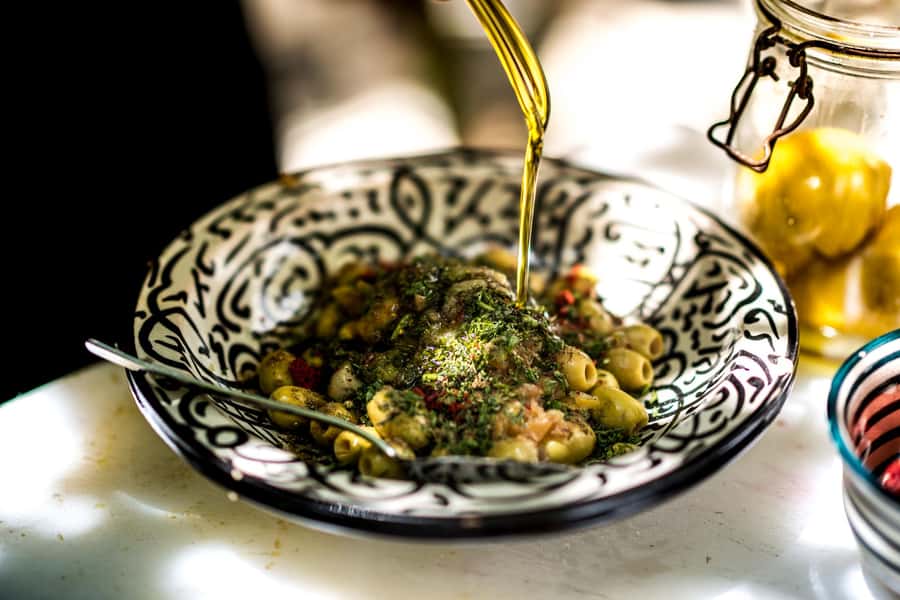
The salads add variety to the meal and show how much flavor Moroccan cooking can produce from simple ingredients. They are described as a selection of three salads, served as the prelude to the main meal.
This part of the class may be especially useful for home cooks. Tagine requires time and a suitable pot, but Moroccan salads are often easier to repeat at home. You learn how side dishes help balance a slow-cooked main course and how a meal can include several small preparations rather than one large centerpiece.
I would pay close attention to seasoning here. The course is designed to explain the relationship between sweet and savory flavors, and these smaller dishes give you a chance to taste that balance before the tagine arrives. You may also find that the salads make the meal feel more complete than a single stew served with bread.
Because the menu can change, you should not book expecting one guaranteed combination of lamb, chicken, and vegetables. The available examples show the kind of food you may prepare, but the actual dishes depend on the class and your dietary choices.
Same city gate, a very different afternoon:
- Marrakech: Agafay Desert Sunset, Camel Ride, and Dinner Show
★ 4.6 · 35,119 reviews - From Marrakech: Ouzoud Waterfalls Guided Hike and Boat Trip
★ 4.7 · 33,630 reviews - Marrakech: Agafay Desert Quad & Camel Rides with Dinner Show
★ 4.8 · 27,382 reviews - Marrakech: Agafay Desert Quad Biking Tour with Dinner-Show
★ 4.8 · 16,569 reviews
Lunch in the courtyard or on the roof
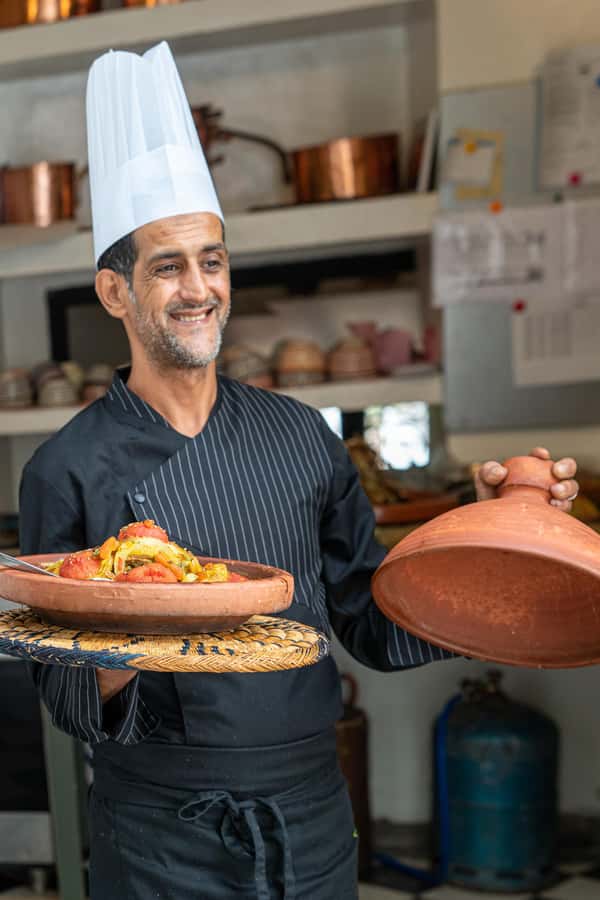
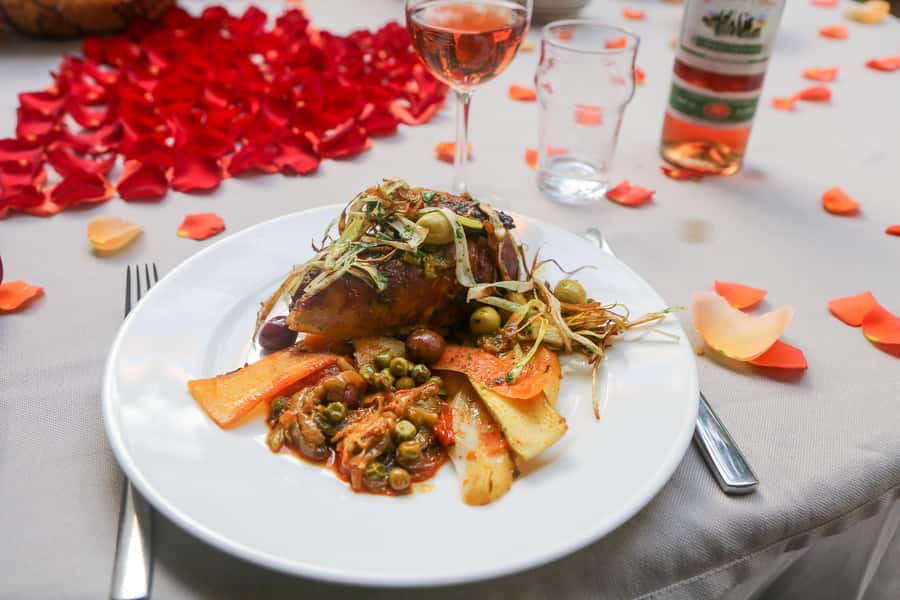
Once the cooking is finished, you sit down to eat the meal you helped prepare. Lunch is served in the riad’s courtyard or, if you prefer, on the rooftop terrace. The setting is a major part of the experience. Rather than rushing away after the final demonstration, you have time to enjoy the food in a quiet place.
The reviews describe lunch at a beautiful garden table, with the prepared dishes brought out after the cooking session. That service gives the class a pleasant change of pace. You do the work in the kitchen, then sit back while the meal is presented.
Mineral water is included, as are tea or coffee at the end. Moroccan mint tea is the natural choice, but coffee is available if that suits you better. Wine and beer can be ordered for an additional charge. Alcohol is not included in the $88 price, so budget extra if a glass of Moroccan wine is part of your plan.
The food itself receives the strongest praise. The descriptions repeatedly point to delicious dishes, a memorable meal, and a relaxed atmosphere. That matters because a cooking course can be informative but disappointing if the final food is an afterthought. Here, lunch is treated as the payoff for the work you have done.
Is $88 a good value?
At $88 per person, this is not the cheapest lunch in Marrakech. You can eat well in the medina for far less. The price makes more sense if you value the instruction, the riad setting, the recipes, the drinks included at the end, and the time spent with a small group.
The fee covers the cooking course, lunch, mineral water, tea or coffee, English or German recipes, and pickup from Jemaa el Fna Plaza. Wine, beer, and pool access cost extra. For a visitor who wants only a meal, the course is poor value. For someone who wants to learn how Moroccan food works and recreate it at home, it is easier to justify.
The recipes are an important part of the deal. You leave with written instructions in English or German, which gives the experience a life beyond one afternoon in Marrakech. A cooking class is most useful when you can repeat at least part of it later, and the included recipes help with that.
The small group also supports the price. A class limited to eight people should give you more direct attention than a large demonstration. If the booking has only two people, the lesson may feel particularly personal. The provider can request a different date if availability changes, so keep some flexibility in your schedule.
The guide makes the difference
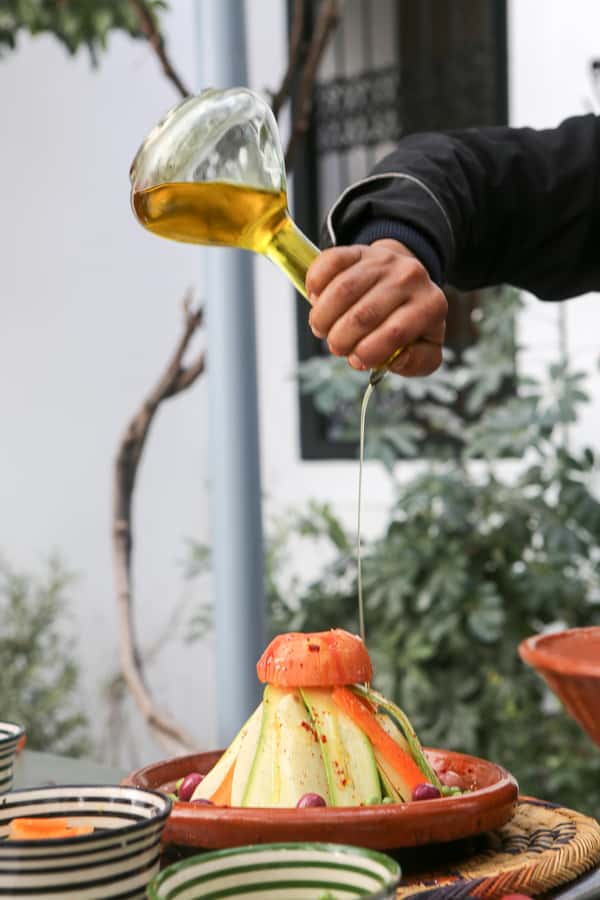
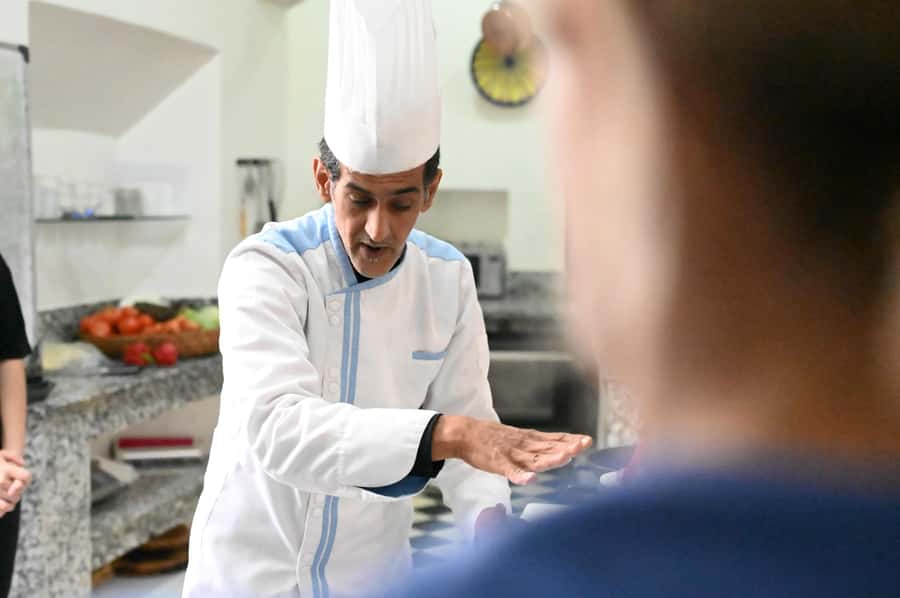
Chef Hassan receives the clearest praise. He is described as experienced, friendly, humorous, and willing to answer questions. Those traits matter more here than a polished performance. You need a teacher who can explain why you are doing something, not just tell you where to put the onions.
The cooking is conducted in English or French. If you are comfortable in either language, you should be able to follow the lesson and ask about ingredients or methods. Recipes are available in English or German, which is useful if you want a written reference after the class.
The provider is Riyad El Cadi, and the staff appear to be involved from the initial pickup through the meal. A member of the team guides you from the square, the chef leads the lesson, and the meal is served afterward. That continuity helps the experience feel organized without making it feel industrial.
One account also refers to an additional walk through parts of the market. The core details provided for this experience focus on the cooking class, so you should not treat a market visit as guaranteed. If it is offered on your day, it can add useful context by showing where ingredients and cooking traditions meet. Ask about it when you confirm the pickup.
The pace, heat, and practical limits
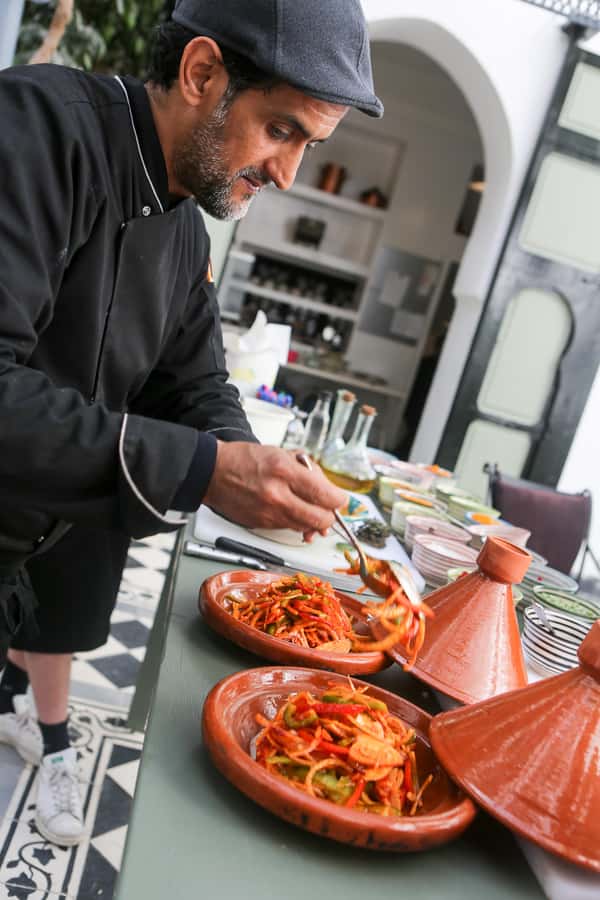
The course lasts about four hours according to the activity details, despite the three-hour wording in the title. Plan your day around a half-day commitment. The morning start is convenient if you want lunch after the class, while the summer afternoon start at 16:30 may suit you better if you prefer a later meal.
Cooking over a fire and working in a courtyard can be warm, especially in Marrakech during summer. The schedule may be more comfortable in the morning, though the available start time depends on the date. July, August, and September also offer a separate cook and swim experience if you want pool time before or after class. Pool access is not included in this booking.
The course is not suitable for wheelchair users. The riad setting, medina access, and cooking area may involve narrow or uneven passages. If mobility is a concern, contact the provider before paying.
Free cancellation is available up to 24 hours in advance, and you can reserve now and pay later. These policies help if your Marrakech schedule is still changing, but the booking remains dependent on availability. The provider may ask you to accept another date and time if needed.
Who will enjoy this class most?
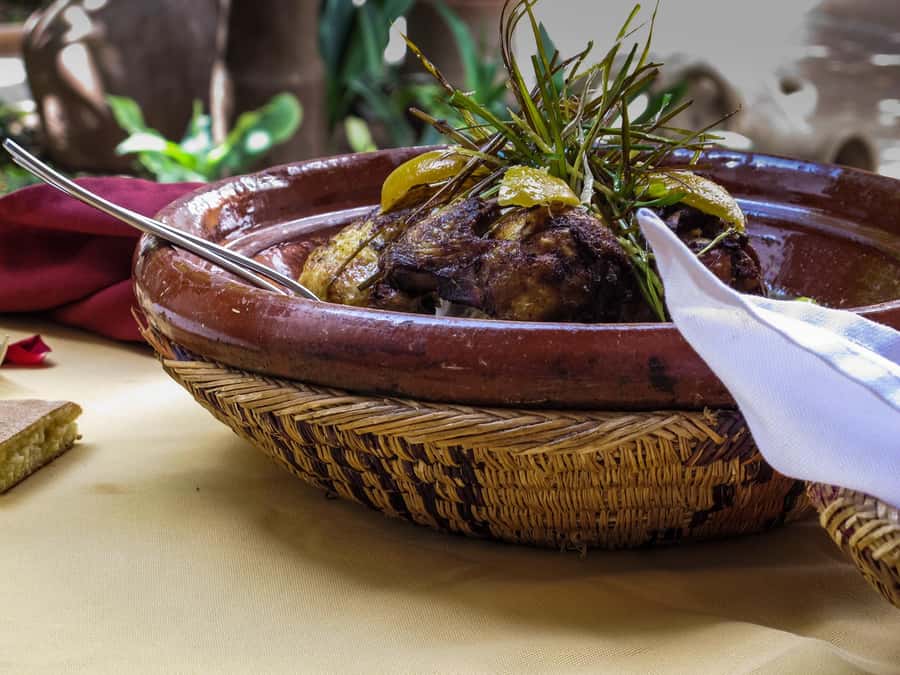
I would recommend it to anyone who plans to eat several Moroccan meals in Marrakech and wants to understand them better. It is also a good choice for home cooks, couples, small families, and people who prefer a quiet cultural activity to another guided walk through the medina.
The class suits people who like to participate. If you would rather sit at a restaurant and let someone else do the work, this may feel too long. You will spend time chopping, seasoning, preparing salads, and waiting for the tagine to cook.
It is also a strong fit for people with dietary preferences, since vegetarian, vegan, and gluten-free menus can be arranged. Families should check the reduced child price and confirm the menu in advance. Wine drinkers should remember that alcohol is available but not included.
I would be less likely to recommend it to someone with a tight schedule, limited mobility, or little interest in cooking. The class is not simply a quick lesson followed by a snack. It takes most of a morning or afternoon and asks you to give the food your attention.
Should you book the Marrakech cooking course?
Book it if you want more than a photograph of a tagine. The small group, calm riad setting, practical instruction, recipes, and shared lunch make this a useful cultural experience rather than a staged food demonstration.
The strongest reasons to go are Chef Hassan’s warm teaching style, the chance to prepare several dishes, and the meal served in the courtyard or on the roof. The main cautions are the unclear three-hour versus four-hour duration, extra charges for alcohol and pool access, the need to confirm pickup, and the lack of wheelchair access.
At $88, you pay for instruction and atmosphere as much as for food. If that sounds worthwhile, this is a good way to spend a half-day in Marrakech and return home with a better grasp of preserved lemon, Moroccan spice blends, slow-cooked tagine, and the pleasures of eating several small dishes together.
FAQ
How long does the cooking course last?
The activity details describe a four-hour experience, although the title refers to three hours. Plan to spend about half a day at the riad.
Where is pickup arranged?
Pickup is listed at Café de France on Jemaa el Fna Plaza, generally between 10:45 and 11:00 for the morning class. You should call ahead to confirm the time.
What languages are offered?
The instructor speaks English and French. Recipes are provided in English or German.
What food will I prepare?
The menu may include a Moroccan tagine, such as lamb, chicken with preserved lemon, or a vegetable version, along with three Moroccan salads. The dishes can vary according to the class and dietary requirements.
Are vegetarian, vegan, or gluten-free options available?
Yes. Vegetarian, vegan, and gluten-free options can be arranged. Tell the provider about your needs when booking.
Is wine included in the price?
No. Mineral water and tea or coffee at the end are included. Wine, beer, and other alcoholic drinks are available for an additional charge.
Just listed around Marrakech
- 3 Days To Merzouga Desert★ 5.0 · 19 reviews
- 3 Days Shared Sahara Desert Tour From Marrakech★ 5.0 · 78 reviews
- 3 Days Sahara Tour from Marrakech to Merzouga Dunes★ 5.0 · 29 reviews
- 1 night Camel Treking in Merzouga Desert Luxury Camp★ 5.0 · 132 reviews
- 3 Days Sahara Desert Trips From Marrakesh★ 5.0 · 176 reviews
- trip of your dreams in 3 days and 2 nights in the desert★ 5.0 · 36 reviews
- 3 Days Private Tour to Merzouga Desert from Marrakech★ 5.0 · 77 reviews
- 3 Day Sahara Desert Tour From Marrakech★ 5.0 · 49 reviews
3-Hour Experiences, compared.
3H Traditional Hammam & Massage & Hotel Transfer
Read our review →
3h Private Sidecar Ride / Secrets of Marrakech
Read our review →


3h Private Walking Tour in Tangier Kasbah Medina & Colorful Souks
Read our review →
3-Hour Monuments, Souks & Old Medina Walking Tour
Read our review →Browse the lists this tour appears in