
Reviewed · PALM GROVE TOURS
Marrakech: Cycling Tour in Palm Groove with Local Breakfast
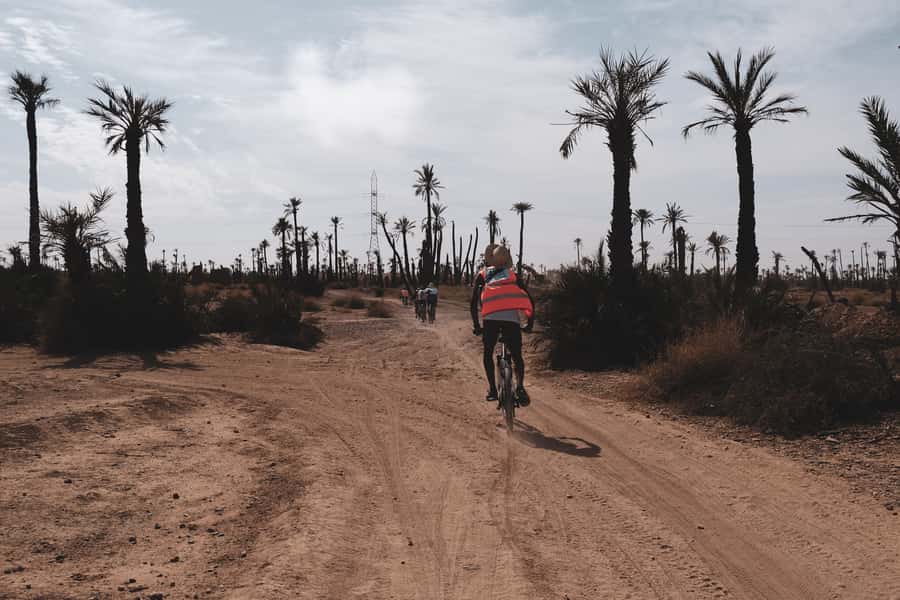
The best Marrakech rides leave the city behind. This 150-minute outing takes you from the Medina to the Palmeraie, where young local guides lead you past grand villas, village lanes, palm trees, and working craft shops. I especially like the small-group feel of a local-led ride and the generous breakfast stop with bread, butter, olive oil, tea, or juice. The main thing to consider is the ride through the Medina, which can feel tricky until you get used to the traffic and narrow streets.
I also like that this is not just a bike ride with scenery added on. You learn how water reaches the oasis, why palm trees matter to the community, how bread is baked in a village oven, and how Moroccan zellige tiles are made. The 17-kilometer route is mostly gentle and flat, but you should be comfortable riding in busy urban streets.
In This Review
- Key points at a glance
- From Marrakech’s Medina to the Palmeraie
- Grand villas beside village paths
- Breakfast at Aziz’s atelier
- Water, palms, and the old oasis system
- Bread baking in a village oven
- Zellige tiles in tiny workshops
- What the $34 price includes
- Who should book this ride?
- Should you book the Palmeraie cycling tour?
- FAQ
- Where does the cycling tour meet?
- How long does the experience last?
- What languages are available?
- Is breakfast included?
- Is the Water Museum included?
- Can I cancel for a refund?
Key points at a glance
- A 17-kilometer route from the Medina to the Palmeraie: The ride begins in central Marrakech, then moves from city traffic to quiet oasis roads and small villages.
- A real Moroccan breakfast with Aziz: Stop for fresh bread, butter, olive oil, tea or juice, and pastries in a peaceful local setting.
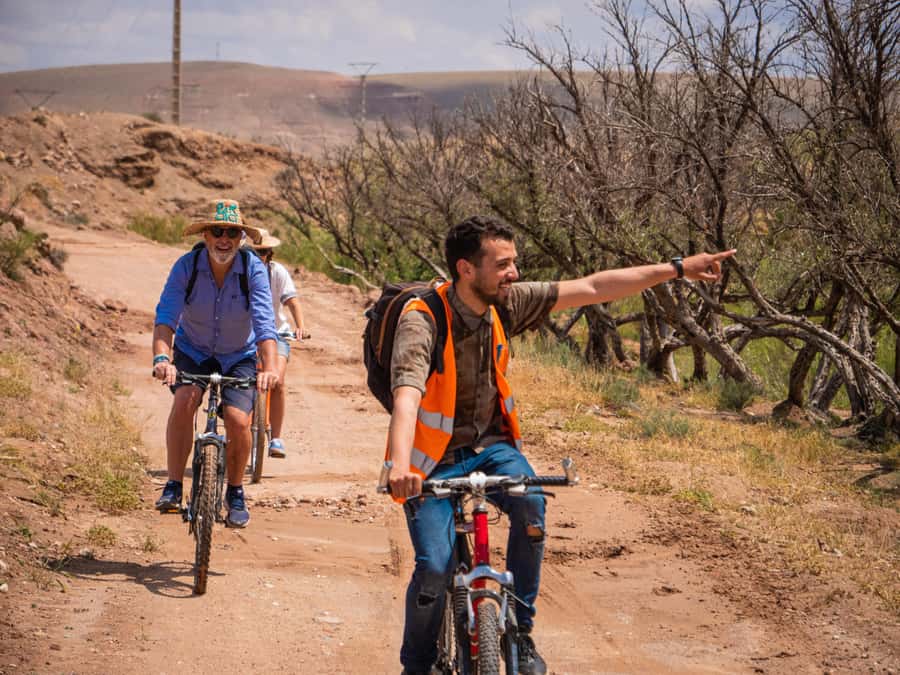
- Young guides who explain daily life: Guides such as Ahmed, Yassim, Ayoub, and Khawla have been praised for their patience, care, and clear explanations.
- Old irrigation methods still matter: You learn how people manage precious water in the palm oasis and why the system has shaped village life.
- Bread baking and zellige workshops: Visit a local oven and small tile ateliers to see two important Moroccan crafts up close.
- Good value at $34 per person: Bikes, water, suncream, drinks, pastries, and guiding are included, but transport and the Water Museum are not.
From Marrakech’s Medina to the Palmeraie
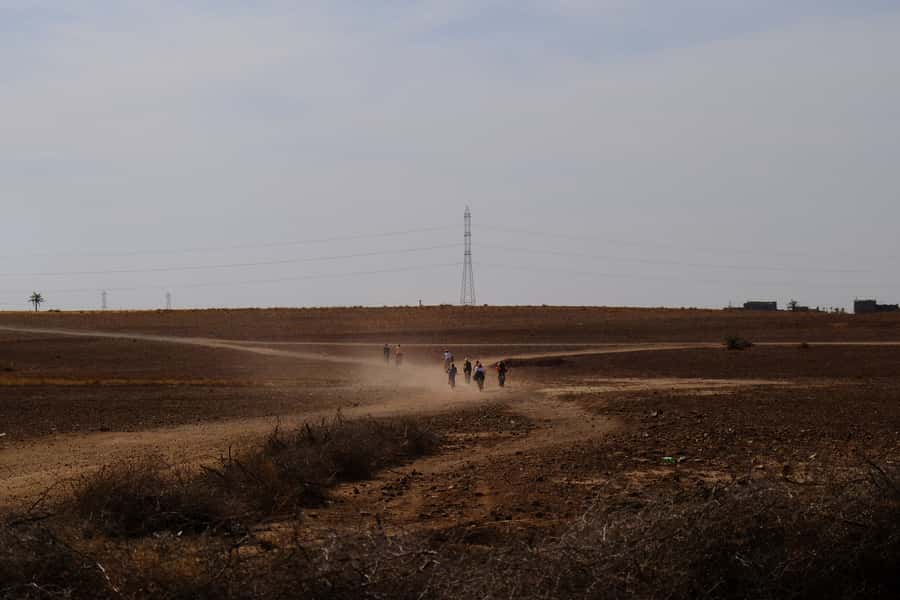
This ride starts at the Pikala Bikes headquarters. You cycle for about 15 minutes from the city center before reaching the palm oasis, so the opening section is part city crossing, part warm-up.
That first stretch deserves a little respect. The Medina can be crowded, and cycling through its narrow streets takes attention. Helen, who rode with her daughter, found this part nerve-racking at first but soon felt in control with help from her guide. Sarah had a similar experience and said the guides offered useful tips while getting riders safely out of the city.
You do not need to be a racing cyclist. The route is described as a gentle, mostly flat 17-kilometer ride. Still, you should feel comfortable using a bicycle around pedestrians, changing traffic, and tight streets. If you have not cycled for years, the Medina section may be the hardest part of the outing. Once you reach the oasis, the pace becomes easier.
The bikes themselves have earned praise from riders who cycle regularly at home. Water and suncream are included, which is helpful in a warm, bright setting. The tour is led in English or French, and the young guides are a major part of its appeal. Ahmed was praised for his patience and careful attention to safety, while Yassim was singled out for sharing stories about the area and his experience growing up in Morocco.
More palm grove rides in Marrakech:
- Marrakech Quad Bike Experience: Desert and Palmeraie
★ 4.5 · 9,509 reviews - Marrakech: Dunes of the Palmeraie Quad Bike Ride with Tea
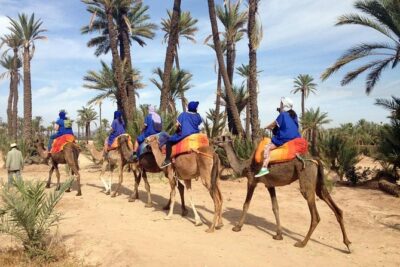
★ 4.8 · 5,112 reviews - Marrakech: Camel Ride in the Oasis Palmeraie
★ 4.6 · 4,883 reviews
Grand villas beside village paths
The first big surprise is the sharp change in surroundings. The route passes luxurious villas and large private compounds before turning onto off-road paths through the Palmeraie.
This contrast tells you something important about Marrakech. The palm oasis is not simply a scenic belt for hotel pools and luxury homes. People still live and work in small villages among the palms, using local skills and old systems that have allowed communities to survive in a dry setting.
I like this part because the guide gives the scenery a human meaning. Instead of simply pointing out palm trees, the tour explains their value to the oasis and the role they play in local culture. You see an area where modern wealth and traditional village life exist side by side, sometimes just a few minutes apart.
The route is not presented as a polished sightseeing circuit. You follow smaller roads and paths into the heart of the oasis, where the surroundings feel quieter and less formal. That makes the ride more revealing than a quick drive past the Palmeraie. You are moving at a speed that lets you notice walls, palms, village workshops, and changing ground under your wheels.
The trade-off is that off-track riding can be less smooth than a normal city road. The supplied information does not describe the exact surface at every point, so expect a varied route rather than a perfectly paved cycleway. Sensible shoes and clothes are a better choice than anything delicate.
Breakfast at Aziz’s atelier
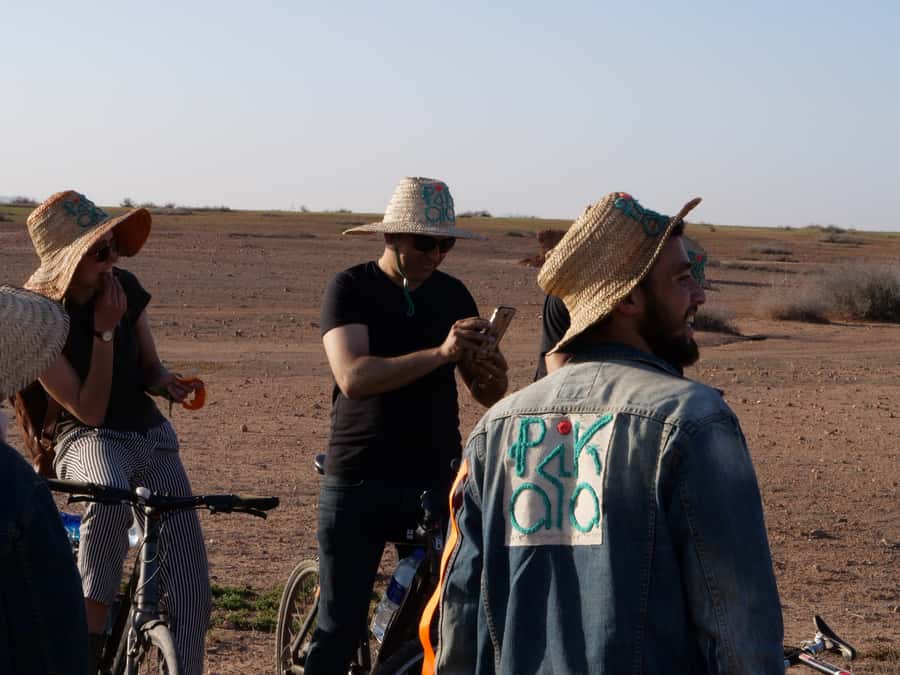
The food stop with Aziz is one of the strongest parts of the experience. In his atelier, you share fresh bread with butter and olive oil, along with Moroccan pastries and tea or juice.
This is called breakfast, but you should think of it as a generous snack and cultural stop rather than a full restaurant meal. The exact selection may vary, but the listed food includes bread, butter, olive oil, and pastries. Gary described a stop with bread, olives, and tea, while other details mention fresh bread and drinks at Aziz’s place.
The setting matters as much as the food. You pause in a peaceful local space, hear Aziz’s stories, and get a break from the physical effort of the ride. It is a simple meal, but it offers a better sense of Moroccan hospitality than a hurried cafe stop in the city.
You may also appreciate the way the stop slows down the morning. Marrakech sightseeing can become a parade of souks, monuments, and motorbikes. Here, you sit, eat, listen, and then continue by bicycle. That change of pace is part of the value.
If you need a substantial breakfast, eat something before meeting the group. The provided meal is not advertised as a large buffet or full lunch. It is best viewed as a local tasting stop included in the tour price.
Water, palms, and the old oasis system
After breakfast, the guide explains how water reaches the oasis. The tour includes a visit to an old irrigation water system, showing how the community has managed a scarce resource in difficult geographic conditions.
This is an important lesson because the Palmeraie does not exist by accident. Palm trees, villages, and gardens depend on water being moved and shared. The guide connects the old system to the present, explaining why water remains precious and how local life has adapted around it.
You will not just hear general facts about Morocco. The focus is this particular oasis and the way people live within it. That local scale makes the information easier to understand. The palms are not merely background scenery. They are tied to the identity and survival of the community.
The Water Museum is not included. If that museum is important to you, note that this experience only visits the old irrigation system and does not cover museum admission. The tour is better suited to someone who wants a short, practical introduction to water management than to someone seeking a full technical study.
The young guides also add a personal angle. Khawla has been praised for explaining culture and architecture with enthusiasm, while other guides have shared stories about their own lives and upbringing. That gives the ride warmth without turning it into a formal classroom.
A few more Marrakech runs to hold up against each other
- Cycling Adventure in Marrakech
★ 5.0 · 289 reviews - Dutch Bike Tour in Marrakech with Local Guide
★ 4.7 · 269 reviews - Marrakech:Guided City Cycling Tour – Culture, Colors & Charm
★ 4.7 · 231 reviews - Marrakech: Guided Bike Tour with a local Guide
★ 4.6 · 79 reviews
Bread baking in a village oven
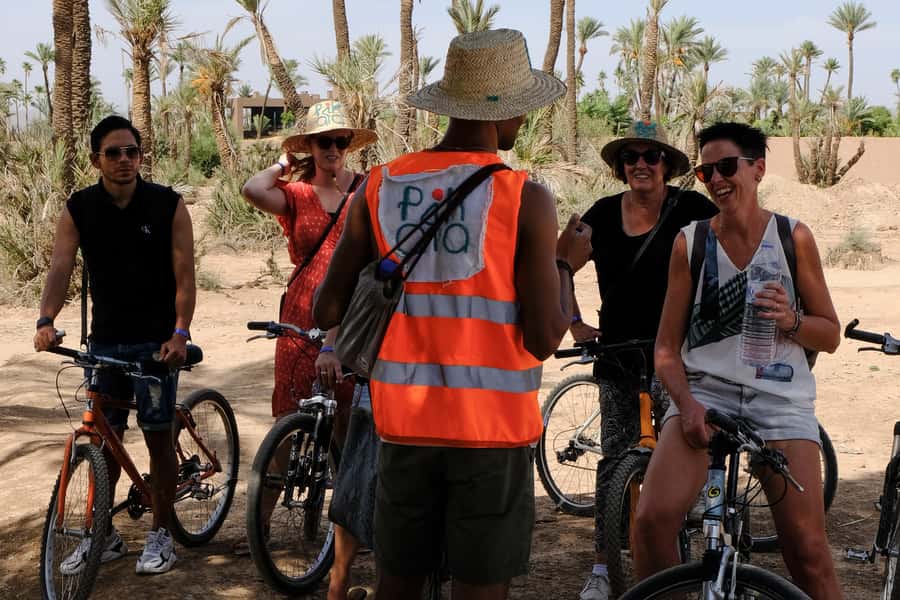
One of the more memorable stops is a local oven where villagers bake bread. You watch the process and learn why bread holds such an important place in Moroccan culture.
Bread is daily food, but the tour shows that it is also connected to family life, work, and community habits. Seeing it made in a village setting helps you understand the meal at Aziz’s atelier. The bread is not an isolated sample prepared for tourists. It is part of a wider tradition that still has a place in village life.
A stop like this is valuable because it reveals work that can easily disappear behind Marrakech’s famous palaces and markets. You get a brief look at a practical skill, carried out in an ordinary local setting.
The information does not promise a hands-on baking class, so do not expect to knead dough or operate the oven. You are there to observe, ask questions, and understand the role of bread. That keeps the visit short enough to fit the two-and-a-half-hour route.
Zellige tiles in tiny workshops
The route also includes stops at small Moroccan tile ateliers. Here, you see the craft of zellige, the colorful geometric tilework associated with Moroccan architecture.
These workshops give the ride another layer. The Palmeraie is not only about agriculture and palms. It also connects you with local making traditions. The guide introduces the work and the people behind it, so you see how Moroccan design is produced rather than simply admiring finished tilework in a palace.
The supplied details do not promise a full demonstration or a chance to make your own tile. The value is in visiting the small ateliers and learning about the craft at close range. If you enjoy architecture, design, or handmade work, this may be one of the most rewarding stops.
Khawla has been praised for explaining culture and architecture, which fits this portion of the ride particularly well. The tile stop also helps you notice details later in Marrakech. After seeing how zellige is made, the patterns in courtyards, fountains, and historic buildings become easier to read.
What the $34 price includes
At $34 per person, this is a strong-value half-day activity if you want more than bicycle hire. You receive a bike, water, suncream, a live guide, tea or juice, Moroccan pastries, and the breakfast stop at Aziz’s atelier.
The price also covers several different kinds of experience: cycling, local stories, village life, irrigation, food, bread baking, and tilemaking. You are not paying only for the route. You are paying for access and explanation that would be difficult to arrange independently in a short visit.
It is also useful that the ride does not rely on a hotel transfer. You meet at the Pikala Bikes headquarters, so you need to make your own way there. Hotel or riad pickup and drop-off are not included. This is a small extra task, but it keeps the price down and gives you more control over when you arrive.
The Water Museum is also outside the included package. If you want a simple bicycle outing with cultural stops, the cost is reasonable. If you expect private transport, museum entry, or a large meal, budget for those separately.
Free cancellation is available up to 24 hours before the start for a full refund, and you can reserve now while paying later. Those terms are useful if your Marrakech plans are still shifting.
Who should book this ride?
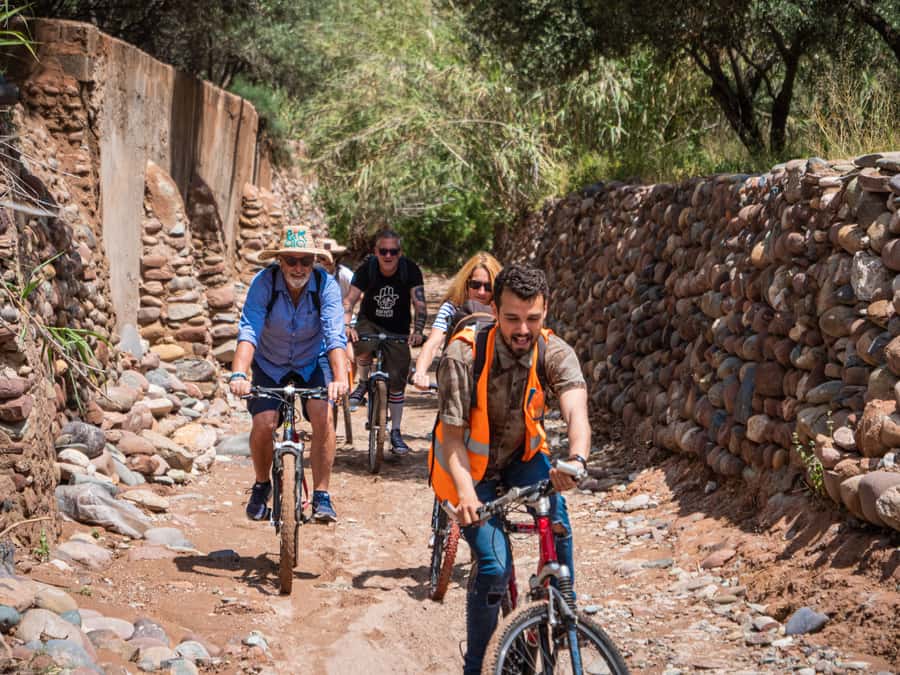
I would choose this tour if you want to see a side of Marrakech beyond the central sights and are happy to use a bicycle as your way around. It suits active couples, families with older children, and solo visitors who enjoy asking questions and meeting local people.
It is especially good for:
- People who want village life and local craft, not only monuments
- Riders looking for a gentle route rather than a demanding cycling challenge
- Visitors interested in water systems, food customs, architecture, or handmade work
- Anyone who likes a guide with a personal connection to the area
- Repeat visitors to Marrakech who have already seen the main Medina sights
You should think carefully if you dislike cycling in traffic or feel uneasy on narrow streets. The guides help, and several riders praised their patience and safety care, but the opening and closing sections still require concentration.
The timing is another consideration. The experience lasts 150 minutes, so it fits neatly into a morning or afternoon. You will not spend a whole day in the Palmeraie, and the stops are introductions rather than long visits. That short format is a benefit if your schedule is full, but it may feel too brief if you want extended time at every workshop.
Should you book the Palmeraie cycling tour?
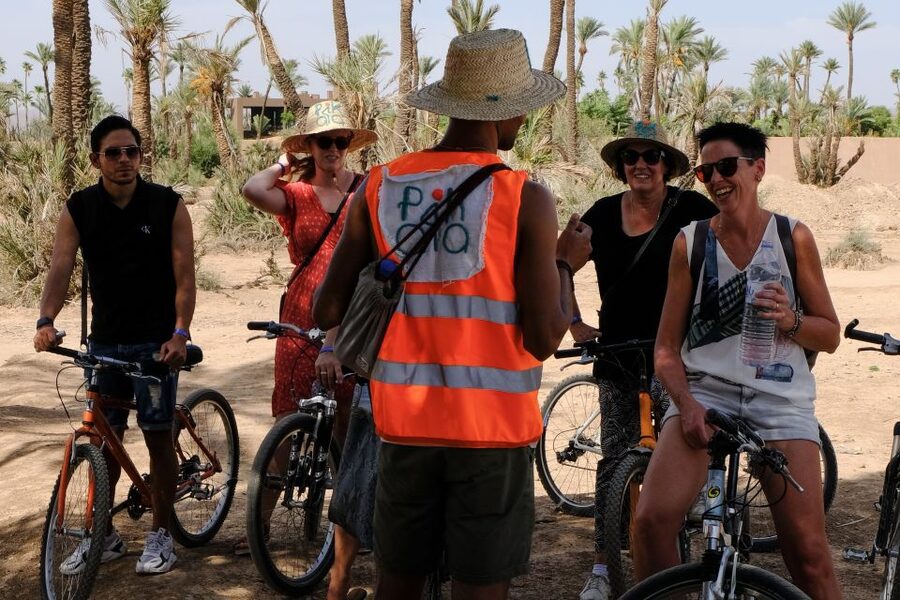
Book it if you want a practical, active introduction to Marrakech’s palm oasis, with food and local culture built into the ride. The strongest reasons are the patient guides, the gentle route once you leave the Medina, the breakfast with Aziz, and the chance to see bread baking, irrigation, and zellige work in one outing.
Skip it if you want a fully paved cycle path, private transport, or a long museum-style tour. The Medina cycling section can be challenging, and the breakfast is modest rather than a full meal.
For $34, I think the balance is very good. You get a bike ride with a clear sense of place, not just a loop around attractive scenery. If you arrive at Pikala Bikes ready for some city traffic and a little dust, this is an easy way to connect Marrakech’s modern edges with the oasis communities that came before them.
FAQ
Where does the cycling tour meet?
You meet at the Pikala Bikes headquarters. Hotel or riad pickup and drop-off are not included.
How long does the experience last?
The tour lasts 150 minutes, or two and a half hours. The ride from the city center toward the Palmeraie takes about 15 minutes.
What languages are available?
The live tour guide speaks English or French.
Is breakfast included?
Yes. The stop at Aziz’s place includes tea or juice, Moroccan pastries, fresh bread, butter, and olive oil. Some tour details also mention olives.
Is the Water Museum included?
No. Visiting the Water Museum is not included in the tour price.
Can I cancel for a refund?
Yes. You can cancel up to 24 hours in advance for a full refund. You can also reserve now and pay later.
Just listed around Marrakech
- 3 Days To Merzouga Desert★ 5.0 · 19 reviews
- 3 Days Shared Sahara Desert Tour From Marrakech★ 5.0 · 78 reviews
- 1 night Camel Treking in Merzouga Desert Luxury Camp★ 5.0 · 132 reviews
- 3 Days Sahara Desert Trips From Marrakesh★ 5.0 · 176 reviews
- 3 Days Sahara Tour from Marrakech to Merzouga Dunes★ 5.0 · 29 reviews
- trip of your dreams in 3 days and 2 nights in the desert★ 5.0 · 36 reviews
- 3 Days Private Tour to Merzouga Desert from Marrakech★ 5.0 · 77 reviews
- 3 Day Sahara Desert Tour From Marrakech★ 5.0 · 49 reviews
Palm Grove Tours, compared.

Marrakech Quad Bike Experience: Desert and Palmeraie
Read our review →
Dunes of the Palmeraie Quad Bike Ride with Tea
Read our review →


Quad activity in the Palmeraie with Tea break
Read our review →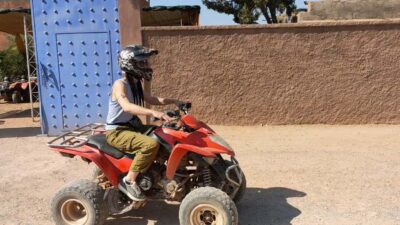

Browse the lists this tour appears in