
Reviewed · DESERT TOURS FROM MARRAKECH
Marrakech Desert Trip Chigaga Dunes Riding Camel Sandboarding
The Sahara feels far away for a reason. This three-day private trip links Marrakech with the remote Erg Chigaga dunes, combining historic kasbahs, High Atlas views, camel riding, sandboarding, and a night in a Berber tent. I like the route because it gives you both Morocco’s cultural side and its open desert. I also like that only your group takes part, which makes the long road journey easier to manage.
The main drawback is the amount of time spent in the vehicle. You will cover long distances on two demanding days, including 60 kilometers of off-road driving toward the dunes and another 90 kilometers across the desert on the return. The 12:00 am start time should be confirmed carefully, since the listing gives midnight rather than a normal morning departure.
In This Review
- Key points before you book
- Is the $557.50 price good value?
- Day one: High Atlas views, Tamnougalt, and Ait-Ben-Haddou
- Day two: Following the Draa Valley toward the Sahara
- Reaching the 300-meter Erg Chigaga dunes
- Day three: Lake Iriqui, fossils, and the long return
- The private format and what it changes
- What to pack and how to prepare
- Who should book this Erg Chigaga trip?
- Should you book it?
- FAQ
- Where does the tour start and end?
- How long does the experience last?
- Is the camel ride included?
- Is sandboarding included?
- What meals are included?
- Can I cancel for a full refund?
Key points before you book
- Erg Chigaga is the main prize: You reach one of Morocco’s more remote dune areas, far from ordinary city traffic and built-up resort zones.
- The camel ride lasts two hours: It takes place near Erg Lihoudi before the off-road journey to Erg Chigaga.
- Sandboarding is included in the desert experience: The tall dunes provide the setting, though the supplied details do not specify how much instruction or equipment is provided.
- You sleep in a Berber tent: Dinner, desert silence, and Berber music around a fire are part of the overnight stay.
- The route includes Ait-Ben-Haddou and Tamnougalt: You get more than a quick desert transfer, with time for two important kasbah stops.
- This is a private tour for your group: That matters on a three-day route with long drives and changing stops.
Is the $557.50 price good value?
At $557.50 per person, this is not a budget bus trip. Still, the price needs to be judged against what is packed into three days: private transport, the Marrakech return journey, visits to the High Atlas and kasbahs, a camel ride, off-road desert travel, a desert camp, breakfast twice, and dinner twice.
Lunch and drinks are not included, and tips are extra. Those costs are easy to overlook, especially on a route where you will need to buy meals during long driving days. You should also keep money available for refreshments and any optional purchases connected with local crafts or carpets.
I see the strongest value in the private format and the remote desert access. Erg Chigaga is not a quick excursion from Marrakech. Reaching it requires a long overland route and a substantial off-road section. If you want a short desert outing, this is too much time and money. If you want the desert to be the central part of your Morocco trip, the cost is easier to justify.
The current rating is 5 out of 5 from 21 ratings, with 100 percent recommending the experience. That is a small sample, so I would not treat it as a guarantee. It does show that the basic combination of desert camping, camel riding, sandboarding, and private transport has been very well received.
More Camel Rides in Marrakech
- Marrakech: Agafay Desert Sunset, Camel Ride, and Dinner Show
★ 4.6 · 35,119 reviews - Marrakech: Agafay Desert Quad & Camel Rides with Dinner Show
★ 4.8 · 27,382 reviews - Marrakech: Agafay Desert Quad & Camel Rides with Dinner Show
★ 4.9 · 10,771 reviews
Day one: High Atlas views, Tamnougalt, and Ait-Ben-Haddou
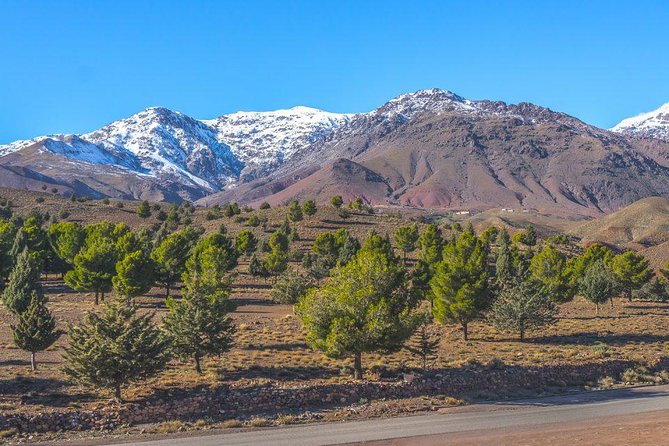
The first day moves you out of Marrakech and into the High Atlas Mountains. The mountain stop is listed as 15 minutes, so think of it as a short viewpoint or orientation pause rather than a hike. It gives you a useful change of scale: Marrakech is quickly replaced by mountain roads and wide Moroccan scenery.
The itinerary also includes Tamnougalt, with about 30 minutes to visit its kasbah. That is a brief stop, but it adds an important piece of context. Kasbahs were not simply decorative buildings. They were fortified settlements connected with local communities, trade, and life along the oasis routes.
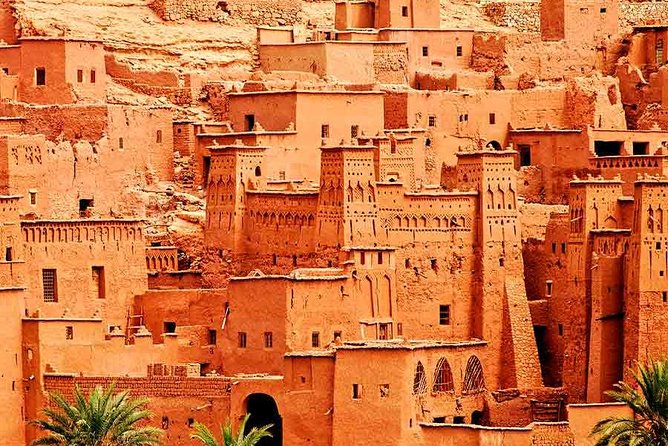
Your longer cultural stop is Ait-Ben-Haddou, with about one hour scheduled there. This is one of Morocco’s best-known earthen kasbah settlements, and its compact, fortified form makes it easy to understand why the site is so often included on routes across southern Morocco. One hour is enough to see the main setting and walk through part of it, but not enough for a slow, detailed visit.
That tight timing is worth noting. The first day gives you a broad introduction rather than a leisurely architectural tour. You will see two kasbah areas, but the real focus is getting you farther south toward the desert.
The road itself is part of the experience. You move from Marrakech’s urban streets through mountain country and toward the old caravan routes of southern Morocco. The contrast prepares you for the next day, when the built world begins to thin out.
Day two: Following the Draa Valley toward the Sahara
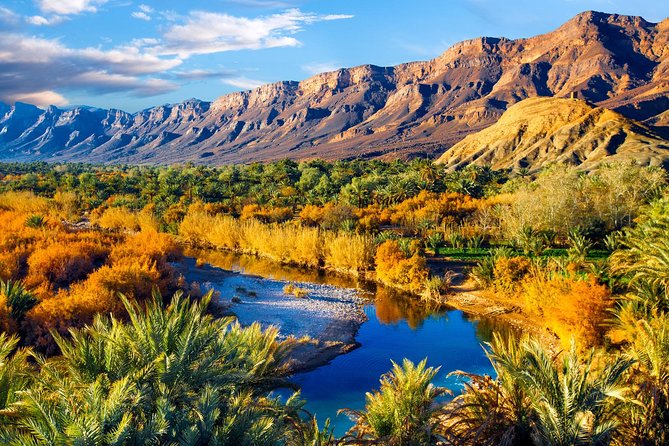
After breakfast, you have time to see more of the kasbah area before continuing along the old caravan road. The route follows the Draa Valley between the river and the mountains, passing villages, gardens, and oasis settlements.
This is one of the most useful parts of the trip for understanding how people live in southern Morocco. The desert is not only empty sand. Along the Draa Valley, water supports gardens and communities, creating a narrow band of life between dry hills and open ground.
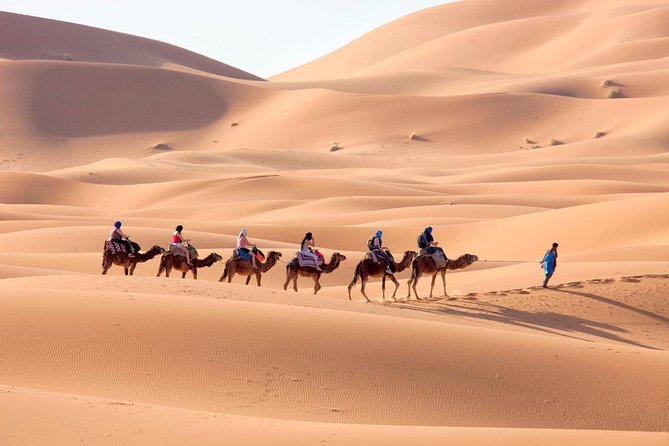
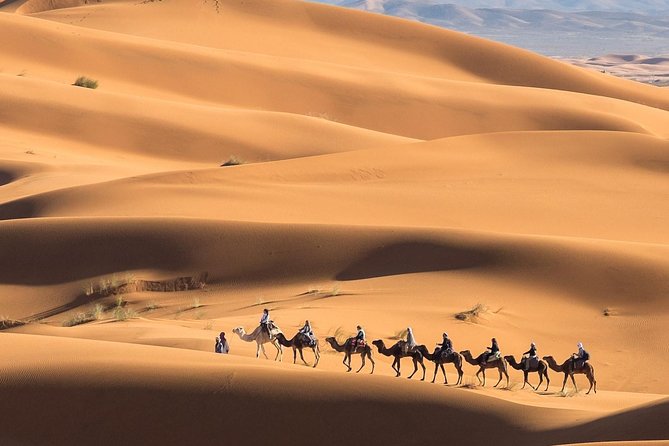
The drive continues to M’hamid, described as the gateway to the desert. From there, you reach Erg Lihoudi for lunch and the scheduled two-hour camel ride. Camel riding is not a fast activity. It is a slow, swaying way to cross the sand, and two hours gives you enough time to get a feel for it rather than simply posing for a photograph.
You should be ready for the physical side. Sitting on a camel for two hours can be tiring, especially if you are not used to the motion. Comfortable clothing and practical footwear will serve you better than anything designed only for photographs. The supplied information does not specify the exact camel route or the level of riding instruction, so it is sensible to ask the operator what to expect before departure.
After the camel ride, the trip becomes more rugged. You continue for 60 kilometers off-road toward Erg Chigaga. This is the section that separates the experience from an easy desert camp transfer. The route passes through several types of desert terrain, including erg, reg, hammada, and oasis areas.
An erg is a sand sea with dunes. Reg refers to stony desert ground, while hammada is a broad, hard, rocky surface. Seeing these different surfaces helps you understand that the Sahara is not one endless sheet of sand. It changes constantly, even when the horizon appears empty.
Reaching the 300-meter Erg Chigaga dunes
The Erg Chigaga dunes rise to about 300 meters, and their scale is the payoff for the long approach. You have already passed through mountains, oasis gardens, villages, kasbahs, and rough desert ground. By the time you arrive, the open sand feels earned.
The setting is described as far from civilization, with immense silence and wide views. That distance is a major advantage if you want a less urban, less developed desert experience. It is also the reason the journey takes so long. Remote scenery always sends you a bill in road time.
Sandboarding is part of the appeal here. The dunes provide natural slopes, and the activity offers a more playful change from the slow camel ride. The available details do not say how many runs are included, whether boards are supplied, or how much guidance you receive. If sandboarding is one of your main reasons for booking, confirm those points in advance.
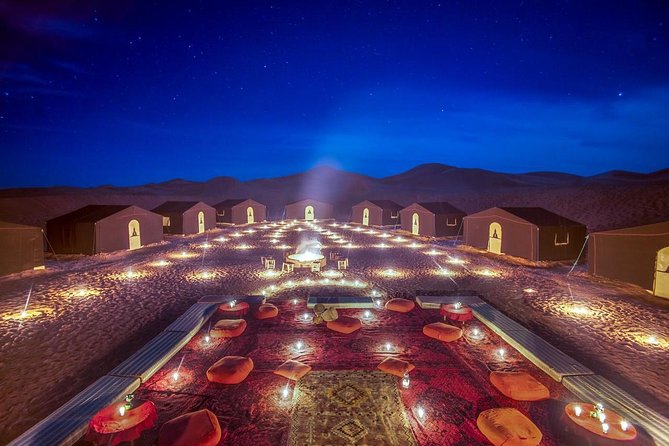
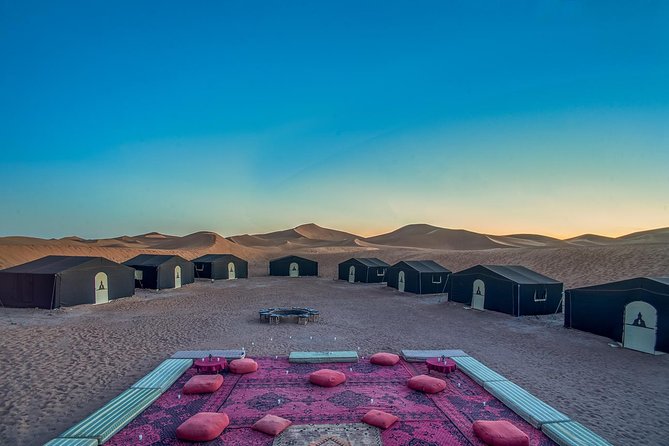
At night, you stay in a bivouac of nomad-style tents at the foot of the dunes. Dinner is included, and the evening includes Berber music around a fire beneath the stars. This is the most atmospheric part of the tour, but it is worth keeping expectations sensible. A tented camp in a remote desert is not the same as a city hotel. The appeal is the setting, the quiet, and the cultural program, not luxury facilities.
The information provided does not specify the tent amenities, bathroom arrangements, or bedding details. Ask about these before you go if comfort is important to you. The same applies to temperature. Desert nights can feel very different from hot daytime conditions.
More desert runs leaving Marrakech:
- 3 Days Desert Tour From Marrakech To Merzouga Dunes & Camel Trek
★ 5.0 · 10,125 reviews - 3-Day Marrakech to Merzouga Desert Tour: Camel Rides & Overnights
★ 5.0 · 8,734 reviews - Marrakech Desert Quad and Camel ride, Lunch, and Poolside
★ 5.0 · 3,446 reviews - Marrakech Desert & Palm Grove Quad Bike Tour
★ 4.6 · 2,375 reviews
Day three: Lake Iriqui, fossils, and the long return
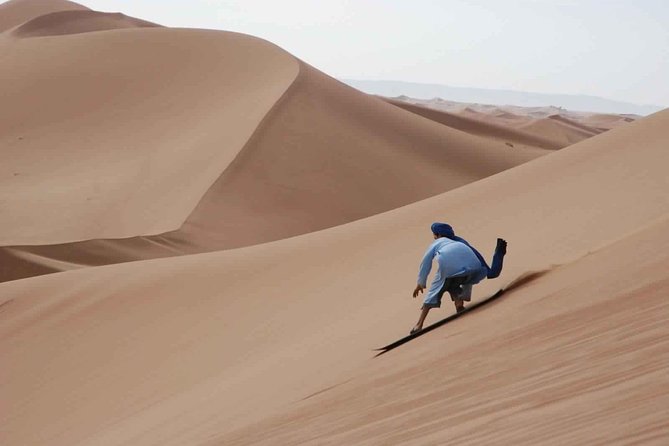
After breakfast, you cross another 90 kilometers of desert. The scenery changes again, with Lake Iriqui, mountain views, and fossil areas listed along the route.
Lake Iriqui adds variety to the return journey. In a dry region, the idea of a lake is particularly striking, even if the exact condition of the lake can vary. The fossil areas offer another reminder that the desert has a much older story than its present-day sands suggest.
Lunch is in Foum Zguid, the first village after the desert. You can also freshen up with a shower there, which may be very welcome after the camp and the off-road drive. Lunch is not included, so plan to pay separately.
From Foum Zguid, the route returns to Marrakech on paved roads through Taznakht. The village is known for Berber carpets and rugs, making it a natural place to learn about one of southern Morocco’s best-known crafts. If shopping interests you, this may be a useful stop. If it does not, be clear about your preferences and keep the visit in proportion to your own interests.
The final crossing of the High Atlas brings you back to Marrakech in the late afternoon. The listed driving time for this day is about eight hours, and that is a serious commitment after the desert crossing. You should not book an important evening flight or a nonrefundable dinner reservation immediately afterward.
The private format and what it changes
This is a private tour, so only your group participates. That gives you more control than a large coach excursion. You can discuss the pace, ask questions during the road sections, and manage the long stops with your own companions.
Private does not mean quick. The route is still governed by distance, road conditions, the camel ride, and the desert transfer. The benefit is not avoiding the long drives. It is having a more personal setting while you make them.
The tour has a mobile ticket, and confirmation is provided at booking. It begins and ends in Marrakech, with the activity returning to its meeting point. The meeting information lists the start time as 12:00 am, an unusual detail that needs clarification. Confirm the exact pickup hour, location, vehicle arrangements, and expected return time before you set your plans.
The activity is near public transportation, though the trip itself is built around private road transport. Most people can participate according to the supplied information, but anyone concerned about camel riding, rough roads, or long driving periods should ask specific questions first.
What to pack and how to prepare
You do not need an elaborate kit, but a few practical choices will make the three days easier.
- Wear comfortable clothing for long drives and camel riding.
- Bring sturdy shoes for kasbah paths and sandy ground.
- Pack sun protection for the open desert.
- Carry money for lunch, drinks, and tips.
- Bring a small overnight bag rather than relying only on a large suitcase.
- Keep a light layer for the desert night.
- Make sure your phone is charged for the mobile ticket and photographs.
The operator includes two breakfasts and two dinners. Lunch is excluded on the route, including the stop near Erg Lihoudi and the return through Foum Zguid. Drinks are also not included, so do not assume every meal or camp service is covered by the headline price.
Who should book this Erg Chigaga trip?
I would recommend this tour to you if the desert is a major goal, not a side trip. It suits people who want a private route, a real night outside the city, camel riding, sandboarding, and a sense of distance from ordinary Morocco.
It is also a good match if you want cultural stops along the way. Ait-Ben-Haddou, Tamnougalt, the Draa Valley, Berber carpets, and the oasis villages give the journey more substance than a simple drive to a dune camp.
I would hesitate to recommend it if you dislike long vehicle journeys or need a relaxed schedule. The first day includes mountain roads and kasbah stops, the second includes a long transfer and 60 kilometers off-road, and the third includes 90 kilometers across the desert plus about eight hours of return travel.
The tour requires good weather and a minimum number of participants. If the operator cancels for either reason, you are offered another date or experience, or a full refund. You can cancel for a full refund up to 24 hours before the start time. Changes or cancellations inside that window are not accepted.
Should you book it?
Book this trip if you want the full southern Morocco experience in three days, with the remote Erg Chigaga dunes as the centerpiece. The camel ride, sandboarding, tented camp, fire, and Berber music give the desert night real character, while the kasbahs and Draa Valley keep the route connected to local culture.
Skip it if you want a short, easy excursion or hotel-level comfort. The price is substantial, lunches and drinks are extra, and the road time is unavoidable. Before paying, confirm the midnight start time, camp facilities, sandboarding equipment, and exact transport details. If those answers suit you, this is a strong choice for a private Sahara adventure from Marrakech.
FAQ
Where does the tour start and end?
The tour starts in Marrakech, Morocco, and ends back at the meeting point in Marrakech.
How long does the experience last?
The tour lasts approximately three days. The third day includes about eight hours of travel.
Is the camel ride included?
Yes. A two-hour camel ride is scheduled at Erg Lihoudi on the second day.
Is sandboarding included?
Sandboarding is included as part of the desert experience. The supplied details do not specify the equipment, instruction, or number of sessions, so confirm those points with the provider.
What meals are included?
Two breakfasts and two dinners are included. Lunch and drinks are not included.
Can I cancel for a full refund?
Yes. You can cancel at least 24 hours before the experience start time for a full refund. Cancellations or changes made less than 24 hours in advance are not accepted.
Just listed around Marrakech
- Zagora: 2-Day Desert Trip from Marrakech★ 4.4 · 31 reviews
- Traditional spa Hammam & Massage with Hotel Transfers★ 4.0 · 24 reviews
- Day trip to OUZOUD waterfall with guide&boat ride from Marrakech★ 5.0 · 172 reviews
- quad bike tour in the palmeraie of Marrakech★ 4.5 · 43 reviews
- Half day quad desert agafay★ 4.5 · 24 reviews
- walking tour★ 5.0 · 46 reviews
- private tour of Marrakech 4 hours with multilingual driver★ 5.0 · 117 reviews
- 3 days tour from Marrakech to Merzouga desert★ 5.0 · 55 reviews
Desert Tours from Marrakech, compared.
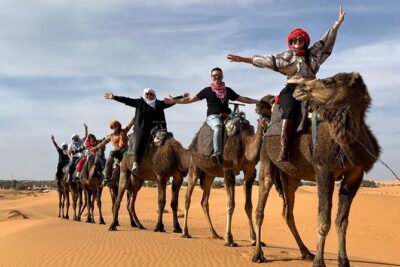
3 Days Desert Tour From Marrakech To Merzouga Dunes & Camel Trek
Read our review →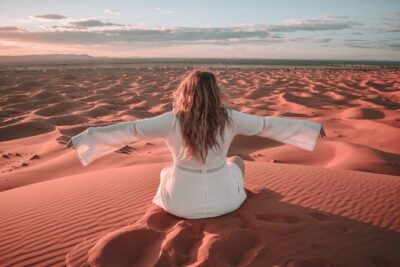
3-Day Marrakech to Merzouga Desert Tour: Camel Rides & Overnights
Read our review →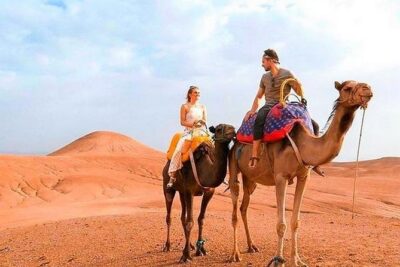
Marrakech Desert Quad and Camel ride, Lunch, and Poolside
Read our review →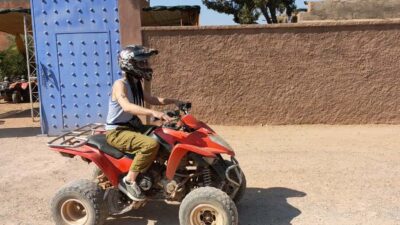
Marrakech Desert Tour & Sunset Camel Ride with Dinner Show
Read our review →
Marrakech to Merzouga Desert 3-Day via the High Atlas Mountains
Read our review →
Air ballooning: Marrakech Desert and Atlas Views
Read our review →Browse the lists this tour appears in