
Reviewed · 2-DAY EXPERIENCES
Mount Toubkal: 2-Day Climb from Marrakech
North Africa’s highest summit is a serious two-day challenge. This trip combines private transport from Marrakech, a local mountain guide, meals, and an overnight stay in the Toubkal Refuge for about $150 per person. I like the direct route through Imlil, Aremd, the Mizane Valley, and Sidi Chamharouch, and I especially like that guides such as Mohammed, Kamal, Said, and Mustafa are praised for pacing groups carefully and watching for altitude problems. The main drawback is that the schedule is tougher than the brief description suggests, and some people have not received the promised mule or sleeping bag.
You should think of this as a demanding mountain trek, not a casual day trip with a summit photo at the end. The views are superb, the food is a welcome surprise, and reaching the 4,167-meter summit is a fine achievement. But the second day can involve up to nine hours of walking, much of it above 3,000 meters, followed by a long descent to Imlil.
In This Review
- Key points to know before booking
- Why Mount Toubkal makes a fine two-day goal
- From Marrakech to Imlil and the first mountain paths
- Aremd, the Mizane Valley, and Sidi Chamharouch
- The climb to the Toubkal Refuge
- The summit push begins before sunrise
- The long descent to Imlil
- What the $150 price really covers
- Packing for cold, rough, and shared conditions
- Who will enjoy this trek most
- Should you book Mount Toubkal in two days?
- FAQ
- How high is Mount Toubkal?
- How long is the Mount Toubkal tour?
- Where does the trek begin?
- Where do you sleep?
- Are meals included?
- Is a guide included?
- Is mule support included?
- Can I cancel for a full refund?
Key points to know before booking
- The summit reaches 4,167 meters: Altitude, cold, wind, and rough ground make this harder than a basic walking tour.
- Day one climbs from Imlil to the refuge: Expect roughly 4 to 7 hours of walking, depending on pace and stops.
- Day two is the real test: The summit push is followed by the full descent to Imlil, with about 8 to 9 hours on foot.
- Guides are often the strongest part: Mohammed, Kamal, Said, Hassan, Mustafa, and Mohammed Ali are praised for encouragement, safety, and local insight.
- Refuge conditions are simple: Dormitory rooms, shared sleeping space, mattresses, blankets, noise, and little or no heat.
- Confirm the equipment in writing: The package says mule support and a sleeping bag are included, but some people had to carry their own bags and received only blankets.
Why Mount Toubkal makes a fine two-day goal
At 4,167 meters, Mount Toubkal is the highest mountain in North Africa. That number matters because the summit is not reached by simply walking up a pleasant hill. You gain roughly 2,400 meters from Imlil to the summit, and the climb is compressed into two days.
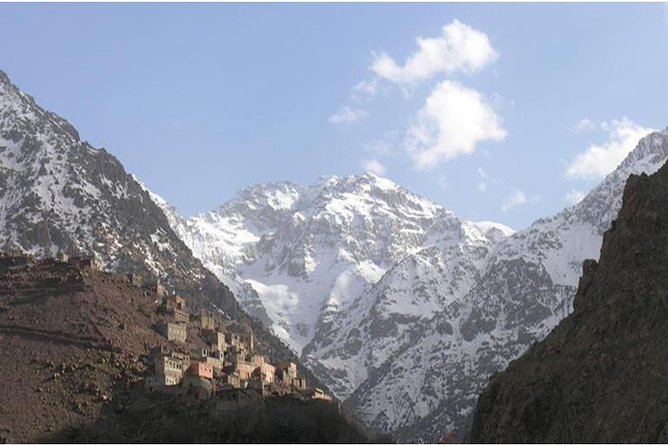
The route runs through Toubkal National Park and the High Atlas Mountains. You get changing scenery as you leave Marrakech behind: dry valleys, steep slopes, small mountain villages, rocky paths, and broad views from higher ground. The setting feels far removed from the medina, yet the trailhead is close enough for a practical trip from Marrakech.
I like the way this tour makes the climb possible without requiring you to arrange every moving part yourself. Transport, a guide, food, a bed in the refuge, and some porter support are bundled together. At $150 per person, that can be good value if everything promised is supplied and the group remains small.
The advertised maximum is six people, with a minimum of two per booking. That is a pleasant size for a steep mountain route. Still, one account describes a group of twelve with two guides, so I would confirm the actual group size before paying. A smaller group usually means easier pacing and clearer communication.
A few more Marrakech runs to hold up against each other
- From Marrakech: 2-Day Sahara Tour to Zagora & Ait Ben Haddou
★ 4.4 · 1,925 reviews - From Marrakech: 2-Days luxurious experience to Zagora Desert
★ 4.9 · 1,502 reviews - From Marrakech: Zagora 2-Day Desert Safari with Food & Camp
★ 4.5 · 1,137 reviews
From Marrakech to Imlil and the first mountain paths
Pickup is arranged from your hotel or riad in Marrakech, with a stated start time of 8:30 a.m. Other timing information places departure closer to 9 a.m., so do not expect Swiss-watch precision. Pickup from the Medina can involve meeting near a gate or a central point such as Café de France, and unclear instructions have caused needless worry.
The drive to Imlil takes about an hour and 15 minutes. This private transfer is one of the useful parts of the package. You avoid arranging a separate taxi and arrive at the trailhead with your guide and group.
Imlil sits at roughly 1,800 meters. It is the usual starting point for the trek and the last major place to check your gear, water, and snacks. If you need walking poles or crampons, equipment may be available to rent in Imlil, according to one detailed account. Ask your guide before setting off rather than assuming the rental shop will have exactly what you need.
The trip description includes a welcome drink before the walk. From Imlil, the route passes toward Aremd, described as the largest and highest village in the Imlil Valley. This section gives you time to settle into the pace, though the climb soon becomes more demanding.
Aremd, the Mizane Valley, and Sidi Chamharouch
Aremd is more than a passing name on the route. It is one of the larger settlements in the valley and offers a useful glimpse of mountain life before the trail heads deeper into the Toubkal Massif.
The path then follows the Mizane Valley toward Sidi Chamharouch. The shrine is a scenic stopping point beside a cascading waterfall, and the tour allows about an hour for lunch and a visit. This is a good pause because the day’s climb is long, and eating properly matters more than trying to race upward.
The guides are also part of what gives this section meaning. Several have been praised for explaining Moroccan and Berber culture, not simply pointing toward the next bend. Mohammed, in particular, is described as passionate about the Atlas Mountains and local people, while other guides such as Kamal and Said are praised for their energy and patience.
Do not mistake the lunch stop for the end of the easy portion. From Sidi Chamharouch, the trail becomes a long, steady climb. You zigzag upward toward the refuge, and the altitude begins to affect your breathing. Walk slower than you think you need to, especially if you are unused to high mountain trekking.
The climb to the Toubkal Refuge
The first day is described as 4 to 5 hours of walking, but several people found it closer to 5 to 7 hours. One set of estimates puts the distance from Imlil to base camp at about 12 kilometers, with the refuge at approximately 3,206 meters.
That is a large ascent in one day. You do not need technical mountaineering skills for the standard route, but you do need stamina and a willingness to keep moving uphill for hours. Jeans and ordinary trainers are poor choices here. Wear proper hiking boots, use layers, and bring waterproof clothing even if Marrakech is warm.
The refuge is basic but functional. You sleep in shared dormitory space, often with at least a dozen people in a room. Mattresses and thick wool blankets are available, and some people found them comfortable and warm. Others had little sleep because the refuge was busy and noisy.
The building is not heated, so pack for cold conditions. The package says a sleeping bag is included, but several accounts say no sleeping bag was supplied and only blankets were available. Bring your own sleeping bag or liner if you have one, and confirm the arrangement before departure.
Meals are one of the better features. Breakfast, lunch, and dinner are included over the two days, and the food has been described as fresh, tasty, and filling. After a long climb, a hot meal is worth far more than a decorative menu. Bring extra snacks for the trail, especially items with sugar or salt.
A mule is also listed for carrying bags. Yet some people had to carry their own luggage, so pack lightly and ask exactly what the mule will carry, when it will meet you, and what happens if no mule is available. A small daypack is still wise because you need water, layers, snacks, and personal items with you.
Same city gate, a very different afternoon:
- Marrakech: Agafay Desert Sunset, Camel Ride, and Dinner Show
★ 4.6 · 35,119 reviews - From Marrakech: Ouzoud Waterfalls Guided Hike and Boat Trip
★ 4.7 · 33,630 reviews - Marrakech: Agafay Desert Quad & Camel Rides with Dinner Show
★ 4.8 · 27,382 reviews - Marrakech: Agafay Desert Quad Biking Tour with Dinner-Show
★ 4.8 · 16,569 reviews
The summit push begins before sunrise
The second morning begins early. The stated timing is an early start, while actual departures have ranged from about 3:30 to 5 a.m. One group wished it had left earlier to reach the summit for sunrise, while another reached the upper slopes as the sun came over the mountains.
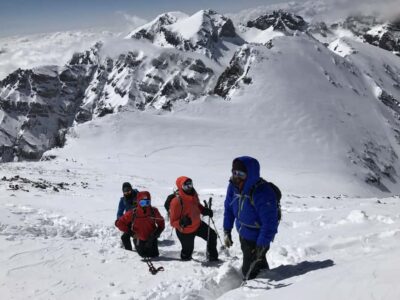
You need a head torch. This is not an optional gadget when the trail begins in darkness. Gloves, a warm hat, a windproof jacket, and several layers are also essential. Even in late spring, the summit can be below freezing with strong winds. Snow may remain near the top from autumn through spring, and crampons can be useful in those conditions.
The final ascent from the refuge to the summit gains almost 1,000 meters. The air is thin, the trail is rough, and every pause becomes tempting. A good guide will control the pace rather than treat the climb as a race. Guides Mohammed, Kamal, Said, Mustafa, and Mohammed Ali are all praised in different accounts for encouragement and care, though you should remember that your assigned guide may be someone else.
Altitude symptoms can affect otherwise fit people. One person in a group became seriously uncomfortable, and the guide took special care of her. That is exactly why you should tell the guide if you feel dizzy, nauseated, unusually weak, or short of breath. Do not try to hide symptoms to protect your pride. Mountains have no patience with pride.
At the summit, the reward is the wide view across the Atlas Mountains, toward the Sahara Desert, and over the valleys below. Conditions can change the view, but the sense of height is the point. Reaching 4,167 meters after a hard ascent gives you a genuine feeling of achievement.
The long descent to Imlil
After the summit, you return to the refuge for lunch. This sounds simple, but descending loose, steep ground can be harder on tired legs than climbing it. You then continue all the way back to Imlil.
The second day is listed at about 8 hours, though a realistic estimate is closer to 8 or 9 hours for many people. One detailed set of figures puts the day at about 5 kilometers from refuge to summit, then 17 kilometers from the summit area back to Imlil. The full trek may total around 34 kilometers.
That distance is the most important thing to understand before booking. The climb is not finished when you reach the summit. You still have a major descent, and your knees, feet, and concentration may be tired by then.
A guide who adjusts the speed makes a big difference. You may stop often for water and short rests, particularly when altitude or heat becomes uncomfortable. Walking poles can help, especially on the descent. They are not listed as included, but they may be rented in Imlil.
Once you reach Imlil, private transport returns you to Marrakech. The package says transport goes back to your hotel or riad, but one person was dropped elsewhere and had to arrange a taxi. Confirm the return point before the trek, particularly if you are staying deep inside the Medina.
What the $150 price really covers
The price is attractive for a private transfer from Marrakech, a mountain guide, overnight refuge accommodation, meals, a mule, and a sleeping bag. If you were to arrange each item separately, the convenience alone would have value.
The cost looks strongest when the group is small and the transport is genuinely private. It is less appealing if the group is larger than expected, you carry your own bags, or you must buy extra equipment and arrange a taxi at the end.
Drinks are not included. Water and snacks may be available along the route, but carrying enough water is sensible, and one account describes route prices as high. Bring Moroccan dirhams for drinks, small purchases, and tips.
The package has free cancellation up to 24 hours before the local start time. Cancellations or changes inside that window are not refunded or accepted. Confirmation is issued when you book, but communication before pickup has been uneven, so save the pickup details and confirm the meeting point as soon as possible.
Packing for cold, rough, and shared conditions
For this climb, your packing choices affect both comfort and safety. I would bring:
- Hiking boots with good grip
- Waterproof outer clothing
- Warm layers, including a puffy jacket
- Gloves, a hat, and a neck warmer
- Head torch with fresh batteries
- Sunglasses and sunscreen
- Walking poles if you use them
- Water and high-energy snacks
- Personal medication and toilet paper
- A sleeping bag or liner
- Flip-flops or sandals for the refuge
The contrast between Marrakech and Toubkal can fool you. A sunny morning in the city does not tell you much about a windy summit before sunrise. From October through May, snow and freezing conditions are possible near the top. Even in June, the summit can be cold and windy.
The refuge uses shared rooms, so earplugs might help, although they are not specifically mentioned in the tour details. Keep valuables and essential clothing close to you. The less you carry, the better, but do not leave out the items that protect you from cold and altitude.
Who will enjoy this trek most
This trip suits you if you already hike, exercise regularly, and can handle a long day on uneven ground. You do not need prior climbing skills for the standard route, but a good level of fitness is more realistic than the phrase basic fitness.
It is a fine choice for someone who wants a major mountain achievement without planning a full expedition. It also suits people who value local guides, Moroccan mountain food, and cultural context as much as the summit itself.
I would hesitate to recommend the two-day version if you know you struggle with altitude or prefer a relaxed pace. A three-day option with an acclimatization day is likely a better match, though that is a different trip and not part of this package.
Should you book Mount Toubkal in two days?
Book it if you want a demanding, well-supported mountain challenge and understand that the summit day includes a long descent. The guides are often excellent, the views are memorable, and the included meals and transport make the $150 price appealing.
Before booking, confirm four things: the pickup point, the actual group size, the return location, and whether the mule and sleeping bag will truly be provided. If you pack warm clothing, a head torch, solid boots, snacks, and a realistic attitude toward altitude, this can be an unforgettable two days in the High Atlas.
FAQ
How high is Mount Toubkal?
The summit reaches 4,167 meters, making it the highest peak in North Africa.
How long is the Mount Toubkal tour?
The experience lasts approximately two days. Day one involves about 4 to 7 hours of walking, while day two may take about 8 to 9 hours.
Where does the trek begin?
The walking portion begins in Imlil, reached by private transport from Marrakech. The route passes through Aremd and the Mizane Valley before continuing to the refuge.
Where do you sleep?
You spend one night at the Toubkal Refuge in shared dormitory accommodation. Mattresses and blankets are available, but the refuge is not heated and may be noisy.
Are meals included?
Breakfast, lunch, and dinner are included for the two-day trek. Drinks are not included.
Is a guide included?
Yes. A mountain guide is included, and guides named in past accounts include Mohammed, Kamal, Said, Hassan, Mustafa, and Mohammed Ali. The assigned guide may vary.
Is mule support included?
Mule support is listed as included for carrying bags. However, some people had to carry their own bags, so confirm this detail before departure.
Can I cancel for a full refund?
Yes, if you cancel at least 24 hours before the experience start time. Cancellations or changes made less than 24 hours before the start are not refunded.
Just listed around Marrakech
- Zagora: 2-Day Desert Trip from Marrakech★ 4.4 · 31 reviews
- Traditional spa Hammam & Massage with Hotel Transfers★ 4.0 · 24 reviews
- Day trip to OUZOUD waterfall with guide&boat ride from Marrakech★ 5.0 · 172 reviews
- quad bike tour in the palmeraie of Marrakech★ 4.5 · 43 reviews
- Half day quad desert agafay★ 4.5 · 24 reviews
- walking tour★ 5.0 · 46 reviews
- private tour of Marrakech 4 hours with multilingual driver★ 5.0 · 117 reviews
- 3 days tour from Marrakech to Merzouga desert★ 5.0 · 55 reviews
2-Day Experiences, compared.
Sahara Desert 2-Day Tour with Merzouga Camp Stay
Read our review →
Mt Toubkal Ascent Express Trek 2 Days 1 Nights
Read our review →
Marrakech/Ouarzazate: 2-Day Desert with Camel, 4×4 & Meals
Read our review →
2-Day Merzouga Desert Trip w/Luxury Tent & Dinner
Read our review →Browse the lists this tour appears in