
Reviewed · WALKING TOURS
Tangier: Food Walking Tour
Come hungry, leave happily stuffed. This three-hour walk links Tangier’s old streets, markets, cafés, and food stalls in a way that makes the city easier to understand. I like the mix of six tasting stops and a full meal, and I like that the food comes with local stories, not just a quick bite and a name. The $73 price is fair if you value a guide, plentiful food, and several meals in one outing.
The main thing to consider is the walking itself. You move through M’Sallah, the Medina, Grand Socco, and the Kasbah, with narrow streets and uneven ground along the way. This is not a good choice for wheelchair users or people with mobility impairments, and you should wear comfortable shoes. Come on an empty stomach. The portions add up quickly.
In This Review
- Key points before you book
- Why a food walk works so well in Tangier
- Starting beside the cannon at Sour Meêgazine
- Grand Socco: food, movement, and city life
- Place de la Kasbah and the old citadel
- A local café and a finish at Café Hafa
- The guides are the real strength
- What you may eat, and why an empty stomach matters
- How much walking and what to bring
- Who will get the most from this tour?
- Should you book the Tangier Food Walking Tour?
- FAQ
- How long does the Tangier Food Walking Tour last?
- Where does the tour meet?
- Where does the tour finish?
- How many food stops are included?
- What foods might I taste?
- Can the tour accommodate dietary restrictions?
- Is the tour suitable for wheelchair users?
- What should I bring?
Key points before you book
- Six food stops plus a full meal: This is more than a sampling walk, so plan for a serious amount of food.
- A local look at Tangier: Markets, produce stalls, artisans, old streets, and ordinary daily life are part of the route.
- Strong guides make the difference: Rabab, Mohammed, Ismail, Ahmed, Anas, and Abdul have each received praise for their warmth, local knowledge, and ability to adjust the experience.
- The route covers several districts: M’Sallah, Grand Socco, Place de la Kasbah, and a local café give you different views of the city.
- Dietary needs can be discussed: Vegetarian, gluten-free, and lactose-free requests can be accommodated when shared in advance.
- The meeting point is precise: Meet beside the third cannon, the cannon in the middle at Sour Meêgazine.
Why a food walk works so well in Tangier
Tangier can feel like several cities at once. There is the old citadel, the Medina’s tight lanes, open market space, steep streets, cafés, and broad views toward the water. A food tour gives you a reason to move through these places slowly instead of simply passing through them on a sightseeing checklist.
Food also gives you a way into local life. You are not only looking at stalls. You are seeing what is sold, how ingredients are presented, where people pause for a drink, and how traditional dishes fit into everyday routines. The guide explains the food, but also the customs, religion, family habits, and differences between food prepared at home and food served by vendors.
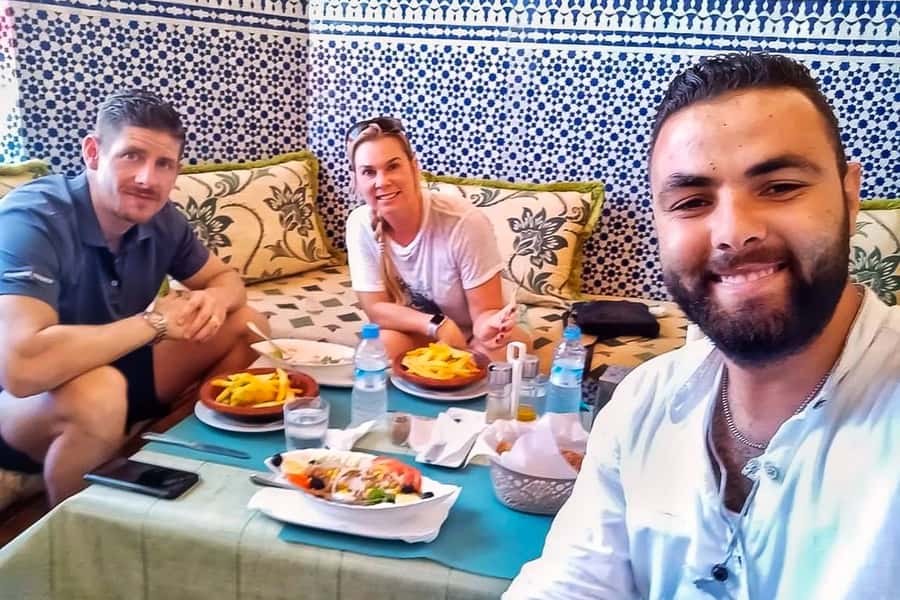
The dishes named for the tour include caliente, stuffed dates, bissara, local bread, olives, meat pastry, smoothies, soup, and tagine. The exact selection can change, especially for dietary needs or seasonal conditions, but the range is broad. You get small street foods, prepared dishes, sweets, drinks, and a sit-down meal rather than one repeated style of tasting.
I also like the way the route spaces out the food. You walk between stops, see another part of Tangier, then sit down to eat again. That matters because six stops plus lunch can otherwise become a heroic test of appetite.
More Walking Tours in Tangier
- 3h Private Walking Tour in Tangier Kasbah Medina & Colorful Souks
★ 5.0 · 148 reviews - Tangier: Private Guided Walking Tour of the Tangier Medina
★ 4.7 · 105 reviews - Private Walking Tour in Tetouan with Pickup
★ 5.0 · 87 reviews
Starting beside the cannon at Sour Meêgazine
The meeting point is next to the third cannon at Sour Meêgazine, the one in the middle. This is a useful detail because a named square or cannon is easier to find than a vague instruction to meet in the old town.
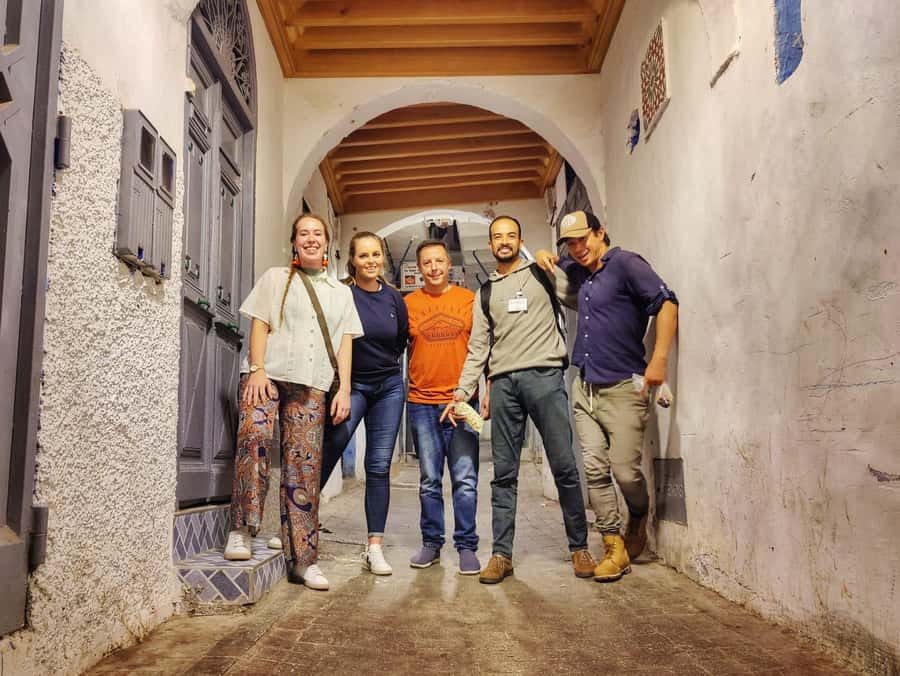
From there, the tour moves into M’Sallah. You begin with a guided look at the district and food tasting, with about 45 minutes devoted to this section. M’Sallah offers an early sense of Tangier beyond the most polished sightseeing stops. You can expect traditional architecture, narrow lanes, local commerce, and food prepared in the direct, practical way that makes Moroccan street eating so appealing.
This is also where your guide starts giving the food context. Bissara, for example, is a humble bean soup that fits the kind of filling, everyday cooking you want to understand on a food walk. Other tastings may include bread, olives, dates, or savory pastries. The point is not fancy presentation. It is learning why these foods matter and how locals eat them.
Your guide is important here. Mohammed has been praised for knowing the Medina and the food traditions of the region, while Anas has been especially good at explaining the city through the places and dishes he personally favors. The experience appears to work best when you ask questions instead of treating each stop as a quick handout.
Grand Socco: food, movement, and city life
The next 45-minute section takes you to Grand Socco for more food and local explanation. This is one of Tangier’s key public spaces, and it helps you see the city as a meeting place rather than a collection of monuments.
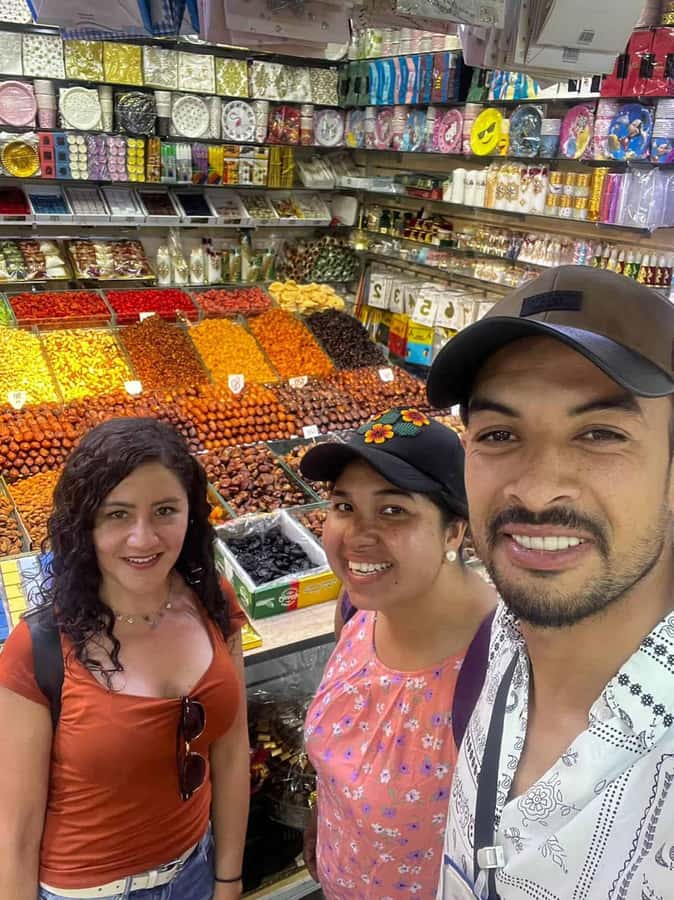
Here, the tour can feel more active. You may pass vendors, fresh produce, local shops, and people handling the ordinary business of the day. The benefit is direct contact with the city’s working rhythm. The drawback is that public market areas can be busy, so you should keep your group together and pay attention to where you are walking.
The food may include more street-style bites or products bought from market vendors. A guide with local connections can make this more than a random purchase. Nate, one of the tour’s past customers, particularly valued that the guide knew the people at the food stalls and restaurants. That kind of relationship can help you understand which foods are made in a certain way and where you might buy more later.
This is a good point to ask practical questions. You can ask how a dish is prepared at home, why one version tastes different from another, or what locals usually eat at a particular time of day. The guide also discusses religion and food customs, which gives extra meaning to what is on your plate.
Place de la Kasbah and the old citadel
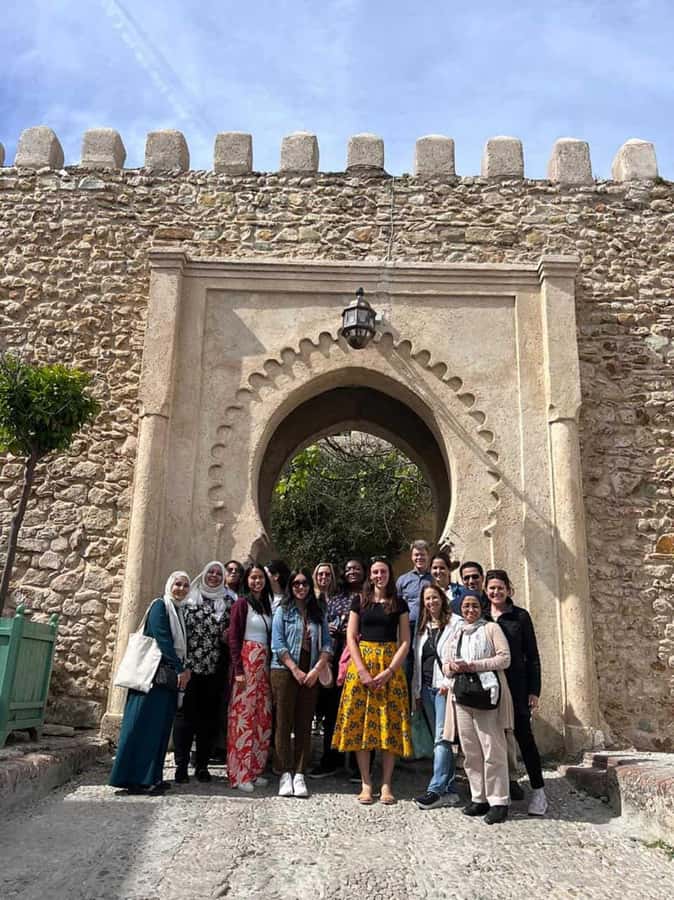
The longest section lasts about an hour at Place de la Kasbah. This is where the tour’s food and sightseeing sides come together most clearly.
The Kasbah is known for its old architecture, narrow streets, and views. The route gives you time to look up from your plate and pay attention to doorways, walls, alleyways, and the shape of the old city. You will also have photo opportunities, though you should remember that this is still a walking food tour, not a dedicated photography excursion.
The tasting stops here may include more substantial Moroccan food. Tagine, soup, meat pastry, bread, olives, and other local products have all formed part of past food selections. The tour includes a full meal, so this section is likely to be where you move from tasting to sitting down for a proper serving.
That full meal is a major part of the value. At $73 per person, the price is not low for a three-hour walk, but you are paying for a guide, bottled water, six tasting stops, and enough food to count as lunch or dinner. If you were planning to eat several meals independently while also hiring a private guide, the total could easily approach the tour price. If you only want a few bites and already know Tangier well, the cost may feel less attractive.
This is also where the walking surface matters most. The old streets are not designed like a modern promenade. If stairs, slopes, or uneven paving are difficult for you, this route is not suitable. The operator specifically excludes wheelchair users and people with mobility impairments.
More food tours in Tangier:
- From Tangier: Asilah Tour with Tea Tasting & Camel Ride
★ 3.9 · 18 reviews - From Marrakech: Merzouga 3-Day Desert Safari with Food
★ 4.7 · 12,232 reviews - Marrakech: Street Food Tour with a Local Guide
★ 4.9 · 3,119 reviews - Marrakech: Street Food Tour by Night
★ 4.8 · 2,838 reviews
A local café and a finish at Café Hafa
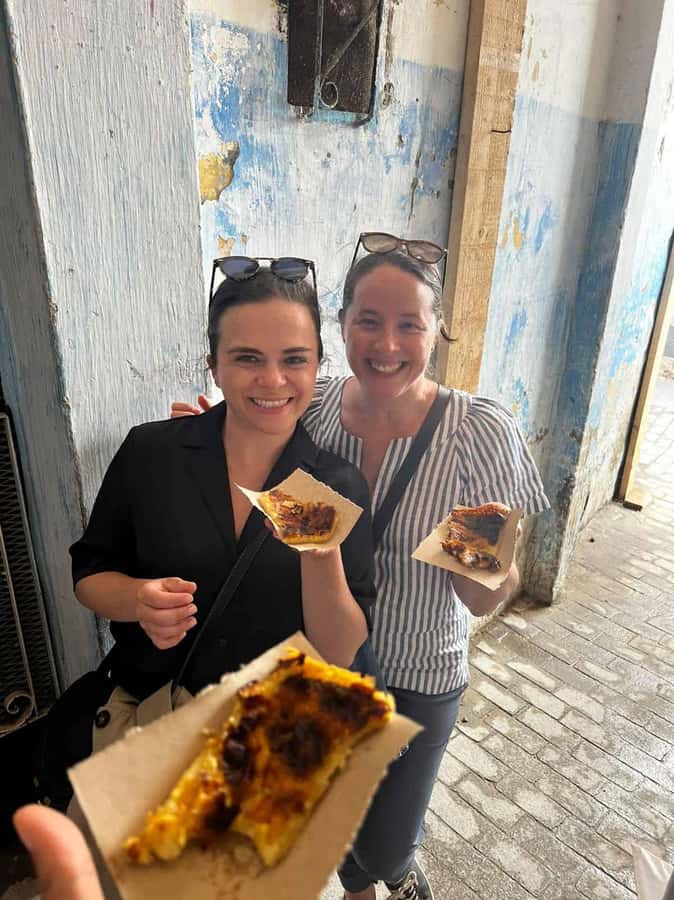
The final 30 minutes include a break at a local café, followed by the finish at Café Hafa. This gives the experience a calmer ending after the market and Medina sections.
The café stop is not just spare time. It lets you pause, ask questions, and digest both the food and the information. Past customers have valued the way guides explain drinks, food traditions, and daily habits along the route. You might use this moment to ask where to buy dates, bread, spices, or other foods you enjoyed earlier.
Finishing at Café Hafa gives you a memorable final setting and a useful place to continue your own Tangier exploration. The tour ends there, so transportation afterward is not included. You should plan your next move before you arrive, especially if you are heading back to a hotel, ferry connection, or another part of the city.
Café Hafa is also a sensible place to extend the afternoon or evening on your own. The tour does not provide onward transport, and the end point is not the same as the start, so allow time to orient yourself.
The guides are the real strength
Food is the reason to book, but the guide is what makes the experience worth doing. The strongest feedback centers on guides who explain the city with warmth, adjust the pace, and notice what each group needs.
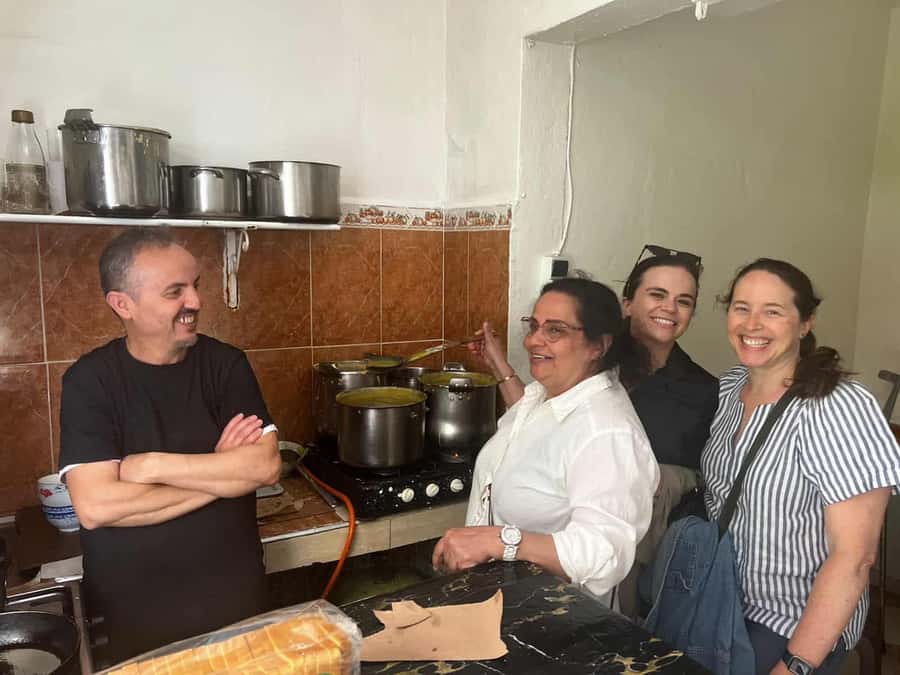
Rabab has been praised for knowing the people at each restaurant and stall, for explaining religion and food customs, and for adapting the route for a group that included three children. During Ramadan, she has also hosted an altered version of the experience built around iftar with her family. That is a special seasonal variation, not something you should assume will happen on every booking, but it shows how the format can change with local traditions.
Mohammed has been especially strong at explaining the Medina, where he was born, along with regional food and local history. He has also adjusted food for dietary needs and helped families with children. Ismail has been described as kind, engaging, and passionate about Tangier’s culture and cuisine.
Other guides named in past experiences include Ahmed, who kept a calm pace while explaining food, drink, and history, and Anas, who brought a lively personal connection to the city. Abdul has also been praised for his understanding of local culture and cooking.
Because the tour is offered in English, clear communication should be straightforward for English-speaking visitors. Still, guide assignments can vary. The individual guide you meet will shape the tone, pace, and amount of conversation.
What you may eat, and why an empty stomach matters
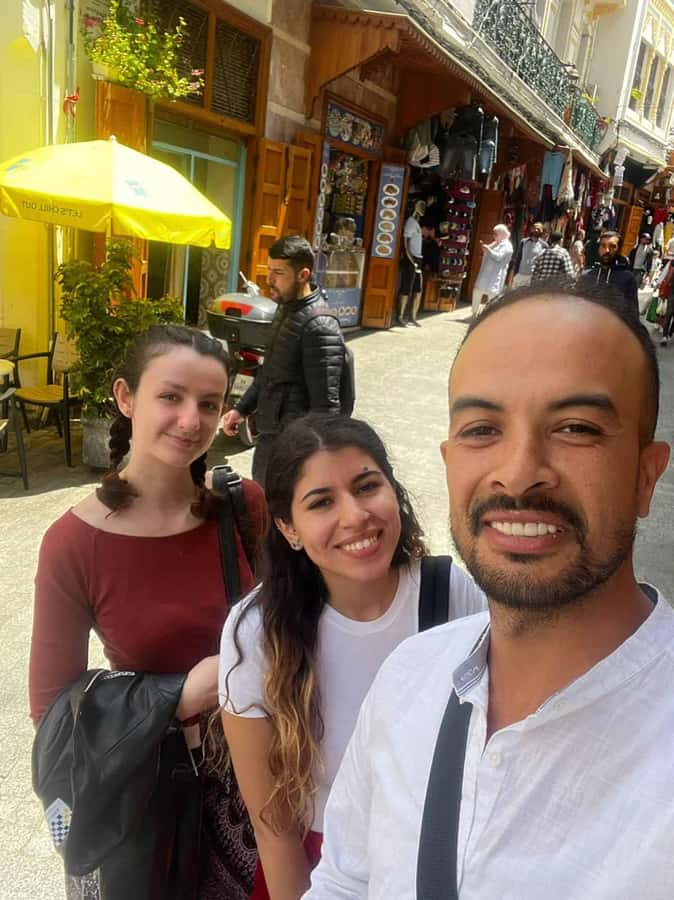
The tour asks you to arrive hungry, and that advice is serious. Six tasting stops and a full meal can include enough food to replace lunch or dinner, with extra snacks around it.
You might try:
- Caliente, a savory local specialty
- Bissara, a filling bean soup
- Stuffed dates
- Moroccan bread and olives
- Meat pastry
- Smoothies or other local drinks
- Tagine and additional cooked dishes
The food is not presented as a formal cooking class. You will learn what you are eating, how it may be prepared at home, and how local versions can differ. That makes the tour useful for people who want to keep eating well after the walk ends.
Dietary restrictions should be stated before the tour. Vegetarian, gluten-free, and lactose-free requests can be accommodated, but the tour says the operator will do its best rather than promising every possible substitution. If your needs are strict or medically essential, explain them clearly when booking and again to the guide.
If you have children in your group, the tour may be adaptable. One guide adjusted the food and pace for three children, but the route still involves walking through old streets, so you should consider each child’s stamina and interest in unfamiliar foods.
How much walking and what to bring
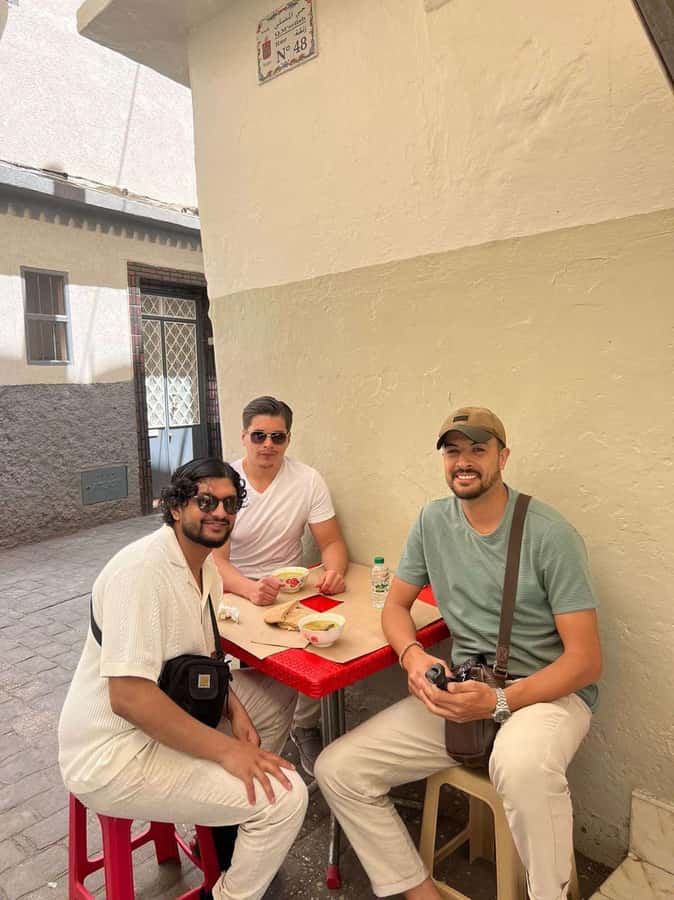
The walking is described as manageable rather than punishing. One past group found that it covered different parts of the old city without becoming too difficult, and another appreciated the calm pace. Still, a three-hour route through M’Sallah, Grand Socco, the Kasbah, and the Medina is not a flat, effortless stroll.
Wear shoes with good grip and support. Avoid arriving in sandals that make uneven streets uncomfortable. You should also bring an appetite, curiosity, and questions for the guide.
Pets are not allowed. Transportation is not included, so you must make your own way to Sour Meêgazine and from Café Hafa. Bottled water is included, which is useful during a food-heavy walk.
The tour is offered with an English-speaking live guide. Starting times vary, so you need to check availability for the date you want. Free cancellation is available up to 24 hours in advance, and the reserve-now, pay-later option can help if your schedule is still changing.
Who will get the most from this tour?
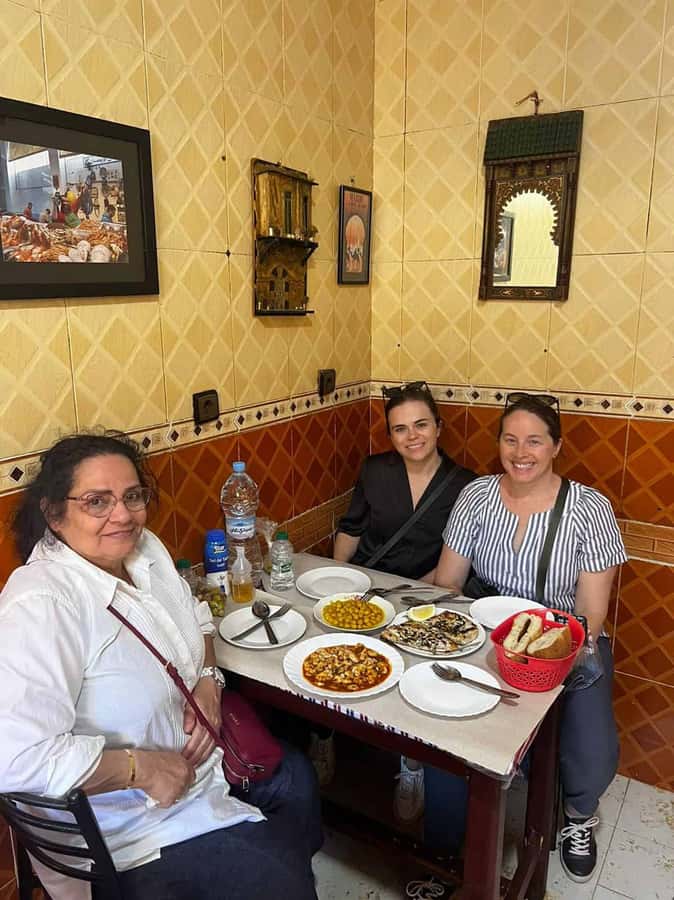
I would choose this for a first visit to Tangier, especially if you want food and orientation in the same afternoon. The route gives you a practical introduction to the old city, and the guide can help you understand what you are seeing before you explore on your own.
It also suits curious eaters who prefer small local places to polished restaurants. The combination of market stalls, cafés, restaurants, and street vendors gives you several ways to eat in Tangier.
Families may do well if children are open to walking and trying new dishes. The guides have adjusted the route for children, but this is not a children’s attraction with entertainment at every stop. It is a real city walk with real food and some uneven streets.
I would be more cautious if you have limited mobility, dislike shared food experiences, or prefer a very short tasting with no full meal. The amount of food is generous, and the old-city route cannot be treated like an accessible modern sidewalk.
Should you book the Tangier Food Walking Tour?
You should book it if you want a friendly introduction to Tangier that combines local food, market life, architecture, and conversation. The strongest part is the human connection. Guides such as Rabab, Mohammed, Ismail, Ahmed, and Anas have helped turn ordinary stalls and old streets into a readable story about the city.
At $73, it offers good value for a three-hour experience with six tastings, a full meal, water, and a guide. Book for the food, but expect to remember the market conversations, Kasbah views, and café finish just as much as the tagine.
Arrive hungry, wear solid shoes, share your dietary needs in advance, and make sure the mobility demands suit you. For the right eater, this is one of the easiest ways to get your bearings in Tangier while eating very well.
FAQ
How long does the Tangier Food Walking Tour last?
The tour lasts three hours. The route includes guided food stops in M’Sallah, Grand Socco, and Place de la Kasbah, followed by time at a local café.
Where does the tour meet?
Meet beside the third cannon at Sour Meêgazine in Tangier. It is the cannon positioned in the middle, next to the other two.
Where does the tour finish?
The tour finishes at Café Hafa. Transportation after the tour is not included.
How many food stops are included?
Six tasting stops are included, along with a full meal and bottled water.
What foods might I taste?
Possible foods include caliente, stuffed dates, bissara, bread, olives, meat pastry, smoothies, soup, and tagine. The exact selection may vary.
Can the tour accommodate dietary restrictions?
The tour can accommodate vegetarian, gluten-free, and lactose-free preferences when you share your needs in advance. The operator will do its best to adjust the food.
Is the tour suitable for wheelchair users?
No. The tour is not suitable for wheelchair users or people with mobility impairments because it takes place on foot through old streets and narrow areas.
What should I bring?
Bring comfortable shoes and arrive on an empty stomach so you can enjoy the six tasting stops and full meal. Pets are not allowed.
Just listed around Tangier
- Tangier Highlights Private 6-Hour Tour★ 4.1 · 137 reviews
- Tangier Full-Day Grand Tour★ 4.8 · 146 reviews
- Tangier: sunset, tea, camel ride, Cape Spartel and caves.★ 4.3 · 58 reviews
- Tangier: Walking Tour in The Medina With Local Guide★ 4.9 · 39 reviews
- Tangier: Quad Bike Adventure with Hotel Transfers★ 4.7 · 71 reviews
- Tangier Private Tour: Explore And Camel Ride Adventure★ 4.8 · 26 reviews
- Tangier Private Day Tour★ 4.7 · 45 reviews
- Tangier: Guided Day Trip to Chefchaouen★ 4.3 · 35 reviews
Walking Tours, compared.
Ben Youssef, Secret Garden, & Souks Walking Tour
Read our review →
Explore Fes: Unforgettable Guided Walking Tour of the Medina
Read our review →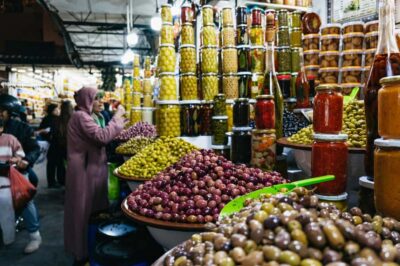
Exclusive Fez Medina Walking Tour with Private Guide
Read our review →
Browse the lists this tour appears in