
Reviewed · SAHARA DESERT TOURS
2-Day Zagora Tour from Marrakech Including the Atlas Mountains, Camel Trek and Desert Camp
The road to Zagora is half the adventure. This two-day trip packs Morocco’s High Atlas Mountains, Berber villages, Aït Ben Haddou, Ouarzazate, camel riding, and an overnight desert camp into a very full itinerary. I especially like the changing scenery and the sunset camel ride, two moments that make the long journey worthwhile. The main catch is simple: you will spend much of both days in a minivan, often around eight hours on the road each day.
I also like that the tour includes hotel pickup, breakfast, dinner, camel trekking, and a private tent at the camp for $111.66 per person. That is a fair price for a quick taste of southern Morocco, especially if your Marrakech stay is short. Still, Zagora is not a sea of towering dunes, so you should book this for the whole route and cultural setting, not only for a classic Sahara picture.
The overnight camp, Berber music, desert sunset, and sunrise are the strongest parts. Drivers such as Abdelaali, Said, Aziz, Hussain, and Mohammed Lvito have been praised for safe driving and friendly help, but the quality of cultural explanation can vary. Bring patience, water money, and comfortable clothes for a demanding road trip.
In This Review
- Key points to know before booking
- What the $111.66 price really includes
- Crossing the High Atlas at Tizi-n-Tichka
- Aït Ben Haddou: the day’s essential stop
- Ouarzazate and the road into the Drâa Valley
- Reaching the Zagora desert by camel
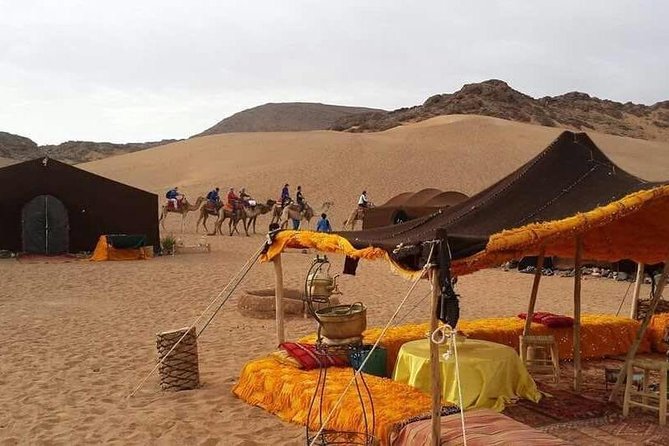
- What the Berber desert camp is like
- Sunrise, breakfast, and the long return
- Transport, drivers, and group comfort
- The best and weakest parts of the route
- Who should book this Zagora trip?
- FAQ
- What time does the tour start?
- How long is the Zagora tour?
- How much time is spent driving?
- Is lunch included?
- Is the camel ride included?
- Is a guide included at Aït Ben Haddou?
- What happens if bad weather cancels the tour?
- Should you book it?
Key points to know before booking
- About eight hours of driving per day: The route covers a lot of ground between Marrakech and Zagora, with mountain roads, rest stops, and long stretches in the minivan.
- Aït Ben Haddou is a major highlight: You can explore the UNESCO World Heritage site on your own or pay for a local guide.
- The camel ride lasts roughly one to one and a half hours: The sunset ride is the most memorable part for many people, but riding can be tiring.
- Zagora has small dunes and rocky desert: Expect palms, open ground, and modest dunes rather than the giant sand seas associated with Merzouga.
- The camp includes dinner, breakfast, and entertainment: Berber music, dancing, stargazing, and time outdoors add much of the evening’s appeal.
- Lunches and drinks are extra: Planned stops can be convenient, but some restaurants are expensive, so carry cash and ask about prices first.
What the $111.66 price really includes
At $111.66 per person, this is one of the less expensive ways to add Morocco’s southern interior to a Marrakech visit. You receive round-trip transport from selected hotels, an air-conditioned minivan, dinner, breakfast, camel trekking, and overnight accommodation in a private tent at a Berber camp.
That package covers the costly parts of a short desert trip. A private vehicle, separate hotel, and custom itinerary would cost far more. The price also saves you from arranging transport across the Atlas Mountains and finding a camp yourself.
You still need to budget for both lunches, drinks, refreshments, and any local guides. The stop at Aït Ben Haddou is free, but a local guide costs extra. Some meal stops are arranged at specific restaurants, and prices can be higher than expected. I would bring snacks and buy water before leaving Marrakech, rather than relying entirely on roadside stops.
The low price comes with a tradeoff: this is a group road trip, not a relaxed private tour. The maximum group size is listed as 100, although transport is by minivan and the actual vehicle group may be smaller. Ask about the pickup point and vehicle arrangements when you book, especially if you prefer a quieter ride.
More Camel Rides in Marrakech
- Marrakech: Agafay Desert Sunset, Camel Ride, and Dinner Show
★ 4.6 · 35,119 reviews - Marrakech: Agafay Desert Quad & Camel Rides with Dinner Show
★ 4.8 · 27,382 reviews - Marrakech: Agafay Desert Quad & Camel Rides with Dinner Show
★ 4.9 · 10,771 reviews
Crossing the High Atlas at Tizi-n-Tichka
Pickup begins around 7:00 am from your accommodation in Marrakech. Once outside the city, the route climbs toward the High Atlas Mountains and the Tizi-n-Tichka pass.
The first portion gives you a useful look at how quickly Morocco changes. Marrakech’s busy streets give way to open countryside, steep mountain slopes, small settlements, and traditional Berber villages. Shepherds and their flocks may be visible along the route, and the views become more dramatic as the road rises.
There is a short mountain viewpoint stop of about 20 minutes. It is not a long walk or a formal sightseeing visit, but it gives you time to stretch, take photographs, and enjoy the broad views.
The mountain road is scenic, but it can be tiring. Curves, traffic, and the sheer length of the journey make this a poor choice if you dislike driving. The minivan is air-conditioned, which helps, though one June trip found the cooling insufficient during a particularly hot spell. Sit where you can see outside, keep water within reach, and treat the stops as part of the day rather than interruptions.
The tour description says approximately eight hours are spent driving each day. Individual accounts describe the first day as roughly six to eight hours behind the wheel, depending on traffic and stops. That difference is worth noting, because the schedule can shift.
Aït Ben Haddou: the day’s essential stop
After crossing the mountains, the vehicle stops at a local café for refreshments. These are not included, so you pay for your own drinks or snacks.
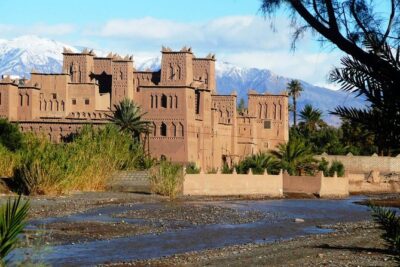
The next major stop is Aït Ben Haddou, a fortified settlement, or ksar, built from earth-colored materials and set beside the route through the southern Moroccan interior. It is a UNESCO World Heritage site and a well-known filming location. The compact lanes, high walls, and carefully shaped buildings make it one of the most rewarding places on the trip.
You receive free time to explore, but a local guide is not included. You can walk through the site independently, or hire a guide at your own expense. I would decide in advance which style suits you. Going alone gives you more freedom for photographs and quiet corners. A guide can explain the buildings, local traditions, and the site’s role in film production, but you should confirm the price before starting.
Allow about two hours here, including the visit and time for refreshments. The stop can feel rushed if you want a detailed tour, yet it is long enough to see the main lanes and viewpoints.
This is also where some of the tour’s cultural value comes through. Aït Ben Haddou is not simply a photo stop. It shows how settlements in this dry part of Morocco used thick walls, compact streets, and earthen construction to cope with heat and limited resources. Look beyond the famous exterior and notice how the buildings fit together.
Ouarzazate and the road into the Drâa Valley
The route continues to Ouarzazate, a city often linked with film production and the old trading routes between the Atlas, the Drâa Valley, and the Dadès Valley.
The schedule gives you a short rest stop of about 20 minutes, with the possibility of visiting Taourirte Kasbah. If time did not allow a visit on the first day, the return journey offers another chance. The itinerary does not guarantee an extended guided tour, so think of Ouarzazate as a pause and a cultural waypoint rather than a full city visit.
Taourirte Kasbah is important because this area once served as a meeting point for people moving between valleys and mountain regions. You may find the stop interesting if you enjoy architecture and old trading settlements. If you want a detailed historical explanation, ask about a guide, since local guides are not included.
From Ouarzazate, the route heads toward Zagora through the Drâa Valley. The scenery changes again, with palms, dry ground, villages, and wide open views. One of the pleasures of this trip is watching the land shift from mountain country to a much more arid setting.
The long drive can also be the least satisfying part. Some drivers offer useful explanations about subjects such as animals, license plates, villages, and Berber customs. Abdelaali and Said have been especially praised for sharing information and stopping at scenic points. Other accounts describe limited English and little explanation. If learning about local culture matters to you, ask questions early and clearly.
More days up in the Atlas:
- Marrakech: Atlas Mountains, Ourika Valley, Waterfall & Lunch
★ 4.8 · 15,834 reviews - Berber villages : Atlas Mountains Day Hike from Marrakech
★ 5.0 · 14,007 reviews - Marrakesh: Ourika Waterfalls, Atlas Mountains, Guide + Lunch
★ 4.9 · 9,986 reviews - From Marrakech: Atlas Mountains Full-Day Hiking Trip w Lunch
★ 4.8 · 7,417 reviews
Reaching the Zagora desert by camel
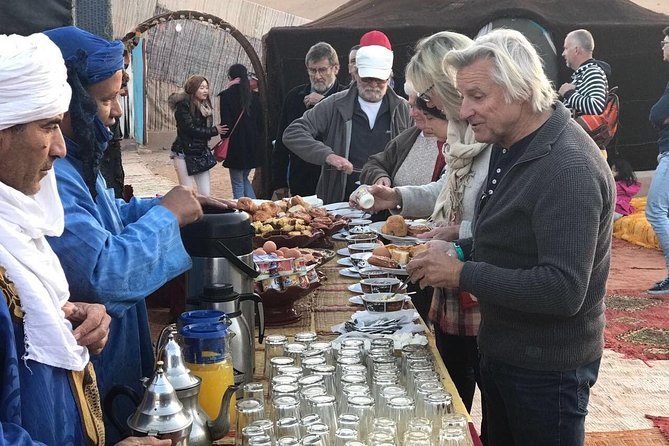
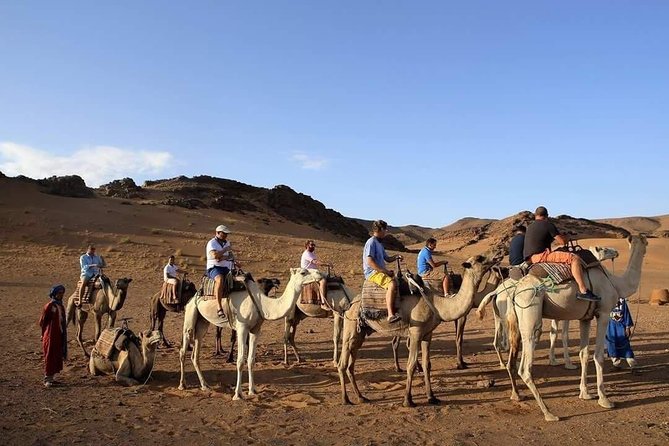
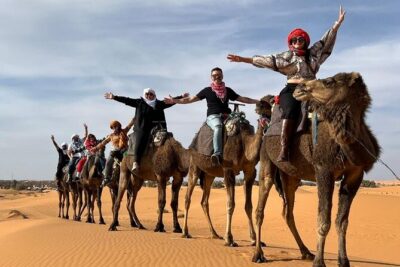
The camel ride is timed for the late afternoon, giving you a chance to cross the desert as the light softens. The ride usually lasts around one to one and a half hours.
Getting onto a camel is awkward, and the first rise can be startling. The animals stand up front legs first and then back legs, so hold on and follow the camel handler’s instructions. Once moving, the pace is slow and steady, but the rocking motion can become uncomfortable.
The setting is the key point. Zagora is a dry desert region with rocky ground, palms, open plains, and small sand dunes. It does not offer the huge, sweeping dunes found farther east near Merzouga. Some people love this more varied setting, while others feel it is not a true desert experience.
I would book this ride for the sunset, the quiet, and the chance to reach camp in a traditional way. Do not book it expecting endless golden dunes. Wear long trousers, secure shoes, sunscreen, and sunglasses. A scarf can also help with sun and dust, though it is not listed as an included item.
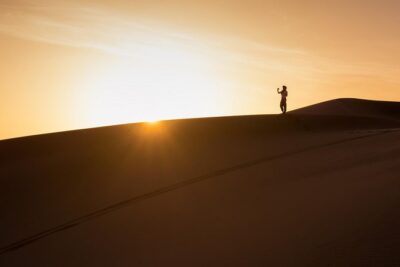
The sunset is often the emotional high point of the trip. The changing light on the dry ground and dunes gives you a sense of place that a quick roadside stop cannot provide.
What the Berber desert camp is like
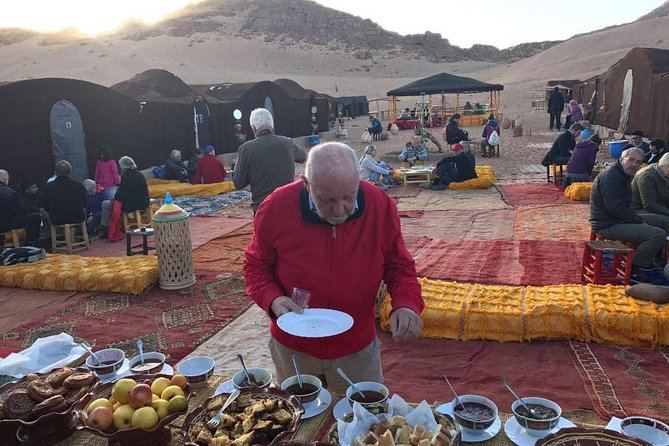
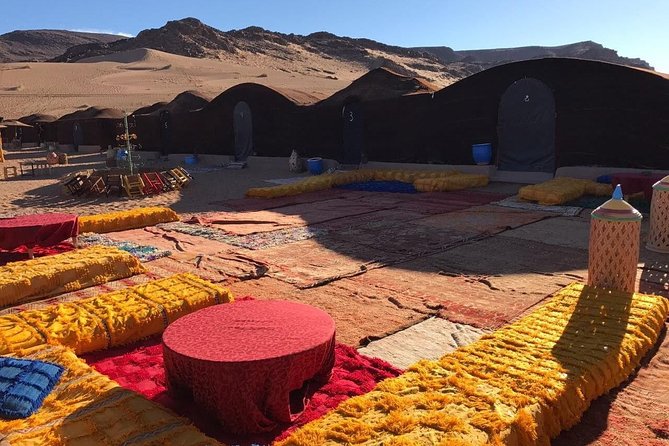
After the camel ride, you spend the night in a private tent at a Berber camp. Dinner and breakfast are included.
The evening usually centers on food, music, and time outside. Several accounts describe good tagines, Berber music, dancing, and a friendly camp atmosphere. Dinner appears to be one of the most consistently praised parts of the overnight stay.
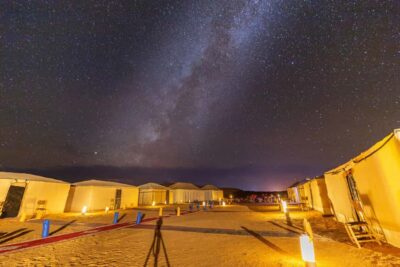
You can also spend time under the stars. With the desert setting and open sky, stargazing is a strong reason to stay awake, although the early start and long drives make sleep valuable too.
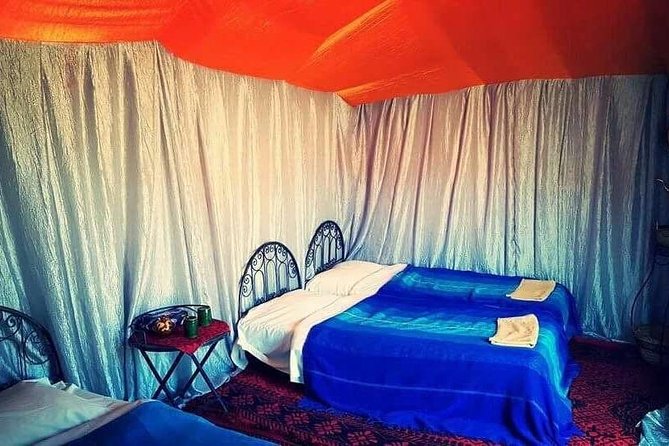
Camp comfort varies. Some tents have windows, power, and private showers, while other arrangements may be more basic. One upgraded camp was appreciated because its windows made the June heat easier to handle and its private shower was convenient. Another camp experience found the tents hot enough that people chose to sleep outside.
The desert can be cold at night, especially in winter, even after a hot afternoon. Pack a warm layer as well as sun protection. Dress modestly, keeping your upper body and knees covered, both for comfort and respect for local customs.
Do not expect hotel-level service. This is a short outdoor stay, and the charm comes from the setting, food, music, and people rather than luxury. If your idea of camping includes a private bathroom, ask exactly what tent category is included before booking.
Sunrise, breakfast, and the long return
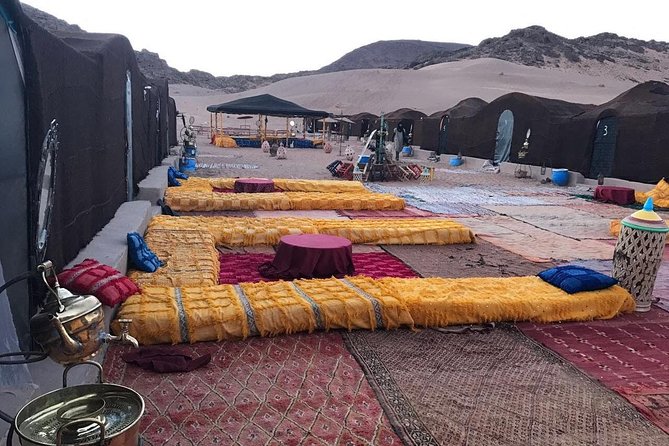
You can rise early for the desert sunrise before breakfast. This is optional, but I would make the effort. The morning light, cooler air, and empty dunes offer a very different mood from the previous evening.
After breakfast, you ride the camels back to Zagora and meet the driver. The morning schedule can be tight. One useful warning is that the group may leave soon after the 7:00 am breakfast, leaving little time for a shower after climbing the dunes for sunrise.
The return route includes a refreshment stop in Agdz at your own expense, followed by Ouarzazate for lunch and more free time. Lunch is not included, and you may be directed to a particular restaurant. Some meals have been considered overpriced, with slow service, so ask whether you can choose another place nearby.
You may also visit Taourirte Kasbah if it was skipped on day one. After Ouarzazate, the minivan crosses the High Atlas again and continues to Marrakech. Arrival is expected in the evening, often around 5:00 to 7:00 pm, though road conditions and stops can affect the timing.
That makes the second day especially demanding. You have already had an early start, a camel ride, a night in a camp, and possibly a sunrise walk. Plan nothing important for the evening after your return.
Transport, drivers, and group comfort
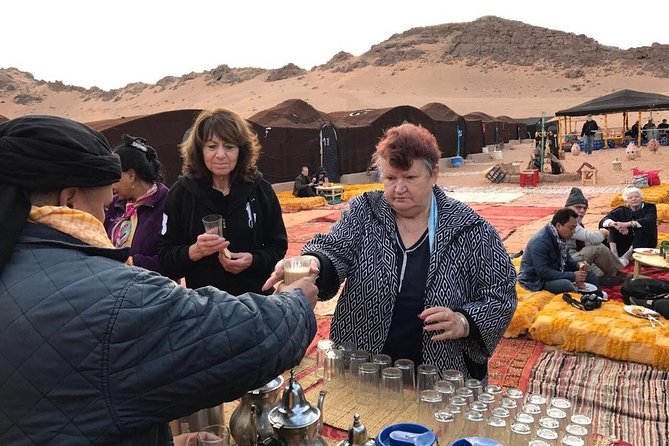
The tour uses an air-conditioned minivan and includes pickup and drop-off at selected hotels. The vehicle makes the route practical, but the amount of time inside it should shape your decision.
Drivers are central to the experience. Abdelaali has been praised for safe driving, friendliness, and help with cultural questions. Said has been described as patient, informative, and skilled on the long road. Aziz, Hussain, and Mohammed Lvito have also received strong praise for courteous service and careful driving.
That praise matters because mountain roads and long distances can make a poor driver ruin an otherwise good trip. A considerate driver also knows when to stop for photographs, snacks, and rest.
Still, your driver may function more as a driver than as a full guide. The tour includes transport and some guided assistance, but local guides are not included at the main historic sites. If you want detailed cultural interpretation all day, a private tour with a dedicated guide may be a better fit.
Most people who can manage long vehicle rides and ordinary walking can take part. Good walking shoes are recommended, especially for Aït Ben Haddou and the dunes. The activity is near public transportation, but the included pickup applies only to selected hotels.
The best and weakest parts of the route
The best parts are the variety and the overnight setting. In two days, you move from Marrakech to mountain villages, an earthen ksar, Ouarzazate, palm-filled valleys, and the dry Zagora region. The sunset camel ride, camp dinner, music, sunrise, and stars give the trip its memorable moments.
The weakest part is the amount of road time. You are not spending two full days sightseeing. You are using a long transfer route with several important stops attached to it.
Lunch arrangements are another weak point. Since lunch is excluded, you have control over what you buy, but the tour may steer you toward certain restaurants. Carry snacks and do not assume every stop will offer good value.
The scale of the desert is also important. If your dream is a vast Sahara covered in high dunes, Zagora may disappoint. If you want a short, affordable introduction to desert life, camel travel, and southern Morocco, it makes more sense.
Who should book this Zagora trip?
I would recommend this tour to you if you have only a few days in Marrakech and want to see more of Morocco without arranging a complicated route. It suits people who value scenery, historic architecture, Berber culture, sunset photography, and a night outdoors.
It is also a good choice if the $111.66 price fits your budget and you accept basic camp conditions. The included dinner, breakfast, transport, camel ride, and tent make the cost reasonable.
I would hesitate if you dislike long drives, get motion sick, need a leisurely schedule, or want a luxury desert camp. I would also choose a longer desert trip to Merzouga if tall dunes are your main goal.
Book at least a day ahead if possible, and note that this trip is often reserved about 37 days before departure. Free cancellation is available up to 24 hours before the 7:00 am start time. Poor weather can lead to a new date or a full refund.
FAQ
What time does the tour start?
Pickup begins at approximately 7:00 am from your accommodation in Marrakech, with pickup available at selected hotels.
How long is the Zagora tour?
The tour lasts approximately two days. You return to Marrakech in the evening of the second day, often around 5:00 to 7:00 pm.
How much time is spent driving?
You should expect approximately eight hours of driving each day because of the distance between Marrakech, Zagora, and the High Atlas route.
Is lunch included?
No. Lunch is not included on either day, and drinks and refreshments are also your responsibility.
Is the camel ride included?
Yes. Camel trekking in the Zagora desert is included, along with the overnight stay at the Berber camp.
Is a guide included at Aït Ben Haddou?
A local guide at Aït Ben Haddou is not included. You can visit during your free time or hire a local guide at your own expense.
What happens if bad weather cancels the tour?
If poor weather causes the experience to be canceled, you will be offered a different date or a full refund. For other cancellations, you must cancel at least 24 hours before the start time for a full refund.
Should you book it?
Book this Zagora tour if you want a low-cost taste of Morocco beyond Marrakech and can accept that the road takes up much of the trip. The best memories are likely to come from the camel ride at sunset, dinner and music at camp, the sunrise, and the changing views between the Atlas Mountains and the desert.
Skip it if you want towering dunes, long time at each sight, or a calm two-day schedule. For the right person, this is a packed but rewarding introduction to southern Morocco. Just bring water, warm layers, good shoes, and realistic expectations about the desert.
More Hiking & Trekking in Marrakech
- From Marrakech: Ouzoud Waterfalls Guided Hike and Boat Trip
★ 4.7 · 33,630 reviews - Marrakech: Ourika Valley Trip with Waterfall Hike
★ 4.6 · 6,792 reviews - Marrakech: Ourika Valley Trip with Waterfall Hike & Lunch
★ 4.9 · 5,303 reviews - Marrakech: ourika valley lunch & guided hike to waterfalls
★ 4.9 · 3,737 reviews
More Sahara Nights out of Marrakech
- From Marrakech: 3-Day Merzouga and Sahara Desert Tour
★ 4.9 · 15,308 reviews - From Marrakech: Merzouga 3-Day Desert Safari with Food
★ 4.7 · 12,232 reviews - 3 Days Desert Tour From Marrakech To Merzouga Dunes & Camel Trek
★ 5.0 · 10,125 reviews - 3-Day Marrakech to Merzouga Desert Tour: Camel Rides & Overnights
★ 5.0 · 8,734 reviews
Just listed around Marrakech
- 3 Days To Merzouga Desert★ 5.0 · 19 reviews
- 3 Days Shared Sahara Desert Tour From Marrakech★ 5.0 · 78 reviews
- 1 night Camel Treking in Merzouga Desert Luxury Camp★ 5.0 · 132 reviews
- 3 Days Sahara Desert Trips From Marrakesh★ 5.0 · 176 reviews
- 3 Days Sahara Tour from Marrakech to Merzouga Dunes★ 5.0 · 29 reviews
- trip of your dreams in 3 days and 2 nights in the desert★ 5.0 · 36 reviews
- 3 Days Private Tour to Merzouga Desert from Marrakech★ 5.0 · 77 reviews
- 3 Day Sahara Desert Tour From Marrakech★ 5.0 · 49 reviews
Sahara Desert Tours, compared.
3 Days Desert Tour From Marrakech To Merzouga Dunes & Camel Trek
Read our review →
3-Day Marrakech to Merzouga Desert Tour: Camel Rides & Overnights
Read our review →
3-Day Marrakech to Fes Sahara Desert Tour via Merzouga
Read our review →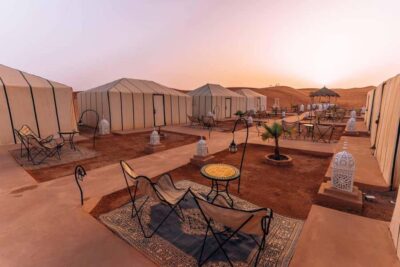
3-Day Merzouga Desert Experience Camel & Meals
Read our review →
3-Day Tour to Merzouga Erg Chebbi with Food & Camel Trek
Read our review →Browse the lists this tour appears in