Reviewed · GUIDED
9 Days Private Guided Tour in Morroco
Morocco packs a lot into nine days. This private circuit links Marrakech, Fez, Chefchaouen, Casablanca, and the Sahara without asking you to arrange each transfer yourself. I like the personal approach, especially the chance to adjust the route around your interests, and I like that guide Hamza has added hikes, family visits, weaving, and local food experiences for past guests. The main drawback is the pace: several driving days are long, and the journey works best if you enjoy seeing a wide slice of a country rather than settling into one place.
The tour costs $1,699 per person, with private transportation and taxes included. That is a reasonable price for a nine-day private trip covering much of Morocco, though you need to budget for lunches, some attraction fees, and extras such as dining at Rick’s Café. The route begins and ends at Café de France in Marrakech, and free cancellation is available up to 24 hours before the start time.
In This Review
- Five details that shape this Moroccan journey
- Starting in Marrakech among palaces and market life
- Crossing the High Atlas to Ait-Ben-Haddou
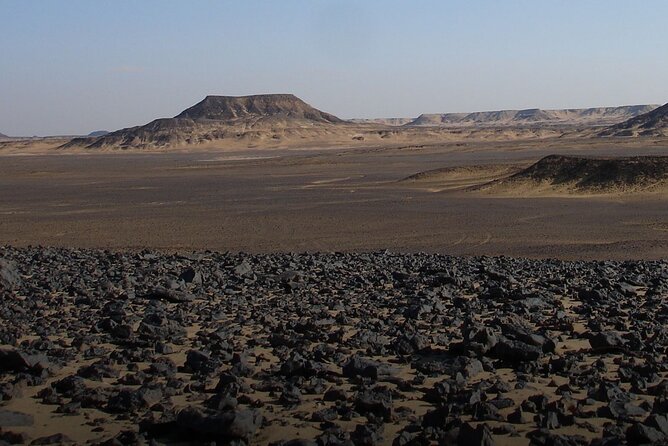
- Entering the Sahara through the Ziz Valley
- The personal side of Merzouga
- From desert roads to Fez and Ifrane
- Fez’s leather, scholarship, and tilework
- Blue streets and a quieter northern Morocco
- Casablanca’s Atlantic finish
- Returning to Marrakech and judging the value
- Who should book this Morocco tour?
- FAQ
- Where does the tour start and finish?
- How long is the experience?
- Is transportation private?
- Are meals included?
- Are attraction tickets included?
- Can the itinerary be customized?
Five details that shape this Moroccan journey
- Marrakech opens the trip with four major sights: Jemaa el-Fnaa, Bahia Palace, Ben Youssef Madrasa, and the Koutoubia Mosque.
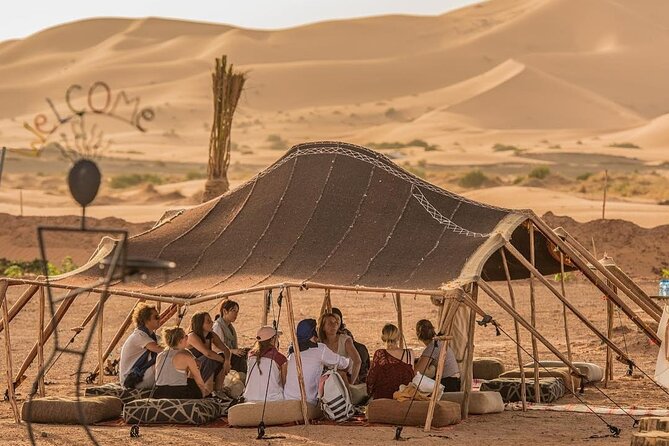
- The Sahara night is the emotional high point: you ride camels at sunset, eat dinner, hear Gnawa or Berber music, and sleep in a desert tent.
- Private transport keeps the route flexible: the itinerary can be adjusted for hikes, local homes, food, and cultural encounters.
- The route crosses Morocco’s big geographic contrasts: the High Atlas, kasbah country, palm-filled valleys, desert dunes, northern hills, and Atlantic Casablanca.
- Hamza receives the strongest praise: his attention, friendliness, and willingness to personalize the experience are central to the tour’s appeal.
- This is a sightseeing marathon: the drive from the desert toward Fez and the return to Marrakech take much of the day.
Starting in Marrakech among palaces and market life
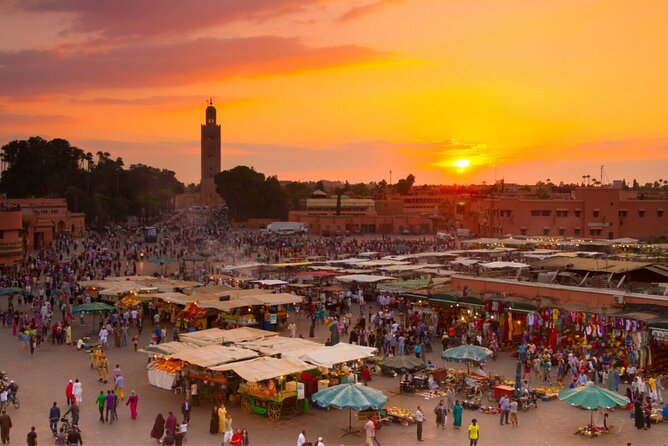
Your first day gives you a useful introduction to Marrakech, moving from public street life to royal architecture and Islamic design.
Jemaa el-Fnaa is the natural first stop. Spend about an hour taking in food stalls, henna artists, tea houses, musicians, dance, souvenir sellers, and the constant movement around the square. It is a place for watching as much as doing. Keep your belongings close, agree on prices before accepting services, and let your guide help you understand what you are seeing.
Bahia Palace follows with a slower look at Moroccan craftsmanship. You can expect courtyards, tiled rooms, carved wood, painted details, and gardens. The visit lasts about 90 minutes, so comfortable shoes and water are sensible. Much of the pleasure comes from looking up and around: doors, ceilings, plasterwork, and tile patterns reward patience more than a quick walk-through.
Ben Youssef Madrasa gives you another view of Islamic architecture. Its central courtyard, tilework, and carved wood create a calm contrast with the noise of the medina. The planned 90-minute visit allows time to look closely and hear the background from your guide.
The Koutoubia Mosque is a brief stop of about 15 minutes. You will admire the minaret and the surrounding gardens from outside, since the mosque is a working religious site. It is a short visit, but the minaret helps you get your bearings in Marrakech and gives the first day a clear visual landmark.
A few more Marrakech runs to hold up against each other
- Marrakech: Agafay Desert Sunset, Camel Ride, and Dinner Show
★ 4.6 · 35,119 reviews - From Marrakech: Ouzoud Waterfalls Guided Hike and Boat Trip
★ 4.7 · 33,630 reviews - Marrakech: Agafay Desert Quad & Camel Rides with Dinner Show
★ 4.8 · 27,382 reviews
Crossing the High Atlas to Ait-Ben-Haddou
Day two changes the mood quickly. You leave Marrakech and climb through the Tizi n’Tichka Pass, where winding roads cut across the High Atlas Mountains. The views are a major reason to take this route, but the drive can feel tiring. If you are prone to motion sickness, sit where you can see the road and ask for breaks when needed.
Ait-Ben-Haddou is the day’s major stop. This fortified ksar began construction in the 17th century and is made up of earthen buildings, narrow passages, and defensive forms rising above the surrounding countryside. The site has appeared in productions including Lawrence of Arabia, Gladiator, and Game of Thrones, but its film connection should not overshadow the place itself.
You have about two hours here, enough for photos, a walk through the settlement, and an explanation of how the ksar relates to older trade routes and local building traditions. Wear shoes with a good grip. The surfaces can be uneven, and the climb to higher viewpoints requires effort.
The day continues to Boumalne Dades, where the schedule allows up to ten hours for the area. The Dades region brings cliffs, valleys, and Berber villages. This is one of the points where private travel matters. You can pause for views and photographs instead of watching the scenery slide past a bus window.
Still, this is a serious driving day. A nine-day route across Morocco has to cover ground, and Ait-Ben-Haddou plus the Dades area means you should expect a full day rather than a leisurely village visit.
Entering the Sahara through the Ziz Valley
Day three carries you toward Merzouga and the dunes. A stop at a Ziz Valley viewpoint gives you a short but worthwhile look at palm groves, oases, canyon walls, villages, and the winding river below. The planned stop is only about 20 minutes, so have your camera ready before you get out.
You pass through Erfoud, a useful glimpse of regional town life, with red-earth buildings, markets, palm groves, and a mix of older Berber forms and modern development. The schedule treats Erfoud as a passing stop rather than a full sightseeing visit.
Merzouga is where the trip changes from road journey to desert experience. You arrive as the dunes catch the late light, then set out on camels across the sand. The ride is not a long-distance expedition, but it offers the classic Sahara moment: slow movement, open space, and changing color as the sun drops.
After dinner, traditional music and dancing take place around a campfire. You then sleep in Berber tents under the desert sky. The full Merzouga portion is listed at about 15 hours, which makes clear that this is an overnight stay rather than a quick sunset stop.
Pack a small overnight bag and keep your larger luggage in the vehicle if possible. The listing confirms the tent stay but does not give details about tent categories or bathroom arrangements, so ask for those specifics before booking if comfort levels matter to you.
The personal side of Merzouga
Day four is one of the tour’s most distinctive sections. Instead of leaving the Sahara after the camel ride, you spend time with local communities and music traditions.
At Les Nomads Zaid Bouni in Tamerdanit, you are introduced to nomadic life in the desert. The visit is planned for two hours, giving more room for conversation and questions than a quick roadside photo stop. The value here depends on your approach. Arrive curious, listen carefully, and remember that a cultural visit should be treated as an exchange, not a staged display.
Khamlia brings Gnawa music, with local musicians performing rhythmic songs and hypnotic melodies. The session lasts about 40 minutes and adds cultural context to the desert setting. Gnawa music has its own place in Moroccan culture, so this stop offers more than background entertainment for a camel ride.
The itinerary also includes Mezguida, described as the original palace of the guide’s mother’s family. You may meet members of his extended family and spend time in a setting connected to his own life. This is the kind of personal access that a standard group itinerary rarely provides.
Past guests have praised Hamza for arranging time with local people, including a weaver woman and Berber families. One couple specifically valued an itinerary adjusted around authentic interactions, while another asked for two hikes and more local food. That flexibility is a major selling point, but ask about requested additions before you pay, since the published route does not spell out every custom option or extra cost.
Same city gate, a very different afternoon:
- Marrakech: Agafay Desert Quad Biking Tour with Dinner-Show
★ 4.8 · 16,569 reviews - Marrakech: Atlas Mountains, Ourika Valley, Waterfall & Lunch
★ 4.8 · 15,834 reviews - From Marrakech: 3-Day Merzouga and Sahara Desert Tour
★ 4.9 · 15,308 reviews - Berber villages : Atlas Mountains Day Hike from Marrakech
★ 5.0 · 14,007 reviews
From desert roads to Fez and Ifrane
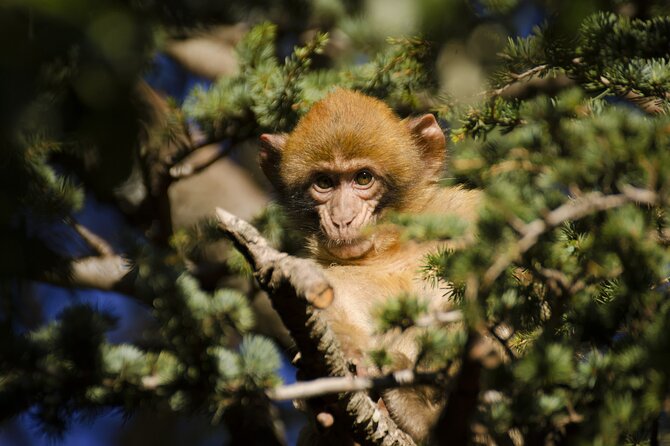
Day five is the least relaxed day on paper. The route toward Fez takes about seven hours, passing through scenic areas and Ifrane. If conditions are right, you might see wild monkeys along the road, though this is clearly a possibility rather than a promised activity.
Ifrane gives the drive a change of scenery and architectural style. The stop is part of the route toward Fez rather than a full day of sightseeing. After so much desert and dry mountain scenery, the contrast can be refreshing.
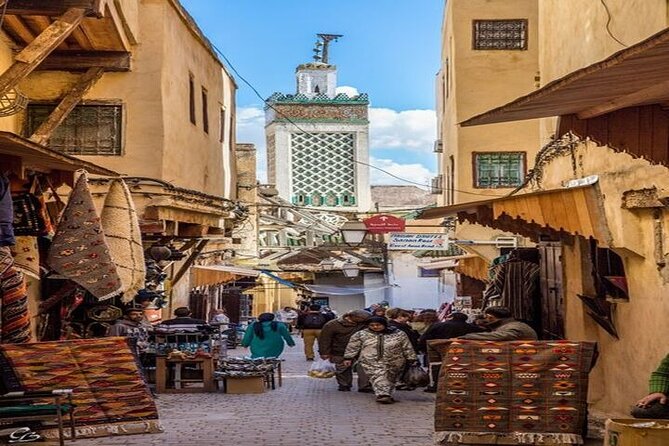
You arrive in Fes el-Bali, the old medina of Fez, and make your way to a traditional riad for the night. The medina is dense and easy to lose your bearings in, so having a guide handle the arrival is useful. The listed visit time at the medina is short, about 18 minutes, but the larger point is reaching the riad and settling in after the long drive.
The accommodation is arranged, though the supplied details do not name each property or explain room types. Ask for the accommodation list if you need to check stairs, private bathrooms, or bedding arrangements in advance.
Fez’s leather, scholarship, and tilework
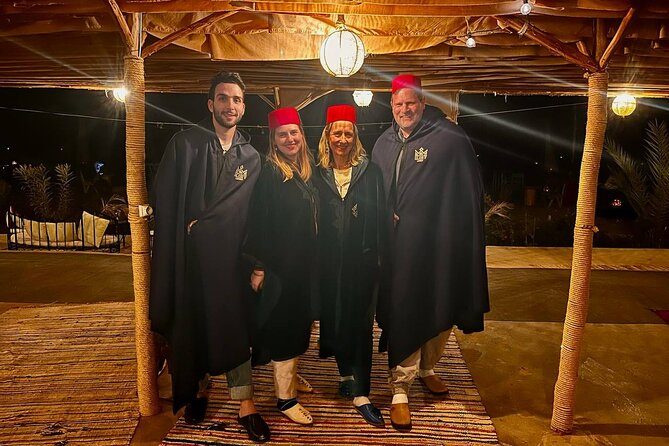
Day six is more focused and gives Fez room to show its historic crafts and religious architecture.
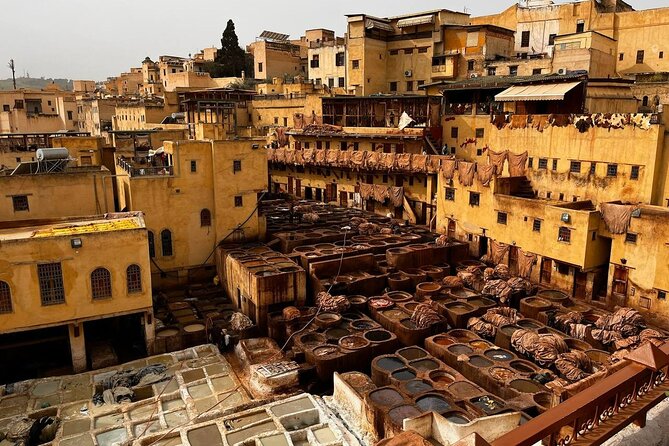
At Chouara Tannery, you see traditional leather production and the colored vats associated with the craft. The visit takes about 40 minutes. Expect a strong smell, especially in warm weather. This is not a polished museum display, and that is part of its value. You see a working tradition, along with the finished leather goods sold in surrounding shops.
The visit to the exterior of Al Quaraouiyine Mosque and University connects Fez with its long scholarly tradition. The institution was founded in 859 AD and is described as the oldest university in the world. You will not enter the university itself, but your guide can explain its place in Moroccan intellectual and religious life while you view the architecture from outside.
Bou Inania Madrasa is a compact stop of about 30 minutes. Look for the carved cedar, tilework, and central courtyard. It is smaller in scale than some major European religious buildings, but the detail is close-up and finely made. This is a stop where a guide adds real value, since the surfaces can otherwise blur into a pretty collection of patterns.
Fez is also a place where you should leave room for unplanned pauses. The medina’s appeal comes from workshops, doors, alleys, and daily activity between the formal sights. A private guide can help you spend more time on the parts that interest you, though you should be clear about shopping expectations if you do not want a long stop in a particular shop.
Blue streets and a quieter northern Morocco
Day seven heads north through Ouezzane and onward to Chefchaouen.
Ouezzane receives only about 15 minutes, so think of it as a short pause rather than a full town visit. It offers a glimpse of rural Moroccan life and a change in scenery before Chefchaouen.
Chefchaouen Medina is the main event. You have about two hours to walk through blue-washed streets, photograph doorways, browse small shops, and absorb the town’s calmer feel. The color is lovely, but the real pleasure comes from walking without a strict checklist. Let the route unfold at a slower pace here.
Ras El Ma gives you another 30-minute pause beside the river. Local people gather there to do laundry, and the spot provides a simple look at everyday life rather than another grand monument. The stop is modest, but it helps balance the more famous sights.
Two hours in Chefchaouen is enough for an introduction, not a deep exploration. If the blue medina is your main reason for visiting northern Morocco, ask whether additional time can be arranged through the private format.
Casablanca’s Atlantic finish
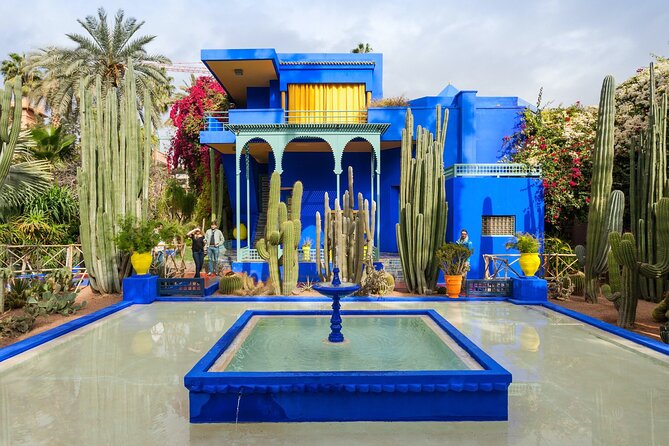
Day eight brings the tour to Casablanca, where the architecture feels more modern and the Atlantic setting changes the rhythm again.
The Hassan II Mosque is the essential stop. It is one of the world’s largest mosques and is known for detailed mosaics and fine craftsmanship. The visit lasts about an hour, but admission is not included. Confirm the current fee and visiting arrangements before you go, especially since the tour price includes transportation and taxes but not every attraction ticket.
The Corniche offers ocean views and a look at Casablanca’s modern side. The planned 45-minute stop includes views from the boulevard and terrace areas near the Corniche Mosque. It is a pleasant contrast after days of medinas, kasbahs, and desert villages.
Rick’s Café is aimed at fans of the film Casablanca. The restaurant recreates the movie’s atmosphere with elegant decor, live music, and Moroccan food. Admission is not included, and dining costs are separate, so treat this as an optional splurge rather than part of the base price.
Returning to Marrakech and judging the value
The final day is a four-hour return to Marrakech. There is no listed sightseeing stop, so use the ride to review the trip and plan what you want to do with any extra time in the city.
At $1,699 per person, the tour’s value depends heavily on the size of your party. Private transport, a dedicated guide and driver, arranged accommodation, taxes, and a route across most of Morocco can make the price attractive for couples, families, or friends sharing the experience. A solo traveler pays more for privacy, but several solo guests have especially praised Hamza’s care and support.
The price does not cover lunch. Some meals are described as provided, but the exact meal plan is not fully detailed, so ask which breakfasts and dinners are included. You should also plan for the Hassan II Mosque, Rick’s Café, personal shopping, tips, and any added activities.
Most people can participate, and service animals are allowed. Pickup is offered, although the stated meeting point is Café de France at 72 Rue des Banques in Marrakech. The tour operates Monday through Sunday between 8:00 a.m. and 8:30 p.m. Confirmation arrives at booking, and the activity ends back at the Marrakech meeting point.
Who should book this Morocco tour?
I would choose this trip if you want Morocco’s major contrasts in one organized route and prefer a private guide over a fixed group schedule. It suits couples, families, friends, and solo visitors who value help with long transfers and want opportunities to meet local people.
I would hesitate if you dislike long drives, prefer several nights in each destination, or want every meal and admission fee included upfront. The tour covers a huge amount of ground, and the best days are balanced by some demanding road time.
The strongest reason to book is Hamza’s personal style. His most praised qualities are kindness, punctuality, attention to individual interests, and a willingness to add hikes or cultural visits. Ask for a precise day-by-day plan, accommodation details, meal inclusions, and any extra costs before confirming. If those answers suit you, this is a strong way to see Morocco broadly while keeping the trip personal.
FAQ
Where does the tour start and finish?
The tour starts at Café de France, 72 Rue des Banques, Marrakech 40000, Morocco. It ends back at the same meeting point in Marrakech.
How long is the experience?
The tour lasts approximately nine days. Some individual days include long drives, including the journey from the desert toward Fez and the final return to Marrakech.
Is transportation private?
Yes. Private transportation is included for the entire tour, and only your group participates in the activity.
Are meals included?
Several meals are provided according to the tour description, but lunch is not included. The exact meal schedule is not fully specified, so confirm which meals are covered before booking.
Are attraction tickets included?
Many listed stops include admission, but admission to the Hassan II Mosque and Rick’s Café is not included. Private transportation and all taxes and fees are included.
Can the itinerary be customized?
Yes. The tour allows customization around your interests. Previous arrangements have included hikes, more contact with local people, weaving, Berber culture, and local food experiences. Confirm requested changes with the provider before departure.
Just listed around Marrakech
- Zagora: 2-Day Desert Trip from Marrakech★ 4.4 · 31 reviews
- Traditional spa Hammam & Massage with Hotel Transfers★ 4.0 · 24 reviews
- Day trip to OUZOUD waterfall with guide&boat ride from Marrakech★ 5.0 · 172 reviews
- quad bike tour in the palmeraie of Marrakech★ 4.5 · 43 reviews
- Half day quad desert agafay★ 4.5 · 24 reviews
- walking tour★ 5.0 · 46 reviews
- private tour of Marrakech 4 hours with multilingual driver★ 5.0 · 117 reviews
- 3 days tour from Marrakech to Merzouga desert★ 5.0 · 55 reviews
Guided, compared.
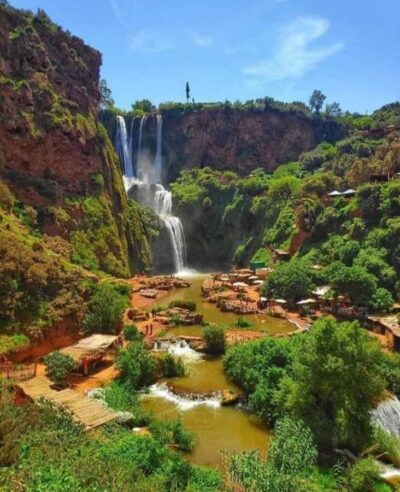
Ouzoud Waterfalls Guided Trip with Boat Ride
Read our review →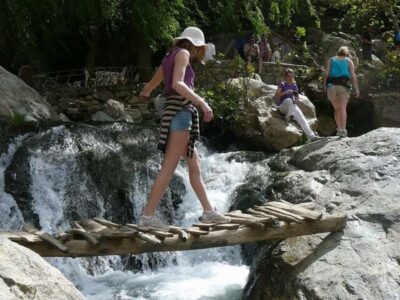
Ourika Waterfalls, Atlas Mountains, Guide + Lunch
Read our review →
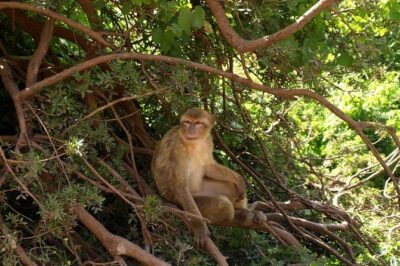
Ouzoud Waterfalls Guided Day Trip with Boat Ride
Read our review →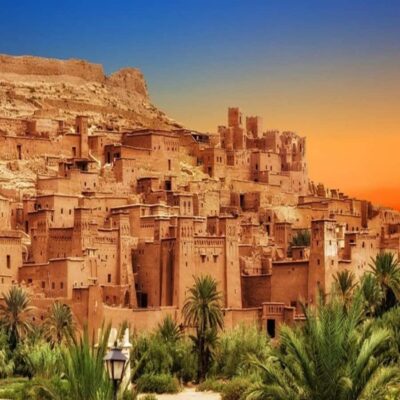
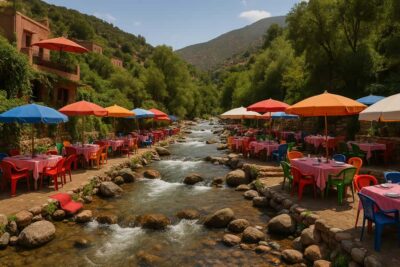
ourika valley lunch & guided hike to waterfalls
Read our review →