
Reviewed · MUSEUMS
Fes: Bou Inania Madrasa, Museum, Tannery, Souk & Medina Tour
Fes rewards curious walkers. I like the way this tour pairs major monuments with working craft quarters, and I like having a local guide who can steer you through streets that are easy to confuse. Guides such as Mouanis, Houssine, Jamal, and Driss have been praised for their patience, local connections, and practical shopping advice.
The main consideration is that this is a long walk through narrow, uneven Medina lanes, with sales visits built into some craft stops. The tour is good value at $12 per person, but you still pay 40 MAD in total for the Bou Inania Madrasa and Dar Batha Museum, and the experience may not suit anyone with serious mobility limits.
In This Review
- Key points to know before you book
- Starting at Bab Bou Jeloud, Fes’s blue gateway
- Dar Batha Museum and a former royal palace
- Bou Inania Madrasa’s cedar and zellige work
- Al-Karaouine University from the outside
- Chouara Tannery and the leather trade
- Walking the souks of Sabaghine and El Attarine
- Pottery and zellige in the workshop
- How the four-hour route feels in practice
- What the $12 price really covers
- Who should choose this Fes walking tour?
- Should you book it?
- FAQ
- Where does the tour meet?
- How long does the tour last?
- Which languages are offered?
- Are entrance fees included?
- Is Al-Karaouine University visited inside?
- Is transportation included?
- What should I bring?
Key points to know before you book
- The Medina makes more sense with a guide: You can see far more in four hours and avoid losing time in the maze of lanes.
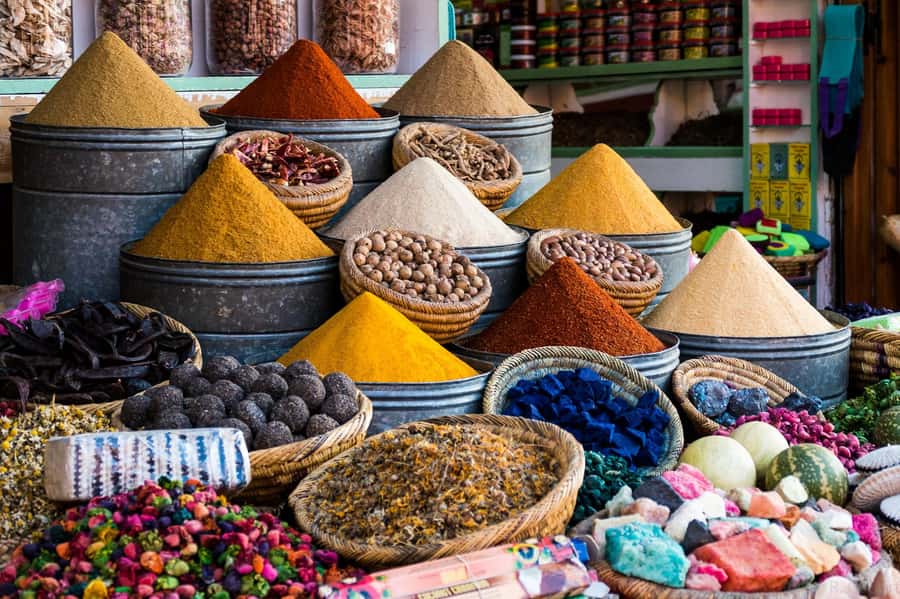
- The craft stops are central to the experience: Expect leather, pottery, zellige tile, textiles, metalwork, rugs, jewelry, and other Moroccan goods.
- Chouara Tannery is viewed from above: A terrace gives you a clear look at the dye pits, but the surrounding shops may encourage you to buy.
- The tour covers Fes’s headline sights: Bou Jeloud, Dar Batha, Bou Inania Madrasa, Al-Karaouine, the tannery, and several souks.
- The pace is usually gentle: Guides have allowed time for questions, photographs, and shopping, including for families with children.
- The price is low, but extras matter: Entrance fees, food, drinks, and transport are not included.
Starting at Bab Bou Jeloud, Fes’s blue gateway
Most versions of the tour begin at Hotel Batha on Avenue de La Liberte, in front of the medina. If you are staying in a riad inside the old town and choose the private option, the guide can collect you from reception. If you are staying outside the Medina, plan to meet at Hotel Batha unless another arrangement is confirmed.
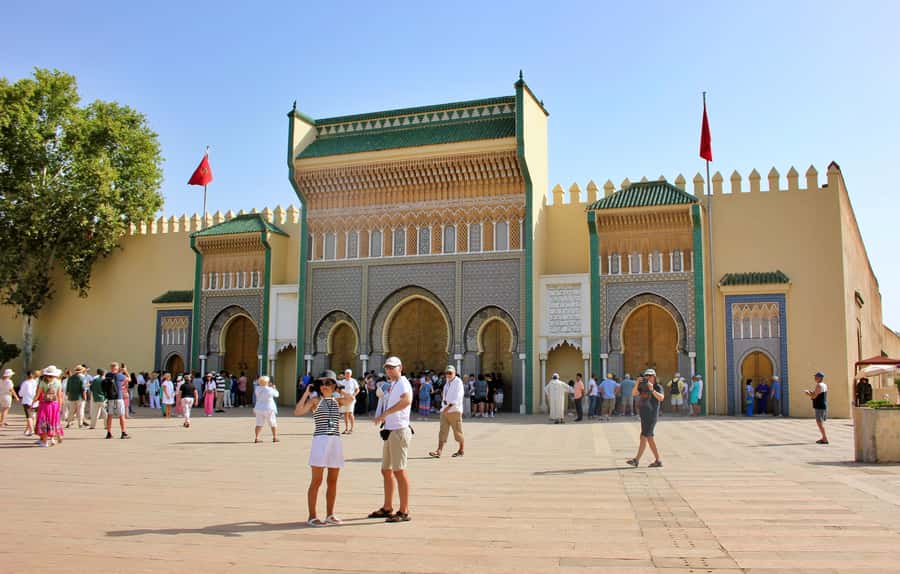
The first sight is Bab Bou Jeloud, the famous Blue Gate. It is a useful meeting point and a fitting entrance to Fes el Bali, the old city recognized by UNESCO. The stop itself is brief, around 10 minutes, but your guide uses it to explain the layout ahead and introduce the city’s long religious, scholarly, and craft traditions.
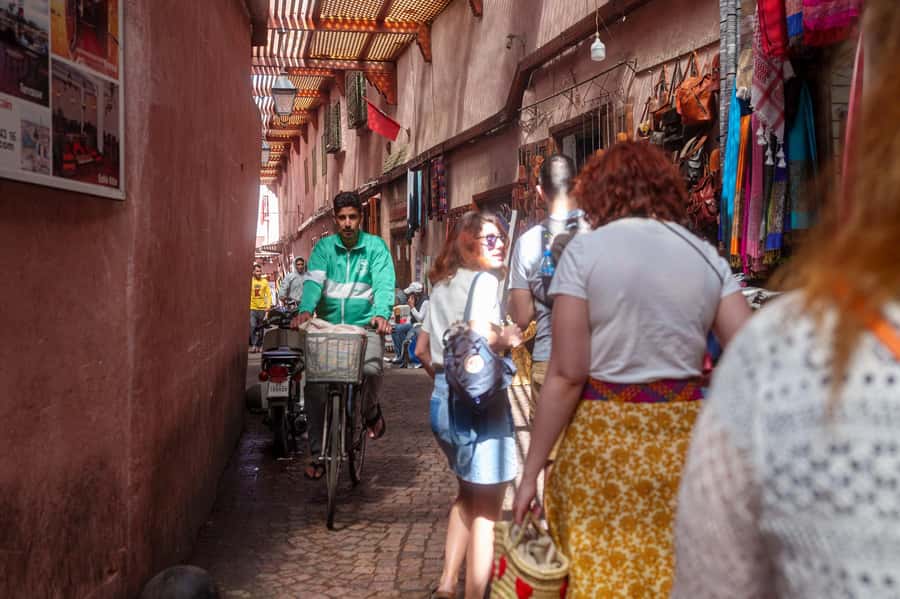
I recommend arriving early. Once you pass through the gate, the streets quickly become narrower and more confusing. Cars give way to pedestrians, handcarts, shopfronts, and the steady movement of local life. A guide is especially useful here because the route is not simply a string of wide streets leading from one monument to another.
A few more Marrakech runs to hold up against each other
- Marrakech: Majorelle Garden, YSL, and Berber Museum Entry
★ 4.6 · 5,168 reviews - Marrakech: Palace, Museum, Madrasa & Medina Highlights Tour
★ 4.7 · 706 reviews - Marrakech: Majorelle Garden, Museums Tickets, & Audio Guide
★ 4.6 · 38 reviews
Dar Batha Museum and a former royal palace
Dar Batha is scheduled for about 30 minutes. The museum occupies a former palace and presents Moroccan arts, crafts, and history. Expect carved wood, ceramics, embroidery, and other examples of skilled handwork.
This is a worthwhile early stop because it gives you a visual guide to the details you will see later in the Medina. After looking at fine tile patterns or carved surfaces in a calm museum setting, you begin to notice similar forms in doorways, fountains, workshops, and religious buildings.
The museum visit includes guided time, photographs, and some freedom to look around. Your exact time inside may depend on the group and the day’s pace. The entrance fee is 20 MAD per adult, paid separately, so keep Moroccan cash with you.
Dar Batha is also a useful pause before the busier lanes. It offers a change of rhythm, although anyone hoping for a large, modern museum should keep expectations modest. The appeal is the setting and the connection between palace decoration and everyday Moroccan craft.
Bou Inania Madrasa’s cedar and zellige work
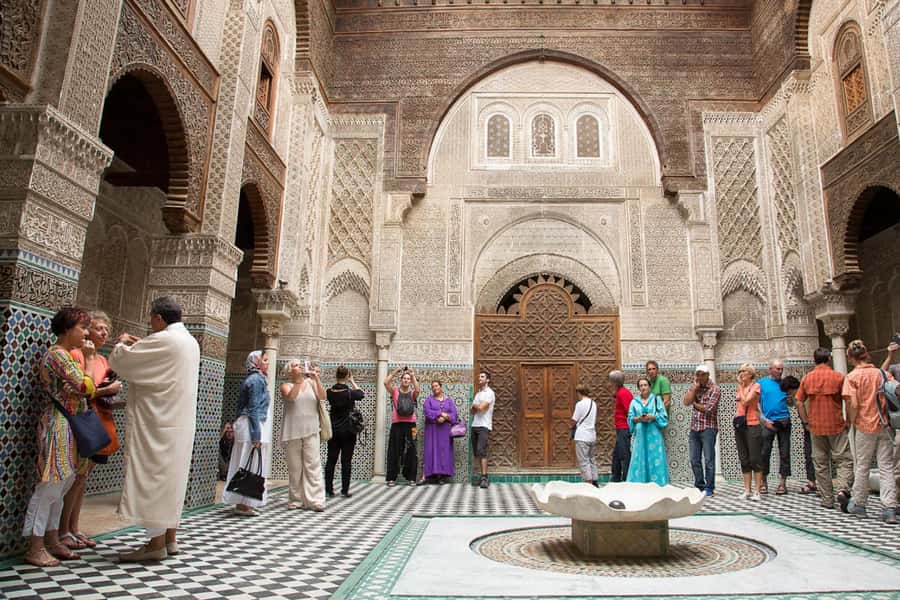
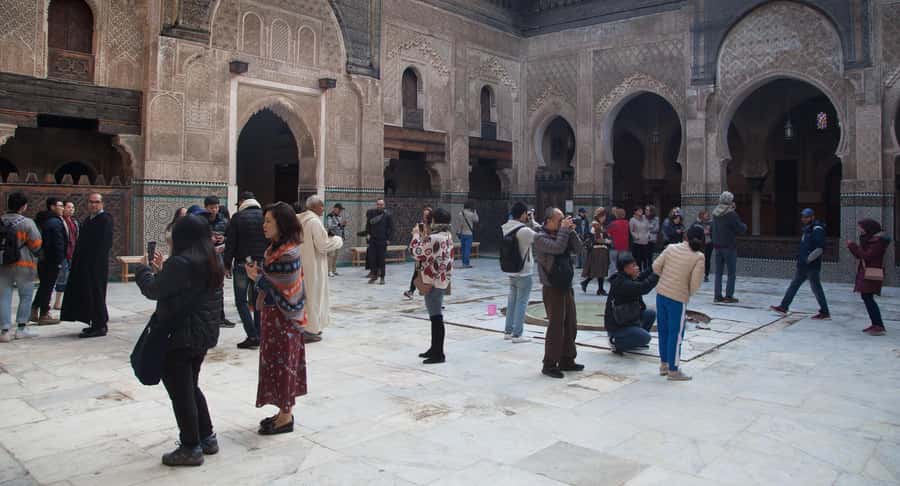
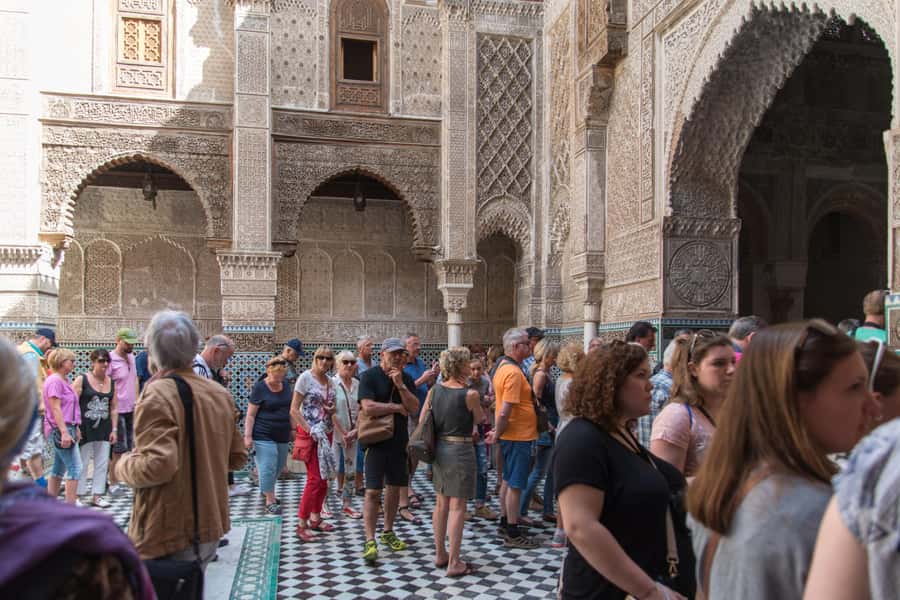
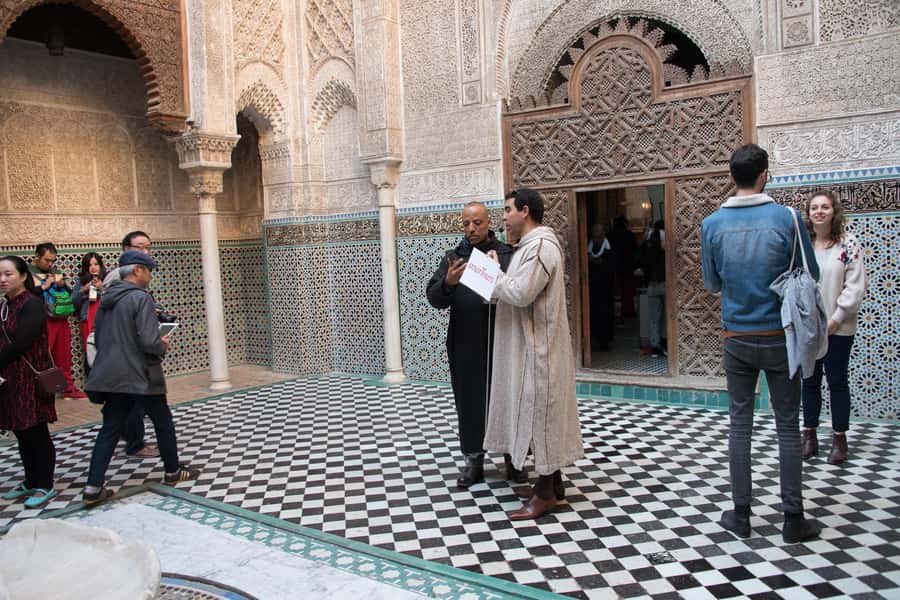
The Bou Inania Madrasa receives about 35 minutes, making it one of the more substantial monument stops. Built in the 14th century under the Marinid dynasty, it is known for carved cedarwood, patterned zellige tilework, and a marble courtyard.
Look up and take your time with the surfaces. The building’s impact comes from the close work: geometric tile patterns, carved wood, and the careful balance between decoration and open space. This is not a monument you understand from one quick photograph.
Bou Inania is unusual because it served as both a madrasa and a mosque. That dual role helps explain why it matters so much in Fes. The city was not only a political center but also a place of religious study and scholarship.
The entry fee is 20 MAD per adult. The tour includes skip-the-line access to selected monuments, which can save some waiting, but you should still allow for the building’s opening conditions and the pace of the group.
The courtyard can feel peaceful after the noise outside. At the same time, the passageways and floors may be difficult for people with mobility impairments. The activity information describes the tour as wheelchair accessible but also says it is not suitable for people with mobility impairments. If this affects you, ask the provider for a clear route assessment before booking.
Al-Karaouine University from the outside
The next stop is the Mosque and University of Al-Karaouine, with about 20 minutes for photographs, explanation, and sightseeing. The planned visit is exterior only, so do not book this tour expecting to walk through the mosque or university interiors.
Al-Karaouine is presented as one of the world’s oldest universities and remains one of Fes’s key symbols of learning. Your guide can place the building within the city’s religious and scholarly life, which is far more useful than simply passing the entrance and taking a picture.
The exterior stop also shows why a guide adds value in the Medina. Important buildings can be tucked into ordinary-looking lanes, and the difference between a religious site, a school, a market, and a workshop is not always obvious at street level.
This is one of the tour’s shorter visits. If you are especially interested in Islamic architecture or the history of education, ask questions here and use the free time for photographs. The building is important, but the tour does not promise an interior visit.
Same city gate, a very different afternoon:
- Marrakech: Agafay Desert Sunset, Camel Ride, and Dinner Show
★ 4.6 · 35,119 reviews - From Marrakech: Ouzoud Waterfalls Guided Hike and Boat Trip
★ 4.7 · 33,630 reviews - Marrakech: Agafay Desert Quad & Camel Rides with Dinner Show
★ 4.8 · 27,382 reviews - Marrakech: Agafay Desert Quad Biking Tour with Dinner-Show
★ 4.8 · 16,569 reviews
Chouara Tannery and the leather trade
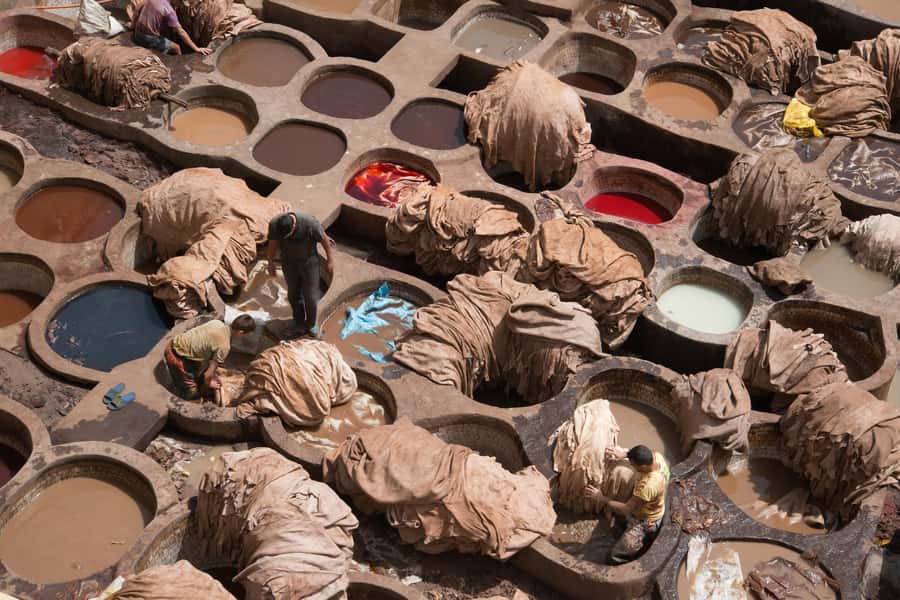
The Chouara Tannery is one of the tour’s headline stops and lasts about 30 minutes. From a panoramic terrace, you look down onto the famous dye pits, where leather is hand-treated and colored using natural dyes such as saffron and indigo.
The view is striking because the work remains visible in the open rather than hidden inside a modern factory. You can watch the shapes, colors, and activity below while your guide explains the centuries-old leather-making process. The tradition is described as dating back to the 11th century.
This stop also needs the most practical preparation. Tannery viewing terraces are commonly connected with leather shops, and the visit can include time to see finished goods. You may be invited to browse bags, belts, slippers, jackets, and other items. The sales staff may be polite, but you should still decide in advance how interested you are in shopping.
The strongest advice from this tour experience is simple: do not feel obliged to buy. If you want leather, ask about quality, origin, and construction rather than choosing only by color. If you do not want to shop, a friendly no is enough.
The tannery can also have a strong smell. Bring water, and consider carrying a scarf or handkerchief if you are sensitive to odors. The terrace view is the main reward, so you can enjoy the stop without treating it as a shopping appointment.
Walking the souks of Sabaghine and El Attarine
The Medina walk takes around 45 minutes, though the overall time can expand with questions and shopping. Two named souks are included: Souk Sabaghine, associated with handwoven textiles, and Souk El Attarine, known for spices, perfumes, and herbal remedies.
These streets show Fes as a working city rather than a set of preserved sights. You might see textiles hanging in narrow shops, hear bargaining, smell spices, and pass goods made for local use as well as for visitors. The guide’s role is to explain what you are seeing and keep the route moving.
At Hammam Seffarine, listen for the rhythmic hammering of coppersmiths. Metalworkers continue traditions that are easy to miss if you wander without a plan. The sound itself becomes a useful landmark as you move through the lanes.
Shopping advice is one of the tour’s most useful extras. Guides have helped people tell handmade Moroccan goods from cheaper imported items, and they can explain how to bargain without turning the process into an argument. Driss, for example, was praised for helping with purchases and pointing out local craft rather than low-cost imports.
Still, keep your own priorities clear. One participant felt that the craft shops took time away from simply walking the Medina. That is a fair criticism, especially if you have only one day in Fes and want to see street life rather than shop displays.
Pottery and zellige in the workshop
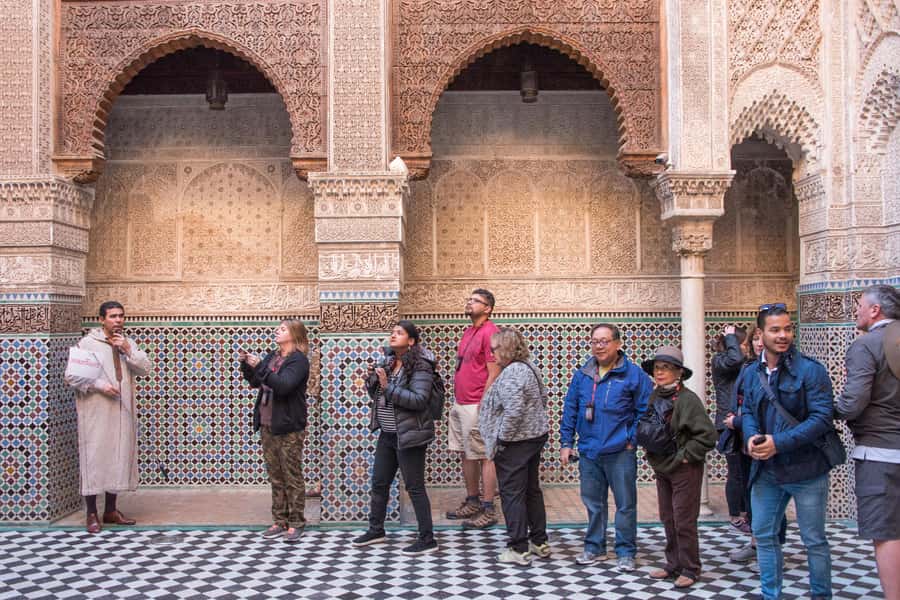
The final craft focus is a pottery and zellige workshop. Here you can see clay shaped into ceramics, pieces hand-painted, and small tiles cut and arranged into complex mosaic designs.
This stop explains the decoration seen earlier at Dar Batha and Bou Inania. Moroccan zellige is not just painted pattern. The small tile pieces are cut and fitted into larger geometric designs used on fountains, palaces, mosques, and other important buildings.
A workshop visit gives you a closer look at the labor behind those surfaces. You may find pottery, tiles, bowls, plates, and decorative pieces for sale. As with the tannery, buying is optional, and you should feel free to look without committing.
For many people, this is where the tour’s separate parts come together. The museum shows finished craft in a formal setting, the souks show it being sold, and the workshop shows how it is made. That connection gives the afternoon more purpose than a basic sightseeing loop.
How the four-hour route feels in practice
The advertised duration is 210 minutes to four hours. The listed walking and sightseeing times add up to roughly three hours, leaving room for transitions, explanations, photographs, and shopping. The route begins and ends around Bab Bou Jeloud, with drop-off options at Hotel Batha or Fes el Bali.
The walking is not a race. Several guides have been praised for keeping a comfortable pace, answering many questions, and allowing families time to stop. A small group or private booking should make it easier to linger at a favorite site.
Wear sturdy, comfortable shoes. The Medina is made for walking, and the route includes narrow lanes, busy passages, and monument floors that may not be smooth. Bring sunglasses, sunscreen, water, and cash. Food and drinks are not included, and transportation is not included unless your private pickup arrangement applies within the Medina.
The tour is offered in French and English. A WhatsApp reminder with the guide’s name, meeting point, and practical tips is sent before the activity, which is useful because the starting arrangements vary by accommodation and booking type.
What the $12 price really covers
At $12 per person, this is an inexpensive way to gain structure inside Fes’s old city. The guide, walking route, local explanations, monument access arrangements, and time at the main sights are included. For a first visit, the cost is easy to justify because getting lost for several hours can mean missing important places.
The two listed admission fees add 40 MAD per adult. You also need to budget for anything you choose to buy, plus personal drinks or snacks. Transportation is separate, so the tour is best for anyone already in or near the Medina.
The strongest value comes from navigation and local context. You are not paying for luxury transport or a private museum curator. You are paying for someone who can connect the sights, read the streets, answer questions, and help you avoid wasting half the afternoon on wrong turns.
A private option costs more than the basic per-person price if selected, but it may suit families or anyone who wants to set the pace. A small group offers a middle ground, with some personal attention without the full cost of a private guide.
Who should choose this Fes walking tour?
I would choose this tour for a first visit to Fes, especially if you have only one day for the Medina. It covers the major landmarks while adding working crafts, which gives you a better sense of how the old city functions.
It also suits families. A guide called Mouanis was praised for moving without pressure with a family of three children, and other guides have been described as patient and happy to answer questions. That matters in a place where young children can tire quickly and adults can spend too much time stopping to check directions.
You should also consider it if you want to shop but prefer help. Guides can show you where rugs, woodwork, jewelry, scarves, leather, pottery, and other goods are made, and they can offer advice about bargaining and quality.
I would hesitate if your main goal is a quiet, unstructured walk. Craft stops can include sales pitches, and one part of the route may feel more focused on products than streets. You can usually decline politely, but the shopping element is part of the design.
This is not the best fit for serious mobility problems. Even though the activity information notes wheelchair access, it also excludes people with mobility impairments. Ask directly about the day’s route, surfaces, and monument access before paying.
Should you book it?
Book it if you want a low-cost, well-organized introduction to Fes’s Medina, with major buildings, souks, and working crafts in one walk. The most praised features are the guides’ patience, local knowledge, ability to navigate, and willingness to tailor the pace.
Choose the private option if you are a family or want more control over shopping and photographs. Choose a small group if you want personal attention at a lower overall cost.
Skip it if you strongly dislike shopping stops or already know the Medina well. For most first-time visitors, though, the $12 price is a sensible trade for four hours of direction, context, and access to parts of Fes that are easy to miss alone.
FAQ
Where does the tour meet?
The standard meeting point is in front of Hotel Batha on Avenue de La Liberte in Fes. If you stay inside the Medina and choose the private option, pickup from your riad reception is available.
How long does the tour last?
The activity lasts between 210 minutes and four hours. Starting times depend on availability.
Which languages are offered?
The live guide is available in English or French.
Are entrance fees included?
No. Entry to Bou Inania Madrasa costs 20 MAD per adult, and entry to Dar Batha Museum costs 20 MAD per adult.
Is Al-Karaouine University visited inside?
No. The planned stop at the Mosque and University of Al-Karaouine is an exterior visit.
Is transportation included?
No. Transportation is not included. Pickup is optional for the private option when your accommodation is inside the Medina.
What should I bring?
Bring comfortable shoes, sunglasses, sunscreen, water, and cash. Food and drinks are not provided.
Just listed around Marrakech
- 3 Days To Merzouga Desert★ 5.0 · 19 reviews
- 3 Days Shared Sahara Desert Tour From Marrakech★ 5.0 · 78 reviews
- 1 night Camel Treking in Merzouga Desert Luxury Camp★ 5.0 · 132 reviews
- 3 Days Sahara Desert Trips From Marrakesh★ 5.0 · 176 reviews
- 3 Days Sahara Tour from Marrakech to Merzouga Dunes★ 5.0 · 29 reviews
- 3 Days Private Tour to Merzouga Desert from Marrakech★ 5.0 · 77 reviews
- trip of your dreams in 3 days and 2 nights in the desert★ 5.0 · 36 reviews
- 3 Day Sahara Desert Tour From Marrakech★ 5.0 · 49 reviews
Museums, compared.
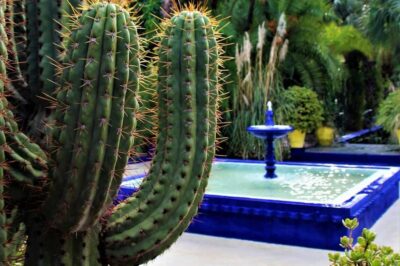
Majorelle Garden, YSL, and Berber Museum Entry
Read our review →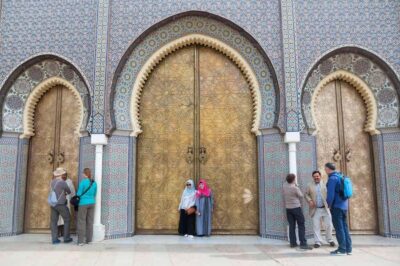
Museum, Al Attarine Madrasa & Tannery and Medina Tour
Read our review →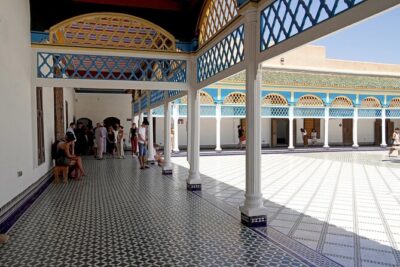
Palace, Museum, Madrasa & Medina Highlights Tour
Read our review →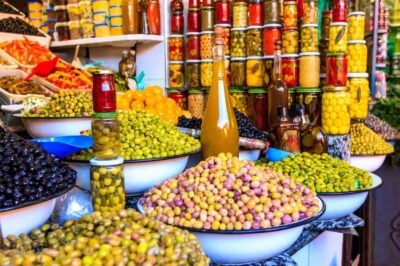
Attarine Madrasa, Museum, Tannery, Souk and Medina Tour
Read our review →
Majorelle Garden, Museums Tickets, & Audio Guide
Read our review →Browse the lists this tour appears in