
Reviewed · MUSEUMS
Marrakech: Palace, Museum, Madrasa & Medina Highlights Tour
Marrakech reveals itself on foot. This four-hour walk links Bahia Palace, Ben Youssef Madrasa, Dar El Bacha Museum, Djemaa El Fna, and the Medina souks for a useful first look at the city. I like the strong mix of architecture and daily life, and I like having a local guide explain what you are seeing instead of simply pointing at tiled walls. The main catch is that monument tickets cost extra, and the shopping stops may not suit anyone who wants a strictly historical walk.
I would book this early in your stay, especially if the Medina feels confusing at first. Guides such as Yassine, Hassan, Youness, Ismail, and Achraf have earned especially warm praise for clear explanations, humor, patience, and help with photos. Still, four hours is a brisk stretch of walking, and crowded souk lanes can make it hard to keep the group in sight.
In This Review
- Key points at a glance
- Why this walking tour works as a first day in Marrakech
- Starting at Djemaa El Fna
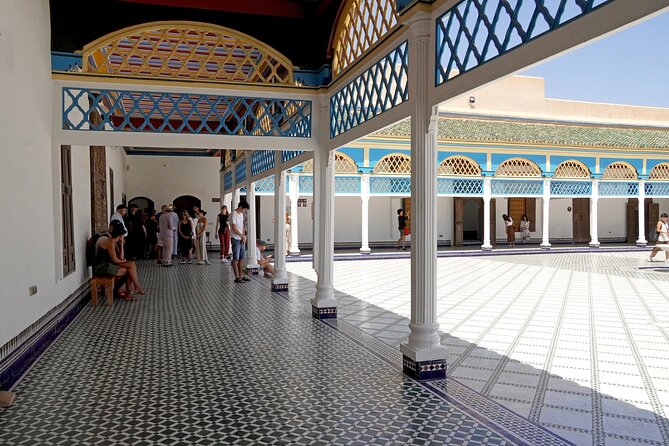
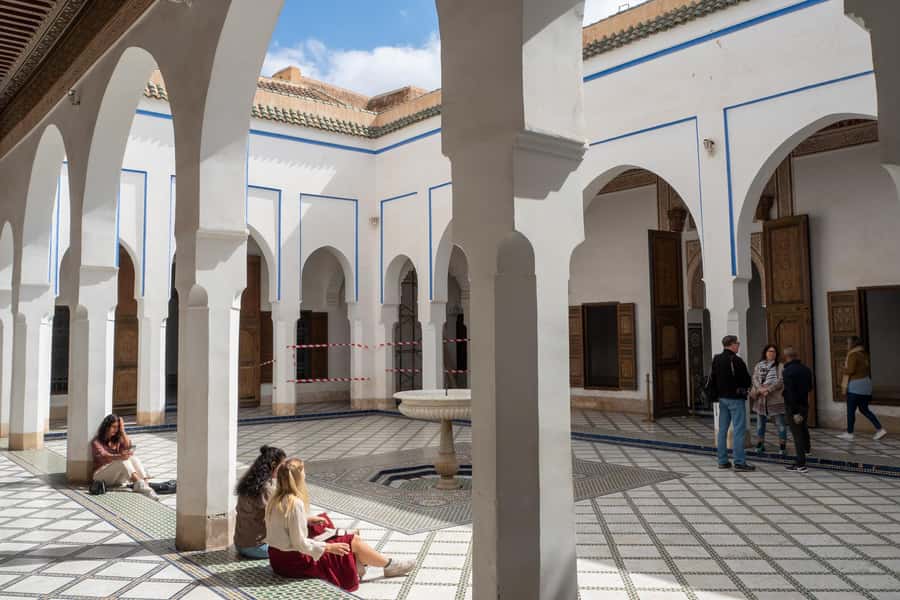
- Bahia Palace and its quiet courtyards
- Reading the Medina through Souk Semmarine
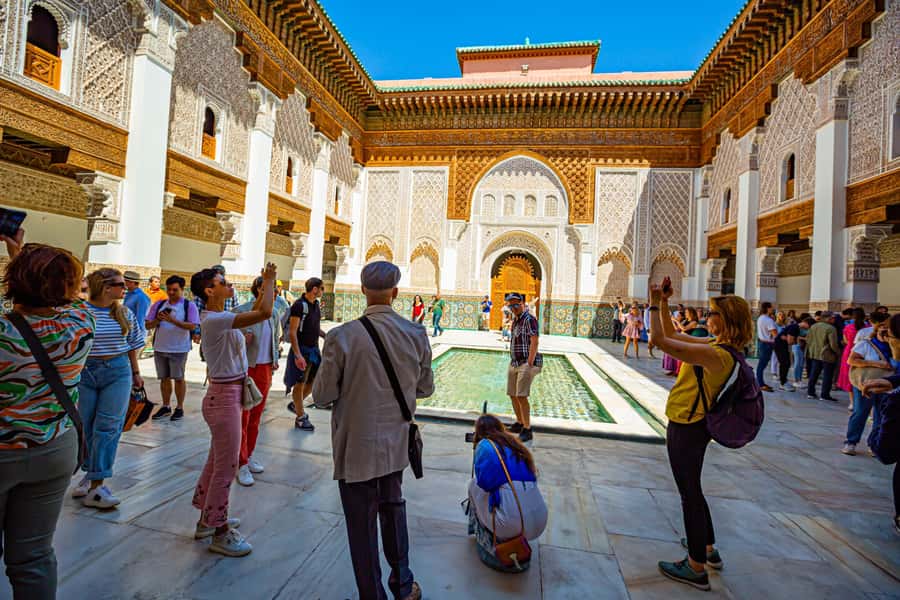
- Ben Youssef Madrasa, the tour’s strongest interior
- Dar El Bacha Museum and the royal past
- Rahba Kedima and the final walk home
- What the guides add
- Pace, comfort, and practical limits
- Is the $18 price good value?
- Should you book this Marrakech tour?
- FAQ
- How long does the Marrakech highlights tour last?
- Where does the tour meet?
- Is hotel pickup available?
- Are monument entry tickets included?
- Does the tour include skip-the-line access?
- Which languages are available?
- Is Dar El Bacha Museum always visited?
- Is food or drink included?
- Is this a private tour?
- What should I bring?
Key points at a glance
- The route connects Marrakech’s essential sights: You see Djemaa El Fna, Bahia Palace, Ben Youssef Madrasa, Dar El Bacha, and key souks in one half-day.
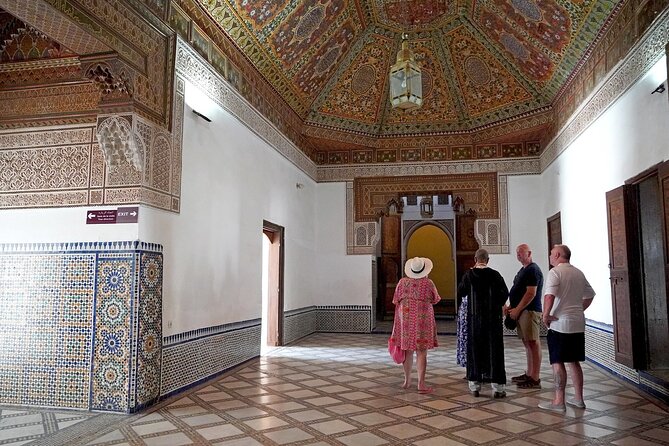
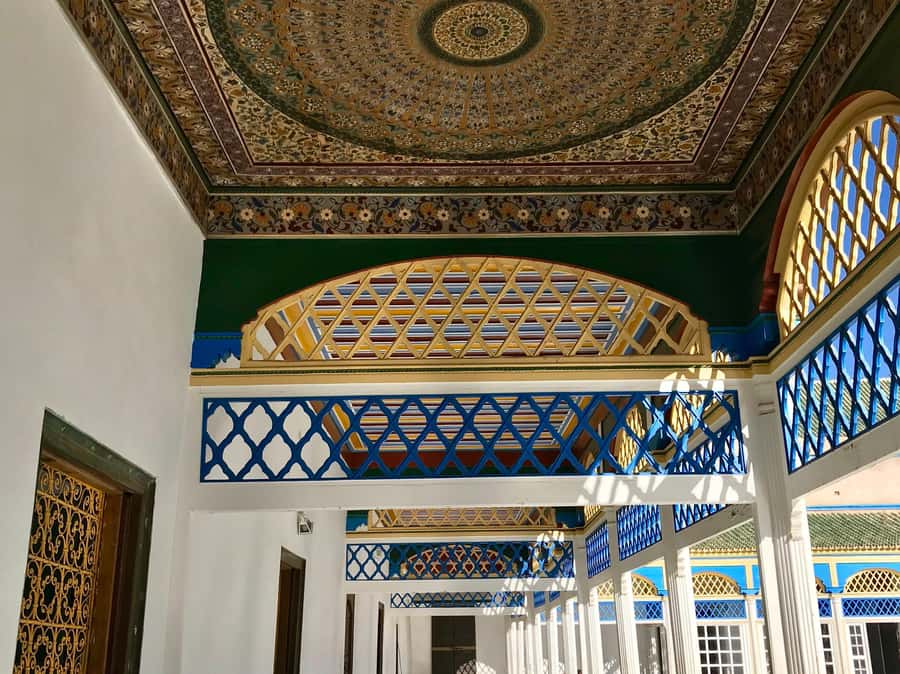
- Bahia Palace is the visual star: Expect carved cedar, painted ceilings, marble, stucco, zellij tilework, courtyards, and gardens.
- Ben Youssef Madrasa adds real historical weight: This former Quranic school once housed about 800 students and is one of the city’s finest interiors.
- The souks are part sightseeing, part shopping: Semmarine focuses on clothing and leather, while El Attarine brings spices, perfumes, and beauty products.
- You pay monument fees separately: Bahia Palace costs 100 MAD per adult and Ben Youssef Madrasa costs 50 MAD per adult.
- Morning is the smartest time: One guest found the earlier start less crowded and more comfortable before lunch.
Why this walking tour works as a first day in Marrakech
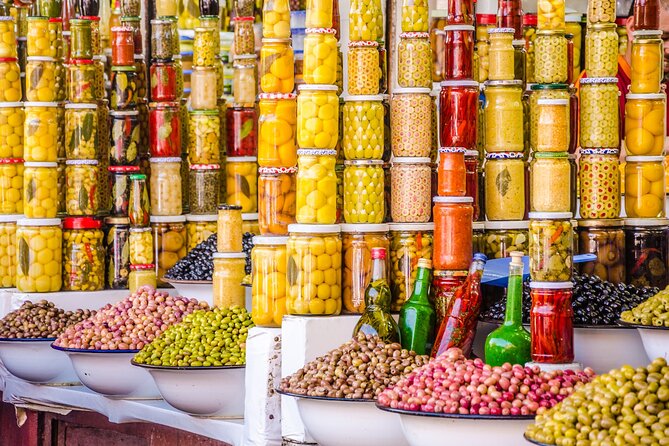
Marrakech can feel like several cities at once. Djemaa El Fna is wide and open, the Medina quickly narrows into twisting lanes, palaces hide behind plain walls, and the souks shift from leather to spices to metalwork within a few minutes. A guide gives you a framework before you attempt the old city alone.
The route also offers a good balance. You are not spending the whole morning inside museums, nor are you left wandering shops without context. You move between royal architecture, religious education, craft traditions, and ordinary Medina life.
That balance is the tour’s greatest strength. It helps you understand that Marrakech is not just a collection of pretty buildings. Its tilework, courtyards, workshops, markets, and public squares all connect to the way the city developed and worked.
At $18 per person, the guiding fee is modest for four hours. Add 150 MAD per adult for Bahia Palace and Ben Youssef Madrasa, plus anything you buy or drink, and it remains a fair deal if your guide is as helpful as the strongest reports suggest. The price is less attractive if you dislike shopping stops or prefer to linger at one monument for a long time.
A few more Marrakech runs to hold up against each other
- Marrakech: Majorelle Garden, YSL, and Berber Museum Entry
★ 4.6 · 5,168 reviews - Fes: Bou Inania Madrasa, Museum, Tannery, Souk & Medina Tour
★ 4.7 · 74 reviews - Marrakech: Majorelle Garden, Museums Tickets, & Audio Guide
★ 4.6 · 38 reviews
Starting at Djemaa El Fna
The meeting point is in front of Café de France in Djemaa El Fna, Marrakech’s best-known square. If you are staying in a Medina riad and choose the private option, pickup can take place at your riad’s reception. Otherwise, you meet at the café.
Allow a little extra time to find the correct spot. The operator contacts you a day or two before the walk to confirm arrangements, which is useful in a square that can feel hectic. Your guide should enter the monuments with you, explain the sites, and then give you time for photos and independent looking.
The square itself receives about 15 minutes. That is enough for an introduction, not a full study of its performers and food stalls. Storytellers, musicians, snake charmers, and changing stalls give the place its special character, but the square’s mood shifts during the day.
This opening works best as orientation. Your guide can point out how the square connects to the Medina and help you recognize the route back later. You return here at the end, so pay attention to the café and nearby landmarks.
Bahia Palace and its quiet courtyards
Bahia Palace receives around 40 minutes, making it one of the main stops. The 19th-century complex contains 160 rooms arranged around courtyards, with an eight-hectare garden surrounding the palace area.
The appeal is in the craftsmanship. Look for zellij floors, carved and painted ceilings, stucco panels, marble finishes, and the blend of Moroccan and Andalusian design. The courtyards create a sudden calm after the noise of the street, and the contrast is part of the experience.
A good guide can help you read the building rather than treat it as a backdrop for photos. Achraf, praised for his explanations of Islamic architecture, reportedly connected arches, geometric decoration, and courtyard design to their cultural meaning. That sort of commentary changes the visit from a quick picture stop into a lesson in how Moroccan buildings communicate status, privacy, and beauty.
Bahia Palace costs 100 MAD per adult, and this fee is not included in the tour price. The tour includes skip-the-line access, so you avoid buying your ticket in the regular queue, but you still pay the admission charge.
Forty minutes is enough to see the main rooms without exhausting your attention. It is not enough for a slow architectural study or a long garden wander. If palace interiors are your main interest, ask your guide at the start how much time is planned and use the free period carefully.
Reading the Medina through Souk Semmarine
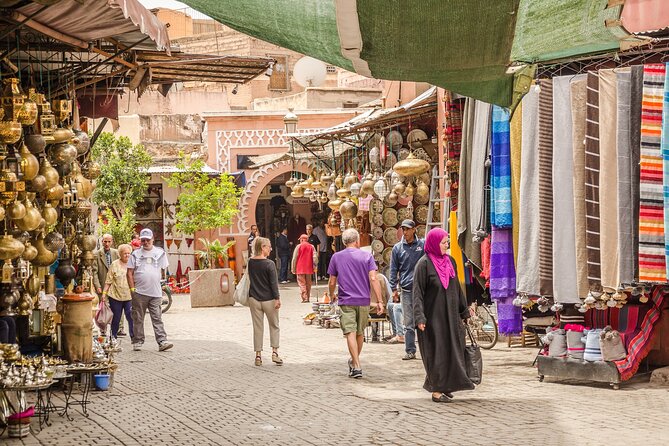
From the palace, the walk turns toward Souk Semmarine. This section is listed as about 15 minutes, though several parts of the route involve walking through market lanes and workshops. The souk is known for traditional clothing and leather goods, with artisans working close to the selling areas.
This is where the tour becomes less predictable. The lanes are crowded, and it can be difficult to keep your guide in sight. Two separate experiences raised the same practical concern: the market route can feel rushed when everyone is trying to stay together.
Stay close, especially at corners, and listen for meeting instructions before the group moves on. The small-group and private options should make communication easier, though the exact group size depends on what you book.
You may also visit arranged stops connected with tea, rugs, argan oil, spices, or other goods. One person found a 30-minute tea-shop stop unnecessary and would have preferred more time at Bahia Palace. Another enjoyed learning how argan oil, perfume, and spice products are made and ended up buying about 500 MAD worth of items.
That difference tells you what to expect. Shopping is not merely accidental here. It forms part of the route. If you enjoy meeting sellers and comparing Moroccan products, the stop can be useful. If you want museums without sales pressure, ask your guide early how much shopping time is planned.
Same city gate, a very different afternoon:
- Marrakech: Agafay Desert Sunset, Camel Ride, and Dinner Show
★ 4.6 · 35,119 reviews - From Marrakech: Ouzoud Waterfalls Guided Hike and Boat Trip
★ 4.7 · 33,630 reviews - Marrakech: Agafay Desert Quad & Camel Rides with Dinner Show
★ 4.8 · 27,382 reviews - Marrakech: Agafay Desert Quad Biking Tour with Dinner-Show
★ 4.8 · 16,569 reviews
Ben Youssef Madrasa, the tour’s strongest interior
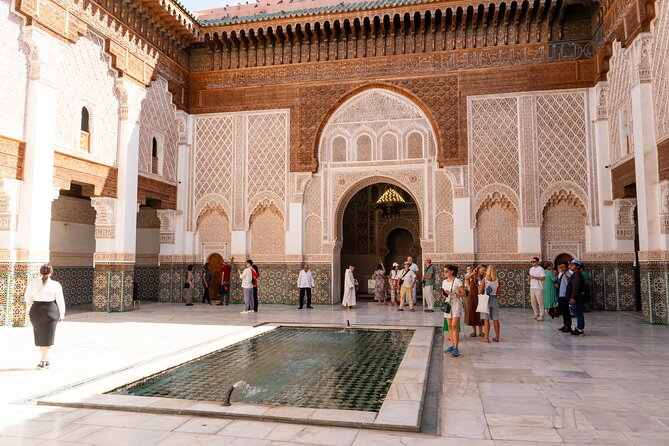
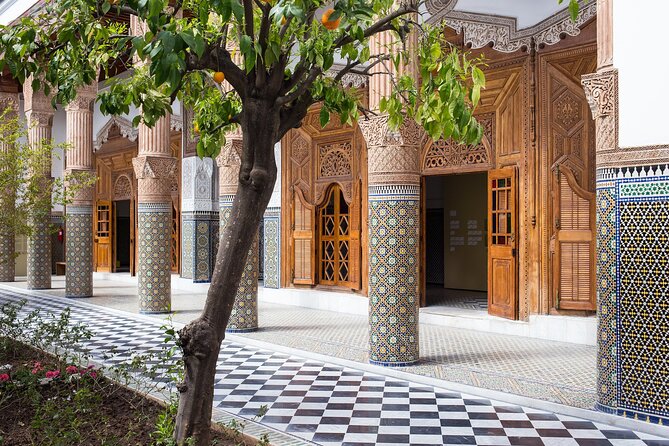
Ben Youssef Madrasa receives about 40 minutes, and for many people it will be the most memorable building of the morning. Founded as a Quranic school in the 14th century and rebuilt in the 1560s, it once housed about 800 students.
The central courtyard gives you the best first impression. Zellij tilework covers the lower walls, stucco rises above it, and carved cedar frames the upper sections. The decoration is detailed without being random. Repeating geometry, calligraphy, and carefully cut surfaces show how much skill went into a place built for study and religious life.
Your guide’s role matters here. Without context, you may see only an attractive courtyard. With a good explanation, you begin to understand how the school functioned and why the arrangement of rooms, prayer space, and student quarters mattered.
Ben Youssef costs 50 MAD per adult, also paid separately. Skip-the-line access is included, which saves time at a popular sight. You get free time for photos and closer inspection after the guided explanation.
The madrasa is especially valuable for anyone interested in Islamic art, architecture, or Moroccan design. It is also a strong reason to take the tour early in your Marrakech visit, since the guide can point out details you might miss when returning alone.
Dar El Bacha Museum and the royal past
Dar El Bacha Museum is planned for about 30 minutes, but the wording of the experience allows for this stop only if time permits. Treat it as a bonus rather than the one sight you must build the day around.
The former palace presents Moroccan art in grand rooms filled with woodwork, textiles, and ceramics. It offers a different mood from Ben Youssef Madrasa. The madrasa centers on learning and religious life, while Dar El Bacha suggests the private world of Marrakech’s elite.
The museum is closed on Mondays. If you particularly want to see it, avoid booking the tour on that day or arrange a separate visit. The supplied details do not state a separate admission fee for Dar El Bacha, so confirm the current arrangements when booking.
Because the route is full, delays at the souks or a slow start can reduce time here. Ask your guide at the beginning if Dar El Bacha is definitely part of that day’s plan. If it matters most to you, plan a separate visit rather than relying on the optional timing.
Rahba Kedima and the final walk home
Rahba Kedima receives around 20 minutes. This square and its surrounding lanes return you to the sensory side of the Medina, with market activity, crafts, and the chance to see how different stalls and workshops fit together.
The route may include nearby craft spaces where pottery, metalwork, and wooden objects are made. These visits are useful because they show the work behind the finished souvenirs. You can ask questions about materials and methods, then decide for yourself if anything is worth buying.
The walk ends back at Djemaa El Fna, after roughly 15 minutes of final walking. Drop-off is listed at Café de France or in the Medina. This is convenient if you want lunch, another look at the square, or a simple route back to your accommodation.
What the guides add
The strongest part of this experience is the human element. Guide assignments vary, so nobody can promise a particular person, but several names appear repeatedly in the praise: Yassine for history, humor, photography, and group care; Hassan for patience and cultural explanation; Youness for professional organization; Ismail for detailed talks and helpful local advice; and Achraf for his command of Islamic architecture.
Mustapha, Mouhssine, Hamza, and others also received warm comments for friendliness and clear guiding. One guide kept the pace comfortable for a couple with a baby in a stroller, while another waited several minutes for a person delayed by heavy rain. These details suggest a service style that is generally patient rather than rigid.
English and French are offered. The strongest English-language experiences describe easy communication, clear answers, and humor that kept the four-hour walk enjoyable. Ask questions. The route becomes much more useful when you connect the buildings to Moroccan culture instead of simply collecting photographs.
Pace, comfort, and practical limits
This is a walking tour through a crowded old city. Wear comfortable shoes, bring water, and carry sunglasses. Summer heat can be serious: one guest praised Achraf for keeping the group comfortable in 39-degree weather, while another found a morning start ideal.
The tour is described as not suitable for people with mobility impairments, yet the general information also labels it wheelchair accessible. That is an important inconsistency. The Medina includes crowded lanes and extended walking, so contact the provider before booking if you use a wheelchair or have difficulty walking.
Transportation is not included. You reach the meeting point yourself unless you select private pickup from a riad or hotel within the Medina. Food and drinks are also extra, though one group enjoyed Berber tea with its guide.
Private and small-group formats are available. A small group of six gave one person enough room to ask questions and hear the explanations. Private touring makes more sense if you want to control the pace, avoid group shopping, or need special help with timing.
Free cancellation up to 24 hours before the start and reserve-now, pay-later booking make this easy to fit into a changing schedule. Those policies are helpful, but the real decision is still about pace and interests.
Is the $18 price good value?
Yes, with two qualifications. First, the entry fees are not included, adding 150 MAD per adult for the palace and madrasa. Second, you need to decide if the guide’s time in the souks is useful to you.
Even after the extra fees, the cost is reasonable for four hours of guiding, route-finding, monument explanations, and local advice. The skip-the-line arrangement has real value at popular sights, especially when you have limited time in Marrakech.
I would not choose this as a replacement for a full day at the monuments. The schedule gives you a broad introduction, not a slow, scholarly visit. I would choose it as a first-day framework, then return independently to whichever place captured your interest.
Should you book this Marrakech tour?
Book it if you want a practical introduction to the Medina, prefer a guide inside the monuments, and like combining architecture with markets and craft shops. It is particularly well suited to a first full day, solo visitors who want confidence in the old city, families, and anyone who wants historical context without paying for a large private excursion.
Think twice if shopping stops irritate you, if you want long stretches of independent photography, or if four hours of walking sounds tiring. If you do book, choose a morning start, wear proper shoes, keep the group close in the souks, and ask whether Dar El Bacha will be open and included that day.
For $18 plus admission, this is a strong-value orientation to Marrakech. Its best moments come at Bahia Palace and Ben Youssef Madrasa, while its most useful service is having a local guide turn confusing streets into a route you can later walk with confidence.
FAQ
How long does the Marrakech highlights tour last?
The tour lasts four hours.
Where does the tour meet?
The standard meeting point is in front of Café de France in Djemaa El Fna square.
Is hotel pickup available?
Pickup is available from a riad or hotel within the Medina when you select the private option. Otherwise, you meet at Café de France.
Are monument entry tickets included?
No. Bahia Palace costs 100 MAD per adult and Ben Youssef Madrasa costs 50 MAD per adult. These fees are paid separately.
Does the tour include skip-the-line access?
Yes. Skip-the-line access to the monuments is included.
Which languages are available?
The live guide service is available in English and French.
Is Dar El Bacha Museum always visited?
The visit can depend on the time available. Dar El Bacha is closed on Mondays, so book another day if it is a priority.
Is food or drink included?
No. Food and drinks are not included. Berber tea may be offered during the experience, but you should not rely on it as an included meal or refreshment.
Is this a private tour?
A private group option is available. The standard booking may be a small-group walking tour, depending on the option selected.
What should I bring?
Bring comfortable shoes, sunglasses, and water. The tour involves considerable walking through the Medina and souks.
Just listed around Marrakech
- 3 Days To Merzouga Desert★ 5.0 · 19 reviews
- 3 Days Shared Sahara Desert Tour From Marrakech★ 5.0 · 78 reviews
- 3 Days Sahara Desert Trips From Marrakesh★ 5.0 · 176 reviews
- 3 Days Sahara Tour from Marrakech to Merzouga Dunes★ 5.0 · 29 reviews
- 1 night Camel Treking in Merzouga Desert Luxury Camp★ 5.0 · 132 reviews
- trip of your dreams in 3 days and 2 nights in the desert★ 5.0 · 36 reviews
- 3 Days Private Tour to Merzouga Desert from Marrakech★ 5.0 · 77 reviews
- 3 Day Sahara Desert Tour From Marrakech★ 5.0 · 49 reviews
Museums, compared.
Majorelle Garden, YSL, and Berber Museum Entry
Read our review →
Museum, Al Attarine Madrasa & Tannery and Medina Tour
Read our review →
Attarine Madrasa, Museum, Tannery, Souk and Medina Tour
Read our review →
Bou Inania Madrasa, Museum, Tannery, Souk & Medina Tour
Read our review →
Majorelle Garden, Museums Tickets, & Audio Guide
Read our review →Browse the lists this tour appears in