
Reviewed · 3-DAY EXPERIENCES
From Marrakech 3-Day Desert Tour to Agadir
The Sahara is only one part of this trip. This three-day route links Marrakech and Agadir through the Atlas Mountains, Ait Ben Haddou, Todra Gorge, the Draa Valley, and the Merzouga dunes. I like the wide variety of scenery and the chance to sleep in a desert camp rather than simply visit the dunes for an hour. I also like that camel trekking, sandboarding, fuel, two dinners, two breakfasts, and both nights of accommodation are included.
The main drawback is the amount of time spent in the vehicle. You cover a huge part of Morocco in roughly three days, so some stops are brief and the first accommodation may feel dated. The desert can also be very cold at night, especially in January, so pack warm clothes even if Marrakech feels mild.
In This Review
- Five things to know before booking
- What the route gives you for $267.13
- Day one: Atlas passes and the clay walls of Ait Ben Haddou
- Day two: Todra Gorge, camel tracks, and a cold desert night
- Day three: Sunrise, the Draa Valley, and the road to Agadir
- The guides can shape the whole journey
- Comfort, group size, and the real pace
- What to pack for three demanding days
- Who should book this Marrakech to Agadir route?
- Should you book it?
- FAQ
- Where does the tour start?
- Where does the tour finish?
- How long does the tour last?
- Is accommodation included?
- Are meals included?
- Is the camel ride included?
- Is sandboarding included?
- How large can the group be?
Five things to know before booking
- This is a point-to-point journey: You begin in Marrakech at about 7:00 a.m. and finish in Agadir after sunset on the third day.
- Ait Ben Haddou gets the proper amount of time: The two-hour visit gives you room to cross the old village and see its famous earthen buildings.
- The desert night is the main event: You ride a camel at sunset, sleep at an Erg Chebbi camp, eat Sahrawi tagine, hear Berber songs, and watch sunrise from the dunes.
- Expect long driving days: The stops break up the road, but this is still a fast-moving route rather than a slow desert stay.
- Bring money for lunch: Breakfast and dinner are included, but all lunches are extra.
- The group can reach 18 people: That keeps the price reasonable, though a full minibus will feel less personal than a private trip.
What the route gives you for $267.13
At $267.13 per person, this trip is priced as a transport-heavy route with a lot packed into the fare. You receive pickup from your Marrakech accommodation, air-conditioned transport, fuel, an English, French, and Spanish-speaking guide or driver, one night in Tinghir, one night in a Merzouga desert camp, two breakfasts, two dinners, a camel ride, sandboarding, and drop-off in Agadir.
That is a fair amount for the price, especially because Marrakech to Agadir by way of Merzouga is not a direct route. You are paying for the long transfer as well as the sightseeing. If you tried to arrange this route independently, you would need to organize several hotels, desert transport, a camel excursion, meals, and the final transfer to Agadir.
The value is strongest if you need to move between Marrakech and Agadir and want to see the Sahara along the way. It is less attractive if you want long walks, leisurely meals, or time to linger in every village. This trip is built around coverage. You see a lot, but you do not settle into one place for long.
A few more Marrakech runs to hold up against each other
- From Marrakech: 3-Day Merzouga and Sahara Desert Tour
★ 4.9 · 15,308 reviews - From Marrakech: Merzouga 3-Day Desert Safari with Food
★ 4.7 · 12,232 reviews - 3 Days Desert Tour From Marrakech To Merzouga Dunes & Camel Trek
★ 5.0 · 10,125 reviews
Day one: Atlas passes and the clay walls of Ait Ben Haddou
Pickup begins around 7:00 a.m. from your Marrakech accommodation, or from the closest point a vehicle can reach if your riad sits in a narrow old-town lane. That early departure matters. The route across the High Atlas and down toward the desert takes time, and you need the morning to reach the major sights.
The first marked stop is Tizi n Tichka, the high mountain pass that crosses the Atlas. You get about 15 minutes to pause for the view. That is enough for photographs and a breath of mountain air, but not enough for a walk. The pass is valued less as a full attraction than as your first clear change from Marrakech’s city streets to Morocco’s high mountain country.
The road itself is part of the show. You pass rugged slopes and high country before descending toward the southern side of the range. The driver’s skill matters here, and several guides associated with this route, including Imad, Ibrahim, Abderahman Moulay, Mahmoud, and Abdul, are praised for creating a good mood while handling the long road safely.
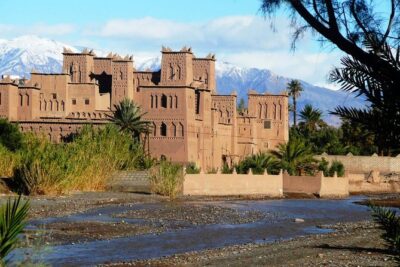
Ait Ben Haddou is the first major stop, with about two hours to explore. This UNESCO-listed ksar is made of earthen buildings grouped behind defensive walls, and its stepped form is easy to recognize from a distance. You cross toward the old settlement and walk among narrow lanes, towers, and traditional homes.
Two hours is a useful amount of time. You can see the main structures without being rushed through in a few minutes, though you should not expect a full scholarly tour of every building. Local guides lead parts of the sightseeing in some places, and time management can vary. If you enjoy reading signs or taking photographs, use your free moments carefully.
From Ait Ben Haddou, the road continues through the Valley of Roses toward Kelaat Mgouna. A short stop of about 20 minutes allows time for coffee and a break. The valley is associated with rose cultivation and small settlements, but this stop is more of a pause than a full visit. It helps break up the drive and gives you a quick look at a different part of southern Morocco.
The first night is spent in Tinghir, with dinner and breakfast included. The accommodation is practical rather than luxurious. You might find the property somewhat old, and one description compares it to a former showpiece with a slightly worn, almost lost-place feel. I would treat this overnight stop as a bed between two demanding days, not as a hotel stay you book for its design.
Day two: Todra Gorge, camel tracks, and a cold desert night
After breakfast, you head toward the Todra River and the Todra Valley. The stop lasts about an hour and includes views of the Dades Gorges area and a scenic walk. This is one of the better places to get out of the vehicle and use your legs.
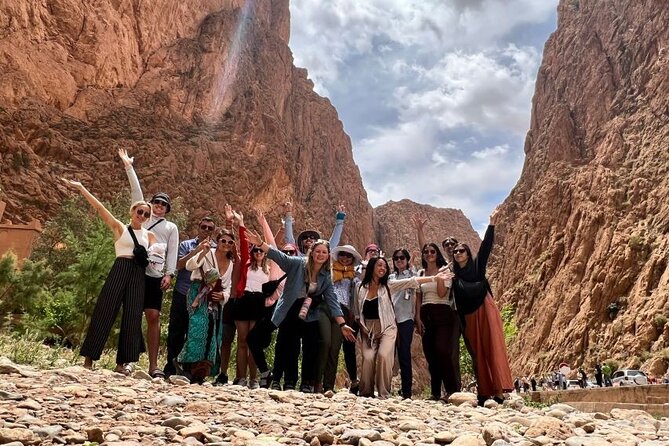
The gorge country brings towering rock walls and a narrow valley feel that contrasts sharply with the open sand later in the day. The walk is short, but it gives the morning some balance. You are not simply driven from one photo stop to another.
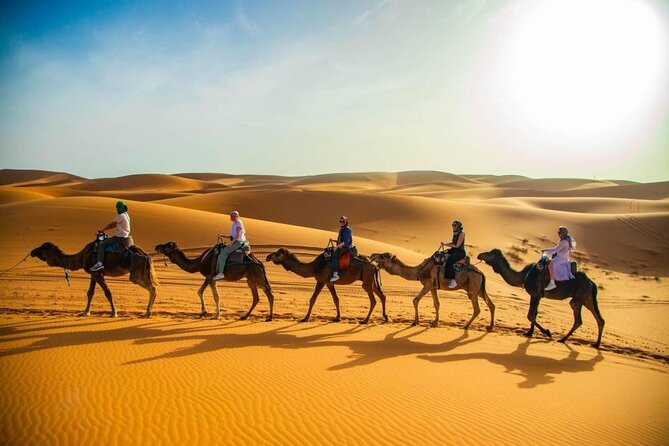
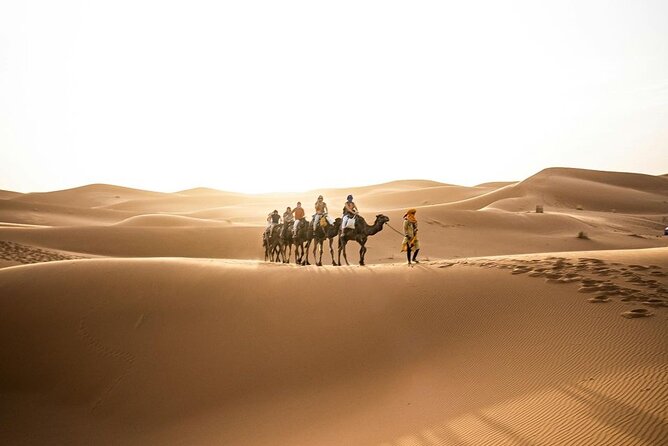
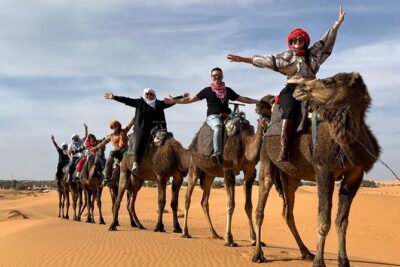
The next major stage is Merzouga and the Erg Chebbi desert. A camel ride takes place around sunset, giving you the classic approach to the dunes. One camel is provided per person, and sandboarding is also included for those who want a faster way down the slopes.
Camel riding is not a smooth horseback-style ride. The animal rises and kneels in stages, and the movement can feel awkward at first. Wear trousers, keep your hands free, and protect your phone from sand. The ride is short, about an hour, but the timing makes it memorable because the light changes quickly across the dunes.
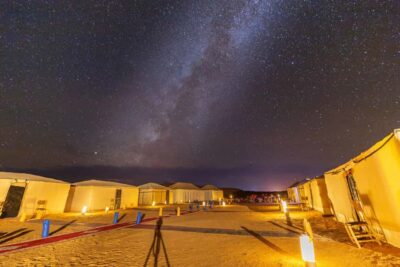
The camp provides the evening’s central cultural experience. Dinner includes a Sahrawi tagine, followed by Berber songs under the stars. This is not a wilderness expedition, but it is more than a quick sunset stop. You spend roughly 16 hours at the desert camp, including the overnight stay and morning departure.
Pack seriously for the night. The sand may look warm in the late afternoon, but desert temperatures can drop sharply after dark. Warm layers are especially important in January. A coat, fleece, long trousers, and covered shoes are sensible choices. Do not rely on Marrakech’s daytime weather as a guide.
Food is one area where expectations should stay modest. Dinner and breakfast are covered, and the tagine forms part of the evening, but food quality may not suit every taste. The package is designed for convenience and atmosphere, not for a gourmet meal. Bring snacks if you need them, though the supplied information does not specify what food storage is available at the camp.
The best part of the overnight stay is the rhythm of it. You arrive before sunset, cross the dunes by camel, eat together, listen to music, and wake before the day becomes hot. That change of pace is valuable after the long drive from the mountains.
Day three: Sunrise, the Draa Valley, and the road to Agadir
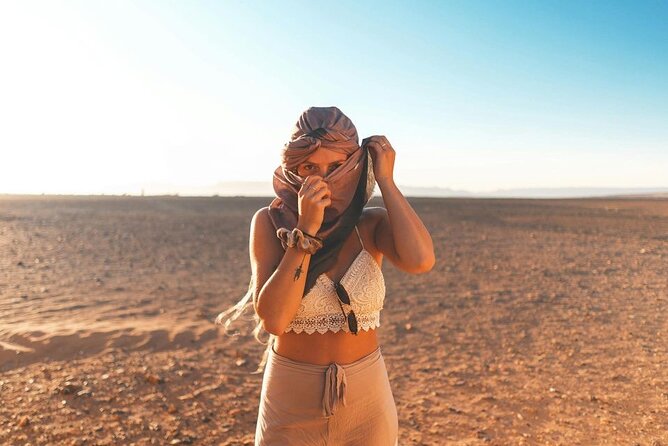
The final morning starts with a panoramic sunrise over the dunes. After breakfast, you can return to Merzouga by camel or by Jeep 4×4. The choice matters if you found the first camel ride uncomfortable, or if you simply want to save your legs after the previous evening.
The morning desert light is often the most rewarding time for photographs. The air is cooler, shadows are longer, and the dunes appear more sculpted than they do at midday. You have about an hour for this stage, so prepare your camera and shoes the night before.
The route then turns west through Alnif, where there is a short coffee and restroom stop. Lunch is not included, so you will need to pay for your midday meal along the way. Later, you stop for about an hour in Nkob for lunch and a look around the village.
Nkob gives the journey a useful local pause. It is known for its kasbahs and its position near the Draa Valley, and the stop helps you see more than sand and major monuments. Still, one hour is enough for a meal and a quick look, not a slow village walk.
The drive through the Draa Valley lasts about two hours. This is one of the route’s most varied sections, with Berber villages, kasbahs, palms, and mountain views. The valley gives you a sense of how people live away from Morocco’s big tourist centers, where agriculture, old earthen architecture, and long-distance roads meet.
The final stops are around Tazenakht and Taliouine, areas linked with saffron production and Berber culture. The scheduled pause is only about 15 minutes, so think of it as a brief roadside look rather than a detailed saffron visit. If local products are available, you may have a chance to browse, but no shopping inclusion is promised.
You reach Agadir after sunset. Drop-off is provided at your hotel or at the nearest accessible location if your accommodation cannot be reached by vehicle. This finish is useful for people who are already moving onward, but it leaves little energy for evening plans in Agadir.
Same city gate, a very different afternoon:
- Marrakech: Agafay Desert Sunset, Camel Ride, and Dinner Show
★ 4.6 · 35,119 reviews - From Marrakech: Ouzoud Waterfalls Guided Hike and Boat Trip
★ 4.7 · 33,630 reviews - Marrakech: Agafay Desert Quad & Camel Rides with Dinner Show
★ 4.8 · 27,382 reviews - Marrakech: Agafay Desert Quad Biking Tour with Dinner-Show
★ 4.8 · 16,569 reviews
The guides can shape the whole journey
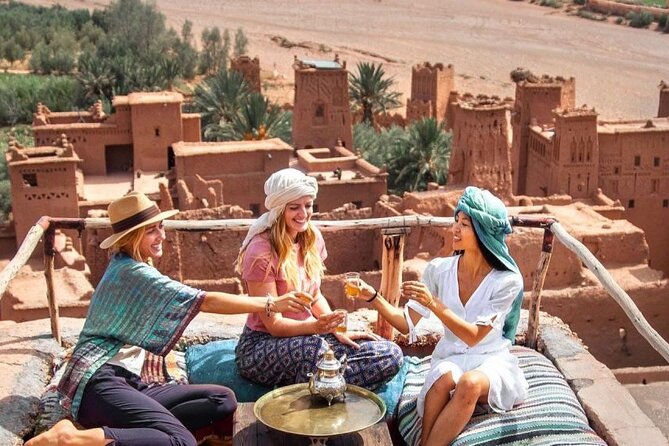
A good guide is especially important on this route because you spend so many hours together. The most praised names connected with the trip are Imad, Ibrahim, Abderahman Moulay, Mahmoud, and Abdul. Their strengths include local explanations, humor, language skills, safe driving, traditional music in the vehicle, and help with practical matters along the way.
Imad and Ibrahim are noted for making a group of 11 feel comfortable and for adding music to the road sections. Abderahman Moulay is praised for patience, care, and a friendly manner. Mahmoud is described as lively and helpful, while Abdul receives praise for his professionalism.
That said, the exact guide may vary. The experience depends partly on who is driving your departure and how well the group works together. A good guide can make a long road feel social and informative. A less engaging one would make the same distance feel much longer.
Comfort, group size, and the real pace
The vehicle is air-conditioned for the full trip, and the maximum group size is 18. Air conditioning is important in southern Morocco, but it does not change the fact that this is a road journey with long stretches between stops.
The route works best if you enjoy looking out the window, listening to local music, and talking with people in your group. It is not ideal for anyone who dislikes winding roads or wants to spend several hours at each historic site.
Pickup from a riad may involve meeting at a nearby accessible point. That is normal in Marrakech’s old quarter, where narrow lanes can prevent a minibus from reaching the door. Confirm the exact pickup details when you book, especially if your accommodation is inside the medina.
The tour is open to most people, but the supplied information does not give detailed accessibility specifications. If you have mobility needs, ask the provider about the vehicle, the camel ride, the walks at Ait Ben Haddou and Todra Gorge, and the camp approach before paying.
What to pack for three demanding days
A small, practical bag is easier than a large suitcase. Your main luggage may be less convenient during the desert section, so keep essentials close.
Bring:
- Warm layers for the desert night and early sunrise
- Comfortable trousers for the camel ride
- Shoes with a firm sole for sand and uneven paths
- Sun protection and a hat
- Water and personal snacks
- Cash for lunches and optional gratuities
- A phone case or pouch to keep sand away from your electronics
You should also allow room in your schedule for a late arrival on day three. Agadir drop-off is after sunset, and road conditions or stop timing can affect the exact arrival hour.
Who should book this Marrakech to Agadir route?
I would choose this tour if you want a strong first taste of southern Morocco and need to travel from Marrakech to Agadir at the same time. It suits people who value variety: mountain passes, old kasbahs, gorges, villages, dunes, camels, and a desert camp all appear in one compact trip.
It also suits social travelers who enjoy a shared minibus and do not mind meeting a group of up to 18 people. The friendly atmosphere, music in the vehicle, and frequent stops can make the long road more pleasant.
I would hesitate if your priority is comfort, slow travel, or high-end accommodation. The Tinghir overnight may feel tired, meals are not the main attraction, lunches cost extra, and the desert can be cold. You also have limited time for some local guides and smaller stops.
Should you book it?
Book this route if you want the desert without arranging a complicated trip yourself, and if you can accept long driving days. The strongest reasons are the point-to-point transport, the well-filled itinerary, the camel ride at sunset, the desert camp, and the chance to see Ait Ben Haddou, Todra Gorge, and the Draa Valley in one sweep.
Skip it if you want a relaxed Sahara holiday or a private, polished setting. For $267.13, the package offers good value, but the value comes from distance covered and experiences included, not from luxury. Pack warm clothes, budget for lunches, and go in expecting a busy road trip rather than a restful retreat.
FAQ
Where does the tour start?
The tour starts in Marrakech at about 7:00 a.m. Pickup is available from your accommodation, or from the nearest accessible point if a vehicle cannot reach your riad.
Where does the tour finish?
The tour finishes in Agadir after sunset on the third day. Drop-off is provided at your Agadir hotel or the nearest accessible location.
How long does the tour last?
The experience lasts approximately three days.
Is accommodation included?
Yes. One overnight stay is provided in Tinghir, and one overnight stay is provided at a desert camp in Erg Chebbi, Merzouga.
Are meals included?
Two breakfasts and two dinners are included. Lunches are not included and must be paid for separately.
Is the camel ride included?
Yes. One camel per person is included, with a camel ride scheduled around sunset in Merzouga. The return to Merzouga on the final morning can be by camel or Jeep 4×4.
Is sandboarding included?
Yes. Sandboarding in the Merzouga dunes is included.
How large can the group be?
The tour can have a maximum of 18 people. The vehicle is air-conditioned throughout the journey.
Just listed around Marrakech
- Zagora: 2-Day Desert Trip from Marrakech★ 4.4 · 31 reviews
- Traditional spa Hammam & Massage with Hotel Transfers★ 4.0 · 24 reviews
- Day trip to OUZOUD waterfall with guide&boat ride from Marrakech★ 5.0 · 172 reviews
- quad bike tour in the palmeraie of Marrakech★ 4.5 · 43 reviews
- Half day quad desert agafay★ 4.5 · 24 reviews
- walking tour★ 5.0 · 46 reviews
- private tour of Marrakech 4 hours with multilingual driver★ 5.0 · 117 reviews
- 3 days tour from Marrakech to Merzouga desert★ 5.0 · 55 reviews
3-Day Experiences, compared.
3 Days Desert Tour From Marrakech To Merzouga Dunes & Camel Trek
Read our review →
3-Day Marrakech to Merzouga Desert Tour: Camel Rides & Overnights
Read our review →
3-Day Marrakech to Fes Sahara Desert Tour via Merzouga
Read our review →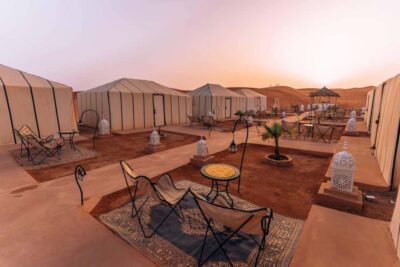
3-Day Merzouga Desert Experience Camel & Meals
Read our review →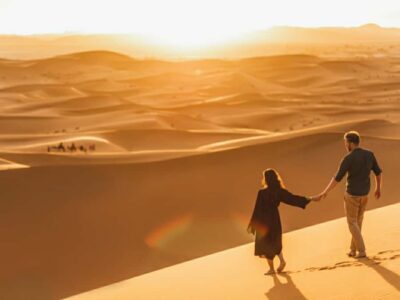
3-Day Tour to Merzouga Erg Chebbi with Food & Camel Trek
Read our review →Browse the lists this tour appears in