
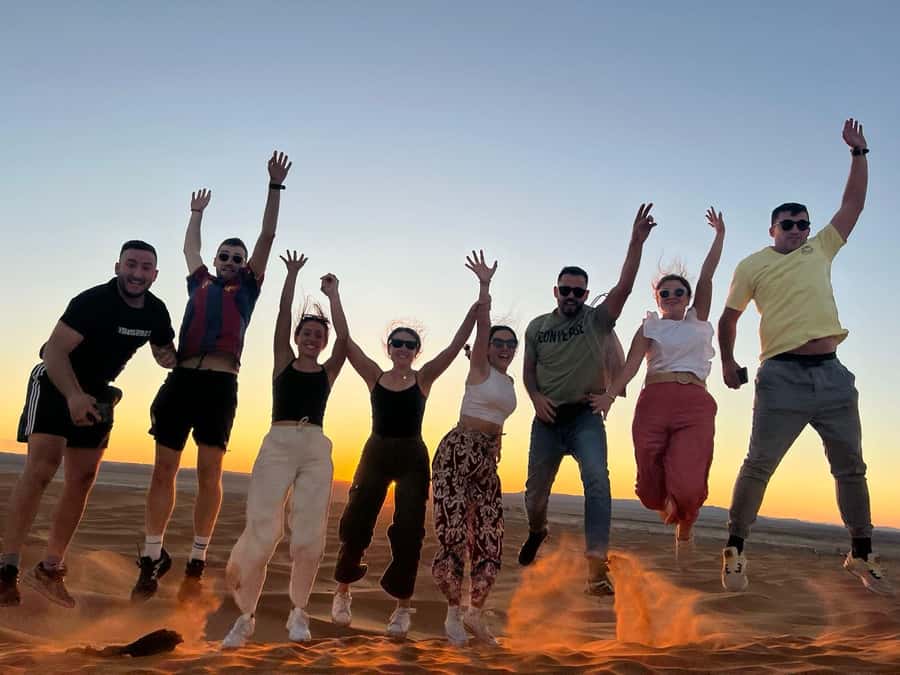
Reviewed · SAHARA DESERT TOURS
From Marrakech: Tour 3-Day To Fez Via-Desert Merzouga
Three days, two worlds, one long road. This Marrakech to Fez desert tour packs the High Atlas, Ait Ben Haddou, Todgha Gorges, Erg Chebbi, and Ifrane into one memorable trip. I especially like the camel ride at sunset and the chance to sleep in a traditional desert camp beneath the stars.
The tour also makes the one-way journey from Marrakech to Fez useful instead of simply being a long transfer. The main caution is the pace: you spend many hours in the vehicle, and communication or transport quality can vary, so this suits you best if you value seeing a lot over taking things slowly.
In This Review
- Key points to know before booking
- What the three-day route really involves
- Day one: crossing the High Atlas to Ait Ben Haddou
- Day two: Todgha Gorges and the road to Merzouga
- Sleeping in the Erg Chebbi desert camp
- Sunrise over the dunes and the long drive to Fez
- Transport, guides, and the service question
- Is $119 good value?
- Who should book this experience?
- My booking verdict
- FAQ
- How long is the Marrakech to Fez desert tour?
- Is pickup included in Marrakech?
- Does the tour include the camel ride?
- Is accommodation included?
- Are meals included?
- Is a guide included at Ait Ben Haddou?
- What languages are available?
- Do I need to be fit for the tour?
Key points to know before booking
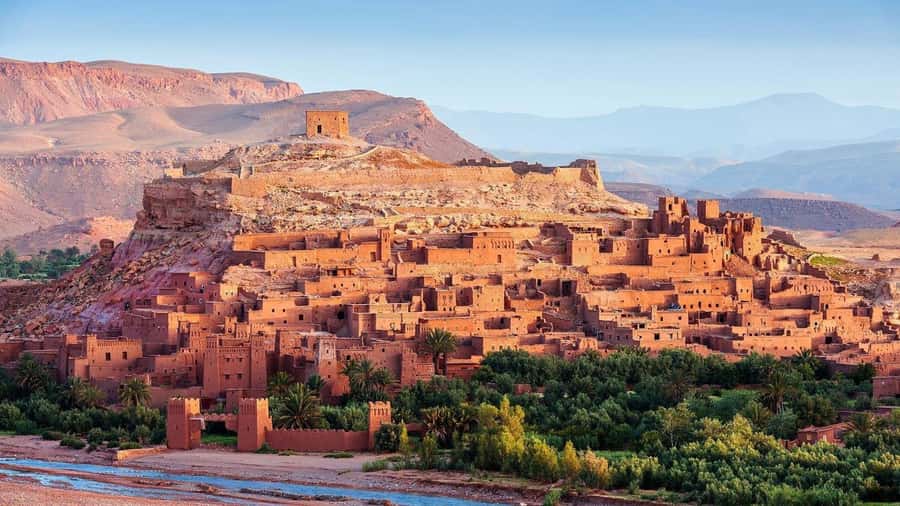
- Ait Ben Haddou gives day one a strong start: Explore the famous fortified village near Ouarzazate, with free time for photos and an optional local guide.
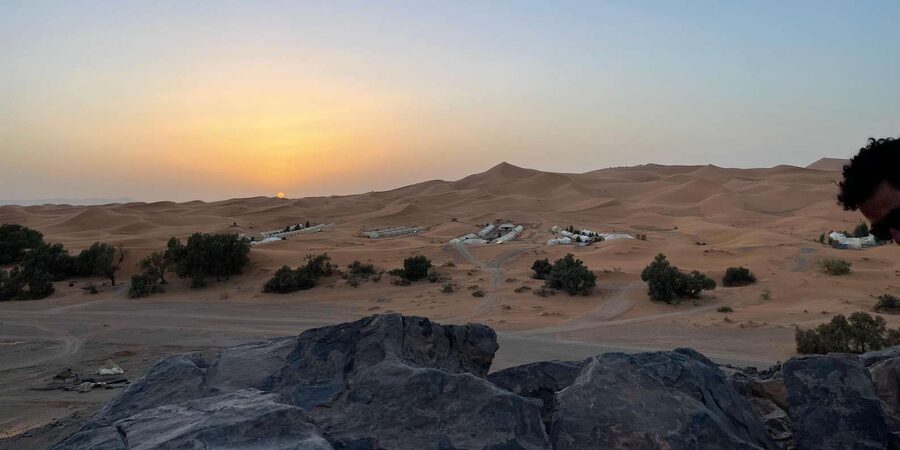
- The Erg Chebbi camel ride is the tour’s main event: Reach the dunes in time for sunset, then sleep at a Berber-style camp.
- The drive is scenic but demanding: Day three from Merzouga to Fez is especially long, with stops at Erfoud, the Ziz Valley, Midelt, Azrou, and Ifrane.
- The price is attractive for a three-day crossing: At $119 per person, transport, two nights, two breakfasts, two dinners, camel rides, and pickup are included.
- Service can be uneven: Several people praised guides such as Houssain, Salem, Ahmed, and Hassan, while others reported poor communication, vehicle trouble, and unsafe seating.
- Pack for two climates: Hot sun reaches the desert by day, while the camp can feel cool at night and before sunrise.
What the three-day route really involves
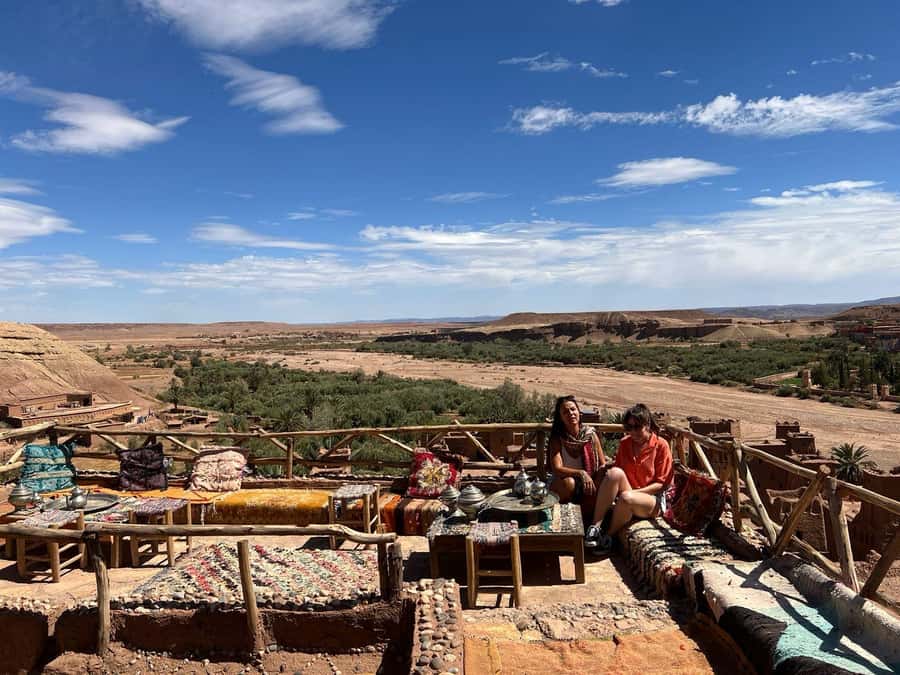
This is not a relaxed desert retreat. It is a moving tour with a desert overnight built into a route between Morocco’s two major cities.
You leave Marrakech and cross the High Atlas Mountains, then pass through the southern valleys toward the Sahara. The next day brings Todgha Gorges and the dunes of Merzouga. On the final day, you cross the eastern part of Morocco toward Fez, with stops in mountain towns and cedar forest country.
That route gives you a useful look at Morocco’s changing scenery. You see Berber villages, dry mountain valleys, kasbahs, rocky canyons, sand dunes, and highland forests in quick succession. The tradeoff is simple: you see far more than you could on a short stay in one place, but you have limited time at each stop.
The tour includes pickup from your Marrakech accommodation or a nearby accessible meeting point. Look for an air-conditioned minibus or minivan with route signage, and wait in the hotel lobby or directly outside the stated pickup point. The vehicle is important here. A good air-conditioning system makes the desert crossing much easier, especially in warmer months.
More Sahara nights out of Merzouga:
- From Merzouga: Overnight Camel Trek over Erg Chebbi Dunes
★ 4.5 · 558 reviews - Merzouga: 1-Night in Desert Camp With Dinner & camel ride
★ 4.5 · 282 reviews - Camel Trekking & 1 Night in Merzouga Desert Camp
★ 5.0 · 210 reviews
Day one: crossing the High Atlas to Ait Ben Haddou
The morning begins with the climb over the High Atlas Mountains. The road passes one Berber village after another, and the views change from Marrakech’s city surroundings to steep mountain slopes and open valleys.
I like this first section because it shows you a side of Morocco that is easy to miss if you fly between cities. The villages and mountain roads give the journey a sense of place before the desert portion begins. Keep your camera ready, but do not expect long photo stops at every scenic bend.
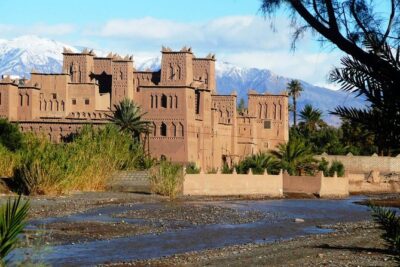
The main stop is Ait Ben Haddou, a UNESCO World Heritage site and one of Morocco’s best-known fortified villages. Built from earth-colored materials, its clustered kasbahs rise above the surrounding area in a way that explains its appeal to filmmakers and magazine photographers.
You receive free time to explore. A local guide is available for an additional €2.50 per person, and I consider that a worthwhile small expense if you want the buildings explained rather than simply photographed. Without a guide, you can still walk around and enjoy the architecture, but the visit may feel more like a quick scenic stop.
After Ait Ben Haddou, the route continues toward Ouarzazate, known as the Gate of the Sahara. You stop for lunch at a local restaurant, but lunch and drinks are not included in the tour price. Carry some Moroccan dirhams, since you will need cash for meals, drinks, and small purchases.
The afternoon drive continues through the southern valleys toward Boumalne Dades. The road along the Dades Valley brings rocky slopes and striking formations into view. Dinner and the night are provided at a hotel in the Dades area.
The hotel is practical rather than the reason to book the tour. One part of the overnight arrangement has drawn criticism for limited quality, so I would keep expectations sensible. The real value of day one lies in the route and Ait Ben Haddou, not in spending extra time at the accommodation.
Day two: Todgha Gorges and the road to Merzouga
After breakfast, you leave the Dades area and continue toward Tinghir and Todgha Gorges. The canyon walls are the focus here, with a pause for you to walk around and take in the narrow rock corridor.
This is a good contrast with Ait Ben Haddou. The first day is about human construction and old defensive villages. Todgha is about bare rock, height, and the force of water through the canyon. You get free time to explore, but the stop is not designed as a long hike.
Lunch follows at a local café. Again, it is at your own cost. The tour includes two dinners and two breakfasts, but not lunches or drinks, so you should budget for those separately.
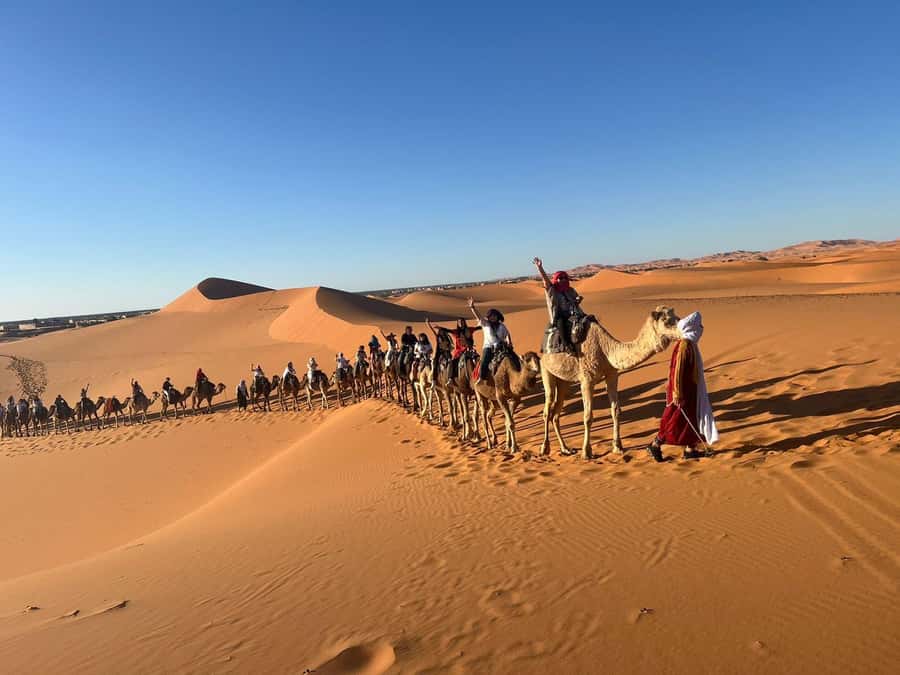
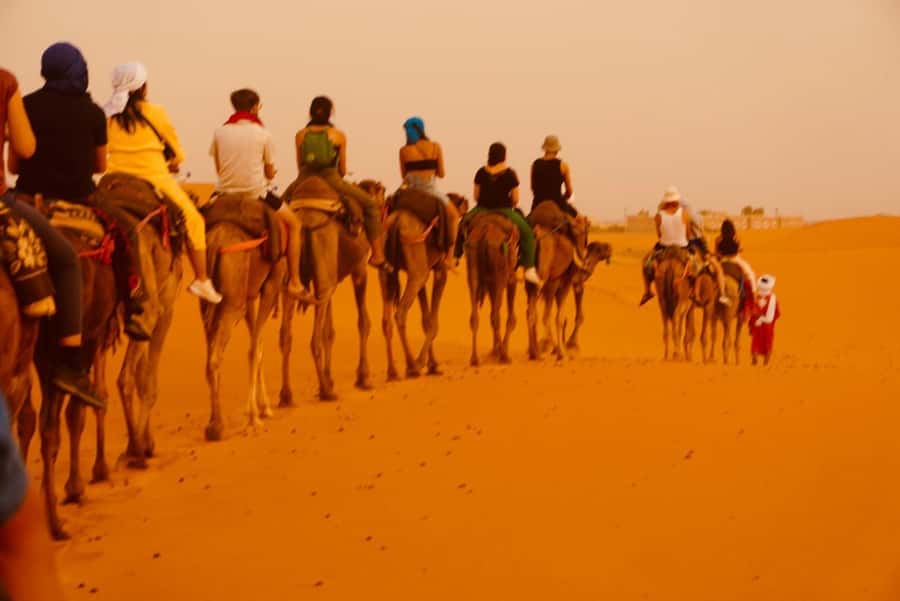
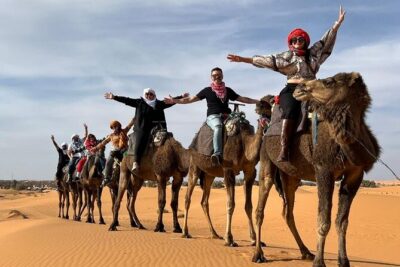
The drive then continues to Merzouga, where you meet the camel caravan. The timing aims to place you in the Erg Chebbi dunes for sunset. You ride across the sand to the camp, stopping to watch the light change over the dunes.
For many people, this is the strongest part of the tour. The camel ride is not just transport. It slows the journey down after two days of road travel and gives you a quiet way to enter the desert. You need moderate fitness, and you should be comfortable mounting, dismounting, and sitting on a camel for the ride.
The dunes are impressive at sunset, but the experience can feel less private if several tour groups arrive at the same time. The operator offers private or small-group options, which may be worth considering if you care about a calmer camp arrival and clearer personal attention.
At the camp, you have dinner beneath the stars and a music session with local nomads. The Berber drumming and Tam Tam demonstration add a cultural element to the overnight rather than making it only a photo stop.
Accommodation varies by the option you select. A traditional desert camp is included, and a luxury private tent is available if that option is chosen. Confirm exactly which camp category you are booking, since the standard and luxury arrangements may not provide the same level of comfort or service.
Sleeping in the Erg Chebbi desert camp
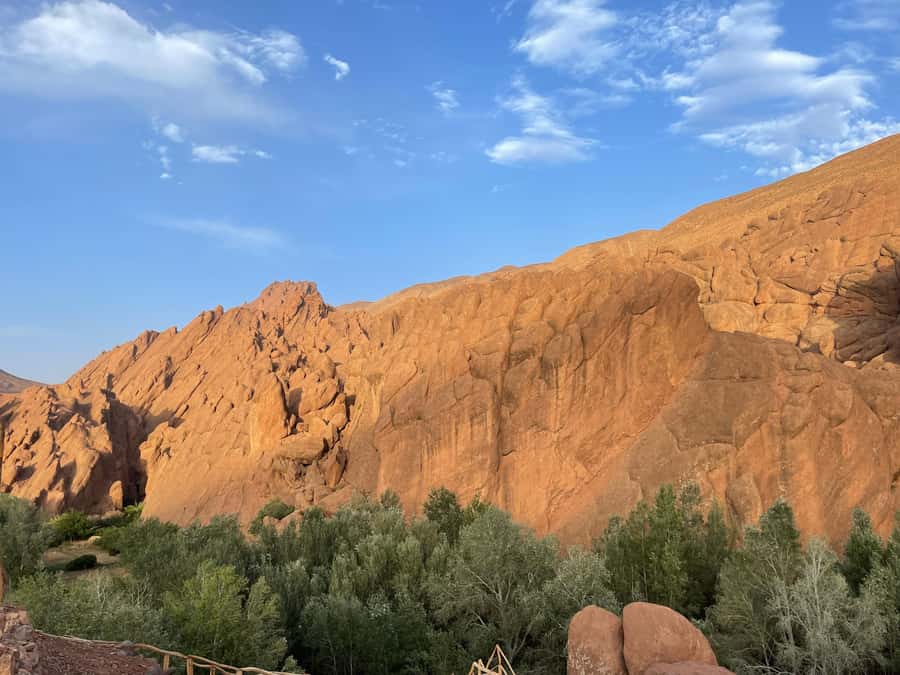
The camp is the part of the trip that makes the long road worthwhile. After dinner, you can spend time outside looking at the sky and listening to the drums. The setting is simple and atmospheric, but it is not a full-service resort.
You should expect basic desert conditions even if you choose the luxury tent. Nights can be cool, and early morning temperatures may surprise you after a hot afternoon. Bring layers, a warm top, sunscreen, a sun hat, and sunglasses.
The tour includes luggage service, which is useful because you do not need to carry everything onto the camel. Still, keep a small day bag with your passport, water, phone, camera, sunscreen, and a warm layer.
A practical point from the service problems reported on some departures: arrangements at the desert base can require patience. Some people were separated from the main group, received little explanation, or were served late for camel departures and meals. Stay near your group, ask clearly where to go next, and confirm your return vehicle before leaving the camp area.
A few more Merzouga runs to hold up against each other
- From Marrakech 3 Days Desert Merzouga with Camel & Quad bike
★ 4.9 · 133 reviews - Ouarzazate to Marrakech: 3-Day Desert Tour with Camel Trek
★ 4.9 · 50 reviews - Marrakech to Fes 3 Days Sahara Desert Tour With Camel & Quad
★ 4.8 · 49 reviews - Marrakech To Fes: 3-Day Majestic Desert Sahara Tour
★ 4.9 · 22 reviews
Sunrise over the dunes and the long drive to Fez
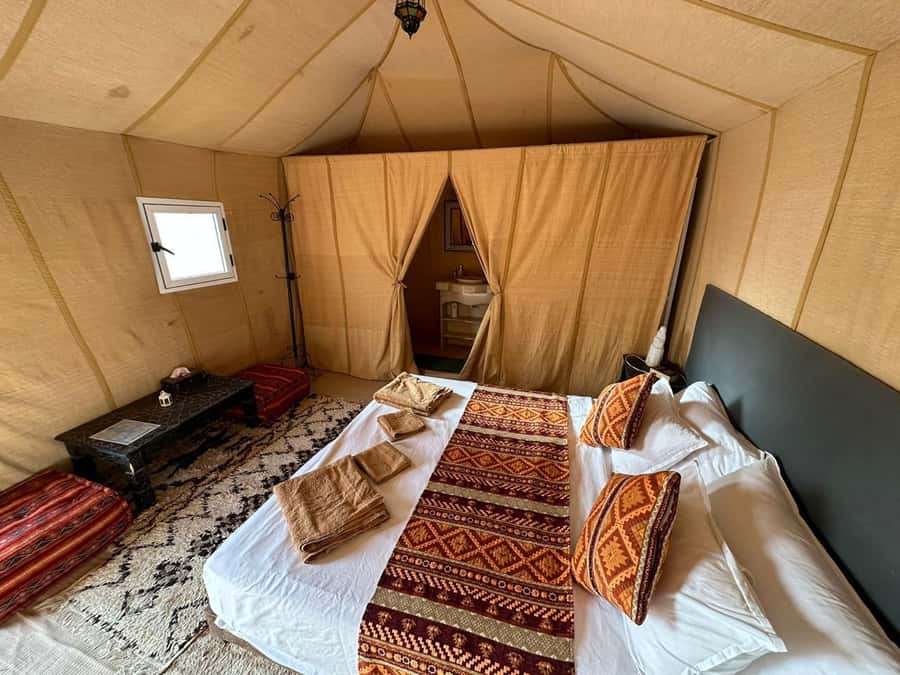
Day three starts before sunrise. You can climb a dune with your camera and watch the sun appear over Erg Chebbi. This is one of the tour’s best photo opportunities, and the quiet morning light is often more striking than the busy sunset arrival.
After sunrise, you can shower and have breakfast at the desert camp hotel facilities before the long drive to Fez. The route passes through Erfoud and the Ziz Valley, then continues to Midelt for lunch.
Day three is the hardest day physically. You spend much of it in the vehicle, and the number of stops means you should not expect extended sightseeing in every town. Midelt is a useful break for lunch, while Erfoud and the Ziz Valley mainly serve as scenic points along the road.
The next major stop is Azrou, where you may have a chance to see groups of Berber monkeys in the cedar forest. This stop adds a completely different setting after the sand and dry valleys. Sightings are possible rather than guaranteed, so treat it as an opportunity, not a promise.
The final stop is Ifrane, often called Little Switzerland. It is a French-built mountain town and a winter ski area, with architecture that looks very different from Marrakech, Ait Ben Haddou, or Merzouga.
The time at Ifrane may be short. One reported itinerary allowed less than ten minutes in a single plaza, so you may get a quick look rather than a proper town visit. If Ifrane matters to you, ask in advance how much time is planned and whether the itinerary can be adjusted.
The tour ends with drop-off in Fez. One strong point is that a considerate driver may take you directly to your accommodation and help coordinate the final arrival. Confirm your Fez address clearly, especially if your lodging is in the old city where vehicles may not be able to reach the door.
Transport, guides, and the service question
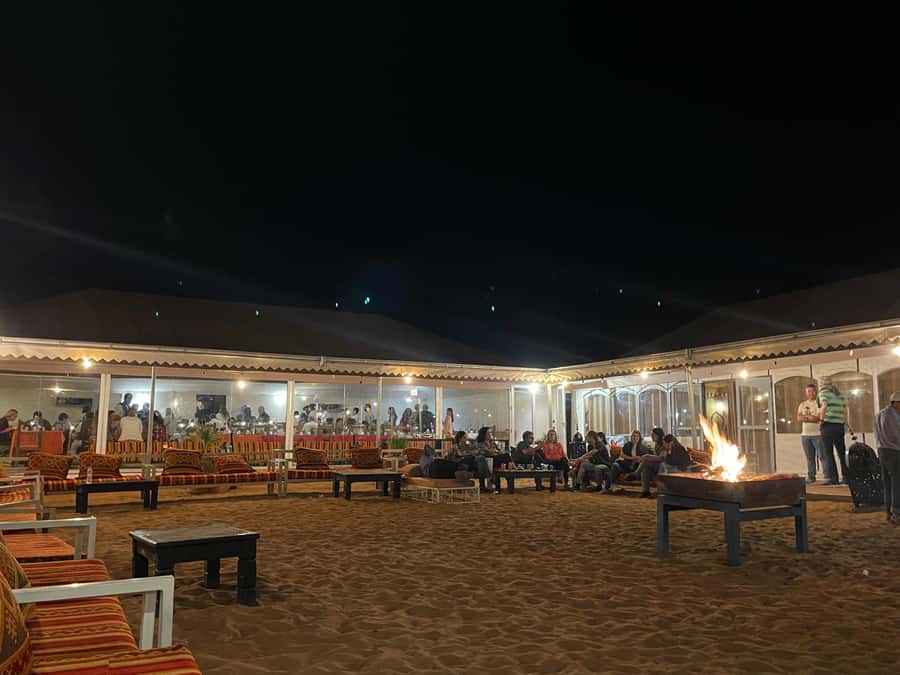
The tour uses an air-conditioned minibus or minivan, with a driver-guide and language support in English, Spanish, Portuguese, French, or Arabic. The quality of this part can shape the entire trip.
Several departures had warm, helpful staff. Houssain was praised for making the long ride more pleasant, while Salem, Ahmed, and Hassan were also credited with attentive guiding or local assistance. These personal touches matter when you are spending three days with a tour company.
Communication has not always been smooth. You may need to ask what is happening next, especially when switching vehicles or moving between the desert camp and the Fez route. Some departures combined people on different packages, then separated them at the desert, which created confusion about accommodation, meals, camel timing, and onward transport.
Vehicle condition is another point to take seriously. Most positive accounts describe a comfortable vehicle with working air-conditioning. But one departure involved a noisy vehicle with failed air-conditioning, police delays, missed stops, and an inconvenient drop-off. Another included several bus changes before the Fez group was assembled.
I would ask these questions before paying:
- Is the vehicle air-conditioned and reserved for this route?
- Will the same group continue from Merzouga to Fez?
- Which camp category is included?
- Where exactly will you be dropped off in Fez?
- How much time is planned at Ifrane, Azrou, and Midelt?
- Will a guide accompany you after leaving the main group?
The answers will not remove every risk, but they can expose unclear arrangements before departure.
Is $119 good value?
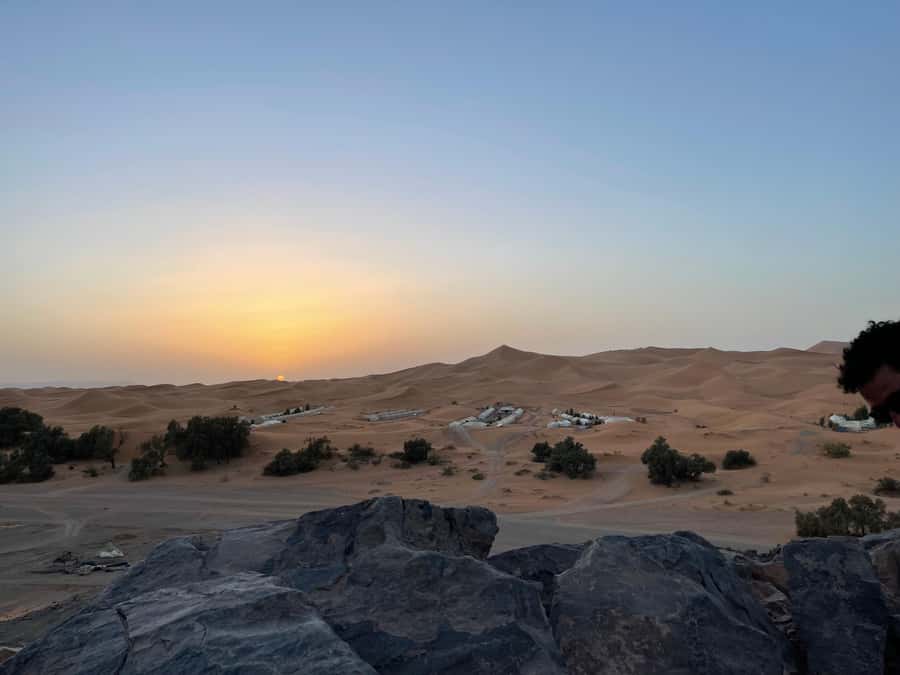
At $119 per person, the tour offers a lot for the money. Pickup and drop-off, transport, a hotel night, a desert camp night, two breakfasts, two dinners, camel rides at sunset and sunrise, luggage service, and Berber music are included.
You still pay for both lunches, drinks, and the optional Ait Ben Haddou guide. You should also check the price difference for a luxury private tent, since that option may cost more than the basic fare.
The strongest value comes if you need to travel from Marrakech to Fez and want the desert included. You get a one-way route instead of paying for a separate return to Marrakech, then arranging another journey to Fez.
The value is weaker if you want long visits, flexible meals, polished transport, or plenty of free time. A three-day schedule covering this much ground will always involve compromises. At this price, I would view the tour as an efficient road trip with a memorable desert night, not as a carefully paced private expedition.
Who should book this experience?
I would recommend it to you if you have limited time in Morocco and want several major sights in one route. It suits first-time visitors who want the Atlas Mountains, Ait Ben Haddou, Todgha Gorges, the Sahara, and Fez without arranging each transfer themselves.
It is also a good fit if the camel ride and desert camp are your main goals. Those parts receive the most consistent praise, along with the helpful attitude of particular guides and the comfort of well-run departures.
I would think twice if you dislike long drives, need firm schedules, or are uncomfortable with changing vehicles. The route is demanding, and a poorly coordinated departure can make the final day frustrating.
Bring cash, your passport, sun protection, and clothing for both hot days and cool nights. Moderate fitness is needed for the camel ride and dune walk. Booking should be confirmed at least 48 hours ahead, and the operator allows cancellation up to 24 hours before departure for a full refund.
My booking verdict
Book this tour if you want maximum scenery and a Sahara overnight at a low price, and you can accept long driving days. The sunset camel ride, sunrise over Erg Chebbi, Ait Ben Haddou, and the changing scenery between Marrakech and Fez give you a memorable slice of Morocco.
Choose a private or smaller group option if possible, and confirm the transport and accommodation details before you go. I would not choose it for a slow, deeply guided cultural trip. I would choose it as an adventurous, budget-friendly crossing with a genuinely special night in the dunes.
FAQ
How long is the Marrakech to Fez desert tour?
The tour lasts three days and travels from Marrakech to Fez through Ait Ben Haddou, the Dades Valley, Todgha Gorges, Merzouga, and several stops on the final route.
Is pickup included in Marrakech?
Yes. Pickup is provided from your accommodation in Marrakech or from an accessible pickup point nearby. You should wait in the hotel lobby or just outside the agreed location.
Does the tour include the camel ride?
Yes. Sunset camel trekking in Erg Chebbi and sunrise camel trekking are included.
Is accommodation included?
Yes. The tour includes one hotel night and one night at a desert camp. A luxury private tent is included only if you select that option.
Are meals included?
Two dinners and two breakfasts are included. Lunches and drinks are not included, so bring cash for those expenses.
Is a guide included at Ait Ben Haddou?
A local guide at Ait Ben Haddou is available for an additional €2.50 per person. The tour itself includes a driver-guide.
What languages are available?
Live guiding is available in English, Spanish, Portuguese, French, and Arabic.
Do I need to be fit for the tour?
Moderate fitness is required for camel trekking and walking on the dunes. You should also be prepared for long periods of travel by minibus or minivan.
Just listed around Merzouga
- Exclusive Merzouga Desert Safari: Camel Ride, Sandsurf & Dinner★ 5.0 · 32 reviews
- merzouga Desert 1 hour or two hour Quad Bike, and sandboarding★ 5.0 · 38 reviews
- Merzouga Jeep 4WD Desert Tour: Sahara Adventure★ 5.0 · 19 reviews
- ✅ Camel Ride and Overnight in Sahara Desert Camp★ 5.0 · 68 reviews
- Sahara ATV Quad & buggy in Merzouga Desert & Sandboarding★ 5.0 · 56 reviews
- Enjoy camp 1 night .Camel.sunset sunrise drums Quad Sunboard★ 5.0 · 62 reviews
- Private Monkey Fingers Canyon Hike★ 5.0 · 41 reviews
- Excursion to Gorge Dades and Canyon Fingers of Monkey Morocco★ 5.0 · 23 reviews
Sahara Desert Tours, compared.
3 Days Desert Tour From Marrakech To Merzouga Dunes & Camel Trek
Read our review →
3-Day Marrakech to Merzouga Desert Tour: Camel Rides & Overnights
Read our review →
3-Day Marrakech to Fes Sahara Desert Tour via Merzouga
Read our review →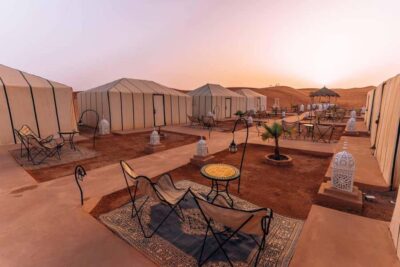
3-Day Merzouga Desert Experience Camel & Meals
Read our review →
3-Day Tour to Merzouga Erg Chebbi with Food & Camel Trek
Read our review →Browse the lists this tour appears in