
Reviewed · WORKSHOPS
Marrakech: Babouch Making Workshop in the Medina
Craft your own piece of Marrakech.
This four-hour workshop takes you beyond the usual souk shopping trip and into the working world of Moroccan leathercraft. I like the hands-on work with Youssef, a craftsman from a family with five generations of leather experience, and I like that you leave with a pair of babouch made to your size. The main drawback is the meeting point: several people found the instructions confusing, so you should confirm the exact spot before setting out.
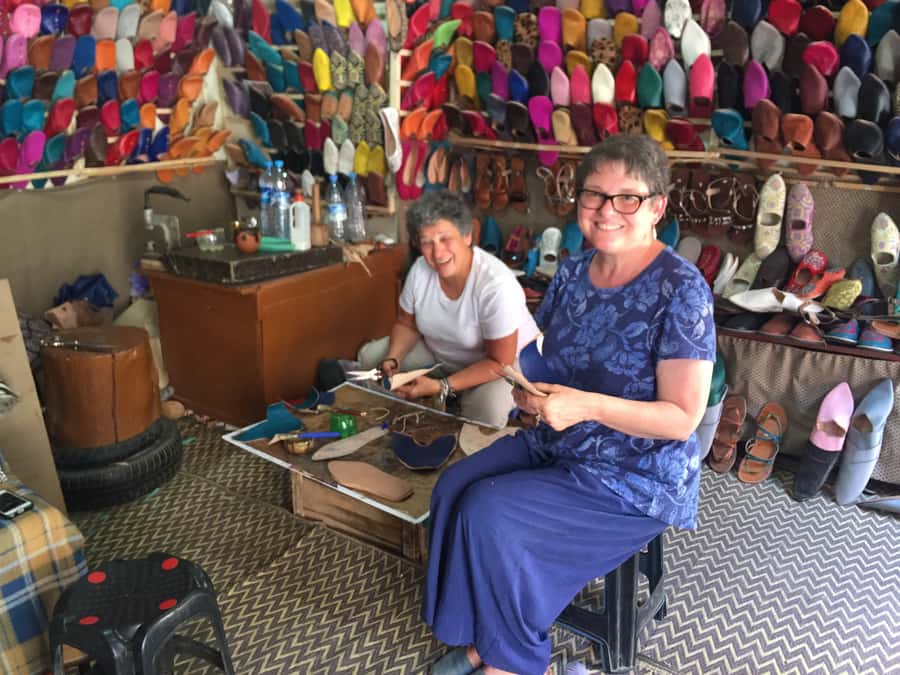
I also like the calm pace. You choose leather, cut patterns, shape the slippers, and watch the more demanding stitching and finishing work up close. A guide such as Khaoula, Ouiam, or Yasmine helps with directions and translation, while tea, water, and homemade Moroccan sweets break up the work. Allow four hours, and wear clothes you can work comfortably in.
In This Review
- Key points to know before you book
- Why making babouch beats simply buying them
- Meeting at Jamaa el Fna and entering the medina
- Inside Youssef’s leather workshop
- Choosing leather, color, and style
- Cutting, gluing, and shaping your slippers
- Watching the artisan stitch and finish the babouch
- Mint tea, pastries, and a slower hour in the souk
- What the $81 price includes
- Who will enjoy this workshop most
- Timing, language, and what to bring
- Should you book the Marrakech babouch workshop?
- FAQ
- How long does the babouch workshop last?
- How much does the workshop cost?
- Where do I meet the guide?
- Is the meeting point easy to find?
- Who teaches the workshop?
- Do I take home the slippers I make?
- Can I choose the color and style?
- Are tools and leather provided?
- What refreshments are included?
- What languages are available?
- Is the activity private?
- Is the workshop wheelchair accessible?
- Are photographs included?
- Can I cancel the booking?
Key points to know before you book
- You make traditional Moroccan babouch: Choose leather and color, then work through the main stages of slipper making.
- Youssef is the central craftsman: He teaches the process in his medina studio and helps turn your cut pieces into wearable slippers.
- A guide leads you through the souks: English, French, and Arabic support is available, which matters when the workshop is far inside the medina.
- The finished pair is fitted to you: The slippers are adjusted to your size, including special help for very small feet.
- Tea and sweets are part of the visit: Mint tea and homemade pastries give the workshop a welcome local touch.
- The meeting point needs care: Meet in front of the post office at Jamaa el Fna Square, but confirm the exact entrance and street location in advance.
Why making babouch beats simply buying them
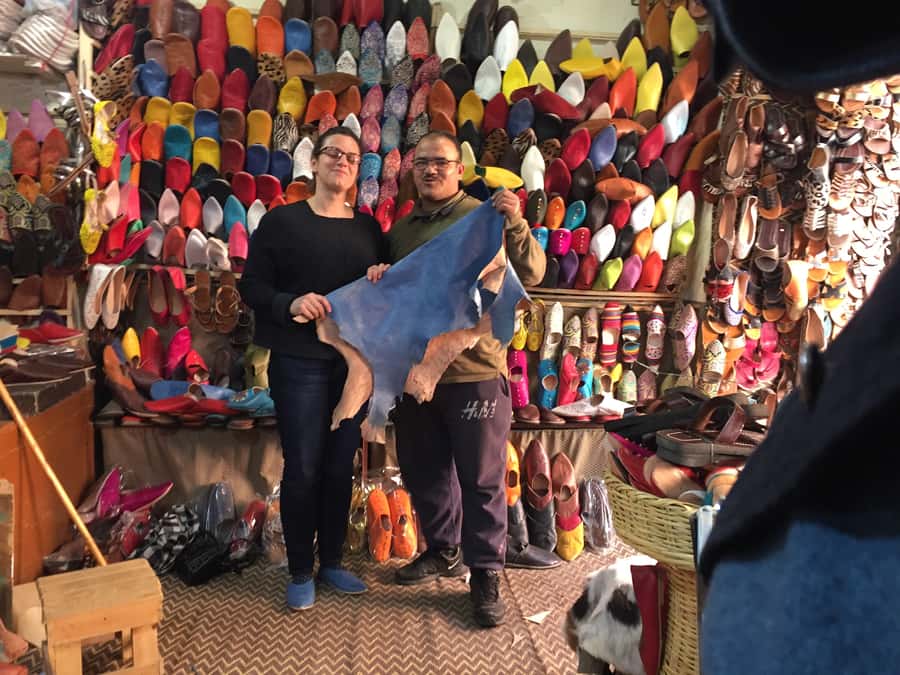
Marrakech makes it easy to buy babouch. Slippers hang in every direction, colors compete for your attention, and a shopkeeper can have your size in hand before you have finished looking around.
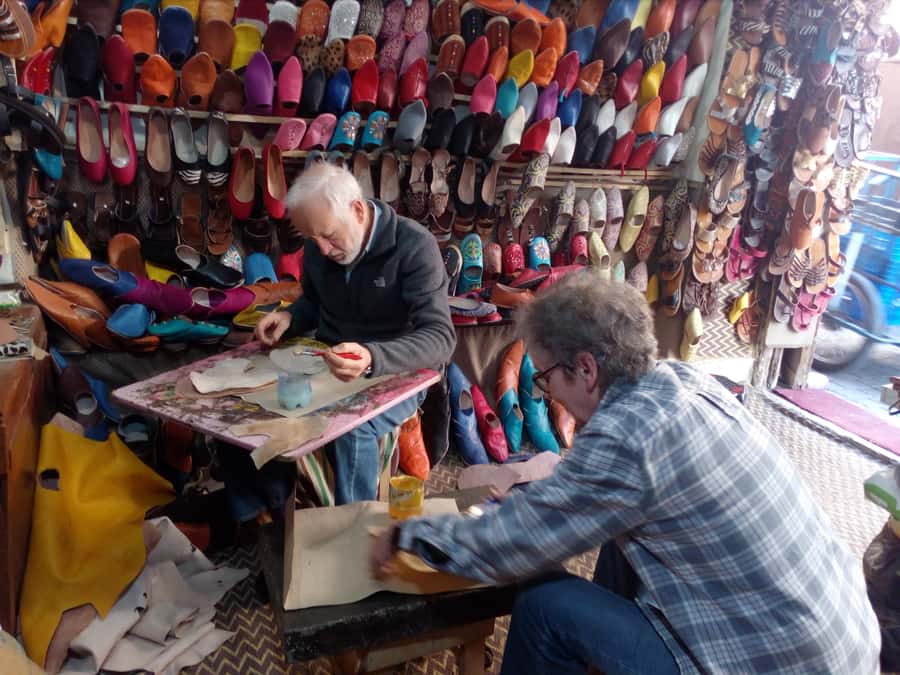
This workshop gives you a different souvenir. You see how much work sits behind the finished shoe. Pattern drawing, cutting, gluing, hammering, stitching, turning, and finishing all take time and practiced hands. That changes the way you look at the slippers in the souk afterward.
The work is practical rather than polished for show. You handle the materials and take part in the simpler stages. The artisan handles the finer construction, especially the stitching and finishing that require speed and skill. That division makes sense. You get a real part in the process without being expected to produce a perfect shoe from scratch.
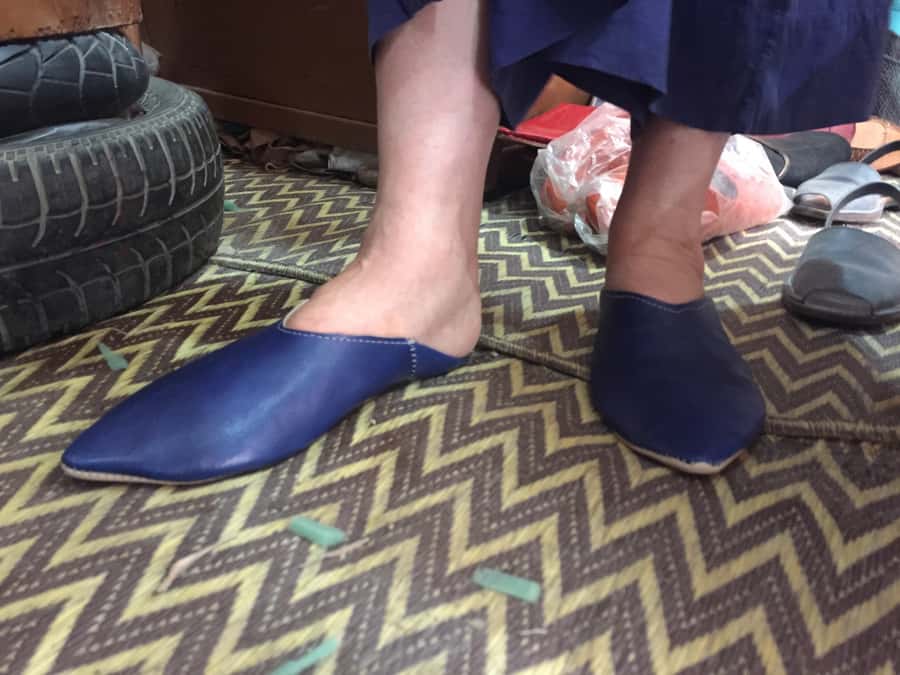
The result is also personal. You select the style and color, and the finished babouch is fitted to your feet. One participant with very small feet received adjustments from the artisan, which is useful if standard shop sizes often leave you with a poor fit.
A few more Marrakech runs to hold up against each other
- Marrakech: Moroccan Cooking Class with Pickup
★ 4.6 · 1,862 reviews - Marrakech: Traditional Moroccan Cooking Class & Market Visit
★ 4.8 · 1,861 reviews - Marrakesh: Moroccan Dishes Cooking Class with a Local Chef
★ 5.0 · 1,615 reviews
Meeting at Jamaa el Fna and entering the medina
The official meeting point is in front of the post office at Jamaa el Fna Square. From there, a guide takes you into the souks and onward to the workshop.
This guide is more than a translator. The medina can turn a short walk into a string of wrong turns, especially once you leave the broad, familiar edges of the square. Khaoula was praised for clear English and steady help, while Ouiam and Yasmine also guided participants through the souks and helped with translation. One guide even helped with a tagine purchase after the workshop.
There is one practical snag. The meeting instructions have sometimes referred to Rue Bani Marine or Rue Bain Marine in a way that left people standing near the wrong entrance. The reliable detail is the post office building, but I would still contact the local number before the start time and ask exactly where the guide will wait.
Once you are with the guide, the walk becomes part of the experience. You leave the busier stalls near the square and reach a more workaday part of the souk. That change matters. You are not only looking at finished goods made for shoppers. You are seeing the setting where Moroccan craft is still carried out.
Inside Youssef’s leather workshop
Youssef introduces you to leather before you begin cutting. You learn about the different kinds of leather and how the material is prepared for Moroccan leather goods.
The workshop has a private-group format. That is a real advantage for a craft lesson. You can ask questions, work at your own pace, and get help without waiting behind a large class. Some bookings have been one-on-one, while others have involved couples or families, including an adult and an 11-year-old child.
The tone is relaxed. You may spend part of the session concentrating on a pattern and part of it talking with the artisan and guide. The setting is still inside the busy medina, but the work gives the visit a quieter rhythm. One person described it as a calm break from the noise outside, and that is a fair way to think about it.
Youssef’s manner is a major part of the appeal. He is described as patient, friendly, and generous with explanations. He has also chatted with participants about Moroccan culture and daily life. In one session, he even offered French lessons. Another group listened to Taylor Swift while working, a small reminder that this is a working studio with a human, informal atmosphere, not a staged cultural display.
Choosing leather, color, and style
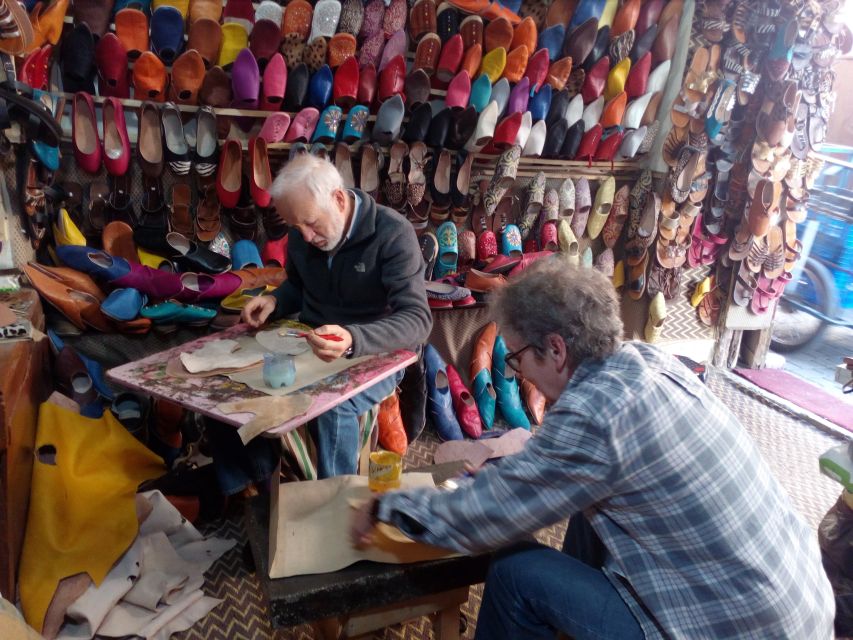
The first practical decision is the look of your babouch. You choose the leather and color, then use templates to mark out the pieces.
This is where the experience becomes more personal than a standard shopping stop. You are not simply pointing at a finished pair and bargaining over the price. Your choices become part of the object you take home.
The available materials and styles can vary, so do not arrive expecting an unlimited catalog. The supplied information confirms that you work with different types of leather and select a style and color, but it does not promise every color, pattern, or decoration. The sensible approach is to choose from what is available in the studio and ask the guide to clarify options.
The cutting stage looks simple until you begin. A pattern needs to be placed carefully, and a small mistake can affect the shape of the slipper. You get the tools and raw materials needed for the practical work, with the guide and artisan nearby to keep things moving.
Same city gate, a very different afternoon:
- Marrakech: Agafay Desert Sunset, Camel Ride, and Dinner Show
★ 4.6 · 35,119 reviews - From Marrakech: Ouzoud Waterfalls Guided Hike and Boat Trip
★ 4.7 · 33,630 reviews - Marrakech: Agafay Desert Quad & Camel Rides with Dinner Show
★ 4.8 · 27,382 reviews - Marrakech: Agafay Desert Quad Biking Tour with Dinner-Show
★ 4.8 · 16,569 reviews
Cutting, gluing, and shaping your slippers
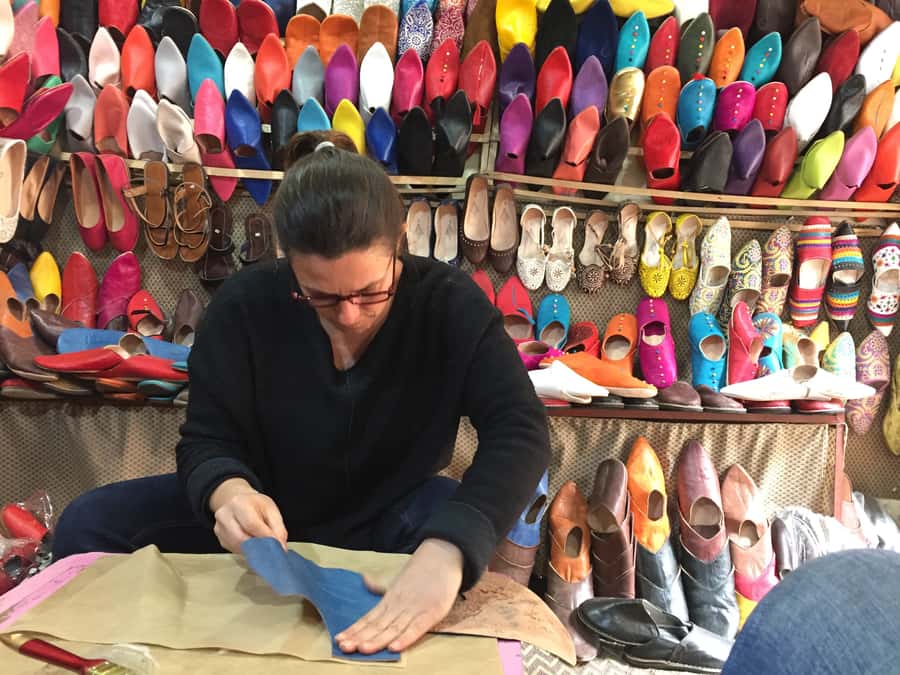
After marking the leather, you cut the pieces and begin putting the slipper together. The process includes gluing and hammering, followed by shaping the leather into the familiar babouch form.
This is hands-on, but it is not a demanding shoemaking course. The craftsman demonstrates the steps and helps you through them. You should expect guidance throughout, especially if your cut needs correcting or a piece needs to be repositioned.
The pace is one of the strongest features. You have time to work without being pushed through a quick demonstration. That makes this suitable for people who want to learn rather than simply pose for photographs.
It also makes the four-hour length easier to understand. A short activity could show you a few tools and send you home with a souvenir. Here, the extra time lets you appreciate the repeated, careful work that gives a handmade slipper its shape.
Watching the artisan stitch and finish the babouch
The artisan takes over the most exacting parts of the construction. Stitching the slippers requires practiced hands, and the speed of the work can be striking when you have just spent time preparing the pieces.
You still remain involved. The workshop is not a trick where your leather disappears into a back room and returns finished. You see the process and take part in the stages suited to a first-time maker. The craftsman then brings the slippers together and makes the adjustments needed for fit.
The final shaping is especially useful. Babouch are simple in appearance, but the fit matters. The artisan can make changes for your feet, and one participant specifically noted that adjustments were made for a wife with very small feet.
This is also the point when the souvenir gains meaning. You remember the rough outline, the tools, the conversation, and the moment the pieces become shoes. That is a better memory than another object bought in a hurry.
Mint tea, pastries, and a slower hour in the souk
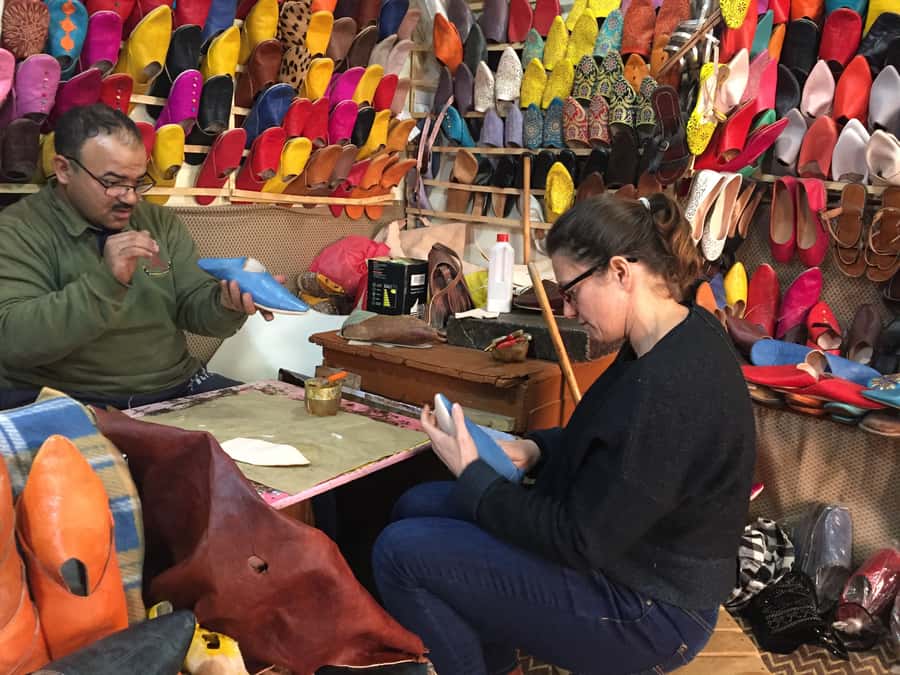
The workshop includes water, a tea break, and homemade Moroccan snacks. The treats have been described as local pastries, biscuits, and sweet bites served with mint tea.
It is a small detail, but it helps. Leatherwork takes concentration, and the pause gives you time to talk with Youssef and your guide. It also adds a normal Moroccan hospitality moment without turning the class into a formal meal.
Do not book this expecting a food tour. The refreshments are a pleasant part of the workshop, not the main event. The value is in the conversation and pause as much as in the tea itself.
The break also helps explain why the experience feels less rushed than many medina activities. You are given room to watch the street, ask about the craft, and reset before the final stages.
What the $81 price includes
At $81 per person, this is not the cheapest souvenir activity in Marrakech. It is also not just a shopping trip with a short demonstration.
Your fee covers the workshop, tools, raw materials, instruction, a finished pair of babouch, water, tea, homemade snacks, and photographs sent by email. The private-group setting adds value, particularly if you are booking as a couple or family and want direct help.
The finished slippers alone do not explain the price. You are paying for several hours of instruction, access to an artisan’s studio, translation support, and the time needed to fit and complete the pair. You also avoid the uncertainty of buying a decorative pair that may not fit well or may be difficult to identify as genuine handmade work.
I would consider the price fair for someone who values time with a local craftsperson. If you only want inexpensive footwear, go shopping in the souks instead. If you want a useful object tied to a real skill, the workshop offers stronger value.
The activity also has free cancellation up to 24 hours before the start, and you can reserve while paying later. That gives you some flexibility when arranging a Marrakech schedule.
Who will enjoy this workshop most
This is a good choice for couples who want matching or complementary slippers, families with older children, and anyone who likes making things with their hands. It also suits repeat visitors who have already seen the main monuments and want a closer look at daily craft traditions.
The workshop works well for people who prefer a small private setting. You can ask questions, request help, and spend time talking with the artisan rather than moving through a large group.
It may be less suitable if you dislike sitting and concentrating for several hours, or if you want a fast activity with an immediate finished product. The class includes real work. The payoff comes from seeing the pieces develop.
The medina setting is part of the deal. You should be comfortable meeting at Jamaa el Fna, walking through the souks with a guide, and working in a traditional studio. The activity is listed as wheelchair accessible, but the meeting route and exact workshop access are worth confirming directly if you have specific mobility needs.
Timing, language, and what to bring
The activity lasts about four hours, with the actual workshop described as roughly three and a half hours. Check the available start time when booking. A morning booking can be a smart choice because it gives you a calm introduction to the souks before spending the rest of the day exploring them.
Instruction and translation are available in English, French, and Arabic. Youssef may communicate directly in English or French, while the guide fills in details and helps the conversation along. The guides have included Khaoula, Ouiam, and Yasmine, though the assigned person can vary.
The workshop supplies the necessary tools and raw materials. You do not need to bring leatherworking equipment. Wear comfortable clothing and shoes for the walk to the studio, and keep your hands free enough to work.
Photographs are taken during the session and emailed afterward. That is useful if you want a record of the process, though the slippers themselves remain the main souvenir.
Should you book the Marrakech babouch workshop?
Yes, if you want more than a quick purchase in the souk. The strongest reasons are the patient teaching, the chance to choose your leather and color, the custom fit, and the personal connection with Youssef and the guides.
Book it especially if you enjoy craft, local conversation, and souvenirs with a story. The high 4.9 rating from 117 bookings matches the consistent praise for the artisan, translation help, relaxed pace, tea, and finished slippers.
Before you go, confirm the meeting point carefully. That is the one repeated weakness, and it is easy to avoid with a message or call. If you can allow four hours and the $81 price fits your budget, this is one of Marrakech’s better choices for turning a shopping item into a memory you helped make.
FAQ
How long does the babouch workshop last?
The activity lasts four hours, with the practical workshop itself described as about three and a half hours.
How much does the workshop cost?
The listed price is $81 per person.
Where do I meet the guide?
The meeting point is in front of the post office at Jamaa el Fna Square in Marrakech.
Is the meeting point easy to find?
The meeting location has caused some confusion, especially around the Rue Bani Marine and Rue Bain Marine references. Confirm the exact entrance with the local contact before the activity.
Who teaches the workshop?
The workshop is led by Youssef, a Moroccan leather craftsman working in his medina studio.
Do I take home the slippers I make?
Yes. Each participant receives a pair of babouch to take home after the workshop.
Can I choose the color and style?
Yes. You choose the style and color from the available options, and the slippers are fitted to your size.
Are tools and leather provided?
Yes. The necessary tools and raw materials for the practical work are provided.
What refreshments are included?
Water, a tea break, and homemade Moroccan snacks or pastries are included.
What languages are available?
The available languages are English, French, and Arabic. A guide helps with translation during the workshop.
Is the activity private?
Yes. It is offered as a private-group experience.
Is the workshop wheelchair accessible?
The activity is listed as wheelchair accessible. If you have particular access requirements, confirm the route and workshop setup in advance.
Are photographs included?
Yes. Photographs taken during the session are emailed to participants.
Can I cancel the booking?
You can cancel up to 24 hours in advance for a full refund. The activity also offers reserve now and pay later booking.
Just listed around Marrakech
- 3 Days To Merzouga Desert★ 5.0 · 19 reviews
- 3 Days Shared Sahara Desert Tour From Marrakech★ 5.0 · 78 reviews
- 1 night Camel Treking in Merzouga Desert Luxury Camp★ 5.0 · 132 reviews
- 3 Days Sahara Desert Trips From Marrakesh★ 5.0 · 176 reviews
- 3 Days Sahara Tour from Marrakech to Merzouga Dunes★ 5.0 · 29 reviews
- trip of your dreams in 3 days and 2 nights in the desert★ 5.0 · 36 reviews
- 3 Days Private Tour to Merzouga Desert from Marrakech★ 5.0 · 77 reviews
- 3-Days Private Tour from Marrakech to Fez through Merzouga Desert★ 5.0 · 29 reviews
Workshops, compared.

Traditional Moroccan Cooking Class & Market Visit
Read our review →
Moroccan Dishes Cooking Class with a Local Chef
Read our review →
Moroccan Cooking Class & Marrakech Market Visit with Chef Khmisa
Read our review →
Half-Day Cooking Class with Local Chef Laila in Marrakech
Read our review →
Browse the lists this tour appears in