
Reviewed · COOKING CLASSES
Marrakech: Traditional Moroccan Cooking Class & Market Visit
Spices tell Marrakech’s story better than souvenirs. This cooking class combines a short walk through a local food market with hands-on preparation in an intimate riad, where Moroccan women and experienced chefs guide you through several home-style dishes. I like the fresh-market start, since you help choose the vegetables, chicken, herbs, and other ingredients before cooking. I also like the warm, family feel created by Kawtar, Khmisa, and their team, especially when everyone sits down to eat the meal together.
The main consideration is that this is a shared class, usually with up to 12 people, so the pace and amount of hands-on time can vary. The meeting point can also be hard to pinpoint around the mosque, and there is no hotel pickup or drop-off. Still, at $40 per person, the meal, instruction, ingredients, market visit, tea lesson, and emailed recipes make this a strong value.
In This Review
- Key things to know before booking
- Why this Marrakech cooking class works so well
- Starting in the souk with a shopping list
- Mint tea as a lesson in Moroccan hospitality
- Cooking tagines, salads, and dessert together
- What the riad setting adds
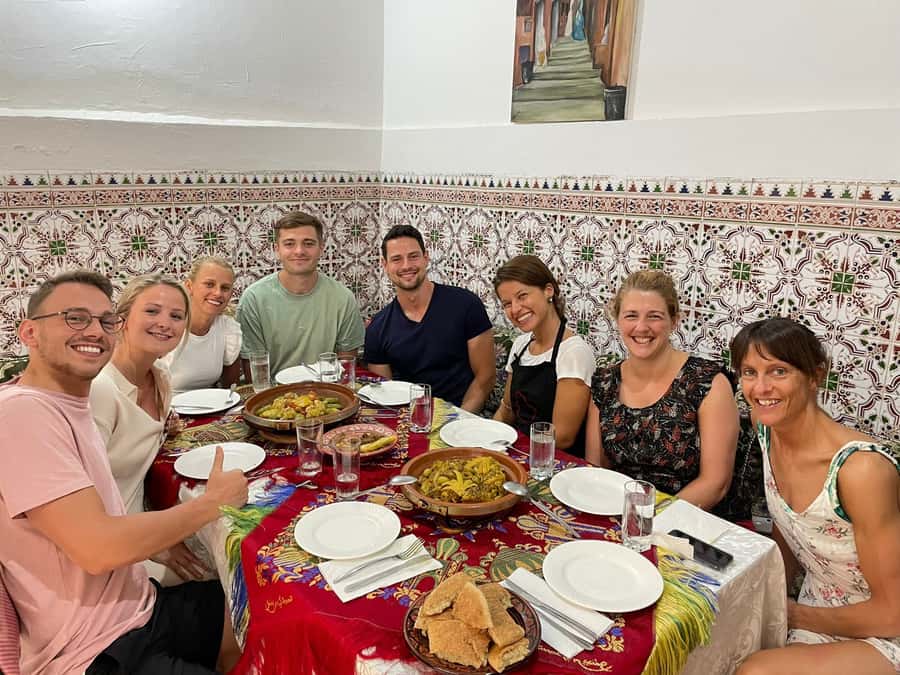
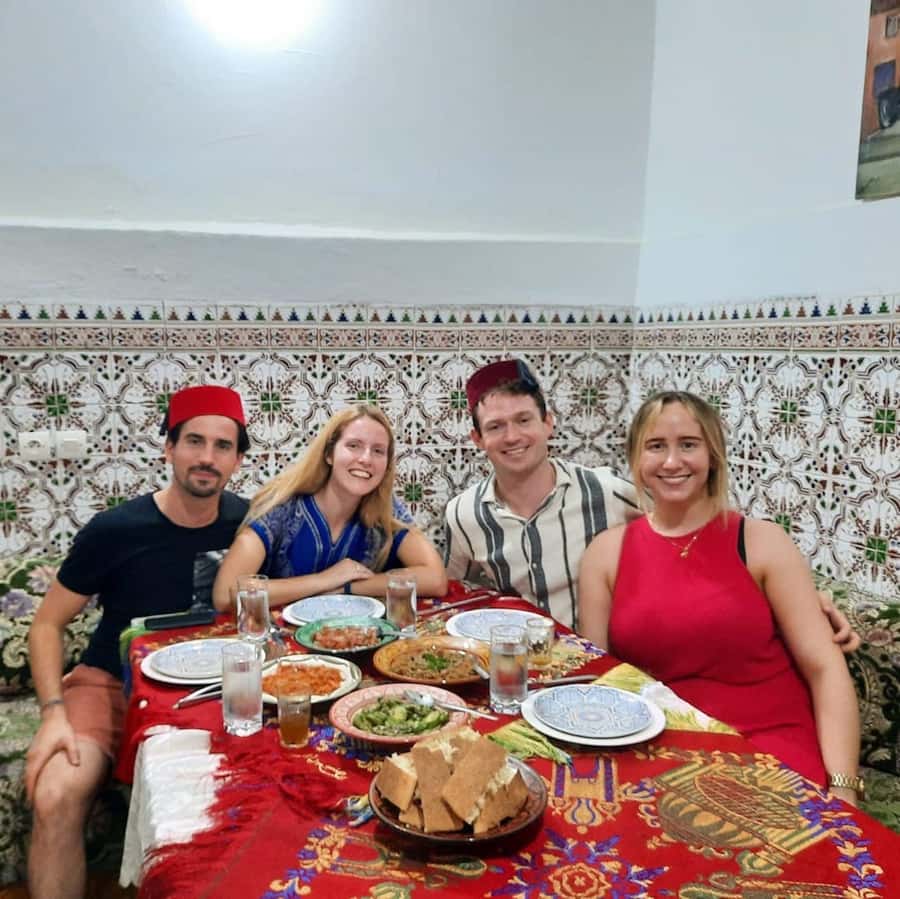
- Eating the meal you helped create
- Vegetarian options and food restrictions
- Recipes, spices, and value at $40
- Who should book this cooking class?
- Should you book the Khmisa Workshops class?
- FAQ
- How much does the Marrakech cooking class cost?
- What is included in the price?
- Does the class include a market visit?
- What dishes might I cook?
- Will I learn how to make Moroccan mint tea?
- Are vegetarian options available?
- Is hotel pickup included?
- Is the class suitable for wheelchair users?
- What should I bring?
- Can I cancel the booking?
Key things to know before booking
- You shop for the ingredients first: The class begins with a short walk through a local souk, away from the more tourist-focused parts of Marrakech.
- The menu is generous: Expect three to six dishes, often including Moroccan salads, a chicken or vegetarian tagine, and a milk pastilla dessert.
- Mint tea gets proper attention: You learn the Moroccan tea ritual rather than simply dropping mint into hot water.
- Local women lead the cooking: Kawtar, Khmisa, their relatives, and other Moroccan cooks create a friendly, informal setting.
- You take the class home: Electronic recipes are sent afterward, and homemade spices, saffron, and orange blossom water may be available to buy.
- The setting is a traditional riad: Cooking takes place at Khmisa’s workshop in the Medina, with air conditioning noted by one family who attended.
Why this Marrakech cooking class works so well
Marrakech has plenty of food tours, but this one does more than put lunch in front of you. You see the ingredients at the market, handle them in the kitchen, learn the role of spices, and then eat what you helped prepare. That simple sequence gives the meal a useful context.
I especially like the way the class links everyday food with Moroccan customs. Mint tea is not treated as a quick drink before the main event. You learn the steps of the ceremony and the care involved in preparing it. Several people found this part surprisingly different from the usual method of steeping mint in hot water and adding sugar.
The class is led by local Moroccan women and chefs with long experience in cooking, catering, hotels, and restaurants. That combination matters. You get the warmth of a family kitchen, along with instruction shaped by professional work. Kawtar often guides the group, while Khmisa and other cooks help with the preparation. Ilham has also translated for the chef in English during some sessions.
The tone is friendly rather than formal. The cooks encourage everyone to take part, and humor helps when language differences appear. That makes the class a good fit if you want cooking instruction without the pressure of a serious culinary school.
More Cooking Classes in Marrakech
- Marrakech: Moroccan Cooking Class with Pickup
★ 4.6 · 1,862 reviews - Marrakesh: Moroccan Dishes Cooking Class with a Local Chef
★ 5.0 · 1,615 reviews - Moroccan Cooking Class & Marrakech Market Visit with Chef Khmisa
★ 5.0 · 1,504 reviews
Starting in the souk with a shopping list
The first part is a short market walk. After discussing food allergies and restrictions, the group goes into a local market to buy fresh ingredients for the meal. This is not a long market tour with a lecture at every stall. It is a practical shopping trip tied to the dishes you will cook.
You may help select vegetables, chicken, herbs, spices, and other groceries. That small role makes a difference. Instead of seeing a finished tagine arrive at a restaurant, you understand what goes into it before it reaches the cooking pot.
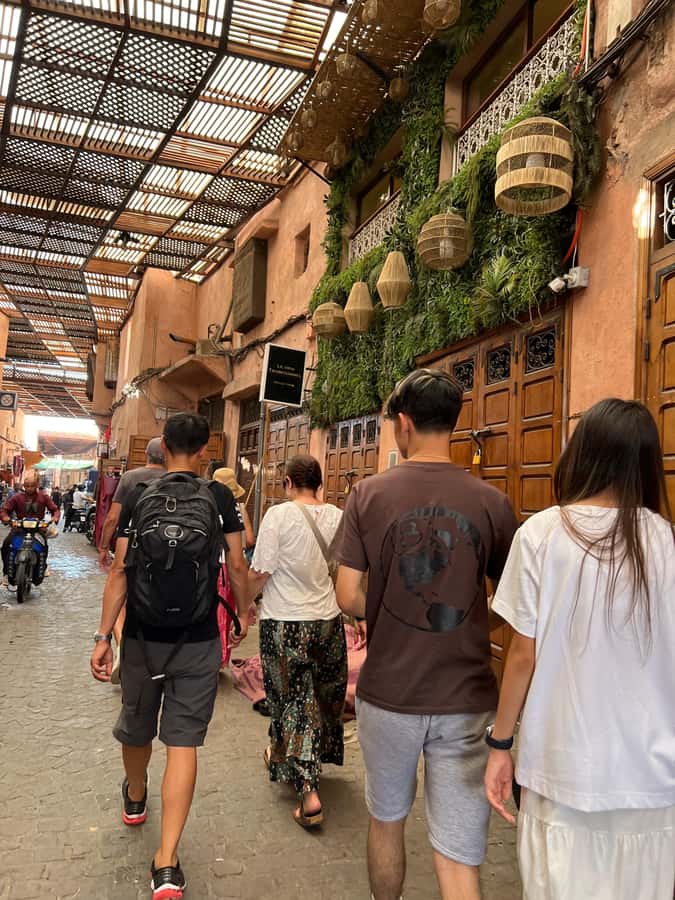
The market also gives you a useful look at ordinary food shopping in Marrakech. Stalls are filled with fresh produce, spices, and local products. The class description says the route is away from the more tourist-focused side of the city, so this portion has a more everyday feel than a souvenir-oriented souk walk.
Keep your expectations in check. The market visit is short, not a full food tour, and the main cooking session happens afterward. If you dislike crowded market lanes or prefer to move quickly, this part may feel less comfortable. Comfortable shoes are a good idea, and you should keep your belongings secure as you would anywhere in the Medina.
The meeting point needs care. One person found the mosque easy to identify but too large as a landmark, suggesting that the exact front entrance should be confirmed. I would contact the provider before setting out and ask for a precise meeting spot.
Mint tea as a lesson in Moroccan hospitality
Once you reach the riad workshop, you are welcomed with Moroccan mint tea. The tea lesson is one of the strongest parts of the class because it explains a custom that visitors often see without understanding.
You learn the full preparation ritual, including the use of tea, mint, and sugar. The process is more involved than pouring hot water over leaves. The class presents tea as part of hospitality and social life, not just as a drink.
This is also a calm transition from the market to the kitchen. You have time to settle in, meet the other people in the group, and listen to the cooks explain the food ahead. The class suits mixed groups well, including families, couples, solo participants, and people who have never cooked Moroccan food before.
The language options are English, French, and Arabic. English instruction has worked well for many groups, though some sessions also use translation. Because the class is hands-on, you can usually follow by watching and taking part even when every explanation is not in your first language.
Cooking tagines, salads, and dessert together
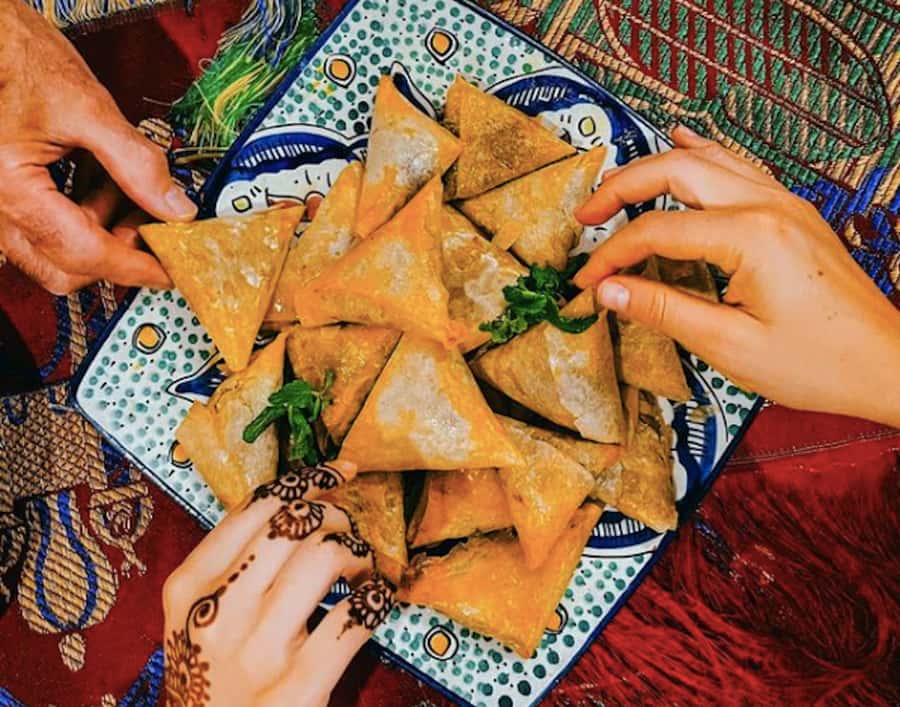
The menu can include three to six dishes, with starters, a main course, and a traditional milk pastilla dessert. Exact dishes vary, but the examples provided give a clear idea of the range.
Several classes prepared four Moroccan starters or salads, followed by chicken and vegetarian tagines. Lemon chicken tagine, potatoes, and vegetable tagine received particular praise. The starters provide a useful introduction to Moroccan seasoning because you can compare several small dishes rather than relying on one main course.
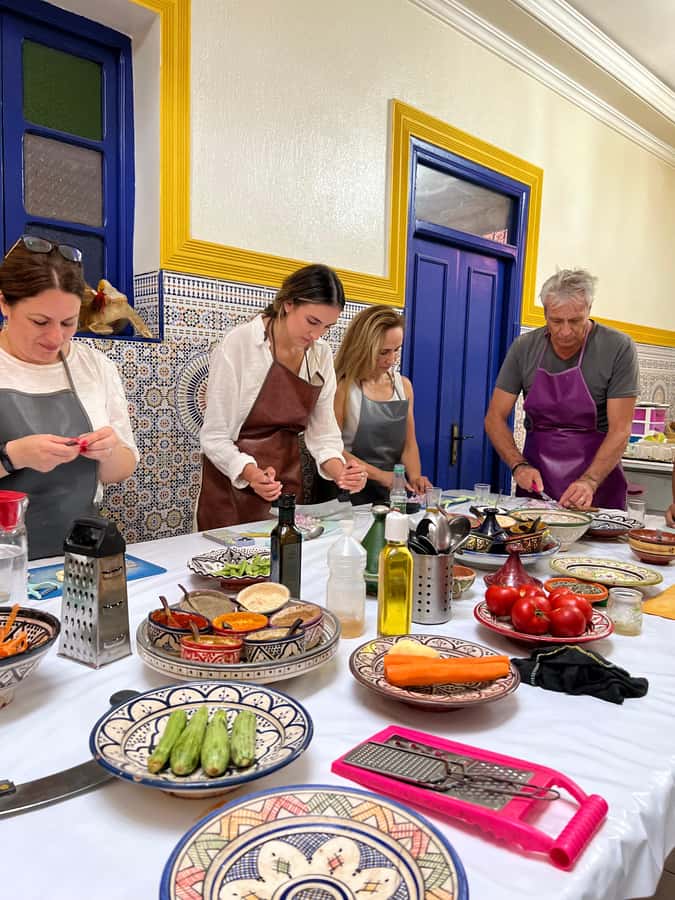
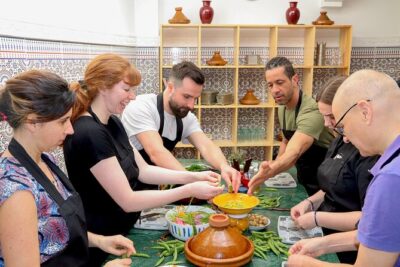
The cooking is organized as teamwork. You may chop vegetables, choose produce, add spices, help prepare the tagines, and take part in the dessert. The cooks make an effort to give everyone a job, including children. One family found that an eight-year-old could participate comfortably, while another family of five with three teenagers enjoyed the activity from beginning to end.
This shared approach is more social than a private lesson. You cook around the table with people from different countries, then eat together. If you want a quiet, highly individualized course, ask about a private session, which is available on demand. Otherwise, the group setting is part of the appeal.
The food is plentiful. People describe the final lunch or dinner as filling, with enough variety to make the $40 price feel fair. Do not plan a large meal immediately afterward. A class that includes several starters, two mains, dessert, and tea can easily become one of your biggest meals of the day.
Same city gate, a very different afternoon:
- Marrakech: Agafay Desert Sunset, Camel Ride, and Dinner Show
★ 4.6 · 35,119 reviews - From Marrakech: Ouzoud Waterfalls Guided Hike and Boat Trip
★ 4.7 · 33,630 reviews - Marrakech: Agafay Desert Quad & Camel Rides with Dinner Show
★ 4.8 · 27,382 reviews - Marrakech: Agafay Desert Quad Biking Tour with Dinner-Show
★ 4.8 · 16,569 reviews
What the riad setting adds
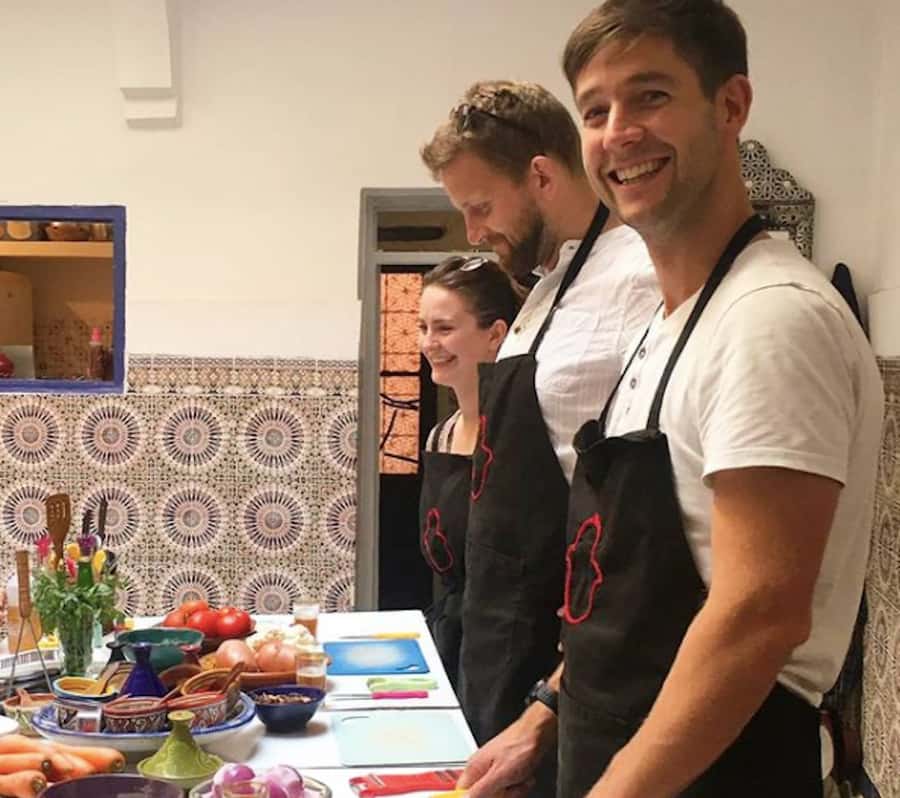
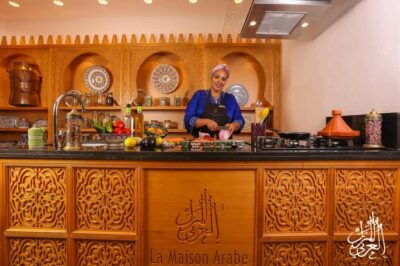
The workshop is an intimate riad in the Medina, connected with Khmisa’s family and Moroccan cooking tradition. The setting helps the class feel personal rather than commercial. You are welcomed into a place associated with local home cooking, and the hosts’ relatives may take part in the session.
One family described the riad as traditional and air conditioned. That last detail matters in Marrakech, especially if you book a daytime class or visit during a warm season. The cooking space is not simply a restaurant dining room. You prepare the meal in the same setting where you later eat it.
The atmosphere can feel like cooking with an aunt or grandmother. That is not just a phrase about decoration. The instruction is patient, direct, and practical. The chef may tell you what to add, then adjust the seasoning herself. You learn the method while watching someone who has cooked these dishes many times.
There is a tradeoff. A family-style riad is not designed like a large teaching kitchen with a separate workstation for every person. You may share cutting space and wait your turn for certain tasks. The group size can vary, with up to 12 people listed as the usual maximum. Smaller groups of six have also taken part, which allows more personal attention.
Eating the meal you helped create
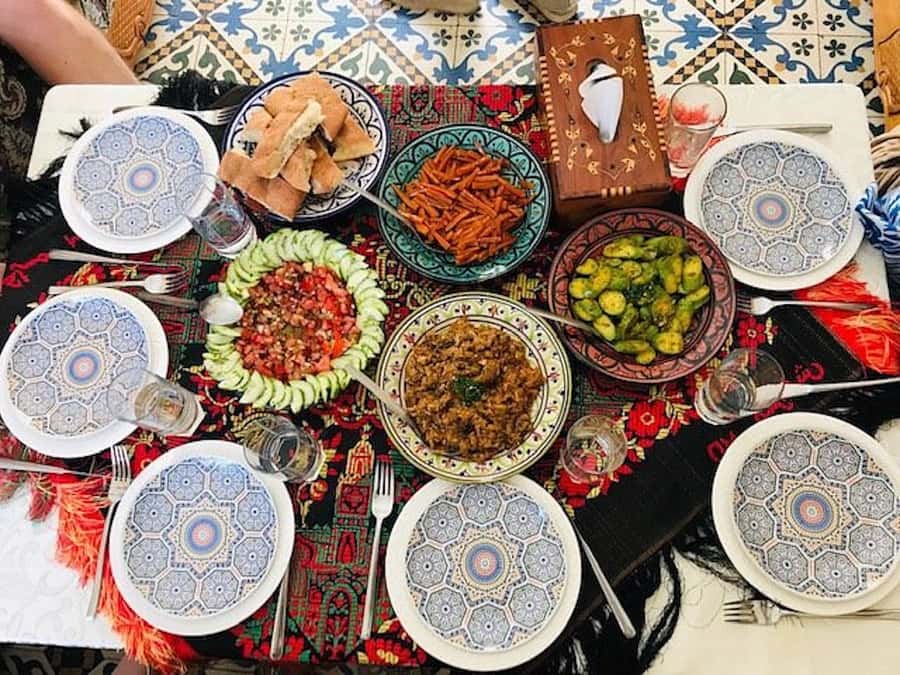
The meal is the reward, but it is also part of the lesson. After the cooking is finished, you sit down with the group and taste the dishes together. This lets you notice how the spice blends, preserved flavors, vegetables, and slow cooking work as a whole.
The chicken tagine is often the star, especially versions with lemon. The vegetarian selection is not an afterthought either. A group with vegetarian diners prepared a vegetarian tagine along with several vegetable starters and found the range satisfying.
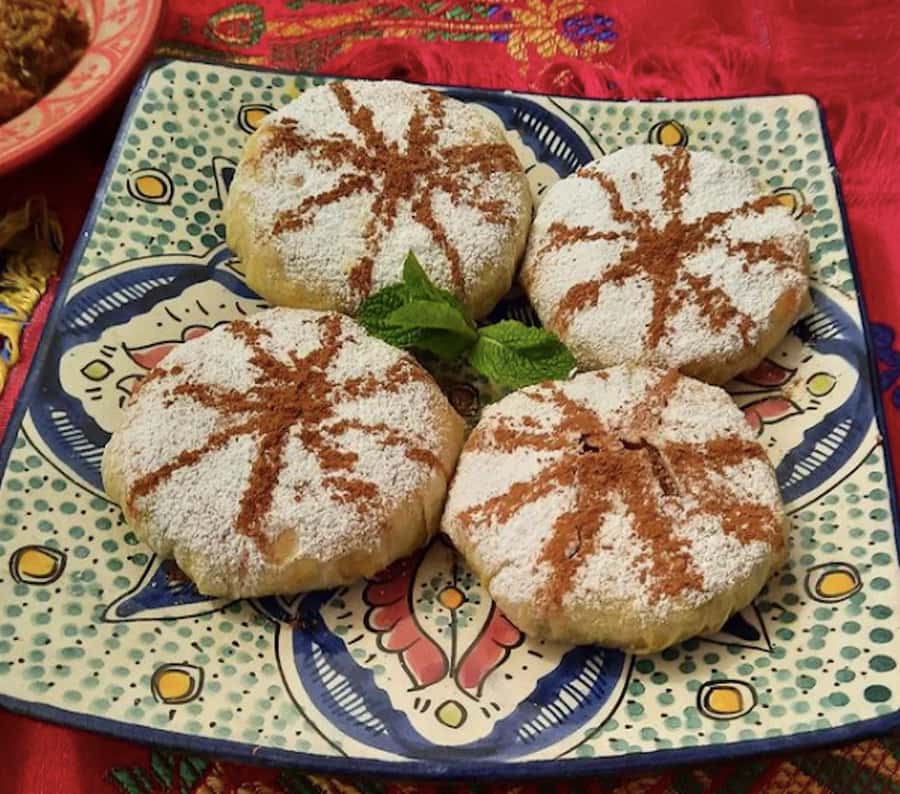
Dessert is included, often a pastilla of milk. This gives the class a useful finish because Moroccan cooking is not limited to savory tagines. You get to see how pastry, milk, sugar, and floral flavors can appear in a traditional sweet course.
The meal also gives you time to talk with the other participants. This is one of the pleasures of a shared class. You are not only learning food preparation; you are sharing a long meal in a relaxed setting. For many people, the cooking class became one of the most memorable meals of their Marrakech stay.
Vegetarian options and food restrictions
The menu can accommodate vegetarian cooking, and past groups have prepared both vegetarian starters and a vegetarian tagine. That makes this a reasonable choice for people who do not eat meat.
You should still discuss allergies and dietary restrictions before the market visit. The experience specifically begins with that conversation, but the class involves shared ingredients and a changing menu. Do not assume every restriction can be handled without advance notice.
The provider lists no alcohol, smoking, pets, or drugs during the activity. Wheelchair users should note that the experience is not suitable for wheelchair access. These details are simple, but they can decide whether the class fits your group.
Recipes, spices, and value at $40
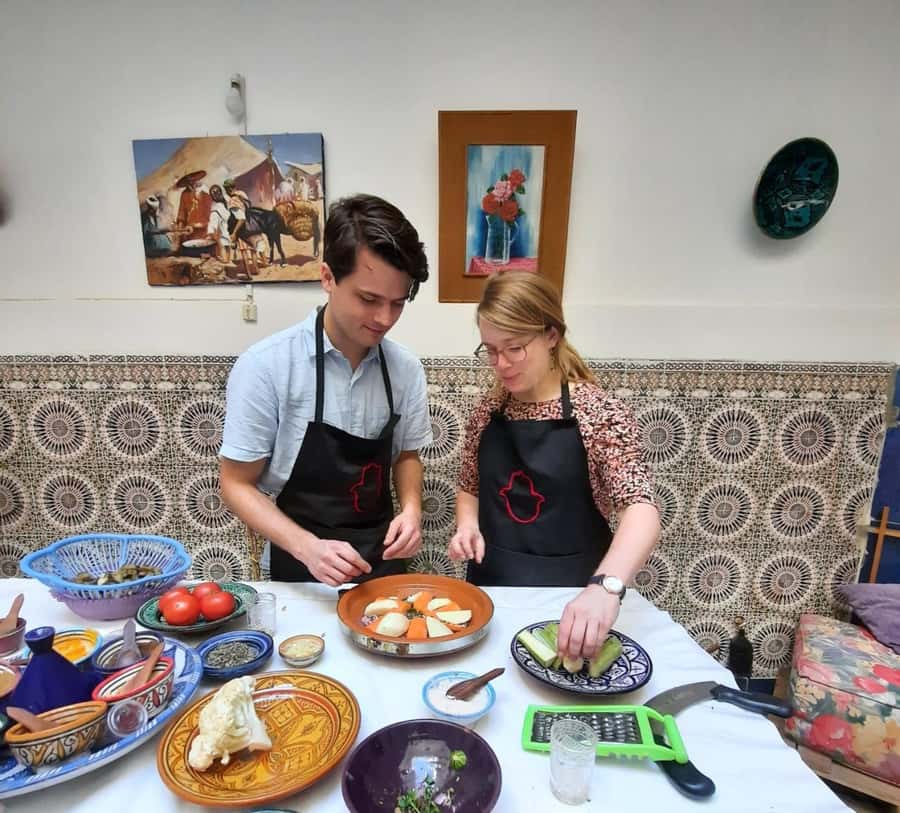
At $40 per person, this class offers more than a meal. The fee covers the market walk, all ingredients, tea, instruction from local cooks, the lunch or dinner, and electronic recipes afterward.
I see the recipes as an important part of the value. Many cooking demonstrations end when the plate is cleared. Here, you receive instructions for making the dishes again at home. People who cooked the lemon chicken tagine, salads, and vegetarian dishes found them realistic for home kitchens, including outside Morocco.
You may also be able to buy homemade spices before leaving. The hosts have offered spices ground by Khmisa at home, along with saffron and orange blossom water used in the recipes. These purchases are optional, but they can help you reproduce the flavors later. I would treat them as a useful extra rather than part of the included cost.
There is no hotel transportation. You must reach the meeting point yourself and then make your own way back. Since the activity is in the Medina, factor in extra time to find the exact location, particularly if you are unfamiliar with Marrakech’s lanes.
The booking terms are practical for a busy itinerary. You can reserve and pay later, and cancellation is allowed up to 24 hours in advance for a full refund. Times may change, so check your message the night before. One class time moved from 10 a.m. to 11 a.m., with notice given the previous evening.
Who should book this cooking class?
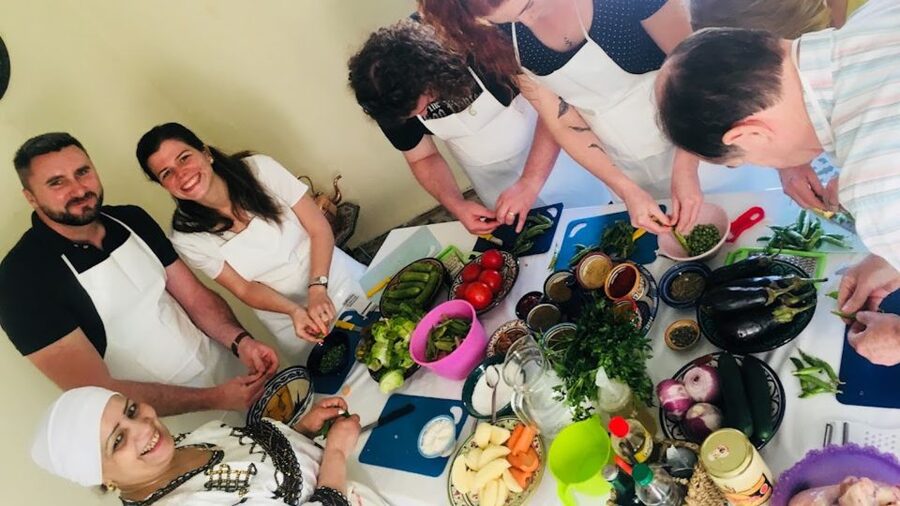
I would recommend it most strongly if you want a cultural activity that is social, practical, and centered on food. It works well for:
- Couples who want more than a restaurant meal
- Solo participants who enjoy meeting an international group
- Families with children and teenagers
- Vegetarian diners, after confirming the menu
- First-time cooks who prefer patient guidance
- Experienced home cooks looking for Moroccan spice ideas
It is less suitable if you need wheelchair access, dislike shared kitchens, or want private instruction by default. It is also not the right choice if your main goal is a long market tour, since the souk visit is short and focused on buying ingredients.
Bring comfortable shoes for the market and a hair tie for the kitchen. Wear something easy to cook in, and arrive ready to participate. This is not a show where you watch someone else do all the work.
Should you book the Khmisa Workshops class?
Yes, if you want to understand Moroccan food by making it, not just eating it. The strongest reasons are the market stop, the proper mint tea lesson, the family-style riad, the generous meal, and the recipes sent afterward.
The class earns its high rating because it combines instruction with hospitality. Kawtar, Khmisa, their relatives, and the other cooks create the kind of setting where you can ask questions, make mistakes, laugh, and still produce a very good meal.
I would book it early if you need a particular time or want a smaller group, then confirm the meeting point and mention every allergy or restriction. At $40, it is a good deal for a multi-dish meal and a cooking lesson, especially when you count the recipes and market experience. Just remember that the class is shared, transportation is not included, and the Medina meeting point needs precise directions.
FAQ
How much does the Marrakech cooking class cost?
The experience costs $40 per person.
What is included in the price?
The price includes lunch or dinner, all ingredients, a short market walk, Moroccan tea, a local Moroccan chef, a guide speaking English, French, or Arabic, and electronic recipes sent afterward.
Does the class include a market visit?
Yes. After discussing allergies and food restrictions, the group takes a short walk through a local souk to buy fresh ingredients for the cooking session.
What dishes might I cook?
The menu can include three to six Moroccan dishes, such as starters, salads, chicken tagine, vegetarian tagine, and a traditional milk pastilla dessert. The exact menu can vary.
Will I learn how to make Moroccan mint tea?
Yes. The class includes a demonstration and lesson on the Moroccan mint tea ritual before cooking begins.
Are vegetarian options available?
Yes. Previous sessions have included vegetarian starters and a vegetarian tagine. Tell the provider about your dietary needs before the market visit.
Is hotel pickup included?
No. Hotel pickup and drop-off are not included, so you must reach the meeting point independently.
Is the class suitable for wheelchair users?
No. The activity is listed as not suitable for wheelchair users. It also does not allow pets, smoking, alcohol, or drugs.
What should I bring?
Bring comfortable shoes for the market walk and a hair tie for cooking.
Can I cancel the booking?
You can cancel up to 24 hours in advance for a full refund. You may also reserve and pay later, which keeps your plans flexible.
More Shopping Tours in Marrakech
- Marrakesh: Guided Souk Shopping Tour with a Local Guide
★ 4.9 · 651 reviews - Shopping in the Souks of Marrakech Private Tour
★ 5.0 · 620 reviews - Souks Shopping Tours
★ 5.0 · 395 reviews - Marrakech Shopping Tours : Private Souks Tour
★ 5.0 · 345 reviews
More Markets in Marrakech
- Marrakech: Moroccan Cooking Class with Market Visit and Meal
★ 4.9 · 347 reviews - Evening Marrakech: Gastronomic and Market Tour Inside the Medina
★ 4.5 · 283 reviews - Edgy 8 Dish Private, Fusion Cooking Class, Menu Plan, Market
★ 4.9 · 31 reviews - Essaouira: Sqala du Port, Medina Ramparts & Fish Market Tour
★ 4.7 · 212 reviews
Just listed around Marrakech
- 3 Days To Merzouga Desert★ 5.0 · 19 reviews
- 3 Days Shared Sahara Desert Tour From Marrakech★ 5.0 · 78 reviews
- 3 Days Sahara Desert Trips From Marrakesh★ 5.0 · 176 reviews
- 3 Days Sahara Tour from Marrakech to Merzouga Dunes★ 5.0 · 29 reviews
- 1 night Camel Treking in Merzouga Desert Luxury Camp★ 5.0 · 132 reviews
- trip of your dreams in 3 days and 2 nights in the desert★ 5.0 · 36 reviews
- 3 Days Private Tour to Merzouga Desert from Marrakech★ 5.0 · 77 reviews
- 3 Day Sahara Desert Tour From Marrakech★ 5.0 · 49 reviews
Cooking Classes, compared.
Moroccan Dishes Cooking Class with a Local Chef
Read our review →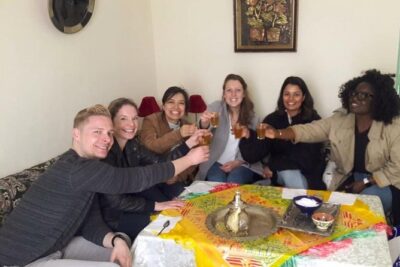
Moroccan Cooking Class & Marrakech Market Visit with Chef Khmisa
Read our review →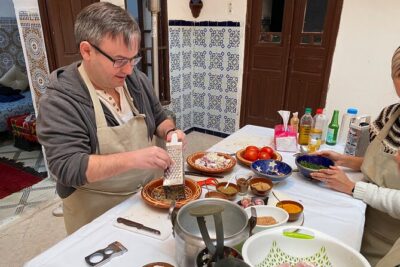
Half-Day Cooking Class with Local Chef Laila in Marrakech
Read our review →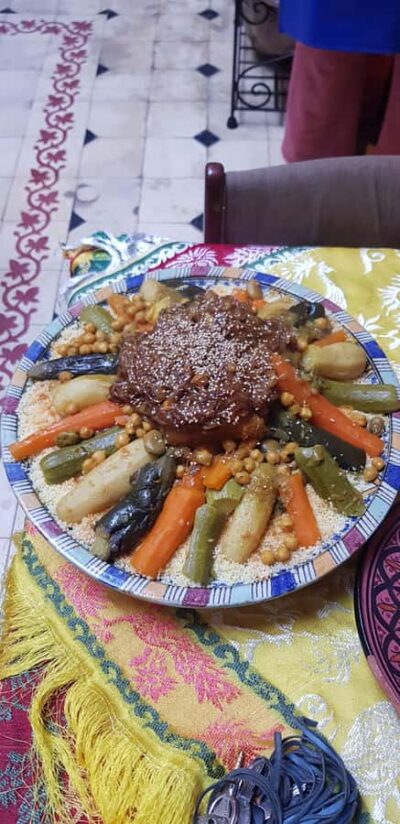
Marrakesh cooking class with chef Hassan – Local dishes
Read our review →Browse the lists this tour appears in