
Reviewed · MARKETS
Evening Marrakech: Gastronomic and Market Tour Inside the Medina
Marrakech tastes best after sunset. This 3.5-hour walk combines the city’s famous square with food stops most first-time visitors would struggle to find, from spice stalls and olive sellers to snail soup and a Moroccan dinner. I like the small group of up to 12 and the chance to learn how saffron, cumin, anise, turmeric, and other spices shape everyday cooking. The main caution is that the food can be simple street fare, and a few people have found the portions or hygiene below expectations.
I also like the timing. Starting at 6 p.m. lets you see Djemaa El Fna shift into its evening form, with food stands, entertainers, and crowds filling the square. Guides such as Atika, Brahim, Jihad, Yousif, Mustafa, and Ibrahim have earned warm praise for explaining local customs and helping newcomers find their way. Still, the experience depends heavily on the guide, so the quality of the storytelling and pacing may vary.
In This Review
- Key points to know before you book
- Why this food walk works well on a first evening
- Djemaa El Fna at 6 p.m., before the square reaches full volume
- Riad Zitoun Jdid and the shift from square to side streets
- Mellah Market, meat stalls, and Morocco’s spice cupboard
- Mechoui Alley and the most adventurous tastings
- Souk Semmarine, the Medina’s main shopping artery
- Dinner above the square, with the night at full pitch
- The guide can make or break the evening
- Price, food portions, and who gets good value
- Should you book the Marrakech evening food tour?
- FAQ
- How long does the Marrakech food tour last?
- What time does the tour begin?
- Where does the tour meet?
- Where does the tour end?
- How much does the tour cost?
- How many people can join the tour?
- Is dinner included?
- What unusual food might I try?
- Can vegetarians and vegans join?
- Can the tour accommodate gluten intolerance?
- Can children join the tour?
- Is hotel pickup included?
- Can I cancel for a full refund?
Key points to know before you book
- Snail soup is part of the route: Ghoulal is a herbal, spicy Moroccan soup, and it may be the tour’s most unusual tasting.
- The evening ends with dinner in Djemaa El Fna: You eat while the square reaches its loudest and most theatrical hour.
- You visit working food markets: The poultry and beef market, Mellah Market, spice stalls, and souks show everyday buying and bargaining.
- The group is capped at 12 people: This gives your guide a better chance to answer questions and adjust the pace.
- It is best early in your Marrakech stay: The walk can help you get your bearings before exploring the Medina alone.
- Vegetarian and vegan requests are possible: You must share dietary needs at least 24 hours ahead, but gluten-free requests cannot be accommodated.
Why this food walk works well on a first evening
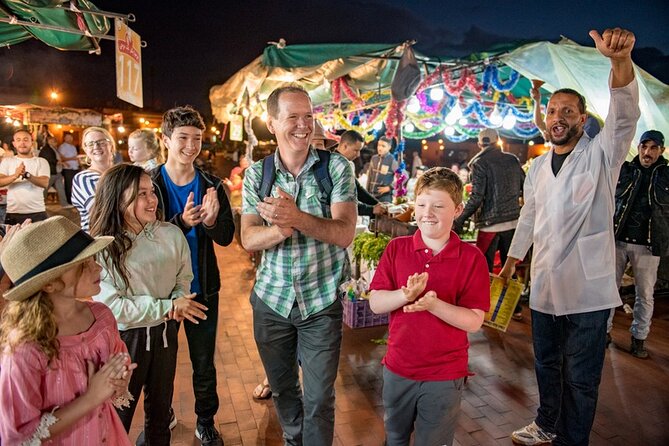
Marrakech’s Medina can feel like a maze with a soundtrack. Djemaa El Fna is easy to locate, but the narrow lanes around it quickly become confusing, especially after dark when food stalls, motorbikes, shopkeepers, and pedestrians all compete for space.
That is where this tour earns its keep. You meet at Café de France at 6 p.m., right by the main square, then walk with a local English-speaking guide through a mix of obvious sights and less polished food stops. I would schedule it near the beginning of your stay, not the last night. The guide can give you useful pointers about the souks, food areas, local customs, and getting around the Medina.
The tour is not a formal cooking class or a fine-dining evening. It is closer to a guided sample of Marrakech’s working food culture. You may eat from basic stalls, share small plates, and try dishes that are more interesting than elegant. That distinction matters when you decide if $46.08 is a fair price.
For me, the strongest part is the combination of food and context. You are not simply handed a plate of Moroccan dishes. You watch people buy meat, hear how spices are used, and see the evening square change character. If you want polished restaurants and generous portions, this may feel modest. If you want help making sense of the Medina, it offers useful value.
A few more Marrakech runs to hold up against each other
- Marrakech: Traditional Moroccan Cooking Class & Market Visit
★ 4.8 · 1,861 reviews - Moroccan Cooking Class & Marrakech Market Visit with Chef Khmisa
★ 5.0 · 1,504 reviews - Marrakech: Moroccan Cooking Class with Market Visit and Meal
★ 4.9 · 347 reviews
Djemaa El Fna at 6 p.m., before the square reaches full volume
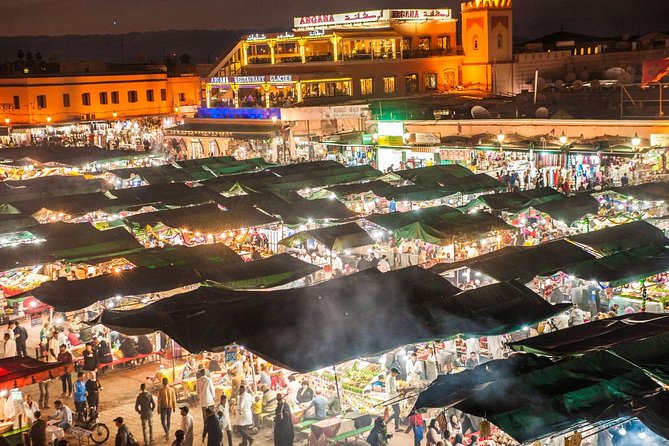
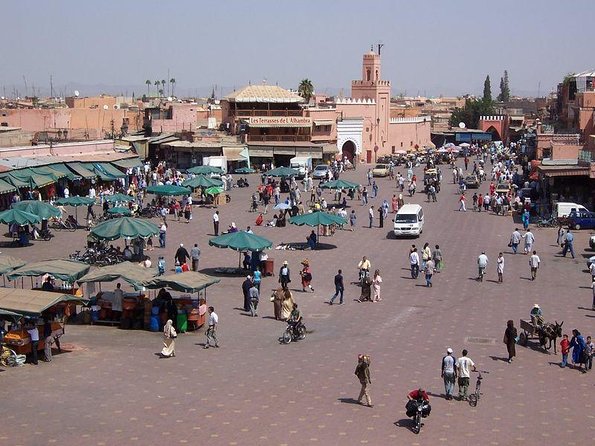
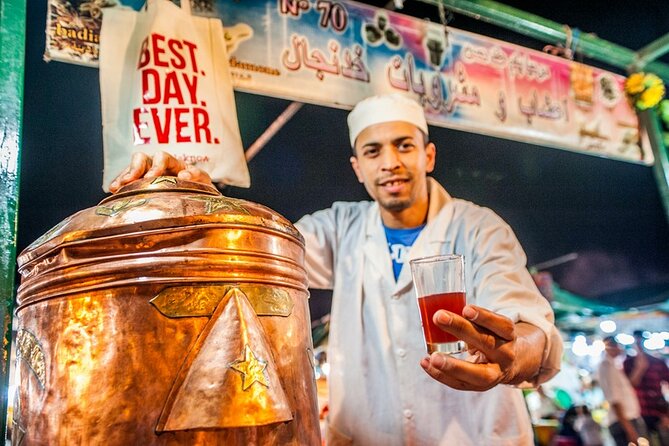
The walk begins with about 15 minutes in Jemaa el-Fnaa, Marrakech’s famous central square and a UNESCO World Heritage site. During the day, it has one mood. After sunset, it becomes a different place, with brightly lit food stalls, storytellers, dancers, water sellers, snake charmers, and people out for their nightly stroll.
Your guide starts with an explanation of the evening and gives you time to take in the scene. That short introduction is useful because the square can be overwhelming when you first arrive. You will see plenty on your own, but a guide helps connect the sounds, food, and performers to the way the square functions.
The square is also the tour’s final dining setting, so the opening stop gives you a preview of what is ahead. Do not expect a quiet meal here. The appeal is the commotion, and the noise is part of the experience.
One practical point: the meeting instructions identify Café de France, but one person found the guide difficult to identify at the start because there was no obvious tour branding. Arrive a little early, keep your booking details handy, and confirm the guide’s name if you are unsure.
Riad Zitoun Jdid and the shift from square to side streets
The next section takes about 15 minutes around Riad Zitoun Jdid. This area mixes riad hotels, small bistros, rooftop terraces, hammams, pottery shops, kaftans, and leather bags. The Bahia Palace and Dar Si Said Museum are nearby, though this food walk does not present itself as a palace or museum tour.
The value here is the change in setting. You leave the open square and enter the older lanes where daily life is less arranged for sightseeing. You might see cafés serving mint tea and Moroccan-style European food, along with shops and homes built around traditional courtyards.
This is a short stop, so you should not expect a full neighborhood tour. The guide’s comments and the walk itself are the point. Guides praised for discussing women, clothing, local rules, and culture can make this section much more useful than a simple passage between food stops.
If you are visiting Marrakech for the first time, this early orientation can help you recognize the difference between the main tourist routes and the smaller lanes that feed into them.
Mellah Market, meat stalls, and Morocco’s spice cupboard
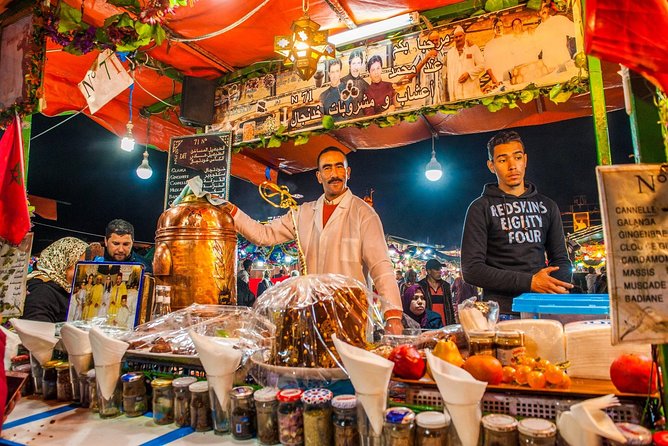
The longest cultural section comes in Mellah, the former Jewish quarter, for roughly 45 minutes. Its narrow alleys include the Lazama Synagogue, the Miaara Jewish cemetery, a produce and meat market, and Bab Mellah Spice Souk. The tour’s focus is food rather than a full historical visit, but the neighborhood adds context to the market stops.
Here you watch buyers and sellers bargain over poultry and beef. Haggling is not just a performance for visitors. It is part of ordinary shopping, and observing it gives you a clearer sense of how food reaches Moroccan kitchens.
The spice portion is one of the tour’s most useful stops. You see saffron, paprika, cardamom, anise, turmeric, and cumin, then hear how they are used in tagines and other staples. That explanation is more helpful than simply seeing rows of colorful powders. You can connect the smells in the market with the food you eat later.
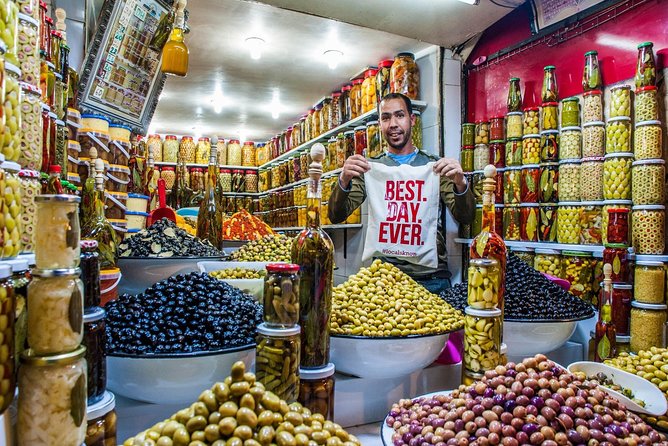
The included tastings may include nuts, olives, and other local specialties. The exact selection can vary, so think of these as small samples rather than a complete meal. Some people find the food portions generous enough when added together, while others consider the meal and samples too basic for the price.
Same city gate, a very different afternoon:
- Marrakech: Agafay Desert Sunset, Camel Ride, and Dinner Show
★ 4.6 · 35,119 reviews - From Marrakech: Ouzoud Waterfalls Guided Hike and Boat Trip
★ 4.7 · 33,630 reviews - Marrakech: Agafay Desert Quad & Camel Rides with Dinner Show
★ 4.8 · 27,382 reviews - Marrakech: Agafay Desert Quad Biking Tour with Dinner-Show
★ 4.8 · 16,569 reviews
Mechoui Alley and the most adventurous tastings
A stop at Chez Lamine Hadj Mustapha in Mechoui Alley brings you to a very traditional food setting behind the Alhambra restaurant. The stand is known for sheep’s heads and tangia cooking pots. Mechoui is cooked over charcoal, while beef pots are served throughout the day. Bread and the juices collected in the bowl are part of the appeal.
This is not a place designed to look pretty for photographs. It is a working food stop, and the display can be confronting if you are not used to seeing whole animal parts. The tour may introduce you to sheep’s head, cow’s hoof, or other foods that are not common on a standard Moroccan restaurant menu.
You should also try ghoulal, Moroccan snail soup. It is made with herbs and spices and is described as a key tasting on the tour. For some people, this is the evening’s best story and a pleasant surprise. For others, the texture or the idea of snails may be a firm no.
Food safety deserves a realistic note. Several people enjoyed the street food without problems, but one poor experience included soup served lukewarm and later illness. That does not establish a general pattern, but it is fair to say this tour is not the right choice if you are uncomfortable with basic market stalls or unfamiliar food preparation. Use your own judgment, and tell the guide if you do not want a particular tasting.
Souk Semmarine, the Medina’s main shopping artery
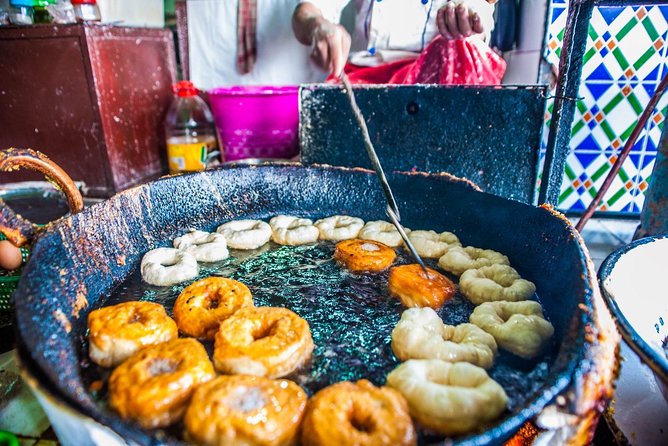
The walk continues through Souk Semmarine for about an hour. This is one of the main routes through Marrakech’s souks, leading from Djemaa El Fna into a maze of shops and covered lanes. Its name connects to the farriers who once worked here, shoeing animals used by caravan traders.
This part adds movement and atmosphere after the food stops. You may pass stalls selling crafts, clothing, leather goods, pottery, and other items, though the tour’s purpose is not dedicated shopping. The guide can point out useful food areas and offer advice for exploring later on your own.
The souk can be crowded and distracting. That is exactly why a guide helps, particularly on your first night. You can focus on the smells, signs, and shop displays instead of worrying about which turn takes you back to the square.
Do not expect much time for serious bargaining on this tour. If you stop often to shop, you may fall behind the group or cut into the food and cultural discussion. Use the walk to learn the layout, then return to shops that interest you another day.
Dinner above the square, with the night at full pitch
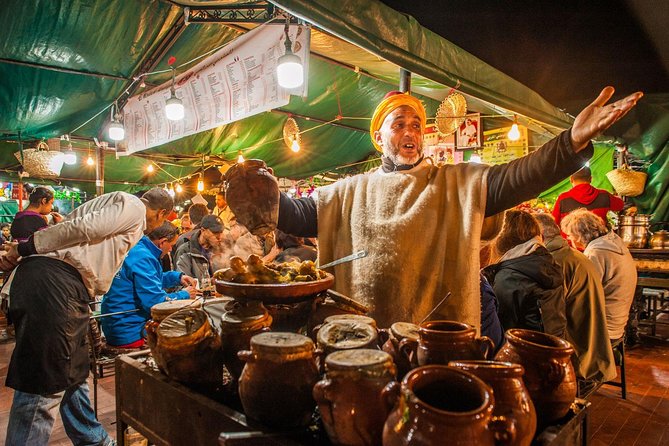
The final stage is a traditional Moroccan dinner in or around Djemaa El Fna. By this point, the square should be at its evening peak. Peddlers, entertainers, snake charmers, food stands, and large crowds create the sensory overload promised by the tour.
The meal is included, along with three typical market tastings. The supplied information does not specify a fixed dinner menu, so you should not book this expecting one particular dish. The food may be traditional and filling, but the evening is as much about the setting and the walk as it is about restaurant service.
This is where the tour’s best qualities come together. You have seen ingredients in the market, heard about Moroccan seasoning, watched local shopping, and then eaten in the place where much of Marrakech comes to spend the evening.
It is also where expectations need managing. One person described receiving a very small plate that did not feel like a proper dinner. Others praised the meal, the variety, and the chance to try local dishes. I would view the included dinner as a useful part of the experience, not as the sole reason to pay the fee.
The tour ends back at the meeting point after approximately three and a half hours. You can return to your hotel or keep exploring the square independently.
The guide can make or break the evening
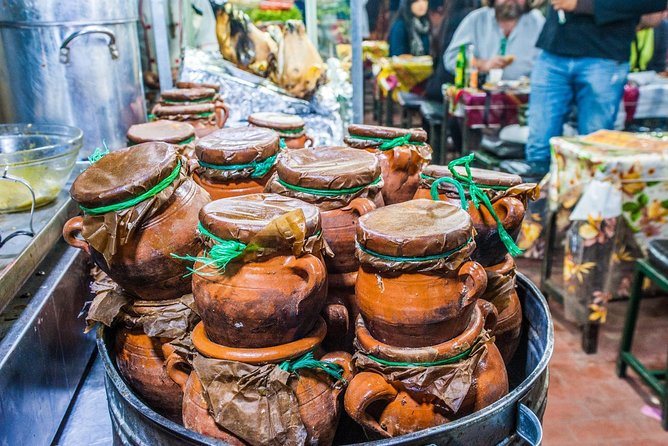
The strongest praise goes to the guides. Atika was appreciated for discussing culture, clothing, women’s experiences, and practical Medina customs. Brahim was praised for clear explanations and an easy manner. Jihad and Gihad were noted for adapting food choices and offering useful information. Yousif, Mustafa, and Ibrahim also received warm comments for friendliness and local insight.
That range tells you something important: this is a guide-led experience, not a fixed script with the same feel every night. A strong guide can turn a small tasting into a lesson about Moroccan life. A less engaged guide may simply lead you from stall to stall with little explanation.
The group limit of 12 helps. It gives you a better chance to ask questions, hear the guide in busy streets, and receive advice about later meals or shopping. Still, the experience may be even more personal if you book a private option when available. One especially positive account described a one-on-one tour tailored around dietary needs.
Price, food portions, and who gets good value
At $46.08 per person, the price is reasonable if you value orientation, tastings, a local guide, and the confidence to enter the Medina at night. You are paying for access to a route and explanations, not simply for the amount of food on the table.
The value drops if you judge the tour by dinner alone. Some stops are inexpensive street food, and the portions may be small. One person felt the experience was too basic for the cost, while several others considered it good value because the guide showed them so much of the souks and helped them understand the city.
I would book it if you are new to Marrakech, enjoy trying unfamiliar food, and want an active evening rather than a formal meal. It also suits solo visitors, couples, and families who want a structured first look at the Medina. Children under six can join free, and most people can take part, but remember that this is a walking tour through crowded lanes.
Vegetarians and vegans can be accommodated if you provide the request at least 24 hours before the start. Gluten intolerance cannot be accommodated. Additional food and drinks beyond the included tastings and dinner are not covered.
The operator, Intrepid Urban Adventures Morocco, describes the tour as carbon neutral and eco-certified. That will matter to some people when choosing between similar excursions.
Should you book the Marrakech evening food tour?
I would book this tour as an introduction to Marrakech, especially for your first or second evening. The best reasons are the guide’s local explanations, the market access, the spice lesson, and the chance to eat in Djemaa El Fna while the square is in full motion.
I would skip it if you want a refined food experience, large portions, strict dietary control, or a quiet dinner. The unusual dishes are part of the point, but they will not suit everyone. The occasional weak guide and uneven food experience also mean you should book with realistic expectations.
At $46.08, this is a fair orientation walk with food attached. Choose it for the stories, street atmosphere, and help finding your way. If the meal itself is your main priority, spend the money at a restaurant instead.
FAQ
How long does the Marrakech food tour last?
The tour lasts approximately 3 hours and 30 minutes.
What time does the tour begin?
The tour begins at 6 p.m.
Where does the tour meet?
The meeting point is Hôtel Restaurant Café de France, at Djemaa El Fna on Rue des Banques in Marrakech.
Where does the tour end?
The activity ends back at the meeting point.
How much does the tour cost?
The listed price is $46.08 per person.
How many people can join the tour?
The group has a maximum of 12 travelers.
Is dinner included?
Yes. The tour includes an authentic local dinner, along with three typical market tastings.
What unusual food might I try?
The tour includes ghoulal, a Moroccan snail soup. You might also be offered foods such as sheep’s head or cow’s hoof.
Can vegetarians and vegans join?
Yes, the tour can cater to vegetarian and vegan diets if you provide the request at least 24 hours before the tour begins.
Can the tour accommodate gluten intolerance?
No. Gluten intolerance cannot be accommodated.
Can children join the tour?
Yes. Children under six are permitted to join free of charge.
Is hotel pickup included?
No. Hotel pickup and drop-off are not included.
Can I cancel for a full refund?
Yes. You can cancel at least 24 hours before the local start time for a full refund. Cancellations or changes made within 24 hours are not accepted for a refund.
More Things to Do After Dark in Marrakech
- Marrakech: Agafay Desert Dinner Show with Sunset Camel Ride
★ 4.8 · 3,330 reviews - Marrakech: Street Food Tour by Night
★ 4.8 · 2,838 reviews - Agafay Desert: Dinner + Show with Quad Bike & Sunset Camel Ride
★ 4.5 · 2,669 reviews - Marrakesh: Agafay Desert Sunset, Camel Ride, and Dinner Show
★ 4.8 · 2,334 reviews
Just listed around Marrakech
- 3 Days To Merzouga Desert★ 5.0 · 19 reviews
- 3 Days Shared Sahara Desert Tour From Marrakech★ 5.0 · 78 reviews
- 1 night Camel Treking in Merzouga Desert Luxury Camp★ 5.0 · 132 reviews
- 3 Days Sahara Desert Trips From Marrakesh★ 5.0 · 176 reviews
- 3 Days Sahara Tour from Marrakech to Merzouga Dunes★ 5.0 · 29 reviews
- trip of your dreams in 3 days and 2 nights in the desert★ 5.0 · 36 reviews
- 3 Days Private Tour to Merzouga Desert from Marrakech★ 5.0 · 77 reviews
- 3 Day Sahara Desert Tour From Marrakech★ 5.0 · 49 reviews
Markets, compared.
Traditional Moroccan Cooking Class & Market Visit
Read our review →
Moroccan Cooking Class & Marrakech Market Visit with Chef Khmisa
Read our review →
Moroccan Cooking Class with Market Visit and Meal
Read our review →
Sqala du Port, Medina Ramparts & Fish Market Tour
Read our review →
Flavors of Fez: Market visit, and a hands-on cooking class.
Read our review →
Agadir City Tours & Sightseeing with Souk elhad Market
Read our review →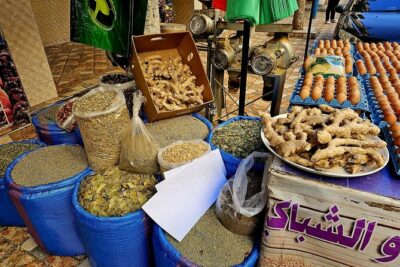
Old local Market visit+Moroccan cooking class with a local family
Read our review →Browse the lists this tour appears in