
Reviewed · COOKING CLASSES
Marrakech: Moroccan Cooking Workshop at La Maison Arabe
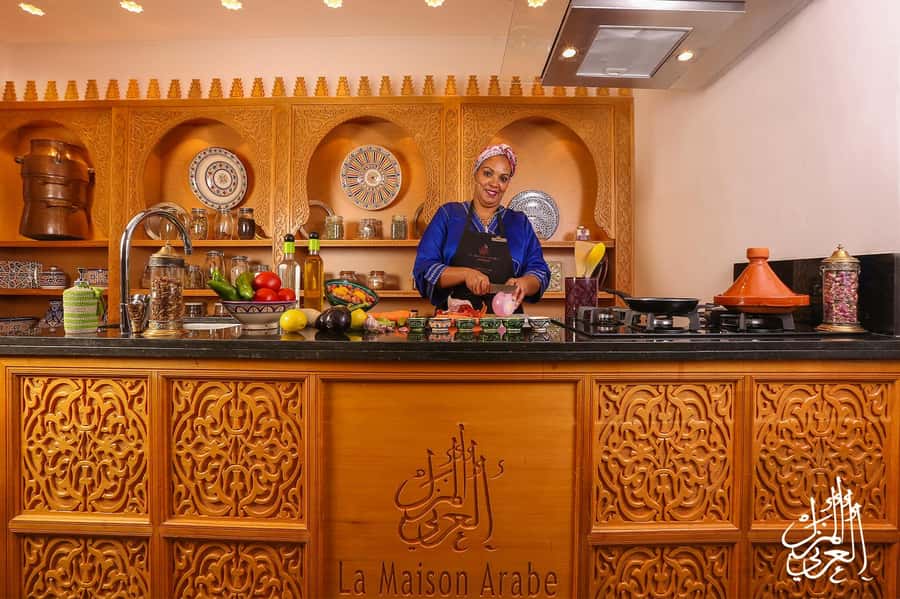
Good food makes Marrakech easier to understand. At La Maison Arabe, you learn by chopping, stirring, tasting, and sharing a meal rather than simply watching a chef work. I like the individual workstations and the spotless, modern kitchen, where you prepare your own dish with fresh local ingredients. I also like the warm teaching style, especially the way cooks such as Hayat, Wafa, Sanaa, Fatiha, and Rokaya explain the food while translators keep the lesson clear in Arabic, English, and French. The main drawback is simple: at $35 per person, it costs more than some basic Marrakech cooking classes.
You can choose a one-hour express session or a three-hour workshop. The shorter class focuses on a Moroccan specialty, often chicken tagine, while the longer option adds starters, dessert, bread making, a tea ceremony, and more background on Moroccan food and culture. The class is not suitable for children under 12 or wheelchair users, so check those points before booking.
In This Review
- Key points at a glance
- Meeting at La Maison Arabe, close to the medina
- The express class: one hour of Moroccan cooking
- The three-hour workshop: from starters to dessert
- Learning from a dada and a live translator
- Tagine, bread, tea, and the meal you actually eat
- A clean, modern kitchen with room to participate
- What the $35 price really buys you
- Group atmosphere and the right kind of participant
- Booking advice for choosing one hour or three
- Should you book the La Maison Arabe cooking workshop?
- FAQ
- Where does the Moroccan cooking workshop meet?
- How long does the cooking class last?
- What food do you cook?
- Is lunch included?
- Which languages are available?
- Is the activity suitable for children?
- Can wheelchair users take part?
Key points at a glance
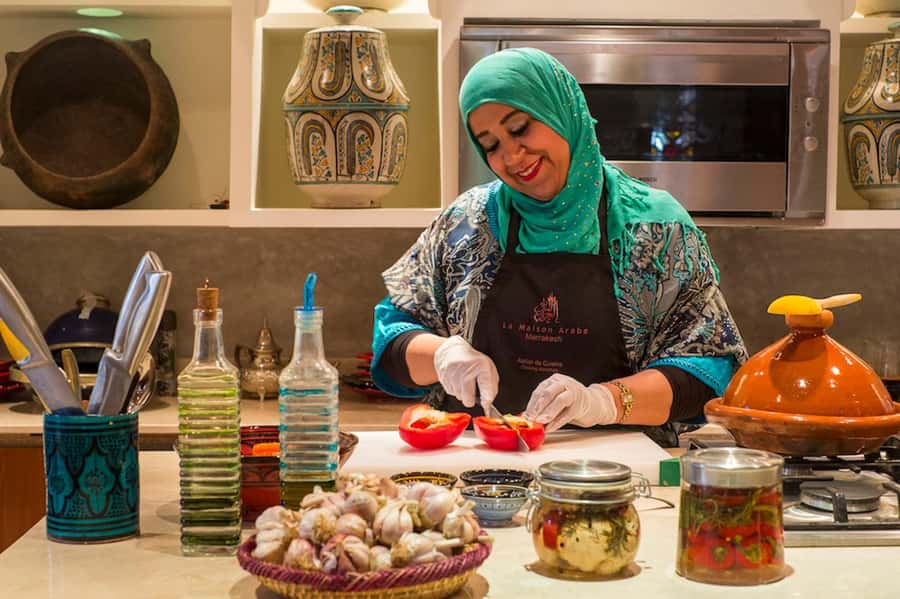
- You cook at your own station: You do the chopping and preparation yourself instead of standing behind a demonstration counter.
- The three-hour class is a full meal: Expect starters, tagine or couscous, dessert, handmade flatbread, tea, and time to eat what you prepare.
- Chicken tagine is a frequent favorite: The recipe is simple enough for a home cook, yet the finished dish is a satisfying introduction to Moroccan flavors.
- The tea ceremony adds cultural context: You learn how Moroccan tea is prepared and served, not just how to drink it.
- The setting is polished and easy to reach: Meet at the front desk of La Maison Arabe, close to the medina.
- The staff make the class feel personal: The dada, or traditional Moroccan cook, leads the cooking with live translation and plenty of help.
Meeting at La Maison Arabe, close to the medina
Your starting point is the front desk of La Maison Arabe. That makes this one of the easier Marrakech activities to fit into a day of exploring the medina. You do not need to arrange transportation to a distant cooking school, and transportation to or from attractions is not included, so plan your own way there.
The workshop may take place near the riad-hotel or in the secret gardens away from the medina’s busy lanes. The exact setting depends on the scheduled class, but the important point is that you are cooking in a dedicated space rather than a cramped home kitchen.
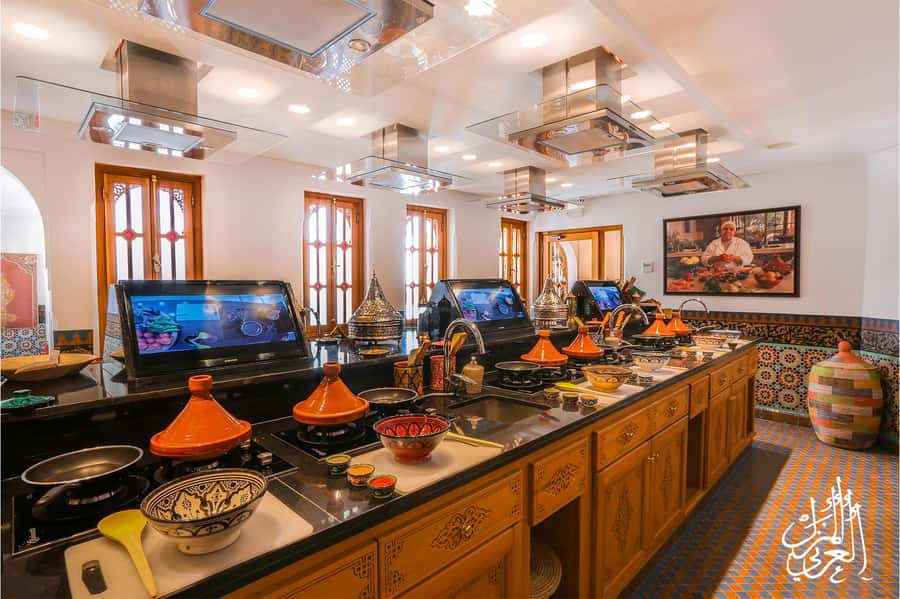
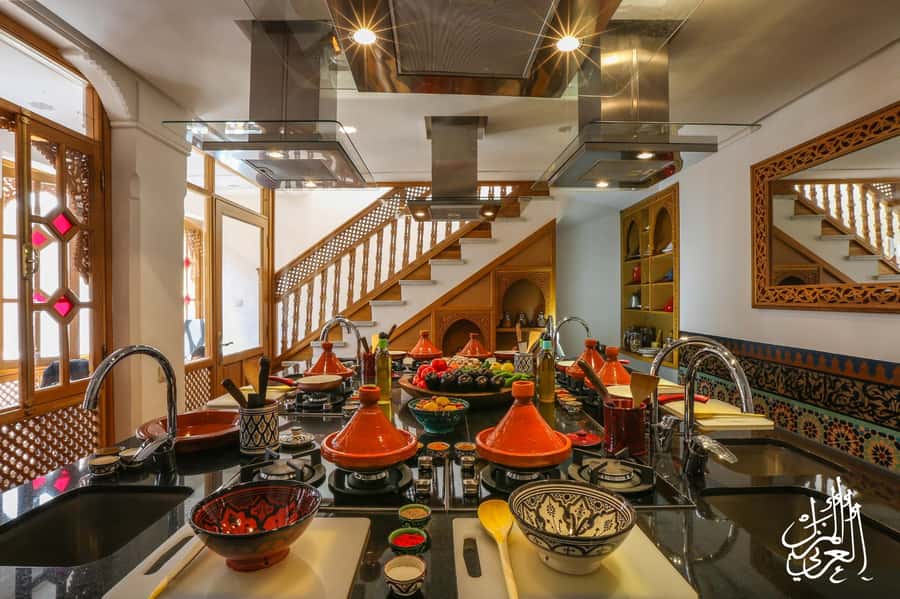
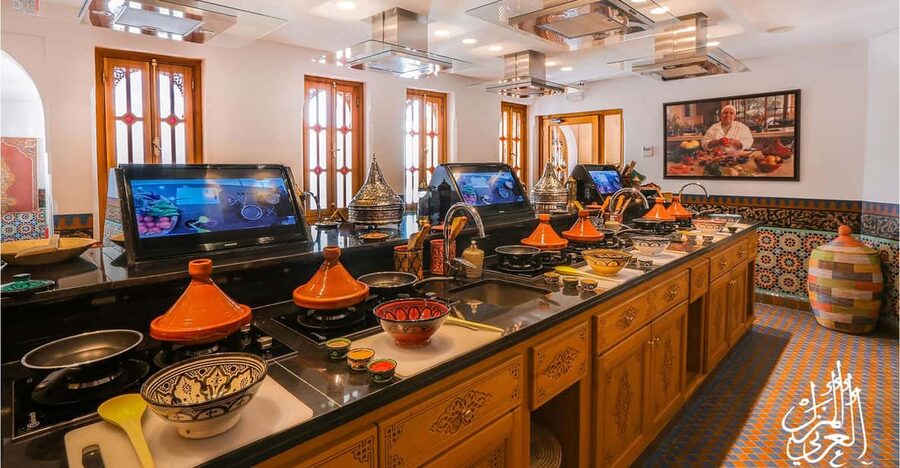
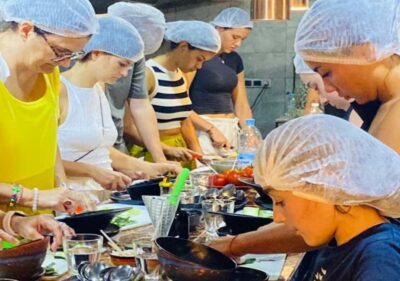
The location receives strong praise for its appearance, cleanliness, and organization. The kitchen uses modern equipment, and every participant has a personal workstation. That matters more than it may sound. In many cooking classes, one person cuts the onions while everyone else watches. Here, you get your own practical role from the start.
Bring water and wear comfortable clothes. Drinks are not allowed in the workshop, apart from the tea served as part of the experience. Since cooking involves chopping and standing at a workstation, comfortable shoes are a sensible choice, even though footwear requirements are not specified.
More Cooking Classes in Marrakech
- Marrakech: Moroccan Cooking Class with Pickup
★ 4.6 · 1,862 reviews - Marrakech: Traditional Moroccan Cooking Class & Market Visit
★ 4.8 · 1,861 reviews - Marrakesh: Moroccan Dishes Cooking Class with a Local Chef
★ 5.0 · 1,615 reviews
The express class: one hour of Moroccan cooking
The one-hour option is built for a quick, useful taste of Moroccan cuisine. You move into the cooking soon after arriving, with less time spent on background information and extra courses. This makes it a good fit if your Marrakech schedule is tight or you want a hands-on activity without giving up half a day.
Chicken tagine appears frequently in the express class. You prepare the dish at your station, following the cook’s instructions and live translation. The class is designed for ordinary home cooks, not people with professional kitchen skills. The recipe is clear, manageable, and easy to follow.
The best part comes after the preparation. You eat the tagine you made, rather than leaving with a demonstration recipe and no idea how it tastes. That immediate meal gives you a useful lesson in seasoning, texture, and the difference between cooking in a tagine and simply reading about one.
The express session has limits. You should not expect the full cultural presentation, several courses, or a long explanation of Moroccan spices and food traditions in one hour. If you want more than a single dish, choose the three-hour version.
Still, the shorter class is not a throwaway activity. It can be one of the most efficient ways to add local food knowledge to a busy Marrakech visit. The cooking stays interactive, and the finished tagine gives you something substantial to eat.
The three-hour workshop: from starters to dessert
The longer class gives you a fuller meal and a broader look at Moroccan cooking. You may prepare two starters and a main dish, with tagine or couscous as the central course. Dessert, handmade bread, and tea are also part of the session.
You do not cook continuously for three hours. That is worth knowing before you book. Time is divided between preparation, demonstrations, explanations, tea, tasting, and sitting down to eat. The slower pace is useful because it leaves room for questions and cultural details instead of turning the class into a timed kitchen drill.
The cooks explain how Moroccan meals are built, including the use of local ingredients and familiar spice combinations. The class also touches on the history of Moroccan food, spices, and tea. You get more than a recipe, but the lesson remains practical rather than academic.
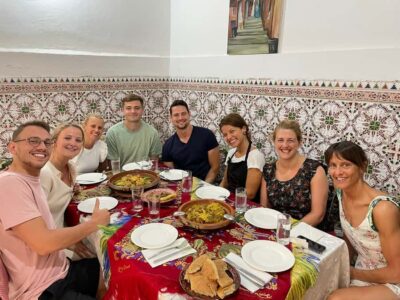
The meal at the end is a central part of the experience. You sit down and eat the dishes you prepared, often sharing the table and conversation with the rest of the group. That turns the workshop into a social activity as well as a cooking lesson.
I would choose this option for couples, friends, families with older children, and small work groups. It has enough variety to feel like a complete event, while the individual stations keep you involved. The three-hour duration also gives the staff time to help if you are uncertain about a technique or ingredient.
Learning from a dada and a live translator
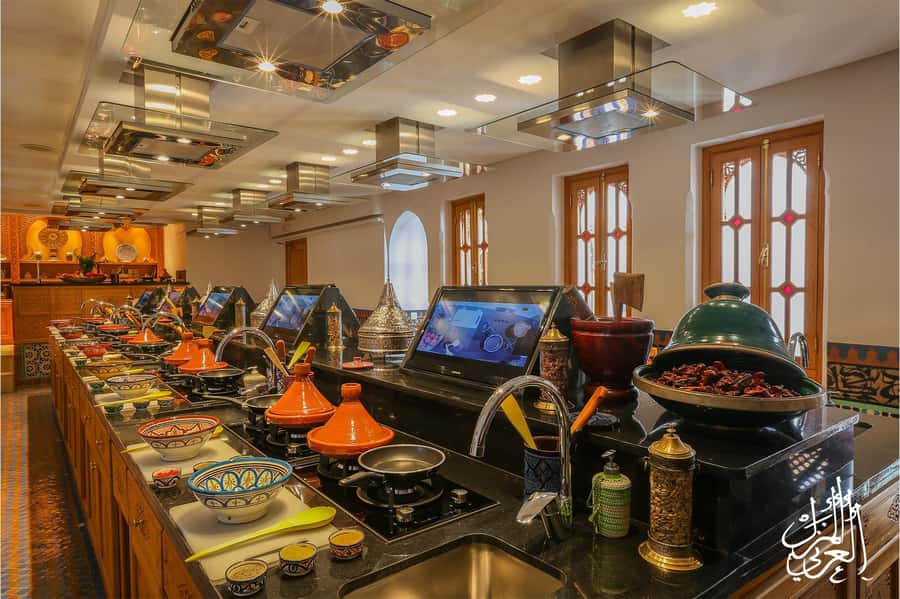
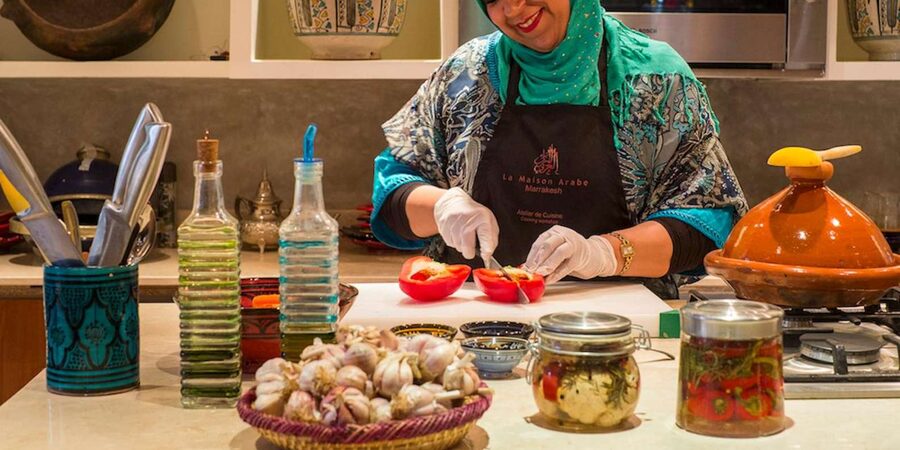
The class is led by a dada, a traditional Moroccan cook, with translation in Arabic, English, or French. This format brings a useful local voice into the kitchen while keeping the instructions accessible to an international group.
The names of individual staff members can vary, but Hayat receives repeated praise for her patient, friendly teaching. Wafa, Sanaa, Fatiha, Rokaya, Habiba, and Muhammad are also singled out for clear instruction and good humor. The manager Hysan and Mohammed are mentioned for helping create an organized, welcoming session.
The teaching style seems to be one of the workshop’s strongest points. Instructions are explained clearly, and in some sessions a screen helps participants follow the recipe. That visual support can be helpful when the group includes several languages.
The tone is informal and friendly. You can ask questions about Moroccan culture while tea is served, and the cooks are happy to explain more than just the next step in the recipe. Some classes feel like a cooking school. This one aims for something closer to cooking with a Moroccan family, though in a far more polished kitchen.
That balance works well. You get local instruction without being left to guess what to do, and you get cultural context without sitting through a long lecture. The staff also make an effort to include everyone when the group is multilingual.
Same city gate, a very different afternoon:
- Marrakech: Agafay Desert Sunset, Camel Ride, and Dinner Show
★ 4.6 · 35,119 reviews - From Marrakech: Ouzoud Waterfalls Guided Hike and Boat Trip
★ 4.7 · 33,630 reviews - Marrakech: Agafay Desert Quad & Camel Rides with Dinner Show
★ 4.8 · 27,382 reviews - Marrakech: Agafay Desert Quad Biking Tour with Dinner-Show
★ 4.8 · 16,569 reviews
Tagine, bread, tea, and the meal you actually eat
Tagine is the star for many participants. Chicken tagine is commonly prepared in the shorter session, and the finished dish is often praised for its flavor. You season, assemble, and cook the dish yourself, which makes the final taste more rewarding than a meal served to you in a restaurant.
The class also offers a chance to understand why tagine is such a useful Moroccan cooking lesson. The recipe is approachable, and the method can be repeated at home. You leave with a recipe, and several participants say they planned to make tagine after returning home.
The three-hour class adds more variety. Starters, salads, couscous or tagine, dessert, and flatbread give you a clearer sense of how a Moroccan meal fits together. Side dishes may be demonstrated rather than prepared entirely by you, so do not assume every plate involves the same amount of hands-on work.
The bread demonstration is a nice practical touch. Flatbread is not just decoration on a Moroccan table, and seeing it made helps connect the cooking lesson to everyday eating. The tea ceremony works in the same way. You learn the ritual of preparing and serving Moroccan tea, including the care that goes into this familiar act of hospitality.
The included afternoon tea and food tasting add real value. Lunch is also included, with the food you prepare forming the heart of the meal. Drinks beyond the included tea are not included, so bring your expectations and your wallet accordingly.
A clean, modern kitchen with room to participate
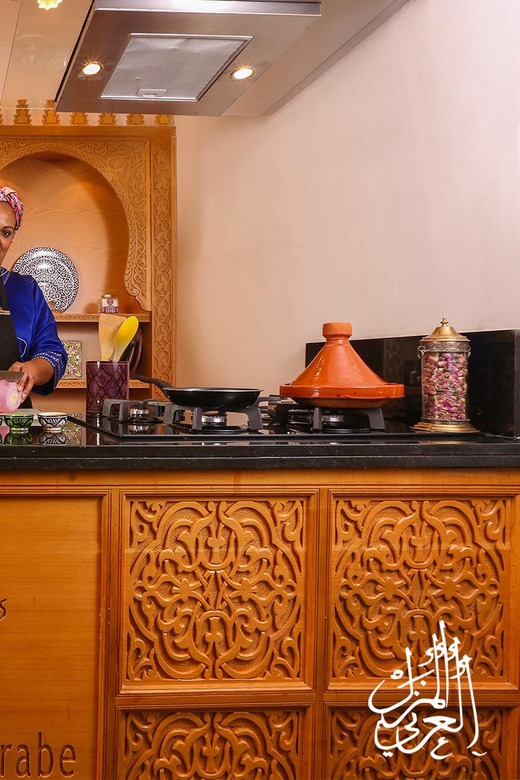
The workshop’s polished facilities are a major reason the $35 price feels fair. The kitchen is described as new, clean, and well equipped, with modern tools and individual workstations. You are not sharing one cutting board with a dozen people or waiting for a turn at the stove.
Cleanliness also matters in a cooking class because it affects comfort. A tidy station lets you focus on learning rather than wondering where equipment has been or how the food is being handled. The staff keep the process organized, and the preparation appears carefully arranged before the class begins.
The modern setting does remove a little of the rough-and-ready feel some people seek in a food experience. If you want to shop for ingredients in a souk, cook in a village home, or learn beside a family stove, this is not that kind of class. La Maison Arabe offers a controlled, comfortable workshop with traditional instruction in a professional space.
For many people, that is the better trade. You get a reliable lesson, clear equipment, and a meal you can enjoy without feeling rushed. The setting is especially useful for first-time cooks or anyone nervous about navigating a more improvised class.
What the $35 price really buys you
At $35, this is not the cheapest cooking experience in Marrakech. The price is higher than some simple classes, especially those offering only one dish and a short demonstration.
The value improves when you consider what is included. You receive instruction, fresh local ingredients, use of your own station, food tasting, lunch, afternoon tea, and, for the longer session, several courses and demonstrations. The three-hour workshop also gives you more time with the cooks and more context about Moroccan cuisine.
A small tagine gift is sometimes given at the end, and it has become a welcome surprise for many people. It is not listed as a guaranteed inclusion, so treat it as a possible extra rather than part of the price calculation.
The strongest value comes from the combination of learning and eating. You are not paying only for a meal or only for a demonstration. You prepare the dish, understand the method, and then sit down to taste the result.
I would call the price good value for the three-hour class if you care about cleanliness, clear instruction, and a complete meal. The one-hour class offers better time value, but it gives you less cultural background and fewer dishes. If budget is your main concern, compare it with simpler cooking schools. If comfort and organization matter, the higher price is easier to justify.
Group atmosphere and the right kind of participant
The workshop works well as a social activity. You cook alongside other people, then share the finished meal. The combination of practical work and table conversation can be a pleasant break from sightseeing.
It suits solo participants, couples, friends, families with children aged 12 and over, and colleagues. Solo visitors can join without needing to organize a private group, while groups can use the class as an easy shared activity.
The age rule is firm in the supplied information: children under 12 are not suitable for the experience. A 12-year-old has enjoyed the class alongside an older family member, so the activity can appeal across generations once children meet the age requirement.
Wheelchair users should choose another activity because the workshop is not listed as wheelchair accessible. The class also requires comfortable clothing and active participation, so it is better for people who are happy to chop, stir, and follow a kitchen lesson rather than simply watch.
You may also find that the three-hour class feels longer if you are not especially interested in food. The cooking is broken up with tea, explanations, and eating, but this remains a food-focused experience. If Moroccan cuisine is not a priority, the one-hour option is the safer choice.
Booking advice for choosing one hour or three
Choose the one-hour express class if you want:
- A quick activity between other Marrakech plans
- A hands-on introduction to one Moroccan dish
- A meal without committing to a long workshop
- A straightforward chicken tagine lesson
Choose the three-hour class if you want:
- Several dishes and a fuller meal
- More information about Moroccan food, spices, and tea
- A tea ceremony and flatbread demonstration
- More time for questions and conversation
- A relaxed group activity
You can cancel up to 24 hours before the start for a full refund, and the reserve-now, pay-later option keeps your plans flexible. Starting times vary, so check availability before choosing a slot. The listed languages are Arabic, English, and French.
Should you book the La Maison Arabe cooking workshop?
I would book it if you want a clean, well-organized cooking class close to the medina, especially if you value friendly instruction and eating the food you prepare. The staff, individual stations, clear translation, and tea ceremony make it more useful than a quick recipe demonstration.
Pick the one-hour session for a compact taste of Moroccan cooking. Pick the three-hour session if you want the full experience, with starters, dessert, bread, tea, cultural background, and a proper sit-down meal.
Skip it if you need wheelchair access, are traveling with a child under 12, or want a rustic market-to-kitchen experience. For most food-loving visitors, though, the workshop offers a practical way to take a piece of Marrakech home in your notebook, your recipe collection, and possibly a small tagine.
FAQ
Where does the Moroccan cooking workshop meet?
The meeting point is the front desk of La Maison Arabe. The workshop is near the riad-hotel or may take place in the secret gardens away from the medina.
How long does the cooking class last?
You can choose between a one-hour express workshop and a three-hour cooking workshop. Starting times vary, so check availability when booking.
What food do you cook?
The express class commonly focuses on a Moroccan specialty such as chicken tagine. The three-hour class may include starters, tagine or couscous, dessert, and flatbread.
Is lunch included?
Yes. Lunch and food tasting are included, with the meal based on the food you prepare during the workshop.
Which languages are available?
Instruction and translation are available in Arabic, English, and French.
Is the activity suitable for children?
The workshop is not suitable for children under 12 years old.
Can wheelchair users take part?
No. The experience is listed as not suitable for wheelchair users.
More Workshops in Marrakech
- Moroccan Cooking Class & Marrakech Market Visit with Chef Khmisa
★ 5.0 · 1,504 reviews - Half-Day Cooking Class with Local Chef Laila in Marrakech
★ 5.0 · 952 reviews - Marrakech: Pottery Workshop with Moroccan Tea
★ 4.8 · 756 reviews - Marrakech: Moroccan Cooking Class with a Local Family
★ 4.9 · 668 reviews
Just listed around Marrakech
- 3 Days To Merzouga Desert★ 5.0 · 19 reviews
- 3 Days Shared Sahara Desert Tour From Marrakech★ 5.0 · 78 reviews
- 1 night Camel Treking in Merzouga Desert Luxury Camp★ 5.0 · 132 reviews
- 3 Days Sahara Desert Trips From Marrakesh★ 5.0 · 176 reviews
- 3 Days Sahara Tour from Marrakech to Merzouga Dunes★ 5.0 · 29 reviews
- trip of your dreams in 3 days and 2 nights in the desert★ 5.0 · 36 reviews
- 3 Days Private Tour to Merzouga Desert from Marrakech★ 5.0 · 77 reviews
- 3-Days Private Tour from Marrakech to Fez through Merzouga Desert★ 5.0 · 29 reviews
Cooking Classes, compared.
Traditional Moroccan Cooking Class & Market Visit
Read our review →
Moroccan Dishes Cooking Class with a Local Chef
Read our review →
Moroccan Cooking Class & Marrakech Market Visit with Chef Khmisa
Read our review →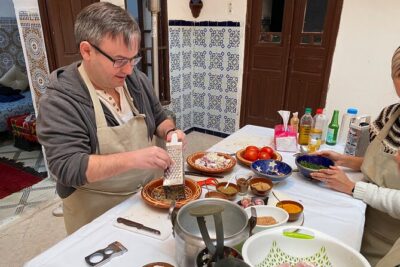
Half-Day Cooking Class with Local Chef Laila in Marrakech
Read our review →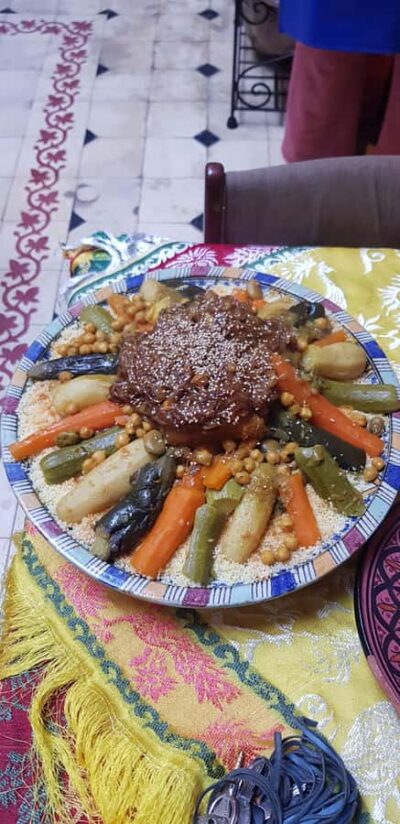
Marrakesh cooking class with chef Hassan – Local dishes
Read our review →Browse the lists this tour appears in