Reviewed · TOURS
Marrakech: Bahia Palace, Ben Youssef Medersa, & Souks Tour
Marrakech rewards a good guide. I like the way this three-hour walking tour links Bahia Palace, Ben Youssef Medersa, and the old souks rather than treating them as separate sights. I also like the strong local focus, from palace design and Quranic-school life to spice sellers and working artisans. The main drawback is practical: the meeting point can be confusing, and monument entry fees are extra.
At $17 per person, this is a good-value introduction to the Medina if you want context, not just photographs. Guides such as Hassan, Lahsen, Charif, Abdul, and Mo have been praised for patience, humor, and clear explanations. Still, leave room in your schedule, since the tour may run beyond its advertised three hours.
In This Review
- Key points to know before you book
- Why this compact Marrakech tour works
- Starting at Koutoubia and Jemaa el Fnaa
- Bahia Palace and its 160 rooms
- The Mellah, a short but useful stop
- Ben Youssef Medersa, the quietest stop
- The souks, where the tour becomes practical
- Guide quality is the main reason to book
- Timing, tickets, and the meeting point
- Who will get the most from this tour?
- Should you book it?
- FAQ
- How long does the Marrakech palace, medersa, and souks tour last?
- What is included in the tour price?
- How much are the Bahia Palace and Ben Youssef Medersa entrance fees?
- Where does the tour meet?
- What languages are available?
- Can I cancel or pay later?
Key points to know before you book
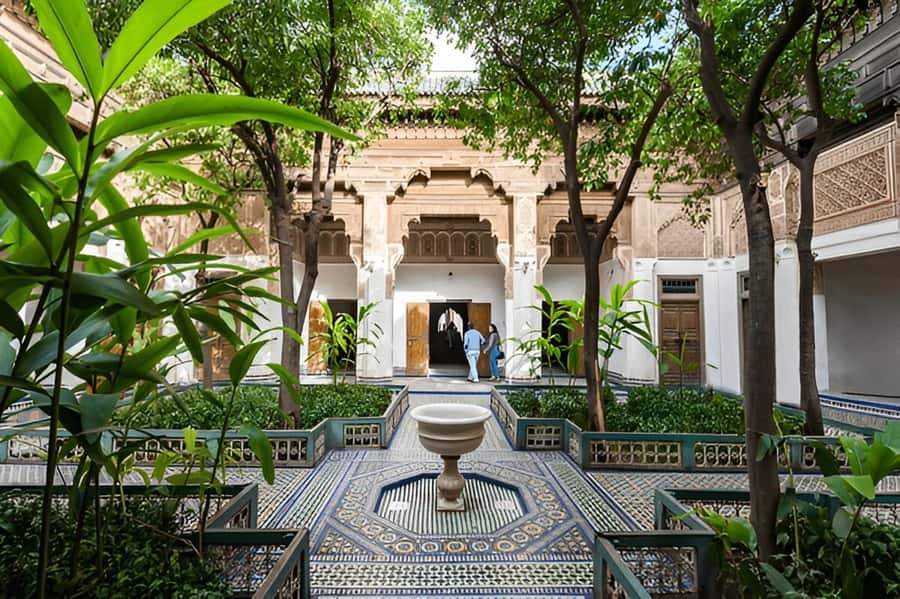
- Bahia Palace comes first: Allow about an hour for courtyards, painted cedar ceilings, zellij tilework, and carved stucco.
- Ben Youssef Medersa is the architectural high point: Its quiet courtyard offers a sharp contrast to the noise of the souks.
- The souks are part shopping lesson, part orientation walk: Your guide can point out spice shops, metalworkers, leather goods, textiles, and familiar local businesses.
- Entry fees are not included: Budget 100 DH for Bahia Palace and 50 DH for Ben Youssef Medersa per person.
- The guide makes the difference: The best experience comes from asking questions about Moroccan life, faith, architecture, and trade.
- Meet early and identify your guide: Hôtel Restaurant Café de France is a busy meeting spot shared by several tour groups.
Why this compact Marrakech tour works
The old Medina can feel like a puzzle on your first morning. A short guided route gives you a useful framework: royal life at Bahia Palace, religious education at Ben Youssef Medersa, and daily commerce in the souks.
I like this order because it moves from grand interiors to quieter scholarship, then into the noisy working heart of Marrakech. You get major sights, but you also spend time walking through narrow lanes where the city feels less polished and more immediate.
The tour lasts three hours and includes a live guide plus shared transport arrangements depending on the option you choose. The core experience is on foot, so comfortable shoes matter. The route includes Koutoubia Mosque, the Mellah, the Medina, Souk Semmarine, and Jemaa el Fnaa, with some stops designed mainly for photographs or orientation.
At $17, the price is modest for a guided introduction. The catch is the separate admission cost. The two listed monument fees add 150 DH per person, so check your booking choice carefully and carry Moroccan dirhams. Some booking options may include tickets, but one reported problem involved a guide not having the paid admissions recorded. For simplicity, the basic option with cash for entry may be easier.
A few more Marrakech runs to hold up against each other
- Marrakech: Agafay Desert Sunset, Camel Ride, and Dinner Show
★ 4.6 · 35,119 reviews - From Marrakech: Ouzoud Waterfalls Guided Hike and Boat Trip
★ 4.7 · 33,630 reviews - Marrakech: Agafay Desert Quad & Camel Rides with Dinner Show
★ 4.8 · 27,382 reviews
Starting at Koutoubia and Jemaa el Fnaa
The meeting point is in front of Hôtel Restaurant Café de France on Rue des Banques, beside Jemaa el Fnaa. This is central and easy to reach, but it is not especially calm. Several companies gather around the square, and groups can look alike.
I would arrive early, hold your booking details ready, and ask directly for the Marrakech Guided Experience guide. One group waited around 30 minutes before locating its guide, so this is the one part of the outing that deserves extra patience. Pickup depends on the option selected, and some arrangements include a transfer to the meeting area.
Koutoubia Mosque receives about 30 minutes for a guided visit, photo stop, and free time. The mosque itself is a major landmark of Marrakech, and its minaret helps you keep your bearings around the Medina. This is not a full mosque interior visit described in the tour details, so think of the stop as an introduction and photo opportunity.
The route ends back near the central area, with drop-off at Hôtel Restaurant Café de France listed. Jemaa el Fnaa receives a final 10-minute stop. That brief visit gives you a chance to connect the monuments and markets with the square that acts as the Medina’s main meeting place.
Bahia Palace and its 160 rooms
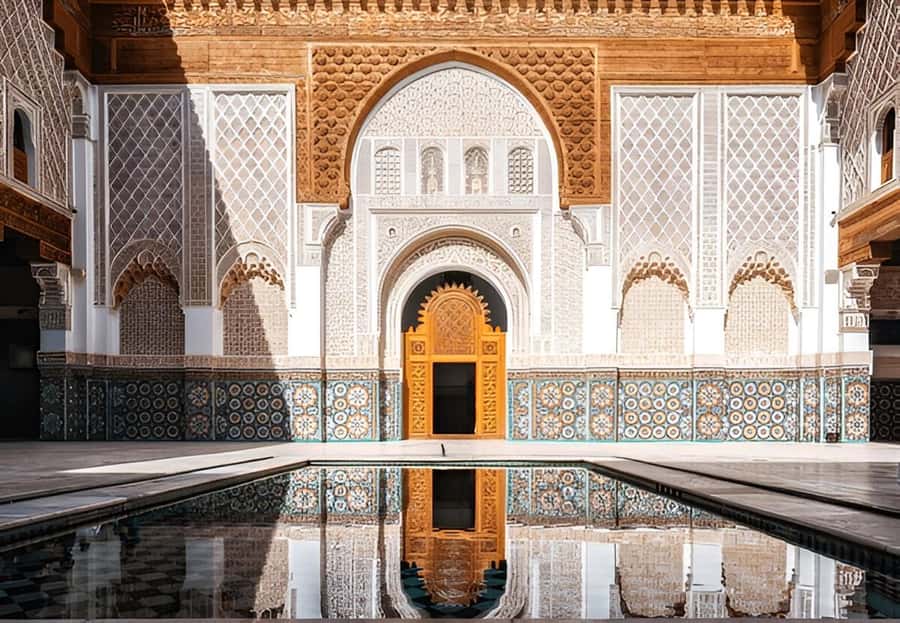
Bahia Palace is the tour’s grandest setting. Built in the 19th century, it once housed grand viziers and royal courtiers. The palace is described as having 160 rooms, though your visit focuses on the decorated rooms and courtyards open along the route.
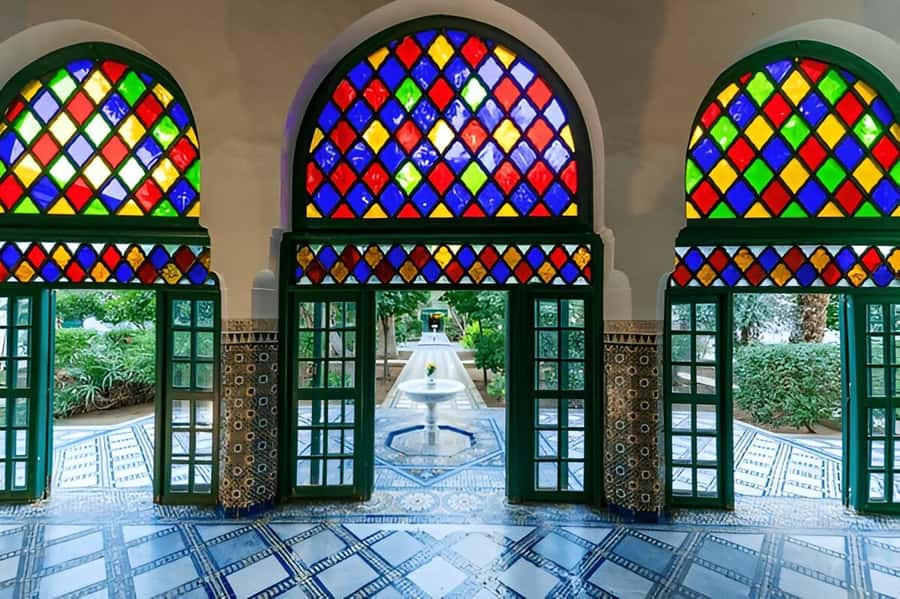
The appeal is not furniture or royal treasure. It is the building itself. Look for carved cedar ceilings, patterned zellij tiles, painted surfaces, and stucco work cut into fine geometric and floral designs. Courtyards bring light into the complex, while the repeated tile and plaster patterns show how much care went into surfaces that might seem simple from a distance.
A guide is especially useful here because the palace can otherwise become a sequence of pretty rooms. You can ask about the people who lived and worked there, the role of grand viziers, and why courtyards matter in Moroccan design. Pat, Rajesh, Marymar, and others specifically valued the historical explanations at Bahia Palace.
The planned visit takes about one hour, including walking, guided commentary, sightseeing, and photographs. That is enough time for a solid introduction, but not enough for a slow architectural study of every corner. If you love design, stay alert to the guide’s route and use the free moments for your own pictures.
The palace has also been affected by earthquake repair work. Access can change, and some areas may remain closed. A guide may help you see as much as current conditions allow, but you should not expect every room to be open on every date.
The admission price is 100 DH per person and is not included in the stated $17 tour price. This is a worthwhile expense if you want the palace explained rather than viewed in silence. Without a guide, the decoration is easy to admire but harder to place in its social and political setting.
The Mellah, a short but useful stop
The route then passes through the Mellah, Marrakech’s historic Jewish quarter. The planned stop is only about 10 minutes, with time for a short visit, explanation, and photographs.
Do not expect a full neighborhood tour in this short interval. Instead, treat it as a compact piece of context. It helps show that Marrakech’s past was shaped by more than one community and that the Medina’s quarters had different roles and identities.
This is also a good point to ask your guide about local customs, the history of the quarter, and how the old city was organized. The strongest guides, including Charif and Medhi, have been praised for connecting places to Moroccan culture and everyday life rather than reciting dates alone.
Same city gate, a very different afternoon:
- Marrakech: Agafay Desert Quad Biking Tour with Dinner-Show
★ 4.8 · 16,569 reviews - Marrakech: Atlas Mountains, Ourika Valley, Waterfall & Lunch
★ 4.8 · 15,834 reviews - From Marrakech: 3-Day Merzouga and Sahara Desert Tour
★ 4.9 · 15,308 reviews - Berber villages : Atlas Mountains Day Hike from Marrakech
★ 5.0 · 14,007 reviews
Ben Youssef Medersa, the quietest stop
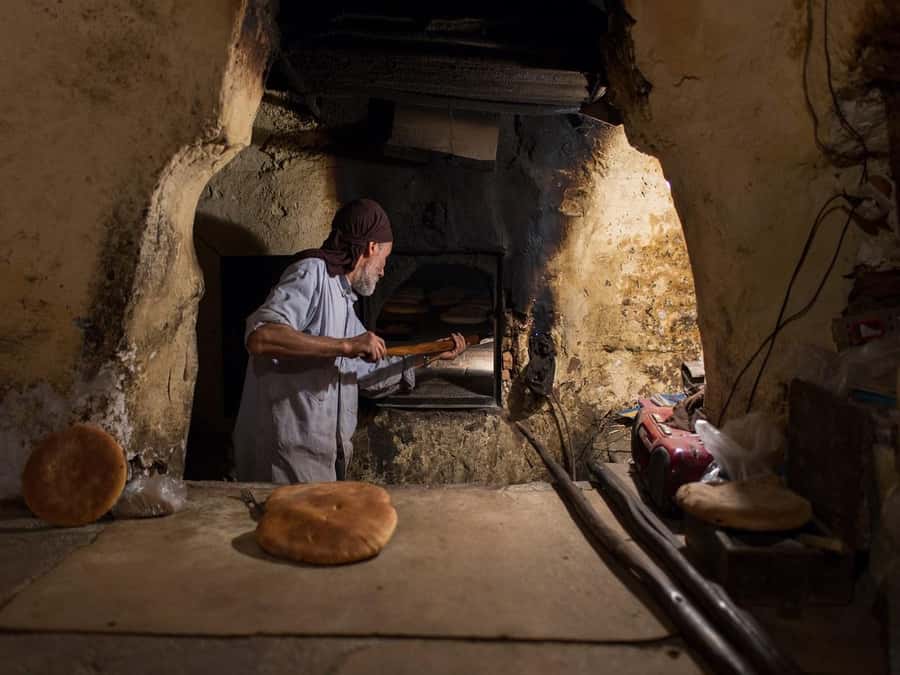
Ben Youssef Medersa is one of North Africa’s largest and most striking Quranic schools. It was first built during the rule of Sultan Abou el Hassan and later expanded by the Saadians in the 16th century.
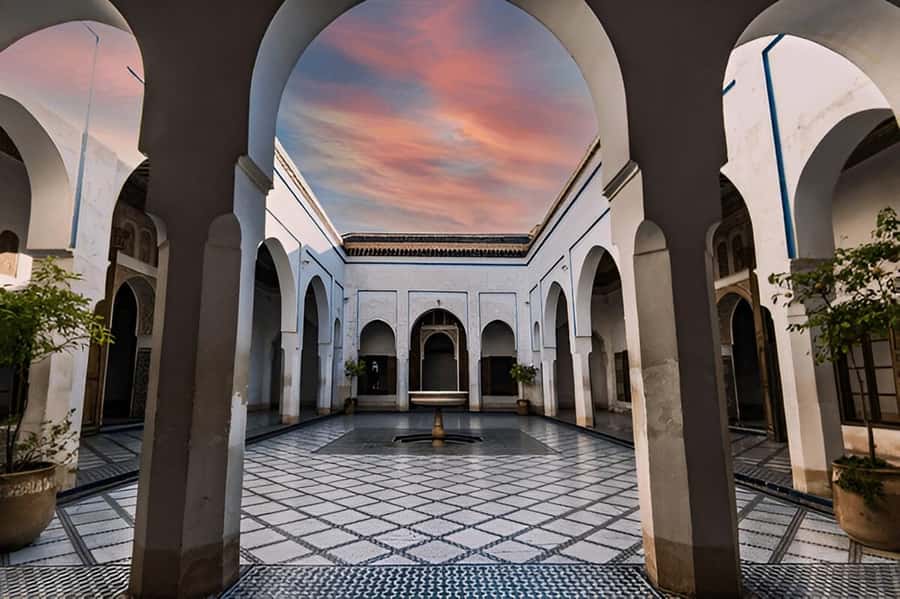
The planned visit lasts about 30 minutes. That may sound brief, but the central courtyard gives you a strong sense of the school’s design. Zellij mosaics, carved cedarwood, and detailed stucco create the same visual language found at Bahia Palace, but the atmosphere is different. Bahia feels like a courtly residence. Ben Youssef feels more ordered and contemplative.
Your guide can explain how students once lived and studied within the complex. That human detail matters. It turns the medersa from a photographic backdrop into a place shaped by education, religion, and daily routine.
I would use the courtyard as a visual pause. After the palace and the Medina lanes, the symmetry and relative quiet make the decorative details easier to read. Look closely at how tile patterns meet plaster and wood, since the charm comes from the combination rather than one single feature.
Entry costs 50 DH per person, again separate from the tour price. The half-hour stop is suitable for first-time visitors, but anyone wanting lengthy photography or architectural detail may prefer a separate return visit if permitted by current opening conditions. The guide accompanies you inside and allows time to look around at your own pace.
The souks, where the tour becomes practical
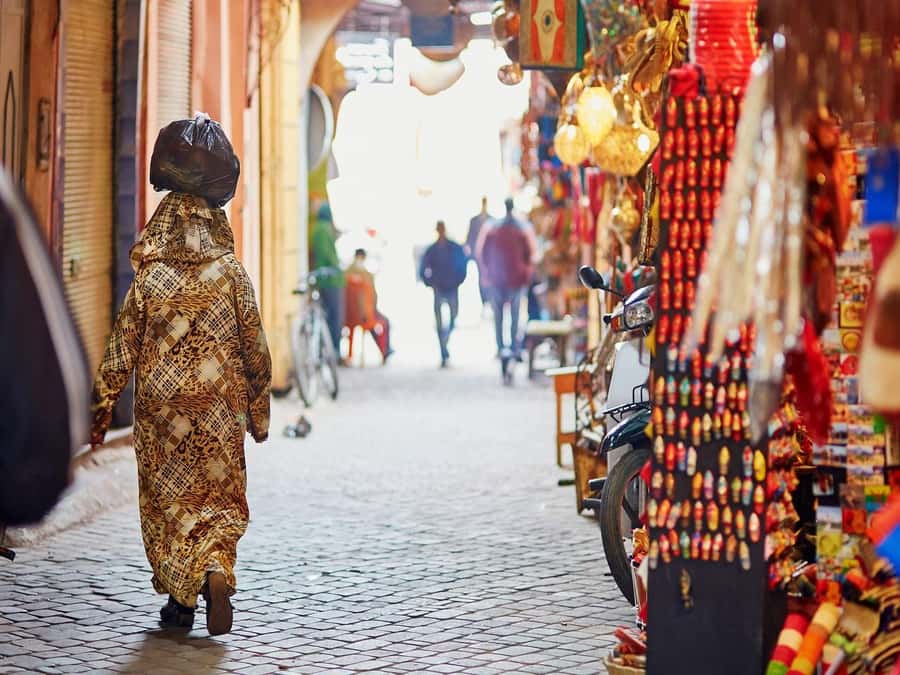
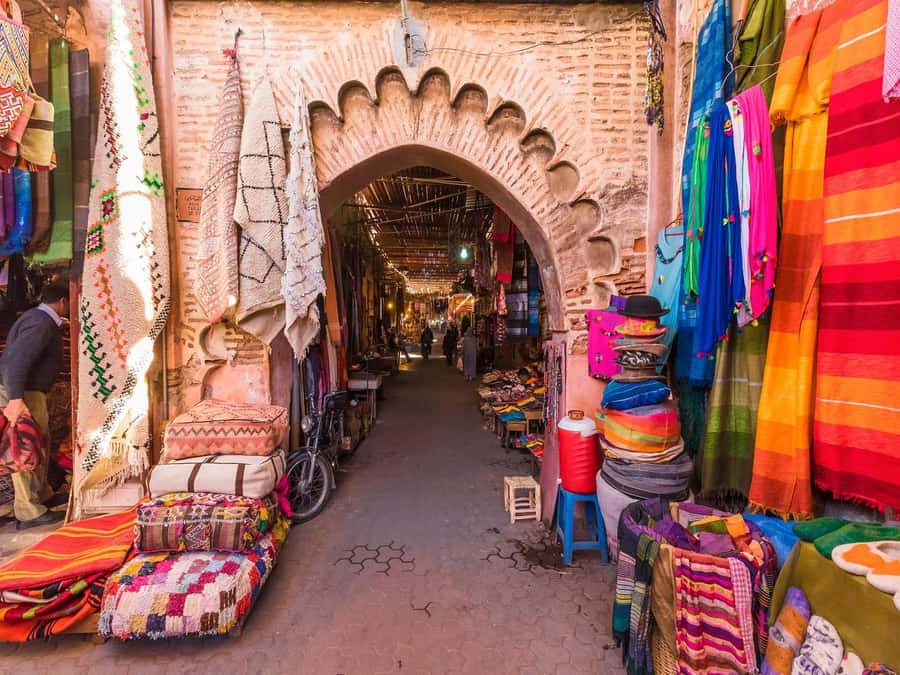
The Medina and Souk Semmarine are where this experience shifts from history lesson to street-level orientation. You walk through narrow alleys lined with textiles, pottery, spices, lanterns, leather goods, and other handmade products.
The route allows roughly 30 minutes in the Medina and 20 minutes around Souk Semmarine. That is enough to introduce the layout and atmosphere, but not enough for serious shopping across every market lane. If you want a large shopping session, plan to return later.
The best part is having a guide explain what you are seeing. You might watch metalworkers shape items, see pottery and textiles being sold, or pass shops tied to traditional crafts. The description also refers to leather tanners, though the exact work visible can vary by route and time of day.
Guides have taken groups to businesses they know personally, where shopkeepers explain products or demonstrate how items are made. This can be useful, but keep your buying decisions separate from the tour. A recommended shop is still a shop. Ask the price, compare items, and buy only if you genuinely want something.
Several people found the shopping advice helpful, including guidance on spices at fair prices. Some guides also add a small cultural touch, such as mint tea or mint offered during the walk. These gestures can make the outing feel personal, but they are not guaranteed parts of the formal package.
The souks are also where a guide can save time and reduce stress. The lanes are easy to wander into and harder to map mentally. A local guide helps you notice the difference between a tourist-facing stall, a working craft area, and a lane that is simply useful for getting from one monument to another.
Guide quality is the main reason to book
The tour provider lists Arabic, English, French, and German. Booking options may also offer Spanish or Italian, but language preference is not guaranteed. If clear historical explanation matters to you, confirm your preferred language as early as possible.
The guides most often praised by name include Lahsen, Hassan, Charif, Abdul, Mo, Abdu, Mohamed, Houcine, Hussain, and Medhi. Their strengths are consistent: clear explanations, patience with questions, a friendly manner, and a willingness to adjust the walking pace.
That last point matters in Marrakech. The route passes through crowded lanes and can be tiring in hot weather. One group completed the walk in temperatures around 45 degrees Celsius, so water, a hat, and breathable clothing are sensible. Comfortable walking shoes are essential. The activity also advises sports shoes, which is a practical choice for uneven Medina streets.
Families can fit comfortably into this format. One guide explained the sites well to children aged nine and ten, answering questions without making the tour feel like a school lecture. Solo visitors may also benefit because a shared booking can sometimes become a very small group, or even function like a private tour if few people book that time.
That flexibility is a pleasant possibility, not a promise. Private groups are available if you want control over the pace and route, but the price may differ depending on the selected option.
Timing, tickets, and the meeting point
The advertised duration is three hours, but build in a little extra time. A guide may pause for questions, photographs, shop demonstrations, or ticket issues. One group enjoyed the slower pace but arrived late for a later sightseeing booking.
I would not schedule a museum reservation or airport transfer immediately afterward. Give yourself at least an hour of breathing room, especially if the group is large or the Medina is crowded.
The tour is marked wheelchair accessible, but the route includes walking through narrow alleys and historic buildings. If you use a wheelchair or have limited mobility, confirm the practical route with the provider before booking, since historic surfaces and crowd conditions can affect ease of movement.
Free cancellation is available up to 24 hours before the start time, and reserve-now-pay-later booking is offered. Those terms are useful if your Marrakech plans are still shifting, but check the exact option selected because pickup, tickets, and group arrangements can vary.
Who will get the most from this tour?
I would choose this tour if you are visiting Marrakech for the first time and want the major old-city sights explained in one morning or afternoon. It is also a good fit if you are nervous about entering the souks alone or want help finding craft areas without losing your way.
Families, solo visitors, and couples can all use it well. The short format gives you an introduction without consuming a full day. It also leaves you with enough orientation to return to the souks later and shop at your own speed.
You may want something else if you dislike shopping stops, prefer long periods of quiet photography, or need a highly precise finish time. The palace and medersa visits are fairly short, and the market portion may include shops linked to the guide. That is not automatically a problem, but you should know the character of the route before booking.
Should you book it?
Yes, if you want a low-cost first look at Marrakech with a real person explaining what you are seeing. The strongest reasons are the combination of Bahia Palace, Ben Youssef Medersa, and the souks, plus the guides’ repeated strengths in history, humor, patience, and local advice.
Book with two cautions: confirm what your option includes for monument tickets, and arrive early at Hôtel Restaurant Café de France so you can identify the guide. Bring water, comfortable shoes, and enough time after the tour in case the walk runs long.
At $17 before entry fees, this is a sensible buy for a compact introduction. It will not replace a full day exploring Marrakech, but it can give you the background and confidence to make the rest of your stay more rewarding.
FAQ
How long does the Marrakech palace, medersa, and souks tour last?
The advertised duration is three hours. The route includes guided visits, walking, photographs, free time, and shopping stops, but it can run longer, so avoid booking another fixed activity immediately afterward.
What is included in the tour price?
The stated price includes a guide and a shared tour. Depending on the selected option, pickup arrangements may vary. Monument entrance fees are not included in the basic information provided.
How much are the Bahia Palace and Ben Youssef Medersa entrance fees?
Bahia Palace costs 100 DH per person, and Ben Youssef Medersa costs 50 DH per person. The listed tour price does not include these fees.
Where does the tour meet?
The meeting point is in front of Hôtel Restaurant Café de France, at Rue des Banques beside Jemaa el Fnaa in Marrakech. Since several tour groups gather there, arrive early and identify your guide directly.
What languages are available?
The listed guide languages are Arabic, English, French, and German. Some booking options may allow a Spanish or Italian preference, but the preferred language cannot be guaranteed.
Can I cancel or pay later?
You can cancel up to 24 hours before the activity for a full refund. Reserve-now-pay-later booking is also available, allowing you to hold a place without paying immediately.
Just listed around Marrakech
- 3 Days To Merzouga Desert★ 5.0 · 19 reviews
- 3 Days Shared Sahara Desert Tour From Marrakech★ 5.0 · 78 reviews
- 1 night Camel Treking in Merzouga Desert Luxury Camp★ 5.0 · 132 reviews
- 3 Days Sahara Desert Trips From Marrakesh★ 5.0 · 176 reviews
- 3 Days Sahara Tour from Marrakech to Merzouga Dunes★ 5.0 · 29 reviews
- trip of your dreams in 3 days and 2 nights in the desert★ 5.0 · 36 reviews
- 3 Days Private Tour to Merzouga Desert from Marrakech★ 5.0 · 77 reviews
- 3-Days Private Tour from Marrakech to Fez through Merzouga Desert★ 5.0 · 29 reviews
Tours, compared.

Agafay Desert Quad Biking Tour with Dinner-Show
Read our review →

Quad Bike Tour to Palm Oasis and Jbilat Desert
Read our review →
3 Days Desert Tour From Marrakech To Merzouga Dunes & Camel Trek
Read our review →

3-Day Marrakech to Merzouga Desert Tour: Camel Rides & Overnights
Read our review →
Desert & Mountain Tour with Camel Ride & Lunch
Read our review →