Reviewed · GUIDED
Marrakech: Bahia Palace, Saadian Tombs & Medina Guided Tour
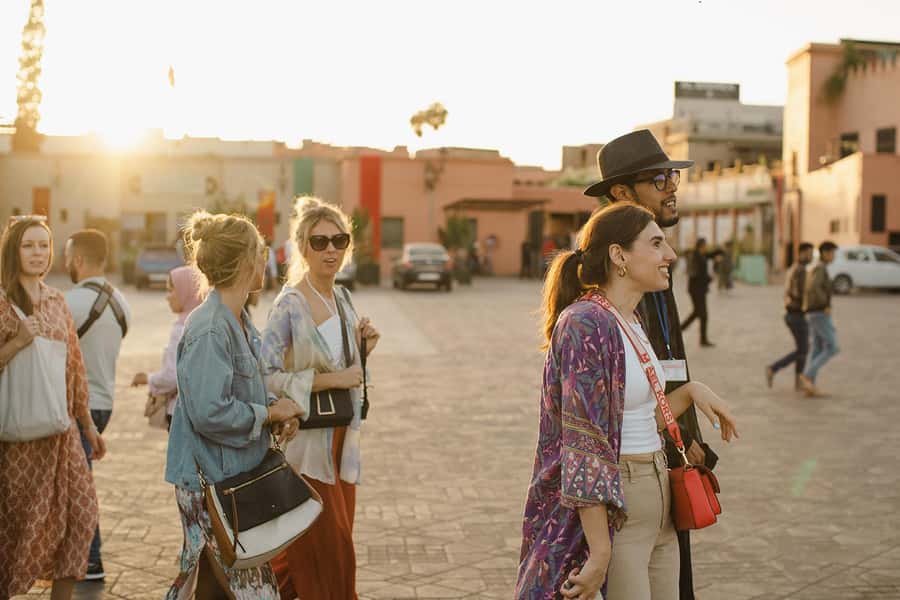
Marrakech reveals itself one alley at a time. This four-hour walking tour packs the city’s major southern sights, royal architecture, old Jewish quarter, and souks into one guided introduction. I like the way it combines famous monuments with everyday craft workshops, and I like that your guide stays with you inside the paid sites rather than leaving you to read a few signs alone. The main catch is the amount of walking, plus the extra monument fees that raise the real cost above the advertised $18.
This works especially well on your first day, when the Medina still feels like a puzzle with no picture on the box. Guides such as Brahim, Yassine, Mustapha, Najem, Mouhssine, and Chafik have earned praise for clear explanations, practical advice, humor, and patience. Just bring water, wear sturdy shoes, and expect crowds at the Saadian Tombs.
In This Review
- Key points before you book
- Why this is a useful first day in Marrakech
- Starting at Jemaa el Fna
- Seeing Koutoubia Mosque from outside
- Bahia Palace and its quiet courtyards
- The Kasbah, Mellah and Bab Agnaou
- The Saadian Tombs and the cost of waiting
- Entering the Medina souks
- What the guides do best
- Walking, heat and group pace
- Is $18 good value?
- Who should book this experience?
- My verdict
- FAQ
- How long does the Marrakech guided tour last?
- Where does the tour begin?
- Is hotel pickup included?
- Are Bahia Palace tickets included?
- Are the Saadian Tombs tickets included?
- Does the tour include transportation?
- Can I enter Koutoubia Mosque?
- What languages does the guide speak?
- Is the tour private?
- What should I bring?
- Is the tour suitable for people with mobility impairments?
Key points before you book
- Four hours on foot: The route links Jemaa el Fna, Bahia Palace, the Kasbah, Saadian Tombs, and Medina souks without included transportation.
- Excellent guide-led context: The strongest part of the experience is the local guide’s explanation of dynasties, architecture, religion, crafts, and daily life.
- Budget price, extra entry fees: The $18 starting price does not include Bahia Palace or Saadian Tombs tickets, which cost 100 MAD per adult each.
- A smart first-day orientation: The route helps you understand Marrakech’s old center before exploring the souks independently.
- Crowded meeting point: Meet in front of Café de France at Jemaa el Fna unless a private Medina pickup is arranged.
- Not suitable for limited mobility: Expect narrow lanes, uneven walking surfaces, standing, and a steady four-hour pace.
Why this is a useful first day in Marrakech
Marrakech can feel confusing at first. Jemaa el Fna opens into a web of lanes, the souks change name from one section to the next, and the route between the royal quarter and the market is not always obvious. A local guide gives you a framework before you set off on your own.
I would choose this tour early in a stay because it covers the essential southern side of the old city. You see the grand monuments, hear the story behind them, and get an introduction to the markets where pottery, leather, wood, metal, spices, and textiles are sold.
The advertised duration is four hours. That is a sensible length for the core route, but the pace can vary. Some tours have lasted around four and a half hours, while several private experiences ran much longer because the guide adjusted the timing or added places such as the Majorelle Garden or Ben Youssef Madrasa. Those additions are not guaranteed on this specific route, so treat them as occasional arrangements, not promised stops.
The experience is available as a private or small-group walking tour, depending on the option you choose. A private booking gives you more control over pace, questions, photo stops, and breaks. In a group, the guide must keep everyone together, which can mean less time in the souks if someone has trouble keeping up.
A few more Marrakech runs to hold up against each other
- Marrakech: Agafay Desert Sunset, Camel Ride, and Dinner Show
★ 4.6 · 35,119 reviews - From Marrakech: Ouzoud Waterfalls Guided Hike and Boat Trip
★ 4.7 · 33,630 reviews - Marrakech: Agafay Desert Quad & Camel Rides with Dinner Show
★ 4.8 · 27,382 reviews
Starting at Jemaa el Fna
Your meeting point is in front of Café de France, one of the easiest landmarks in Jemaa el Fna. It is also a busy meeting place, and several guides may be gathering there at the same time. The provider sends the guide’s name, meeting point details, and reminders by WhatsApp a day or two before the tour, so check your messages.
The square is the right place to begin. By day, you might see juice stalls, performers, and the famous activity around the square. By evening, it changes character, with lights, music, and food stalls filling the open space.
Your first stop is short, about 15 minutes. Think of it as an orientation rather than a full visit. Your guide can explain how the square fits into the old city and point you toward the main routes before the group heads into the southern quarter.
At the end, the tour returns to Jemaa el Fna for about 10 minutes. Drop-off is listed at Café de France or elsewhere in the Medina. That makes it easy to continue with dinner, return to your riad, or remain in the square after the guided portion ends.
Seeing Koutoubia Mosque from outside
Koutoubia Mosque is included as an exterior sight. You will not enter the mosque, since access is restricted to Muslims during prayer times. The minaret is one of Marrakech’s best-known landmarks, and it helps you understand the city’s visual center before heading farther into the old quarters.
This is a brief stop, so do not expect an interior visit or a long architectural lecture. Still, it gives the route a useful opening point and lets your guide explain the religious setting of the city in a respectful, straightforward way.
Bahia Palace and its quiet courtyards
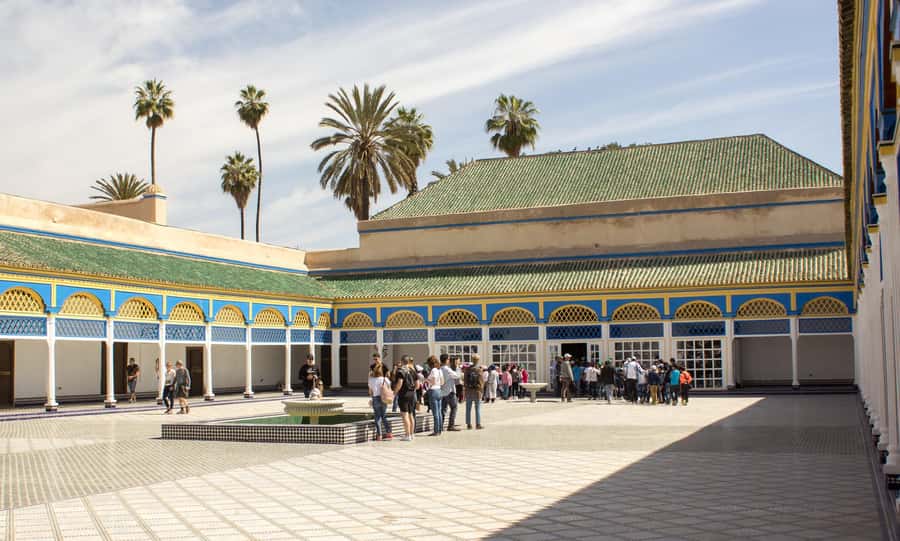
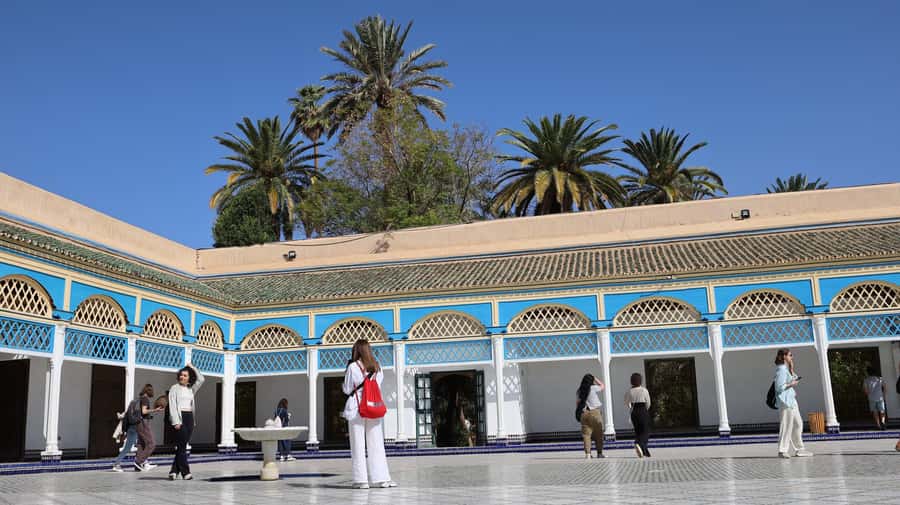
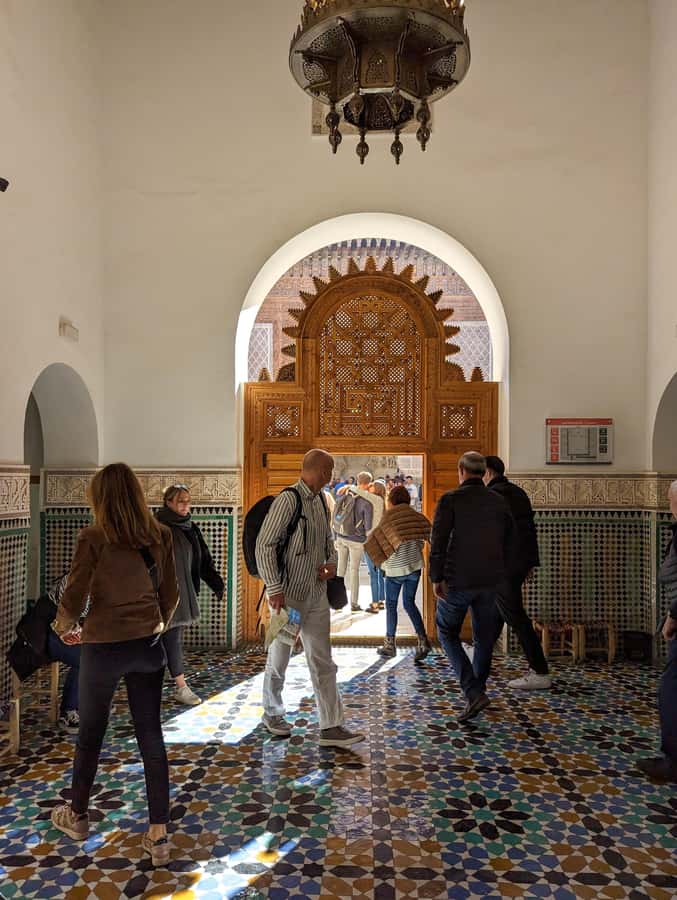
Bahia Palace is the tour’s grandest interior. Built in the 19th century by Grand Vizier Si Moussa, the complex contains more than 150 rooms, courtyards, gardens, carved stucco, mosaic floors, and cedarwood ceilings.
The 45-minute visit is long enough for a guided explanation and some time to look around by yourself. I like this balance. A guide can point out details you could easily miss, then step back while you take photos and enjoy the light, tilework, and open courtyards.
The palace was designed as a series of rooms and gardens rather than one single monumental building. That makes the visit feel more intimate than its size suggests. You move through shaded spaces, decorated doors, and courtyards where the architecture does much of the talking.
Some sections may be under renovation. That matters if you are expecting every room to be open, but the palace remains an important stop for anyone interested in Moroccan design.
The entry ticket is not included. Budget 100 MAD per adult, paid in cash on site. Your guide can help with the initial ticket line, but crowded periods may still create delays inside the complex.
Same city gate, a very different afternoon:
- Marrakech: Agafay Desert Quad Biking Tour with Dinner-Show
★ 4.8 · 16,569 reviews - Marrakech: Atlas Mountains, Ourika Valley, Waterfall & Lunch
★ 4.8 · 15,834 reviews - From Marrakech: 3-Day Merzouga and Sahara Desert Tour
★ 4.9 · 15,308 reviews - Berber villages : Atlas Mountains Day Hike from Marrakech
★ 5.0 · 14,007 reviews
The Kasbah, Mellah and Bab Agnaou
After Bahia Palace, the route moves toward the Kasbah, the fortified royal quarter. The scheduled visit is about 15 minutes, so this part is more of a guided walk and photo stop than a long archaeological visit.
Bab Agnaou is the key sight here. This 12th-century gate has carved decoration and once marked the entrance to the royal area. Its scale and stonework offer a useful contrast to the enclosed tile and stucco of Bahia Palace.
The historic Mellah, once the Jewish quarter, adds another layer to the walk. You see how different parts of Marrakech developed around royal, religious, commercial, and residential uses. The route does not turn the Mellah into a separate extended tour, but passing through it helps connect the monuments with the city’s social past.
This section also shows why a walking guide is useful. You are not simply moving between isolated attractions. You are following the old city’s walls, gates, quarters, and market routes in a logical sequence.
The Saadian Tombs and the cost of waiting
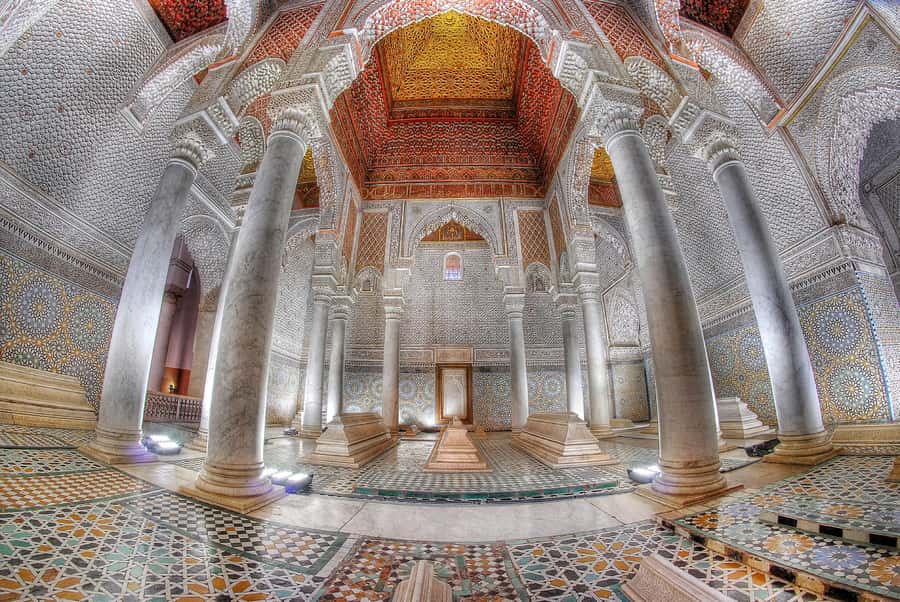
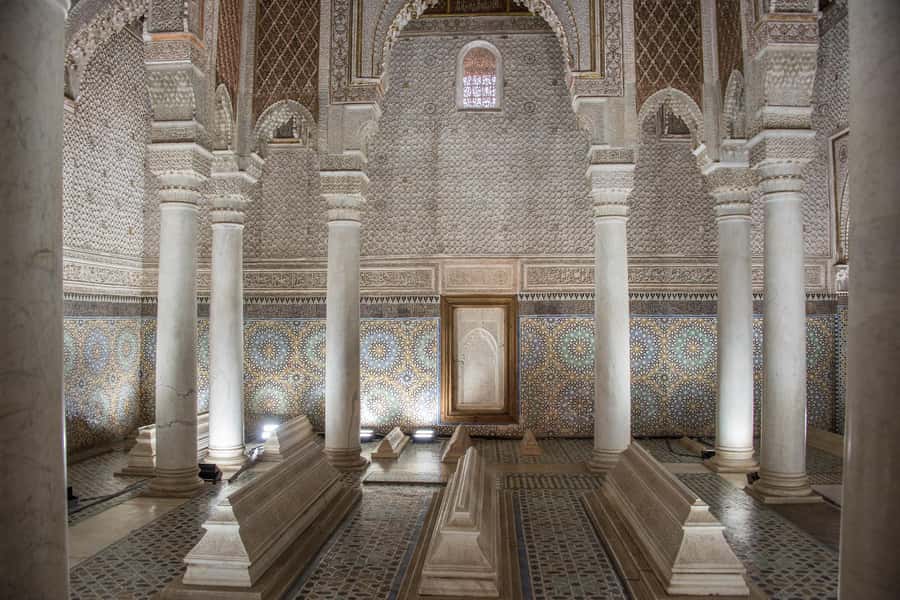
The Saadian Tombs are one of Marrakech’s most memorable stops. They hold members of the Saadian dynasty and are known for marble epitaphs, carved stucco, and hand-cut zellij tilework.
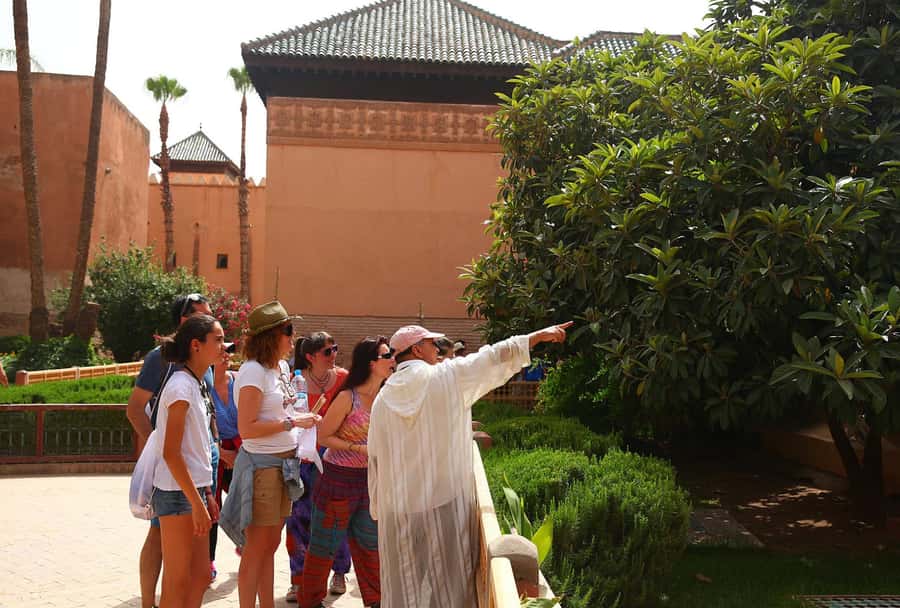
The planned visit lasts about 30 minutes. Your guide goes inside with you, explains the site, and leaves time for photographs. The chambers are compact, so the experience can feel concentrated rather than spread out. Look closely at the tile patterns and carved surfaces, since the details matter more than the size of the site.
This is also where you are most likely to lose time. The tombs can develop a long queue, especially at busy times, and an interior line may remain even when the guide helps you bypass the first ticket queue. One recent tour ran about four and a half hours partly because of waiting here.
Entry costs another 100 MAD per adult, in cash. Add that to the Bahia Palace fee and the $18 tour price, and the full cost becomes much higher than the headline figure. Even so, the guide’s explanations and help with the route can make the total worthwhile, especially on a first visit.
Entering the Medina souks
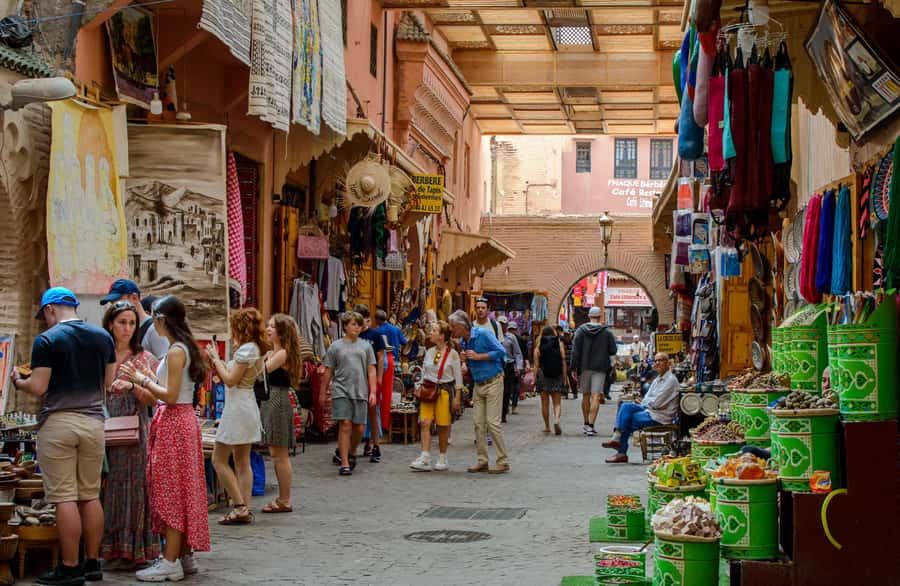
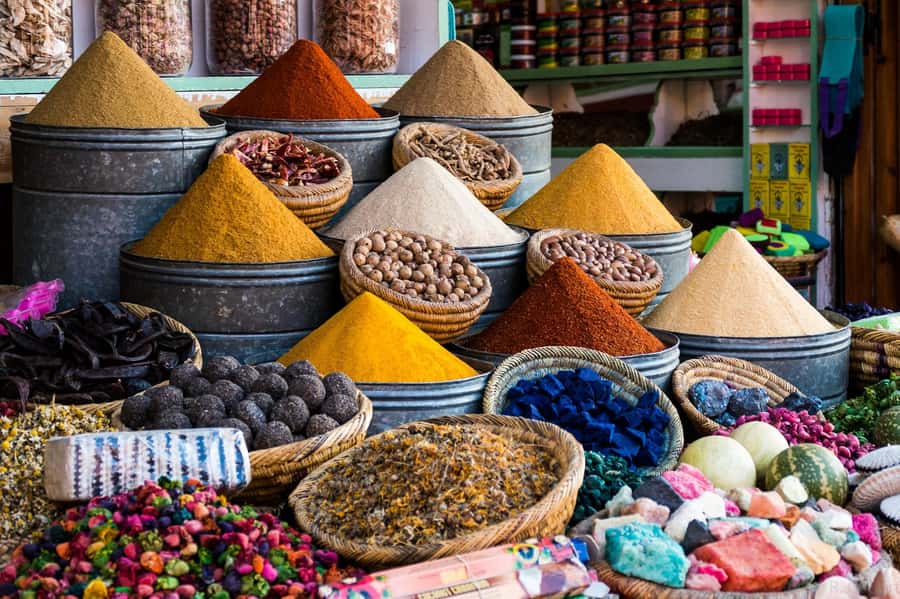
The souk portion is where the tour becomes less about royal monuments and more about present-day Marrakech. You pass through sections such as Souk Semmarine and Souk El Attarine, with stalls selling spices, textiles, leather goods, and other crafts.
The scheduled time is about 30 minutes in the main Medina, followed by another 30 minutes around Rahba Kedima. That is enough to get a taste of the market and learn how the lanes connect, but it is not a full shopping afternoon.
Guides have taken groups to see artisans working with pottery, wood, and metal. These stops can help you understand the labor behind the objects on sale. Some guides have also shown visitors local ovens or herbalist shops, though those additions depend on the day, the guide, and the group’s interests.
You should not assume every product claim in the souk is accurate. One useful piece of advice is to treat craft demonstrations as cultural visits, not automatic proof that an item is unique or locally made. If you want to buy something, compare prices and ask direct questions about materials and origin.
The tour does not require you to purchase anything. That is important in a market where sales pressure can affect the mood. A good guide can explain how to browse, help with practical questions, and point out areas worth revisiting later.
What the guides do best
The guide is the heart of this experience. Across the different tours, the most praised qualities are clear English or French, patience, humor, and the ability to explain history without turning the walk into a lecture.
Brahim has been praised for making Moroccan culture easy to understand and for offering useful advice beyond the monuments. Yassine is often described as friendly, flexible, and attentive to different paces. Mustapha has helped visitors feel comfortable on a first day in the city, while Najem has been praised for his English, craft knowledge, and practical help in the souks.
Mouhssine has explained the differences between Moroccan arts and craft styles from various cities. Chafik has added local touches such as a bakery visit, a herbalist shop, and a reasonably priced restaurant recommendation. Hassan, Ahmad, Achraf, Khalid, and Mohamed have also received praise for humor, detailed answers, picture-taking, and personal attention.
Guide quality can vary from person to person, as it does on any multi-guide operation. The overall rating is 4.7 from 153 reviews, and the repeated pattern is clear: people value the human side of the tour as much as the sightseeing.
If you have questions about religion, dynasties, family life, crafts, or food, ask them. The tour is most useful when you treat it as a conversation rather than a procession from doorway to doorway.
Walking, heat and group pace
You need comfortable shoes. This is a four-hour walking tour through narrow Medina lanes, with time spent standing inside monuments and moving through crowded areas. It is not suitable for people with mobility impairments.
Bring water, sunglasses, and cash. The provider does not include food or drinks, and the monument fees must be paid on site. Guides may point out shops where you can buy refreshments, and private tours usually make it easier to pause when needed.
The time of day matters. During Ramadan, the monuments close earlier, so morning tours begin at 9:30 instead of 10:00 and afternoon tours at 1:00 instead of 2:00. Check the date carefully, since a late start could leave less time at the final stops.
The Medina can be crowded at peak times. The guide can help with the first ticket line, but nobody can remove every queue or clear every alley. If you dislike crowds, a private morning tour may give you the most control.
Is $18 good value?
At $18 per person, the tour is inexpensive for a guided introduction to several major sites. You are paying for a licensed local guide, the walking route, monument explanations, free time at each stop, and help finding your way through the Medina.
The advertised price is not the final sightseeing budget. Bahia Palace and Saadian Tombs add 200 MAD per adult in total. Transportation, meals, and drinks are also separate. Hotel pickup is included only for the private option and only if you are staying within the Medina.
Even after adding entry fees, the tour can be good value if you want structure and context. You could walk to the monuments yourself, but the Medina’s layout and the history behind the buildings are easier to understand with local help.
I would choose the private option for families, couples, or anyone who wants a slower pace. A small group is the better bargain if you are comfortable keeping to the guide’s timing.
Who should book this experience?
Book it if you want the main sights organized into one half-day walk. It suits first-time visitors, short stays, solo visitors who want orientation, and anyone interested in architecture, Moroccan crafts, and the old city’s history.
It is also a good choice if you want a guide who can answer questions and help you feel less lost in the souks. The experience gives you enough market time to decide where you want to return for shopping later.
Think twice if you want a relaxed, transportation-based tour or long independent visits inside each monument. Four hours on foot can be tiring, and the Saadian Tombs queue may shorten time elsewhere. The route also does not guarantee the Majorelle Garden or Ben Youssef Madrasa, despite some past tours including them as extra arrangements.
Free cancellation is available up to 24 hours before the start, and you can reserve now and pay later. That flexibility helps if your Marrakech plans are still shifting.
My verdict
I would book this tour for the first full day in Marrakech, especially if you have limited time and want a clear introduction to the old city. The combination of Bahia Palace, Saadian Tombs, Bab Agnaou, the Kasbah, Mellah, and souks gives you a strong sense of how Marrakech works.
The best reason to book is the guide. Names such as Brahim, Yassine, Mustapha, Najem, Mouhssine, and Chafik come up for good reason: their explanations and practical help turn a confusing walk into a useful introduction. Bring cash for the 200 MAD in entry fees, expect to walk steadily, and consider paying more for a private option if comfort and flexibility matter most.
FAQ
How long does the Marrakech guided tour last?
The scheduled duration is four hours. Some tours may run longer because of queues, extra stops, or a slower private pace.
Where does the tour begin?
The standard meeting point is in front of Café de France in Jemaa el Fna square.
Is hotel pickup included?
Hotel pickup is included only with the private option and applies if you are staying within the Medina. Otherwise, meet your guide at Café de France.
Are Bahia Palace tickets included?
No. Bahia Palace entry costs 100 MAD per adult and is paid in cash on site.
Are the Saadian Tombs tickets included?
No. Saadian Tombs entry costs 100 MAD per adult and is paid in cash on site.
Does the tour include transportation?
No. This is a walking tour. Transportation is not included.
Can I enter Koutoubia Mosque?
No. Koutoubia Mosque is viewed from outside only. Entry is restricted to Muslims during prayer times.
What languages does the guide speak?
Guided tours are available in English and French.
Is the tour private?
A private group is available, but the experience may also be offered as a small-group walking tour, depending on the option selected.
What should I bring?
Bring comfortable shoes, water, sunglasses, and cash. Food and drinks are not included.
Is the tour suitable for people with mobility impairments?
No. The experience involves several hours of walking through the Medina and is not suitable for people with mobility impairments.
Just listed around Marrakech
- 3 Days To Merzouga Desert★ 5.0 · 19 reviews
- 3 Days Shared Sahara Desert Tour From Marrakech★ 5.0 · 78 reviews
- 1 night Camel Treking in Merzouga Desert Luxury Camp★ 5.0 · 132 reviews
- 3 Days Sahara Desert Trips From Marrakesh★ 5.0 · 176 reviews
- 3 Days Sahara Tour from Marrakech to Merzouga Dunes★ 5.0 · 29 reviews
- trip of your dreams in 3 days and 2 nights in the desert★ 5.0 · 36 reviews
- 3 Days Private Tour to Merzouga Desert from Marrakech★ 5.0 · 77 reviews
- 3 Day Sahara Desert Tour From Marrakech★ 5.0 · 49 reviews
Guided, compared.
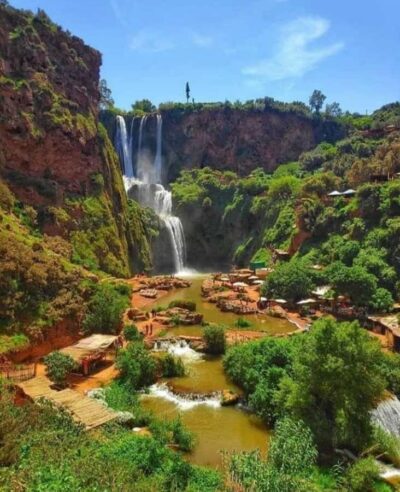
Ouzoud Waterfalls Guided Trip with Boat Ride
Read our review →
Ourika Waterfalls, Atlas Mountains, Guide + Lunch
Read our review →
Ouzoud Waterfalls Guided Day Trip with Boat Ride
Read our review →
ourika valley lunch & guided hike to waterfalls
Read our review →