Reviewed · TOURS
Marrakech: Cultural Bicycle Tour with Pastry and Tea
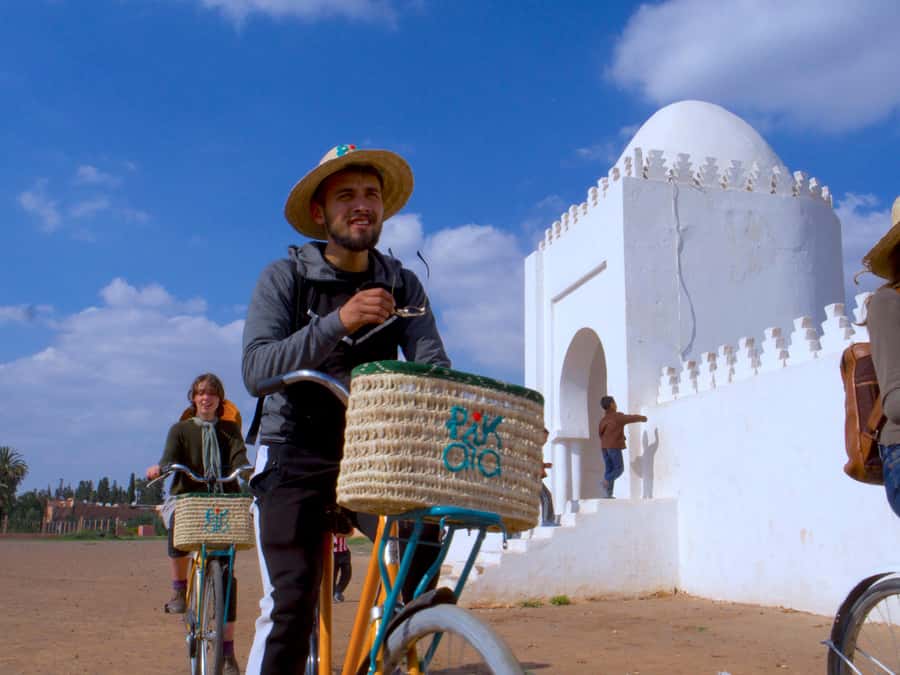
Marrakech looks different from a bicycle seat. This three-hour ride with Pikala Bikes moves beyond the usual souk circuit, linking daily customs with major sights and giving you a close look at how old and new Marrakech share the same city. I especially like the bakery visit, where bread comes straight from a clay oven, and the stop at a zellige workshop, where tile work becomes a living craft rather than just palace decoration. The main consideration is traffic: you need to feel comfortable riding around mopeds, donkeys, carts, pedestrians, and narrow lanes.
The tour also has a useful social purpose. Pikala trains Moroccan young people to guide visitors, so your guide may be a university student or a young local building work experience. Guides such as Ayoub, Rabab, Hamid, Yassir, Kenza, Sayid, and Yasmin have earned strong praise for their care, humor, and clear explanations. This is not a gentle sightseeing glide all the way through, but it is a very good way to meet the real city.
In This Review
- Key points before you book
- Starting at Pikala Bikes in the old city
- Sidi Bel Abbas and the first look at local Marrakech
- A neighborhood bakery and the meaning of bread
- Zellige tiles, patient hands, and palace decoration
- Place des Ferblantiers and the quieter corners around it
- The Royal Palace from public gardens
- Koutoubia Mosque and the Church of the Holy Martyrs
- Understanding the hammam without taking a bath
- Gueliz and Hivernage show another side of Marrakech
- Mint tea, pastries, and a relaxed finish
- Who will enjoy this ride most
- Practical advice for a smoother ride
- Should you book the Pikala cultural bicycle tour?
- FAQ
- How long is the Marrakech cultural bicycle tour?
- How much does the tour cost?
- Where does the tour start and finish?
- Which languages are available?
- Is hotel pickup included?
- What food and drinks are included?
- Do I need to be a confident cyclist?
Key points before you book
- Bread tells a bigger story: Watch loaves bake in a traditional neighborhood oven and learn why bread matters in Moroccan homes.
- The medina ride is an adventure: Narrow lanes bring you close to people, carts, mopeds, and ordinary city life.
- Zellige is made by hand: The tile workshop shows the patient craft behind Morocco’s famous geometric mosaics.
- Old and new Marrakech meet: The route moves from the medina to Gueliz and Hivernage, with broad roads, cafes, and hotels.
- The guides make the difference: Pikala’s young guides focus on culture and daily life, not just dates and monuments.
- The finish is tasty: Moroccan pastries, tea, juices, fruit, and local snacks round out the ride.
Starting at Pikala Bikes in the old city
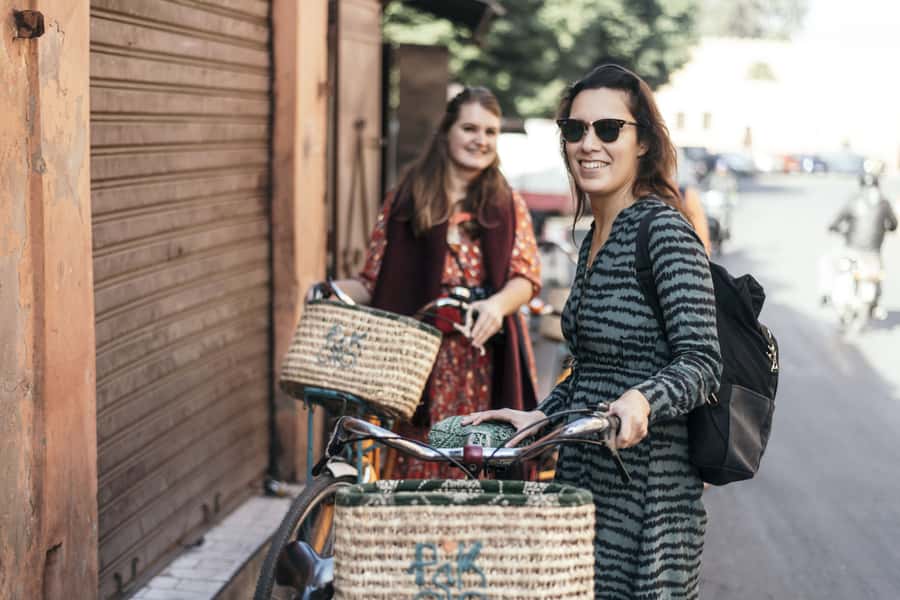
You meet at the Pikala Bikes headquarters, where the ride begins with bicycles suited to the flat streets of Marrakech. Several people specifically praised the comfortable saddles and solid bikes, though a few found the bicycles heavy or harder to handle than expected.
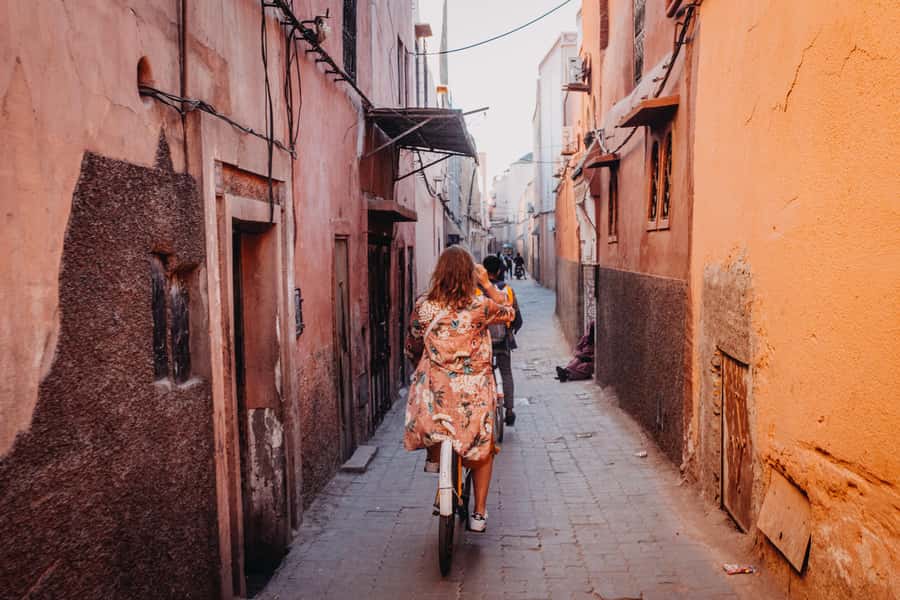
That matters in the first part of the ride. Marrakech is not a place where you pedal in a neat line beside a painted bike lane. You may need to slow quickly, steer around a pedestrian, or hold your line while a moped slips past. The guides are used to managing this. They check behind them, wait at crossings, and keep the group together.
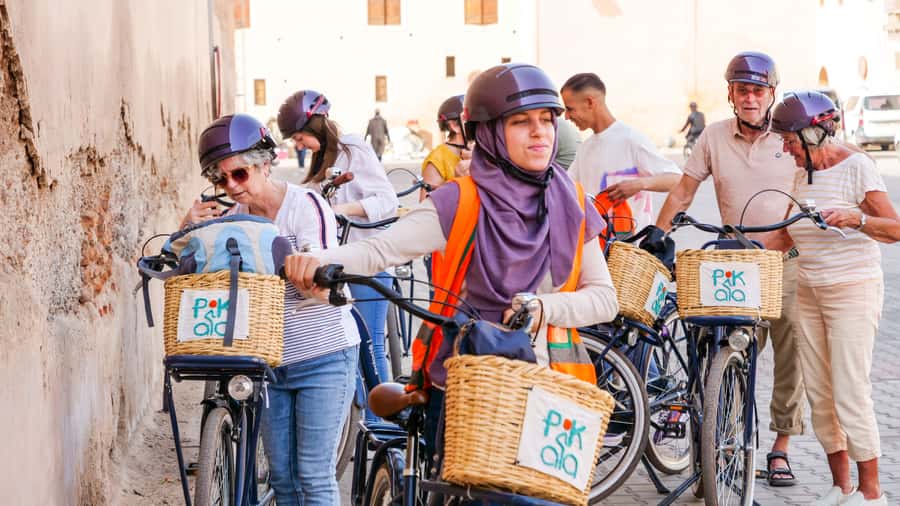
The pace is generally gentle, with regular stops. Still, gentle does not mean effortless. You should be a confident cyclist, especially if you have not ridden in city traffic for a while. Long dresses and skirts are awkward on a bicycle, so wear casual clothes that allow easy movement. Suncream is included, and water and fruit are provided.
An early start can help. One participant found the 9:30 morning departure a little calmer on the roads. The tour operates in English or French, and the small-group setup allows you to ask questions without shouting over a large crowd.
A few more Marrakech runs to hold up against each other
- Marrakech: Agafay Desert Sunset, Camel Ride, and Dinner Show
★ 4.6 · 35,119 reviews - From Marrakech: Ouzoud Waterfalls Guided Hike and Boat Trip
★ 4.7 · 33,630 reviews - Marrakech: Agafay Desert Quad & Camel Rides with Dinner Show
★ 4.8 · 27,382 reviews
Sidi Bel Abbas and the first look at local Marrakech
One of the early stops is the Zawiya of Sidi Bel Abbas. You pause for about 15 minutes to see the site and hear about its place in the city. A zawiya is connected with religious learning and devotion, so this stop gives you a first sense of the spiritual side of Marrakech, beyond shopping and architecture.
The value here is context. You are not simply racing past a photographed building. Your guide can connect the site to Moroccan religious life and explain how these places fit into the city. Guides have been praised for bringing in cultural and political background, as well as telling you how people live now.
The route then slips through lesser-used lanes and small local areas. Some stops are described only as places of interest, rather than named monuments. That is part of the appeal. The guide may point out a feature you would walk past without noticing, then explain why it matters.
It also means the tour is not a checklist of famous sights. If you want a long stop at every major monument, this is the wrong format. If you want a better feel for the medina’s working streets, it fits well.
A neighborhood bakery and the meaning of bread
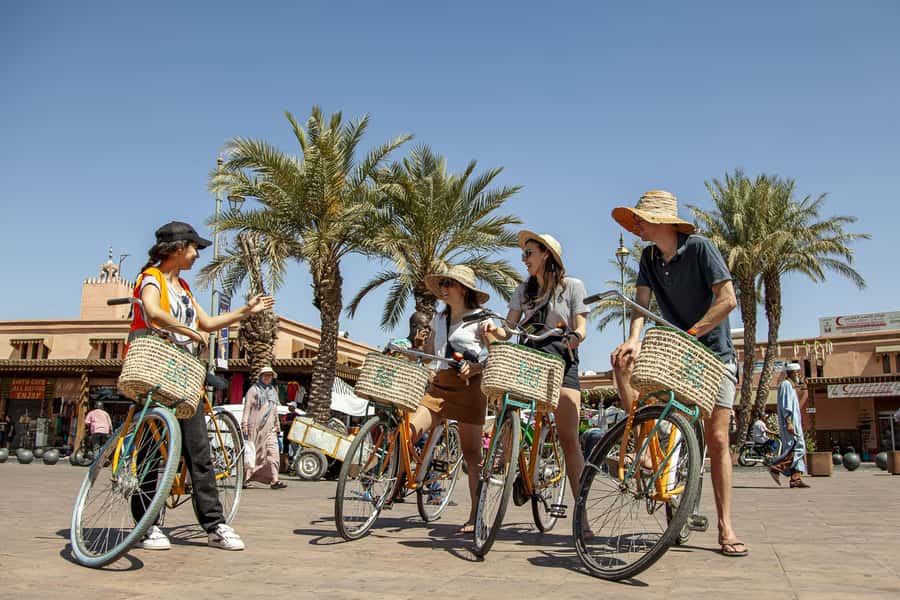
The local bakery is one of the most memorable stops. You step inside, watch bread bake in a clay oven, and taste fresh Moroccan bread. The visit lasts about 10 minutes, but it covers a subject that reaches into daily life, family routines, and neighborhood cooperation.
Traditional community ovens have a practical role. People prepare dough at home and use a shared oven, making bread part of the social rhythm of the neighborhood. The heat, the smell, and the quick movement around the oven tell you more than a formal museum display could.
This is a good example of what Pikala does well. The stop is small, but it answers a simple question: how does an ordinary household get its daily bread? You see a working place rather than a staged performance.
The bakery can be busy and compact, so do not expect a long demonstration with every step explained. The point is the setting, the taste, and the story. It is also a useful reason to avoid filling up before the tour.
Zellige tiles, patient hands, and palace decoration
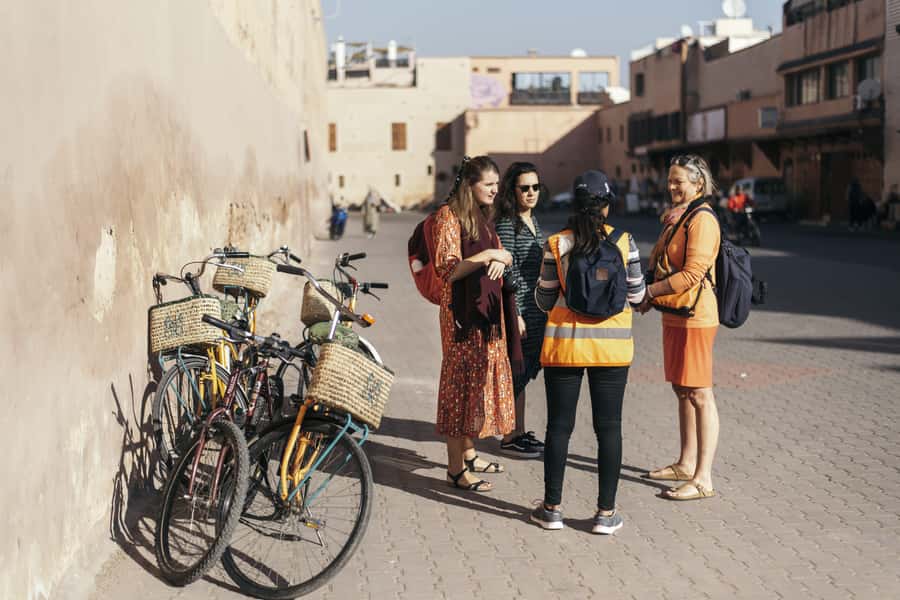
The tile workshop gives the ride another strong cultural stop. Moroccan zellige is known for detailed geometric patterns, but the workshop shows that the finished surface begins with handwork, repetition, and exact cutting.
You meet artisans and see how the tiles are produced. The craft has decorated Moroccan palaces and mosques for centuries, and the guide explains how the patterns and methods connect to the country’s buildings.
I like this stop because it makes familiar decoration easier to understand. You may have admired colorful mosaics in courtyards without thinking about the work behind them. Here, the process becomes visible.
The visit is not a full craft class, and the schedule gives you limited time. You are there to observe, ask questions, and understand the tradition. If you are interested in architecture or design, this may be one of the tour’s best moments.
Same city gate, a very different afternoon:
- Marrakech: Agafay Desert Quad Biking Tour with Dinner-Show
★ 4.8 · 16,569 reviews - Marrakech: Atlas Mountains, Ourika Valley, Waterfall & Lunch
★ 4.8 · 15,834 reviews - From Marrakech: 3-Day Merzouga and Sahara Desert Tour
★ 4.9 · 15,308 reviews - Berber villages : Atlas Mountains Day Hike from Marrakech
★ 5.0 · 14,007 reviews
Place des Ferblantiers and the quieter corners around it
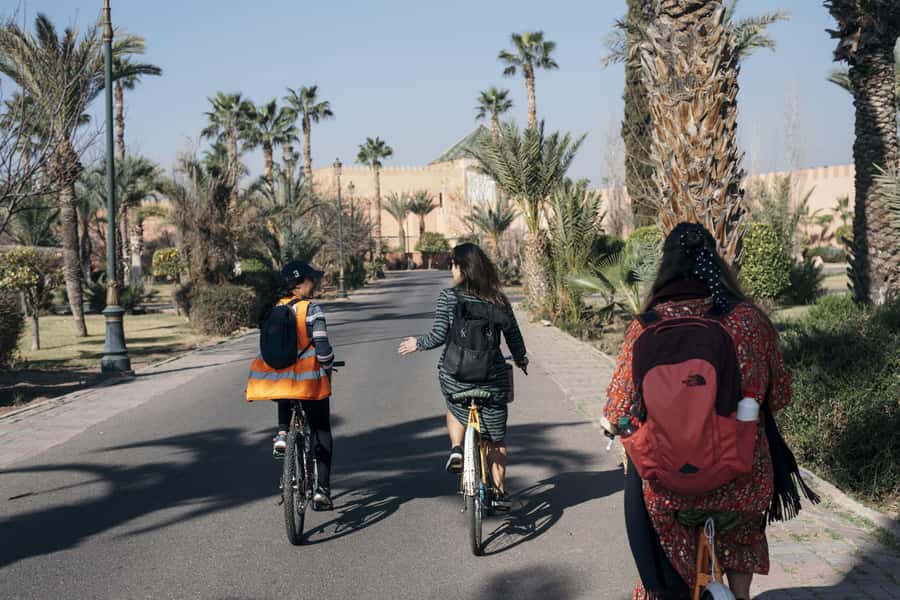
The ride reaches Place des Ferblantiers, where you have about 20 minutes for a break, photographs, and free time. The square is a useful pause after the tight lanes of the medina, giving you room to look around and catch your breath.
You pass through additional small streets and lesser-known corners before and after the square. The guide may point out details that are easy to miss when you are walking alone or trying to follow a map. Because the ride moves at a modest pace, you get short explanations without losing the flow of the journey.
This section also shows the tradeoff of a bicycle tour. You cover more ground than you would on foot, but you do not linger everywhere. The tour gives you a broad introduction rather than a detailed study of one district.
A short break at this stage helps. Bring a bottle if you prefer to drink often, although water and fruit are included. The route is flat according to the experience details, but heat can still make cycling feel harder.
The Royal Palace from public gardens
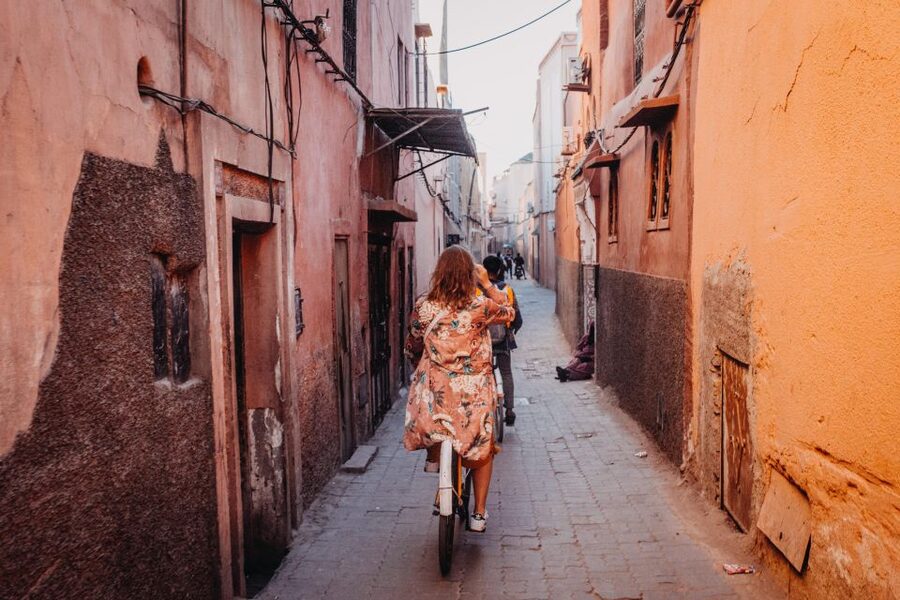
The route passes the public gardens around the Royal Palace, Dar El-Makhzen. You admire the palace from outside and learn about its place in Morocco’s monarchy and political history.
This is an exterior visit, not a palace tour. You will not enter the royal complex, so set your expectations accordingly. The interest comes from seeing how a major royal site fits into the city and from hearing the guide explain its importance.
The stop works well because it links the everyday streets to the institutions of the kingdom. One moment you are watching neighborhood traffic and local businesses. The next, you are looking toward a place connected with Morocco’s royal government.
Photography time is available at several points, but the tour is not built around posed pictures. Keep your camera ready, listen while you ride, and do not let taking photos distract you from the road.
Koutoubia Mosque and the Church of the Holy Martyrs
The bicycle passes the Koutoubia Mosque for about 10 minutes of sightseeing. Its minaret is one of Marrakech’s best-known markers, and the stop gives your guide a chance to discuss Muslim beliefs and practices.
You do not need a formal religious tour to gain something from this explanation. A good local guide can help you understand how worship, public space, and daily routines connect in Moroccan life. Sayid was praised for explaining these subjects clearly while also making sure the group crossed roads safely.
The route also includes the Church of the Holy Martyrs. This creates an interesting contrast with the mosque and with the older religious sites elsewhere on the ride. You see another part of Marrakech’s religious and architectural story, rather than receiving a single narrow view of Moroccan culture.
The stop includes photographs and scenic views along the way. As with the palace, the focus is on seeing the exterior and learning from the guide, not entering every building.
Understanding the hammam without taking a bath
The traditional hammam stop explains the Moroccan public bathhouse and its role in everyday life. You learn about the rituals, the social customs, and the reasons hammams remain important in Moroccan communities.
This can be a particularly useful stop for first-time visitors. A hammam is not simply a spa in the modern hotel sense. It has a social and practical place in neighborhood life, and the guide helps separate local tradition from the simplified version often presented to tourists.
The tour is cultural, not a bathing session. You are there to understand the custom rather than receive a hammam treatment. That makes the stop easy to fit into a busy sightseeing day, though anyone hoping for a spa experience will need to book that separately.
The guides are often the strongest part of this explanation. Several have been praised for being patient, friendly, and willing to answer questions. Their youth can be an advantage here because they can talk about both tradition and present-day life.
Gueliz and Hivernage show another side of Marrakech
The final part of the ride shifts toward modern Marrakech, especially Gueliz and Hivernage. Wide boulevards replace much of the medina’s cramped pattern. You pass trendy cafes, luxury hotels, and newer city spaces.
This contrast is one of the tour’s main strengths. Many first visits focus almost entirely on the old walls and souks. The ride shows that Marrakech is not frozen in the past. The newer districts have a different rhythm, look, and social setting.
For some people, this part of the route feels more intimidating at first because the roads are wider and traffic moves differently. The experience details openly describe Marrakech traffic as organized chaos. Mopeds, cars, donkeys, carts, bicycles, and pedestrians all share space, often with little obvious order.
That sounds alarming, but the point is not that the traffic is impossible. The guides lead carefully and keep checking the group. Several riders said they adjusted after the first hour. You should still remain alert and follow the guide’s instructions closely.
Mint tea, pastries, and a relaxed finish
The ride ends back at Pikala Bikes, followed by time at Pikala Cafe. You receive tea, juices, Moroccan pastries, and local snacks, with mint lemonade and spiced cookies mentioned as welcome refreshments during the experience.
This finish is more than a quick drink. It gives you a chance to talk with the guide, ask about places you passed, and let your legs recover. One rider liked the cafe enough to return later, while another became so engaged in conversation that the snack nearly got forgotten.
The included food and drinks help the $34 price feel fair. You are paying for three hours of guided riding, access to local stops, refreshments, bicycle use, and a personal introduction to Moroccan life. It is not the cheapest way to see a few landmarks, but it offers more contact with working neighborhoods than a standard sightseeing loop.
Pikala’s youth training program adds another layer of value. Your booking supports an organization that trains Moroccan young people as guides and works with local businesses. The social purpose does not replace the need for a good tour, but here the cultural content and the project’s aims fit together naturally.
Who will enjoy this ride most
I would choose this tour if you want an early overview of Marrakech and like learning through small encounters. It suits people who are curious about food, craft, religion, neighborhood life, and the contrast between the medina and the modern city.
It is also a good choice for families with confident older children and for couples who want something more active than a walking tour. One family had a very good morning with a group of five. A 72-year-old participant used a tandem and managed the ride successfully, but that should not be taken to mean the tour is effortless for everyone.
You should think twice if you are nervous on a bicycle, dislike crowded streets, or want a quiet route. The first hour can be demanding because you are avoiding pedestrians, mopeds, donkeys, carts, and other cyclists in tight spaces. The ride is flat and not fast, but the need to react matters more than physical fitness.
Practical advice for a smoother ride
Wear comfortable clothing and avoid long skirts or dresses. Closed shoes that stay secure on the pedals are a sensible choice, although the provided information does not specify a footwear requirement.
Book an earlier start if you can. The 9:30 departure was described as calmer by one participant, and cooler morning conditions can make the ride easier. Bring a light layer too, since the temperature can change when the sun goes behind clouds.
Keep your hands free for steering and your attention on the road. Take photographs during stops rather than while moving. If you are riding with a child or older family member, tell the guide at the start so the group can adjust its pace where possible.
The guide’s role is important, so listen carefully during the first traffic section. Guides such as Hamid, Rabab, Yassir, Kenza, Yasmin, Khalil, Sayid, and Ayoub have been praised for checking on riders and keeping everyone together. The exact guide depends on the day, but Pikala’s young Moroccan staff are central to the experience.
Cancellation is flexible up to 24 hours before departure for a full refund, and you can reserve now and pay later. Hotel pickup and drop-off are not included, so plan your own way to the Pikala Bikes headquarters.
Should you book the Pikala cultural bicycle tour?
Book it if you want to see Marrakech through daily customs rather than only famous buildings. The bakery, zellige workshop, hammam explanation, Royal Palace gardens, and modern districts give you a useful range in just three hours. The guide’s personal stories and the youth-training mission make the experience feel grounded.
Skip it if you are not a confident cyclist or if traffic makes you freeze. Marrakech’s streets require attention, and the tour does not hide that fact. For riders who can handle the first stretch, though, the reward is a lively, thoughtful introduction to the city at a fair price.
FAQ
How long is the Marrakech cultural bicycle tour?
The tour lasts three hours, although one participant described a similar experience as about three and a half hours.
How much does the tour cost?
The price is $34 per person.
Where does the tour start and finish?
You meet and return at the Pikala Bikes headquarters.
Which languages are available?
The live tour guide speaks English or French.
Is hotel pickup included?
No. Hotel pickup and drop-off are not included.
What food and drinks are included?
The experience includes water and fruit, plus juices, Moroccan pastries, tea, and local snacks at Pikala Cafe. Spiced cookies and mint lemonade may also be served.
Do I need to be a confident cyclist?
Yes. You should be comfortable riding in crowded city traffic, including around mopeds, donkeys, carts, pedestrians, and other cyclists. The route is flat and not fast, but some sections can feel nerve-wracking.
Just listed around Marrakech
- 3 Days To Merzouga Desert★ 5.0 · 19 reviews
- 3 Days Shared Sahara Desert Tour From Marrakech★ 5.0 · 78 reviews
- 1 night Camel Treking in Merzouga Desert Luxury Camp★ 5.0 · 132 reviews
- 3 Days Sahara Desert Trips From Marrakesh★ 5.0 · 176 reviews
- 3 Days Sahara Tour from Marrakech to Merzouga Dunes★ 5.0 · 29 reviews
- trip of your dreams in 3 days and 2 nights in the desert★ 5.0 · 36 reviews
- 3 Days Private Tour to Merzouga Desert from Marrakech★ 5.0 · 77 reviews
- 3 Day Sahara Desert Tour From Marrakech★ 5.0 · 49 reviews
Tours, compared.

Agafay Desert Quad Biking Tour with Dinner-Show
Read our review →

Quad Bike Tour to Palm Oasis and Jbilat Desert
Read our review →
3 Days Desert Tour From Marrakech To Merzouga Dunes & Camel Trek
Read our review →

3-Day Marrakech to Merzouga Desert Tour: Camel Rides & Overnights
Read our review →
Desert & Mountain Tour with Camel Ride & Lunch
Read our review →