Reviewed · GUIDED
Marrakech: Medina, Souks, Artisans Guided Tour with Mint Tea
Marrakech’s souks reward a good guide. This three to four-hour walk takes you from Jemaa el-Fna into dyeing, leather, metalworking, spice, and textile quarters, where local artisans still work by hand. I especially like the chance to see these crafts in their workshops and the practical help with bargaining. The main drawback is the amount of walking on uneven medina streets.
I also like the small-group or private format, plus a quiet mint tea break that gives your feet and senses a rest. Guides such as Ishmael and Saïd have been praised for their patience and strong knowledge of the city, though the exact guide depends on the date and booking option.
In This Review
- At a Glance: What Makes This Walk Worthwhile
- Starting at Jemaa el-Fna
- Walking the Medina Beyond the Main Streets
- Souk Semmarine and the Leather Trade
- Souk El Attarine and the Narrow Market Lanes
- Souk Sebbaghine and the Dyers’ Quarter
- Mint Tea on a Quiet Terrace
- Souk Haddadine and Traditional Metalwork
- Rahba Lakdima and the Spice Square
- Ben Youssef Madrasa and Optional Sightseeing
- Shopping Advice That Saves You Trouble
- Price, Group Size, and Practical Value
- Who Will Enjoy This Marrakech Walk?
- Should You Book This Tour?
- FAQ
- Where does the tour start?
- How long does the experience last?
- What language is the tour offered in?
- Is this a private tour?
- Is mint tea included?
- Does the price include transportation?
- What should I bring?
- Can I cancel for a refund?
- Is the tour suitable for people with mobility impairments?
At a Glance: What Makes This Walk Worthwhile
- Craft quarters with a purpose: See leather workers, dyers, metalworkers, and spice sellers in the parts of the medina linked to their trades.
- Bargaining help included: Get advice on prices, quality, and how to negotiate without turning every purchase into a wrestling match.
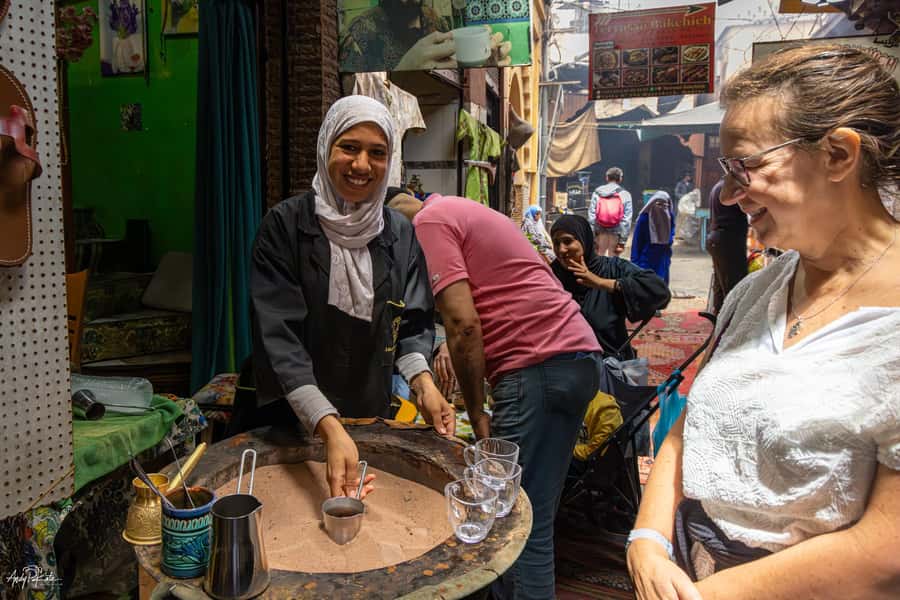
- Mint tea on a terrace: Pause at an authentic medina spot and learn why tea is central to Moroccan hospitality.
- Jemaa el-Fna starting point: Meet in front of Café de France, an easy landmark in Marrakech’s famous main square.
- Ben Youssef Madrasa visit: Allow about 40 minutes for this historic religious school, with time for photographs and sightseeing.
- Good value at $18: The price covers a licensed guide, tea, workshop access, and shopping advice, but not transportation or purchases.
Starting at Jemaa el-Fna
The tour begins in front of Café de France in Jemaa el-Fna, unless you book the private option and are staying in a riad inside the medina. In that case, pickup at your riad reception may be available.
Café de France is a sensible meeting point because Jemaa el-Fna can feel like a maze even before you enter the souks. The provider sends the guide’s name, meeting details, and practical tips by WhatsApp the day before or a day or two ahead. Keep your phone available, and make sure you know whether your booking includes riad pickup.
Give yourself time to arrive. The square is a busy social center, and finding the café is easier when you are not rushing. Your guide begins with a short orientation and a photo stop, then leads you into the medina.
Jemaa el-Fna changes mood during the day, but this tour focuses on the square as the gateway to the old city. You get a quick look at its energy before leaving the open space for narrow lanes and covered market streets.
A few more Marrakech runs to hold up against each other
- Marrakech: Agafay Desert Sunset, Camel Ride, and Dinner Show
★ 4.6 · 35,119 reviews - From Marrakech: Ouzoud Waterfalls Guided Hike and Boat Trip
★ 4.7 · 33,630 reviews - Marrakech: Agafay Desert Quad & Camel Rides with Dinner Show
★ 4.8 · 27,382 reviews
Walking the Medina Beyond the Main Streets
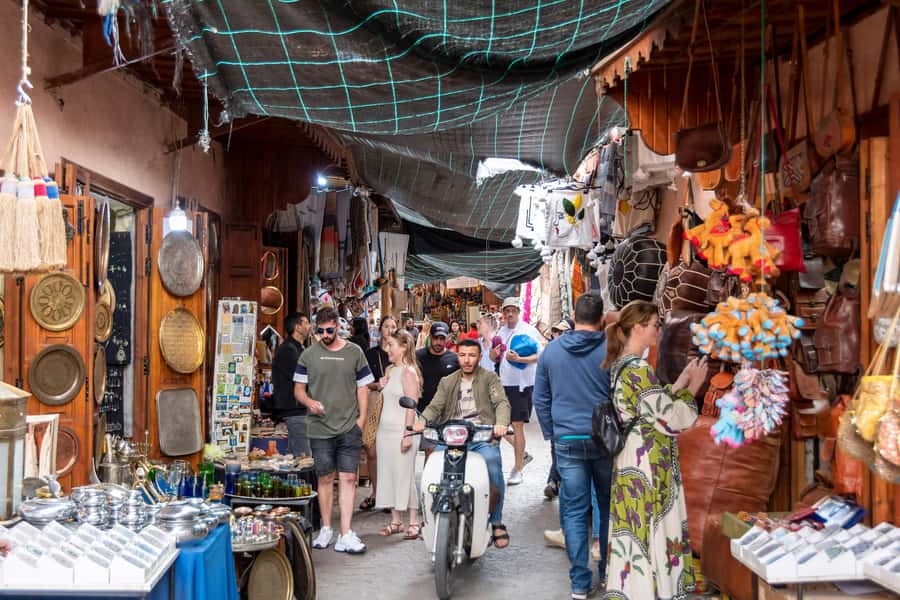
The medina is not a simple shopping mall with neat rows and signs. It is a working part of Marrakech, with homes, shops, workshops, delivery traffic, and small food stalls sharing tight passages. A guide makes the route easier to follow and gives meaning to what might otherwise look like a blur of merchandise.
The first medina section lasts about 30 minutes and is built around walking, sightseeing, and short photo stops. This is where a local guide can point out details you would probably miss alone, explain how the souks are arranged, and help you adjust to the pace of the streets.
Wear proper walking shoes. One of the clearest practical lessons from the experience is that this is a fairly long walk, not a gentle stroll from one shop to the next. You should also carry water, sunscreen, sunglasses, and some cash.
The tour is offered in English or French. A private group is available if you want more control over the pace or more time to ask questions. The standard option may suit you if you mainly want orientation and a first look at the craft quarters.
Souk Semmarine and the Leather Trade
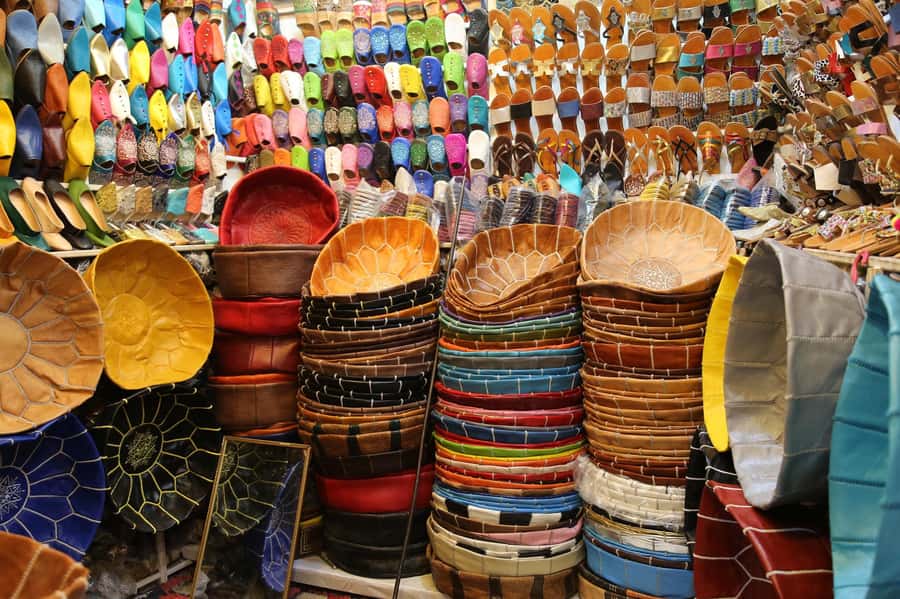
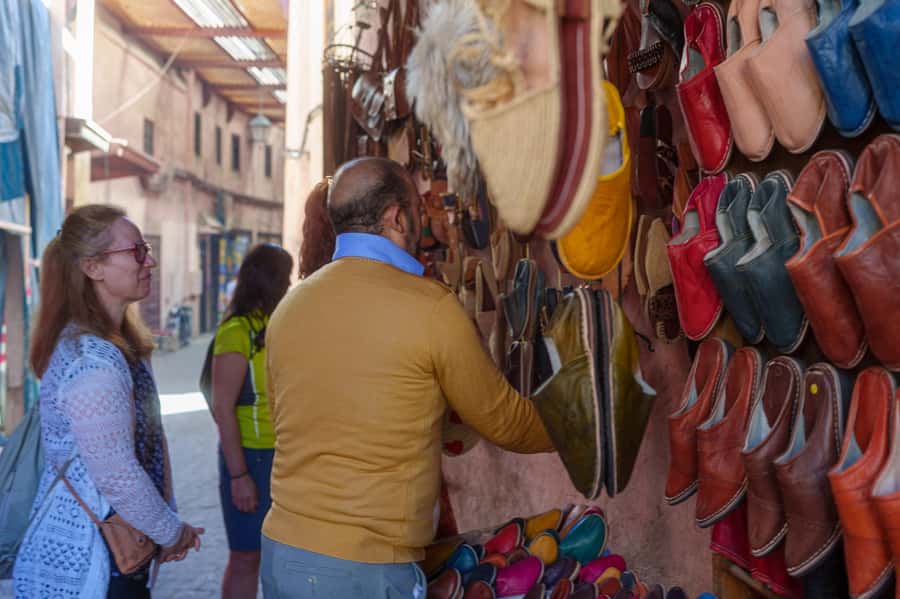
Souk Semmarine is one of the medina’s main market streets. Here, you move past leather goods, textiles, traditional clothing, bags, belts, and babouche slippers.
The guide’s role matters most when you are tempted to buy immediately. You can learn how to compare workmanship, ask questions, and negotiate in a way that feels more comfortable. The tour does not include your purchases, so the shopping advice is especially useful if you are new to Moroccan souks.
Leather is not just a souvenir category here. The guide explains the skills behind handmade goods and helps connect the finished bag or slipper to the work done in local workshops. You may see leather products displayed in bright rows, but the useful question is how well they are made, not simply how attractive they look.
This is also the section where sales pressure may feel strongest. A guided visit does not mean you must buy anything. Take your time, listen to the advice, and remember that looking is part of the experience.
Souk El Attarine and the Narrow Market Lanes
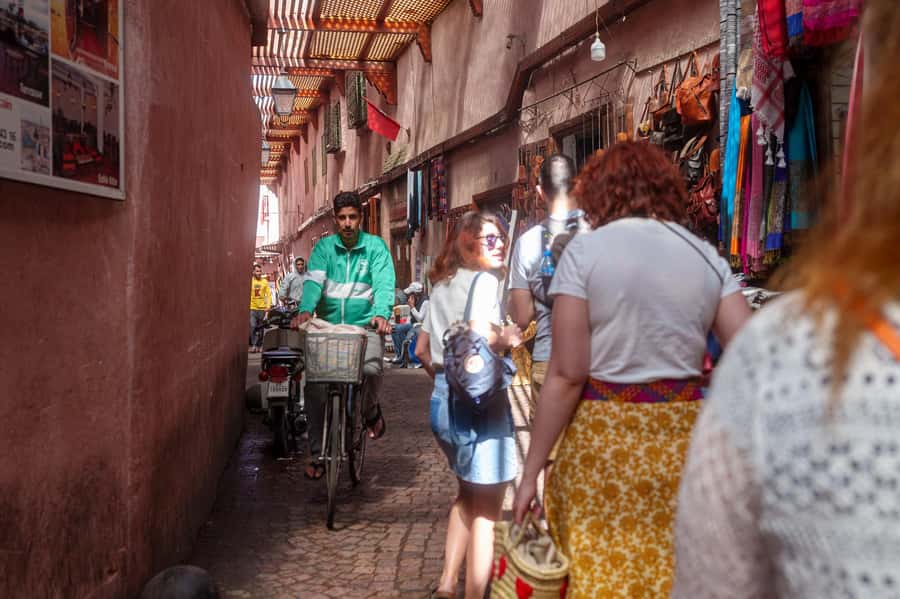
The route continues through Souk El Attarine, another shopping area with photographs, sightseeing, and time to browse. Its place in the walk helps you see how the souks operate as connected quarters rather than one single market.
You may find more traditional crafts and everyday goods here, with the guide explaining what is worth a closer look. This stop is less about a single dramatic sight and more about learning how to read the medina’s commercial streets.
If you want souvenirs, this is a good point to start noting prices without committing to a purchase. Keep a small mental list of items you like, then compare quality and cost later. That simple approach can prevent the first appealing object from becoming your most expensive one.
Same city gate, a very different afternoon:
- Marrakech: Agafay Desert Quad Biking Tour with Dinner-Show
★ 4.8 · 16,569 reviews - Marrakech: Atlas Mountains, Ourika Valley, Waterfall & Lunch
★ 4.8 · 15,834 reviews - From Marrakech: 3-Day Merzouga and Sahara Desert Tour
★ 4.9 · 15,308 reviews - Berber villages : Atlas Mountains Day Hike from Marrakech
★ 5.0 · 14,007 reviews
Souk Sebbaghine and the Dyers’ Quarter
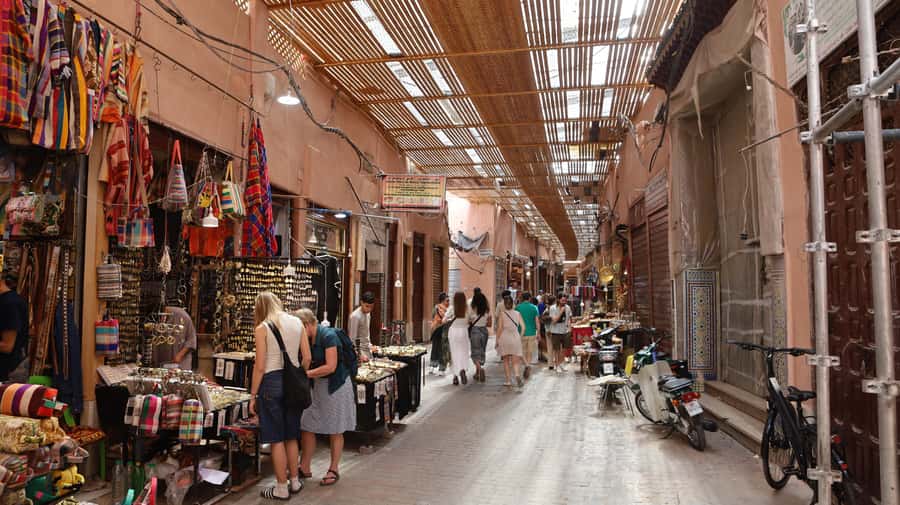
Souk Sebbaghine, also called the dyers’ quarter, offers one of the more distinctive scenes on the route. Colored wool hangs overhead, and artisans demonstrate traditional dyeing methods passed through generations.
This is a strong stop for photographers, but it is worth watching the process rather than treating it as a quick picture stop. The overhead textiles make the lane visually striking, while the guide explains the textile work behind the colors.
The craft remains practical as well as decorative. Dyes, wool, and finished textiles connect the workshop to the scarves, clothing, rugs, and other goods sold elsewhere in the souks. You get a clearer sense of how Moroccan crafts move from raw material to finished product.
The exact workshop experience can depend on the day and the route. The tour promises access to local artisan workshops, but working spaces are not museum exhibits with a fixed timetable. Stay close to the guide and ask before photographing people or their work.
Mint Tea on a Quiet Terrace
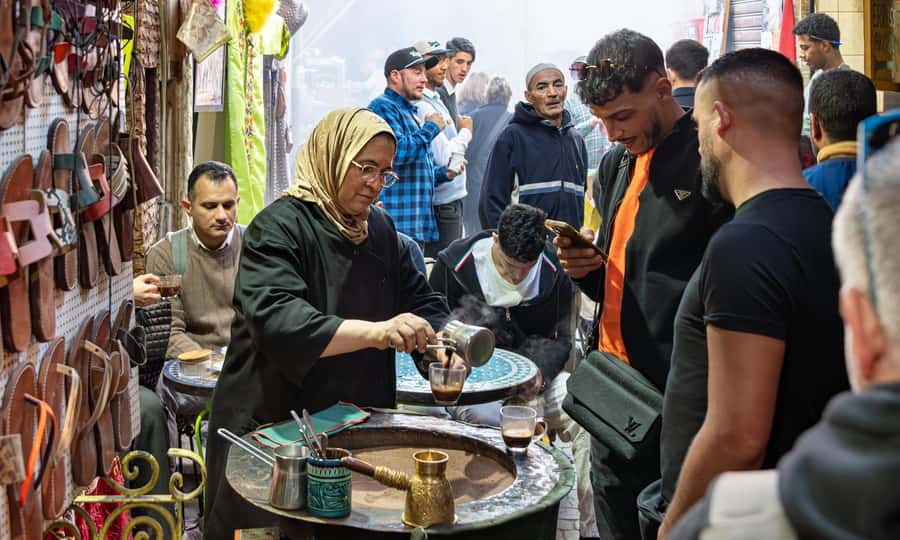
After the crowded lanes, the tea break is well timed. You stop at a quieter terrace for Moroccan mint tea, with about a short break built into the walk.
Tea is more than a refreshment in Morocco. It is a daily social ritual and a familiar expression of hospitality. Your guide explains that cultural role while you rest, which makes the pause feel connected to the city rather than like a random café stop.
This is also your chance to check your purchases, drink water, and reset before more walking. Mint tea is usually sweet, so it may not replace water on a warm day. Keep your bottle with you.
I see this break as one of the tour’s best design choices. A three to four-hour walk through tight streets can become tiring, and a calm terrace gives the experience a better rhythm.
Souk Haddadine and Traditional Metalwork
The route then reaches Souk Haddadine, the blacksmiths’ quarter. Here, you can watch metalworkers shape tools and decorative objects using traditional methods.
Metalwork gives the tour a useful change of pace. After leather and textiles, you see a louder, more physical craft, with the artisan working directly on the material. The guide explains how these trades remain part of daily medina life.
This is the sort of stop that adds value to a guided walk. You are not only looking at lamps or metal decorations in a shop. You are seeing the making process and gaining a better idea of why handmade work costs more than a factory-made copy.
The lanes can be tight, and the sound of workshop activity may be intense. Keep bags and loose clothing close as you move through working areas. The walk is designed around observation, not a hands-on class.
Rahba Lakdima and the Spice Square
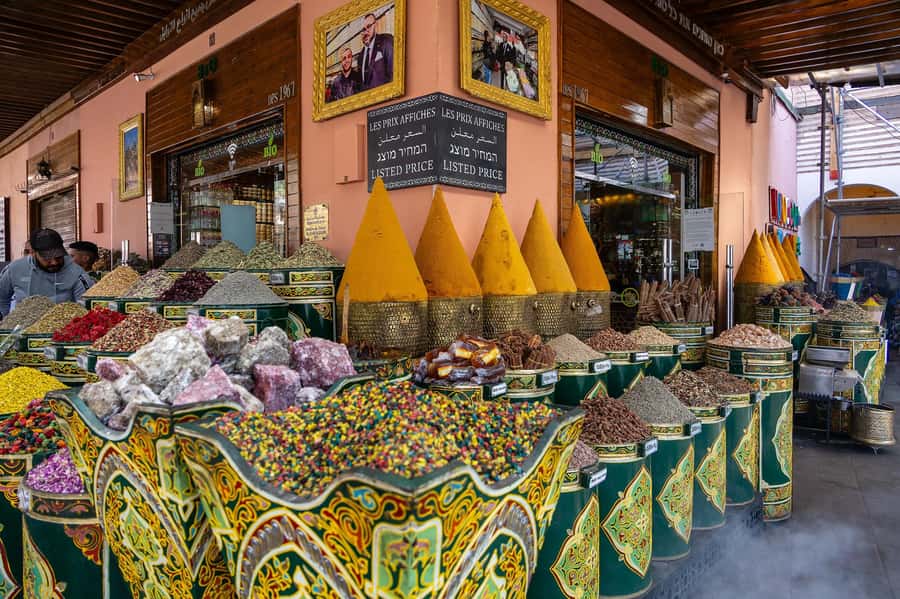
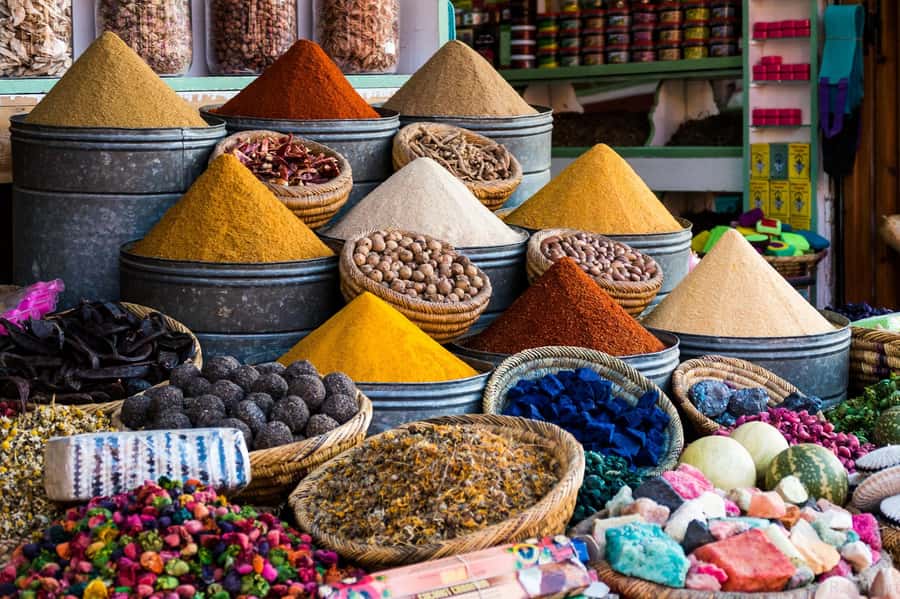
The guided portion ends around Rahba Lakdima, commonly called Spice Square. Stalls here carry spices, herbs, natural products, and other items associated with Moroccan cooking and daily life.
Your guide can explain how to spot authentic argan oil and how local herbs are used. That advice is valuable because natural products are a common target for tourist marketing, and a bottle with a Moroccan label does not automatically tell you what is inside.
Spices also show how food and culture meet in the souks. You can smell and compare products, ask about their uses, and decide if you want to buy something small and easy to carry. Cash is important for shopping, and you should keep your spending separate from the tour price.
Rahba Lakdima is a practical ending because you can continue browsing after the formal walk. You are not rushed straight back to the meeting point. Instead, you can revisit a shop, return to a product you noted earlier, or simply enjoy the square.
Ben Youssef Madrasa and Optional Sightseeing
The planned route includes about 40 minutes at Ben Youssef Madrasa for a visit, photographs, guided sightseeing, and free time. This adds an architectural and cultural stop to a tour otherwise centered on markets and workshops.
The madrasa gives the walk a welcome change from commercial streets. You can pause, look around, and hear the guide place the building within Marrakech’s religious and educational traditions. The scheduled time is long enough for a proper look rather than a quick pass through.
One point needs careful attention: the timing and exact stops may vary. A recent booking included the Secret Garden instead of the advertised garden-related stop, while another booking specifically noted that the Secret Garden was not visited. Do not book this experience solely for that garden. Ben Youssef Madrasa is the more clearly stated sightseeing stop.
After the madrasa, the group returns toward Jemaa el-Fna. The walk ends with drop-off near Café de France or another stated medina location, depending on the arrangement.
Shopping Advice That Saves You Trouble
The tour promises personalized shopping suggestions and insider tips, which may be worth nearly as much as the sightseeing for first-time visitors. The souks are enjoyable, but buying well requires patience.
Here is how I would use the guide’s help:
- Ask what a fair price range is before making an offer.
- Compare similar items in more than one shop.
- Check stitching, leather quality, metal finishing, and fabric closely.
- Decide on a maximum price before bargaining.
- Keep your tone friendly and be ready to walk away.
- Do not buy simply because a shopkeeper offers tea or gives you attention.
Haggling is part of the market culture, but it should remain good-natured. You are not trying to win a contest at any cost. You are trying to agree on a price that feels fair for the object and the work behind it.
The guide may also help you separate workshop-made items from mass-produced souvenirs. That distinction is important if your main goal is to take home something handmade.
Price, Group Size, and Practical Value
At $18 per person, this is a strong value if you want a structured introduction to the medina. You receive a licensed local guide, a mint tea break, access to artisan workshops, and shopping advice. A private or small-group format can make the price even more worthwhile if you want personal attention.
The fee does not cover transportation, personal purchases, or anything outside the stated tour. If you are staying in the medina, private pickup from your riad may be available. Otherwise, you meet at Café de France.
The advertised duration is three to four hours. That is enough time to cover several craft quarters, tea, Rahba Lakdima, and Ben Youssef Madrasa, but it also means you need to keep moving. If you want long shopping sessions at every stop, you may need to use the free time afterward.
The tour is listed as wheelchair accessible, but it is also marked as unsuitable for people with mobility impairments. Those details do not fully agree, so anyone with mobility concerns should confirm the route and street conditions with the provider before booking. The medina includes narrow, uneven walking routes, and the experience is fundamentally a walking tour.
Free cancellation is available up to 24 hours before the start, and you can reserve without paying immediately. Those terms are useful if your Marrakech schedule is still changing.
Who Will Enjoy This Marrakech Walk?
I would recommend this tour to you if you are visiting Marrakech for the first time and want a practical introduction to the medina. It suits shoppers who want help with prices, photographers interested in craft work, and curious visitors who prefer meeting artisans to simply passing shop displays.
It also works well near the beginning of a Marrakech stay. After the walk, you will have a better sense of the souk quarters and can return to places that caught your attention. The free time after the guided portion gives you room to browse independently.
Families and older visitors should think about the walking distance and street surfaces. Comfortable shoes are not optional, and water is worth carrying. Anyone who dislikes sales conversations may prefer to focus on the workshops, architecture, tea, and cultural explanations rather than shopping.
The guides can make a large difference. Ishmael was praised for patiently answering questions and taking the route through alleyways that would be difficult to find alone. Saïd was described as passionate about Marrakech and generous with explanations. The provider advertises English and French, so choose the language in which you can ask detailed questions comfortably.
Should You Book This Tour?
Book it if you want a reasonably priced, guided look at Marrakech’s working souks, with real attention to leather, textiles, dyeing, metalwork, spices, and shopping etiquette. The craft workshops and bargaining advice are the strongest reasons to go, while the mint tea break keeps the long walk manageable.
Skip it if you want a relaxed shopping afternoon, a guaranteed Secret Garden visit, or a tour built around one major monument. This experience covers a lot of ground and may vary slightly in its garden stop.
For most first-time visitors, I would book it early in the stay, wear sturdy shoes, bring cash and water, and treat the shopping as part of the learning rather than the main mission. At $18, it gives you a useful map of the medina and enough local context to explore the souks with more confidence afterward.
FAQ
Where does the tour start?
The usual meeting point is in front of Café de France in Jemaa el-Fna square. If you book the private option and stay in a riad inside the medina, pickup at the riad reception may be available.
How long does the experience last?
The tour lasts approximately three to four hours. Starting times depend on availability.
What language is the tour offered in?
Live guiding is available in English and French.
Is this a private tour?
A private group option is available. The experience may also be offered as a small-group walking tour, depending on the option selected.
Is mint tea included?
Yes. The experience includes a Moroccan mint tea break at an authentic spot in the medina.
Does the price include transportation?
No. Transportation is not included. Private pickup may be available from a riad inside the medina, but you should confirm the arrangement.
What should I bring?
Bring comfortable shoes, sunglasses, sunscreen, water, and cash. The route involves several hours of walking and may include shopping.
Can I cancel for a refund?
You can cancel up to 24 hours in advance for a full refund. A reserve-now, pay-later option is also available.
Is the tour suitable for people with mobility impairments?
The experience is listed as wheelchair accessible but is also marked as unsuitable for people with mobility impairments. Because the walk uses medina streets and includes several hours on foot, confirm the route with the provider before booking if you have mobility concerns.
Just listed around Marrakech
- 3 Days To Merzouga Desert★ 5.0 · 19 reviews
- 3 Days Shared Sahara Desert Tour From Marrakech★ 5.0 · 78 reviews
- 3 Days Sahara Desert Trips From Marrakesh★ 5.0 · 176 reviews
- 3 Days Sahara Tour from Marrakech to Merzouga Dunes★ 5.0 · 29 reviews
- 1 night Camel Treking in Merzouga Desert Luxury Camp★ 5.0 · 132 reviews
- trip of your dreams in 3 days and 2 nights in the desert★ 5.0 · 36 reviews
- 3 Days Private Tour to Merzouga Desert from Marrakech★ 5.0 · 77 reviews
- 3 Day Sahara Desert Tour From Marrakech★ 5.0 · 49 reviews
Guided, compared.
Ouzoud Waterfalls Guided Trip with Boat Ride
Read our review →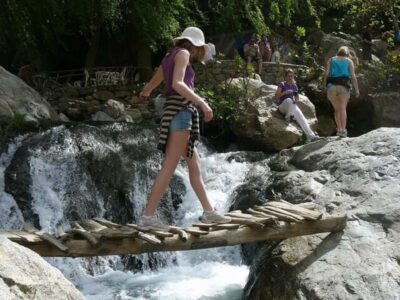
Ourika Waterfalls, Atlas Mountains, Guide + Lunch
Read our review →
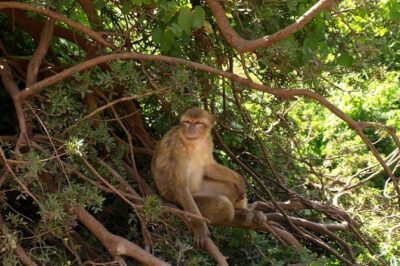
Ouzoud Waterfalls Guided Day Trip with Boat Ride
Read our review →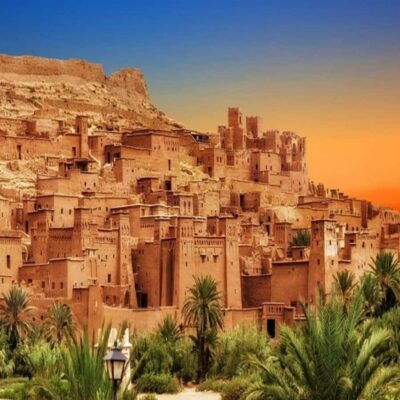
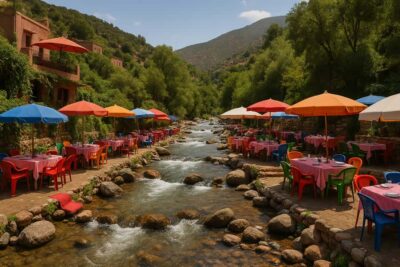
ourika valley lunch & guided hike to waterfalls
Read our review →