
Reviewed · WORKSHOPS
Marrakech: Moroccan Pastries and Tea Class with a Local
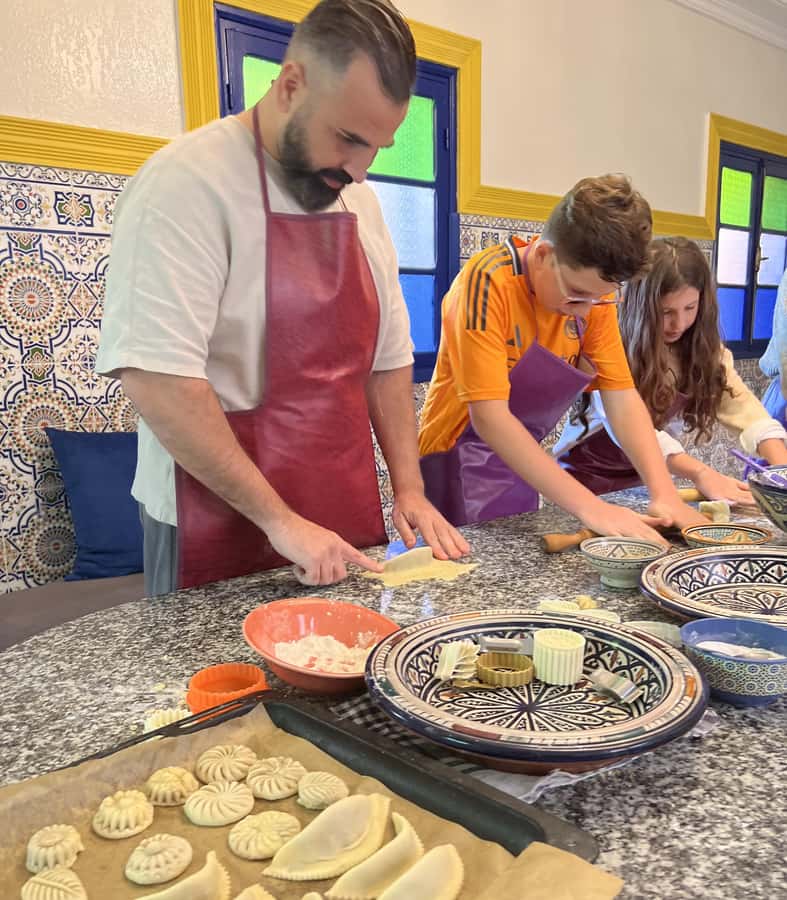
Moroccan baking makes a sweet break from the souks. This 2.5-hour class with a local chef gives you hands-on practice with traditional pastries, plus the chance to learn the proper way to prepare and pour mint tea. I especially like the small groups of up to 10 and the fact that you taste your work and take a box home. The main consideration is that the class involves careful, precise pastry work, so it may feel more like a practical workshop than a relaxed demonstration.
You pay $40 per person, which is fair if you value participation and food you can carry away. I also like the family-friendly setup for older children and teenagers, though children under four cannot take part, and anyone under 18 must come with an adult.
In This Review
- Key points to know before booking
- A sweet change of pace in Marrakech
- Learning the small tricks behind Moroccan pastries
- From mixing and shaping to fresh pastries
- Moroccan mint tea is more than a drink
- The best moment: tasting what you made
- Is $40 a good value?
- Timing, meeting point, and planning advice
- Who will enjoy this workshop most?
- What the 4.7 rating tells you
- Should you book the Marrakech pastry class?
- FAQ
- How long does the Moroccan pastry and tea class last?
- How much does the class cost?
- What is included in the experience?
- Do I get to eat the pastries I make?
- Can I take pastries home?
- What languages does the instructor speak?
- How many people can join the class?
- Are children allowed to attend?
- What should I bring and tell the provider?
Key points to know before booking
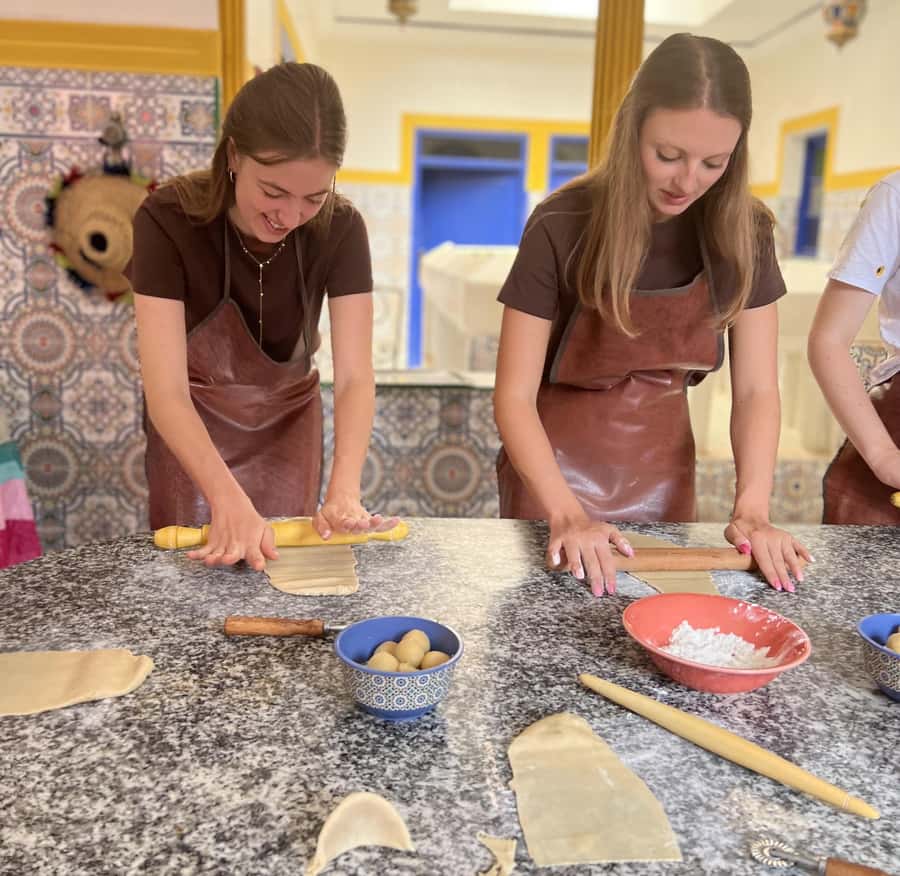
- You make several traditional pastries: The class can include Moroccan favorites such as fekkas and Kaab el Ghazal, along with other biscuits and pastries.
- The small group matters: With a maximum of 10 people, you should have a better chance to follow each stage and ask for help.
- Mint tea is part of the lesson: You do not simply drink tea with the pastries. You learn how to prepare it and practice the traditional pouring style.
- You get food for now and later: You taste the fresh pastries at the end and receive a box to take away.
- The class uses distinctive Moroccan flavors: Fennel seeds and orange blossom water add an important local character to the recipes.
- Ask for the recipes: One participant specifically advised requesting them before leaving, so do not forget.
A sweet change of pace in Marrakech
Marrakech can fill your day with markets, palaces, gardens, traffic, and plenty of walking. This pastry workshop offers a useful change of rhythm. You sit down, work with your hands, and focus on the small details that make Moroccan sweets different from ordinary biscuits.
The setting is a cooking workshop run by Khmisa Workshops. The exact meeting address is sent before your experience date, so you should check your messages carefully and allow time to find the entrance. One participant had trouble because a taxi arrived late, but the guide helped direct the driver and locate the door. That is a good reminder to leave extra time, especially if you are unfamiliar with Marrakech.
The class lasts 150 minutes. That is long enough to cover pastry preparation, baking, tea, tasting, and packing a box to take home without turning the activity into a full-day commitment.
A few more Marrakech runs to hold up against each other
- Tangier: Sunset, Tea, Sweets, Camel Ride, and Hercules Caves
★ 4.9 · 575 reviews - boat trip from 9 am to 3 pm fishing & swimming & barbecue & dessert
★ 4.0 · 36 reviews - Moroccan Crepes & Pastries Kitchen
★ 4.9 · 34 reviews
Learning the small tricks behind Moroccan pastries
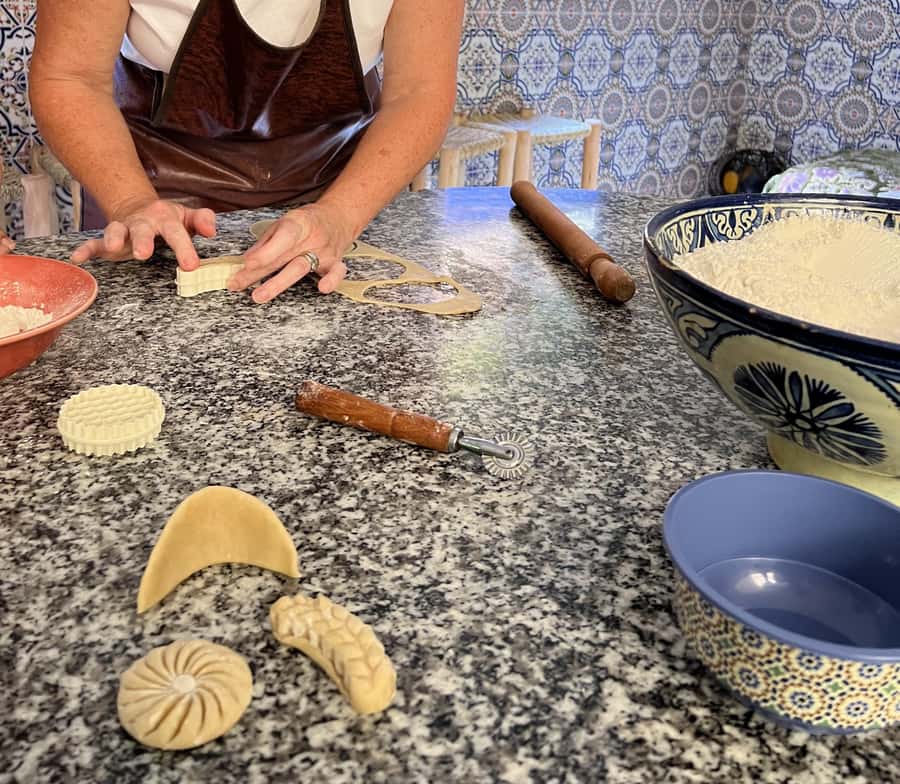
The central part of the class focuses on the techniques that give Moroccan pastries their texture, shape, and flavor. The description emphasizes that the methods are simple but precise. In practice, that means you should expect to follow instructions carefully rather than simply mix ingredients and wait for the oven.
This is useful even if you have little baking experience. One participant who had never baked before found the class a good introduction. You get to watch each stage, repeat it yourself, and see how small choices affect the result.
At the same time, the class is not necessarily effortless. A participant described the work as interesting and difficult, but satisfying. That is an honest expectation to carry with you. If you want a very easy activity where you sit back and watch, this may feel demanding. If you enjoy learning a practical skill, the hands-on work is part of the appeal.
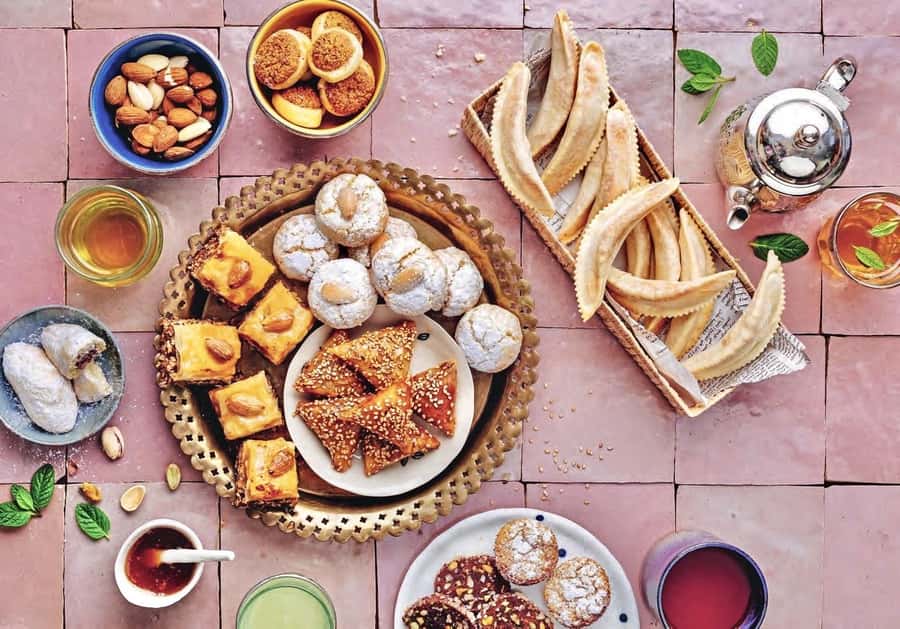
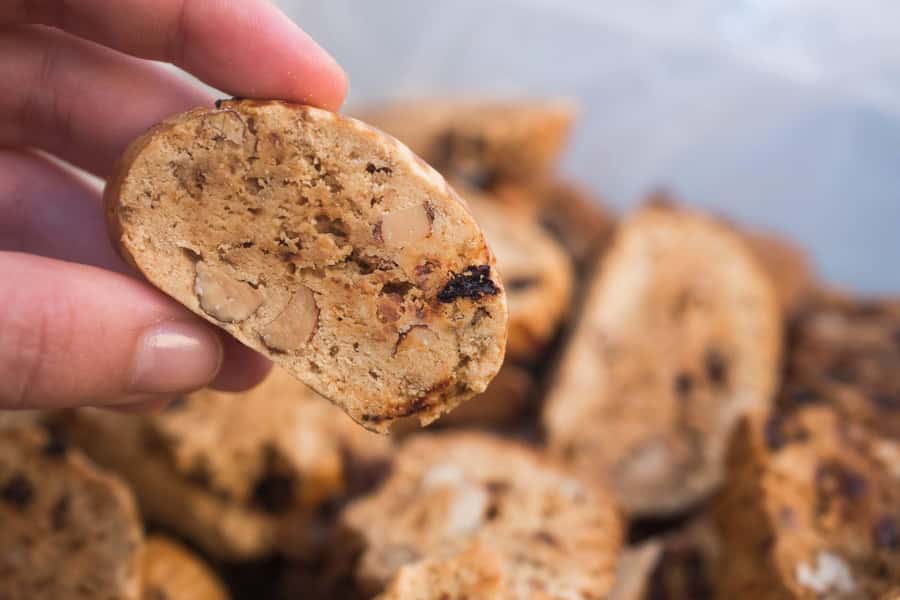
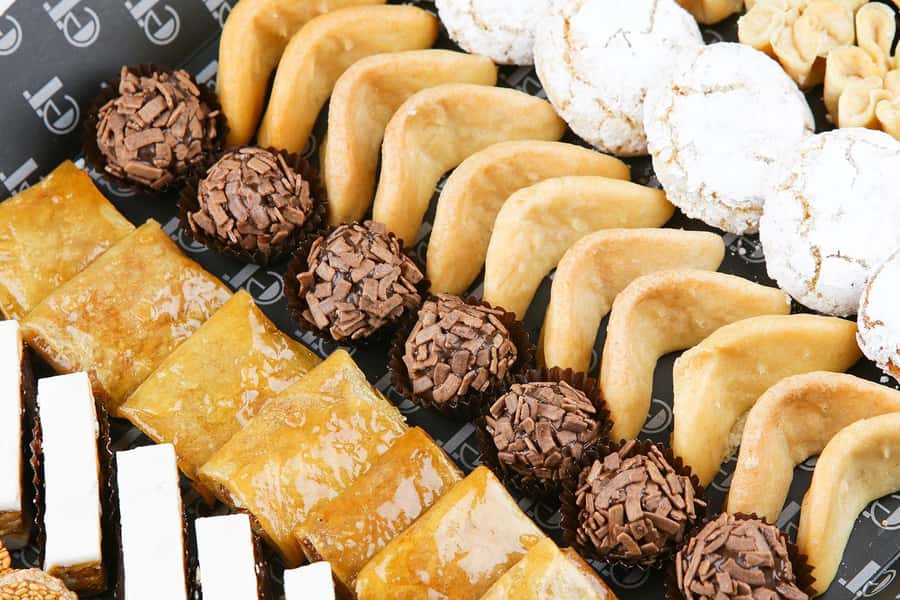
The recipes may include fekkas, a crisp Moroccan biscuit often served with tea, and Kaab el Ghazal, a crescent-shaped pastry associated with almond filling and orange blossom flavor. Other pastries and biscuits may also be prepared, but the exact selection is not fixed in the information provided.
The ingredients are one of the best parts of the experience. Fennel seeds and orange blossom water bring flavors that may be unfamiliar if your baking usually revolves around vanilla, chocolate, or cinnamon. You are not just copying a generic cookie recipe. You are working with ingredients that connect the pastries to Moroccan food traditions.
From mixing and shaping to fresh pastries
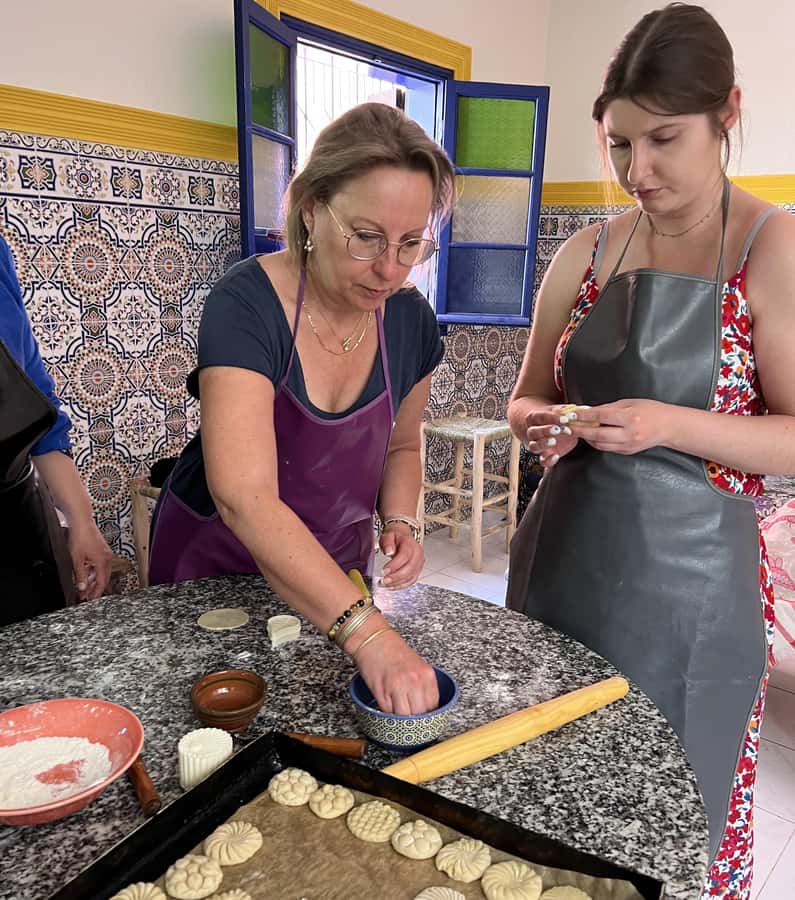
The class is built around making the pastries yourself. You should expect instruction at each step, from handling ingredients to shaping the dough and preparing the pastries for baking. The instructor speaks Arabic, French, and English, making the class accessible to a wide mix of participants.
The small-group limit of 10 is important here. Pastry work often depends on details such as thickness, folding, shaping, and timing. A large class could make it hard to see what is happening. A smaller group gives you a better chance to watch closely and get corrections when needed.
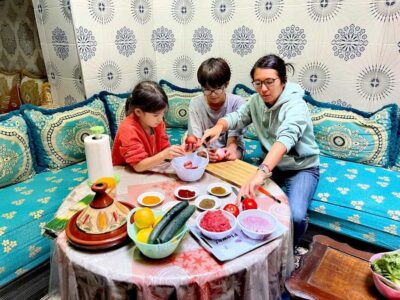
The experience can also work well for a private family booking. Four people, including two teenagers, ended up having a private session and found the format enjoyable for the whole family. That does not guarantee a private class for every booking, but a small group can make the session feel personal when demand is light.
Teenagers may particularly enjoy the activity because it is active without being strenuous. They can shape pastries, work with unusual ingredients, and take part in the tea ritual later. Younger children under four are not allowed, and anyone under 18 needs an accompanying adult.
Wear comfortable clothes suitable for cooking. You should also bring water. No special cooking equipment is required because the necessary equipment is included.
Moroccan mint tea is more than a drink
The tea lesson gives the workshop a second focus. You learn how to prepare Moroccan mint tea to serve with the pastries, then have a chance to practice pouring it.
The pouring is not just a finishing touch. It gives the group a small cultural ritual to share after the practical baking work. One family particularly enjoyed letting everyone try the pouring technique, and the activity kept the teenagers involved.
You should expect the tea to be served as part of the tasting session. Additional food and drinks are not included, so the included tasting is the main refreshment provided by the class.
This part of the experience also helps explain why Moroccan pastries are commonly paired with tea. The combination balances crisp, sweet pastry with a hot, fragrant drink. You get to taste the result of your work in the setting where these foods make the most sense together.
Same city gate, a very different afternoon:
- Marrakech: Agafay Desert Sunset, Camel Ride, and Dinner Show
★ 4.6 · 35,119 reviews - From Marrakech: Ouzoud Waterfalls Guided Hike and Boat Trip
★ 4.7 · 33,630 reviews - Marrakech: Agafay Desert Quad & Camel Rides with Dinner Show
★ 4.8 · 27,382 reviews - Marrakech: Agafay Desert Quad Biking Tour with Dinner-Show
★ 4.8 · 16,569 reviews
The best moment: tasting what you made
At the end, you sit down with the pastries you prepared and Moroccan mint tea. This gives the class a clear payoff. You are not leaving with only notes or a demonstration. You get to see, taste, and judge the finished food.
Freshly baked pastry has a different appeal from something purchased in a shop earlier in the day. You can compare the texture and flavor with the techniques you just practiced. Even if a shape is not perfect, the tasting makes the effort worthwhile.
You also receive a box of pastries to take home. This adds real value to the $40 price, particularly if you are heading to another part of Morocco soon. One participant booked the class partly to stock up before going to Merzouga. The box can also make a useful treat for your accommodation or a snack for the next part of your trip.
The amount of pastry is not specified, so you should not assume a particular box size. Still, the takeaway portion is a meaningful benefit, especially when combined with the tasting and the lesson itself.
Is $40 a good value?
At $40 per person, this is not the cheapest way to eat Moroccan pastries in Marrakech. You can buy sweets much more cheaply in bakeries and market stalls. The question is what you want from the experience.
You are paying for a 150-minute activity, an instructor, cooking equipment, ingredients, a tasting, mint tea, and a box of pastries. You also leave with techniques you can try at home. One participant had already used the recipes again after returning home, which shows the class can have value beyond the afternoon itself.
The price makes the most sense if you enjoy food activities and want to participate rather than simply sample. It is also a strong option for a family or small group looking for something different from sightseeing.
If you are mainly seeking a large quantity of pastries, buying them directly will likely be more efficient. If you want a guided lesson, local flavors, and a hands-on memory, the fee is reasonable.
Timing, meeting point, and planning advice
The exact workshop location is sent before the date of the activity. Since hotel pickup and drop-off are not included, you need to arrange your own transport to the meeting point.
Give yourself extra time. Marrakech taxi rides and unfamiliar entrances can make a simple journey take longer than expected. The experience provider was helpful when one late-arriving pair needed directions, but arriving on time will make the start less stressful.
Check the available starting times when booking. The duration is fixed at 150 minutes, but the information does not give one standard start time.
Tell the provider about food allergies in advance. This is especially important for a pastry class, where ingredients may be mixed into doughs, fillings, and flavorings. Comfortable cooking clothes are recommended, and water is worth carrying with you.
You can cancel up to 24 hours before the experience for a full refund. The reserve-now, pay-later option also gives you some flexibility while finalizing your Marrakech plans.
Who will enjoy this workshop most?
I would recommend this class to food-focused visitors, first-time bakers, couples, families with older children, and anyone who wants a quieter activity between sightseeing stops. It is particularly suitable if you like learning through your hands and do not mind careful, repetitive work.
It also suits people who want a stronger connection to everyday Moroccan food. You learn how pastries are prepared, which flavors are used, and how mint tea is made and poured. That gives the activity more substance than a simple snack break.
Teenagers can take part with an adult, and the small-group format may work well for a family booking. The class is not suitable for children under four.
You may want to skip it if you dislike cooking, have serious food allergies that cannot be accommodated, or want a fast activity with no practical effort. You should also ask for the recipes before leaving. The class can teach you useful methods, but having the written recipes will make it much easier to repeat them at home.
What the 4.7 rating tells you
The experience has a 4.7 rating from 84 reviews, with repeated praise for the friendly staff, clear instruction, traditional pastries, and relaxed atmosphere.
The strongest pattern is the personal attention. Participants describe the teacher as helpful and easy to follow, with one family feeling like special guests during the session. Another participant appreciated help with finding the workshop after a difficult taxi ride.
The food itself earns consistent approval. Fekkas and Kaab el Ghazal are among the pastries mentioned, while fennel seeds and orange blossom water add a memorable local flavor. The fresh tasting with mint tea is another common high point.
The one practical criticism is simple but useful: remember to request the recipes. You should also understand that the pastry work may be harder than it first appears. That is not a flaw for someone who wants a real class, but it can surprise anyone expecting a passive demonstration.
Should you book the Marrakech pastry class?
Book it if you want to spend two and a half hours making Moroccan food, learning tea customs, and leaving with a box of pastries. The class offers good value for a hands-on activity, especially for families, couples, and visitors who need a break from the souks.
I would be more cautious if your main goal is simply to eat sweets cheaply or if you have little patience for precise baking work. For everyone else, the combination of local instruction, unusual ingredients, fresh tasting, and takeaway pastries makes this a practical and enjoyable addition to a Marrakech stay.
FAQ
How long does the Moroccan pastry and tea class last?
The experience lasts 150 minutes, or two and a half hours.
How much does the class cost?
The price is $40 per person.
What is included in the experience?
The class includes the Moroccan pastry lesson, cooking equipment, a tasting session with Moroccan mint tea, and a box of pastries to take home.
Do I get to eat the pastries I make?
Yes. You taste the pastries you prepare at the end of the class with Moroccan mint tea.
Can I take pastries home?
Yes. A box of pastries is included for you to take home.
What languages does the instructor speak?
Instruction is available in Arabic, French, and English.
How many people can join the class?
The class is limited to 10 participants.
Are children allowed to attend?
Children under four are not suitable for the experience. Participants under 18 must be accompanied by an adult.
What should I bring and tell the provider?
Bring water and wear comfortable clothes suitable for cooking. You must provide allergy information in advance.
Just listed around Marrakech
- 3 Days To Merzouga Desert★ 5.0 · 19 reviews
- 3 Days Shared Sahara Desert Tour From Marrakech★ 5.0 · 78 reviews
- 1 night Camel Treking in Merzouga Desert Luxury Camp★ 5.0 · 132 reviews
- 3 Days Sahara Desert Trips From Marrakesh★ 5.0 · 176 reviews
- 3 Days Sahara Tour from Marrakech to Merzouga Dunes★ 5.0 · 29 reviews
- trip of your dreams in 3 days and 2 nights in the desert★ 5.0 · 36 reviews
- 3 Days Private Tour to Merzouga Desert from Marrakech★ 5.0 · 77 reviews
- 3 Day Sahara Desert Tour From Marrakech★ 5.0 · 49 reviews
Workshops, compared.
Traditional Moroccan Cooking Class & Market Visit
Read our review →
Moroccan Dishes Cooking Class with a Local Chef
Read our review →
Moroccan Cooking Class & Marrakech Market Visit with Chef Khmisa
Read our review →
Half-Day Cooking Class with Local Chef Laila in Marrakech
Read our review →
Browse the lists this tour appears in