
Reviewed · WORKSHOPS
Marrakech: Pottery Workshop
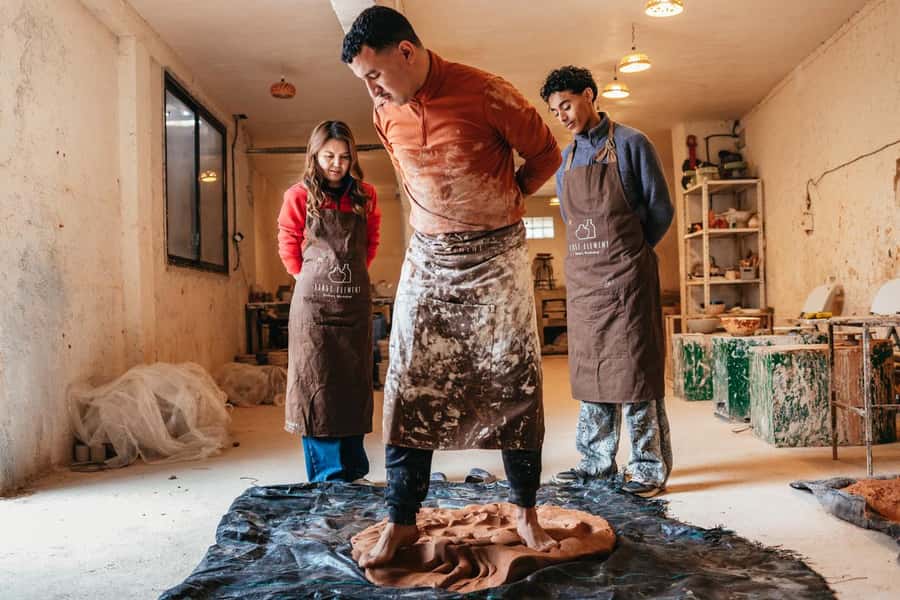
Clay makes a fine souvenir. It also makes a fine mess.
This four-hour workshop near Marrakech gives you a hands-on look at Moroccan pottery, from preparing the clay to shaping and firing it. I especially like the chance to try both the traditional potter’s wheel and molding, plus the relaxed tea break with Moroccan pastries. The main drawback is price: at $93 per person, it may feel high if you are looking only for a short craft lesson.
The experience works best for you if you want more than a quick photo stop. You see how a workshop operates, work with help from an artisan, and get time to ask questions about materials and technique. It is a private group, with instruction in English, French, or Arabic, though four hours of clay work may be more time than casual sightseers want to spend.
In This Review
- Key points before you book
- Meeting at Jamaa el Fna Square
- Seeing how Moroccan clay becomes pottery
- Taking a turn on the traditional wheel
- Learning the molding method
- A tea break with Moroccan pastries
- Guidance in English, French, and Arabic
- What the $93 price really buys
- The people who make the class work
- Practical tips for a less messy afternoon
- Who should book this workshop?
- Should you book the Marrakech pottery workshop?
- FAQ
- How long does the Marrakech pottery workshop last?
- How much does the pottery workshop cost?
- Where is the meeting point?
- Is the workshop private?
- What languages are available?
- Which pottery techniques will I learn?
- Is food or drink included?
- What should I wear?
- Can I cancel the booking?
Key points before you book
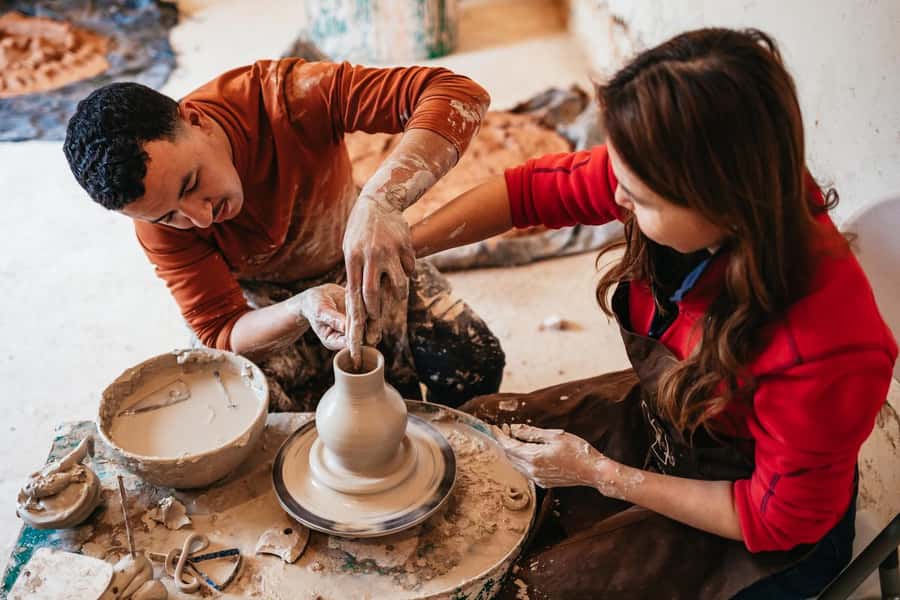
- Two Moroccan shaping methods: Try the turning technique on a traditional wheel and the molding method used by local potters.
- A real workshop setting: Follow the process from clay preparation through firing and glazing.
- Patient artisan instruction: The craftsman guides you through the work, with Tariq praised as an especially warm and talented tutor when he leads a session.
- Tea and pastries included: A midway break adds a social Moroccan touch, not just a pause from the clay.
- Private four-hour format: You get focused help rather than being placed in a large public class.
- Comfortable clothes matter: Clay soil, water, and hands-on shaping can get untidy, so wear clothes and shoes you do not mind getting dirty.
Meeting at Jamaa el Fna Square
Your starting point is in front of the post office at Medina Jamaa el Fna Square. This is a useful meeting place because the square is a familiar central reference point, but allow time to find the post office and guide before the scheduled start.
The workshop itself is near Marrakech, not in the middle of the square. The supplied details do not give a precise transfer method or travel time, so confirm the meeting instructions and departure details when you book. That small bit of planning matters in Marrakech, where a busy square can make a simple rendezvous less simple than it sounds.
The activity is designed as a private group. That is good news if you want to ask questions, work at your own speed, or receive repeated help with the wheel. It also makes the $93 price easier to understand than it would be for a large class, though the value still depends on how much you enjoy the process.
A few more Marrakech runs to hold up against each other
- Marrakech: Moroccan Cooking Class with Pickup
★ 4.6 · 1,862 reviews - Marrakech: Traditional Moroccan Cooking Class & Market Visit
★ 4.8 · 1,861 reviews - Marrakesh: Moroccan Dishes Cooking Class with a Local Chef
★ 5.0 · 1,615 reviews
Seeing how Moroccan clay becomes pottery
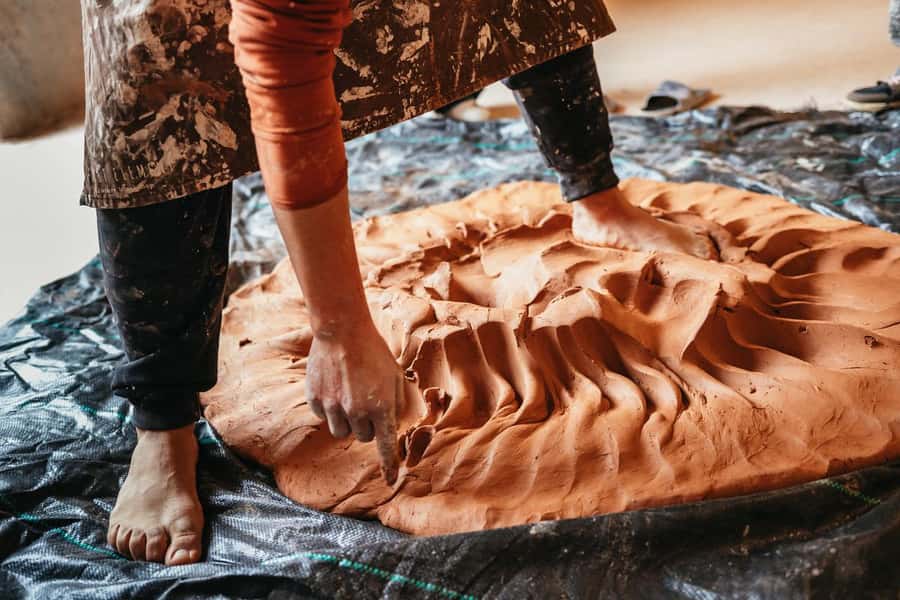
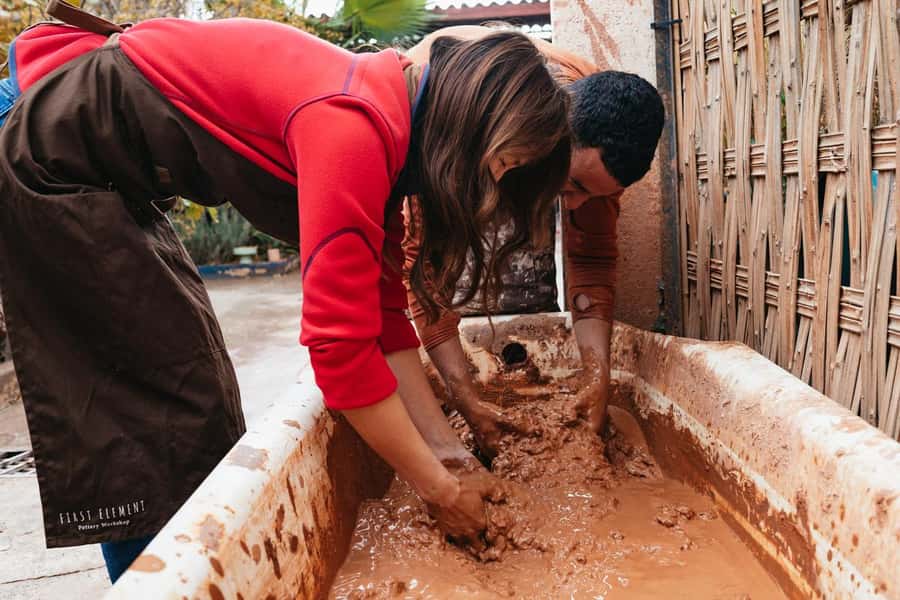
The workshop begins with the material itself. You learn about the clay soil and how it is prepared before it can be shaped. This opening is easy to overlook, but it gives the rest of the class purpose. Instead of treating pottery as a quick craft project, you see that the finished object depends on several stages.
You then get a look at the workshop’s organization. The course covers the path from initial clay preparation to shaping, firing, and glazing. You may not personally perform every stage in full, but you can observe how the parts fit together.
That wider view is one of the strongest reasons to book this activity. A finished Moroccan bowl or tagine can look simple in a market stall. Here, you get a better sense of the labor behind it, including the work that happens before and after the potter’s hands shape the clay.
The information provided does not promise that you take home a completed piece, so do not book this expecting a guaranteed finished souvenir. The focus is on training, observation, and making your own pottery object during the session. Ask the provider what happens to your piece after the class, especially if firing and glazing take place later.
Taking a turn on the traditional wheel
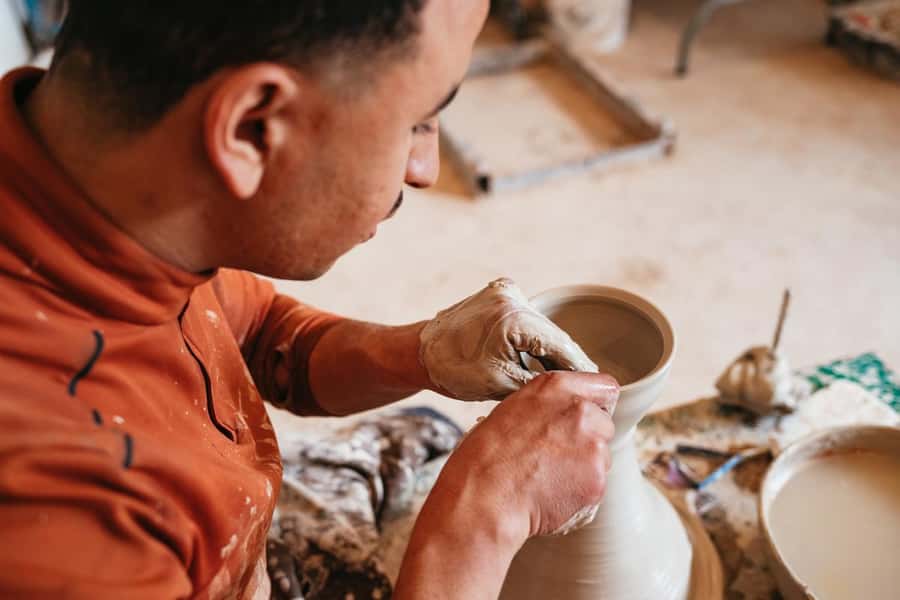
The wheel is the part most people picture when they hear pottery workshop. You place the clay on the turning surface and learn how to center and shape it as it spins. The description calls this the famous traditional potter’s wheel, and the course gives you an introduction to the turning technique practiced in Morocco.
Wheel work takes patience. Clay reacts to pressure, water, and the speed of your hands, so the craftsman’s help is important. You should expect correction and encouragement rather than a polished result on your first attempt. That is part of the value: you feel how much control and timing professional pottery requires.
A private group gives the instructor more room to watch your hands and adjust the lesson. If Tariq is your tutor, you may benefit from the patient, humorous teaching style praised by past participants. He is also described as an artist, which suggests that the class can include more than basic mechanical instructions.
Do not compare your first pot with the work displayed in Moroccan shops. The point is not to produce a market-ready piece in one sitting. The point is to understand the pressure, balance, and rhythm involved in forming clay on a wheel.
Learning the molding method
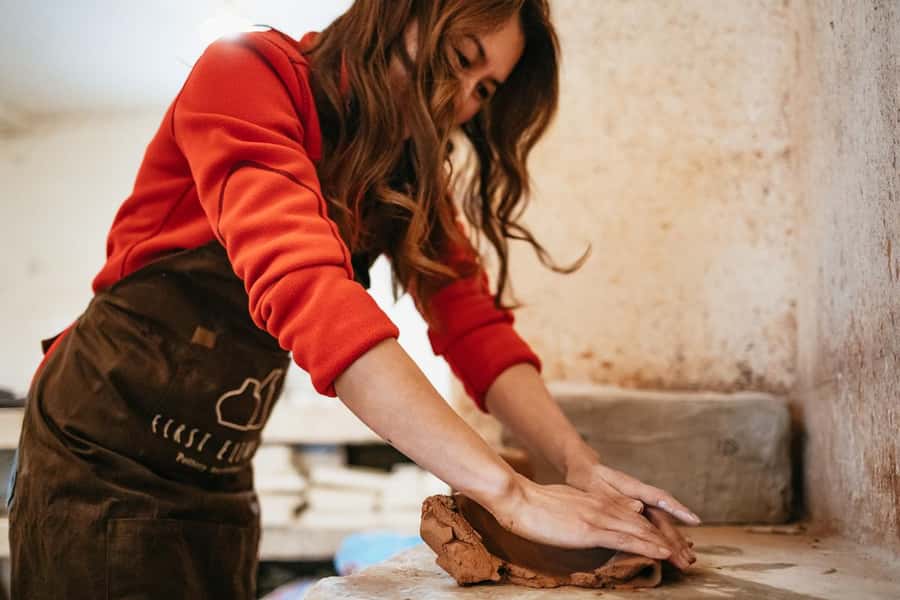
The second technique is molding. This gives you a useful contrast with the wheel, since molding relies less on spinning clay and more on forming it by hand or with a mold.
Trying both methods helps you understand why pottery has different shapes, textures, and production methods. The wheel offers movement and symmetry. Molding can give you a more direct sense of pressing and forming the material.
This part may suit you especially well if the wheel feels difficult at first. You get another way to work with clay rather than spending the whole class trying to control a spinning form. The two methods also make the lesson more varied across four hours.
The details do not specify the exact object you make or the type of mold used. That is worth asking about before you arrive if you have a particular souvenir in mind. The course promises the chance to craft a pottery object, but it does not list a choice of designs or a fixed project.
Same city gate, a very different afternoon:
- Marrakech: Agafay Desert Sunset, Camel Ride, and Dinner Show
★ 4.6 · 35,119 reviews - From Marrakech: Ouzoud Waterfalls Guided Hike and Boat Trip
★ 4.7 · 33,630 reviews - Marrakech: Agafay Desert Quad & Camel Rides with Dinner Show
★ 4.8 · 27,382 reviews - Marrakech: Agafay Desert Quad Biking Tour with Dinner-Show
★ 4.8 · 16,569 reviews
A tea break with Moroccan pastries
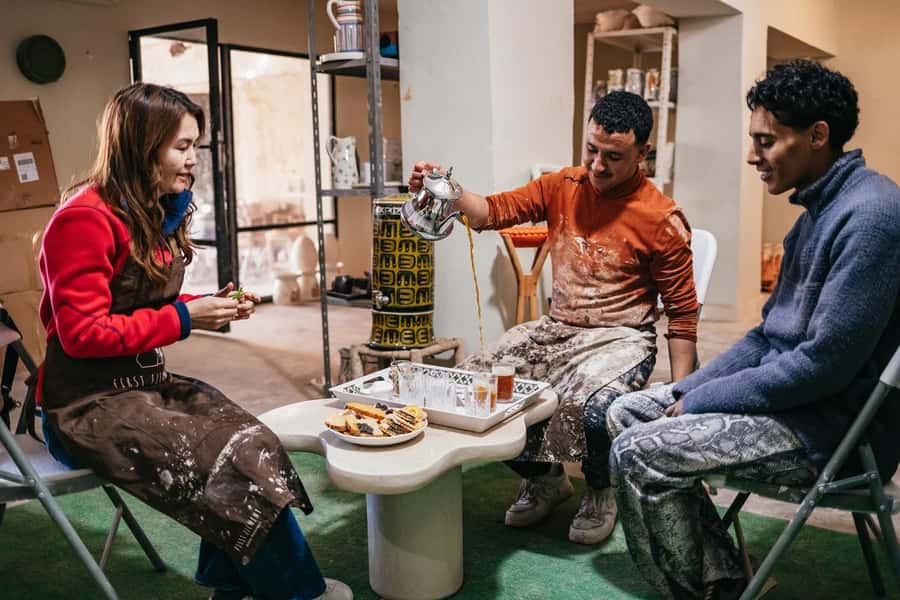
Halfway through, you pause for local herbal tea and Moroccan cakes with the craftsman. I like this detail because it turns the class into a social meeting, not just a technical workshop.
Tea is also a practical break after working with clay. You can clean your hands, take photographs, and talk about the craft without rushing straight from one exercise to the next. The pastry adds a small taste of local hospitality at no extra charge.
Water is included too. That is useful during a four-hour activity, although you should still wear comfortable clothing and shoes as requested. The workshop involves clay and water, and neat clothes are not a priority here.
The break may be one of the most memorable parts for you if you enjoy conversation. The craftsman is part of the experience, and the class has received strong praise for its friendly, welcoming atmosphere. A French participant described the potter as kind and encouraging, while another praised the guide Wiam for providing fluent English translation.
Guidance in English, French, and Arabic
Instruction is available in English, French, and Arabic. That gives the activity broad appeal, but the exact language arrangement may depend on the guide and craftsman assigned to your date.
If you need English support, Wiam has been praised for translating fluently and helping conversations move easily between the guide, potter, and group. If your session includes a different guide, confirm the language when booking rather than assuming every member of the workshop team speaks English.
The best part of having a guide is not just translation. A guide can help you meet at the right point, explain what you are seeing, and make the shift from Marrakech to the workshop easier. The potter then focuses on teaching the craft.
This arrangement also helps if you want to ask about the stages of pottery. A question about clay preparation, glazing, or firing can be explained as part of the larger process instead of reduced to a few quick instructions.
What the $93 price really buys
The cost is $93 per person for four hours. That is not a bargain-priced craft class, so you should look at the full package rather than the clay lesson alone.
You are paying for a private group, an experienced craftsman, instruction in two shaping methods, a look at the full workshop process, tea, Moroccan pastry, water, and photography. The length also matters. Four hours gives the instructor time to explain the material, let you practice, take a break, and show you more than one technique.
Still, the price can feel high if you mainly want a short activity or a guaranteed finished pot. One participant enjoyed the lesson but considered it somewhat expensive for what was included. That is a fair concern, especially if you are comparing it with shorter market workshops.
I would see the value this way:
- Good value for craft-minded visitors: You get time, instruction, and a close look at working methods that are easy to miss in a shop.
- Fair value for a private experience: A small group can justify a higher rate if personal help matters to you.
- Less appealing for casual sightseers: If you want to spend most of your day visiting palaces, gardens, or markets, four hours is a sizable commitment.
- Unclear souvenir value: The available details do not confirm that your piece is fired, glazed, or returned to you, so ask before paying.
The rating is 4.9 from 47 reviews, with repeated praise for the teacher’s patience, warmth, and humor. That supports the idea that the human side of the class is a major part of what you are buying.
The people who make the class work
Pottery is a hands-on craft, but the instructor can make or break the experience. The strongest praise centers on the craftsman’s patience, humor, and willingness to help.
Tariq is specifically described as an excellent tutor and artist. If he leads your session, you can expect a teacher who takes the craft seriously while keeping the mood friendly. Another craftsman is praised for guiding the class with patience and humor, so the positive impression does not depend only on one name.
Wiam is identified as a guide who can provide fluent English translation. That is useful because the workshop involves more than copying hand movements. You want to understand why the clay is prepared in a certain way and how firing or glazing affects the final piece.
The listing also identifies Imman in a message of thanks, but the available information does not specify Imman’s exact role. I would not rely on a particular staff member being present unless the provider confirms it for your booking.
Practical tips for a less messy afternoon
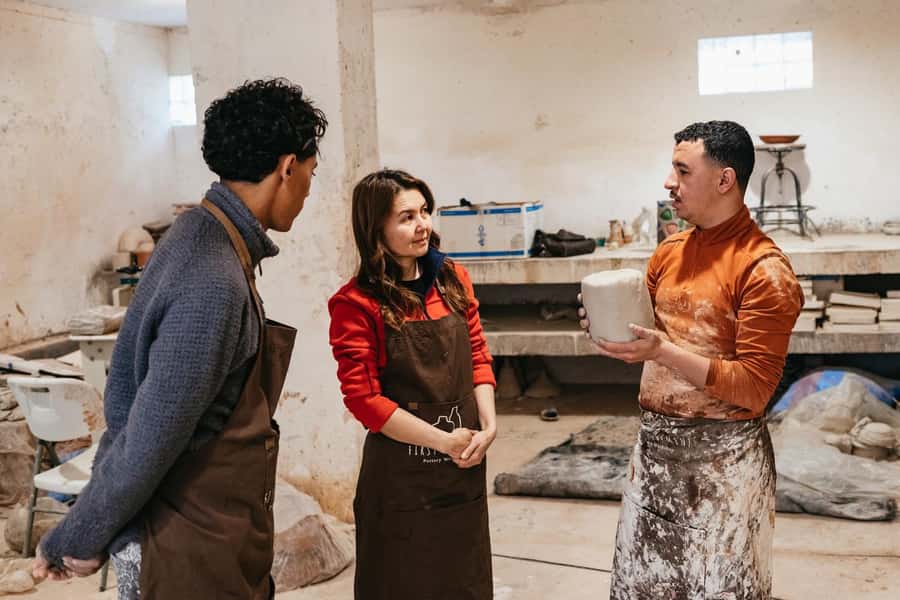
Wear comfortable clothes and shoes. This is not just a general travel suggestion. Clay soil, water, and repeated handling can leave marks, and you will be more relaxed if you do not worry about protecting delicate clothing.
Choose clothes that allow free movement around the wheel and work area. Closed, comfortable shoes are sensible, since the activity takes place in a working workshop rather than a polished gallery.
Keep your expectations realistic. You are learning a difficult skill in one four-hour session, not completing an apprenticeship. Your first piece may be uneven, and that is exactly what makes the lesson useful.
Use the tea break to ask about firing and glazing. Those stages are included in the workshop explanation, but the supplied details do not say how your own object is handled afterward. This is the most important unanswered practical point.
Photography is included. Take pictures of the process if permitted, but give your hands and the instructor your attention while the clay is being shaped. The best record may be the sequence of the work, not just a final object.
Free cancellation is available up to 24 hours before the activity for a full refund, and you can reserve now and pay later. Starting times vary, so check availability for your date. The experience is described as having skip-the-ticket-line access, though this is a workshop rather than a major monument with a conventional ticket queue.
Who should book this workshop?
I would recommend it to you if you enjoy making things, want a slower afternoon, or are curious about the work behind Moroccan ceramics. It also suits couples, families with an interest in crafts, and small private groups that prefer personal attention.
It is a good choice after several days of sightseeing, when you want to use your hands instead of simply moving from one landmark to the next. The tea and conversation give it a warm, local feel, while the technical instruction keeps it from becoming only a social visit.
You may want to skip it if your Marrakech schedule is packed or if $93 feels too high for an activity without a confirmed finished souvenir. It is also not ideal if you dislike getting messy or prefer a polished demonstration where you simply watch.
Should you book the Marrakech pottery workshop?
Book it if you value the process more than the product. The strongest features are the private format, two traditional shaping techniques, access to an experienced craftsman, and the chance to see pottery from clay preparation through firing and glazing.
The price needs a clear-eyed look. At $93, this is a special-interest experience, not a cheap filler activity. Before confirming, ask what happens to the pottery object you make and how transport from the Jamaa el Fna meeting point is arranged.
If those details suit your plans, this is a thoughtful way to spend four hours near Marrakech. You leave with a better understanding of Moroccan craftsmanship, a shared tea break, and the memory of discovering that clay is much harder to control than it looks.
FAQ
How long does the Marrakech pottery workshop last?
The workshop lasts four hours. Starting times vary, so check availability for your chosen date.
How much does the pottery workshop cost?
The price is $93 per person.
Where is the meeting point?
Meet in front of the post office at Medina Jamaa el Fna Square in Marrakech.
Is the workshop private?
Yes. The activity is offered as a private group experience.
What languages are available?
Instruction and guide support are available in English, French, and Arabic.
Which pottery techniques will I learn?
The course covers turning clay on a traditional potter’s wheel and shaping clay with the molding technique.
Is food or drink included?
Yes. The experience includes a tea break, Moroccan pastry, and water.
What should I wear?
Wear comfortable clothes and shoes. Working with clay can be messy.
Can I cancel the booking?
Yes. You can cancel up to 24 hours in advance for a full refund. You can also reserve now and pay later.
Just listed around Marrakech
- 3 Days To Merzouga Desert★ 5.0 · 19 reviews
- 3 Days Shared Sahara Desert Tour From Marrakech★ 5.0 · 78 reviews
- 1 night Camel Treking in Merzouga Desert Luxury Camp★ 5.0 · 132 reviews
- 3 Days Sahara Desert Trips From Marrakesh★ 5.0 · 176 reviews
- 3 Days Sahara Tour from Marrakech to Merzouga Dunes★ 5.0 · 29 reviews
- trip of your dreams in 3 days and 2 nights in the desert★ 5.0 · 36 reviews
- 3 Days Private Tour to Merzouga Desert from Marrakech★ 5.0 · 77 reviews
- 3 Day Sahara Desert Tour From Marrakech★ 5.0 · 49 reviews
Workshops, compared.

Traditional Moroccan Cooking Class & Market Visit
Read our review →
Moroccan Dishes Cooking Class with a Local Chef
Read our review →
Moroccan Cooking Class & Marrakech Market Visit with Chef Khmisa
Read our review →
Half-Day Cooking Class with Local Chef Laila in Marrakech
Read our review →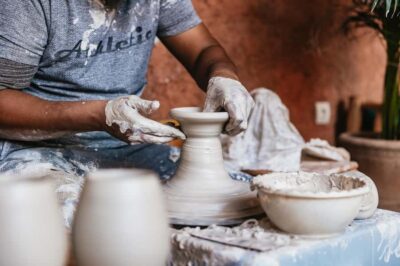
Browse the lists this tour appears in