Reviewed · MARRAKECH TOURS
Marrakech through the eyes of a Local
Marrakech rewards curious walkers. This half-day tour pairs the city’s famous landmarks with the narrow lanes, markets, and everyday corners that are easy to miss when you explore alone. I like the way it combines major sights such as Koutoubia Mosque and Bahia Palace with the Mellah, spice souks, and local markets. I also like the chance to shape the route around your interests, a useful touch if you care more about food, architecture, shopping, or city history.
The main drawback is that three to four hours is not enough for a slow visit to every place named in the description. Entrance fees are also extra, and Bahia Palace requires a separate ticket. You should confirm the exact order of stops and which sites you will enter before setting out, especially if you want time inside monuments rather than a quick introduction from outside.
The guide, Mohamed Abdani, receives especially strong praise for being punctual, friendly, patient, funny, and attentive to families. He has also helped guests with unexpected problems after a tour, which says something about his sense of responsibility. The tour begins at 10:00 am at the Musée du Patrimoine Immatériel beside Jemaa el-Fnaa and returns there at the end.
In This Review
- Key points to know before booking
- Why this tour works well on your first morning
- Koutoubia Mosque and the 77-meter city marker
- Riad Zitoune El Kdime and the route into the old city
- Bahia Palace and the cost of seeing the interiors
- The Mellah, synagogue, cemetery, and market life
- Jemaa el-Fnaa, the city’s great meeting place
- Rahba Kdima, olive markets, and the souks
- Ben Youssef and an important restoration note
- What the guide adds to the experience
- Price, timing, and who gets good value
- Who should book this Marrakech walking tour
- Final verdict: a strong first look at Marrakech
- FAQ
- How long does Marrakech Through the Eyes of a Local last?
- Where does the tour begin?
- What time does the tour start?
- Where does the tour end?
- Are entrance fees included?
- Is mint tea included?
- How many people can join the tour?
- Can the tour be canceled for a full refund?
Key points to know before booking
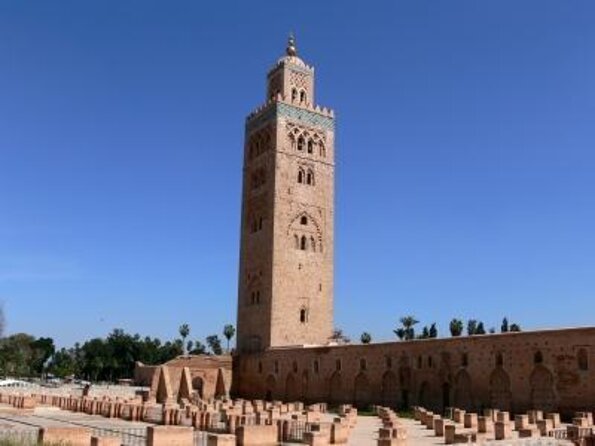
- Koutoubia begins the story: See Marrakech’s best-known minaret and learn why it remains the city’s visual marker.
- The Mellah adds a different side of the medina: Visit the former Jewish quarter, with its synagogue, cemetery, market, and spice stalls.
- Bahia Palace costs extra: Allow room in your budget for the entrance fee to one of Marrakech’s most ornate historic buildings.
- The route can be personalized: The guide offers a highly flexible experience, so tell him what you want to see.
- The group can reach 17 people: It may feel personal, but it is not guaranteed to be a private tour unless arranged separately.
- Mint tea is included: Guiding services and coffee or tea are covered, while monument entrance fees are not.
Why this tour works well on your first morning
Marrakech’s old city can feel confusing at first. The lanes twist, market stalls look similar, and the difference between a place worth seeing and a place selling something to tourists is not always obvious. A local guide gives you a framework before you wander off on your own.
I like the tour’s basic balance. You get landmarks that help you understand the city’s scale, then you move into the souks and residential quarters where Marrakech feels less like a collection of sights and more like a living town. The guide can explain architecture, local trades, religion, and neighborhood life while you walk.
The half-day length is another advantage. A three to four-hour outing gives you a useful introduction without taking over the whole day. One of the strongest practical benefits is the absence of a long lunch stop. You can finish with enough time for your own meal, shopping, a museum, or a rest at your riad.
The pace does require some energy. You will spend much of the tour on foot, and the medina’s narrow streets can be crowded and uneven. The operator recommends a moderate level of physical fitness, so comfortable shoes matter more than smart clothes.
A few more Marrakech runs to hold up against each other
- Marrakech: Agafay Desert Sunset, Camel Ride, and Dinner Show
★ 4.6 · 35,119 reviews - From Marrakech: Ouzoud Waterfalls Guided Hike and Boat Trip
★ 4.7 · 33,630 reviews - Marrakech: Agafay Desert Quad & Camel Rides with Dinner Show
★ 4.8 · 27,382 reviews
Koutoubia Mosque and the 77-meter city marker
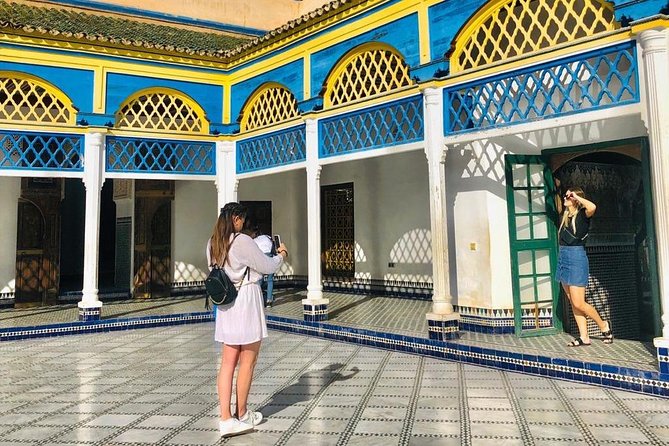
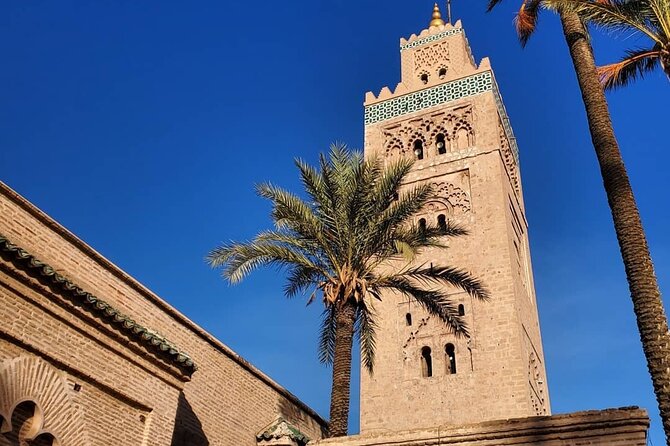
Koutoubia Mosque is a natural starting point because its minaret helps you find your way around Marrakech. At 77 meters, it rises above the surrounding city and remains one of the most recognizable features of the old town.
The mosque’s exterior has curved windows, decorative arches, a ceramic band, pointed merlons, and the distinctive finial of an arrow and orbs. A broad public space and gardens surround it, giving you a little room to step back and see the full design. At night, lighting gives the minaret a different mood, though this tour begins in the morning.
The stop lasts about 30 minutes and has no admission fee. That makes it a good opening sight, especially if you are still learning your bearings. Your guide can place Koutoubia within the city’s wider story before leading you into the denser streets.
Do not expect this stop to be a long interior visit. The supplied details describe the mosque and its grounds, not an included entry. Plan on exterior viewing and explanation unless the guide confirms otherwise. The stop is short, but it gives you a clear reference point for the rest of the day.
Riad Zitoune El Kdime and the route into the old city
Riad Zitoune El Kdime is included among the areas covered on the tour. Its name refers to an old neighborhood near the southern part of the medina, and it helps connect the grand monuments with the smaller streets around them.
This is where a local guide can add real value. A map may show you where the district is, but it will not explain how the lanes connect, what kinds of businesses operate there, or how the area fits with Bahia Palace and the Mellah. The tour is designed to show you those transitions rather than simply move from one ticket booth to the next.
Because the route is personalized, you should tell Mohamed at the start if you want more time in neighborhood streets. Some people prefer architecture and history. Others want crafts, food markets, or chances to stop for photographs. The flexible format allows the day to lean in one direction, although the total time remains limited.
Bahia Palace and the cost of seeing the interiors
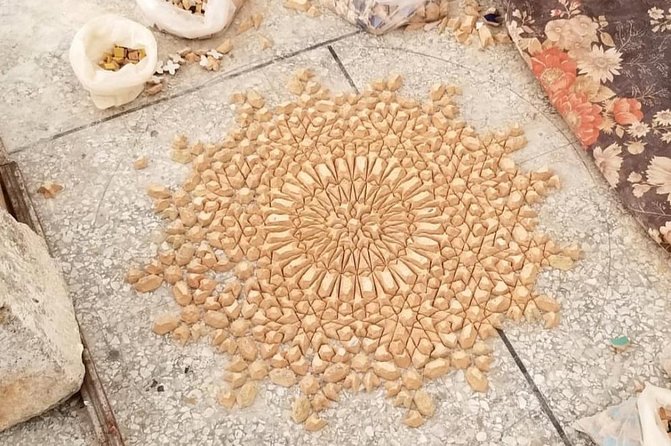
Bahia Palace is the tour’s main architectural stop. Built at the end of the 19th century, it was intended to become the largest palace of its time. The complex includes palace rooms and gardens, making it a useful place to look at design, decoration, and the way power was displayed in Morocco.
The planned visit lasts about 45 minutes. That is long enough for a guided introduction and a look at the key spaces, but not necessarily enough for an unhurried inspection of every detail. If you enjoy tilework, carved surfaces, painted ceilings, and courtyard design, you may wish you had more time.
The important budget point is simple: the entrance ticket is not included. The tour price is $45 per person, but your total cost will be higher if you enter Bahia Palace or other historic monuments. Ask the guide which admissions are planned so you are not surprised during the walk.
I see this as a fair arrangement for a flexible city tour. You pay for the guide’s time and local interpretation, then decide which sites deserve an entrance fee. It also keeps the base price lower for people who mainly want an introduction to the streets and exterior landmarks.
Same city gate, a very different afternoon:
- Marrakech: Agafay Desert Quad Biking Tour with Dinner-Show
★ 4.8 · 16,569 reviews - Marrakech: Atlas Mountains, Ourika Valley, Waterfall & Lunch
★ 4.8 · 15,834 reviews - From Marrakech: 3-Day Merzouga and Sahara Desert Tour
★ 4.9 · 15,308 reviews - Berber villages : Atlas Mountains Day Hike from Marrakech
★ 5.0 · 14,007 reviews
The Mellah, synagogue, cemetery, and market life
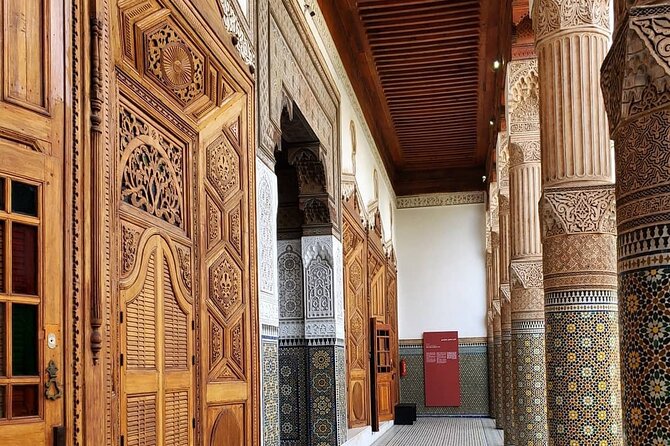
The Mellah gives the tour a broader view of Marrakech. This former Jewish quarter once housed much of the city’s Jewish population, and the narrow lanes still point to that past.
The Lazama Synagogue is associated with a tiled courtyard and displays about Jewish life. The Miaara Jewish cemetery offers a quieter contrast to the market streets. These places add social and religious history to a tour that might otherwise focus only on royal buildings and shopping.
Nearby, the Mellah Market sells meat and produce, while the Bab Mellah spice souk brings in the smells and colors of daily trade. You might also find cafes, Moroccan restaurants, and stalls serving steak or tajine in the area. The point is not simply to take photographs. It is to see how a historic neighborhood continues to function.
This part of the tour may be especially useful if you want more than the standard medina route. The Mellah helps explain that Marrakech has always been shaped by different communities, trades, and neighborhoods. It also gives you a chance to ask questions about customs and local life in a setting that feels less polished than a palace courtyard.
Entrance arrangements for the synagogue, cemetery, or other historic sites are not specified. Since monument fees are excluded, confirm what is included before you enter any paid site.
Jemaa el-Fnaa, the city’s great meeting place
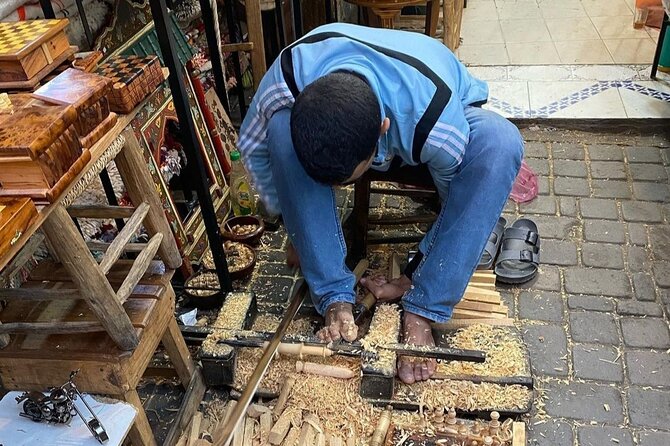
Jemaa el-Fnaa is both a square and a market, and it remains Marrakech’s main public gathering place. The tour begins here at the Musée du Patrimoine Immatériel, so you encounter the square before the walk even gets going.
The formal stop lasts about 30 minutes and has no admission fee. That sounds brief, but a guide can use the time well by explaining how the square works and how it connects to the surrounding medina. You will also have a fixed meeting point, which is useful in a part of town where it is easy to lose your direction.
The square changes through the day, so a 10:00 am start gives you a morning view rather than the later atmosphere. That is worth remembering if your main goal is the evening activity. The tour cannot show you every version of Jemaa el-Fnaa in one visit, but it gives you a solid first look before you return independently.
The ending point is also the starting point. That makes planning easier if your accommodation or later plans are near the square. It also means you can continue exploring on your own after the guide says goodbye.
Rahba Kdima, olive markets, and the souks
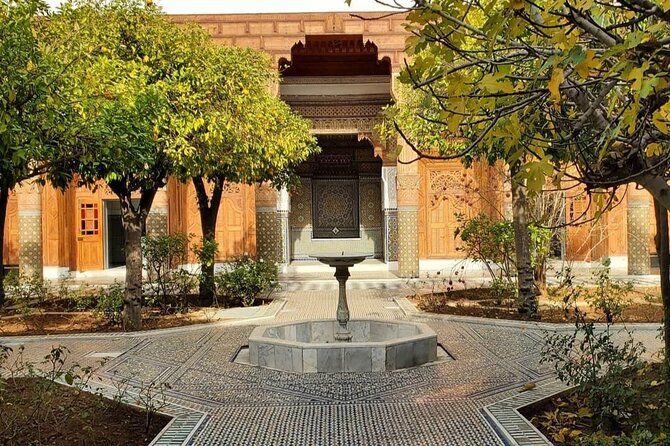
The route description also includes Rahba Kdima and the olive markets. These stops shift the emphasis from monuments to commerce, which is one of the tour’s strongest ideas.
Rahba Kdima is associated with market activity in the medina, while the olive markets offer a direct look at a food trade that is easy to pass without understanding. Your guide can help you see what is being sold, how the stalls fit into the market system, and which parts are simply worth observing rather than buying.
The souks can be enjoyable, but they can also be tiring. Shopkeepers may approach you, lanes can be tight, and it is easy to spend more time negotiating than you planned. A guide who knows the streets can help you move through the area with less uncertainty.
The experience is not presented as a shopping trip, and that is a good thing. You can ask for suggestions or souvenirs, but you are not locked into a long sales stop. One guest specifically appreciated seeing strong shopping areas while still getting history and local context.
Ben Youssef and an important restoration note
Ben Youssef is listed as part of the wider route, but the Quranic School is closed for restoration. That distinction matters. You may pass through the area or see the exterior, but you should not book this tour expecting a normal interior visit to the school.
The closure is one reason to confirm the day’s exact plan. The tour description names several locations, and the guide can adjust the route to your interests, but three to four hours will force choices. If Ben Youssef is your priority, ask how much time can be devoted to it while still covering Bahia Palace, the Mellah, and the markets.
The route may also be adjusted for families or for people who have had enough architecture. The guide has previously adapted plans when a child needed a break from historic buildings. That sort of flexibility is more useful than a rigid checklist.
What the guide adds to the experience
The guide is the heart of this tour. Mohamed is repeatedly described as prompt, kind, funny, patient, and easy to communicate with. He has guided in English and Spanish, and he is praised for answering children’s questions without rushing them.
I would value that most on a first day in Marrakech. A good guide does not just recite dates. He helps you understand why a street matters, how a market operates, and what you are looking at when decorative details begin to blur together.
The personal care also appears to go beyond the scheduled walk. After one tour, Mohamed helped a guest’s family coordinate assistance after a scooter accident. That incident was outside the planned experience, but it shows the kind of local support you may appreciate in an unfamiliar city.
The group size can reach 17 people, so do not assume you will receive a private tour. The guide’s warm style may keep a larger group engaged, but a private booking or a smaller party would offer more room for questions and photography.
Price, timing, and who gets good value
At $45 per person, this is not the cheapest way to walk through Marrakech, but the value depends on how much you want from the medina. If you only need directions, you can explore the square and souks without paying for a guide. If you want context, local insight, and a route that joins major sights with less obvious districts, the fee is more reasonable.
The price includes guiding services and coffee or mint tea. It does not include historic monument entrance fees, so add those costs if Bahia Palace or another paid site is important to you.
The 10:00 am start suits people who want a relaxed first activity rather than an early departure. The mobile ticket makes access simple, and confirmation is sent when you book. Free cancellation is available until 24 hours before the start time. A late cancellation is not refundable, and poor weather or failure to meet the minimum group size can lead to a new date, another experience, or a full refund.
Who should book this Marrakech walking tour
I would recommend it to first-time visitors who want an introduction without committing to a full day. It also suits families, couples, and small groups who appreciate a guide willing to answer questions and adjust the route.
You should book it if you want a mixture of landmarks, markets, neighborhood history, and practical orientation. It is particularly useful if the Mellah, souks, and local life interest you as much as palace architecture.
I would hesitate if you want a slow, specialist visit to every monument. The schedule is too short for that, paid admissions are extra, and the Quranic School at Ben Youssef is closed for restoration. In that case, arrange a longer or more focused private walk.
Final verdict: a strong first look at Marrakech
This tour’s best feature is its human scale. Koutoubia Mosque, Bahia Palace, and Jemaa el-Fnaa give you the big picture, while the Mellah, spice souk, olive markets, and side streets show how the city works day to day.
The main question is not the $45 fee. It is how you want to spend your first morning. If you want a well-organized introduction led by a warm local guide, with room to request your priorities, I think this is a good choice. Confirm the paid entries and exact route, wear sensible shoes, and tell Mohamed what matters most to you before you begin.
FAQ
How long does Marrakech Through the Eyes of a Local last?
The tour lasts approximately three to four hours.
Where does the tour begin?
It begins at the Musée du Patrimoine Immatériel beside Jemaa el-Fnaa, at J2G6+385 Jamaâ El-Fna, Marrakech 40000, Morocco.
What time does the tour start?
The scheduled start time is 10:00 am.
Where does the tour end?
The activity ends back at the meeting point.
Are entrance fees included?
No. Entrance fees to historic monuments are not included. Bahia Palace specifically lists its admission ticket as extra.
Is mint tea included?
Yes. Guiding services and coffee or tea, including mint tea, are included.
How many people can join the tour?
The group can include a maximum of 17 people.
Can the tour be canceled for a full refund?
Yes, if you cancel at least 24 hours before the experience start time. Cancellations made less than 24 hours in advance are not refunded. Poor weather or failure to meet the minimum number of participants may lead to a different date, another experience, or a full refund.
Just listed around Marrakech
- Zagora: 2-Day Desert Trip from Marrakech★ 4.4 · 31 reviews
- Traditional spa Hammam & Massage with Hotel Transfers★ 4.0 · 24 reviews
- Day trip to OUZOUD waterfall with guide&boat ride from Marrakech★ 5.0 · 172 reviews
- quad bike tour in the palmeraie of Marrakech★ 4.5 · 43 reviews
- Half day quad desert agafay★ 4.5 · 24 reviews
- walking tour★ 5.0 · 46 reviews
- private tour of Marrakech 4 hours with multilingual driver★ 5.0 · 117 reviews
- 3 days tour from Marrakech to Merzouga desert★ 5.0 · 55 reviews
Marrakech Tours, compared.

Agafay Desert Sunset, Camel Ride, and Dinner Show
Read our review →
Agafay Desert Quad & Camel Rides with Dinner Show
Read our review →
Agafay Desert Quad Biking Tour with Dinner-Show
Read our review →
Atlas Mountains, Ourika Valley, Waterfall & Lunch
Read our review →

Berber villages : Atlas Mountains Day Hike from Marrakech
Read our review →