
Reviewed · SAHARA DESERT TOURS
Marrakech To Fes: 3-Day Majestic Desert Sahara Tour
The desert night is the real prize. This three-day journey links Marrakech and Fes by way of the High Atlas Mountains, Ait Benhaddou, Todra Gorge, the Dades Valley, and the golden dunes of Merzouga. I like the route because it gives you far more than a simple transfer between Morocco’s two famous cities. You get mountain passes, fortified villages, canyon walks, a camel ride, and a night in a traditional desert camp.
I also like the small-group format, limited to 17 people, and the fact that dinner and breakfast are included on both nights. Guides such as Hassan and Mohammed have been praised for creating a relaxed mood and explaining the places along the way. The main drawback is the amount of time spent in the minivan. This is a busy three days, and the two long driving legs can feel tiring, especially on the final journey to Fes.
In This Review
- Key things to know before booking
- Why this route works between Marrakech and Fes
- Crossing the High Atlas to Ait Benhaddou
- Night one in Dades or Tinghir
- Walking through Todra Gorge before the desert
- Camel riding across Erg Chebbi
- Sunrise, camels, and the long road to Fes
- What the $111 price really covers
- Who will enjoy this three-day desert trip
- Practical packing advice for the desert and mountains
- Should you book this Marrakech to Fes desert tour?
- FAQ
- How long is the Marrakech to Fes desert tour?
- What places does the tour visit?
- Is the camel ride included?
- Is desert camping included?
- Are meals included?
- Is sandboarding available?
- Is a local guide included at Ait Benhaddou?
- What languages are spoken on the tour?
- Where does pickup take place in Marrakech?
Key things to know before booking
- Ait Benhaddou is the first major stop: The UNESCO-listed kasbah is reached after crossing the Tizi n’Tichka Pass and makes a strong opening to the trip.
- The Sahara camp requires a small overnight bag: Your larger luggage remains behind while you cross the Erg Chebbi dunes by camel.
- The second day combines canyon and desert scenery: Todra Gorge comes before the road through Tinjdad, Erfoud, and into Merzouga.
- The final drive to Fes is long: Arrival is expected around 7:00 PM, but traffic and weather can affect the timing.
- Lunch costs extra: Dinner and breakfast are covered, while lunches, drinks, entrance fees, tips, and optional guides are not.
- Desert nights can be cold: Pack warm clothing from November through February, even if Marrakech feels mild.
Why this route works between Marrakech and Fes
Morocco’s two major inland cities are separated by a wide sweep of mountains and desert. Flying or taking a direct road transfer gets you there faster, but it skips the places that make southern Morocco special. This tour turns the journey into the main event.
You start in Marrakech and finish in Fes, so you do not need to return to your starting point. That makes the tour particularly useful if you are building a one-way Morocco itinerary. The tradeoff is simple: you save a separate transport day, but you spend much of three days on the road.
The minivan holds a maximum of 17 participants. That is not a private tour, but it is smaller than a large coach trip. Pickup is available from your hotel or riad, or from the nearest place a vehicle can reach if you are staying on a narrow street. The exact pickup time is confirmed by WhatsApp, and you should be ready 10 minutes early.
The driver speaks English and French. A guide such as Hassan or Mohammed can make a real difference on a route with so many stops. Direct feedback about these guides highlights humor, good spirits, and clear explanations, which matter when you are spending long hours together in a vehicle.
More Sahara nights out of Merzouga:
- From Merzouga: Overnight Camel Trek over Erg Chebbi Dunes
★ 4.5 · 558 reviews - Merzouga: 1-Night in Desert Camp With Dinner & camel ride
★ 4.5 · 282 reviews - Camel Trekking & 1 Night in Merzouga Desert Camp
★ 5.0 · 210 reviews
Crossing the High Atlas to Ait Benhaddou
Day one begins early in Marrakech. The road climbs through villages and mountain scenery toward the Tizi n’Tichka Pass, one of the best-known crossings of the High Atlas. There are stops for photographs, a short break, and coffee, but this is still a full travel day.
The pass is a useful reminder that Morocco is not one uniform country of palm trees and sand. The road winds through high mountain country before dropping toward the dry valleys south of the range. Mountain weather can change quickly, so a light layer is useful even when Marrakech is warm.
Ait Benhaddou is the day’s main cultural stop. This fortified earthen village, known as a ksar, is made up of closely packed buildings, defensive walls, and narrow paths rising above the surrounding area. Its appearance has made it a film location for productions including Gladiator, Lawrence of Arabia, and Kingdom of Heaven.
You get about an hour to explore the site. That is enough for a brisk walk and photographs, but not enough for a slow visit to every corner. A local guide is optional and costs about 2 euros according to the supplied details, while entrance fees are not included. I would consider paying for the guide if you want the history and layout explained rather than simply wandering through the lanes.
The tour description refers to a local guide for the visit, but the fee is separate. Clarify this before the walk so you know what is included. Also keep some energy in reserve. The paths can involve walking and light climbing, and the sun can feel strong.
Lunch follows Ait Benhaddou and is not included in the tour price. The route then continues through Ouarzazate, the Rose Valley, and the Dades area. You arrive at a hotel in Dades or Tinghir in the late afternoon, with dinner included.
One practical caution comes from the meal arrangements. Paid buffet lunches have been described as disappointing, so I would treat lunch as a necessary stop rather than a highlight. If you have dietary needs or strong food preferences, bring a few snacks and ask what the lunch stop includes before ordering.
Night one in Dades or Tinghir
The first overnight stay breaks up the long road from Marrakech to the desert. You sleep in a hotel in the Dades or Tinghir area, rather than heading all the way to Merzouga in one exhausting push.
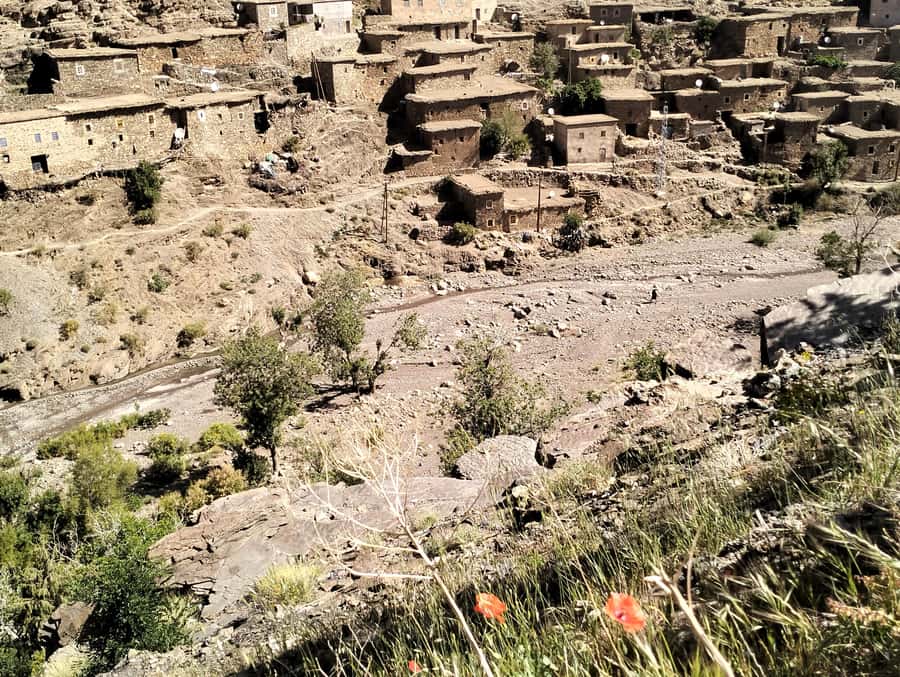
This part of the route is about scenery and recovery. The Dades Valley is known for dry hills, rocky formations, and villages shaped by the limited water available in the region. The exact hotel can vary, so you should not expect a luxury property from the $111 price.
Dinner and breakfast are included. Accommodation and food quality can vary, but the supplied feedback praises both the first-night lodging and the desert camp. That makes this overnight stop good value for a basic three-day trip, especially since it removes the need to arrange a separate hotel.
Walking through Todra Gorge before the desert
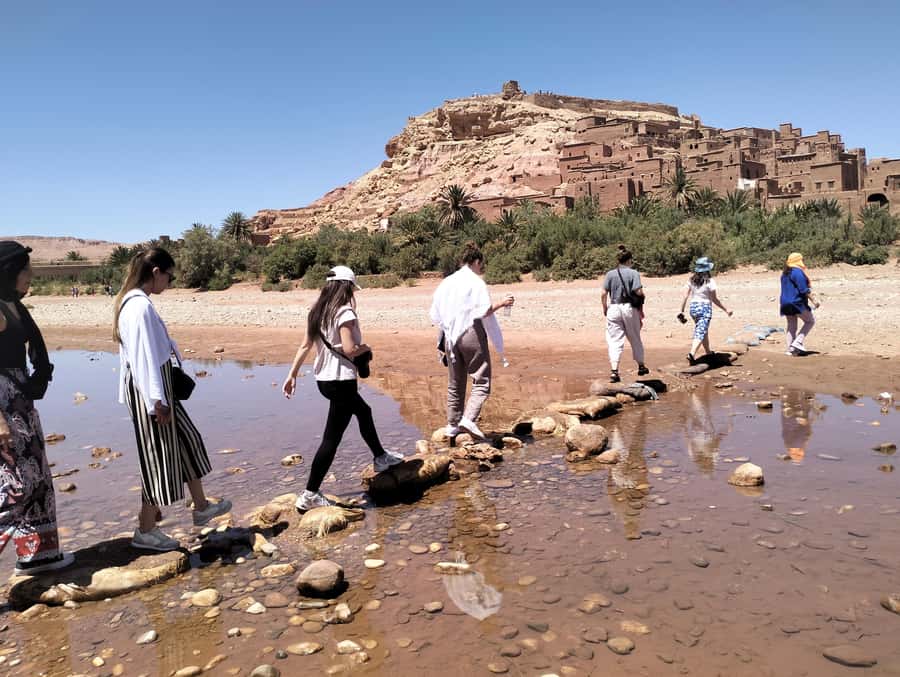
Day two begins after breakfast and heads toward Merzouga. The route passes through Tinghir, Tinjdad, and Erfoud, with Todra Gorge as the key stop.
Todra Gorge is a dramatic canyon with steep rock walls close to the road. The planned visit includes a walk through the canyon with a local guide. This is one of the more active parts of the trip, but the tour describes the physical demands as moderate. You should be comfortable walking and standing for a while, but you do not need advanced hiking skills.
The gorge gives the morning a different feel from the previous day. Ait Benhaddou is about architecture and old settlement patterns. Todra is about the scale of the rock and the narrow passage through it. Bring shoes with a firm sole, since comfortable walking footwear will serve you better than sandals.
The route also includes a visit to a local cooperative. This is intended to show regional crafts and products. Treat it as a chance to understand local work, but remember that buying something is not required. If shopping stops bother you, ask how much time is planned before the visit.
After Todra Gorge, the views become more open and dry as you pass through Tinjdad and Erfoud. The road then reaches Merzouga and the Erg Chebbi dunes. You have a chance to rest before the camel ride, which is welcome after the morning walk and hours in the vehicle.
A few more Merzouga runs to hold up against each other
- From Marrakech 3 Days Desert Merzouga with Camel & Quad bike
★ 4.9 · 133 reviews - Ouarzazate to Marrakech: 3-Day Desert Tour with Camel Trek
★ 4.9 · 50 reviews - Marrakech to Fes 3 Days Sahara Desert Tour With Camel & Quad
★ 4.8 · 49 reviews - From Marrakech: Tour 3-Day To Fez Via-Desert Merzouga
★ 3.9 · 19 reviews
Camel riding across Erg Chebbi
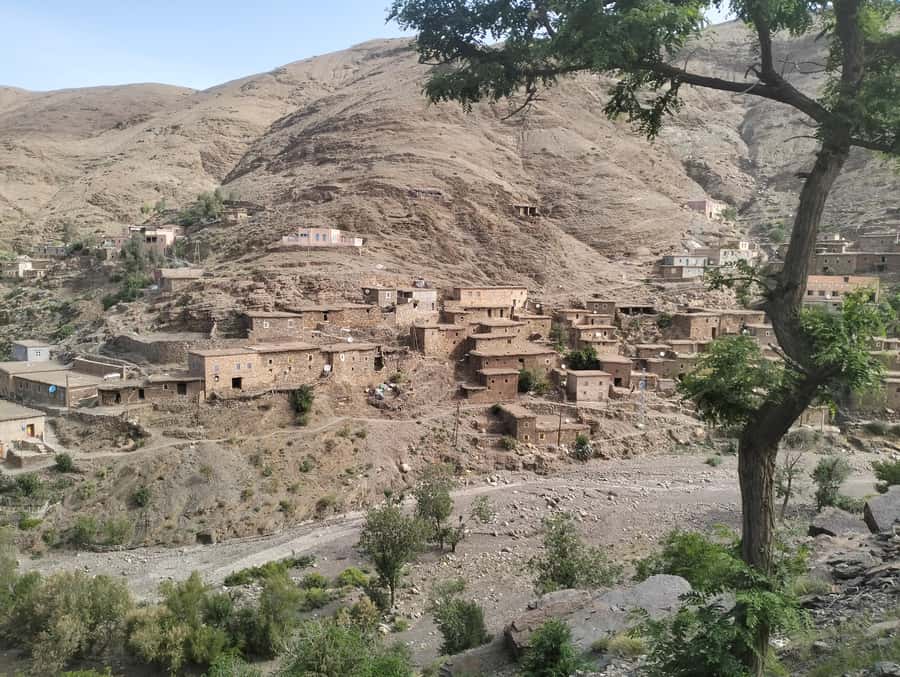
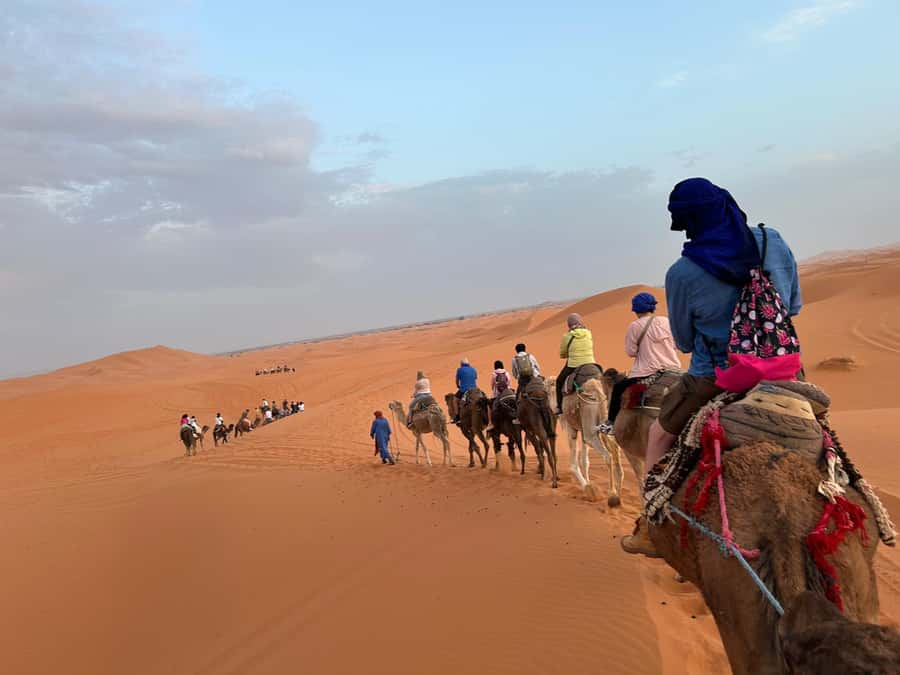
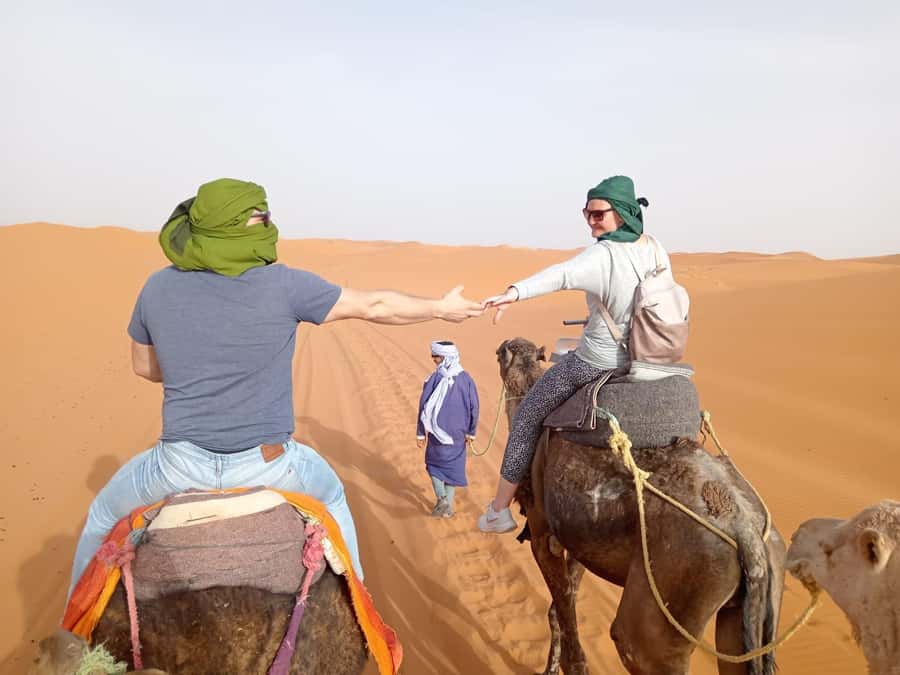
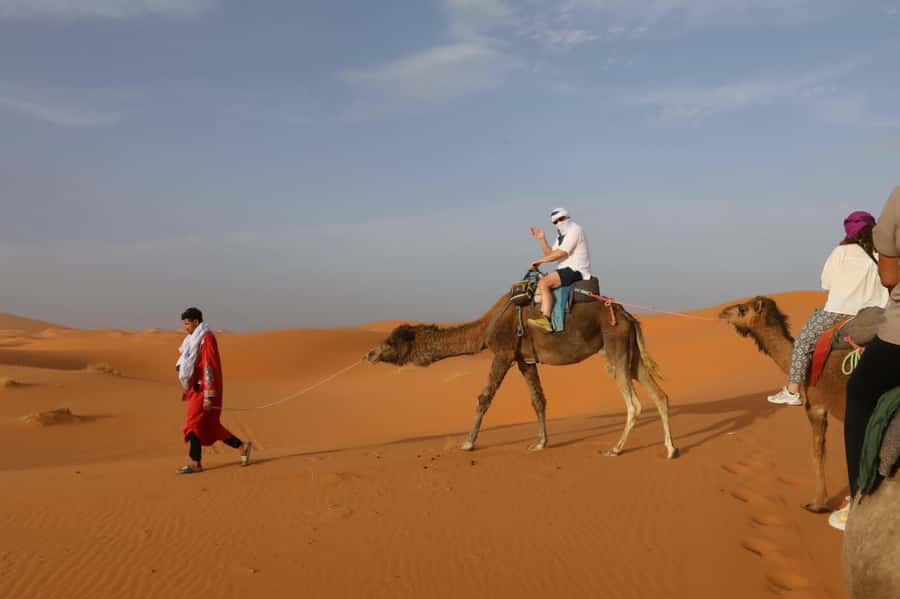
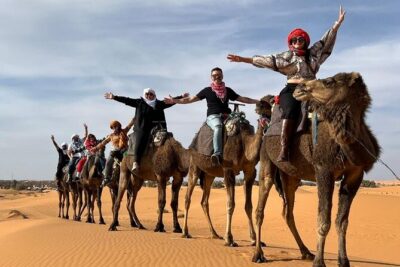
The desert section begins with a camel trek into the dunes. You get one camel per person and ride toward the traditional Berber camp in the Erg Chebbi area.
A camel ride is not a fast way to cross the sand. It is a slow, swaying trip with time to watch the dunes change color and shape. The ride can be uncomfortable for some people, particularly if you are not used to sitting on a camel. Moderate fitness is enough, but anyone with back, hip, or knee concerns should think carefully before booking.
Pack a small overnight bag before leaving Merzouga. Your main luggage should not go with you into the camp, so keep your warm layer, toiletries, phone charger, medications, and camera in the smaller bag. This is one of the most useful preparations for the trip.
The camp is reached in time for sunset. You can walk up the dunes, watch the light fade, and try sandboarding if equipment is available at the camp. Sandboarding is not guaranteed, so see it as a possible extra activity rather than a central promise.
The camp offers dinner and traditional drum music around a fire. You sleep in a traditional Berber nomad tent, with shared facilities in the standard tent arrangement. This is not a private hotel room with full bathroom service. The appeal is the setting, the quiet, and the chance to sleep beneath a wide desert sky.
Desert temperatures can drop sharply at night. From November through February, warm clothing is essential. Even outside those months, bring a sweater or jacket because the wind and lack of shade can make the dunes feel cold after sunset.
Sunrise, camels, and the long road to Fes
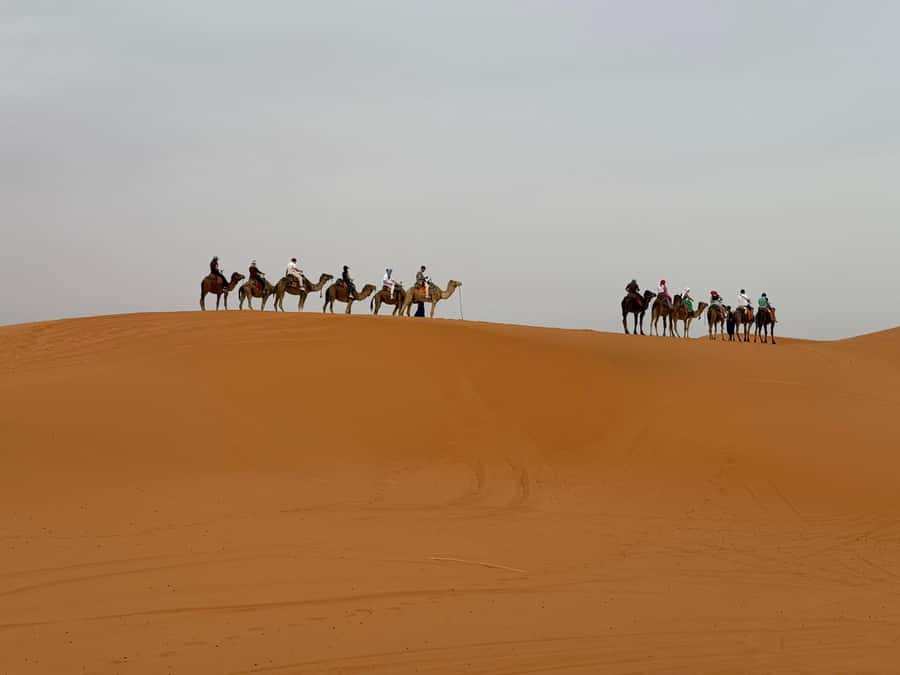
Day three starts early with sunrise over the dunes. This is worth the early alarm. The low light brings out the curves of the sand before the heat and glare arrive.
After sunrise, you ride the camels back to Merzouga and have breakfast. The return ride is another reason to wear practical clothing. Loose trousers and closed walking shoes are more useful than anything delicate or fashionable.
The drive to Fes then begins. The route passes through the Ziz Valley, Errachidia, and the Middle Atlas Mountains. This final leg is scenic, but it is also long. Expected arrival in Fes is around 7:00 PM, and traffic or weather can delay you.
Do not book a tight evening reservation in Fes. The tour ends with drop-off at your accommodation or the closest accessible location, but narrow streets may require you to walk the final short distance with your luggage. Keep your arrival evening simple and flexible.
The final drive is the biggest strain of the itinerary. You are covering a large distance after two active days, so this tour suits people who prefer seeing more of Morocco over moving slowly in one place. If you need lots of free time or dislike long road journeys, a four-day version, private transfer, or separate stays would be easier.
What the $111 price really covers
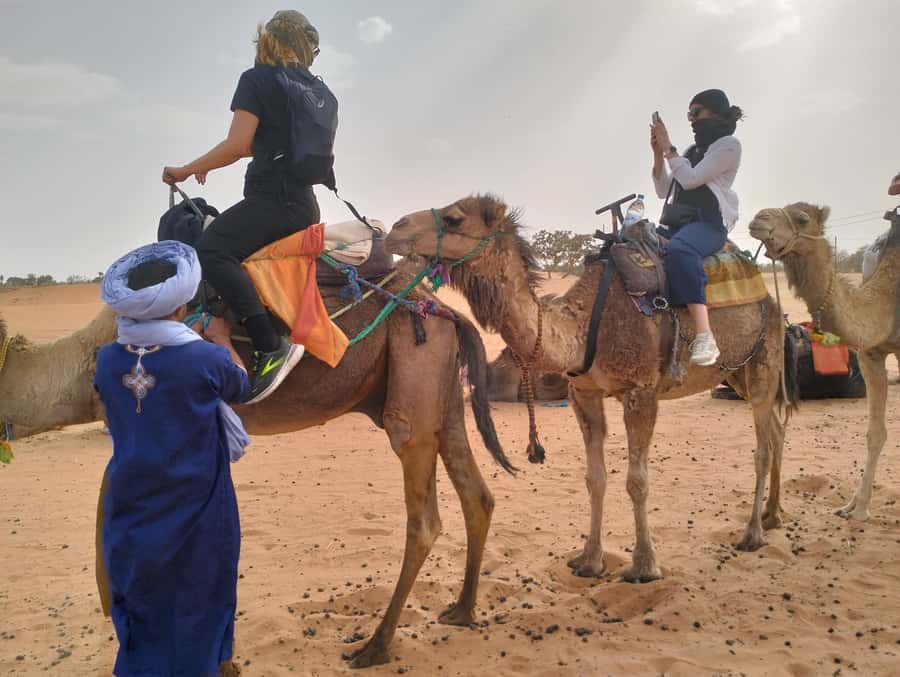
At $111 per person, the tour offers strong value for a three-day route that includes transportation, a driver, two nights of accommodation, four included meals, and the camel trek.
The included items are:
- Pickup in Marrakech
- Minivan transportation
- English or French-speaking driver
- One hotel night in Dades or Tinghir
- One night at a Berber desert camp
- Dinner and breakfast on both nights
- One camel per person
- Sandboarding if available
- Drop-off in Fes
The price does not cover lunch, soft drinks, entrance fees, private expenses, tips, or optional local guides. Those extras can add up, especially if you buy drinks at every stop or choose guided visits at Ait Benhaddou and Todra Gorge.
The tour is best understood as a well-priced shared route, not a luxury desert journey. You are paying for access to a difficult cross-country itinerary without arranging each hotel, transfer, and activity yourself. The camp and hotel are praised for comfort and food, but exact standards can vary.
Who will enjoy this three-day desert trip
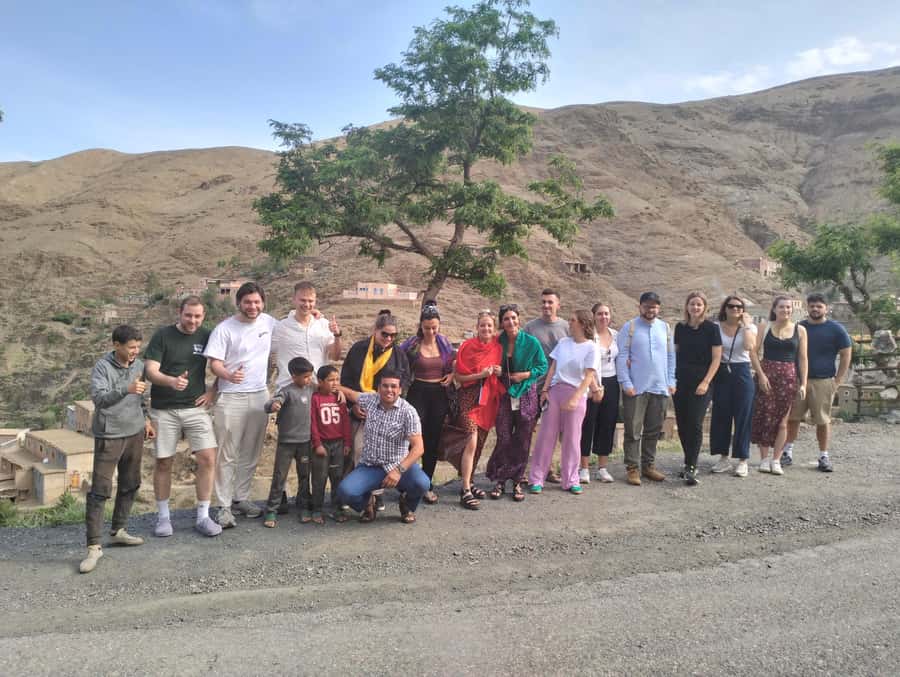
I would recommend this tour to you if you want to connect Marrakech and Fes while seeing the Sahara along the way. It is also a good fit if you enjoy a full schedule, accept shared transport, and want a first taste of camel riding and desert camping without paying for a private trip.
It suits most people with moderate fitness. You need to manage walking, a camel ride, light trekking, and long periods seated in a minivan. Families with older children may find it workable, but the long drives and early starts should be considered carefully.
It is less suitable if you want a quiet desert retreat, private bathrooms throughout, or long visits at each attraction. The one-hour Ait Benhaddou visit is fairly brief, and the route covers a lot of ground in three days.
The guide can shape the mood. Hassan has been praised for humor and a friendly atmosphere, while Mohammed has received strong praise for explaining the sites and keeping the trip enjoyable. Because the exact guide can vary, I would confirm the guide’s name and language after booking.
Practical packing advice for the desert and mountains
Pack for several climates, not just the Sahara. You may encounter cooler mountain air at the Tizi n’Tichka Pass, warm daytime conditions in the desert, and cold nights at camp.
Bring:
- Comfortable clothes and walking shoes
- A hat, sunglasses, and sunscreen
- Warm clothing for the desert night
- A small bag for the camp
- Personal medication and toiletries
- A camera and phone charger
- Snacks for the road
- Money for lunch, drinks, guides, entrance fees, and tips
The tour includes meals at the hotel and camp, but not lunch. Drinks are also extra. Carrying water and a few simple snacks can make the long driving days more comfortable.
The cancellation policy is flexible: you can cancel up to 24 hours before departure for a full refund. You can also reserve now and pay later, which helps if your Morocco route is still changing.
Should you book this Marrakech to Fes desert tour?
Book it if you want maximum scenery in minimum time and like the idea of making the journey between Marrakech and Fes part of your holiday. The route includes the right major stops, and $111 is a fair price for transport, accommodation, meals, a camel ride, and desert camping.
Before booking, accept three facts: lunch is extra, the group is shared, and the final drive to Fes is long. If those limits suit you, this is an efficient and memorable way to reach Fes while seeing Ait Benhaddou, Todra Gorge, the Dades area, and the Merzouga dunes.
FAQ
How long is the Marrakech to Fes desert tour?
The experience lasts three days, with pickup in Marrakech and expected arrival in Fes around 7:00 PM on the final day. Traffic and weather can affect the arrival time.
What places does the tour visit?
The route includes the High Atlas Mountains and Tizi n’Tichka Pass, Ait Benhaddou, Ouarzazate, the Rose Valley, Dades or Tinghir, Todra Gorge, Tinjdad, Erfoud, Merzouga, the Erg Chebbi dunes, the Ziz Valley, Errachidia, and the Middle Atlas Mountains.
Is the camel ride included?
Yes. One camel ride per person is included. The ride takes you across the Erg Chebbi dunes to the desert camp and back to Merzouga the next morning.
Is desert camping included?
Yes. One night at a traditional Berber desert camp in Merzouga is included. Standard tents have shared facilities.
Are meals included?
Dinner and breakfast are included on both nights. Lunches, soft drinks, and other personal purchases are not included.
Is sandboarding available?
Sandboarding is included if equipment is available at the camp. Availability is not guaranteed.
Is a local guide included at Ait Benhaddou?
A local guide may be used for the visit, but guide fees are not included. The supplied information lists a local guide cost of about 2 euros.
What languages are spoken on the tour?
The driver or guide speaks English and French.
Where does pickup take place in Marrakech?
Pickup is available from your hotel or riad, or from the nearest accessible meeting point if your accommodation is on a narrow street. The exact location and time are confirmed by WhatsApp, and you should be ready 10 minutes early.
Just listed around Merzouga
- Exclusive Merzouga Desert Safari: Camel Ride, Sandsurf & Dinner★ 5.0 · 32 reviews
- merzouga Desert 1 hour or two hour Quad Bike, and sandboarding★ 5.0 · 38 reviews
- Merzouga Jeep 4WD Desert Tour: Sahara Adventure★ 5.0 · 19 reviews
- ✅ Camel Ride and Overnight in Sahara Desert Camp★ 5.0 · 68 reviews
- Sahara ATV Quad & buggy in Merzouga Desert & Sandboarding★ 5.0 · 56 reviews
- Enjoy camp 1 night .Camel.sunset sunrise drums Quad Sunboard★ 5.0 · 62 reviews
- Private Monkey Fingers Canyon Hike★ 5.0 · 41 reviews
- Excursion to Gorge Dades and Canyon Fingers of Monkey Morocco★ 5.0 · 23 reviews
Sahara Desert Tours, compared.
3 Days Desert Tour From Marrakech To Merzouga Dunes & Camel Trek
Read our review →
3-Day Marrakech to Merzouga Desert Tour: Camel Rides & Overnights
Read our review →
3-Day Marrakech to Fes Sahara Desert Tour via Merzouga
Read our review →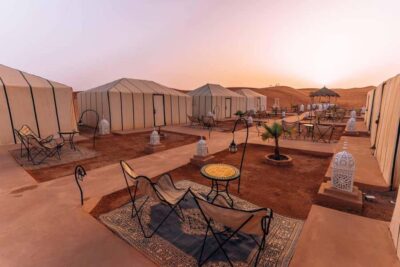
3-Day Merzouga Desert Experience Camel & Meals
Read our review →
3-Day Tour to Merzouga Erg Chebbi with Food & Camel Trek
Read our review →Browse the lists this tour appears in