Reviewed · TOURS
Morocco 11 Days Tour From Marrakech
Morocco changes scenery fast. This 11-day circuit links Marrakech, the Atlas Mountains, the Sahara, Fez, Chefchaouen, Rabat, Casablanca, and Essaouira in one carefully planned route. I like the mix of guided city visits and free time, and I like that transport, accommodation, breakfasts, two dinners, and a Sahara camel ride are built into the price.
The main drawback is the pace. You cover a great deal of ground, with several long driving days and some early starts. The final airport transfer returns you to Marrakech after time on the Atlantic coast, so you will want to understand the departure arrangements before booking your flight.
In This Review
- The highlights that shape the whole journey
- What the $2,264.84 price really covers
- Marrakech begins with souks, palaces, and a lively square
- Crossing Tizi n Tichka to Aït Ben Haddou
- Todra Gorge leads to the desert night
- Sunrise, palm groves, and the road to Fez
- Fez rewards a full day on foot
- Chefchaouen brings a gentler mountain rhythm
- Rabat and Casablanca show two sides of the coast
- El Jadida and Essaouira finish the route by the sea
- Who will get the most from this Morocco circuit?
- Should you book this 11-day Morocco tour?
- FAQ
- How long is the Morocco tour from Marrakech?
- Where does the tour begin?
- Is airport pickup included?
- How large is the group?
- Are local guides included?
- Is the Sahara camel ride included?
- Are meals included?
- Is accommodation included?
- Can I cancel for a full refund?
The highlights that shape the whole journey
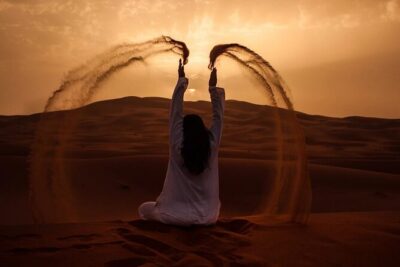
- A camel ride and desert camp in Erg Chebbi: Ride for about 90 minutes at sunset, then spend the night in a camp among the Merzouga dunes.
- Two strong city guides: Official local guides lead visits in Marrakech and Fez, giving structure to the medinas and major monuments.
- A small maximum group of eight: This is more manageable than a large coach tour, especially in narrow medina streets.
- A full sweep of Morocco: The route includes mountains, kasbahs, palm groves, desert, imperial cities, the Rif Mountains, and the Atlantic coast.
- A free day in Essaouira: After the packed road journey, you get a full day to slow down and explore at your own speed.
- A practical package price: At $2,264.84 per person, the tour includes 10 nights of accommodation and much of the transport, but not most lunches, drinks, or eight dinners.
What the $2,264.84 price really covers
The price makes the most sense if you want one company to handle the long-distance transport and hotel arrangements. You receive an air-conditioned vehicle, 10 nights of accommodation, 10 breakfasts, two dinners, local guides in Marrakech and Fez, airport transfers, and the camel trip in the Sahara.
That is a useful bundle for a first visit to Morocco. You do not have to arrange separate transfers between Marrakech and the desert, find a driver for the Atlas crossing, or work out how to connect Fez, Chefchaouen, Rabat, Casablanca, Essaouira, and Marrakech.
Still, the headline price is not an all-inclusive holiday. Eight dinners are excluded, as are lunch and drinks throughout the trip. Entrance fees are also not consistently included. Some stops show admission included, while Bahia Palace and Jardin Majorelle are listed separately, so you should keep extra money available for sightseeing and meals.
The accommodation is described as selected hotels and riads, with standard accommodation mentioned in Marrakech. The exact properties may matter to you, especially if you care about room style, location, air conditioning, or comfort after long drives. Ask for the accommodation list before paying if those details affect your decision.
A few more Marrakech runs to hold up against each other
- Marrakech: Agafay Desert Sunset, Camel Ride, and Dinner Show
★ 4.6 · 35,119 reviews - From Marrakech: Ouzoud Waterfalls Guided Hike and Boat Trip
★ 4.7 · 33,630 reviews - Marrakech: Agafay Desert Quad & Camel Rides with Dinner Show
★ 4.8 · 27,382 reviews
Marrakech begins with souks, palaces, and a lively square
Your first day is simple. A driver collects you at Marrakech airport and takes you to your hotel or riad, a transfer listed at about 45 minutes. That is welcome after a flight, since arriving in Marrakech can feel like stepping into a new rhythm all at once.
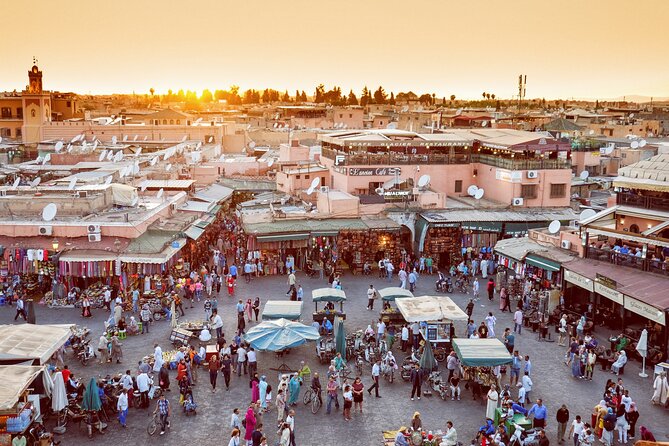
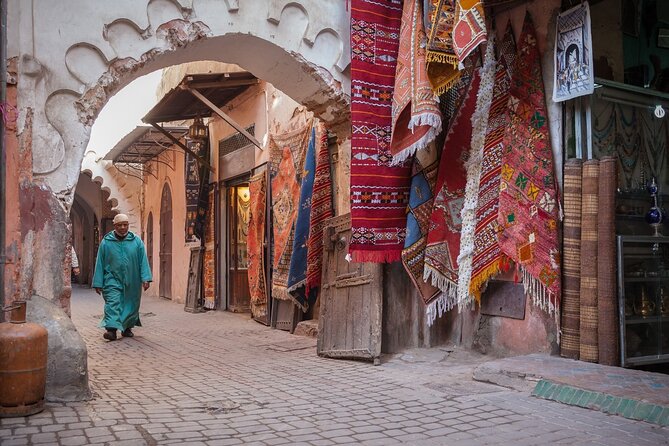
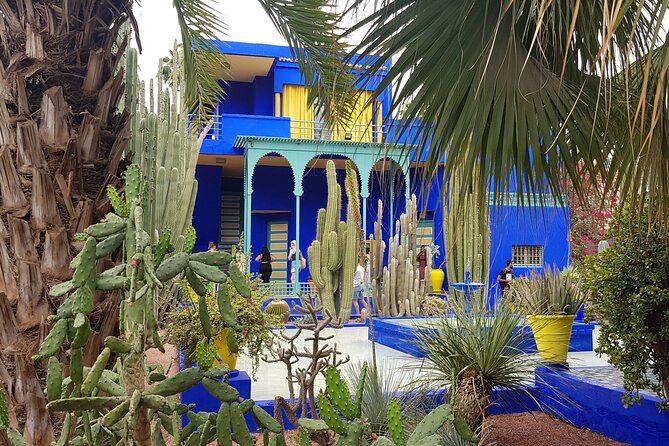
Day two gives you a private guided tour of the Marrakech Medina. The route includes Jemaa el-Fnaa, the Koutoubia Mosque area, the souks, the Ali Ben Youssef Koranic school, the Saadian Tombs, Bahia Palace, and Jardin Majorelle.
I like this arrangement because Marrakech is easier to understand with a guide at the start. The Medina is a maze of narrow streets, shops, workshops, food stalls, and sudden courtyards. A local guide can help you see more than the obvious shopping lanes and explain how the major sites fit together.
Jemaa el-Fnaa changes character as the day goes on. The information provided describes narrators, jugglers, fortune tellers, snake charmers, and musicians appearing in the evening. You get free time in the afternoon to return on your own, which is useful if you want a second look without being hurried along.
The timing deserves attention. The listed stops add up to a substantial day, and entrance to Bahia Palace and Jardin Majorelle is not included. Ask your guide how the tickets will be handled and how much independent time you will have.
Crossing Tizi n Tichka to Aït Ben Haddou
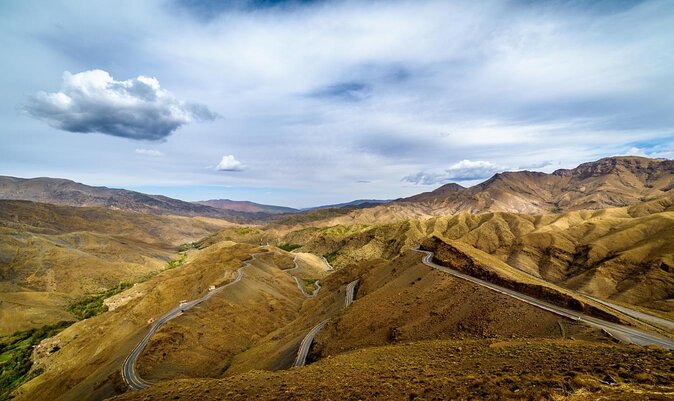
Day three is the first major road day. Pickup is scheduled for 8 a.m., then the route climbs toward the High Atlas through the Tizi n Tichka pass. You stop for mountain views and photographs of small Berber villages set into the hillsides.
The pass is not just a transport link. It gives you a sharp change from Marrakech’s ochre city walls to high mountain country. The road includes bends and elevation changes, so if you are prone to motion sickness, sit near the front and keep water close.
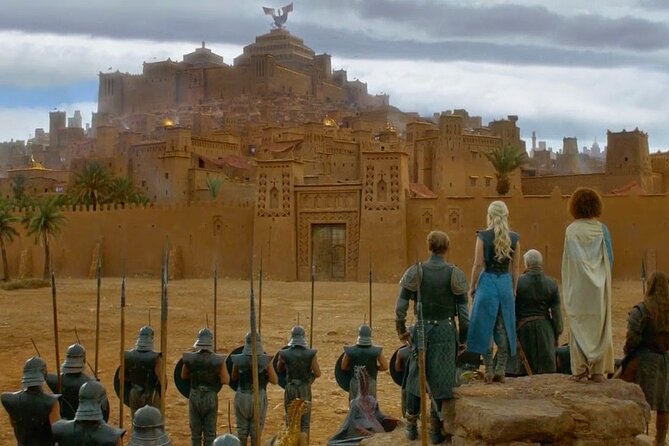
Aït Ben Haddou is the star stop. This fortified village, or ksar, is a UNESCO World Heritage site and has appeared in films including Gladiator, The Mummy, Sahara, and Obelix. You get several hours there, including free time for lunch.
I would treat this as a place for walking and photographs rather than a quick roadside stop. The earthen buildings and defensive form show how settlements in southern Morocco adapted to a dry climate. Wear shoes with a decent grip, since the route through the village may include uneven ground.
The journey continues to Ouarzazate, known as the gateway to the desert. You see Taourirt Kasbah, then pass through the Skoura palm grove and Rose Valley before reaching the Dades Valley for the night.
The palm grove is a welcome change after the mountain roads. The route is described as passing more than 700,000 palms and numerous kasbahs. In Rose Valley, damask roses are grown for products such as rosewater, and the annual Rose Festival takes place in May.
This is a rewarding day, but not a light one. You move from mountain pass to historic village, film location, kasbah, palm grove, rose-growing valley, and gorge country. The variety is excellent, but you will spend many hours in the vehicle.
Todra Gorge leads to the desert night
On Day four, you leave the Dades Gorges at 8 a.m. after breakfast and follow the road of 1,000 Kasbahs toward Tineghir. The route passes Berber villages, palm groves, and the town’s old Jewish quarter before reaching Todra Gorge.
Todra Gorge is one of the more active stops. The canyon walls rise about 300 meters, and you have free time to walk along the gorge. It is also a favored location for mountain climbers, though the tour does not promise a climbing activity.
The key word here is free time. You can keep the walk modest or spend longer taking in the narrow canyon walls. The stop lasts about 45 minutes in the schedule, so ask your driver how much time is actually available on your day.
After lunch on the road, you continue toward Erfoud and the Erg Chebbi dunes near Merzouga. This is the point where the trip shifts from historic Morocco to wide-open desert.
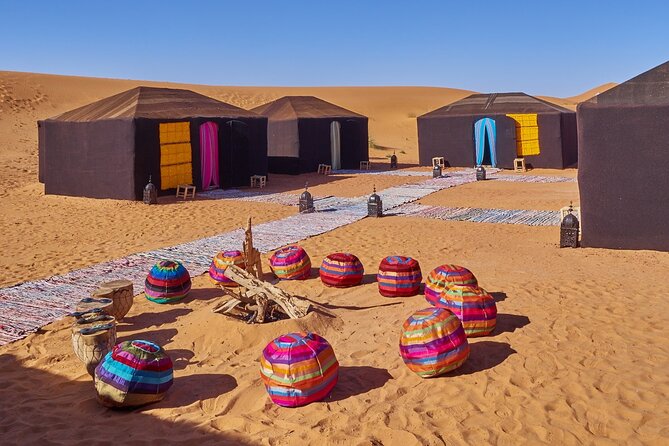
The camel ride lasts about an hour and a half and takes place around sunset. You ride to the desert camp, have dinner, and spend the night under nomadic-style tents or outside beneath the stars. Drumming with the camel drivers is included in the evening description.
This is likely to be the emotional high point of the trip. The ride is not a luxury transfer, and camel saddles can be uncomfortable, but the slow pace gives you time to watch the dunes change color. Bring a small overnight bag if possible, since you may not want to carry a full suitcase on a camel.
Same city gate, a very different afternoon:
- Marrakech: Agafay Desert Quad Biking Tour with Dinner-Show
★ 4.8 · 16,569 reviews - Marrakech: Atlas Mountains, Ourika Valley, Waterfall & Lunch
★ 4.8 · 15,834 reviews - From Marrakech: 3-Day Merzouga and Sahara Desert Tour
★ 4.9 · 15,308 reviews - Berber villages : Atlas Mountains Day Hike from Marrakech
★ 5.0 · 14,007 reviews
Sunrise, palm groves, and the road to Fez
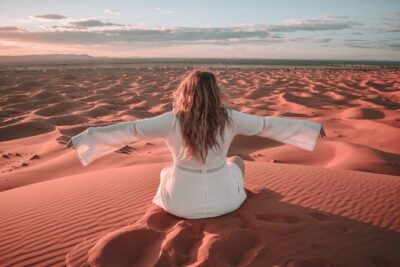
Day five starts early with a sunrise from a dune near camp. The schedule calls this a date with the sunrise, and that early start is part of the desert experience. The reward is quiet light over the dunes before the heat and activity of the day arrive.
After breakfast, you return to Merzouga by camel and travel north through the Tafilalet palm grove. The route follows the Ziz Valley, with a viewpoint overlooking the valley and the town of Aoufous.
Then comes Midelt, where you have time for lunch and a rest. The day continues through the Cedar forest, where you might see monkeys if conditions are favorable, and on to Ifrane in the Middle Atlas.
Ifrane looks strikingly different from the rest of the route. Its clean streets, gardens, broad avenues, and European-style architecture have earned it the nickname Moroccan Switzerland. The town also has the Michlifen ski resort.
I like including Ifrane because it prevents the tour from presenting Morocco as only medinas and desert. You see a modern mountain resort town and a cooler highland setting. The drawback is the length of the day. After a sunrise wake-up, camel return, palm grove, valley viewpoint, Midelt, cedar forest, and Ifrane, reaching Fez around 6 p.m. will feel like a full travel day.
Fez rewards a full day on foot
Day six is devoted to Fez, and this is exactly the right amount of time for a first look at the city. A local guide leads you through the ancient Medina, a place of narrow streets, markets, craftspeople, donkeys, and mules carrying loads.
The planned sights include the Attarine and Bou Anania Medersas, the Nejjarine Fountain, the Moulay Idriss Mausoleum, and the Karaouine Mosque. The tour also includes Fes Jdid and the Merenid Tombs, where you get a panoramic view over the city.
Fez can be confusing without help. The Medina is not arranged like a modern city, and its lanes can be difficult to connect in your mind. A guide gives the day a clear shape and helps you notice working crafts and religious buildings instead of simply following the crowd.
The schedule describes the tour as lasting a full day, but it does not list entrance fees for each attraction. Confirm what is covered before you set out. Wear comfortable shoes, and keep your belongings close in the narrow streets.
Chefchaouen brings a gentler mountain rhythm
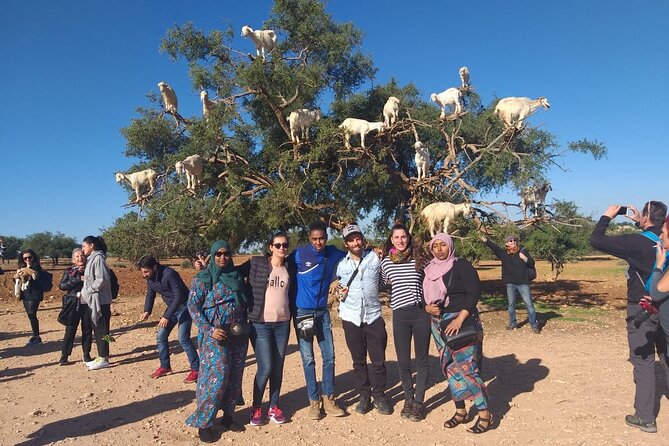
On Day seven, the drive from Fez to Chefchaouen takes about three hours. After arriving, you check into your accommodation and have the rest of the day free.
Chefchaouen sits in the Rif Mountains and is famous for its blue-painted old town. Its steep cobbled alleys lead past leather and weaving workshops, while Outa el Hammam square provides a place to pause beside the red-walled kasbah.
This is one of the tour’s better-balanced stops. After the guided intensity of Fez and the long desert crossing, you get time to wander without a fixed list of monuments. The old town also includes the Great Mosque with its octagonal minaret, though visitors should be mindful that the mosque itself is not presented as an interior sightseeing stop.
The scheduled visit lasts through the day and overnight accommodation is provided. Take your time with the blue streets, but remember that the hills and cobbles require more effort than the photographs suggest.
Rabat and Casablanca show two sides of the coast
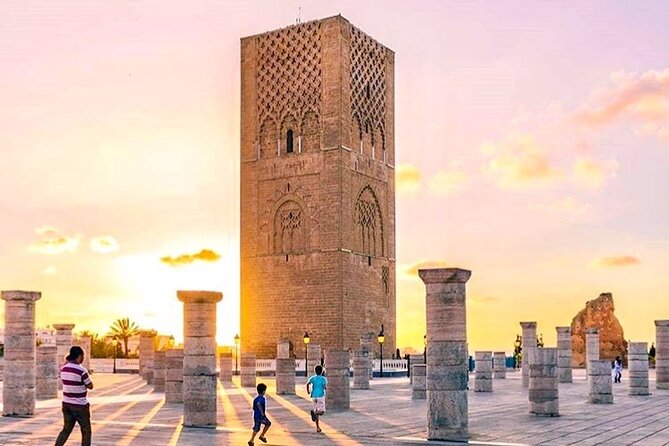
Day eight moves from Chefchaouen to Rabat, the capital. The route takes a few hours, and you visit the Tour of Hassan II before continuing to Casablanca.
The information names the Hassan II Mosque in Casablanca as Morocco’s best mosque. The route therefore gives you two major city stops in one day, but the exact amount of independent sightseeing time is limited by the driving schedule.
Rabat is useful for political and royal context, while Casablanca feels more modern and metropolitan. You spend the night in Casablanca, so this is a practical overnight rather than a slow city stay.
El Jadida and Essaouira finish the route by the sea
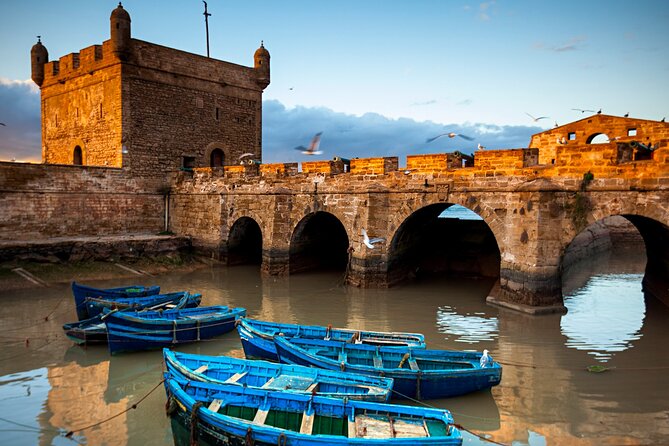
Day nine follows the Atlantic coast through El Jadida, a former Portuguese-controlled port and UNESCO World Heritage site. You then continue to Essaouira, another UNESCO-listed destination with a fishing port, beaches, sea walls, and an old Medina.
Essaouira is a welcome change of pace. You can walk along the ramparts, visit the port, explore the compact Medina, or sit near the beach. The town is described as windswept, and that coastal character is part of its appeal.
You spend the night at Riad Zahra in Essaouira, according to the itinerary. On Day 10, you have a full free day, with options that include a hammam, massage, spa time, and visits to nearby valleys, waterfalls, and scenery.
I especially like this unscheduled day. Many grand Morocco circuits rush from one sight to the next, but Essaouira gives you room to choose. You can rest, shop, walk, or arrange an extra activity instead of collecting another checklist of monuments.
The trip ends with a transfer to Marrakech airport on Day 11. Since the itinerary places you in Essaouira the night before and does not state the exact transfer duration or departure pickup time, confirm those details before booking your flight.
Who will get the most from this Morocco circuit?
I would recommend this tour if you want to see Morocco’s major regions in one trip and prefer a planned route over independent transport arrangements. It suits first-time visitors who want local guides in the two major medinas, a desert camp, and hotel bookings handled in advance.
The maximum group size of eight is a real advantage. You still receive the ease of a group itinerary, but the vehicle and stops should feel more personal than a large coach tour. Past praise for drivers including Yassin, Hicham, Muhammad, and Ibrahim also points to the value of having a friendly, careful driver on such a long route.
I would think twice if you dislike early mornings, lengthy drives, or changing accommodation often. The tour covers an impressive amount of ground, but it does not give you slow, in-depth stays in every city.
Confirmation is provided at booking, pickup is offered, and the activity is listed as suitable for most people. Cancellation is free up to 24 hours before the start time for a full refund. Within 24 hours, the payment is not refunded, and changes are not accepted.
Should you book this 11-day Morocco tour?
Book it if your priority is variety. You will see Marrakech’s Medina, Atlas villages, Aït Ben Haddou, kasbah country, Todra Gorge, the Erg Chebbi desert, Fez, Chefchaouen, Rabat, Casablanca, El Jadida, and Essaouira without having to connect the route yourself.
I would book only after confirming the accommodation list, which meals and entrance fees are covered, and the exact final transfer to Marrakech airport. If you accept the long drives and budget separately for eight dinners, lunches, drinks, and some tickets, the $2,264.84 price offers a convenient way to experience a large slice of Morocco in 11 days.
FAQ
How long is the Morocco tour from Marrakech?
The tour lasts approximately 11 days, with 10 nights of accommodation included.
Where does the tour begin?
The tour begins in Marrakech, with airport pickup and transfer to your hotel or riad.
Is airport pickup included?
Yes. A driver collects you from Marrakech airport and transfers you to your accommodation.
How large is the group?
The activity has a maximum of eight participants.
Are local guides included?
Yes. Local guides in Marrakech and Fez are included.
Is the Sahara camel ride included?
Yes. A camel ride in the Sahara is included, with the itinerary describing a ride of about one hour and 30 minutes at sunset.
Are meals included?
Ten breakfasts and two dinners are included. Eight dinners, lunches, and drinks are not included.
Is accommodation included?
Yes. The package includes 10 nights in selected hotels and riads, with standard accommodation mentioned for Marrakech.
Can I cancel for a full refund?
Yes, if you cancel at least 24 hours before the experience start time. Cancellations within 24 hours are not refunded, and changes within that period are not accepted.
Just listed around Marrakech
- Zagora: 2-Day Desert Trip from Marrakech★ 4.4 · 31 reviews
- Traditional spa Hammam & Massage with Hotel Transfers★ 4.0 · 24 reviews
- Day trip to OUZOUD waterfall with guide&boat ride from Marrakech★ 5.0 · 172 reviews
- quad bike tour in the palmeraie of Marrakech★ 4.5 · 43 reviews
- Half day quad desert agafay★ 4.5 · 24 reviews
- walking tour★ 5.0 · 46 reviews
- private tour of Marrakech 4 hours with multilingual driver★ 5.0 · 117 reviews
- 3 days tour from Marrakech to Merzouga desert★ 5.0 · 55 reviews
Tours, compared.

Agafay Desert Quad Biking Tour with Dinner-Show
Read our review →
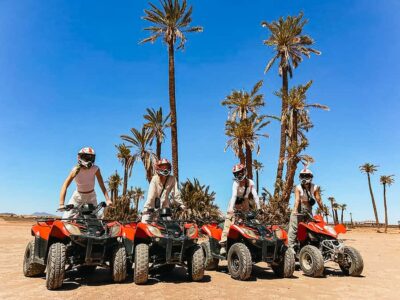
Quad Bike Tour to Palm Oasis and Jbilat Desert
Read our review →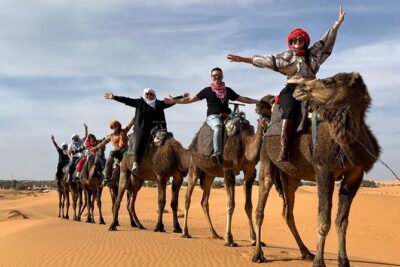
3 Days Desert Tour From Marrakech To Merzouga Dunes & Camel Trek
Read our review →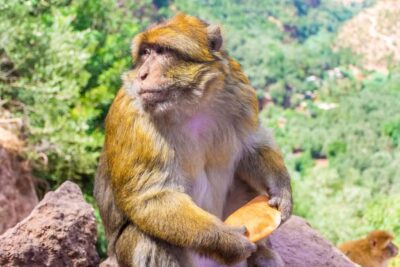
3-Day Marrakech to Merzouga Desert Tour: Camel Rides & Overnights
Read our review →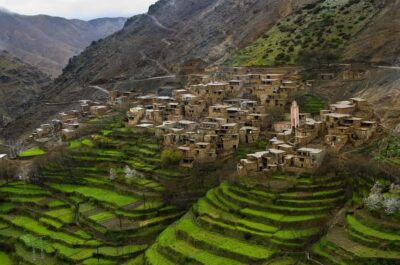
Desert & Mountain Tour with Camel Ride & Lunch
Read our review →