
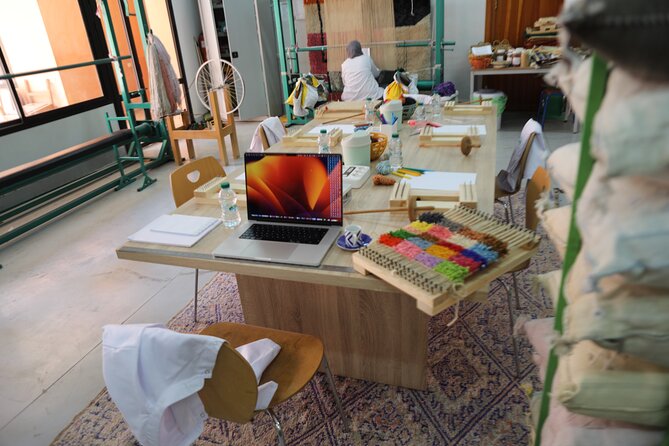
Reviewed · WORKSHOPS
Myrugy-Small Group Rug Making Workshop in Marrakech with Licensed
Small rugs make lasting souvenirs. This three-hour Marrakech workshop gives you a hands-on introduction to Moroccan weaving, with local women guiding you through the process and a visit to a traditional weavers’ market afterward. I especially like the small group size of up to 10 people and the chance to make something yourself rather than simply buying a carpet in the souks.
I also like the warm, personal teaching style reported by past participants, particularly the patience of Hajar and Alba. The main caution is time: the advertised three hours can stretch to four or even four and a half hours if you want to finish carefully, so do not squeeze this between tightly scheduled activities.
In This Review
- Key points at a glance
- Why this Marrakech rug workshop is worth your afternoon
- Arriving at the traditional arts center
- Choosing a design and learning the basics
- Working with wool and a wooden tool
- Meeting Hajar, Alba, and the local instructors
- The traditional weavers’ market after the workshop
- Tea, snacks, and a slower Moroccan welcome
- How long should you actually allow?
- Is $59 a fair price?
- Who will enjoy this most?
- Practical details before you book
- Should you book the Kechart rug-making workshop?
- FAQ
- Where does the rug-making workshop meet?
- Where does the activity end?
- How long does the workshop last?
- Do I need previous rug-making experience?
- What is included in the price?
- Can I cancel for a full refund?
Key points at a glance
- You make a real miniature rug: Choose a design, work with wool, and take your finished piece home.
- Hajar and Alba receive special praise: Their patient, clear instruction helps first-time weavers get started.
- The workshop is held at a traditional arts training center: That gives the activity more cultural substance than a standard souvenir stop.
- A weavers’ market visit is included: You can see finished rugs, materials, and skilled craftspeople at work.
- Tea, water, and snacks add Moroccan hospitality: The refreshments make the long, careful work more relaxed.
- Plan for extra time: Several people needed more than the stated three hours to complete their rugs.
Why this Marrakech rug workshop is worth your afternoon
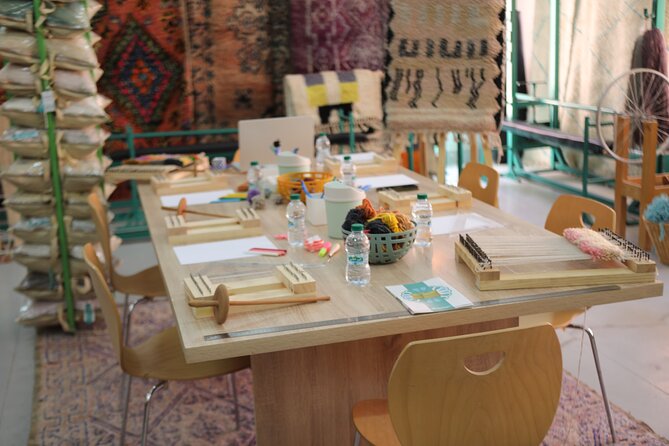
Marrakech offers plenty of chances to look at Moroccan crafts. Far fewer activities let you sit down, handle the materials, and learn how a small rug takes shape.
That difference matters. You are not just walking past carpets in the medina or listening to a sales pitch. You are learning a basic version of the work, guided by people who practice and teach the craft. Even a small finished rug helps you understand why larger Moroccan carpets require so much time and skill.
I like this experience for two reasons. First, it gives you a physical souvenir with a story attached to it. Second, it creates time for conversation with local artisans. The craft is the center of the activity, but the cultural exchange is part of its appeal.
The setting also adds value. The workshop takes place at the Cqpat Center Qualification Business Des Arts Traditionnels in Marrakech, described as a government-sponsored traditional arts training center. That makes the lesson feel connected to local craft education rather than designed only for quick tourist entertainment.
A few more Marrakech runs to hold up against each other
- Marrakech: Moroccan Cooking Class with Pickup
★ 4.6 · 1,862 reviews - Marrakech: Traditional Moroccan Cooking Class & Market Visit
★ 4.8 · 1,861 reviews - Marrakesh: Moroccan Dishes Cooking Class with a Local Chef
★ 5.0 · 1,615 reviews
Arriving at the traditional arts center
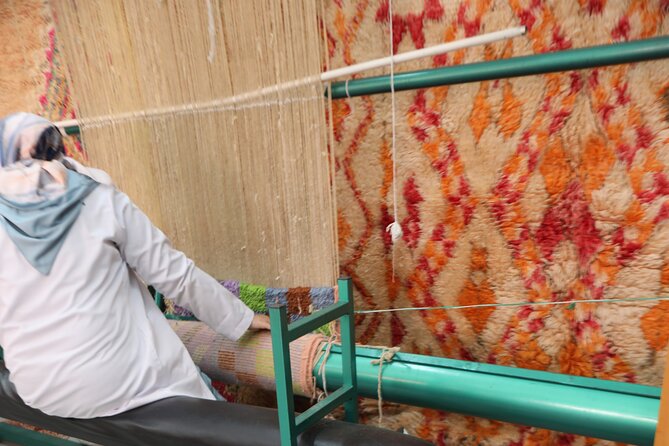
The meeting point is listed at Cqpat, Center Qualification Business Des Arts Traditionnels, on Rue Kbour Chou in Marrakech. The address includes the map code J2R4+8RW, which may help if you are using a navigation app.
You return to the same meeting point at the end. The activity is near public transportation, but the information does not specify a hotel pickup or drop-off service. I would allow extra time to find the center, especially if you are coming from the medina and are not familiar with Marrakech’s street layout.
The name and address are worth saving before you leave your accommodation. A mobile ticket is provided, and confirmation arrives when you book, so you should have the basic information available on your phone.
The group limit is 10 people. That is small enough for personal help without making the session feel like a private class. If everyone arrives with no weaving experience, the quality of the instruction will matter, and the small group gives the instructors a fair chance to work with each person.
Choosing a design and learning the basics
The session begins with an introduction to Moroccan rugs and their place in local craft traditions. You then select a design that appeals to you before beginning the practical work.
This is a good order. You get some context first, then make a personal choice instead of copying a pattern without understanding it. The available information does not list the exact designs or the number of choices, so you should expect guidance rather than a fixed catalog of specific motifs.
The workshop is designed for beginners. You do not need prior weaving experience, and the instruction is given step by step. English and French guidance are available, which is useful if you are more comfortable asking questions in one of those languages.
The actual method varies in the descriptions, with references to knot carpets, hooked rugs, and a small woven rug. That suggests the workshop may include more than one traditional technique or that different sessions use slightly different methods. If you have a particular technique in mind, ask at the start which one you will be learning.
Working with wool and a wooden tool
The materials are a major part of the experience. Past participants specifically praised the naturally colored wool and handcrafted wooden weaving tool. These details give the lesson a tactile quality that you do not get from a modern craft kit.
You will work with the materials provided, following the instructor’s demonstrations. The goal is not to produce a full-size carpet. You make a miniature Moroccan rug, which keeps the project manageable while still showing the basic motions and structure of the craft.
The work is described as simple to understand but slow to complete. That is an important distinction. You may grasp the technique quickly, yet still need patience because each knot, loop, or section takes time.
I would treat the rug as a small craft project rather than a quick activity. The more carefully you work, the more time you may need. Several people found the process relaxing and even therapeutic, but that calm pace may frustrate you if you prefer fast-moving sightseeing.
Same city gate, a very different afternoon:
- Marrakech: Agafay Desert Sunset, Camel Ride, and Dinner Show
★ 4.6 · 35,119 reviews - From Marrakech: Ouzoud Waterfalls Guided Hike and Boat Trip
★ 4.7 · 33,630 reviews - Marrakech: Agafay Desert Quad & Camel Rides with Dinner Show
★ 4.8 · 27,382 reviews - Marrakech: Agafay Desert Quad Biking Tour with Dinner-Show
★ 4.8 · 16,569 reviews
Meeting Hajar, Alba, and the local instructors
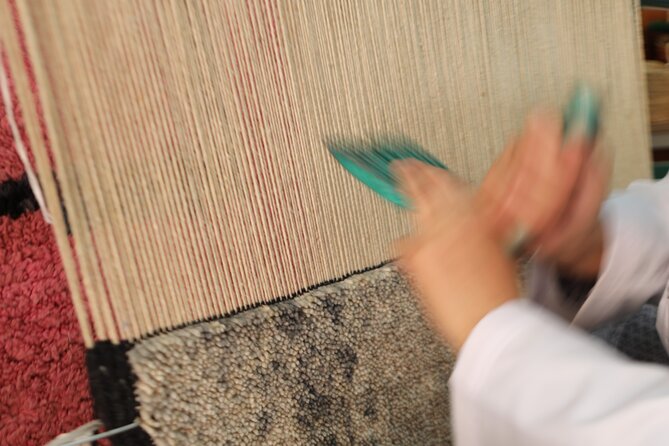
The personal instruction receives the strongest praise. Hajar is singled out for being patient and encouraging, helping two complete beginners finish a medium-level symbol. Alba is also praised for guiding a group through the steps and helping with a taxi afterward when the group had trouble finding its driver.
Those details suggest a friendly, attentive teaching style. You should expect the instructors to demonstrate the process, correct your technique, and help when the pattern becomes confusing.
The conversations are part of what makes the activity feel personal. You can learn about the women’s connection to the craft and hear stories about its role in Moroccan life while your hands stay busy. This is not a formal lecture, so the amount of cultural discussion may depend on the group and the questions you ask.
I recommend asking questions as you work. The lesson gives you a natural chance to discuss materials, traditional methods, and the difference between a handmade rug and a factory-produced carpet. You will get more from the session if you treat the instructors as teachers rather than simply waiting for the next step.
The traditional weavers’ market after the workshop
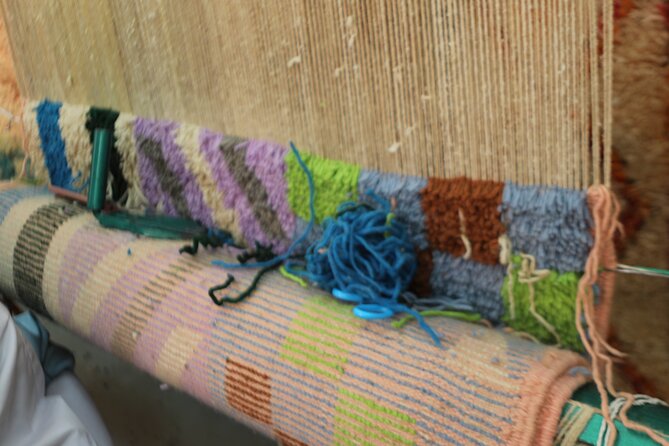
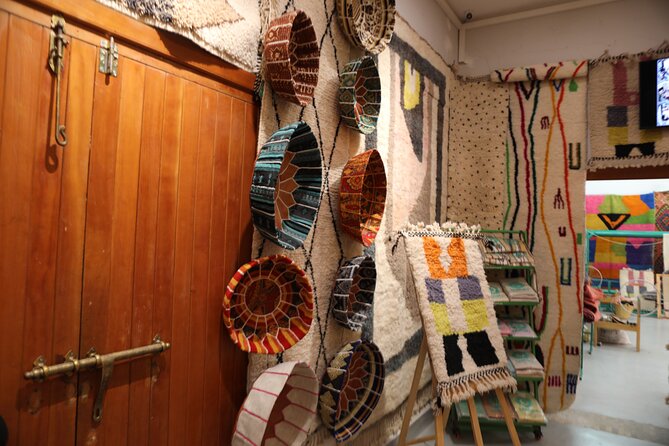
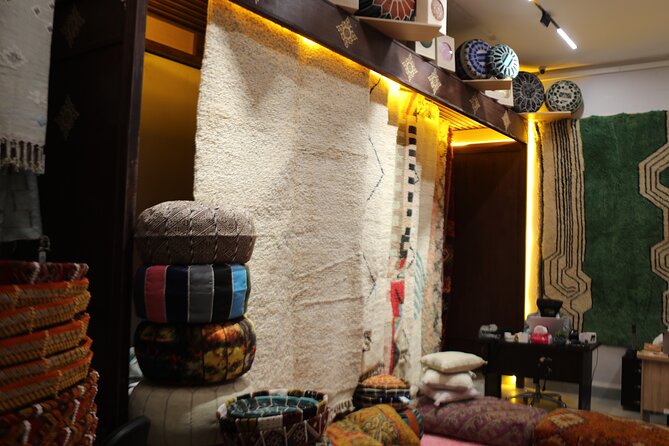
The market visit expands the lesson beyond your small rug. You can see a range of rugs and materials, meet artisans, and watch experienced people at work.
This part is useful because your own project will likely give you a sharper eye. After making even a small section, you can look at a larger rug and appreciate the repeated labor behind its patterns. You may also notice the difference between a beginner’s piece and the work of an expert.
The market is described as a traditional weavers’ market and showroom. The supplied details do not promise a specific shopping arrangement, a set amount of time, or a particular selection of carpets. I would think of it primarily as a chance to see the craft in context, not as a guaranteed bargain-shopping stop.
If buying a rug is on your Marrakech list, this visit may help you ask better questions about materials and workmanship. Still, the price of any market rug is separate from the $59 workshop fee, and nothing here suggests that a carpet purchase is required.
Tea, snacks, and a slower Moroccan welcome
Traditional Moroccan tea is included, along with reports of water and snacks. These are small touches, but they matter during a hands-on activity that can last much longer than expected.
Tea also fits the social side of the workshop. You have time to pause, talk, and watch the instructors work. The refreshments help the session feel like a visit with a craft community rather than a quick class where everyone rushes in and out.
The food and drink should not be the reason you book. Their value is in the hospitality and breathing room they add to the afternoon. If you have dietary restrictions, the available information does not specify the snacks, so ask the provider before the session.
How long should you actually allow?
The stated duration is approximately three hours, with the detailed description giving a range of three to four hours. In practice, several participants needed four hours or more, and one group stayed about four and a half hours.
This is the single most useful planning tip. Do not book a museum ticket, cooking class, airport transfer, or dinner reservation immediately afterward. If you finish in three hours, you gain free time. If you need four or more, your day will not unravel.
The extra time is not necessarily a flaw. It may mean you are given enough help to finish your rug rather than being sent home with an incomplete project. The drawback is that the experience can take over most of an afternoon.
I would choose a morning or early afternoon slot with nothing urgent after it. You can then work at a comfortable pace, enjoy the market visit, and avoid watching the clock.
Is $59 a fair price?
At $59 per person, this is not the cheapest craft activity in Marrakech. The value comes from what is bundled into the fee: a three to four-hour lesson, all materials, direct instruction, your handmade rug, tea, and the market visit.
The finished rug alone is not likely to be the main financial calculation. It is a small souvenir, not a full-size floor covering. You are paying for the teaching, the access to the craft setting, and the time spent with local instructors.
I find the price reasonable if you value an activity that gives you something to do with your hands. It is less appealing if you want a short, polished demonstration or are mainly looking for a shopping trip.
The group limit also helps the value. With no more than 10 people, the experience has a better chance of offering personal attention than a large workshop. Group discounts are available, which may help if you are booking for friends or family.
Who will enjoy this most?
This workshop suits you if you like creative activities, local crafts, and experiences that move at a patient pace. It is also a good choice for couples, families, and small groups who want a shared souvenir rather than separate commercial purchases.
Families can take part, and the instruction is designed for all skill levels. The available information does not state a minimum age, so ask before booking if you are bringing young children. Kids who enjoy careful handwork may like it, while very young children could find the slow process difficult.
I would also recommend it to anyone who wants a break from Marrakech’s streets. The workshop offers a quieter period focused on concentration, conversation, and making something by hand.
You may want to skip it if your schedule is packed or if you dislike repetitive work. A person looking for constant movement and sightseeing will probably find the long weaving process too slow.
Practical details before you book
The tour accepts mobile tickets, confirms your reservation at booking, and allows service animals. Most people can participate, and the activity is near public transportation.
Free cancellation is available if you cancel at least 24 hours before the start time. Changes or cancellations made within 24 hours are not accepted for a refund, and the cut-off uses Marrakech local time.
Wear something comfortable for sitting and working with wool. The supplied information does not give a dress code or explain the exact seating arrangement, so practical comfort is the safest approach.
Save the meeting address and map code, arrive with an open schedule, and be ready to ask which rug technique your class will use. Those three steps will make the afternoon easier.
Should you book the Kechart rug-making workshop?
I would book this if you want a personal Marrakech activity with a real craft focus. The strongest reasons are the patient instruction from people such as Hajar and Alba, the small group size, the naturally colored wool, and the chance to take home something you made yourself.
I would not book it as a quick filler between major sights. Allow at least four hours if possible, and remember that the finished rug is a small keepsake rather than a large carpet.
For couples, families, and craft-minded visitors, the $59 price offers a good mix of instruction, materials, hospitality, and cultural contact. If you can give it the time it deserves, this is the kind of Marrakech experience that stays attached to a memory long after the souk purchases have faded.
FAQ
Where does the rug-making workshop meet?
The meeting point is Cqpat, Center Qualification Business Des Arts Traditionnels, at J2R4+8RW, Rue Kbour Chou, Marrakesh 40000, Morocco.
Where does the activity end?
The activity ends back at the original meeting point.
How long does the workshop last?
The advertised duration is approximately three hours, with the full activity described as three to four hours. You should allow four or more hours because some sessions take longer to complete.
Do I need previous rug-making experience?
No. The workshop is designed for all skill levels and includes step-by-step instruction from local artisans.
What is included in the price?
The $59 price includes the workshop, the market visit, all required materials, personal instruction, traditional Moroccan tea, and the handmade miniature rug you create.
Can I cancel for a full refund?
Yes. You can receive a full refund if you cancel at least 24 hours before the experience start time. Cancellations or changes made less than 24 hours in advance are not accepted for a refund.
Just listed around Marrakech
- Zagora: 2-Day Desert Trip from Marrakech★ 4.4 · 31 reviews
- Traditional spa Hammam & Massage with Hotel Transfers★ 4.0 · 24 reviews
- Day trip to OUZOUD waterfall with guide&boat ride from Marrakech★ 5.0 · 172 reviews
- quad bike tour in the palmeraie of Marrakech★ 4.5 · 43 reviews
- Half day quad desert agafay★ 4.5 · 24 reviews
- walking tour★ 5.0 · 46 reviews
- private tour of Marrakech 4 hours with multilingual driver★ 5.0 · 117 reviews
- 3 days tour from Marrakech to Merzouga desert★ 5.0 · 55 reviews
Workshops, compared.

Traditional Moroccan Cooking Class & Market Visit
Read our review →
Moroccan Dishes Cooking Class with a Local Chef
Read our review →
Moroccan Cooking Class & Marrakech Market Visit with Chef Khmisa
Read our review →
Half-Day Cooking Class with Local Chef Laila in Marrakech
Read our review →
Browse the lists this tour appears in