
Reviewed · WORKSHOPS
Pottery Workshop, A sensory journey at Arterre
Clay has a calming pull. Arterre turns Marrakech’s red earth into a hands-on, private workshop where you can model, turn, paint, and make a traditional zellij tile. I like the personal guidance from Zineb, who is described as patient and welcoming, and I like the chance to choose between practical pottery and free artistic work. The main drawback is important: your fresh pieces are too soft to take home safely.
The workshop lasts about 90 minutes and costs $52.27 per person, with materials, tools, and aprons included. It often runs longer, which is good for anyone who enjoys an unhurried afternoon, but less useful if you have a tightly packed Marrakech schedule. The studio can also be tricky to find, so allow extra time for reaching 44 lot, Avenue Akioud.
In This Review
- Key points to know before booking
- Why Arterre is a good break from Marrakech
- Arriving at the Arterre pottery studio
- Meeting Marrakech clay before shaping it
- The pottery wheel: harder than it looks
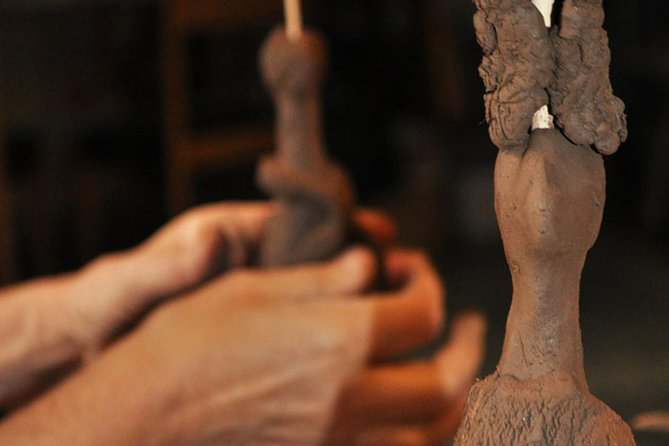
- Hand modeling, sculpture, and decoration
- Making a traditional Moroccan zellij tile
- The guide makes the difference
- What you can and cannot take home
- Is $52.27 per person good value?
- Who will enjoy this workshop most?
- Timing, booking, and cancellation advice
- Should you book Arterre?
- FAQ
- Where does the pottery workshop begin and end?
- How long does the workshop last?
- What is included in the price?
- Can I take my pottery home?
- Is the activity private?
- Is the workshop suitable for children?
- Are service animals allowed?
- What is the cancellation policy?
Key points to know before booking
- Mint tea starts the session: You are welcomed with a traditional Moroccan tea before working with clay.
- Several techniques are available: Try the pottery wheel, hand modeling, decoration, painting, sculpture, molding, or zellij tile work.
- Red Marrakech clay is the star material: You knead and shape local clay while learning basic ideas about pottery and form.
- Zineb receives especially warm praise: Her patient, friendly teaching helps beginners feel at ease.
- The workshop is private: Only your own family, couple, or group takes part.
- You cannot take the wet pieces home: The creations remain soft and are at risk of breaking.
Why Arterre is a good break from Marrakech
Marrakech is full of color, sound, movement, and sales pitches. Arterre offers a different pace. For an hour and a half, your attention shifts to the feel of clay under your fingers and the small problem of keeping a pot upright.
That change matters. You do not need to know anything about pottery before arriving. The activity is built for children and adults, families, couples, and private groups. You can aim for a useful bowl, try a decorative piece, or simply make shapes without worrying about producing museum-quality work.
I especially like the sensory side of the session. Clay asks you to use both hands, watch closely, and slow down. Kneading, pressing, rolling, and shaping give the workshop a simple physical rhythm. There is also an art therapy element, although the supplied details do not describe a formal therapy program or clinical service. Think of it as a creative, calming activity rather than a pottery course with a certificate at the end.
The studio setting includes an outside courtyard, which adds to the relaxed feel. It is a useful contrast to time spent in the Medina, especially during the middle of a busy sightseeing day. You are still doing something distinctly Moroccan, but you are not simply looking at crafts in a shop. You are handling the material and making something yourself.
A few more Marrakech runs to hold up against each other
- Marrakech: Moroccan Cooking Class with Pickup
★ 4.6 · 1,862 reviews - Marrakech: Traditional Moroccan Cooking Class & Market Visit
★ 4.8 · 1,861 reviews - Marrakesh: Moroccan Dishes Cooking Class with a Local Chef
★ 5.0 · 1,615 reviews
Arriving at the Arterre pottery studio
The meeting point is Atelier de Poterie Arterre, Céramique Art Thérapie et Création, at 44 lot, Avenue Akioud, Marrakech 40000. The activity begins and ends at the workshop, so you do not need to manage a separate return point.
One practical warning deserves attention: the location may not be obvious to find. Build in spare time, and check the meeting details carefully before setting out. The workshop is near public transportation, but no specific route or pickup service is provided in the information available.
Once inside, the welcome begins with mint tea. This is not just a drink before the real activity. It sets a Moroccan tone and gives the session a gentle opening. You have a moment to settle in, meet the person guiding you, and look at the materials before putting on an apron.
The workshop is a private activity, meaning only your group participates. That is a real advantage if your children need help, if you want to ask plenty of basic questions, or if your group has mixed interests. You will not be trying to hear instructions over a large class.
Meeting Marrakech clay before shaping it
The first practical stage introduces the earth material. You learn about the clay before working with it, then put on an apron and begin kneading the red clay associated with Marrakech.
This opening is useful for beginners because clay is less cooperative than it looks. It can be too dry, too wet, too thick, or unevenly worked. Kneading helps you understand its texture and prepares it for shaping. It also takes away some of the fear of making a mistake.
The theoretical introduction accompanies the hands-on work. It is not presented as a long lecture. Instead, you receive basic explanations while your hands are already learning what the material can do. That approach should suit you if you prefer learning by trying rather than sitting through a formal demonstration.
There is also an option to knead with your feet. That is an unusual touch and connects the workshop to the physical, earthy nature of the activity. It can be especially fun for children and groups, though anyone who prefers a neat, controlled craft session may find it less appealing.
The pottery wheel: harder than it looks
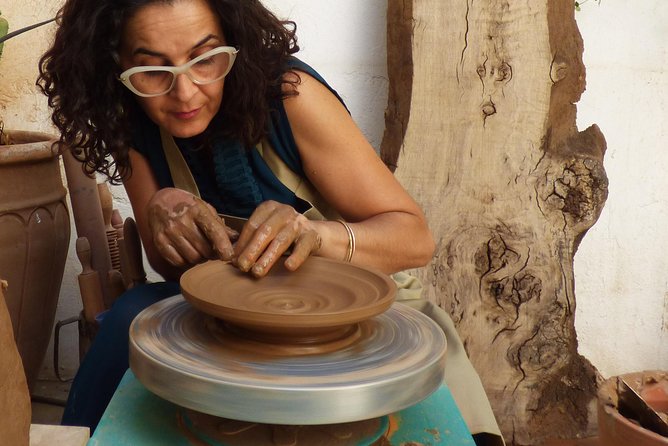
The pottery wheel is one of the main attractions. You can try shooting a pot in different shapes, with guidance as you work. The word shooting refers to turning or throwing the clay on the wheel, not to a separate activity.
A wheel can make a simple pot look easy from a distance. In practice, the clay responds to small changes in pressure and balance. Your hands need to work together while the wheel spins, and a little too much force can flatten or distort the form. That is part of the fun, particularly when the instructor stays patient and lets you try again.
The workshop also includes ways to work with clay tools. You can experiment with the material away from the wheel, then compare the two methods. Wheel work gives you round, symmetrical forms. Hand modeling gives you more freedom to build, press, attach, and alter the shape.
The time is listed as approximately 90 minutes, but the session may run longer. Several people have spent more than two and a half hours at the studio. I would treat the advertised time as a planning guide, not a hard stop, especially if you enjoy the work and your group wants to try several techniques.
That extra time is a benefit when the day is open. It is a drawback if you have a restaurant booking, hammam appointment, or evening performance immediately afterward. Leave a cushion in your schedule.
Same city gate, a very different afternoon:
- Marrakech: Agafay Desert Sunset, Camel Ride, and Dinner Show
★ 4.6 · 35,119 reviews - From Marrakech: Ouzoud Waterfalls Guided Hike and Boat Trip
★ 4.7 · 33,630 reviews - Marrakech: Agafay Desert Quad & Camel Rides with Dinner Show
★ 4.8 · 27,382 reviews - Marrakech: Agafay Desert Quad Biking Tour with Dinner-Show
★ 4.8 · 16,569 reviews
Hand modeling, sculpture, and decoration

You are not limited to the wheel. Arterre offers free modeling, sculpture, texture work, assembly, and molding. These options make the experience work well for people who do not enjoy the pressure of a spinning wheel.
Hand modeling is also a better choice for younger children. They can press fingerprints into the clay, build simple shapes, add textures, or combine small forms. Adults can take a more deliberate approach and create something artistic or utilitarian, depending on their mood.
The ability to choose your own project is one of the workshop’s strongest points. You might shape a small pot, try a decorative object, or simply follow an idea that develops while you work. The instructor can accompany you through the process, but the session does not force everyone to make the same item.
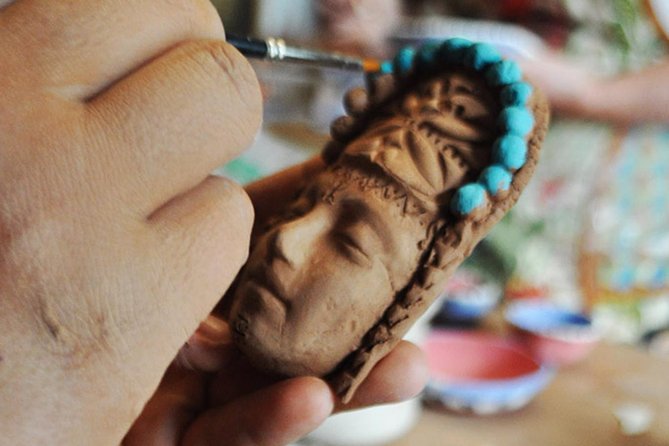
Decoration adds another layer. You can mark the surface with textures, attach pieces, or use the tools provided to change the character of the clay. These small details are often what make a simple form feel personal.
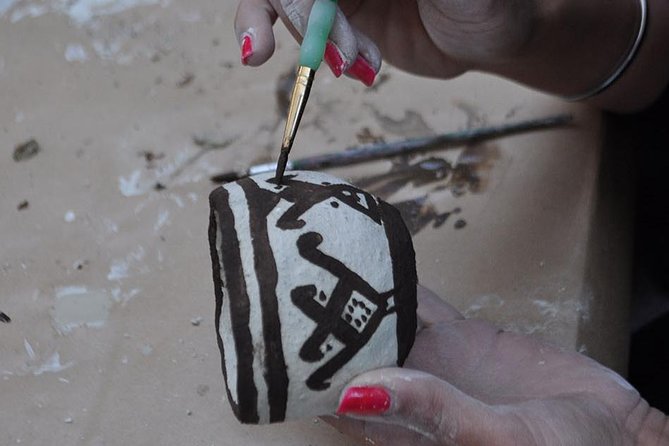
Painting is also included among the possible activities. The available information does not specify which paints, colors, or firing arrangements are used, so do not book this expecting a finished, fired ceramic souvenir. The point is to explore the process during the session.
Making a traditional Moroccan zellij tile
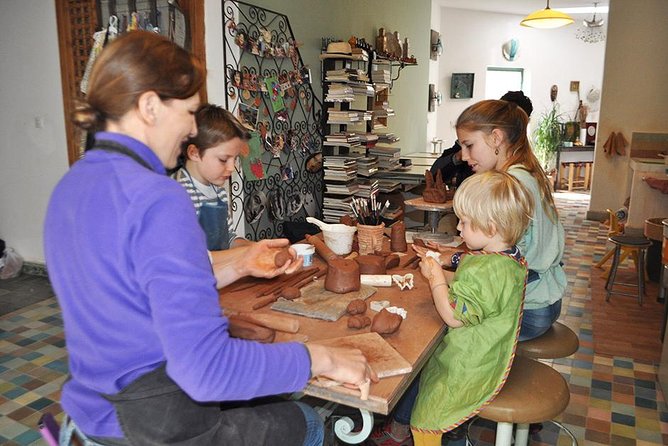
The zellij tile option gives the workshop a direct link to Moroccan craft. Zellij is the detailed geometric tile work seen in Moroccan architecture and interiors. Here, you get to make a traditional Moroccan tile rather than only shaping a generic pot.
This is a good choice if you want a small cultural connection within the activity. You are not only handling clay. You are trying one of the visual traditions that helps define Moroccan design.
The supplied details do not promise that the tile will be fired or ready to install. Treat it as a workshop piece made during your visit. Ask the studio about the final treatment if that matters to you, especially if you are hoping to receive a finished tile later.
For many people, the zellij project may be more approachable than the wheel. Geometric decoration gives you a clear starting point, while free modeling requires you to invent the object as you go. Families can also divide their time, with some people at the wheel and others working on tile or hand-built pieces.
The guide makes the difference
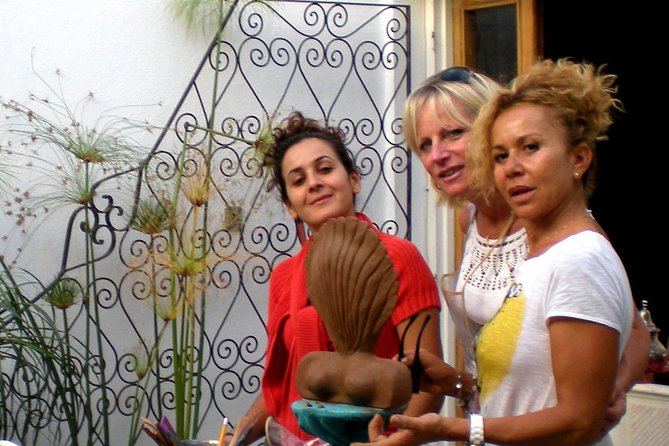
Zineb is the named teacher associated with the experience, and her role is central to its appeal. The strongest comments focus on her welcome, patience, and ability to help people feel comfortable.
That matters in a beginner workshop. Pottery can feel awkward during the first few minutes, and a rushed instructor can turn a creative activity into a frustrating one. A patient teacher gives you room to make mistakes while still showing you how to improve your technique.
The teaching appears to balance instruction with freedom. You receive an introduction to the material and basic pottery ideas, then choose from several forms of making. I would expect guidance rather than a strict lesson plan, which suits a family or private group with different ages and skill levels.
The workshop also seems to offer a social side beyond the clay itself. One particularly positive account describes receiving many useful suggestions for restaurants, rooftop bars, activities, and hammams in Marrakech. That kind of local advice can add real value, though it should be seen as a pleasant extra rather than a guaranteed part of the formal program.
What you can and cannot take home
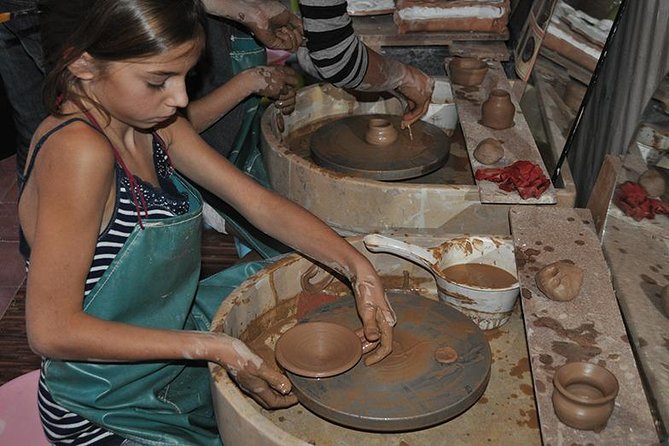
The most important limitation is that the pieces you create are soft and cannot be taken away safely. Fresh clay objects can break easily, and the experience does not include a finished souvenir for your luggage.
This may disappoint you if you want a physical reminder of the workshop. It is worth explaining to children before you arrive, since they may expect to carry their pot or tile back to the hotel.
At the same time, the limitation keeps the activity focused on making rather than shopping. You are paying for the time, instruction, materials, and creative process. The value is in the hands-on experience, not in taking home a fired object.
If having a finished piece is essential, ask Arterre in advance whether any firing, collection, or later delivery option exists. No such service is included in the supplied details, so do not assume it is available.
Is $52.27 per person good value?
At $52.27 per person, this is not the cheapest way to spend 90 minutes in Marrakech. It becomes better value if your group uses the private format, tries more than one technique, and stays longer than the planned duration.
Materials and aprons are included, so you do not face a separate equipment charge. The private setup also gives you more attention than a large class normally allows. That is useful for first-time potters, families with children, and couples looking for a shared activity that feels more personal than a standard sightseeing stop.
The price is harder to justify if you only want a quick attempt at the wheel and do not care about modeling, painting, or tile work. It is also less appealing if your main goal is to buy Moroccan ceramics. A souk or pottery shop will better suit that purpose.
I see the value in the mix of instruction, creative choice, tea, and a quieter setting. The workshop gives you a break from sightseeing while still connecting you with Moroccan material culture. Since the session can run well beyond 90 minutes, the cost per hour may improve, but you should not count on extra time if you need a strict schedule.
Who will enjoy this workshop most?
I would recommend Arterre most strongly to:
- Families looking for an activity children and adults can share
- Couples who want a creative afternoon rather than another monument
- Private groups that enjoy trying several techniques together
- Beginners who want patient guidance at the wheel
- People who find hands-on crafts more rewarding than passive sightseeing
- Anyone seeking a quieter activity away from the Medina
Children and adults can work side by side, and the choice of hand modeling makes the session accessible to people who are not comfortable with the wheel. The private format also helps groups move at their own pace.
You may want to skip it if you have very limited time, dislike getting your hands dirty, or need to bring a finished object home. The inability to take the soft pieces away is not a minor detail. It is the main tradeoff.
The activity is also listed as suitable for most participants, and service animals are allowed. It is near public transportation. No special physical requirements are stated, but pottery naturally involves standing, reaching, kneading, and using your hands.
Timing, booking, and cancellation advice
The experience is usually booked about 23 days ahead, so reserve early if you have fixed Marrakech dates. Confirmation is normally received at booking. If you book within two hours of the start time, confirmation comes as soon as possible and depends on availability.
Free cancellation is available if you cancel at least 24 hours before the local start time. Inside that 24-hour window, you receive no refund, and changes are not accepted. If the minimum number of participants is not met and the activity is canceled, you are offered another date or experience, or a full refund.
I would schedule this near the beginning of your stay if you want local suggestions for restaurants, rooftop bars, activities, and hammams. It can help you plan the rest of your visit. If you are booking it as a calm final afternoon, leave plenty of time afterward because the workshop may last longer than the stated 90 minutes.
Should you book Arterre?
Book this workshop if you want to make something with your hands, prefer private instruction, and like the idea of choosing between the wheel, free modeling, decoration, painting, sculpture, and zellij tile work. The mint tea, courtyard setting, and patient teaching from Zineb add warmth to an activity that could otherwise feel like a basic craft lesson.
I would pass if your schedule is tight or if you need a finished ceramic item for your suitcase. For everyone else, $52.27 buys a thoughtful break from Marrakech’s faster pace and a direct encounter with red clay, Moroccan design, and your own imperfect artistic instincts. Just allow extra time to find the studio, and arrive ready to leave your creations behind.
FAQ
Where does the pottery workshop begin and end?
It begins and ends at Atelier de Poterie Arterre, Céramique Et Création, 44 lot, Av. Akioud, Marrakech 40000, Morocco.
How long does the workshop last?
The scheduled duration is approximately 1 hour and 30 minutes. The session may run longer, with some participants spending more than two and a half hours at the studio.
What is included in the price?
Equipment, materials, and aprons are included. The price is $52.27 per person.
Can I take my pottery home?
No. The pieces created during the session are soft and cannot be taken home because they may break.
Is the activity private?
Yes. Only your own group participates in the private workshop.
Is the workshop suitable for children?
Yes. The activity is designed for children and adults, and families are welcome to take part.
Are service animals allowed?
Yes. Service animals are allowed.
What is the cancellation policy?
You can cancel at least 24 hours before the local start time for a full refund. Cancellations or changes made less than 24 hours before the start are not refunded or accepted.
Just listed around Marrakech
- Zagora: 2-Day Desert Trip from Marrakech★ 4.4 · 31 reviews
- Traditional spa Hammam & Massage with Hotel Transfers★ 4.0 · 24 reviews
- Day trip to OUZOUD waterfall with guide&boat ride from Marrakech★ 5.0 · 172 reviews
- quad bike tour in the palmeraie of Marrakech★ 4.5 · 43 reviews
- Half day quad desert agafay★ 4.5 · 24 reviews
- walking tour★ 5.0 · 46 reviews
- private tour of Marrakech 4 hours with multilingual driver★ 5.0 · 117 reviews
- 3 days tour from Marrakech to Merzouga desert★ 5.0 · 55 reviews
Workshops, compared.

Traditional Moroccan Cooking Class & Market Visit
Read our review →
Moroccan Dishes Cooking Class with a Local Chef
Read our review →
Moroccan Cooking Class & Marrakech Market Visit with Chef Khmisa
Read our review →
Half-Day Cooking Class with Local Chef Laila in Marrakech
Read our review →
Browse the lists this tour appears in