
Reviewed · WALKING TOURS
Rabat: Walking Food Tour
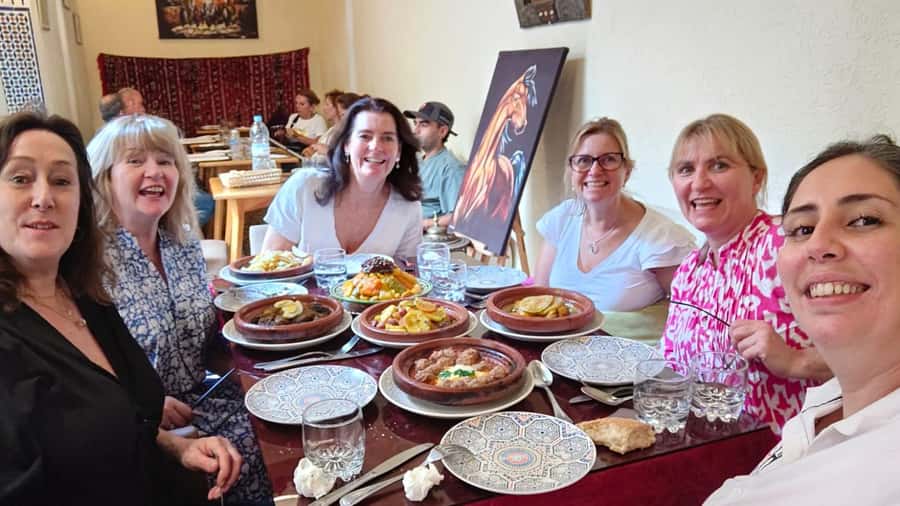
Come hungry, leave with a fuller picture of Rabat. This three-hour walk links the city’s Medina, food stalls, markets, and traditional eateries with six tasting stops and a full Moroccan meal. I like the mix of small bites and sit-down dishes, and I like that the guide explains the food alongside Rabat’s customs, architecture, religion, and daily life. The main drawback is simple: at $72 per person, it is not a cheap lunch, and the generous portions may leave you uncomfortably full.
The walk begins at Rabat Ville train station and ends at the Kasbah des Oudayas, so you get useful city orientation as well as food. Guides such as Mohammed, Imane, and Sarra have been praised for their warmth and clear explanations. Still, you should plan your timing carefully, since three hours of eating, walking, and conversation can feel packed.
In This Review
- Key points at a glance
- Starting at Rabat Ville and entering the Medina
- Six tasting stops through Rabat’s market lanes
- The community ovens and everyday food culture
- A full Moroccan meal in the Medina
- Mint tea, pastries, and the walk to the Kasbah des Oudayas
- How the guides shape the experience
- Dietary needs and family suitability
- Is $72 a fair price in Rabat?
- Timing, cancellation, and practical planning
- Who should book this Rabat food walk?
- Should you book it?
- FAQ
- Where does the Rabat food tour begin?
- Where does the tour finish?
- How long does the walking food tour last?
- How much does the tour cost?
- How many tasting stops are included?
- Is a meal included?
- What food might I taste?
- Is the tour conducted in English?
- Can the tour accommodate dietary restrictions?
- Should I eat before the tour?
- Is transportation included?
- Can I cancel the booking?
Key points at a glance
- Six tasting stops plus a full meal: This is far more than a pastry-and-tea outing. Expect a substantial sampling of street foods followed by Moroccan dishes at a local restaurant.
- A practical route through the Medina: You start at Gare Rabat Ville and finish near the Kasbah des Oudayas, making the tour useful early in your stay.
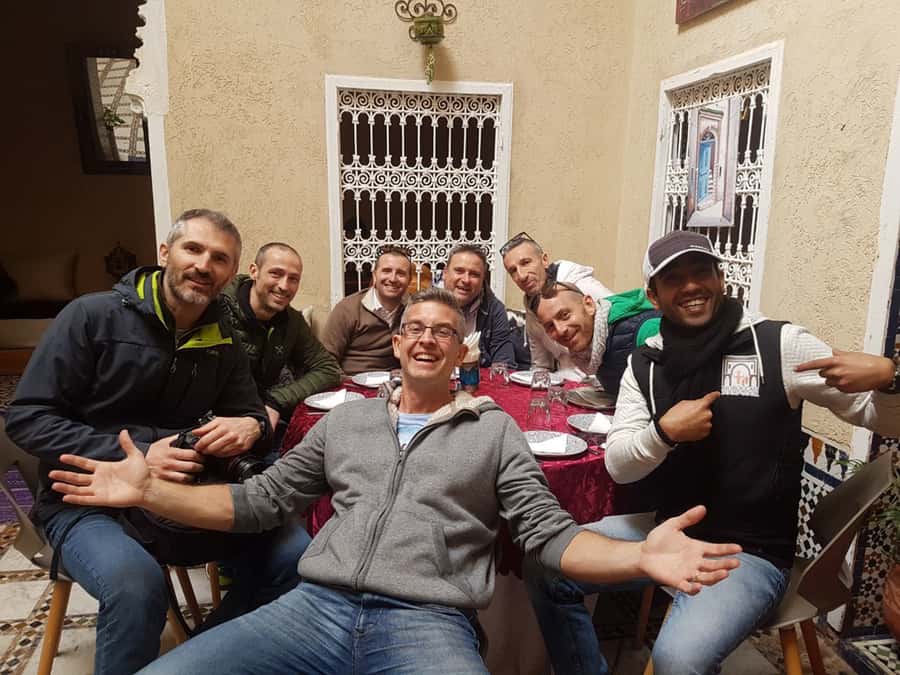
- Strong guide-led context: Mohammed, Imane, and Sarra have all been praised for explaining food, customs, history, and the Medina in an engaging way.
- Plenty of variety: Tastings can include sardines, stuffed dates, chebakia, smoothies, pastries, salads, tagine, couscous, mint tea, and almond cookies.
- Good for dietary needs: Vegetarian, gluten-free, and lactose-free preferences can be accommodated if you share them ahead of time.
- A serious amount of food: Come with an empty stomach. Even then, you may want to pace yourself.
Starting at Rabat Ville and entering the Medina
The meeting point is in front of the main door of Gare Rabat Ville on Avenue Mohammed V. That is a useful place to begin because it is easy to identify, and the route then moves toward the Medina rather than asking you to find a small stall deep inside the old quarter.
Your guide leads you into Rabat’s historic Medina, where narrow lanes, traditional buildings, market stalls, artisans, and produce sellers provide the setting. This is not a food tour conducted from a vehicle. You move on foot, stopping often, so comfortable shoes matter.
I like this format because the walk gives you a sense of how food fits into city life. You are not simply handed a plate and told what it is. You can watch the market operate, see products being sold, and ask how Moroccan dishes relate to family customs and local routines.
The guide also adds information about Rabat beyond food. You may hear about architecture, religion, traditions, and the city’s past as you move between stops. That wider context is one of the tour’s best features. A stuffed date or bowl of soup becomes more memorable when you understand how it fits into Moroccan hospitality and everyday eating.
More food tours in Morocco:
- From Marrakech: Merzouga 3-Day Desert Safari with Food
★ 4.7 · 12,232 reviews - Marrakech: Street Food Tour with a Local Guide
★ 4.9 · 3,119 reviews - Marrakech: Street Food Tour by Night
★ 4.8 · 2,838 reviews
Six tasting stops through Rabat’s market lanes
The exact order of the food is not provided, and ingredients can vary. The stated tasting list includes sardines, stuffed dates, chebakia, and other local products, while detailed tour experiences have included fresh drinks, traditional pastries, almond cookies, and unusual cuts of meat.
Sardines are a particularly fitting taste in a Moroccan coastal city. They give you a savory contrast to the sweeter treats that often appear on food walks. You may also encounter market products that you would not feel confident ordering on your own. One useful role of the guide is helping you understand what is being served and how to approach unfamiliar foods.
Dates stuffed with fillings offer a completely different experience. They are sweet, compact, and easy to sample between stops. Chebakia, a Moroccan pastry associated with honey and sesame, brings another layer of sweetness and spice. If you have a sweet tooth, the pastry stops may become favorites, but pace yourself because the meal still lies ahead.
Past tours have also included smoothies or fresh juices, traditional pastries, and almond cookies bought during the walk. These small stops create variety, but they can add up quickly. One practical tip is to take small portions when possible and save room for the main meal.
A few food samples may be more adventurous. One detailed account included cow’s head, which gives you an idea of the range of local fare. If that sort of dish is not for you, tell the guide clearly. The tour is designed to work with dietary restrictions, and a simple preference is easier to manage when shared before the walk begins.
The community ovens and everyday food culture
One of the most interesting details associated with this route is a visit or explanation connected to community ovens. These shared ovens are a useful window into neighborhood life. They show that Moroccan food culture is not only about restaurant dishes prepared for visitors. It also depends on local systems, shared facilities, markets, and long-standing routines.
This is the sort of detail I value on a food tour. You get a better sense of how food moves through the community, from fresh produce vendors to prepared foods and shared cooking spaces. The guide’s explanations help turn the Medina from a pretty collection of lanes into a lived-in neighborhood.
You should also use this part of the walk to ask questions. The tour description encourages conversation, and the strongest guide experiences have involved personal attention and clear answers. Mohammed has been praised for his warmth and humor, while Imane and Sarra have been singled out for enthusiasm and strong explanations.
The group size is not specified, so I would not book this expecting a guaranteed private tour. One earlier booking happened to have only one participant, but that should be treated as an occasional possibility rather than a promise. The guide-led nature of the walk does mean you can ask about ingredients, customs, and places to eat later.
A full Moroccan meal in the Medina
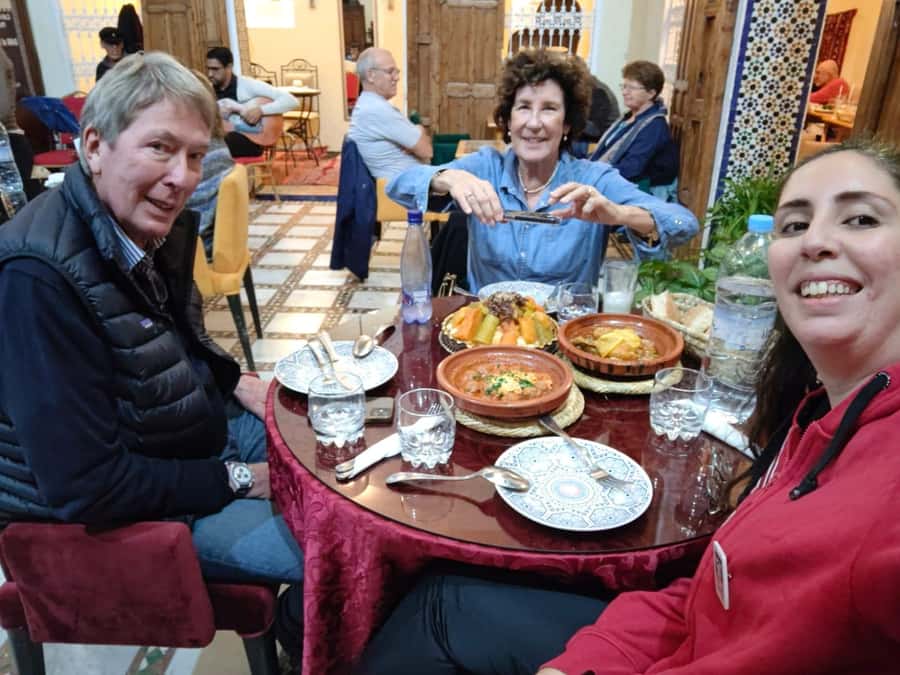
The six tastings are only part of the food. The tour includes a full meal, and this is where the value becomes easier to judge.
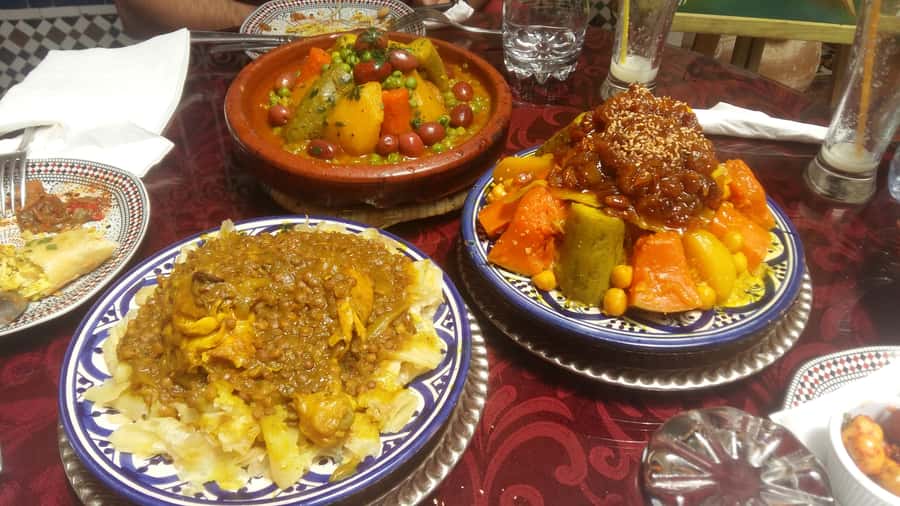
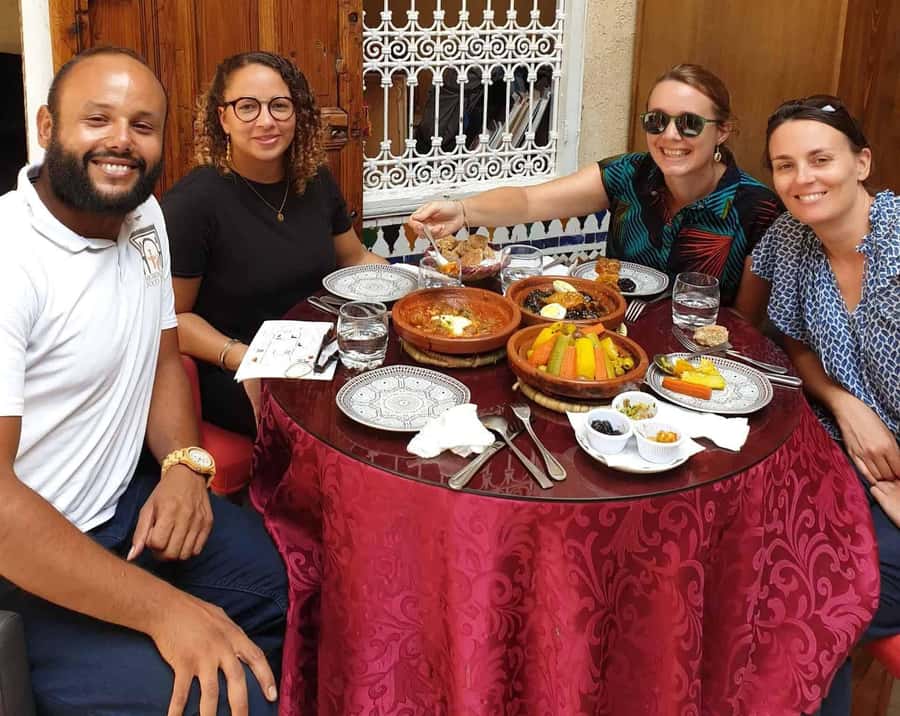
Past food selections have included traditional salads and spreads, two tagine dishes, couscous, and Moroccan pastries. Another account described lunch at Dar Medina as a strong finish. A meal like this gives you a proper introduction to the structure of Moroccan dining rather than only a series of snacks.
Tagine is often the dish people hope to try in Morocco, but a food tour can make the experience more useful by placing it among other foods. You may taste salads and small plates first, then compare them with the slower, more substantial main dishes. Couscous adds another classic element, and the combination helps you understand the range of textures and flavors in a Moroccan meal.
The restaurant meal is also a welcome pause after walking through the Medina. It gives you time to ask follow-up questions and talk with the guide. Several guides have been praised for being easy to speak with, which matters here. The food is only half the point. The conversation helps you connect what you ate with Moroccan traditions.
The warning about quantity is real. One person found the portions too large, and several others described being extremely full by the end. The tour asks you to arrive on an empty stomach, which is sensible, but you should still pace yourself. This is not a light morning snack followed by a modest lunch.
Same city gate, a very different afternoon:
- Marrakech: Agafay Desert Sunset, Camel Ride, and Dinner Show
★ 4.6 · 35,119 reviews - From Marrakech: Ouzoud Waterfalls Guided Hike and Boat Trip
★ 4.7 · 33,630 reviews - Marrakech: Agafay Desert Quad & Camel Rides with Dinner Show
★ 4.8 · 27,382 reviews - Marrakech: Agafay Desert Quad Biking Tour with Dinner-Show
★ 4.8 · 16,569 reviews
Mint tea, pastries, and the walk to the Kasbah des Oudayas
The route finishes at the Kasbah des Oudayas. Along the way or near the end, you can expect Moroccan mint tea and pastries to play a role in the final stretch. One particularly appealing ending involved sitting at a riverside café with coffee or mint tea and almond cookies.
The endpoint gives the tour a strong sense of place. You do not finish back at the train station or at an anonymous restaurant. You finish near one of Rabat’s best-known historic areas, with views and photo opportunities along the way.
That makes the tour useful for planning your day. If you are arriving by train, you can meet at Rabat Ville and then continue exploring around the Kasbah after the food walk. Transportation is not included, but the route itself is walked, and the finish is in an area where you may want to spend more time.
Keep in mind that the tour covers food, conversation, and a good stretch of the old city in only three hours. You will not receive a slow, exhaustive visit to every landmark. Instead, you get a moving introduction with a satisfying meal attached.
How the guides shape the experience
The guide is the key variable in a food tour, and this one has received especially strong praise for its guiding. Mohammed appears repeatedly as a friendly and engaging host, with several accounts describing him as warm, humorous, and well informed. Imane has been praised for her enthusiasm, and Sarra for her explanations of Moroccan food and culture.
I would ask questions rather than quietly follow along. Ask how a pastry is made, why a dish appears at a certain meal, or what to order later in Rabat. The tour is set up for interaction, and the more you participate, the more useful the three hours become.
The guide also helps with the social side of street food. A market stall can be confusing if you do not know what to point at or how much to order. Having someone explain the choices lets you try foods you might otherwise pass by.
The cultural discussion extends beyond food. Past tour experiences have included information about Moroccan history, architecture, religion, traditions, and nearby cities. That makes this a better choice for someone who wants context, not just a list of tastings.
Dietary needs and family suitability
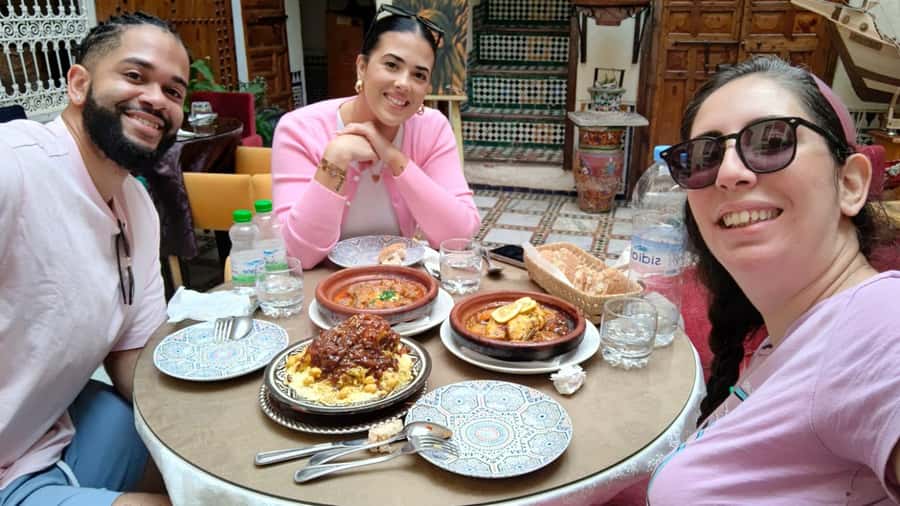
The tour states that vegetarian, gluten-free, and lactose-free diets can be accommodated. You should give your preferences in advance rather than waiting until you reach the first stall. The available alternatives will depend on the food served that day, but the provider says it will do its best to meet those needs.
Vegetarians have successfully taken part with suitable substitutions. This is encouraging, though you should still explain how strict your restrictions are. A preference and a medical allergy require different levels of care.
The tour can also suit families. A six-year-old and a thirteen-year-old were both able to enjoy one version of the walk, including the food and conversation. The main issue for children is the length and quantity. Three hours of walking and eating may be a lot for a young child, especially if the group moves at an adult pace.
If you are traveling with children, tell the guide at the start what they are willing to try. The variety of small tastings can work well, but the less adventurous items should never become a source of pressure.
Is $72 a fair price in Rabat?
At $72 per person, this tour costs more than finding a few snacks independently in the Medina. If your only goal is to eat cheaply, you can spend less by choosing stalls yourself.
The price is easier to justify if you value the full package: six tasting stops, a full meal, a live English-speaking guide, neighborhood orientation, cultural explanations, and help with unfamiliar foods. You are paying for access and interpretation as much as for ingredients.
The generous meal also matters. This is not a tour where you finish hungry and need to buy lunch afterward. The food can be so plentiful that you may not want dinner later. That makes the price more reasonable for someone who would otherwise pay separately for lunch, snacks, and a guided city walk.
Still, the cost may feel high for budget travelers or anyone who already knows Moroccan cuisine. I would book it early in a Rabat stay, when the guide’s advice and route orientation can shape the rest of your visit. If you take it on your final day, much of the practical benefit arrives too late.
Timing, cancellation, and practical planning
The advertised duration is three hours, with starting times available according to the date you choose. Because the route includes repeated stops and a full meal, do not schedule a train, museum visit, or other fixed appointment immediately afterward.
Wear shoes suited to narrow streets and walking. Bring an appetite, but do not eat a heavy breakfast or lunch first. The most consistent practical advice is to arrive hungry, then eat slowly.
The tour is conducted in English. Free cancellation is available up to 24 hours before the start for a full refund, and you can reserve now and pay later. Those policies are useful if your Rabat schedule is still changing.
The tour does not include transportation. You are responsible for getting to Gare Rabat Ville and arranging onward transport after finishing near the Kasbah des Oudayas.
Who should book this Rabat food walk?
I would recommend it to first-time visitors who want an easy introduction to Rabat’s food and Medina. It is also a good fit if you are nervous about ordering at street stalls, curious about Moroccan customs, or keen to combine lunch with a guided walk.
It suits food-focused families and vegetarians who communicate their needs ahead of time. The English-speaking guide and conversational format make it useful for people who want to ask questions rather than simply follow a preset route.
I would think twice if you prefer small portions, dislike eating at several stops, or have a very tight budget. The amount of food is a genuine concern, not a minor detail. You may enjoy the quality and variety while still wishing the servings were smaller.
Should you book it?
Book this Rabat walking food tour if you want a full meal, many tastings, and a local guide who can explain more than what is on the plate. The route from Rabat Ville to the Kasbah des Oudayas gives you both practical orientation and a taste of daily Medina life.
Skip it if you want a cheap, self-guided snack crawl or a short tasting with little walking. At $72, the value depends on using the guide well, asking questions, and arriving hungry enough to appreciate the generous spread. For most first visits, I would schedule it near the beginning of your Rabat stay and treat it as both lunch and a useful introduction to the city.
FAQ
Where does the Rabat food tour begin?
It begins at Gare Rabat Ville, on Avenue Mohammed V, in front of the main door of the station.
Where does the tour finish?
The tour finishes at the Kasbah des Oudayas.
How long does the walking food tour last?
The experience lasts three hours.
How much does the tour cost?
The listed price is $72 per person.
How many tasting stops are included?
Six tasting stops are included, along with a full meal.
Is a meal included?
Yes. The tour includes a full meal, with past food selections including salads, spreads, tagine, couscous, pastries, and mint tea.
What food might I taste?
Possible tastings include sardines, stuffed dates, chebakia, local pastries, smoothies, almond cookies, and other Moroccan products. The exact selection can vary.
Is the tour conducted in English?
Yes. The listed live tour language is English.
Can the tour accommodate dietary restrictions?
The provider states that vegetarian, gluten-free, and lactose-free preferences can be accommodated. You should share your needs in advance.
Should I eat before the tour?
You should arrive on an empty stomach. The tour includes many tastings and a full meal, and the portions may be generous.
Is transportation included?
No. Transportation is not included. You need to reach the meeting point and make your own arrangements after the tour.
Can I cancel the booking?
You can cancel up to 24 hours in advance for a full refund. The reserve-now, pay-later option also allows more flexibility when planning.
More Walking Tours in Morocco
- Marrakech: Ben Youssef, Secret Garden, & Souks Walking Tour
★ 4.6 · 2,802 reviews - Marrakech: Colorful Medina Souks Guided Walking Tour
★ 4.7 · 2,470 reviews - Explore Fes: Unforgettable Guided Walking Tour of the Medina
★ 4.7 · 1,339 reviews - Marrakech: Medina by Night Walking Tour with Moroccan Tea
★ 4.6 · 586 reviews
Just listed around Morocco
- 3 Days To Merzouga Desert★ 5.0 · 19 reviews
- 3 Days Shared Sahara Desert Tour From Marrakech★ 5.0 · 78 reviews
- 1 night Camel Treking in Merzouga Desert Luxury Camp★ 5.0 · 132 reviews
- 3 Days Sahara Desert Trips From Marrakesh★ 5.0 · 176 reviews
- 3 Days Sahara Tour from Marrakech to Merzouga Dunes★ 5.0 · 29 reviews
- trip of your dreams in 3 days and 2 nights in the desert★ 5.0 · 36 reviews
- 3 Days Private Tour to Merzouga Desert from Marrakech★ 5.0 · 77 reviews
- 3 Day Sahara Desert Tour From Marrakech★ 5.0 · 49 reviews
Walking Tours, compared.
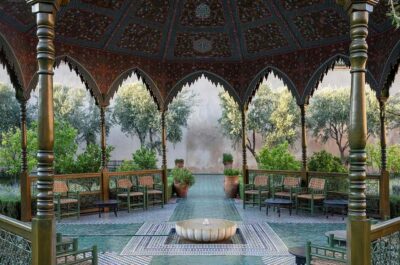
Ben Youssef, Secret Garden, & Souks Walking Tour
Read our review →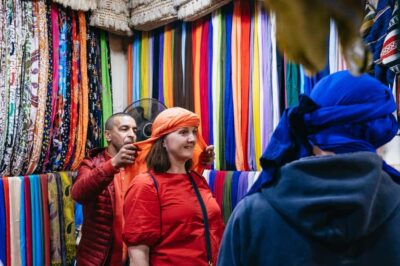
Explore Fes: Unforgettable Guided Walking Tour of the Medina
Read our review →
Exclusive Fez Medina Walking Tour with Private Guide
Read our review →
Browse the lists this tour appears in