
Reviewed · CITY TOURS
Rabat: Private Guided City Walking Tour
Rabat rewards curious walkers. This two-hour private tour links the capital’s key sights with the everyday life of its medina, making a short visit feel well spent. I like the focus on the Kasbah of the Udayas and Hassan Tower, and I like having a guide explain what you are seeing instead of simply passing monuments in silence.
I also appreciate the easy meeting point at Rabat Ville train station and the choice of English, French, or Arabic. A possible drawback is the pace: two hours is enough for an overview, but not for a slow museum-style visit or a long stop at every site.
In This Review
- Key points at a glance
- Why Rabat is a smart city for a short walking tour
- Meeting at Rabat Ville and getting oriented
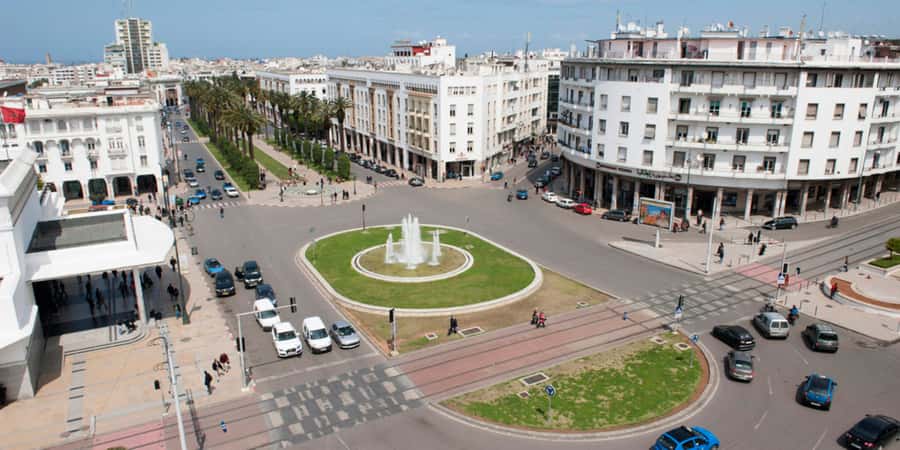
- Mohamed V Avenue and the modern capital
- The Kasbah of the Udayas, the tour’s characterful stop
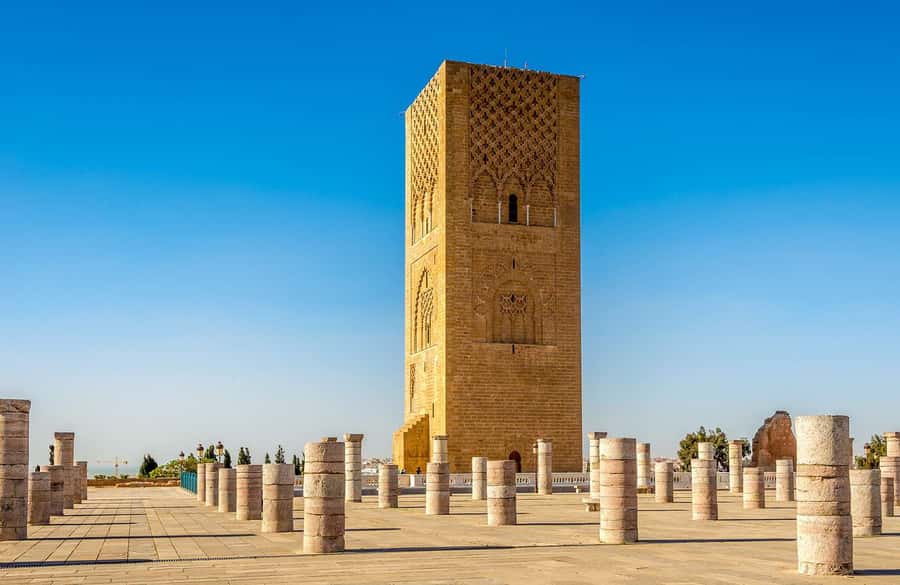
- Hassan Tower and the Royal Mausoleum
- Walking through the medina
- What the guide adds to the experience
- The two-hour pace and what you will not get
- Lunch, timing, and practical value
- Who should book this Rabat walk
- Should you book the Rabat private walking tour?
- FAQ
- Where does the Rabat walking tour meet?
- How long does the tour last?
- What languages are available?
- What sights are included?
- Is transportation included?
- Is lunch included?
- What should I bring?
- Can I cancel the booking?
Key points at a glance
- Kasbah of the Udayas: Walk through one of Rabat’s most important historic areas and learn how the old fortress fits into the city’s story.
- Hassan Tower and Royal Mausoleum: See two of Rabat’s best-known monuments, with the mausoleum viewed from outside.
- Medina walk: Get a direct look at local streets, shops, and daily routines rather than seeing Rabat only through grand monuments.
- Mohamed V Avenue: Follow one of the capital’s notable central streets as part of the city overview.
- Private guide, small group: The group is limited to 10 people, with a live guide in English, French, or Arabic.
- Flexible finish: After the walk, you can ask your guide for help choosing a place to buy lunch, though food and drinks are not included.
Why Rabat is a smart city for a short walking tour
Rabat is Morocco’s capital, yet it often receives less attention than Marrakech, Fez, or Casablanca. That can work in your favor. You can see major monuments and get a feel for ordinary city life without trying to cover an enormous old quarter in a single frantic morning.
I like this tour because it gives you a useful first frame for Rabat. The city is not presented as one long market street. Instead, you move between official avenues, royal monuments, a medieval fortress area, and the medina. Those contrasts help you understand Rabat as a living capital rather than only a sightseeing stop.
The tour costs $79 per person. That is a fair price if you value personal explanation and want to cover several major areas in a compact visit. It is less attractive if you mainly want an inexpensive orientation walk or prefer to explore independently with a guidebook.
The private format is important here. You can ask questions about the city’s past, daily life, or the meaning of a monument as you go. The advertised group limit is 10 people, so the experience may be private for your party or simply kept to a small number of participants, depending on the booking arrangement.
More medina walks in Morocco:
- Marrakech: Ben Youssef, Secret Garden, & Souks Walking Tour
★ 4.6 · 2,802 reviews - Marrakech: Colorful Medina Souks Guided Walking Tour
★ 4.7 · 2,470 reviews - Explore Fes: Unforgettable Guided Walking Tour of the Medina
★ 4.7 · 1,339 reviews
Meeting at Rabat Ville and getting oriented
You meet your guide at the gate of Rabat Ville train station in central Rabat. This is a practical starting point, especially if you are arriving by train or staying in the city center.
The meeting point also helps remove one common travel nuisance: finding an unfamiliar guide in a crowded square. Confirm the exact gate and arrive ready to walk, since transportation is not included and the experience is on foot.
Your guide begins with an overview of Rabat and then leads you toward the city’s main historic areas. The value of this opening is not just convenience. A local guide can point out how the capital’s central spaces connect, giving you a mental map before you wander on your own later.
Bring water and wear comfortable shoes. The tour lasts only two hours, so the walking may feel purposeful rather than leisurely. Comfortable clothing will also help, particularly if you are visiting during a warm part of the day.
Mohamed V Avenue and the modern capital
A walk along Mohamed V Avenue gives the tour a useful change of pace. This is not simply a route between old monuments. It helps you see Rabat as the administrative and political center of Morocco.
The avenue provides context for the grander sights that follow. You are not looking only at old walls and towers. You are also moving through the public face of a modern capital, where broad streets and important civic buildings help explain Rabat’s role in the country.
Your guide can add meaning to what might otherwise look like a straightforward city street. That is one of the strongest reasons to choose a guided walk over a self-guided route. The buildings and spaces may be easy to photograph, but the historical connections are harder to spot without explanation.
Do not expect a long architectural tour of every building on the avenue. The two-hour schedule gives you an overview, not an exhaustive study. If this area interests you most, ask your guide early how much time can be devoted to it.
The Kasbah of the Udayas, the tour’s characterful stop
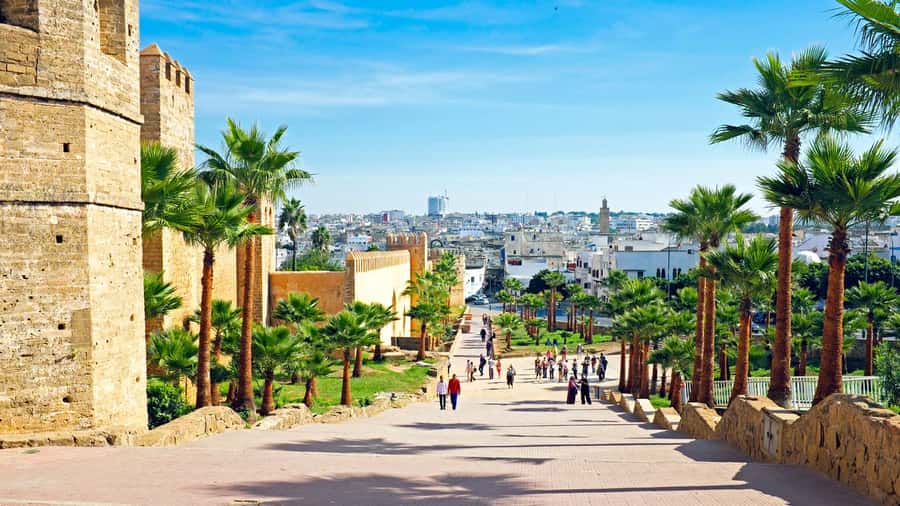
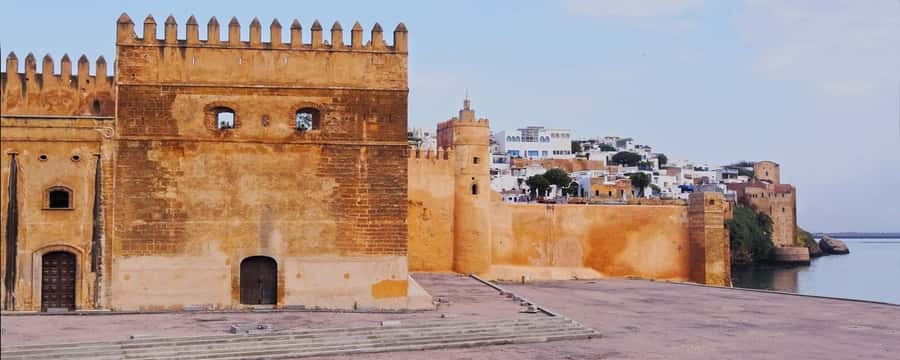
The Kasbah of the Udayas is likely to be the emotional high point of the walk. It brings together fortress walls, old streets, and a strong sense of Rabat’s past.
The kasbah is also where the tour’s promise of local atmosphere becomes most convincing. You stroll through a historic neighborhood rather than viewing a monument from a distance. The narrow streets and old urban layout give you a better sense of how people have used this part of the city over time.
Your guide’s explanation matters here. Without context, the kasbah can become a pleasant maze of walls and doorways. With a guide, you can place it within Rabat’s wider story and understand why it is treated as one of the city’s major heritage sites.
The Kasbah of the Udayas is associated with Rabat’s UNESCO World Heritage recognition, making it one of the most significant stops on the route. The tour does not turn this into a formal heritage lecture. Instead, you get the useful version: what the place is, why it matters, and what details deserve your attention.
Give yourself room to look around, but keep in mind that this is still a group walking schedule. If you enjoy taking many photographs or stopping at every corner, two hours may feel tight. I would save long photo sessions for after the tour and use the guide’s time for questions.
A few more Morocco runs to hold up against each other
- Rabat Food Tour in the Old Town
★ 5.0 · 102 reviews - Rabat: Guided City Tour with Mausoleum Mohammed V Visit
★ 4.4 · 86 reviews - Private Transfer from Rabat Sale Airport to Rabat Medina
★ 5.0 · 60 reviews - Join Best Moroccan Cooking Class with Chef Khadija ( Over 35 years Experience )
★ 5.0 · 56 reviews
Hassan Tower and the Royal Mausoleum
The tour then brings you to Hassan Tower, one of Rabat’s defining monuments. Its scale and unfinished character make it different from the city’s enclosed old quarters.
This stop works well in a short tour because you can understand the monument from the outside without needing a long visit inside. Your guide can explain its place in Rabat’s history and help you notice the relationship between the tower and the surrounding complex.
You also see the Royal Mausoleum, though the experience specifies an exterior view. That distinction matters. You should not book this expecting an interior visit or a detailed tour of the mausoleum’s rooms. The reward is the building’s exterior and the chance to understand its importance as part of Rabat’s royal and national identity.
These monuments are among the sights most often praised for making the tour feel worthwhile. Past bookings have singled out guides such as Ilyass Imami and Rachid for clear explanations, friendly manner, and strong command of Rabat’s story. Guide assignments can vary, but the personal approach is central to the experience.
One memorable touch reported from a booking with Ilyass Imami was an invitation for traditional tea. This is not listed as a guaranteed part of every tour, so you should treat it as a pleasant possibility rather than a promised inclusion. The food and drink policy is clear: lunch and refreshments are not included.
Walking through the medina
The medina gives you the most direct look at daily life. You stroll through its streets, taking in the movement of local shoppers, shopfronts, and ordinary routines.
This part of the walk is valuable because it keeps the experience from becoming a procession of famous monuments. You see how the historic center functions today, not only how it appears in photographs. Your guide can help you understand what you are looking at and can answer questions as the streets grow busier.
The medina may also be the least predictable part of the route. Street activity changes, and the pace can vary. Stay close enough to hear your guide, especially if the group reaches a crowded section.
You do not need to plan a separate shopping session into these two hours. The medina is included as a taste of local life, not as a dedicated market tour. If you want to browse carefully, compare prices, or shop for souvenirs, ask your guide when the best time would be and expect to continue after the formal walk.
What the guide adds to the experience
The strongest reason to pay $79 is the human layer. Rabat’s monuments are easy to name, but their meaning is not always obvious. A guide can connect the Kasbah, the medina, Mohamed V Avenue, Hassan Tower, and the mausoleum into one understandable story.
The guide language options are English, French, and Arabic. That gives you a good chance of finding a comfortable language for questions and conversation. The guide is live rather than recorded, so you can ask for clarification instead of waiting for a fixed audio explanation.
The personal style may vary by guide. Moncef has been praised for knowing both Moroccan history and Rabat itself. Other named guides, including Ilyass Imami and Rachid, have been described as engaging, clear, friendly, and well prepared. Those details suggest that the experience depends heavily on who leads your walk, but they also show the kind of service the tour aims to provide.
I would use the guide actively. Ask about the city’s role as Morocco’s capital, the purpose of the monuments, and how the medina fits into modern Rabat. A quiet follower may still see the sights, but a curious participant will get much more value.
The two-hour pace and what you will not get
Two hours is both the tour’s strength and its limit. It lets you fit a number of major sights into a morning or afternoon, which is useful if Rabat is one stop in a longer Morocco trip.
The tradeoff is depth. You will see the main sites, but you should not expect extended time at each one, a museum visit, or a full exploration of every historic street. The Royal Mausoleum is viewed from the outside, and the tour is designed around walking and explanation rather than long indoor stops.
I see this as an orientation tour. It helps you decide which places deserve a return visit. Afterward, you may want to revisit the kasbah, spend more time in the medina, or linger near Hassan Tower without needing to keep up with the group.
The walking format also means that transportation is not part of the package. You are responsible for getting to the meeting point and returning to your accommodation. The description notes that you can head back to your city accommodation after the tour, but no transport is included.
Lunch, timing, and practical value
Once the walk works up your appetite, you can choose a place to purchase lunch with help from your guide. This is a useful service, especially if you are unsure where to eat, but the meal is your own expense.
I like this arrangement better than a fixed restaurant stop for a short tour. You keep control over your budget and food preferences. The downside is that lunch is not part of the two-hour activity, so you should not count on a meal being built into the schedule.
Starting times vary, so check availability when booking. The tour offers free cancellation up to 24 hours before departure, with a full refund, and you can reserve now and pay later. Those terms are helpful if your train schedule or wider Morocco plans are still moving.
The price is easiest to justify for a first visit, a short stay, or anyone who wants personal guidance. If you already know Rabat well, or if you prefer to wander alone, you may find the cost harder to defend. For a couple or small group that shares an interest in history, the private format can make the fee feel more reasonable.
Who should book this Rabat walk
I would recommend this experience to you if:
- You have only a few hours in Rabat and want to see the main historic sights.
- You prefer explanations and conversation over independent sightseeing.
- You want to combine famous monuments with a walk through the medina.
- You are arriving at Rabat Ville station and want a simple central meeting point.
- You enjoy small groups and may want to ask a guide personal questions.
- You want a first look at Rabat before choosing where to spend more time.
I would be more cautious if you want a slow photography walk, a full visit inside every monument, or a shopping-focused medina experience. The schedule is compact, and the tour covers ground.
Should you book the Rabat private walking tour?
Book it if you want a clear, friendly introduction to Rabat in two hours. The route covers the Kasbah of the Udayas, Hassan Tower, the exterior of the Royal Mausoleum, Mohamed V Avenue, and the medina, while a guide supplies the links between them.
The best value comes from the explanations and the chance to ask questions. The main compromise is that $79 does not include transport, food, or drinks, and the short duration limits how long you can linger.
For a first visit, I think the balance is good. You see Rabat’s major historic faces, get a taste of ordinary city life, and finish with enough orientation to explore more confidently on your own.
FAQ
Where does the Rabat walking tour meet?
You meet your guide at the gate of Rabat Ville train station in central Rabat.
How long does the tour last?
The walking tour lasts two hours.
What languages are available?
The live guide can lead the tour in English, French, or Arabic.
What sights are included?
The tour includes Mohamed V Avenue, the Kasbah of the Udayas, Hassan Tower, the exterior of the Royal Mausoleum, and a walk through the medina.
Is transportation included?
No. Transportation is not included, so you need to reach the meeting point and arrange your return to your accommodation.
Is lunch included?
No. Food and drinks are not included. You can choose a place to purchase lunch with your guide after the walk.
What should I bring?
Bring comfortable shoes, water, and comfortable clothes.
Can I cancel the booking?
Yes. You can cancel up to 24 hours in advance for a full refund. You can also reserve now and pay later.
Just listed around Morocco
- 3 Days To Merzouga Desert★ 5.0 · 19 reviews
- 3 Days Shared Sahara Desert Tour From Marrakech★ 5.0 · 78 reviews
- 1 night Camel Treking in Merzouga Desert Luxury Camp★ 5.0 · 132 reviews
- 3 Days Sahara Desert Trips From Marrakesh★ 5.0 · 176 reviews
- 3 Days Sahara Tour from Marrakech to Merzouga Dunes★ 5.0 · 29 reviews
- trip of your dreams in 3 days and 2 nights in the desert★ 5.0 · 36 reviews
- 3 Days Private Tour to Merzouga Desert from Marrakech★ 5.0 · 77 reviews
- 3-Days Private Tour from Marrakech to Fez through Merzouga Desert★ 5.0 · 29 reviews
City Tours, compared.

Blue City magic: Affordable Day Trip from Fez to Chefchaouen
Read our review →
Marrakech Historical and Cultural Tour – Half Day City Tour
Read our review →
Highlights of Marrakech: Private Half-Day City Tour
Read our review →Browse the lists this tour appears in