
Reviewed · HISTORICAL TOURS
Marrakech Historical and Cultural Tour – Half Day City Tour
Marrakech reveals itself one alley at a time. This half-day walk brings together Bahia Palace and the Saadian Tombs, then threads through souks, the Kasbah, and Jemaa el-Fna with a local guide to keep the story straight. I like the choice of morning or afternoon departures, and I like the small maximum group of 15, which matters in narrow lanes and crowded courtyards.
The price is reasonable at $30.94 per person, especially for a first look at the medina. The catch is that entrance fees, drinks, and hotel pickup are extra, and the tour can lose time when the Saadian Tombs are crowded. A few people have ended up choosing the souks instead of waiting in line.
In This Review
- Key points to know before booking
- What this three-hour Marrakech walk is really for
- Starting at Jemaa el-Fna
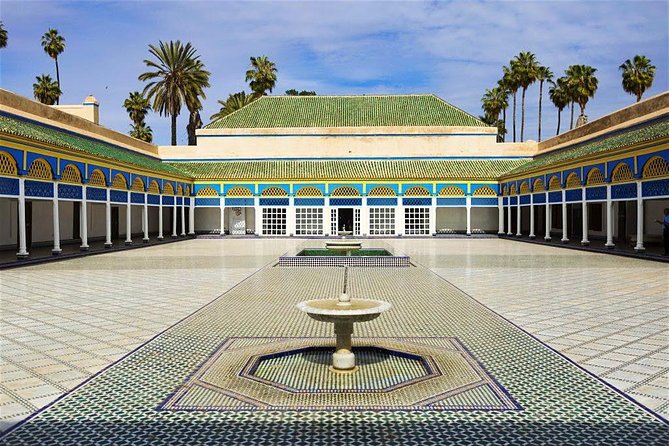
- Bahia Palace and the art of Moroccan detail
- The Jewish quarter and the Kasbah
- The Saadian Tombs and the problem of the queue
- Bab Agnaou and the royal entrance
- Koutoubia Mosque and the city’s famous landmark
- Entering the souks with a guide
- The guides make or break the morning
- Is $30.94 a fair price?
- Timing, comfort, and practical preparation
- Who should book this Marrakech tour?
- Final verdict: book it for orientation, not certainty
- FAQ
- How long does the Marrakech Historical and Cultural Tour last?
- How much does the tour cost?
- Is the tour available in the morning and afternoon?
- What is included in the tour price?
- Are monument entrance fees included?
- Is hotel pickup and drop-off included?
- Where does the tour meet?
- What is the maximum group size?
- Can children join the tour?
- What happens if I need to cancel?
Key points to know before booking
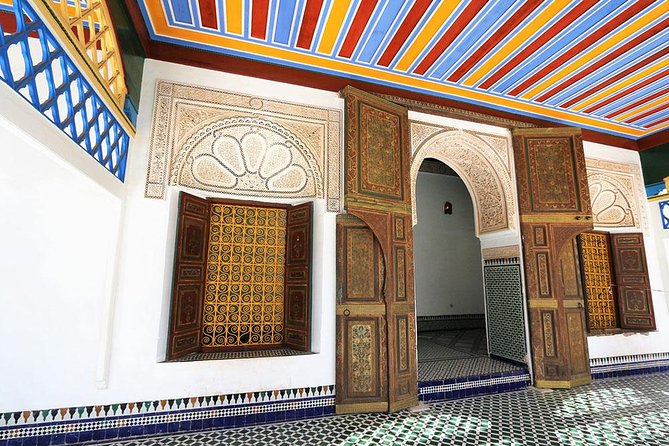
- Bahia Palace gets a full hour: Its gardens, tiled rooms, carved wood, and palace design are the visual high point, but the entrance fee is extra.
- The Saadian Tombs can be difficult to enter: A long queue may force the group to choose between waiting and visiting more of the souks.
- The guide is the real value: Guides such as Abdul, Abdu, Ali, Mohamed, Jaouad, Hassan, and Oussama have been praised for clear stories, friendly care, and keeping groups together.
- The souk route aims beyond the main shopping lanes: You may see workshops connected with tinsmiths, dyers, herbalists, and argan processing.
- Jemaa el-Fna is the meeting point and finale: The square offers a quick look at storytellers, musicians, acrobats, jugglers, and other performers.
- Budget for extras: Most monument entrances cost about $10 each, and there is no included pickup or drop-off.
What this three-hour Marrakech walk is really for
This is a good first chapter in Marrakech rather than a complete study of the city. In roughly three hours, you move through several historic quarters, hear the basic story of the city, and get help finding your way through the medina’s lanes.
That guidance matters. The souks can feel like a maze, with workshops, shops, side alleys, and motorbikes competing for space. A local guide can point out details you might pass without noticing, including tile patterns, architectural styles, the meaning of eight-pointed stars, and the uses of different colors in Moroccan decoration.
The group can include up to 15 people. That is not private, but it is manageable for a walking tour. Several guides have been singled out for making the group feel safe and included, even in crowded places. Abdul, in particular, is praised for his humor, cultural explanations, and habit of keeping track of people in busy courtyards and while crossing streets.
You meet at Hôtel Restaurant Café de France beside Jemaa el-Fna. The tour ends back at the same meeting point, so you are left in a useful central location for lunch, a later visit, or another walk through the square.
A few more Marrakech runs to hold up against each other
- Marrakech: Historical Discovery Tour
★ 4.1 · 87 reviews - Marrakech: Day Trip to the Beautiful and Historic Essaouira
★ 4.3 · 39 reviews - From Marrakech: Essaouira Full day trip, beach and History
★ 4.9 · 26 reviews
Starting at Jemaa el-Fna
The opening stop at Jemaa el-Fna is brief, about 10 minutes, and admission is free. Do not expect a full performance session at this point. Instead, the guide helps you read the square, one of Marrakech’s main gathering places.
You may see storytellers, musicians, snake charmers, acrobats, jugglers, and performers of many kinds. The square changes throughout the day, so the exact feel depends on your departure time. A morning visit and an afternoon visit will not offer identical activity.
Starting here also gives you a practical orientation. The Café de France meeting point can be crowded, and identifying the correct guide may take a little patience. Look for clear instructions at the start and stay close while the group gathers. This is one part of the experience that can feel less organized than the sightseeing itself.
Bahia Palace and the art of Moroccan detail
Bahia Palace receives about an hour, making it the most substantial stop on the route. The palace was built in the late 19th century with the ambition of becoming the finest palace of its time. Its name means brilliance, a fitting description for the decoration.
I would pay close attention to the surfaces rather than rush from room to room. The value here is not only the palace story. It is the chance to see how Moroccan design combines tiled walls, carved wood, gardens, painted ceilings, and carefully framed spaces.
Guides can make the building easier to understand by explaining how the architectural styles and decorative elements connect. One guide, Abdu, has been praised for explaining the meaning of star shapes, color choices, and design traditions. Those small explanations turn a pretty courtyard into a place with a cultural vocabulary.
The drawback is cost. Admission is not included, and most of the monuments on this tour cost about $10 each. If you plan to enter both Bahia Palace and the Saadian Tombs, add roughly $20 per person to the advertised tour price, though exact fees can change.
The palace can also become crowded. Your guide may need to keep the group together while moving through narrow rooms and courtyards. That is useful, but it means you will not always linger exactly where you want.
The Jewish quarter and the Kasbah
The route continues through historic parts of the medina, including the old Jewish quarter and the Kasbah district. The Jewish quarter is described as undergoing a revival, while the Kasbah remains tied to the royal palace district.
These sections help connect the famous sights with everyday Marrakech. The Kasbah area around the Saadian Tombs is clearly a sightseeing zone, but it also retains traditional shops and a quieter local rhythm once the tombs close. That contrast is worth noticing. Marrakech is not only palaces and photo stops. It is also a working city, with people living and trading among the monuments.
The walk is part of the experience, not simply transportation between attractions. You may pass through smaller shops and older streets where the pace changes from the open square to shaded lanes. At the same time, you need to stay alert. One poor experience involved fast motorbikes trying to pass through narrow streets. Wear comfortable shoes, keep bags close, and follow the guide’s signals when the group crosses busy areas.
Same city gate, a very different afternoon:
- Marrakech: Agafay Desert Sunset, Camel Ride, and Dinner Show
★ 4.6 · 35,119 reviews - From Marrakech: Ouzoud Waterfalls Guided Hike and Boat Trip
★ 4.7 · 33,630 reviews - Marrakech: Agafay Desert Quad & Camel Rides with Dinner Show
★ 4.8 · 27,382 reviews - Marrakech: Agafay Desert Quad Biking Tour with Dinner-Show
★ 4.8 · 16,569 reviews
The Saadian Tombs and the problem of the queue
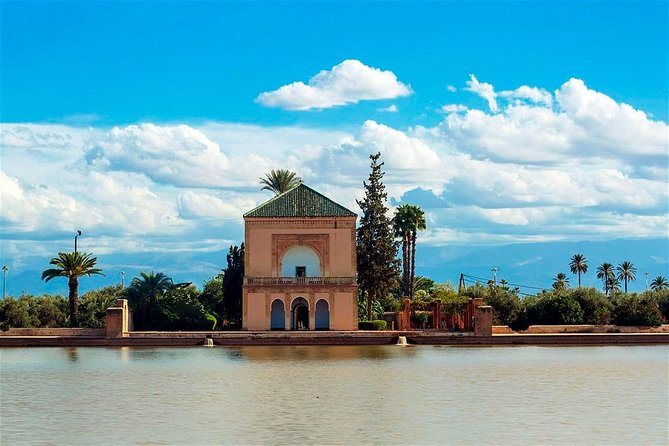
The Saadian Tombs are among Marrakech’s most important historic remains. They date to the Saadian dynasty and the reign of Sultan Ahmad al-Mansur. After being abandoned for centuries, they were rediscovered in 1917 through aerial photography and later restored by the Beaux-Arts service.
The site is located south of the Kasbah Mosque. Inside, the tombs are known for their decorated burial chambers and the evidence they provide of Saadian power and taste. The scheduled visit lasts about an hour, but the real timing depends on the line.
This is the tour’s biggest weakness. At busy times, the wait can reach an hour. The group may then vote on whether to remain in line or use the time for the souks. That is a sensible response to a difficult situation, but it creates a real risk: you could pay for a tour that includes the tombs and never enter them.
I would ask about the queue as soon as you arrive and decide what matters most to you. If seeing the tombs is a top priority, an independent visit at a quieter time may give you more control. If you mainly want an introduction to the medina, choosing the souks can still produce a worthwhile afternoon.
One guide handled this choice well by letting the group decide rather than forcing everyone to wait. That kind of flexibility improves the experience, but it cannot remove the uncertainty caused by crowding.
Bab Agnaou and the royal entrance

The walk also passes Bab Agnaou, one of Marrakech’s 19 gates. Built in the 12th century during the Almohad dynasty, it provided entry to the royal Kasbah in the southern part of the medina.
This is a short exterior stop, but it adds useful context. The gate was not simply a hole in the city wall. Its position connected the medina with the royal district, and its age links the present-day streets to Marrakech’s Almohad period.
A guide can point out how the gate fits into the old city’s defensive and ceremonial layout. You may not spend long here, but it helps explain why the Kasbah feels different from the commercial souks.
Koutoubia Mosque and the city’s famous landmark
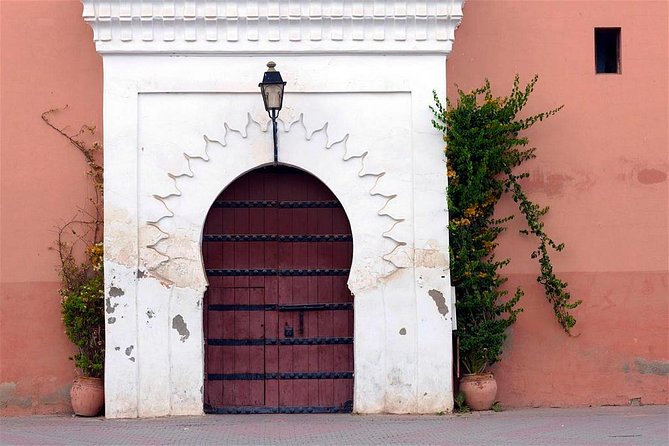
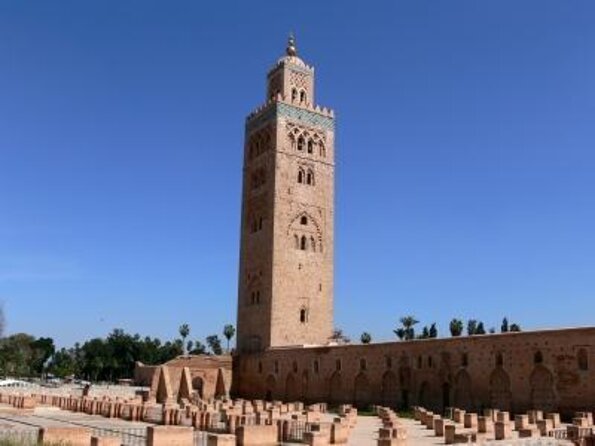
Koutoubia Mosque is the largest mosque in Marrakech and one of the city’s defining landmarks. Its name is linked to booksellers, reflecting the area’s former association with the book trade.
The tour allocates about 30 minutes here, with free admission listed. As with many mosque visits in Morocco, the practical focus may be the exterior, surrounding grounds, architecture, and history rather than a standard interior sightseeing visit. The provided tour details do not promise interior access, so you should not book this expecting a full mosque tour.
This stop works well at the end because the minaret gives you a strong visual reference point for Marrakech. After the tight lanes and busy shopping streets, the mosque’s scale helps you understand the shape of the old city.
Entering the souks with a guide
The souks are where this experience can become more useful than a simple monument circuit. The guide leads you through colorful market streets and toward workshops that may be less frequented by tourists.
The focus includes tinsmiths, dyers, herbalists, and other traditional trades. One particularly interesting stop described in the tour experience involves watching argan being processed by hand. You may also be taken to a shop where products are offered for sale, so keep your expectations clear: this is partly a cultural stop and may include a sales pitch.
That does not automatically make it a bad stop. Seeing how a product is processed can be worthwhile, and a guide may offer practical advice about local tea or goods to take home. Abdul, for example, went out of his way to recommend a Moroccan tea brand.
Still, you should feel free to browse without buying. If shopping is not your main goal, tell the guide politely. The best part of the souks is often the working side of the market, not the pressure to purchase.
The lanes can be confusing, and motorbikes may move quickly through them. Stay near the group. In a group of up to 15, it is easy to lose sight of the guide if you stop for photographs or step into a shop.
The guides make or break the morning
The strongest part of this experience is the human element. Abdul is praised for being funny, warm, and careful with a group of 12. Ali brings the perspective of someone who lives in the medina. Mohamed is noted for explaining local history and culture in an engaging way, while Jaouad has led an enjoyable three-hour introduction to Marrakech.
Hassan has been especially appreciated for looking after a child in a crowded setting and allowing time for photographs. Abdorahim and Oussama have also been praised for their friendly attention.
Guides may be assigned based on language, schedule, and availability, so you cannot assume you will receive a particular person. Still, the repeated pattern is clear: the better guides do more than recite dates. They explain Muslim culture, point out design meanings, answer questions, take photographs when asked, and keep the group together.
There is some inconsistency. One guide was criticized for not wanting to walk in the hot sun, which is an unfortunate problem on a walking tour. The tour can also run longer than the advertised three hours, so do not schedule a tight appointment immediately afterward.
Is $30.94 a fair price?
At $30.94 per person, the price is fair for a guided introduction, especially if you value local orientation and cultural explanation. The group size is capped at 15, the route includes several major sights, and you have a choice of departure times.
The price becomes less attractive if you expect every listed monument to be included. Entrance fees are separate, drinks are separate, and there is no pickup or drop-off. The majority of monument entrances cost about $10 each, so the total can rise quickly.
The biggest value question is the tombs. If you miss them because of the line, you may feel that the tour delivered less than promised. On the other hand, a good guide can redirect the group toward the souks, explain what you are seeing, and turn a frustrating wait into useful time.
I see this as a good-value orientation walk, not the cheapest way to visit individual monuments. It suits someone who wants stories, navigation help, and a broad look at the medina in one compact outing.
Timing, comfort, and practical preparation
You can choose a morning or afternoon departure. That flexibility is helpful if you have a short stay, a late arrival, or other plans around the tour. Since the route is on foot, consider the heat when choosing your time.
Wear comfortable shoes. The route includes narrow lanes, crowded public spaces, palace courtyards, and historic districts. Bring water, since drinks are not provided, and leave room in your schedule in case the group runs longer than three hours.
Children must be accompanied by an adult. Most people can take part, and the meeting point is near public transportation. Because hotel pickup is not included, you need to reach Hôtel Restaurant Café de France at Jemaa el-Fna on your own.
Free cancellation is available if you cancel at least 24 hours before the start time. Changes or cancellations inside that window are not accepted for a refund.
Who should book this Marrakech tour?
I would choose this tour for a first visit, a short stay, or a solo visit when finding the medina alone feels daunting. It is also a sensible option if you want a guide to explain architecture and local customs rather than simply point out buildings.
Families can benefit from the group support, especially in the crowded palace and streets. The tour can also suit solo visitors because guides may help with group photographs and keep an eye on everyone.
I would be more cautious if the Saadian Tombs are your main reason for booking. The queue may take an hour, and entry is not guaranteed within the planned schedule. I would also think twice if you dislike walking in heat, crowded lanes, or possible shopping stops.
Final verdict: book it for orientation, not certainty
I recommend the Marrakech Historical and Cultural Tour as a practical introduction to the medina. The route covers Jemaa el-Fna, Bahia Palace, the Kasbah, Bab Agnaou, the Saadian Tombs, Koutoubia Mosque, and parts of the souks in a short period. The best guides add real value with stories, cultural context, humor, and steady group care.
Book it if you want help getting your bearings fast and you accept that crowds may change the plan. Budget separately for entrance fees, carry water, and treat the souk shopping stop as optional. If you need guaranteed entry to the Saadian Tombs or prefer a slower pace, choose a private tour upgrade or visit the monuments independently.
FAQ
How long does the Marrakech Historical and Cultural Tour last?
The tour lasts approximately three hours, although it may run longer depending on crowds and the pace of the group.
How much does the tour cost?
The listed price is $30.94 per person.
Is the tour available in the morning and afternoon?
Yes. Several departure times are available, including morning and afternoon options.
What is included in the tour price?
A local guide and a professional guide are included.
Are monument entrance fees included?
No. Entrance fees are extra. Most of the monuments cost about $10 each.
Is hotel pickup and drop-off included?
No. Pickup and drop-off are not included. The tour starts and ends at Hôtel Restaurant Café de France near Jemaa el-Fna.
Where does the tour meet?
The meeting point is Hôtel Restaurant Café de France, J2G7+G2G jamaa el-fnna, Rue des Banques, Marrakech 40000, Morocco.
What is the maximum group size?
The activity has a maximum of 15 participants.
Can children join the tour?
Yes. Children must be accompanied by an adult.
What happens if I need to cancel?
You can cancel at least 24 hours before the start time for a full refund. Cancellations or changes made less than 24 hours before the start time are not refunded.
Just listed around Marrakech
- 3 Days To Merzouga Desert★ 5.0 · 19 reviews
- 3 Days Shared Sahara Desert Tour From Marrakech★ 5.0 · 78 reviews
- 1 night Camel Treking in Merzouga Desert Luxury Camp★ 5.0 · 132 reviews
- 3 Days Sahara Desert Trips From Marrakesh★ 5.0 · 176 reviews
- 3 Days Sahara Tour from Marrakech to Merzouga Dunes★ 5.0 · 29 reviews
- trip of your dreams in 3 days and 2 nights in the desert★ 5.0 · 36 reviews
- 3 Days Private Tour to Merzouga Desert from Marrakech★ 5.0 · 77 reviews
- 3 Day Sahara Desert Tour From Marrakech★ 5.0 · 49 reviews
Historical Tours, compared.
Full-day Historical Meknes Volubilis and Moulay Idriss Tour
Read our review →
Casablanca Cultural Tour: Medina, Views & Local Delights
Read our review →
Casablanca to Fez: Scenic & Historical Day Trip with Lunch
Read our review →
A Guided Walking Tour Through the Historic Medina
Read our review →
Discover the secrets of the Medina of Fez: guided cultural tour (private)
Read our review →
History and culture with Fes Medina private tour guide
Read our review →Browse the lists this tour appears in