
Reviewed · HISTORICAL TOURS
Half Day Guided Tour in Marrakech History & Culture
Marrakech reveals itself one alley at a time. This three-hour walk brings you from the Koutoubia Mosque to Bahia Palace, Jemaa el-Fnaa, the souks, and Ben Youssef Madrasa, giving you a useful first look at the city’s monuments and daily life. I like the strong mix of major sights and working craft markets, and I like that guides such as Ibrahim and Mo adapt their explanations to your interests. The main drawback is that entrance fees are extra, and three hours can feel tight if you want long visits at every stop.
At $23.23 per person, this is a sensible way to get oriented in the medina without paying for a full-day excursion. You should expect walking, narrow lanes, lively sales pitches, and a group of up to 20 people. If you want context before exploring on your own, this tour offers good value, though shoppers may wish for more time in the souks.
In This Review
- Key points to know before you book
- Why this three-hour Marrakech walk works well
- Koutoubia Mosque: Marrakech’s unmistakable landmark
- Bahia Palace: tiled courtyards and royal ambition
- Jemaa el-Fnaa: Marrakech’s public stage
- The souks: craft, commerce, and careful shopping
- The Dyers’ Souk: color with a working purpose
- Marrakech’s carpet market: patterns, symbols, and bargaining
- Ben Youssef Madrasa: a quiet finish to the route
- Guide quality and group size
- Who should book this Marrakech tour?
- Should you book it?
- FAQ
- How long is the Marrakech history and culture tour?
- Where does the tour begin?
- Where does the tour end?
- Is the tour price per person?
- Are entrance fees included?
- What sights are included on the route?
- How large can the group be?
- Can I cancel for a full refund?
Key points to know before you book
- The route covers Marrakech’s essential cultural sights, including Koutoubia Mosque, Bahia Palace, Jemaa el-Fnaa, Ben Youssef Madrasa, and several souks.
- The souks are more than shopping streets, with stops focused on carpets, dyes, spices, leather, metal, wood, ceramics, and jewelry.
- Bahia Palace and Ben Youssef Madrasa cost extra, with both admission fees together staying below about 15 euros.
- Guides Ibrahim and Mo receive special praise for clear explanations, cultural background, shopping advice, and flexibility.
- The tour begins and ends near Jemaa el-Fnaa, at Argana, number 18 on Znikat Rahba.
- The maximum group size is 20, so the experience is personal enough for questions but not a private walk.
Why this three-hour Marrakech walk works well
Marrakech can feel confusing at first. The medina has lanes that twist without warning, markets that change their focus from one passage to the next, and historic buildings that are easy to miss if you do not know what you are looking at. A local guide gives the city a shape.
This tour works best as an introduction. You see the famous monuments, then move into the places where craftspeople and merchants keep older traditions alive. That combination matters. A palace tells you about power and wealth. A dye market shows how work and trade still shape the medina.
The price is low for a guided walk that includes several major stops. You pay separately for Bahia Palace and Ben Youssef Madrasa, but the extra cost is modest. The real value is the explanation along the way, especially in the souks, where a guide can point out the difference between a carpet style, explain a craft, or help you understand bargaining customs.
The tour is not designed for a slow, scholarly inspection of each monument. With roughly three hours, the pace must keep moving. I would choose it for your first day in Marrakech, or for a short stay when you want a strong overview without giving up an entire day.
A few more Marrakech runs to hold up against each other
- Marrakech Historical and Cultural Tour – Half Day City Tour
★ 4.5 · 1,180 reviews - Historical Marrakech Walking Tour
★ 5.0 · 198 reviews - Marrakech: Historical Discovery Tour
★ 4.1 · 87 reviews
Koutoubia Mosque: Marrakech’s unmistakable landmark
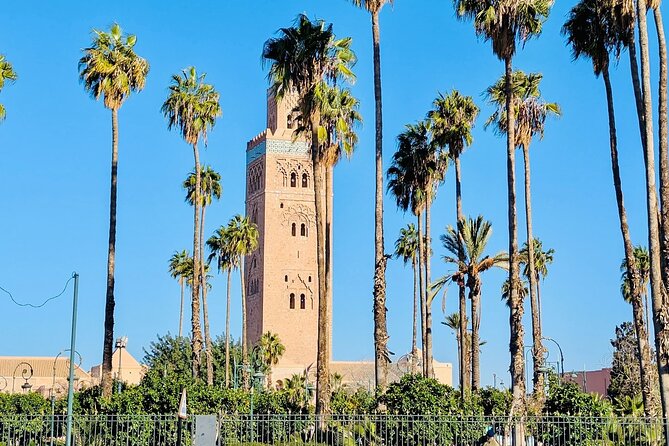
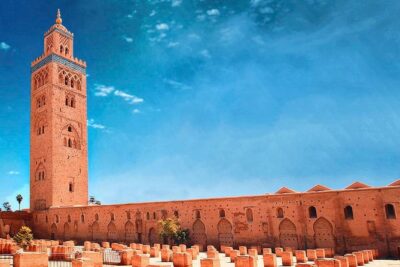
The tour starts with the Koutoubia Mosque, whose 12th-century minaret dominates the city skyline. Even if you do not enter the mosque, the exterior gives you an immediate sense of Marrakech’s scale and age.
Your guide explains the minaret’s Andalusian design, its place in the city, and its role as a reference point for people approaching Marrakech. The surrounding gardens offer a calmer setting and good views of the tower. That pause is welcome before the walk moves into the tighter lanes of the medina.
The scheduled visit lasts about 30 minutes, and admission is free. That makes this an easy opening stop. You receive useful context without spending a large part of the tour at one monument.
You should understand that this is primarily an exterior visit. The description focuses on the minaret, history, and gardens rather than entry into the mosque. Dress respectfully around the religious site, and follow your guide’s instructions.
Bahia Palace: tiled courtyards and royal ambition
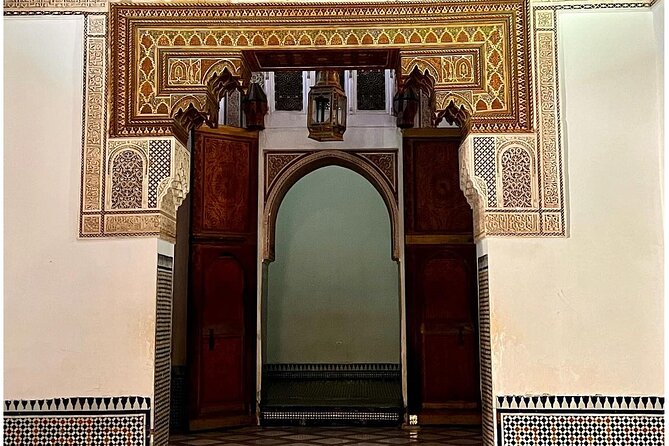
Bahia Palace receives about an hour, making it one of the tour’s main stops. You enter through the grand entrance and continue through gardens, courtyards, and decorated rooms.
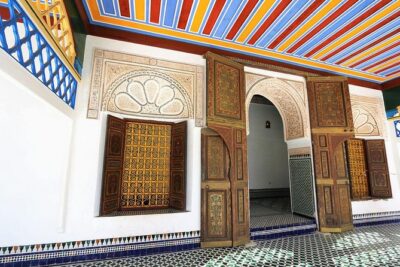
The palace is a lesson in Moroccan craftsmanship. Look for carved wooden ceilings, mosaics, sculpted details, and the way rooms open onto quiet interior spaces. Your guide connects these details to the palace’s royal past, so the building becomes more than a series of attractive patterns.
I like the longer timing here. Bahia Palace rewards attention, and a hurried ten-minute look would miss much of its appeal. The courtyards and rooms also provide a change from the noise and movement outside.
Admission is not included. The fee is stated as less than 10 euros, so you should budget for it separately. This is a small extra cost, but it is worth knowing in advance because the advertised tour price does not cover every monument.
The palace can also be one of the more crowded parts of a medina walk. Your guide can provide the story, but you may have limited time to stop wherever you like for photographs. If you enjoy architecture, stay close and listen for the explanation of the woodwork and mosaics.
Jemaa el-Fnaa: Marrakech’s public stage
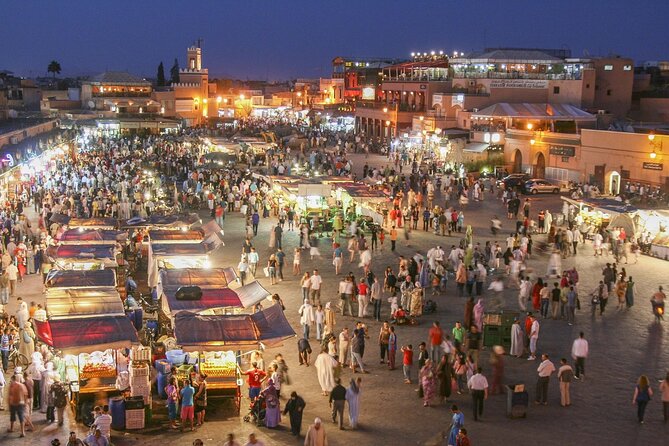
Jemaa el-Fnaa is the natural center of the route. The square connects the old city’s markets, food stalls, juice stands, shops, performers, and merchants. It has UNESCO World Heritage recognition and remains one of the clearest places to see Marrakech’s public life at work.
The planned stop lasts about 30 minutes. Your guide explains how the square developed and why it remains so important to the city. You will hear about spice sellers, musicians, street performers, and snake charmers, along with the restaurants and fresh juice stands around the square.
This is not a quiet museum visit. The square changes throughout the day, and its energy can be exciting or tiring depending on your tolerance for noise, crowds, and persistent sellers. Keep your belongings secure and stay aware of where the group is gathering.
The guide’s role is especially useful here. A first visit can feel like a blur of people and activity. A few details about what you are seeing help you separate a traditional practice from a tourist-oriented performance and make better choices about where to pause.
Same city gate, a very different afternoon:
- Marrakech: Agafay Desert Sunset, Camel Ride, and Dinner Show
★ 4.6 · 35,119 reviews - From Marrakech: Ouzoud Waterfalls Guided Hike and Boat Trip
★ 4.7 · 33,630 reviews - Marrakech: Agafay Desert Quad & Camel Rides with Dinner Show
★ 4.8 · 27,382 reviews - Marrakech: Agafay Desert Quad Biking Tour with Dinner-Show
★ 4.8 · 16,569 reviews
The souks: craft, commerce, and careful shopping
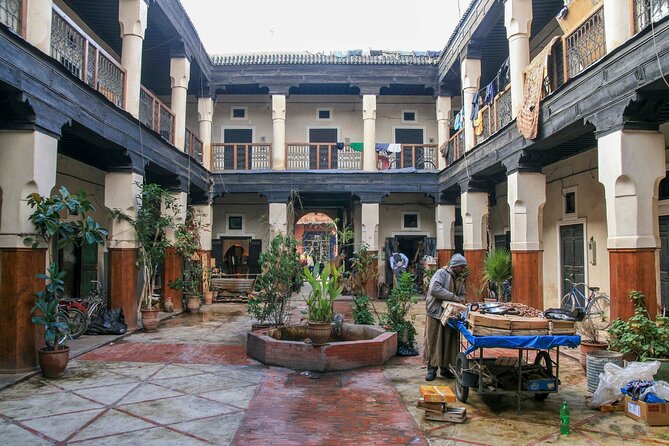
The souks are the heart of the walking portion. You pass through narrow market lanes where different trades are grouped by specialty. The route may include spices, fabrics, jewelry, leather, metal, wood, ceramics, and other handmade goods.
This is where the tour becomes practical. Your guide explains trading customs, the background of the crafts, and how bargaining works. You can ask questions before buying, which may help you avoid rushing into a purchase simply because a shopkeeper has unrolled an attractive item.
I especially like the focus on artisans. The souks are not just rows of souvenirs. They are working markets, and you may see craftspeople handling leather, metal, wood, or fabric. Every object has a production process behind it, and the guide helps you notice that.
Shopping advice is one of the most useful parts of the experience. Ibrahim is praised for answering individual questions and offering tips for markets and souks. Mo is also praised for suggesting places to shop and giving practical advice. If your guide is either of them, tell him early what interests you. You may get more useful help if you want carpets, spices, leather, or something else specific.
Do not expect a quiet browsing session. The lanes are active, and merchants want your attention. The tour is better for learning how the market works than for making a large purchase on the spot.
The Dyers’ Souk: color with a working purpose
The Souk of Dyers adds a particularly visual stop. Here, fabrics are dyed in strong natural colors and hung to dry, creating rows of cloth in different shades.
Your guide explains the dyeing process, from applying pigments to drying the finished fabric. The value of this stop is that you see the labor behind the goods sold elsewhere in the medina. It gives you a better sense of how old craft traditions connect to the market economy.
The stop also breaks up the architectural focus of the palaces and madrasa. Instead of looking at finished decoration, you see production in progress. That contrast makes the overall tour feel more grounded in daily work.
Conditions in craft markets can vary. Smells, damp fabric, and crowded passages are part of the setting. If you prefer polished galleries and quiet rooms, this may feel rough around the edges. If you want a closer look at local production, it is one of the more distinctive parts of the route.
Marrakech’s carpet market: patterns, symbols, and bargaining
The carpet souk is a natural place to learn about Moroccan weaving. You see Berber and Arabic rugs with different designs, colors, and techniques. Your guide explains how patterns can carry meaning and how weaving traditions differ.
A carpet merchant may unroll several pieces for you. That can be enjoyable, but it can also create pressure to buy. You are free to look and learn without committing to a purchase. If you are considering a rug, ask about its origin, materials, size, and price before getting drawn into the sales routine.
Bargaining is part of the local shopping culture, and your guide can explain how to approach it. The most useful rule is simple: do not begin bargaining unless you are genuinely interested in buying. A polite refusal is better than agreeing to a price you do not want to pay.
The carpet stop is valuable even if you plan to buy nothing. You learn to recognize repeated motifs, compare weaving styles, and understand why two rugs that look similar may carry very different prices. Still, allow extra time on another day if buying a carpet is a major goal. The half-day tour must keep to its route.
Ben Youssef Madrasa: a quiet finish to the route
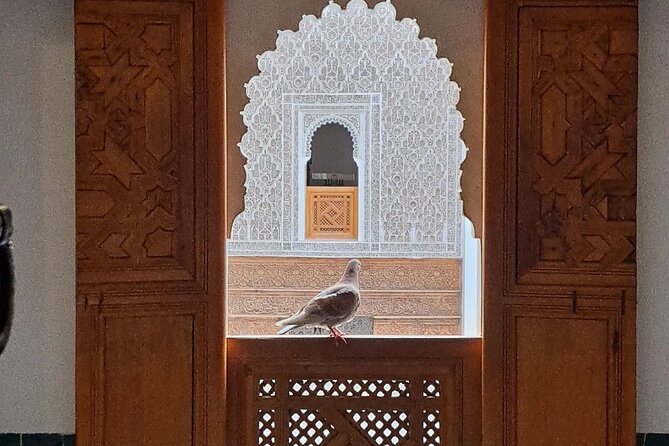
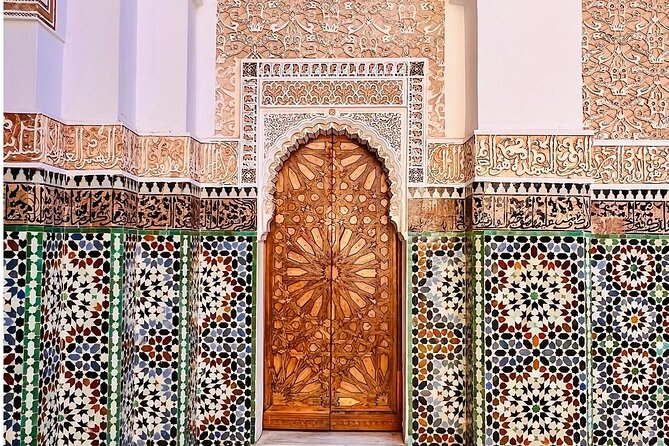
The final major stop is Ben Youssef Madrasa, one of Marrakech’s finest examples of Islamic architecture. The school was founded in the 14th century and welcomed students from across North Africa for religious study.
The visit lasts about an hour. You explore the inner courtyard, decorated surfaces, carved wood, and the small student rooms. After the noise of Jemaa el-Fnaa and the commercial pressure of the souks, the madrasa provides a calmer ending.
The building’s design rewards close attention. Look at the relationship between the open courtyard and the small cells, as well as the balance of tilework, wood carving, and curved architectural details. Your guide explains how the school functioned and why education mattered to Marrakech’s development.
Admission is not included and costs less than 5 euros. Again, it is a minor addition to the price, but you should bring enough money for both paid monuments.
Ben Youssef Madrasa is also the stop where the limited duration may be most noticeable. An hour gives you time to see the main spaces, but architecture fans may want to return independently for a slower look.
Guide quality and group size
The guide is central to the value of this experience. The best moments come from explanations that connect a building or market to Moroccan life, rather than simply naming dates and architectural features.
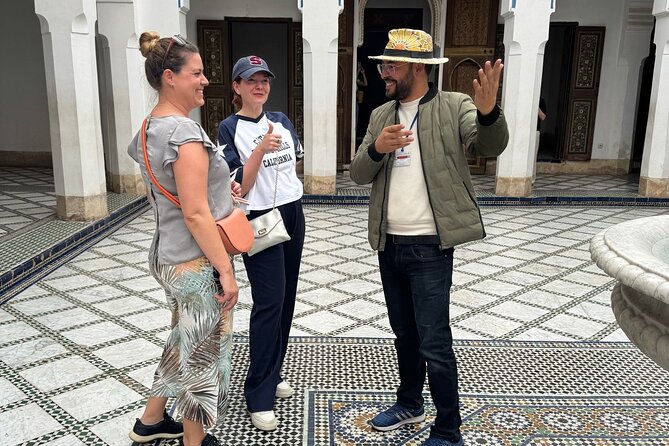
Ibrahim is praised for addressing different questions individually and offering cultural insight. Mo is praised for his passion, detailed explanations, timely start, and willingness to adjust the tour to personal interests. Those details suggest that you should speak up. Ask about food, shopping, architecture, religion, or daily life if those subjects matter to you.
The group can include up to 20 people. That is not a private tour, so you should expect to share the guide’s attention. On the other hand, a group this size can still work well for a walking route, especially if the guide keeps everyone together in the narrow lanes.
The meeting point is Argana, number 18, on Znikat Rahba near Jemaa el-Fnaa. The tour ends back at the same point, which is convenient if you want to continue shopping or return to your accommodation afterward. A mobile ticket is accepted, and confirmation arrives at booking.
Most people can take part, and service animals are allowed. The route is near public transportation, though the experience itself is a walking tour through the medina.
Who should book this Marrakech tour?
I would choose this tour if you are visiting Marrakech for the first time, have only a short stay, or want a local explanation before exploring alone. It suits people who like a mix of grand buildings, public squares, and working markets.
It is also a good choice if you want shopping guidance without booking a tour devoted only to shopping. The guide can explain carpets, dyes, spices, leather, and other crafts while you decide what interests you.
You may want a different arrangement if you dislike crowds, bargaining, or a set route. Art and architecture specialists may prefer private guiding, since they can spend longer at Bahia Palace or Ben Youssef Madrasa. Families and older visitors should also consider that the tour runs through narrow market lanes and requires steady walking.
The free cancellation policy gives you some flexibility. You can cancel for a full refund up to 24 hours before the local start time. Changes or cancellations inside that window are not accepted.
Should you book it?
Book this half-day walk if you want a clear introduction to Marrakech’s medina at a modest price. You will see the city’s headline monuments, learn how its craft markets work, and get practical shopping advice from a local guide.
Budget separately for the Bahia Palace and Ben Youssef Madrasa, and do not expect enough time for a slow inspection of every room or a relaxed carpet-buying session. For most first-time visitors, the mix of history, architecture, and everyday commerce makes the tour a useful starting point. Take the guide’s advice, keep your pace comfortable, and return later to the places that deserve more time.
FAQ
How long is the Marrakech history and culture tour?
The tour lasts approximately three hours.
Where does the tour begin?
It begins at Argana, number 18, Znikat Rahba, near Jemaa el-Fnaa in Marrakech.
Where does the tour end?
The activity ends back at the meeting point.
Is the tour price per person?
Yes. The listed price is $23.23 per person.
Are entrance fees included?
No. Entrance to Bahia Palace and Ben Youssef Madrasa is not included. Bahia Palace costs less than 10 euros, and Ben Youssef Madrasa costs less than 5 euros.
What sights are included on the route?
The route includes Koutoubia Mosque, Bahia Palace, Jemaa el-Fnaa, Marrakech’s souks, the Souk of Dyers, the Marrakech Carpet Souk, and Ben Youssef Madrasa.
How large can the group be?
The maximum group size is 20 people.
Can I cancel for a full refund?
Yes. You can cancel at least 24 hours before the experience’s start time for a full refund. Cancellations or changes made less than 24 hours before the start time are not accepted.
Just listed around Marrakech
- Zagora: 2-Day Desert Trip from Marrakech★ 4.4 · 31 reviews
- Traditional spa Hammam & Massage with Hotel Transfers★ 4.0 · 24 reviews
- Day trip to OUZOUD waterfall with guide&boat ride from Marrakech★ 5.0 · 172 reviews
- quad bike tour in the palmeraie of Marrakech★ 4.5 · 43 reviews
- Half day quad desert agafay★ 4.5 · 24 reviews
- walking tour★ 5.0 · 46 reviews
- private tour of Marrakech 4 hours with multilingual driver★ 5.0 · 117 reviews
- 3 days tour from Marrakech to Merzouga desert★ 5.0 · 55 reviews
Historical Tours, compared.
Marrakech Historical and Cultural Tour – Half Day City Tour
Read our review →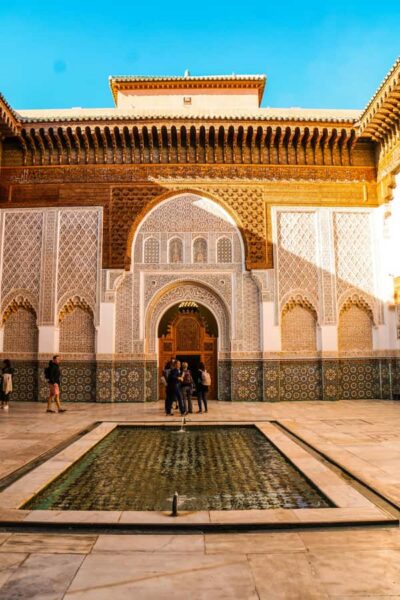
Full-day Historical Meknes Volubilis and Moulay Idriss Tour
Read our review →
Casablanca Cultural Tour: Medina, Views & Local Delights
Read our review →
Casablanca to Fez: Scenic & Historical Day Trip with Lunch
Read our review →
A Guided Walking Tour Through the Historic Medina
Read our review →
Browse the lists this tour appears in