
Reviewed · HISTORICAL TOURS
Casablanca Cultural Tour: Medina, Views & Local Delights
Casablanca rewards a closer look. This four-hour tour links the city’s old medina, French-era streets, local cafés, pastry counters, and Atlantic viewpoints in one sensible route. I like the mix of walking and taxi rides, which lets you cover more ground without turning the day into a march. I also like the food stops, especially Moroccan olives, mint tea, and pastries at Pâtisserie Bennis. The main drawback is that the pace can feel brisk, and cruise passengers may find the meeting point at Rick’s Café less convenient than United Nations Square.
You get a live English-speaking guide and a small group capped at 12 people, with a private option available. Guides such as Mohammed, Aafif, Hicham, and Bennis Mohammed have been praised for explaining local life, adapting the route, and helping with taxis or onward plans. If rain, traffic, or a mosque visit affects your timing, some flexibility may be possible, but you should not expect every stop to receive the same amount of time.
In This Review
- Key points at a glance
- Why this four-hour route works in Casablanca
- Rick’s Café and the useful movie connection
- Sqala Tower, old cannons, and the Atlantic
- Walking Casablanca’s old medina
- Sacred Heart Cathedral and the city’s French-Moroccan blend
- Habous Quarter: shopping with less confusion
- Pâtisserie Bennis and the best food stop
- A local market, tea, and a taste of ordinary Casablanca
- Al Aank Observation Deck and the Hassan II Mosque view
- What the guides add to the experience
- Walking, taxis, weather, and what to bring
- Who should book this Casablanca tour?
- Should you book it?
- FAQ
- How long does the Casablanca Cultural Tour last?
- Where does the tour begin?
- Where does the tour finish?
- Is the tour conducted in English?
- How large is the group?
- Does the tour include taxi transportation?
- Are food and drinks included?
- Can vegetarian guests join?
- Is a visit inside Hassan II Mosque included?
- What should you bring?
Key points at a glance

- Rick’s Café starts the story: Learn how the famous film connects with Casablanca, even though the movie was not filmed in the city.
- The old medina feels local: Walk through traditional streets, markets, craft shops, and food stalls with context from your guide.
- Taxi rides save your feet: The tour joins far-flung sights such as Sacred Heart Cathedral, Arab League Parc, and Mohammed V Square.
- Habous brings two styles together: French planning and Moroccan design meet in a pleasant shopping district.
- Pâtisserie Bennis is a highlight: Try gazelle horns and Fekkas with Moroccan tea or coffee.
- The final view is memorable: Al Aank Observation Deck looks toward the Hassan II Mosque and the Atlantic Ocean.
Why this four-hour route works in Casablanca
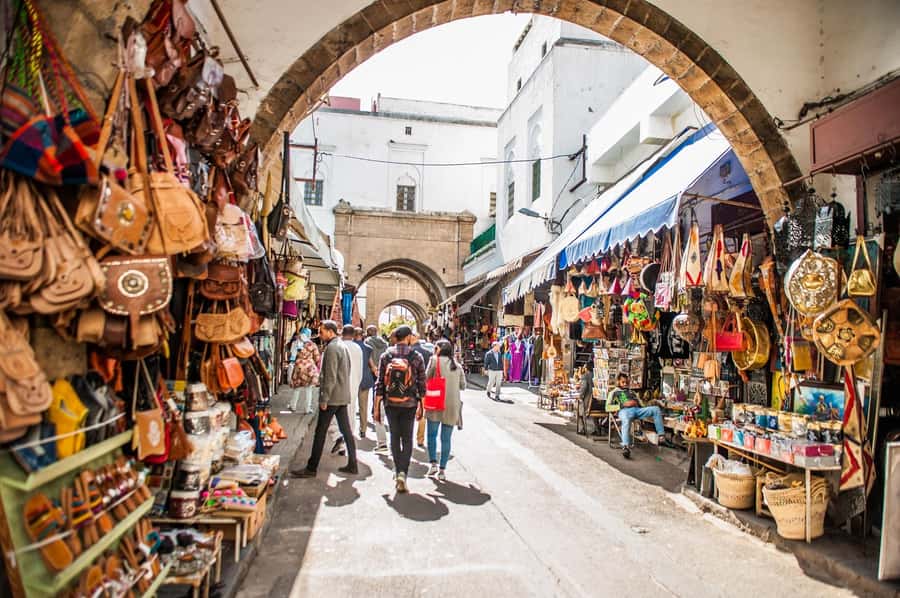
Casablanca is not a city that reveals itself from one postcard viewpoint. Its appeal comes from the contrast between the old medina and broad modern avenues, between Moroccan markets and French-built civic buildings, and between working neighborhoods and grand religious architecture.
That contrast is exactly what this tour handles well. You start near the port and old city, walk through historic quarters, then use taxis to reach sights that would otherwise require a fair amount of backtracking. I prefer this format to a purely walking tour because Casablanca’s attractions are spread out.
The group size matters, too. With no more than 12 people, you can ask questions without shouting across a crowd. If you book a private departure, the guide can give more attention to your interests, though the supplied information does not specify an additional private-group fee.
At $53 per person, the value is strongest if you have only half a day in Casablanca. You are paying for a guide, several food and drink tastings, taxi transportation between key sites, and a city introduction that would be difficult to arrange efficiently on your own. It is less compelling if you already know Casablanca well or mainly want a long, unhurried shopping session in the medina.
A few more Casablanca runs to hold up against each other
- Casablanca to Fez: Scenic & Historical Day Trip with Lunch
★ 4.7 · 111 reviews - 6-Day Private Morocco Cultural Tour From Casablanca To Marrakech
★ 5.0 · 24 reviews - Marrakech Historical and Cultural Tour – Half Day City Tour
★ 4.5 · 1,180 reviews
Rick’s Café and the useful movie connection
The meeting point is in front of Rick’s Café, at Place du Jardin public, 248 Boulevard Sour Jadid. This is a practical starting place near the old city, but it may require extra planning if you arrive by cruise ship. One person found that the ship shuttle stopped at United Nations Square, not near Rick’s Café, and needed a company-arranged pickup after the group contacted the operator.
Rick’s Café is linked to the 1942 film Casablanca, but the movie’s famous interiors were created in Hollywood. The café in the city was later designed to capture the film’s mood. Your guide uses the setting to explain the difference between cinematic Casablanca and the real city.
I like this opening because it gives you an easy cultural reference before the tour turns toward everyday Morocco. You can enjoy the atmosphere without confusing the movie with actual local history. The stop is more about stories and orientation than a major sightseeing visit, so do not plan on spending the whole morning inside.
Sqala Tower, old cannons, and the Atlantic
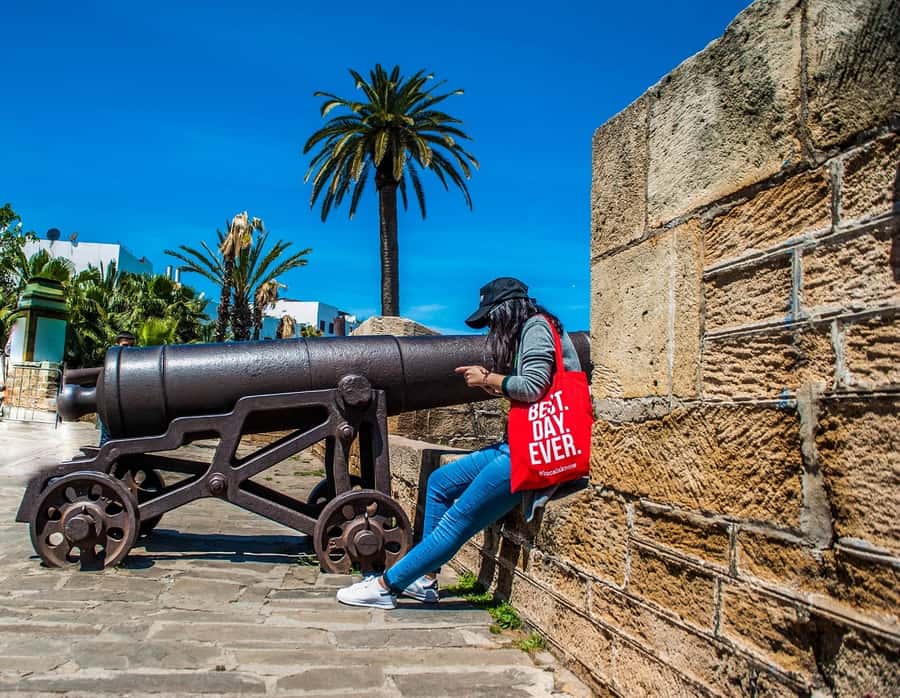
From the café, the route continues toward the Sqala area and its historic tower. Portuguese-era cannons recall the period when European powers held influence along Morocco’s coast. The site also gives you a broad view toward the Atlantic, making it one of the better places to understand Casablanca’s coastal position.
This is a good point to let your guide handle the historical framework. Names, dates, and colonial chapters can blur together when you visit several North African cities in one trip. A clear explanation at the actual site helps you connect the fortifications with the city’s later development.
The ocean view is also a welcome pause after the tighter streets of the old city. Bring comfortable shoes, but remember that weather can change along the coast. One January group encountered cold rain, and two people left early. The tour continued for those who wanted to stay, but wet conditions can affect both walking comfort and the time available for views.
Walking Casablanca’s old medina
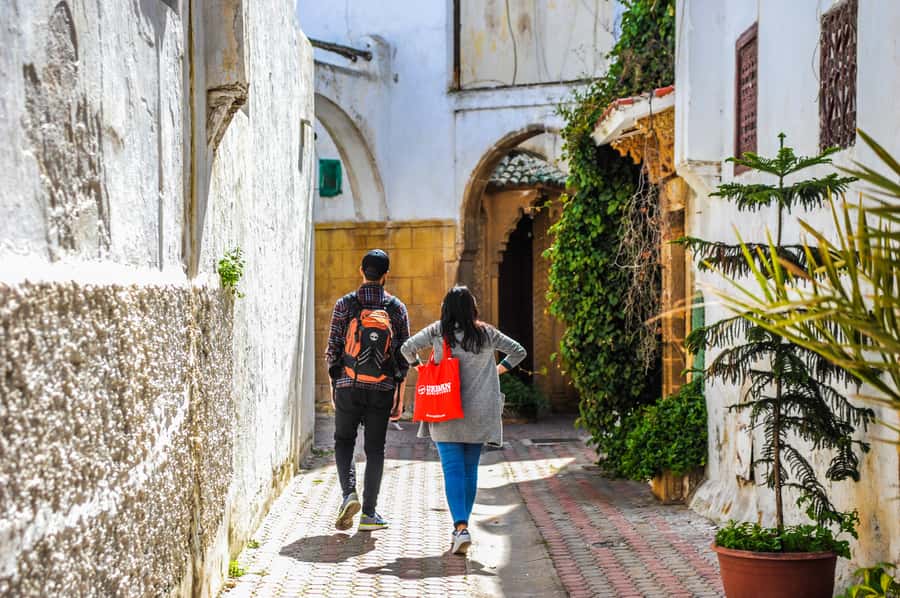
The old medina is where the tour becomes more grounded in daily life. You will walk through narrow streets, browse artisan work, see traditional markets, and get a sense of how the old city functions beyond its photo opportunities.
The value of having a guide here is not simply finding the entrance or following the route. A local guide can explain what you are looking at, point out the difference between a shop aimed at local residents and one aimed at visitors, and help you understand how the old and newer parts of Casablanca connect.
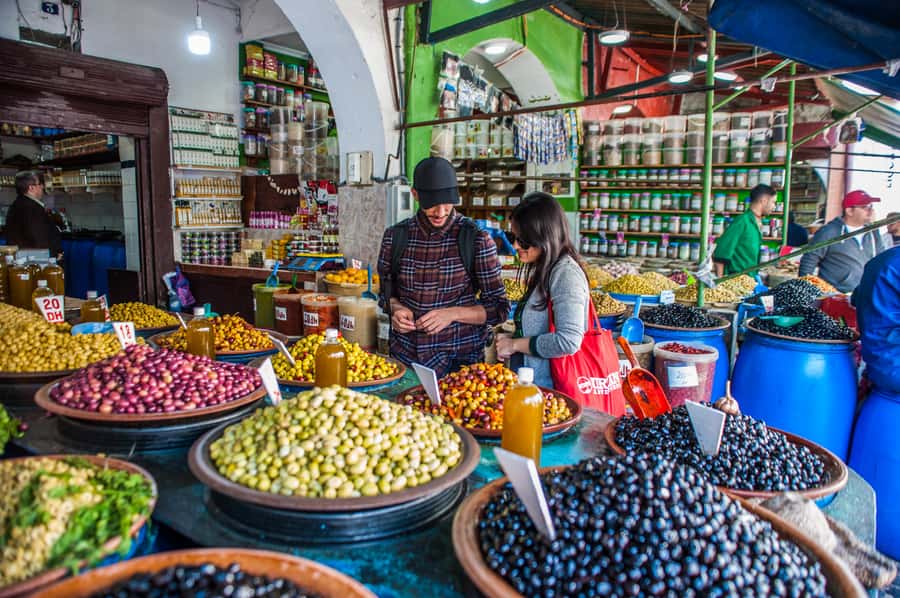
You may also taste traditional Moroccan olives during this section. It is a small detail, but it turns a market walk into a sensory experience. Food is often the quickest way to get a feel for a place, and olives are a simple introduction before the sweeter pastry stop later.
Allow yourself to stay alert in the medina. The streets can be crowded, and you will want to keep close enough to hear the guide. If shopping is your main goal, tell the guide early. The tour includes time to discover local goods, but four hours is not long enough for extended bargaining at every stall.
Same city gate, a very different afternoon:
- From Marrakech: Casablanca Tour with Hassan II Mosque Visit
★ 4.7 · 4,756 reviews - Casablanca: Hassan II Mosque Premium Tour with Entry Ticket
★ 4.5 · 2,971 reviews - Casablanca City Tour with Hassan II mosque ticket
★ 5.0 · 2,480 reviews - Casablanca: City Tour with Hassan II Mosque Entry Ticket
★ 4.6 · 1,137 reviews
Sacred Heart Cathedral and the city’s French-Moroccan blend
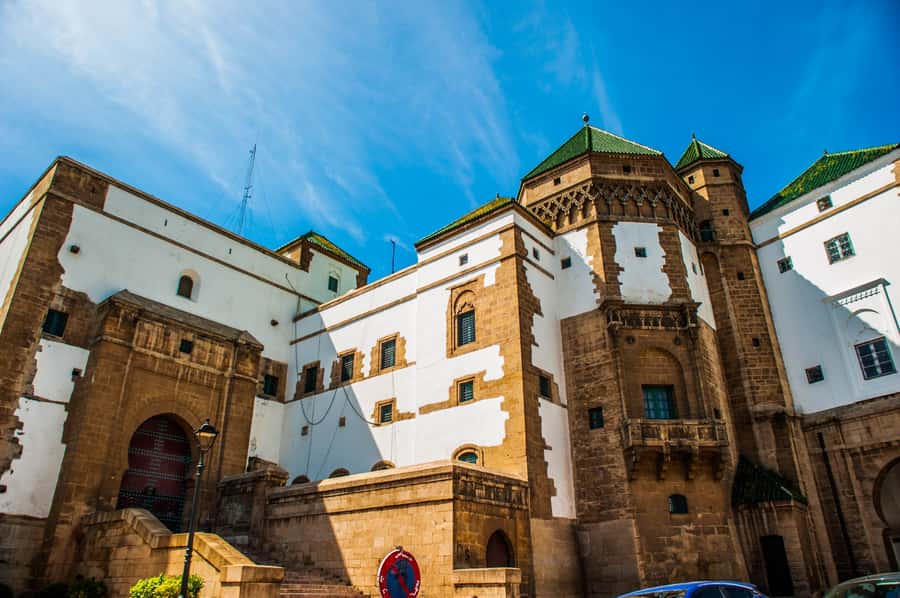
The Sacred Heart Cathedral offers one of Casablanca’s most striking architectural contrasts. Its Christian design reflects the city’s French colonial period, while its setting places it firmly within a modern Moroccan city. The building helps show that Casablanca’s past is not represented by one culture or one faith alone.
Nearby Arab League Parc provides a quieter change of pace. The itinerary also includes Mohammed V Square, often called Pigeon Square, with its grand civic buildings and open urban space. Together, these stops explain the planned, formal side of Casablanca.
I find this section especially useful if you are interested in architecture. The tour does not treat buildings as isolated monuments. Instead, it connects them to the city’s changing identity, including Moroccan, French, Portuguese, Muslim, Jewish, and Christian influences discussed along the way.
The exact amount of time at each site can vary. Taxi traffic, walking speed, and group interests all matter. This is a city overview, not an architectural study, so you should expect exterior views and explanations rather than long indoor visits at every building.
Habous Quarter: shopping with less confusion
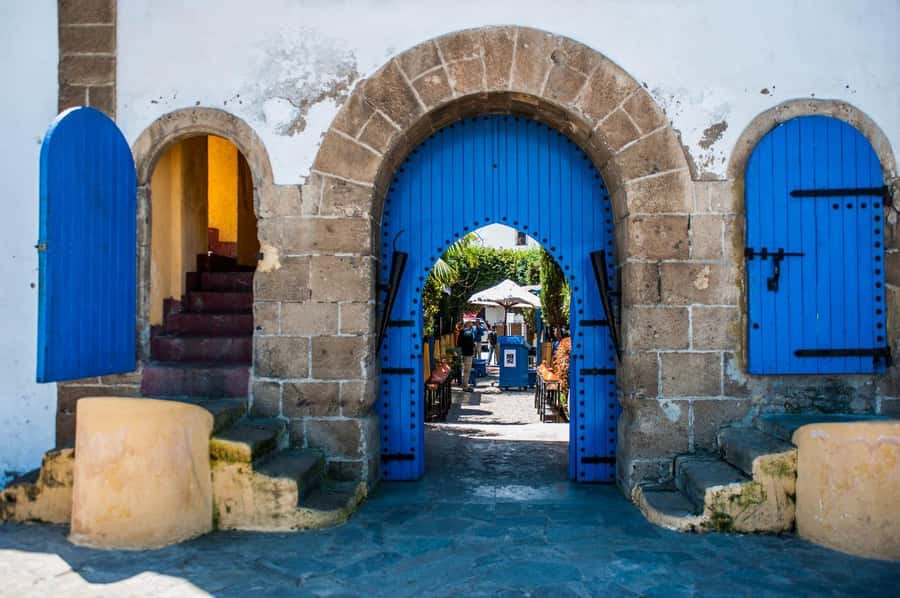
The Habous Quarter offers a more orderly setting than the old medina. Its streets combine French urban planning with Moroccan arches, shops, and traditional goods. You can browse items associated with Moroccan craft and food without having to cross the entire city in search of the next stop.
This is a sensible place to buy something if you want a souvenir. Your guide can help you understand what you are seeing and may point you toward traditional products. Still, you should treat shopping as optional. The tour’s purpose is cultural orientation, not a dedicated buying trip.
I like Habous because it gives you another version of Casablanca. The old medina shows a tighter, older street pattern. Habous feels more planned, yet it still carries Moroccan visual details and commercial life. Seeing both makes the city easier to read later when you explore alone.
Pâtisserie Bennis and the best food stop
Pâtisserie Bennis is likely to be one of the tour’s most enjoyable stops. Here you can try Moroccan pastries such as gazelle horns and Fekkas, usually accompanied by mint tea or coffee. Gazelle horns are delicate crescent-shaped pastries, while Fekkas is a crisp, twice-baked treat often served in small pieces.
The pastry tasting is not just a sugar break. Moroccan baking traditions are tied to hospitality, family gatherings, religious celebrations, and everyday café culture. A guide can explain those connections while you taste, which makes the food more meaningful than grabbing a pastry without context.
Several people especially enjoyed the bakery stop and the way guides handled the food. In one case, the guide purchased treats for the group to have with mint tea. The supplied details also say that pastries and additional food or drinks are not included, so confirm exactly what the tasting covers and bring a little extra money if you want more.
Dietary needs can be accommodated, including vegetarian requests, but you must notify the operator ahead of time. The information does not promise that every pastry is suitable for every restriction, so be specific about allergies or ingredients you need to avoid.
A local market, tea, and a taste of ordinary Casablanca
The route also includes a food market visit and a stop at a local bar or café for tea. These are modest experiences, but they are useful because they shift the focus away from major monuments.
Moroccan mint tea is part refreshment, part social custom. Sitting down for tea gives you a chance to ask questions that may not arise while walking. You might ask about local neighborhoods, football teams, religion, family life, or how Casablanca differs from other Moroccan cities.
The café stop is also a chance to slow down. Four hours can pass quickly when you are moving between sites, and a seated drink keeps the tour from becoming a string of hurried photographs. Coffee is available as an alternative to mint tea.
The phrase local bar should not lead you to expect a nightlife experience. The supplied information describes it as a tea stop, so think of it as a café break within the route. Additional drinks and food beyond the stated tastings cost extra.
Al Aank Observation Deck and the Hassan II Mosque view
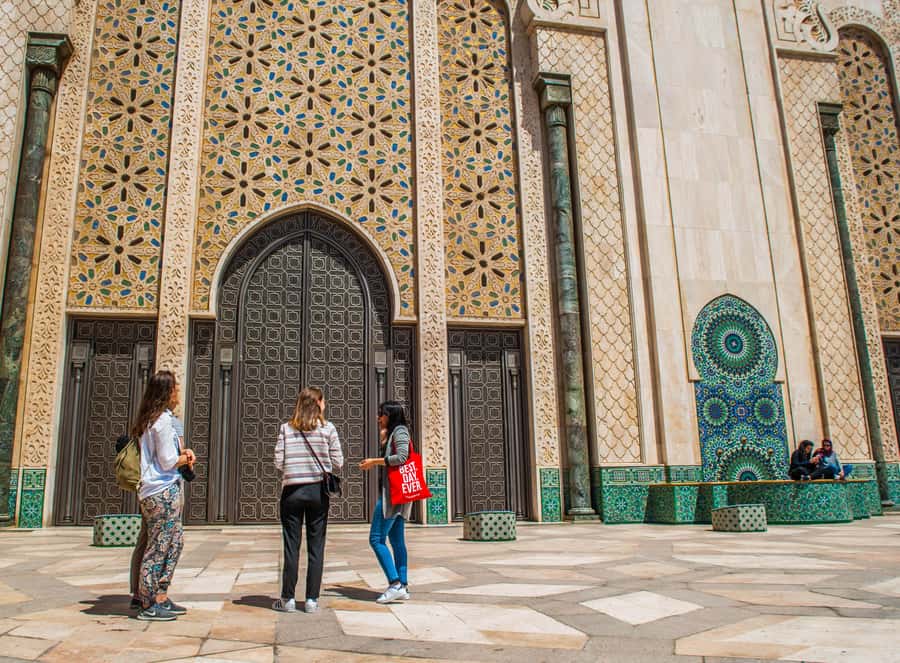
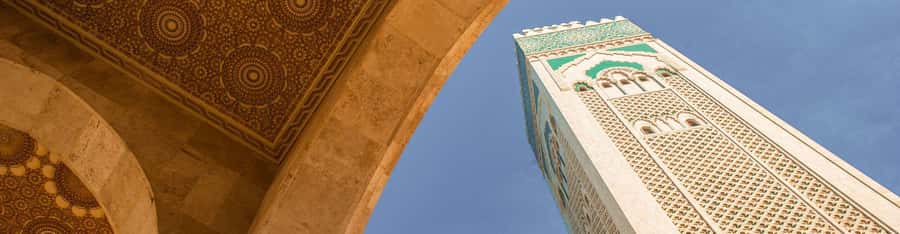
The tour ends at Al Aank Observation Deck, where you look across toward the Hassan II Mosque and the Atlantic Ocean. The mosque is one of Casablanca’s defining sights, and seeing it from across the water gives you a strong sense of its scale and coastal setting.
The deck is particularly useful if your schedule does not allow a full mosque visit. Several guides have helped people arrange a mosque visit separately when timing allowed, including during a limited schedule in Ramadan. That is a sign of helpful local service, but it is not part of the advertised inclusions, so you should not assume the interior visit is guaranteed.
The final stop works well as a visual farewell. After the medina’s narrow lanes and the city center’s formal avenues, the open view lets you place Casablanca on a map in your mind. You finish at J86X+4PJ in Casablanca, so check your onward plans before the tour begins.
Some guides have arranged hotel drop-offs or helped people reach restaurants afterward. That assistance has been appreciated, but it should be treated as a courtesy rather than a guaranteed part of the four-hour service. Ask before the end if you need help finding your next stop.
What the guides add to the experience
The strongest feature of this tour is the guiding. Mohammed, Aafif, Hicham, and Bennis Mohammed are all named in positive feedback, with particular praise for clear explanations, warmth, patience, and flexibility.
Guides have adjusted the experience for solo participants, added an extra site when time allowed, helped with restaurant directions, arranged taxis, and explained how to return to a cruise shuttle point. One solo participant effectively received a private experience during a quiet period. Another guide stayed involved long enough to help with a safe onward plan.
That personal care is valuable in Casablanca, where transport, timing, and city distances can complicate a short visit. I would book this tour for the guide’s local perspective more than for any one monument.
Still, guide quality can vary from person to person, and a specific guide request is not promised. The named guides provide a useful indication of the standard you might hope for, but you should judge the tour as a service rather than booking solely around one individual.
Walking, taxis, weather, and what to bring
This is a four-hour walking and driving experience. You will walk in the medina, around historic sites, through Habous, and at viewpoints, then use taxis between key areas. Comfortable shoes are essential, especially if you want to stay with the group and make the most of the old city.
Taxi rides are part of the Casablanca experience, according to one participant, and they make the route practical. They also introduce some uncertainty. Traffic may affect the time spent at individual stops, and the ride itself may feel less polished than private vehicle transport.
Dress for the weather and choose clothing appropriate for visits to religious or historic places. The operator asks for weather-appropriate clothing and says dietary requests should be sent in advance.
The tour is carbon neutral and operated by a B Corp certified company. That may matter to you if you prefer booking with a business that has made formal commitments around social and environmental practices. It does not change the route, but it adds useful context when comparing similar city tours.
Who should book this Casablanca tour?
I would choose this experience if you have a short stay, a cruise stop, or a first morning in Casablanca and want an efficient introduction. It suits you especially well if you enjoy architecture, local food, city history, and conversations with a guide more than a single major attraction.
It is also a strong choice for solo visitors and small parties. The small-group format can feel nearly private when demand is low, and the guide may be able to adjust the emphasis to your interests.
You may want something else if you dislike moving between several stops, need a fully wheelchair-free route, or want a long, slow shopping afternoon. The supplied information does not provide accessibility details, so contact the operator before booking if mobility support is important.
The $53 price is fair for the combination of guiding, tastings, taxis, and viewpoints. You should budget extra for additional pastries, food, drinks, and any separate attraction such as a mosque visit.
Should you book it?
Book this Casablanca tour if you want to see the city in layers: old medina, French-era architecture, Habous shops, local food, and ocean views. The route is busy but well chosen, and the guides appear particularly good at turning a short visit into a useful introduction.
Before booking, check your arrival point if you are coming from a cruise ship, request dietary accommodations in advance, and wear shoes suited to city walking. I would also ask whether a mosque visit or hotel drop-off can fit your schedule, but I would not count on either unless confirmed.
For most first-time visitors with four hours to spare, this is a practical and personable way to get your bearings without seeing Casablanca only through a car window.
FAQ
How long does the Casablanca Cultural Tour last?
The tour lasts four hours. Starting times depend on availability when you book.
Where does the tour begin?
It begins in front of Rick’s Café at Place du Jardin public, 248 Bd Sour Jadid, Casablanca 20250, Morocco.
Where does the tour finish?
The stated finishing point is J86X+4PJ, Casablanca, Morocco.
Is the tour conducted in English?
Yes. The tour includes a live English-speaking guide.
How large is the group?
The small-group tour is limited to 12 people. A private group option is also available.
Does the tour include taxi transportation?
Yes. Taxi transportation between key sites is included.
Are food and drinks included?
The experience includes traditional Moroccan olive tasting, a pastry tasting at a local spot, and coffee or Moroccan mint tea at a local café. Additional pastries, food, and drinks are not included.
Can vegetarian guests join?
Yes. Vegetarian and other dietary requests can be accommodated if you notify the operator in advance.
Is a visit inside Hassan II Mosque included?
The tour includes a view of Hassan II Mosque from Al Aank Observation Deck. A separate mosque visit has sometimes been arranged when timing allowed, but it is not stated as a standard inclusion.
What should you bring?
Bring comfortable walking shoes and dress appropriately for the weather.
Just listed around Casablanca
- Your Private Casablanca Transfer★ 5.0 · 52 reviews
- Casablanca Airport Transfer from hotel in Casablanca★ 5.0 · 18 reviews
- Exclusive tour of Casablanca with access to the Hassan II Mosque★ 5.0 · 205 reviews
- Amazing airport pickup/ drop off in Casablanca/ safe&easy★ 5.0 · 218 reviews
- Sunset Camel Ride in the Palm Grove Of Marrakech★ 5.0 · 34 reviews
- 14 Days From Casablanca- Morocco Grand Tour★ 5.0 · 24 reviews
- Private full day trip to chefchaouen from Casablanca with lunch★ 5.0 · 20 reviews
- Marrakeck City tour from Casablanca all the day around trip★ 5.0 · 35 reviews
Historical Tours, compared.
Marrakech Historical and Cultural Tour – Half Day City Tour
Read our review →
Full-day Historical Meknes Volubilis and Moulay Idriss Tour
Read our review →
Casablanca to Fez: Scenic & Historical Day Trip with Lunch
Read our review →
A Guided Walking Tour Through the Historic Medina
Read our review →
Discover the secrets of the Medina of Fez: guided cultural tour (private)
Read our review →
History and culture with Fes Medina private tour guide
Read our review →Browse the lists this tour appears in