
Reviewed · ATLAS MOUNTAINS TOURS
Trekking in Morocco / 3 Days Valley Trek in the Atlas Mountain & Waterfalls
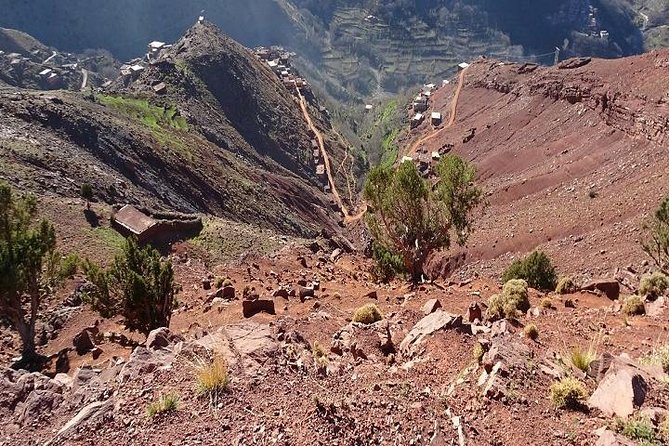
Mountain days, village nights, and no heavy pack. This three-day trek from Marrakech takes you into Toubkal National Park, where you walk between Berber villages, cross high passes, visit the park’s biggest waterfalls, and sleep in local guesthouses. I like the mule support, which leaves you free to enjoy the route, and I like that meals are cooked along the way rather than treated as an afterthought. The main consideration is fitness: six to seven hours of walking per day, with steep climbs and descents, is a serious outing.
The route is also more than a scenic hike. Your guide can explain village life, farming, schooling, and local customs as you move through the valleys. Guides named in past trips include Hassan, Ibrahim, Abdul, Sabir, and others, with several praised for calm leadership and good English. Still, guide quality matters, and one unhappy account described a guide walking too fast, so it is sensible to speak up early if the pace feels unsafe.
In This Review
- Key points before you book
- Why this trek is a good alternative to a summit climb
- Leaving Marrakech for Imlil at 8:30 in the morning
- Day one: Imlil to Tizi n’Tamaterte and Tachdirt
- Day two: Ikkis, Aguersiwal, Matat, and Ait Aissa
- Day three: waterfalls, Mzik Pass, and the return to Imlil
- What the mule support really adds
- Guides, pace, and group comfort
- Food, lodging, and the local feel
- How hard is the three-day route?
- Price, planning, and who gets the best value
- What to pack for three Atlas Mountain days
- Should you book this Atlas Mountains trek?
- FAQ
- How long is the trek?
- Where does the trek begin?
- What time does the tour start?
- Is transport from Marrakech included?
- What meals are included?
- Are accommodation and luggage transport included?
- Do I need to be very fit?
- Can I cancel for a full refund?
Key points before you book
- Walk from Imlil across several Atlas valleys: The route links Imlil, Tachdirt or Tinghourine, Ikkis, Aguersiwal, Matat, Ait Aissa, and Mzik.
- Cross mountain passes rather than staying on valley floors: The route reaches Tizi n’Tamaterte at 2,300 meters, Oudit Pass at 2,200 meters, and Mzik Pass at 2,500 meters.
- Visit the biggest waterfalls in Toubkal National Park: This is a highlight of the third day before the final climb over Mzik Pass.
- Mules carry bags and food: You walk with a lighter daypack while a mule handler and cook support the group.
- Sleep in local houses and eat seven included meals: Two nights, three lunches, two breakfasts, and two dinners are covered.
- Expect a moderate fitness requirement: Walking days last about five to seven hours, and the route includes substantial uphill and downhill sections.
Why this trek is a good alternative to a summit climb
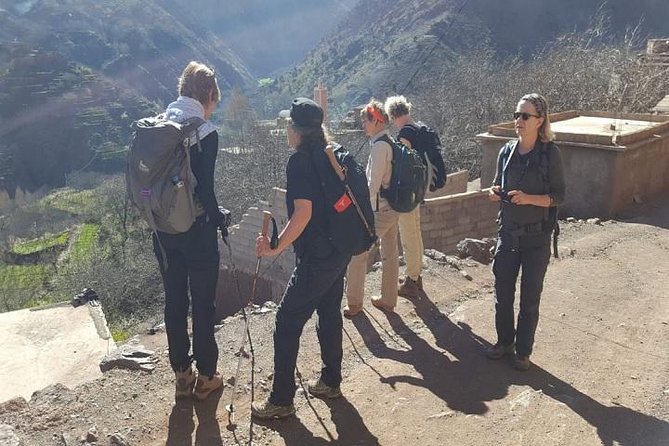
This is a valley trek, not a Mount Toubkal summit trip. That distinction matters because some accounts connected with the same trekking company describe longer trips that included a dawn climb of Toubkal. This three-day plan focuses on villages, passes, waterfalls, and valley views instead.
I like that choice for many people. You get a real taste of the High Atlas without spending the trip at a high-altitude refuge or committing to a summit day. The route still reaches 2,500 meters at Mzik Pass, so it is not an easy stroll, but the focus is on crossing the mountains and seeing how people live in them.
The scenery changes from one valley to the next. You might walk through open rocky ground, pine and juniper areas, terraced settlements, and narrow mountain paths. The exact feel depends on weather and season, but the route offers more variety than a simple out-and-back walk from Imlil.
The tour costs $267.13 per person. That includes Marrakech transport, a guide, two nights of accommodation, seven meals, mules, a cook, coffee, and tea. For a three-day mountain trip with transport and support staff, that makes reasonable sense, especially if you would otherwise need to arrange a guide, food, lodging, and pack transport separately.
Water is not included, and you buy it from local shops. Tips are also extra. Keep some Moroccan dirhams available, since small village shops are where you are likely to buy supplies.
More days up in the Atlas:
- Marrakech: Atlas Mountains, Ourika Valley, Waterfall & Lunch
★ 4.8 · 15,834 reviews - Berber villages : Atlas Mountains Day Hike from Marrakech
★ 5.0 · 14,007 reviews - Marrakesh: Ourika Waterfalls, Atlas Mountains, Guide + Lunch
★ 4.9 · 9,986 reviews
Leaving Marrakech for Imlil at 8:30 in the morning
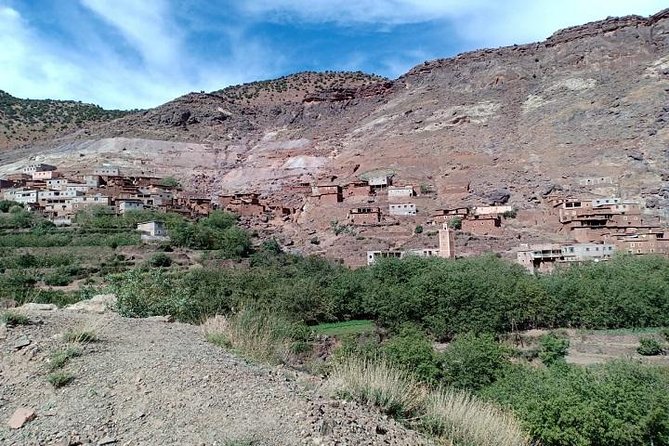
Pickup is offered from Marrakech, with the listed start time at 8:30 am. The transfer takes you to Imlil, the main starting point for many Atlas Mountain walks. The practical benefit is simple: you do not need to arrange a separate taxi or work out the connection yourself.
Once you reach Imlil, the walking begins at about 1,740 meters. You should arrive ready to walk, not dressed for a city tour. Wear sturdy walking shoes, carry water, and keep a jacket close at hand. Mountain weather can shift, and the evenings are cooler than Marrakech.
The small-group format is limited to 15 people. That is not a private trek, but it is small enough for the guide to keep an eye on the group and answer questions. If only one or two people book, the experience may become more personal, though one solo account found the guide’s manner disappointing. If you are alone, confirm how the departure will operate and make sure you are comfortable with the guide at the start.
Day one: Imlil to Tizi n’Tamaterte and Tachdirt
The first day covers roughly five to six hours of walking. From Imlil, you climb toward Tizi n’Tamaterte, at about 2,300 meters. This is the day to settle into the pace and learn how your body feels on the uphill sections.
The pass is a major reward. You get broad views over the surrounding valleys, and lunch is served after the climb. A meal at the pass gives the day a welcome pause, but remember that you still have a descent and village walking ahead.
From Tizi n’Tamaterte, the route continues toward Tachdirt or Tinghourine. The itinerary uses both names for the first night, so ask your operator which village and guesthouse are confirmed before departure. You spend the night in a local house or guesthouse rather than a conventional hotel.
That lodging is part of the appeal. You are not simply passing through the mountains on a marked excursion. You sleep in the communities along the route, eat food prepared for the group, and see a slower side of Morocco. Comfort is likely to be basic, so bring a towel and a sleeping bag as requested.
The first day is also a useful test. If five to six hours and the climb to 2,300 meters leave you exhausted, tell your guide. The next day is longer, and a sensible pace is safer and more enjoyable than trying to prove something before lunch.
Day two: Ikkis, Aguersiwal, Matat, and Ait Aissa
Day two is the longest scheduled walking day, at about six to seven hours. You leave Tinghourine or Tachdirt and continue toward Ikkis and Aguersiwal, reaching around 2,100 meters before heading on toward Matat and Ait Aissa.
This is where the route feels like a true crossing of the Atlas valleys. You are not simply climbing one hill, taking photographs, and returning by the same path. The trail passes through several villages and over Oudit Pass, which reaches about 2,200 meters.
I find this day especially valuable for people interested in local life. The guide can help you notice details that are easy to miss, from the layout of villages to the rhythm of movement between settlements. Several guides, including Ibrahim and Hassan, have been praised for explaining daily life and for knowing people along the route.
The views change as you move between valleys. Some sections are open and rocky, while others include trees and more sheltered slopes. You should expect uneven ground, steady climbs, and descents that can work your knees even when the weather is pleasant.
The night is in Ait Aissa, where a gite provides accommodation. A steam bath, or hammam, is available if you want one. That can be a welcome way to loosen tired legs, though it is an optional extra rather than part of the listed inclusions.
Food is one of the stronger parts of this arrangement. A cook travels with the support team, and several accounts praised the meals as plentiful and well prepared. The cook may arrive ahead of you, carried supplies make the arrangement possible, and you avoid having to depend on whatever is available in a remote village at the end of a long day.
A few more Marrakech runs to hold up against each other
- From Marrakech: Ouzoud Waterfalls Guided Hike and Boat Trip
★ 4.7 · 33,630 reviews - 3 Days Desert Tour From Marrakech To Merzouga Dunes & Camel Trek
★ 5.0 · 10,125 reviews - From Marrakech: Atlas Mountains Full-Day Hiking Trip w Lunch
★ 4.8 · 7,417 reviews - Marrakech: Ourika Valley Trip with Waterfall Hike
★ 4.6 · 6,792 reviews
Day three: waterfalls, Mzik Pass, and the return to Imlil
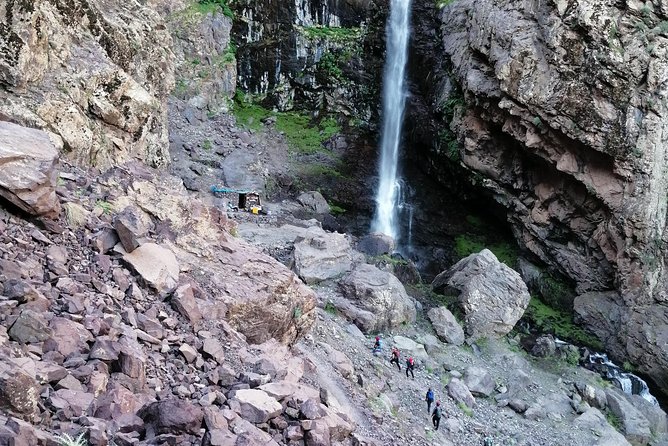
The final day lasts about six hours. The route first visits the biggest waterfalls in Toubkal National Park. This gives the morning a clear focal point before the trail turns toward Mzik Pass.
Mzik Pass rises to about 2,500 meters, the highest point on this itinerary. From there, you get views over the Ait Mizan Valley. The pass is likely to be the hardest climb of the day, especially after two earlier walking days, but it is also one of the route’s best viewpoints.
Lunch is served in Mzik, followed by the descent to Imlil. Downhill walking sounds easy until your legs are tired and the trail is uneven. Use walking poles if you have them, take your time, and do not let a fast group pace push you beyond what feels secure.
At Imlil, the trek ends and transport returns you to Marrakech. The schedule does not list an exact arrival time, so do not plan a tight evening reservation or airport connection without confirming the transfer timing.
What the mule support really adds
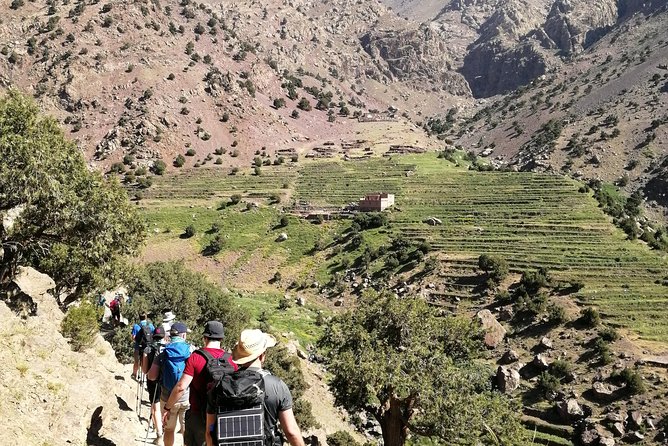
The tour includes mules and mule handlers to carry baggage and food. This is more than a charming detail. It means you can carry a smaller pack with water, a jacket, sun protection, and personal items while the heavier equipment moves with the support team.
You still need to pack carefully. The supplied list asks for walking shoes, jackets, warm and light clothing, a hat, sunscreen, sunglasses, a towel, and a sleeping bag. Equipment that you cannot bring can reportedly be rented from a local equipment shop.
The arrangement also supports the local trekking economy. Mule handlers and cooks are part of the working team, not decorative extras. Their role allows the route to connect remote villages while keeping the walking practical for people who do not want to carry three days of supplies.
Do not confuse mule support with a no-effort holiday. You walk for several hours each day, and the guide expects a moderate level of fitness. The mules carry your bags, but they do not carry you up Tizi n’Tamaterte or over Mzik Pass.
Guides, pace, and group comfort
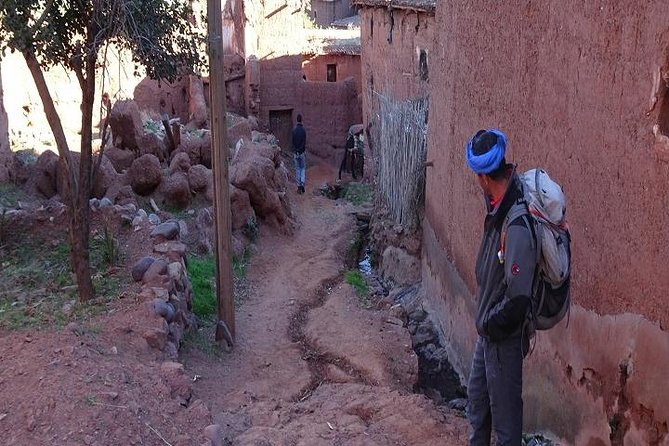
A good mountain guide can change the entire experience. The strongest accounts describe guides such as Sabir, Hassan, Ibrahim, and Abdul as friendly, experienced, attentive, and able to communicate well in English. Several also praised guides who knew local families and could explain village life.
That personal connection is a major reason to choose a guided trek instead of following a route alone. You get help with navigation, the day’s pace, and the practical details of eating and sleeping in the mountains.
There is one important caution. A complaint described a guide moving too quickly and making the walking feel hazardous. You should not wait until the end of the day to say something. Tell the guide at once if you need a slower pace, a water stop, or a short break.
The group limit is 15 people, which keeps the tour from becoming a large procession. Still, fitness levels can vary. If you want a quiet and flexible walk, ask about the expected group size and guide before you go. A solo booking may run with only one guide and one participant, which can be either wonderfully personal or less satisfying if the match is poor.
Food, lodging, and the local feel
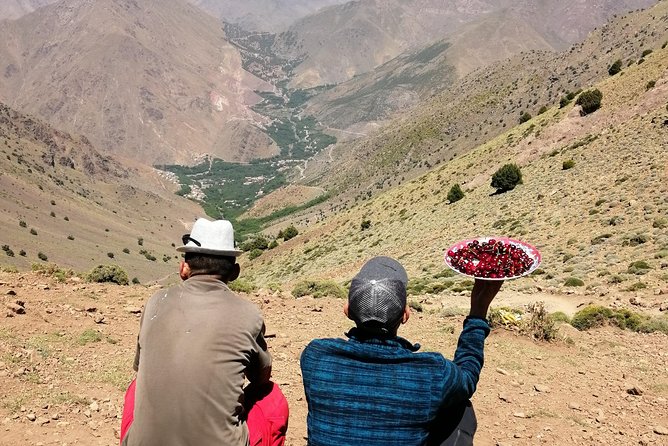
The package includes two breakfasts, three lunches, and two dinners, for seven meals in all. Coffee and tea are also included. This is useful because food planning becomes difficult once you are away from Marrakech, and a warm meal matters after a long mountain day.
The cooking is repeatedly praised in the supplied feedback, with Hamid and Mohammed mentioned as cheerful and capable cooks on different trips. Exact menus are not specified, so do not assume a particular dish, but you can expect meals to be prepared for the trek rather than bought as standard packed snacks.
Accommodation is in local houses or gites. This gives you a more direct connection with village life than a resort stay, but it also means you should expect simple conditions. Bring the requested sleeping bag and towel, and pack warm clothing for the night. One account described daytime temperatures around 22 degrees Celsius but still needed a hoodie after dark.
The hammam at Ait Aissa is an appealing extra after day two. Ask whether there is a charge before using it, since it is not listed among the inclusions.
How hard is the three-day route?
The tour calls for moderate physical fitness, and that is a fair description. You do not need to be a technical climber, and this itinerary does not include the summit of Toubkal. You do need to manage several consecutive days of mountain walking.
The main demands are duration, elevation gain, uneven trails, and the accumulated tiredness of day three. The passes are not extreme by mountaineering standards, but 2,300 meters, 2,200 meters, and 2,500 meters are high enough for the climbs to feel serious if you are not used to hills.
I would recommend this trip to anyone who regularly walks, hikes, or spends active days outdoors. If you are unsure, train with long walks and some uphill work before arriving. Good shoes matter more than fancy clothing, and a light pack will make every climb easier.
Sun protection is essential. The supplied advice includes sunscreen, sunglasses, and hats, and you should take it seriously. Carry water even though it is not included, buying more from village shops when needed.
Price, planning, and who gets the best value
At $267.13 per person, the price covers the parts that are usually awkward to arrange independently: Marrakech transfers, a local guide, two nights of accommodation, meals, a cook, and mule support. I consider that solid value if you want a supported trek rather than a self-guided route.
The value is strongest for couples, friends, and small groups who want a simple package. You can focus on walking instead of negotiating transport in Marrakech, finding a mule handler in Imlil, or arranging meals in each village.
It is less attractive if you already have mountain equipment, transport, and a local guide arranged. Solo participants should also ask about group composition, since a small group can be excellent but a one-person departure may depend heavily on the guide’s personality.
Bookings are commonly made about 11 days ahead, so do not leave this until the last minute if your dates are fixed. Confirmation is provided at booking. Free cancellation is available up to 24 hours before the local start time, but changes or cancellations inside that period are not refunded.
What to pack for three Atlas Mountain days
Keep your luggage practical and light. The mule team handles the heavier load, but you need a daypack for essentials.
- Sturdy walking shoes
- Warm and light clothing
- A jacket
- Sleeping bag
- Towel
- Hat
- Sunscreen
- Sunglasses
- Water money and personal supplies
The equipment shop can rent items you cannot bring, according to the tour information. Ask about availability before relying on a rental, especially for a sleeping bag or walking shoes.
Should you book this Atlas Mountains trek?
Book it if you want three active days in the High Atlas, prefer village stays to hotels, and like the security of a guide, cook, mule team, and arranged transport. The best parts are the changing valleys, the high passes, the waterfalls, and the chance to learn about Berber village life from a local guide.
Think twice if you dislike basic accommodation, long walking days, or changing weather. Also confirm that you are booking the valley trek, not a Toubkal summit itinerary. With a 4.9 rating, 94 percent recommendation rate, and 34 listed reviews, the overall record is strong, but the occasional guide and pace problem is a reminder to communicate clearly.
For a first multi-day Atlas trek, this is a sensible and good-value choice. Go prepared, keep your pace steady, and treat the mountains as the main event rather than a backdrop for a quick Marrakech escape.
FAQ
How long is the trek?
The experience lasts approximately three days. Walking time is about five to six hours on day one, six to seven hours on day two, and six hours on day three.
Where does the trek begin?
The walking begins in Imlil, at approximately 1,740 meters above sea level. Pickup and transport from Marrakech are included.
What time does the tour start?
The listed start time is 8:30 am.
Is transport from Marrakech included?
Yes. Transport from Marrakech to the trek and back to Marrakech is included.
What meals are included?
The package includes three lunches, two breakfasts, and two dinners. Coffee and tea are also included.
Are accommodation and luggage transport included?
Yes. Two nights of accommodation in local houses or gites are included, along with mules and mule handlers to carry baggage and food.
Do I need to be very fit?
You should have a moderate level of physical fitness. The route includes five to seven hours of walking per day, several mountain passes, and a high point of about 2,500 meters.
Can I cancel for a full refund?
Yes, if you cancel at least 24 hours before the experience start time. Cancellations made less than 24 hours before the start are not refunded.
More 3-Day Experiences in Marrakech
- From Marrakech: 3-Day Merzouga and Sahara Desert Tour
★ 4.9 · 15,308 reviews - From Marrakech: Merzouga 3-Day Desert Safari with Food
★ 4.7 · 12,232 reviews - 3-Day Marrakech to Merzouga Desert Tour: Camel Rides & Overnights
★ 5.0 · 8,734 reviews - 3-Day Marrakech to Fes Sahara Desert Tour via Merzouga
★ 5.0 · 6,546 reviews
Just listed around Marrakech
- Zagora: 2-Day Desert Trip from Marrakech★ 4.4 · 31 reviews
- Traditional spa Hammam & Massage with Hotel Transfers★ 4.0 · 24 reviews
- Day trip to OUZOUD waterfall with guide&boat ride from Marrakech★ 5.0 · 172 reviews
- quad bike tour in the palmeraie of Marrakech★ 4.5 · 43 reviews
- Half day quad desert agafay★ 4.5 · 24 reviews
- walking tour★ 5.0 · 46 reviews
- private tour of Marrakech 4 hours with multilingual driver★ 5.0 · 117 reviews
- 3 days tour from Marrakech to Merzouga desert★ 5.0 · 55 reviews
Atlas Mountains Tours, compared.
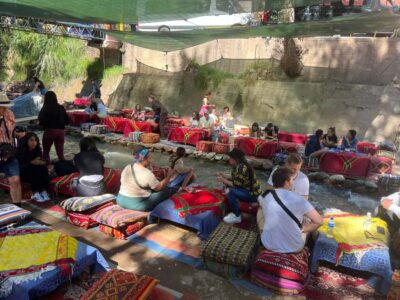
Atlas Mountains, Ourika Valley, Waterfall & Lunch
Read our review →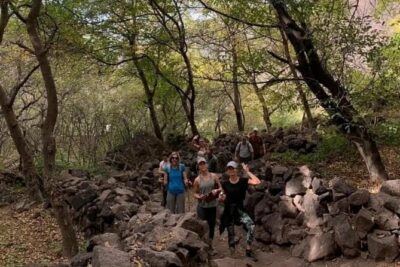
Berber villages : Atlas Mountains Day Hike from Marrakech
Read our review →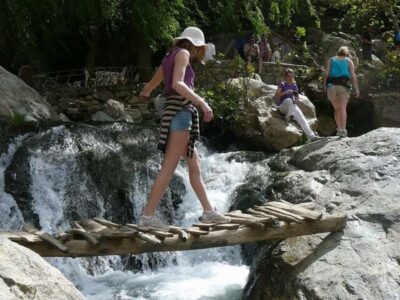
Ourika Waterfalls, Atlas Mountains, Guide + Lunch
Read our review →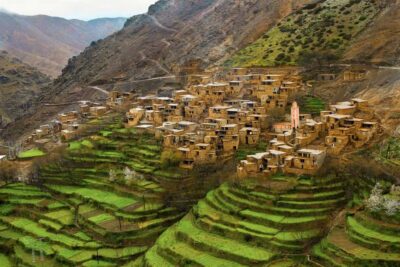
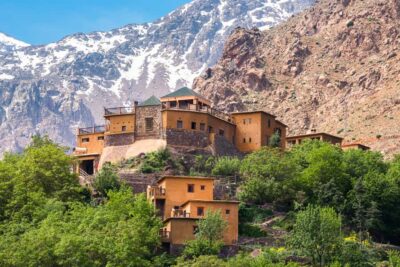
Atlas Mountains & Agafay Desert Tour w Camel Ride
Read our review →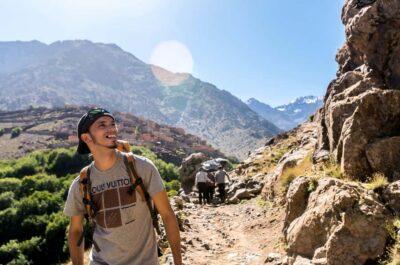
Atlas Mountains, Waterfalls, Ourika Valley +Lunch
Read our review →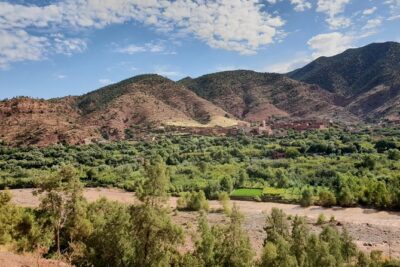
Atlas Mountains & 5 Valleys Tour from Marrakech – All inclusive –
Read our review →Browse the lists this tour appears in