
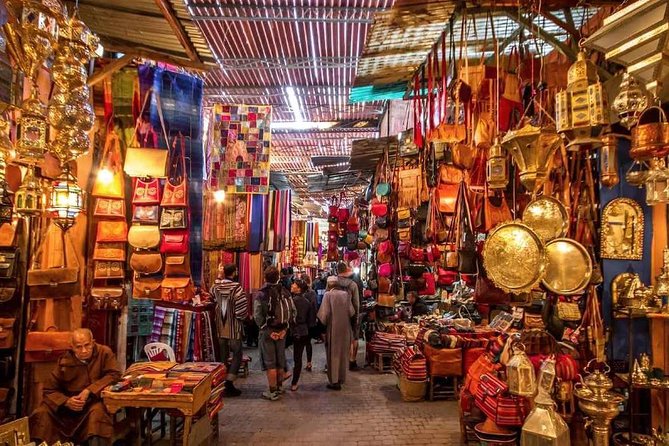
Reviewed · SAHARA DESERT TOURS
10-days Private tour in Morocco: Sahara Desert + Imperial Cities
Morocco packs a lot into ten days. This private tour links Casablanca, Rabat, Chefchaouen, Fes, the Sahara Desert, the Atlas region, Ait Benhaddou, and Marrakech without making you arrange each transfer yourself. I like the mix of famous sights and less polished places, especially Rissani’s market and the Gnawa village of Khamlia. I also like the private format, which lets your group set the pace more easily than a large coach tour.
The main caution is the amount of time spent on the road. Morocco is a large country, and this route covers a great deal of it. You should also budget for museum and monument admissions, most lunches and dinners, flights, and any optional desert activities beyond the included camel ride.
In This Review
- The five things I would know before booking
- Casablanca begins with Morocco’s modern face
- Rabat puts royal history beside quiet streets
- Volubilis and Meknes reveal two very different pasts
- Fes rewards a full morning inside the old medina
- From cedar forests to the first Sahara dunes
- Merzouga combines desert adventure with living culture
- Todra Gorge and the Dades Valley change the scenery again
- The Thousand Kasbahs leads to Ait Benhaddou
- Marrakech needs a full day, not a rushed photo stop
- What the $2,954 price really covers
- Who should book this Morocco route?
- Should you book the 10-day Morocco tour?
- FAQ
- What is included in the 10-day Morocco tour?
- Are flights included in the tour price?
- Are entrance fees to monuments and museums included?
- Is this a private tour?
- Where does the tour begin and end?
- Is the camel ride included?
- What is the cancellation policy?
The five things I would know before booking
- The route crosses nearly all of Morocco’s major touring zones: Atlantic cities, northern mountains, Roman ruins, imperial cities, desert, gorges, kasbahs, and Marrakech.
- The Sahara night is the centerpiece: You ride a camel through the Merzouga dunes, watch sunset from the sand, and sleep in a luxury desert tent.
- Private travel changes the feel: Your group has its own air-conditioned vehicle and can move at a more personal pace.
- Fes deserves your full attention: A separate city guide takes you through the old medina, with more than 9,000 streets and centuries of religious and scholarly history.
- Only three dinners are included: Nine breakfasts are covered, but you will pay for most other meals yourself.
- Hassan and Achmed received special praise: One review singled out guide Hassan and driver Achmed for their friendly service, good balance of guided time, and free time.
Casablanca begins with Morocco’s modern face
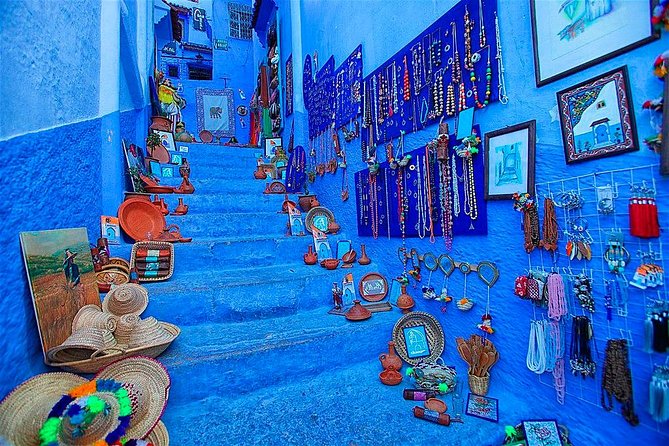
Your arrival in Casablanca is handled with an airport pickup, and the exact starting and ending points can be adjusted. That flexibility matters if your international flight schedule does not fit a standard group departure.
The first major stop is the Hassan II Mosque, one of Morocco’s most impressive buildings. It is also unusual because non-Muslims can visit the interior with a guide. The visit lasts about an hour, and you can expect an explanation of Islamic customs, prayer traditions, and the building’s design.
Admission is not included, so confirm the current entry cost before you arrive. The mosque visit is a strong opening because it gives you cultural context rather than just a photo stop.
You may also have time for Rick’s Café, a restaurant and piano bar designed to recall the setting from the film Casablanca. It sits in an old courtyard-style mansion near the Old Medina, with arches, balconies, brass lighting, and a sculpted bar. This is a fun stop for film fans, but it is an optional restaurant experience, not a replacement for seeing Casablanca itself.
The day continues to Rabat, Morocco’s capital. The drive is short compared with later sections, and the change from Casablanca’s modern city to Rabat’s broad avenues, domes, gardens, and old walls gives you a quick lesson in the country’s varied urban character.
More Sahara nights out of Casablanca:
- Morocco Tour from Casablanca to Sahara and Marrakech 5 days
★ 4.5 · 171 reviews - 7-days: Casablanca to Chefchaouen then Fes and Sahara Desert – Camel Trekking
★ 5.0 · 53 reviews - 8-Day Morocco Adventure: Imperial Cities & Sahara Desert Trek
★ 5.0 · 37 reviews
Rabat puts royal history beside quiet streets
Rabat’s main sights are compact enough to visit without feeling rushed. At the Hassan Tower, you see the remains of a grand Almohad mosque project, including the famous unfinished tower. The nearby Mausoleum of Mohammed V is more complete and carefully decorated.
The mausoleum honors Mohammed V, the sultan associated with Morocco’s independence. The complex is guarded, and the entrance includes mounted guards. Your guide can explain the political importance of the site, which makes the visit more meaningful than simply admiring the carved stone.
Next comes the Kasbah des Oudaias, a fortress area with white and blue homes, narrow lanes, orange trees, and flowers. I like this stop because it offers a slower pace after the formal monuments. The old walls also help you understand Rabat as a fortified coastal city shaped by several periods of settlement.
The tour then heads north to Chefchaouen. The listed visit allows about six hours, giving you time to walk through the blue-painted medina and reach Hammam Square, the central meeting place. Chefchaouen is known for handicrafts and goat cheese, but its real appeal is the orderly medina set against the Rif Mountains.
The blue streets are highly photogenic, yet you should not expect a completely empty town. The narrow lanes can become busy around the main square and popular photo spots. A private guide helps you get your bearings, while free time lets you shop or sit with tea without being pulled along.
Volubilis and Meknes reveal two very different pasts
Day three starts with Volubilis, a Roman site near the route to Fes. The ruins are among the best preserved Roman remains in North Africa, and the visit lasts about two hours. Admission is not included.
Volubilis is worth the stop for its mosaics, columns, and broad sense of scale. You are not just looking at isolated stones. The site shows how Roman administration reached this part of North Africa, outside Egypt, and how older settlements became part of a much larger empire.
Meknes follows, with around two hours to see its major sights. Sultan Moulay Ismail wanted Meknes to rival the grandest cities of North Africa, earning it the nickname Versailles of the Maghreb. The city feels less crowded than some of Morocco’s better known imperial centers, which can make the visit easier on the feet and the nerves.
By late afternoon, you reach Fes for a panoramic look at the city. The timing is useful because you get an initial impression before the dedicated medina visit the next day. A suggested dinner at Clock Café offers Moroccan dishes and unusual choices such as a camel burger, along with cultural events and workshops. Dinner is not included, so you can choose this recommendation or find another place.
Fes rewards a full morning inside the old medina
Fes is the intellectual and religious heavyweight of this itinerary. The old medina has more than 9,000 streets and is protected as a UNESCO World Heritage Site. It can feel confusing at first, which is exactly why the private city guide matters.
The guided visit lasts about five hours and covers the medina’s lanes, traditions, palaces, Jewish quarter, madrassa, and Quranic school. Fes reached a major peak in the 13th century and became a center of learning, with one of the world’s oldest universities.
I like the way this day is arranged. Rather than squeezing Fes into a quick walking tour between long drives, you have a substantial block of time with a guide dedicated to the city. You can ask questions, pause when something catches your eye, and better understand how religious, commercial, and residential areas fit together.
The drawback is physical. The medina is a maze of narrow streets, and the tour is mostly on foot. Wear comfortable shoes and keep your expectations practical. This is not a day for checking off a few monuments from a distance. It is a day for paying attention to doors, workshops, courtyards, food smells, and the way daily life continues inside an old city.
A few more Casablanca runs to hold up against each other
- From Marrakech: Casablanca Tour with Hassan II Mosque Visit
★ 4.7 · 4,756 reviews - Casablanca: Hassan II Mosque Premium Tour with Entry Ticket
★ 4.5 · 2,971 reviews - Casablanca City Tour with Hassan II mosque ticket
★ 5.0 · 2,480 reviews - Casablanca: City Tour with Hassan II Mosque Entry Ticket
★ 4.6 · 1,137 reviews
From cedar forests to the first Sahara dunes
Day five is one of the longest travel days. You leave Fes for the cedar forests around Azrou and Ifrane, then continue through Midelt and the Ziz Valley toward Erfoud and Merzouga.
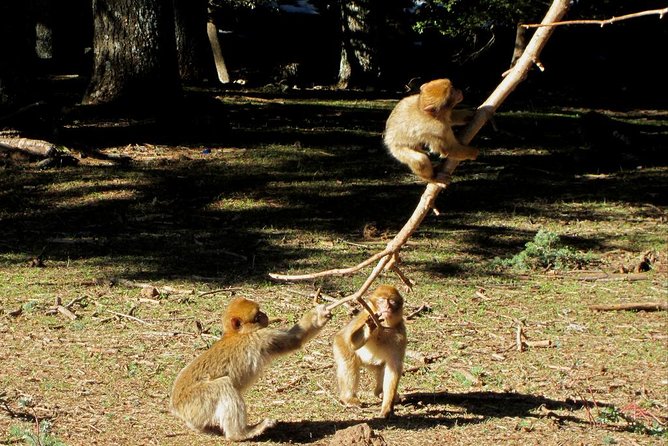
The cedar forests offer a sharp change from the cities. You may see monkeys and other animals, though wildlife sightings are not guaranteed. Midelt sits between the High and Middle Atlas, giving you a useful pause among mountain scenery before the road drops toward the desert.
The Ziz Valley is a fertile strip of palms and dates. This is a good place to try locally grown dates, especially if you want to connect the scenery with the food on your plate. Near Erfoud, fossil workshops explain how the Sahara was once covered by an ancient ocean. You may be able to work with original fossils and keep the finished piece, though any workshop cost should be confirmed.
At Merzouga, you receive traditional Moroccan tea and stay at a hotel overlooking the dunes. The first desert night is not yet the main camp night, but it gives you a comfortable base before the next day’s activities.
The long drive is the price of reaching the Sahara by land. You see the country change from forest to mountain to palm valley to sand, but you should be ready for many hours in the vehicle.
Merzouga combines desert adventure with living culture
Day six gives you more time in the Merzouga area. The available activities can include extreme sports, Moroccan cooking workshops, and visits with nomadic communities. The exact choice matters because some activities may carry extra costs, so ask your guide what is included before agreeing.
The visit to Rissani is one of the most distinctive parts of the trip. Once a major caravan trading post, Rissani remains known for its market and souk. Gold, spices, fabrics, weapons, and enslaved people once moved through this region. Today, the market still has an old-world feel, with unusual sights such as a donkey market and stalls selling local goods.
Khamlia offers another strong cultural encounter. This village is associated with the Gnawa people, whose ancestors were brought from Sudan as slaves. Music is central to the visit, and you can learn about their traditions and life in the Sahara. The stop lasts around four hours, so it is more than a quick performance staged between photo stops.
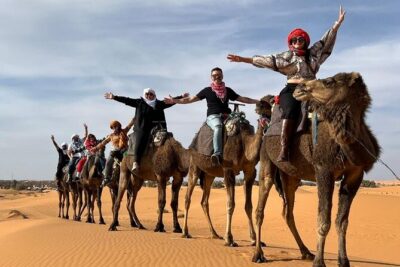
Back in the Merzouga dunes, you can take part in optional quad-bike challenges or other activities. The included camel ride lasts about an hour and leads through the sand toward desert oases. Near sunset, you reach higher dunes for wide views and changing colors.
The night is spent under the stars in a luxury tent at the desert camp. Desert camps vary, so do not assume this means a hotel room in the sand. You should be comfortable with a more basic setting and changing temperatures. The reward is the quiet, the open sky, and a clear sense of place that a short desert excursion cannot provide.
Todra Gorge and the Dades Valley change the scenery again
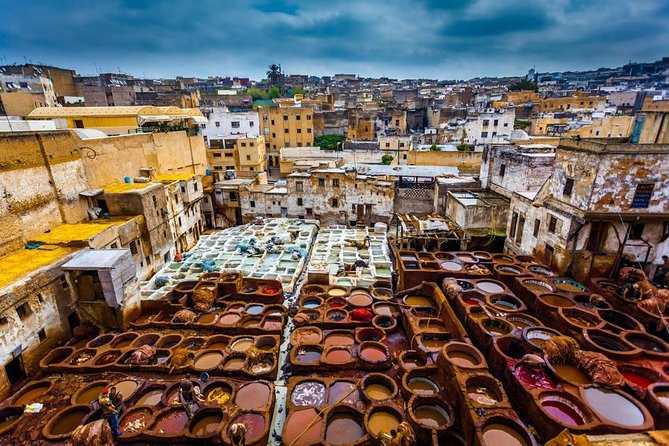
After sunrise, you leave the desert for Todra Gorge and the Dades Valley. The morning begins with the option to climb a dune and watch the desert wake up. Then the route shifts to rock walls and green valley floor.
Todra Gorge is the dramatic stop of the day. Its cliffs rise as high as 600 meters, while the narrowest section is only about 10 meters wide. You have around two hours to explore, enough for a walk and photographs without turning the stop into an all-day hike.
The night is spent near Boumalne Dades in the Dades Valley. Compared with the Sahara, the valley feels calm and green, with birds and a softer pace. This back-and-forth between dry desert, high rock, and cultivated valley is one of the route’s greatest strengths.
The Thousand Kasbahs leads to Ait Benhaddou
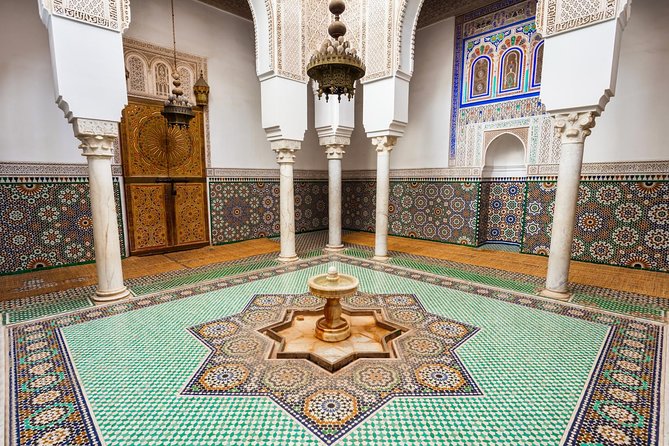
Day eight follows the Route of the Thousand Kasbahs through Kalaat Mgouna, known as the City of Roses, and the villages of Skoura and El Kelaa des M’Gouna. A kasbah is a fortified building, and these structures once helped protect caravan routes between the Sahara and Marrakech.
Ouarzazate is the next major stop. You can see the old walls, Kasbah Taourirt, and the former pasha’s palace area. The town also has strong film associations, but its cultural value is not limited to movie sets. It was an important crossing point between southern Morocco and the High Atlas.
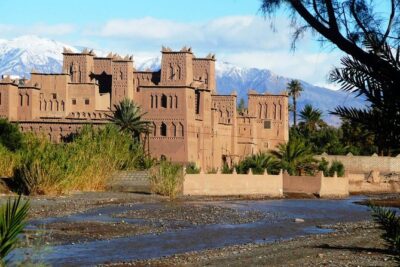
Ait Benhaddou is the day’s highlight. This UNESCO World Heritage site is an old fortified village on the caravan route toward Marrakech. It remains inhabited and has appeared in films such as Gladiator and television productions such as Game of Thrones.
Give yourself time to look beyond the famous view. Notice the defensive form of the village, the earthen construction, and its position along an old trade route. The two-hour visit is enough for a solid walk, though the uneven surfaces may not suit everyone.
The day finishes in Marrakech at Jamaa el Fna. The square fills with food stalls, tea sellers, music, and public performances. You can choose from tagine, couscous, sandwiches, and other Moroccan dishes at local prices. Dinner here is not included, but that is part of the appeal: you choose what looks good and decide how much you want to spend.
Marrakech needs a full day, not a rushed photo stop
Your final full touring day focuses on Marrakech with a guide devoted to the city. This is helpful because the medina, palaces, gardens, and museums can otherwise feel like a jumble of names.
The Ben Youssef Medersa is a former Islamic school with finely decorated interiors and careful architectural detail. Bahia Palace adds a different mood, with courtyards, gardens, and rooms decorated by artisans from Fes.
The Koutoubia Mosque is Marrakech’s best-known landmark. You cannot enter the mosque as a non-Muslim visitor, but its exterior and minaret are central to the city’s identity. The visit listed here is brief, so treat it as a landmark stop rather than a long museum visit.
Majorelle Garden takes about two hours and offers shade, plants, and strong blue architectural details. The Yves Saint Laurent Museum next door adds a design-focused counterpoint. Entrance fees for the medersa, Bahia Palace, Koutoubia-related sites, the garden, and the museum are not included, so calculate these costs before booking.
You may also have time for final shopping in the souks on the last morning. A hot-air balloon ride over Marrakech is offered as an optional activity, but it is not part of the package price.
What the $2,954 price really covers
At $2,954.46 per person, this is a major purchase. The value depends heavily on how much you value private transport, organization, and included accommodation.
The price includes an air-conditioned vehicle, private transportation, four-star hotels or riads, a luxury desert tent, nine breakfasts, three dinners, and the camel ride. It also covers the service of guides and the ability to travel with only your own group.
That can be good value for a couple, family, or small group that would otherwise hire separate drivers, book hotels across seven or eight areas, and arrange local guides in Fes and Marrakech. You are paying for a complete route, not just sightseeing tickets.
Still, the package is not all-inclusive. Flights are excluded, as are entrance fees to museums and monuments. You will also pay for most lunches and dinners, optional desert activities, the fossil workshop if you choose it, and the hot-air balloon ride if you add it.
The private format is the strongest reason to choose this tour over a cheaper shared departure. One highly positive review praised the balance between guided time and free time, along with Hassan and Achmed’s friendly service. That balance is important on a ten-day route. You get structure when the history is complicated, but you are not necessarily marched from one stop to the next all day.
Who should book this Morocco route?
I would recommend it to you if you want to see Morocco’s major regions in one trip and prefer not to manage long-distance transport. It suits first-time visitors, couples, families, and small groups who want a personal guide and a fixed plan.
It is especially good for people who want more than imperial cities. Chefchaouen, Volubilis, Rissani, Khamlia, the Ziz Valley, Todra Gorge, and Ait Benhaddou give the trip a strong range of places and cultures.
I would be more cautious if you dislike long drives, frequent hotel changes, or tightly packed touring days. The route is ambitious, and some days combine several stops with major travel. You should also be happy making your own meal choices, since only breakfast and three dinners are included.
The tour has a five-star rating from 279 reviews and a 99 percent recommendation rate. Those figures support the idea that the guide service and overall planning are strong, but they do not erase the route’s physical demands.
Should you book the 10-day Morocco tour?
Book it if you want the Sahara, imperial cities, mountain scenery, and historic villages in one private trip, and if you value having transport, hotels, breakfasts, guides, and the main route arranged for you.
Before paying, ask for the exact hotel and riad names, which three dinners are included, the current admission fees, and the cost of optional desert activities. If Hassan and Achmed are available for your dates, their praised service would be a worthwhile detail to request.
Skip it if you want a slow city holiday based in one or two places. Choose it if you want broad coverage, private attention, and the memorable combination of a camel ride, a desert camp, Fes’s old medina, and Marrakech’s evening square.
FAQ
What is included in the 10-day Morocco tour?
The tour includes an air-conditioned vehicle, private transportation, four-star hotels or riads, a luxury tent at the desert camp, a camel ride, nine breakfasts, and three dinners.
Are flights included in the tour price?
No. Flights are not included.
Are entrance fees to monuments and museums included?
No. Entrance fees are excluded. This applies to places such as Volubilis, Ben Youssef Medersa, Bahia Palace, Jardin Majorelle, and the Yves Saint Laurent Museum.
Is this a private tour?
Yes. Only your group participates in the private tour or activity.
Where does the tour begin and end?
The tour begins with pickup at Casablanca airport. The starting and ending points can be adjusted, and the final airport transfer is included in the stated plan.
Is the camel ride included?
Yes. A camel ride in the desert is included. The ride is described as lasting about one hour and includes a visit toward desert oases and the Merzouga dunes.
What is the cancellation policy?
You can cancel up to 24 hours before the experience begins for a full refund. Changes or cancellations made less than 24 hours before the start time are not accepted or refunded. Weather or minimum-participant cancellations may result in another date, another experience, or a full refund.
Just listed around Casablanca
- Your Private Casablanca Transfer★ 5.0 · 52 reviews
- Casablanca Airport Transfer from hotel in Casablanca★ 5.0 · 18 reviews
- Exclusive tour of Casablanca with access to the Hassan II Mosque★ 5.0 · 205 reviews
- Amazing airport pickup/ drop off in Casablanca/ safe&easy★ 5.0 · 218 reviews
- Sunset Camel Ride in the Palm Grove Of Marrakech★ 5.0 · 34 reviews
- 14 Days From Casablanca- Morocco Grand Tour★ 5.0 · 24 reviews
- Private full day trip to chefchaouen from Casablanca with lunch★ 5.0 · 20 reviews
- Marrakeck City tour from Casablanca all the day around trip★ 5.0 · 35 reviews
Sahara Desert Tours, compared.
3 Days Desert Tour From Marrakech To Merzouga Dunes & Camel Trek
Read our review →
3-Day Marrakech to Merzouga Desert Tour: Camel Rides & Overnights
Read our review →
3-Day Marrakech to Fes Sahara Desert Tour via Merzouga
Read our review →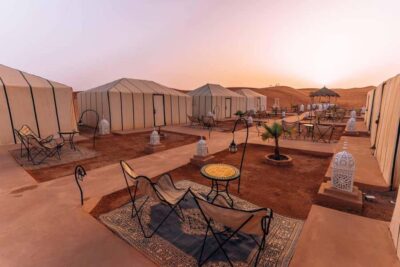
3-Day Merzouga Desert Experience Camel & Meals
Read our review →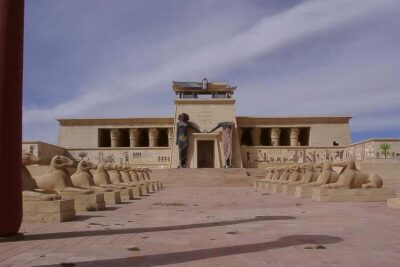
3-Day Tour to Merzouga Erg Chebbi with Food & Camel Trek
Read our review →Browse the lists this tour appears in