
Reviewed · SAHARA DESERT TOURS
Morocco Tour from Casablanca to Sahara and Marrakech 5 days
The desert is only one part of the story. This private five-day journey links Morocco’s imperial cities, Roman ruins, mountain roads, kasbahs, and Sahara dunes in one ambitious route from Casablanca to Marrakech. I like the wide range of places covered, from Rabat and Meknes to Fez, Merzouga, Ouarzazate, and Ait Ben Haddou. I also like the private vehicle and flexible final drop-off, which let your group travel at its own pace rather than follow a large coach.
The main concern is the schedule. You cover a huge portion of Morocco in only five days, with several long drives and a packed final stretch. At $2,890 per person, the tour offers private transport, hotels or riads, a desert camp, breakfasts, two dinners, and a camel ride, but you should compare that price carefully with the amount of time spent on the road.
In This Review
- Key points at a glance
- From Casablanca to Rabat’s royal monuments
- Meknes and the Roman ruins of Volubilis
- Four hours inside Fez el-Bali
- Crossing the Middle Atlas to Merzouga
- Camel ride and a night beneath the Sahara sky
- Todra and Dades Gorges on the road west
- Ouarzazate, Taourirt Kasbah, and Atlas Studios
- Ait Ben Haddou and the Tizi n’Tichka Pass
- Arriving in Marrakech, then choosing your finish
- What the $2,890 price really buys
- Guide quality, communication, and practical cautions
- Who should book this five-day Morocco route?
- Should you book it?
- FAQ
- How long is the Morocco tour from Casablanca?
- Is this a private tour?
- Which cities and major sites are included?
- Is the camel ride included?
- Are meals included?
- Can I finish the tour in Marrakech instead of returning to Casablanca?
- Can I cancel or change the booking?
Key points at a glance
- A full Moroccan circuit: The route connects Casablanca, Rabat, Meknes, Volubilis, Fez, Merzouga, the Todra and Dades Gorges, Ouarzazate, Ait Ben Haddou, and Marrakech.
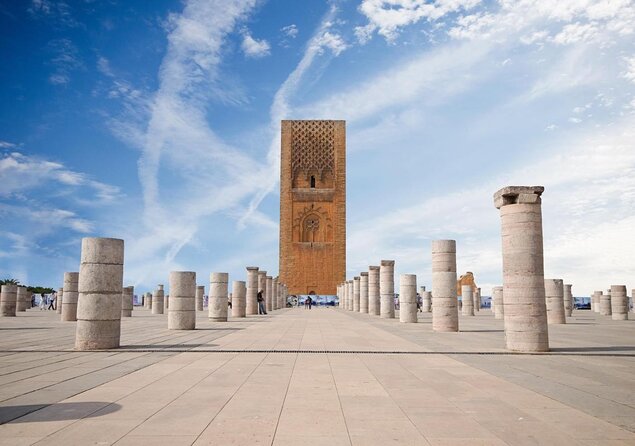
- A real Sahara night: You ride a camel, sleep at a traditional desert camp, eat Berber-style dinner, and rise for sunrise over the dunes.
- Private travel for your group: Hotel pickup, air-conditioned transfers, and a local driver are included, with no unrelated passengers listed.
- Excellent historical variety: Roman mosaics at Volubilis, Fez’s old medina, Rabat’s royal monuments, and Morocco’s famous mud-brick kasbahs all appear.
- A demanding pace: Several days combine sightseeing with long road journeys, so this suits energetic visitors more than anyone seeking a slow holiday.
- Communication needs attention: Most praise focuses on helpful drivers and guides, but several serious complaints involve missed pickups or unanswered messages.
From Casablanca to Rabat’s royal monuments
Pickup is scheduled from your Casablanca hotel at 9:00 a.m. You meet the local driver and guide, then head north to Rabat, Morocco’s capital. This is a sensible first stop because Rabat gives you a gentler introduction to the country than the crowded lanes of Fez or Marrakech.
The Kasbah of the Udayas is the first major visual treat. Its blue-and-white lanes, old fortress walls, and views toward the Bou Regreg River and Atlantic make it a pleasant place to walk. I would bring shoes with a firm grip, since old lanes and steps can be uneven.
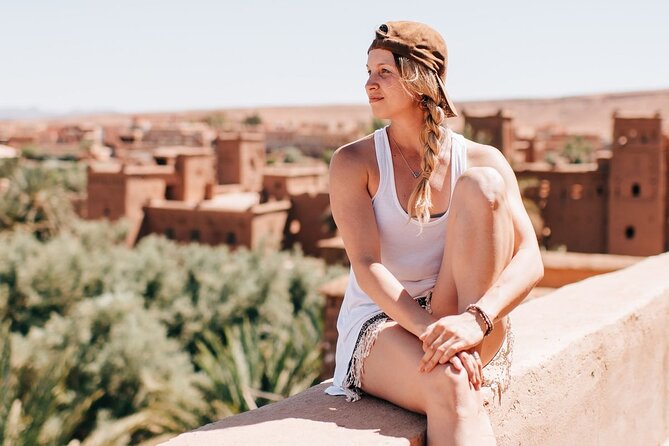
Nearby, the Hassan Tower offers a different kind of atmosphere. The unfinished minaret is a powerful reminder of an ambitious royal building project, while the nearby Mausoleum of Mohammed V is known for marble, carved details, and traditional Moroccan design. The visit is listed as free admission, though the schedule allows only about an hour for the Rabat portion.
That timing matters. You will see the main landmarks, but you should not expect a detailed study of every monument. Your experience will depend heavily on how much context your guide provides and how efficiently the group moves between stops.
More Sahara nights out of Casablanca:
- 10-days Private tour in Morocco: Sahara Desert + Imperial Cities
★ 5.0 · 279 reviews - 7-days: Casablanca to Chefchaouen then Fes and Sahara Desert – Camel Trekking
★ 5.0 · 53 reviews - 8-Day Morocco Adventure: Imperial Cities & Sahara Desert Trek
★ 5.0 · 37 reviews
Meknes and the Roman ruins of Volubilis
After Rabat, the route continues to Meknes, one of Morocco’s four imperial cities. The city was shaped by Sultan Moulay Ismail, whose reign gave Meknes its grand gates and royal character.
Bab Mansour is the headline sight. Its zellij tilework and calligraphy make it one of the most memorable gates on the route. You also visit the Mausoleum of Moulay Ismail, another place where a guide can make a major difference by explaining the sultan’s role in Moroccan history.
The itinerary allows three hours in Meknes, more than enough for a useful first look, though lunch and local traffic may affect the actual sightseeing time. Lunch is not included, so you will need to budget separately for meals during the road days.
Volubilis follows Meknes. These Roman ruins sit among open countryside, with temples, basilicas, columns, and floor mosaics spread across a hilltop site. The setting is part of the attraction. You are not simply walking through isolated stones, but looking across farmland and hills while picturing an ancient settlement that once connected North Africa with the Roman world.
One hour is allocated here. That works for the main ruins and photographs, but it is short if you enjoy archaeology. Wear a hat and carry water, as the site is open and exposed. Admission is included.
The day ends in Fez, where you check into a traditional riad. A riad’s inward-facing courtyard and decorated interior offer a welcome change from the road. Dinner in Fez is not included, so plan for that extra cost.
Four hours inside Fez el-Bali
Fez deserves more time than this tour can really give it, but the second day at least allows a focused visit to the old medina. Fez el-Bali is a maze of narrow lanes filled with workshops, shops, food stalls, and old religious buildings. Cars are generally not the point here. You move on foot, often through corridors where the city feels wonderfully close and confusing at the same time.
The tanneries are a major stop. Leather is still processed using long-established methods, and the sight of the dyeing vats is striking. The smell can be strong, so accept any traditional mint sprig offered nearby, but do not feel pressured to buy leather goods afterward.
The Bou Inania Medersa and Al-Attarine Madrasa provide a quieter look at Fez’s craftsmanship. Expect carved wood, patterned tilework, and careful geometric decoration. These buildings show why Fez is such an important stop for anyone interested in Moroccan design and religious architecture.
The old medina is also where you need to stay alert. Lanes can be crowded, and it is easy to lose sight of your guide. Keep your group together, listen for meeting instructions, and ask clearly about any shop visits or purchases. A private tour should make this easier, but the medina itself remains a busy, shifting place.
The strongest part of the Fez day is the chance to walk through a living historic quarter rather than only view monuments from a vehicle. The limitation is time. Four hours gives you an introduction, not a complete exploration.
Crossing the Middle Atlas to Merzouga
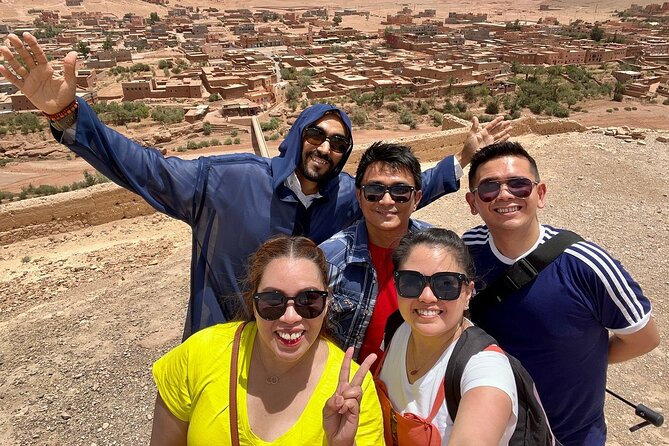
Day three is the tour’s biggest road day. After breakfast, you leave Fez and head toward Merzouga, passing through the Middle Atlas Mountains. The route includes Ifrane and Azrou, with stops connected to cedar trees and Barbary Macaques.
Ifrane is known for a very different feel from the desert towns later in the trip. Azrou provides the chance to see cedar woodland and, if conditions allow, Barbary Macaques. Keep food tucked away and follow your guide’s instructions around animals.
You continue to Midelt for lunch, which is not included. After that comes the Ziz Valley, where palm groves and mountain views mark the approach to the Sahara. This changing scenery is one of the great strengths of the itinerary. In a single day, you move from upland roads to dry valleys and finally to the desert edge.
The trip does ask a lot from you physically. The provided schedule gives only one hour to the Fez departure stop, two hours for Ifrane and Azrou, and four hours for Merzouga, but the actual driving time between these places is substantial. If you get motion sickness, tell the driver early. One particularly useful account praised the driver for making photo stops and helping with a travel-sick child.
A few more Casablanca runs to hold up against each other
- 5 Days Private Tour from Casablanca to Fes and Sahara Desert
★ 5.0 · 22 reviews - 5 Days Tour From Fes
★ 5.0 · 18 reviews
Camel ride and a night beneath the Sahara sky
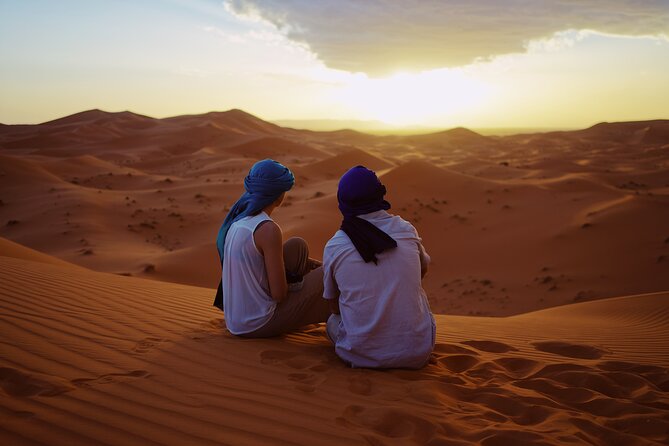
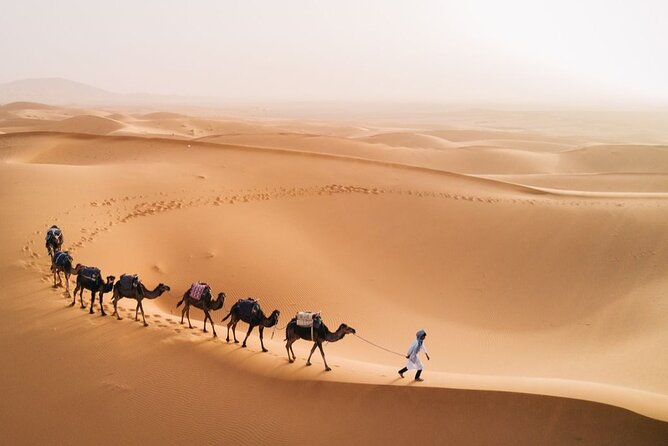
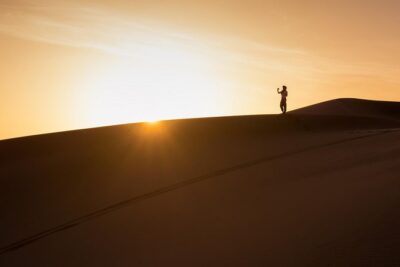
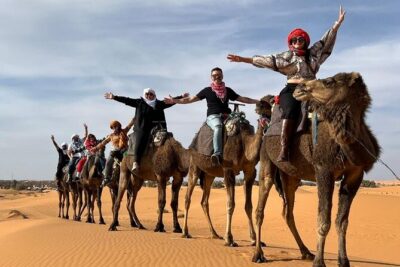
The arrival at Merzouga is the emotional center of the tour. You leave the vehicle for a camel ride into the dunes, unless you choose the alternative 4WD transfer. The camel journey is not just transport. It gives you time to watch the light change across the sand and feel the desert become quieter as the camp approaches.
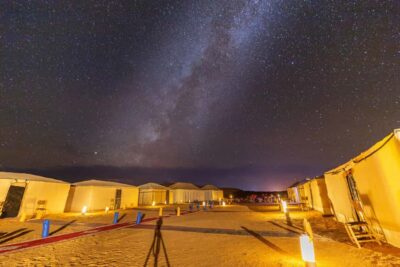
A traditional desert camp is included, along with dinner. The meal is described as Berber-style, and the evening takes place under the stars. This is the part of the tour that most clearly delivers the classic Sahara experience: sand, open sky, slow movement, and a night away from city noise.
You should approach the camp with sensible expectations. It is described as traditional and, elsewhere in the supplied details, as a luxury desert camp, but the exact tent facilities are not specified. Ask about bedding, private bathrooms, electricity, and heating before departure if those details matter to you.
The next morning starts early for sunrise. You then ride the camels back to Merzouga after breakfast. The schedule allows only about an hour for this return portion, so be ready to leave promptly. If camel riding is uncomfortable, use the 4WD option. The alternative is specifically offered, which makes the desert section more manageable for seniors, young children, or anyone with back or joint concerns.
Todra and Dades Gorges on the road west
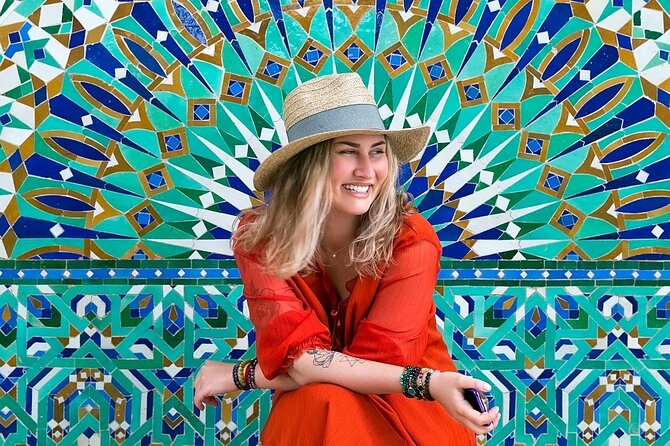
After the desert, the route turns toward the Todra Gorges. Towering rock walls close in around the river, creating one of Morocco’s most dramatic natural scenes. You have about an hour to walk and take photographs.
That short visit is enough for a look at the canyon, but not for serious hiking. If you want long walks, tell the organizer before booking. The tour is built around seeing many places, not spending half a day on one trail.
The Dades Valley comes next, with winding gorges, rock formations, palm groves, old kasbahs, and Berber villages. The route also passes through the Valley of Roses near Kalaat M’Gouna. A local cooperative may show you rosewater, perfume, and beauty products made from the area’s roses.
Cooperative visits can be interesting when they explain local work and production. They can also become shopping stops, so decide in advance how much time and money you want to spend. You are not required to buy something simply because a product is presented.
Ouarzazate, Taourirt Kasbah, and Atlas Studios
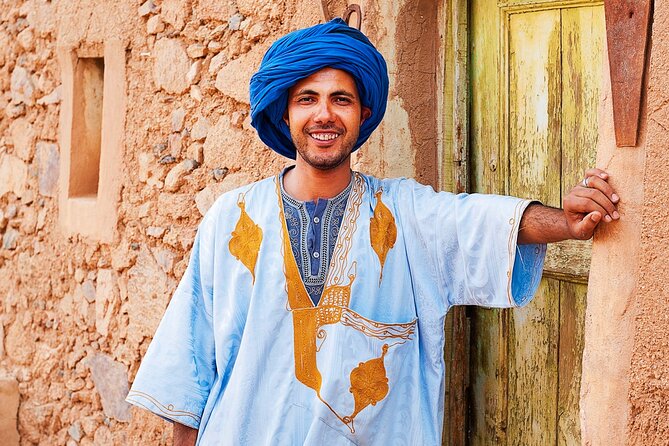
Ouarzazate is a natural pause between the desert and the High Atlas. Its location at the meeting point of desert routes and mountain roads gives the town a practical importance, while its film connections have made it famous far beyond Morocco.
Taourirt Kasbah is the main cultural stop. The former Glaoui residence has decorated rooms, narrow passages, and views over the surrounding area. Its maze-like layout makes a guide useful, particularly if you want to understand how the building functioned rather than simply photograph its walls.
Atlas Studios adds a lighter, more playful note. The studio has been used for productions including Gladiator, Kingdom of Heaven, and Game of Thrones. You walk among sets and props and get a sense of how filmmakers use Ouarzazate’s dry surroundings to create ancient cities and distant kingdoms.
Admission to Atlas Studios is included. The one-hour allowance is enough for a concise visit, though film fans may want more time. The tour’s film focus is a good bonus, but it should not replace the architectural and cultural value of Ouarzazate itself.
Ait Ben Haddou and the Tizi n’Tichka Pass
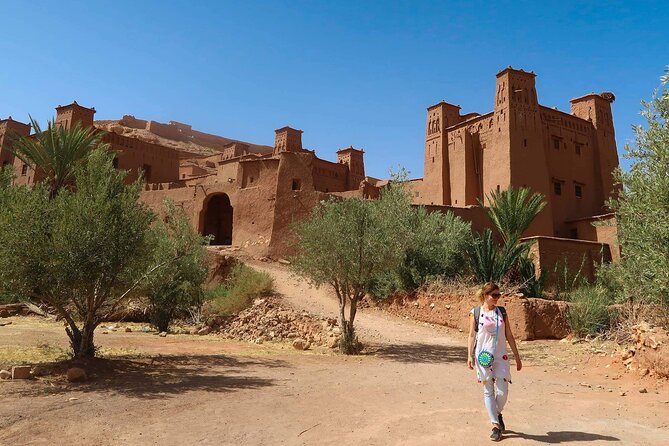
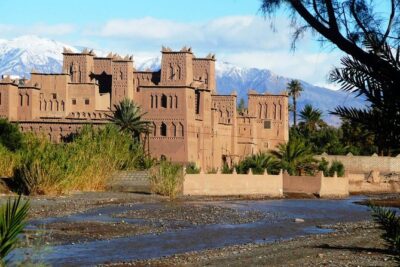
Ait Ben Haddou is one of Morocco’s most recognizable fortified villages. Its earthen towers and compact lanes rise above the surrounding valley, and its appearance has helped it feature in Gladiator, Lawrence of Arabia, and Game of Thrones.
You walk through the narrow lanes and climb toward the top for broad views. The one-hour stop favors a quick visit, so wear comfortable shoes and keep your camera ready. The climb may be tiring for anyone with limited mobility, though the tour is presented as suitable for most participants.
From Ait Ben Haddou, the road climbs through the High Atlas to Tizi n’Tichka Pass, more than 2,260 meters above sea level. The pass offers views of peaks, valleys, and terraced farmland, but the road is winding. If you are prone to motion sickness, take precautions and ask for breaks when needed.
This is another section where the scenery is more important than a long stop. You will see a great deal from the vehicle, with occasional pauses for photographs. The mountain crossing also explains why the final day can feel long.
Arriving in Marrakech, then choosing your finish
The tour reaches Marrakech around midday, according to the schedule, before you head into the medina. This is a lively, sensory ending: narrow alleys, spices, textiles, pottery, jewelry, and traditional food all compete for your attention.
The medina is best approached with patience. Let your guide lead you through the main lanes, but keep some time for wandering. The provided details mention hidden corners, souks, and Moroccan cuisine, though the exact monuments included in the Marrakech visit are not fully specified.
The final transfer is flexible. You can stay in Marrakech or request transport back to Casablanca. That choice is useful if your international flight or wider itinerary begins in Casablanca, but confirm the arrangement before the trip. A return to Casablanca after Marrakech adds more road time and may leave little energy for sightseeing.
What the $2,890 price really buys
At $2,890 per person, this is not a budget tour. Its value depends on group size and how much you care about private service. The price includes hotel or riad nights, a desert camp, private air-conditioned transfers, a local driver, hotel pickup and drop-off, four breakfasts, two dinners, the camel ride or 4WD transfer, and the included admission noted for Volubilis and Atlas Studios.
It does not include lunches, dinner in Fez, or souvenirs. Those costs are easy to overlook because you eat on the road several times. You also need to confirm precisely how many room nights and what level of lodging are included, since the description uses hotels, riads, and a luxury desert camp without listing names or categories.
The best value comes when several people share the private vehicle and want one organized route. Solo visitors may find the per-person price harder to justify. Families can benefit from private pacing, especially when children need stops, while couples may appreciate the desert camp and sunrise.
Guide quality, communication, and practical cautions
The most consistent praise is directed at the drivers and guides. Mustafa is described as friendly, helpful, and good at explaining the route. Ibrahim is praised for being polite, punctual, patient, and willing to take photographs. Ali is also singled out for being accommodating and even buying bottled water for a group.
Those personal touches matter on a five-day road trip. A patient driver can make the difference when a child feels sick, an older person needs a slower walk, or you want one more photograph at a mountain viewpoint.
Communication is the weak point. Several serious complaints describe missed pickups, long waits, unanswered calls, and refund disputes. Other accounts describe good coordination and punctual service, so the experience may depend on the local team and the accuracy of your pickup details.
Because the booking is non-refundable and cannot be amended, check every detail carefully. Confirm the hotel name, meeting point, pickup time, final destination, dietary needs, and desert camp arrangements in writing. If you have a nut allergy, state it repeatedly and verify that snacks and meals will be safe. One complaint involved almonds being served despite a nut allergy request.
Who should book this five-day Morocco route?
I would choose this tour if you want to see many major Moroccan sights in one trip and prefer private transport over arranging trains, taxis, hotels, and desert transfers yourself. It suits active couples, families, small groups of friends, and first-time visitors with limited time.
I would hesitate if your priority is slow travel. Fez alone can fill several days, and the Sahara crossing involves long stretches in the vehicle. You should also think carefully before booking if communication problems would cause serious stress or if the non-refundable terms leave you uncomfortable.
Should you book it?
Book this tour if the Sahara overnight, camel ride, and broad route matter more to you than extended time in any one city. The combination of Fez, Volubilis, desert dunes, gorges, film sites, kasbahs, and Marrakech gives you an unusually full introduction to Morocco.
Before paying, confirm the pickup in writing and ask for a day-by-day schedule with lodging details. If the operator gives clear answers and your group is comfortable with long drives, the tour can deliver remarkable variety in five days. If you want depth, relaxed mornings, or guaranteed flexibility, build the same route over a longer trip.
FAQ
How long is the Morocco tour from Casablanca?
The tour lasts approximately five days and begins with hotel pickup in Casablanca at 9:00 a.m.
Is this a private tour?
Yes. Only your group participates, and private transfers in an air-conditioned vehicle are included.
Which cities and major sites are included?
The route includes Rabat, Meknes, Volubilis, Fez, Merzouga, the Todra Gorges, the Dades Valley, Ouarzazate, Ait Ben Haddou, the Tizi n’Tichka Pass, and Marrakech.
Is the camel ride included?
Yes. A camel ride to the Merzouga desert camp is included. A 4WD transfer is offered as an alternative.
Are meals included?
Four breakfasts and two dinners are included. Lunches, dinner in Fez, and souvenirs are not included.
Can I finish the tour in Marrakech instead of returning to Casablanca?
Yes. You can stay in Marrakech, or request a transfer to Casablanca. Confirm your preferred final destination in advance.
Can I cancel or change the booking?
No. The experience is non-refundable and cannot be changed for any reason.
Just listed around Casablanca
- Casablanca Airport Transfer from hotel in Casablanca★ 5.0 · 18 reviews
- Your Private Casablanca Transfer★ 5.0 · 52 reviews
- Exclusive tour of Casablanca with access to the Hassan II Mosque★ 5.0 · 205 reviews
- Amazing airport pickup/ drop off in Casablanca/ safe&easy★ 5.0 · 218 reviews
- Sunset Camel Ride in the Palm Grove Of Marrakech★ 5.0 · 34 reviews
- 14 Days From Casablanca- Morocco Grand Tour★ 5.0 · 24 reviews
- Private full day trip to chefchaouen from Casablanca with lunch★ 5.0 · 20 reviews
- Marrakeck City tour from Casablanca all the day around trip★ 5.0 · 35 reviews
Sahara Desert Tours, compared.
3 Days Desert Tour From Marrakech To Merzouga Dunes & Camel Trek
Read our review →
3-Day Marrakech to Merzouga Desert Tour: Camel Rides & Overnights
Read our review →
3-Day Marrakech to Fes Sahara Desert Tour via Merzouga
Read our review →
3-Day Merzouga Desert Experience Camel & Meals
Read our review →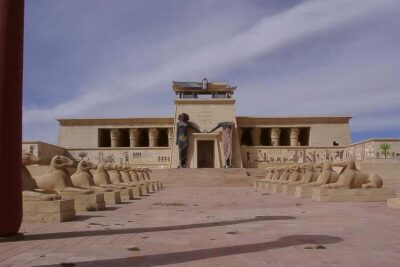
3-Day Tour to Merzouga Erg Chebbi with Food & Camel Trek
Read our review →Browse the lists this tour appears in