
Reviewed · COOKING CLASSES
3 Hour Moroccan Cooking Class in Marrakech
Food can open doors. This three-hour class at Amal Targa Center takes you beyond restaurant tables and into the practical heart of Moroccan cooking. I like the chance to prepare a traditional meat, fish, or vegetarian tagine, and I like that your payment supports a non-profit training local women for culinary work. The main consideration is that the hands-on cooking time may feel shorter than expected for a class advertised as three hours.
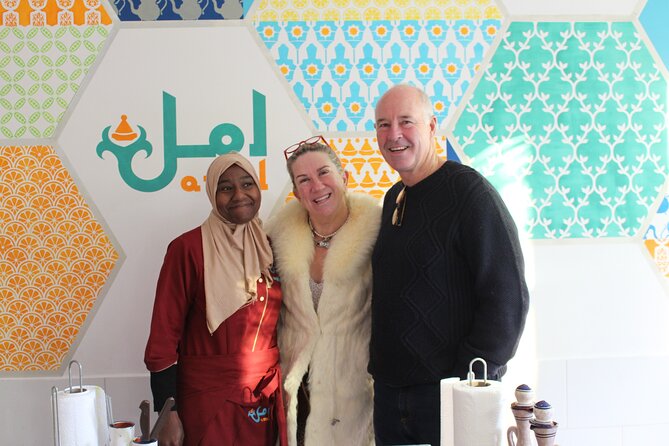
The setting, outside the Medina in a quieter Marrakech suburb, gives the morning a calmer rhythm. You cook over charcoal, share mint tea and sweets, and hear about Amal’s work from the staff, including Ghita, who has been praised for her warm welcome. At $53.65 per person, this is not the cheapest meal activity in Marrakech, but the social mission adds real value.
In This Review
- Key Points Before You Book
- Why the Amal Targa Center Matters
- Starting at 9:30 am in a Quiet Courtyard
- Choosing Your Tagine
- Preparing Moroccan Food, Not Just Watching It
- The Charcoal Tagine Lesson
- Pastilla, Couscous, Bread, and What May Be Included
- Mint Tea, Sweets, and the Social Side
- How Much Value Do You Get for $53.65?
- Who Will Enjoy This Class Most?
- Practical Details for a Smooth Morning
- Should You Book the Amal Cooking Class?
- FAQ
- Where does the Moroccan cooking class begin?
- What time does the class start?
- How long does the cooking class last?
- Can I choose which tagine to prepare?
- How many people can join the class?
- Can I cancel for a full refund?
Key Points Before You Book
- Cook tagine over charcoal: Learn the traditional method rather than simply watching a demonstration.
- Choose your main dish: Select a meat, fish, or vegetarian tagine when booking.
- Support Amal’s mission: Your class helps fund culinary training and job placement for local women.
- Expect a small-group setting: The class has a maximum of 16 people, allowing for personal help.
- Finish with Moroccan hospitality: Mint tea, sweets, and a tea ceremony round out the morning.
- Plan the route carefully: The class begins at Amal Targa Center at 9:30 am, and taxi drivers may need clear directions.
Why the Amal Targa Center Matters
Amal is more than a cooking school. It is a non-profit training center designed to help local women gain culinary skills and find work. That purpose changes the feel of the class. You are not only paying for a recipe and a meal. You are also helping support a working program in Marrakech.
I value that connection because many food classes can feel detached from local life. Here, the cooking is tied to a practical community goal. You get food instruction, but you also hear about the organization and the opportunities it creates for women.
The Targa Center sits in Lot Harouchi, Marrakech 40130, outside the most hectic parts of the city. This location is useful if you need a break from the Medina’s crowds, noise, and traffic. It is less convenient if you are staying near the old city and want a class you can reach on foot.
The meeting point is also the end point. No hotel pickup is listed, so you need to arrange your own way there. The location is near public transportation, but one useful piece of advice is to make sure your taxi driver understands the destination. The center’s name and address should be ready on your phone.
More Cooking Classes in Marrakech
- Marrakech: Moroccan Cooking Class with Pickup
★ 4.6 · 1,862 reviews - Marrakech: Traditional Moroccan Cooking Class & Market Visit
★ 4.8 · 1,861 reviews - Marrakesh: Moroccan Dishes Cooking Class with a Local Chef
★ 5.0 · 1,615 reviews
Starting at 9:30 am in a Quiet Courtyard
The class starts at 9:30 am and lasts about three hours. A morning schedule makes sense for Moroccan cooking. You can prepare food before the hottest part of the day, eat what you make, and still have most of the afternoon free for Marrakech sightseeing.
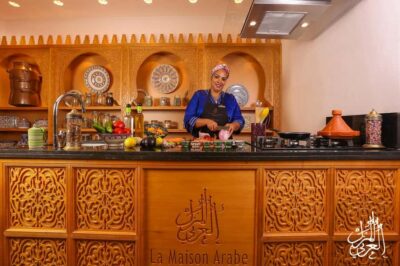
The class takes place in a purpose-built kitchen and courtyard setting. Several people describe the kitchen as clean, professional, and well arranged for teaching. That matters because Moroccan cooking often involves several steps, and a cramped work area would make the process harder to follow.
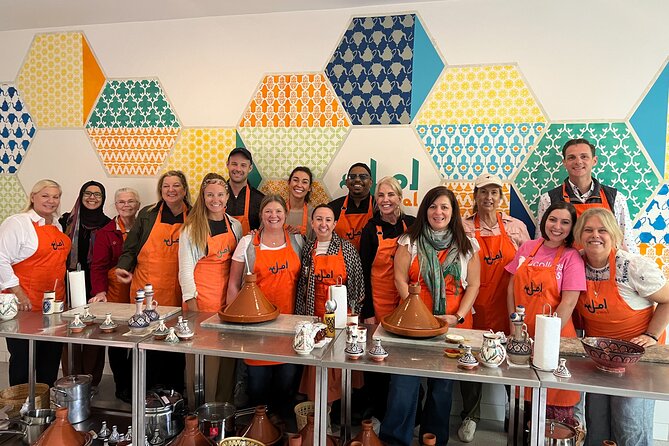
The maximum group size is 16 people. That is not a private lesson, but it is small enough to keep the group manageable. The staff can circulate, answer questions, and help when a knife cut, seasoning choice, or cooking step needs correction.
The class also seems suitable for mixed ages and experience levels. A parent and 12-year-old daughter enjoyed the session together, while experienced home cooks also felt they learned useful techniques. You do not need to arrive as a serious cook. The format is built around support and encouragement.
Choosing Your Tagine
One important step happens before you arrive: you select the tagine you want to make. The available choices include meat, fish, and vegetarian versions. This is a welcome option for people with different tastes or dietary preferences, although you should make your choice carefully because the class focuses on one main dish.
I like the freedom to choose. A fish tagine offers a different lesson from a slow-cooked meat version, while a vegetable tagine shows how Moroccan cooks build flavor without meat. The choice also makes the final meal feel more personal.
There is one limitation. You may not cook every dish offered during the morning. One account of the class wished for the chance to prepare both a salad and a tagine rather than choosing only one. If you hope to make a full Moroccan spread from start to finish, check exactly what your selected class includes before booking.
The supplied description highlights tagine, pastilla, couscous, and other Moroccan dishes. The individual experience can vary, with some class accounts describing tagine alongside pastilla and bread, while others mention vegetable couscous. Treat the chosen tagine as the reliable centerpiece, and view additional dishes as possible parts of the lesson rather than guaranteed items.
Preparing Moroccan Food, Not Just Watching It
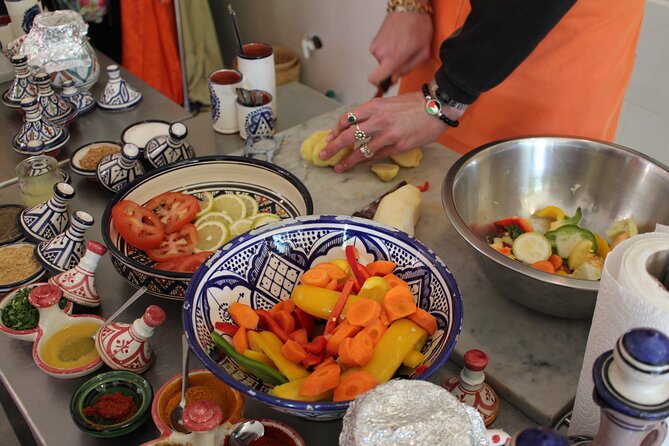
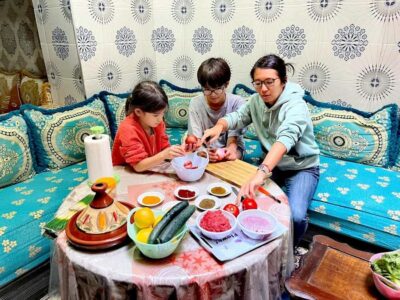
The strongest part of the experience is the hands-on cooking. You do not simply sit through a chef’s demonstration and then eat a prepared meal. You work with ingredients, follow the method, and receive help as your dish comes together.
The staff’s role appears to be especially important. They give enough assistance to help your food succeed without taking over every task. That balance is valuable for beginners. You get the satisfaction of making the dish yourself, but you are not left guessing at every stage.
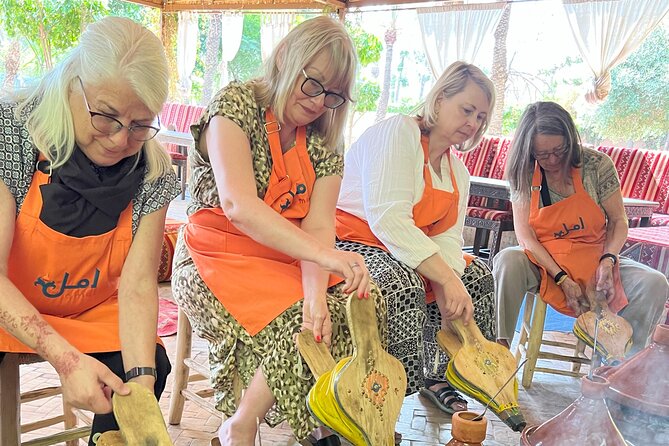
The class introduces the basics behind Moroccan flavor. You learn how ingredients are combined, how the tagine is arranged, and how the distinctive cooking vessel works. The traditional charcoal method is a special feature. Cooking over charcoal gives you a practical look at how tagine has long been prepared outside a modern kitchen.
Still, set your expectations sensibly. A three-hour food experience includes instruction, preparation, cooking, eating, tea, and time to hear about Amal. That means the active chopping and cooking may occupy only part of the schedule. One dissatisfied account felt the actual cooking lasted about 30 minutes. The class seems best for someone who wants a social introduction and a finished dish, not a full professional cooking course.
Same city gate, a very different afternoon:
- Marrakech: Agafay Desert Sunset, Camel Ride, and Dinner Show
★ 4.6 · 35,119 reviews - From Marrakech: Ouzoud Waterfalls Guided Hike and Boat Trip
★ 4.7 · 33,630 reviews - Marrakech: Agafay Desert Quad & Camel Rides with Dinner Show
★ 4.8 · 27,382 reviews - Marrakech: Agafay Desert Quad Biking Tour with Dinner-Show
★ 4.8 · 16,569 reviews
The Charcoal Tagine Lesson
The charcoal cooking method is one of the details that gives this experience a sense of place. A tagine is not just a recipe. It is also a cooking system, with the conical lid helping food cook gently while keeping moisture in the dish.
Learning to use charcoal adds a traditional element you are unlikely to get from a standard cooking demonstration. You can see how the vessel sits over the heat and how Moroccan cooks produce tender, well-seasoned food without relying on a conventional oven.
This is also where staff guidance matters most. Heat control can be difficult for a first-time cook, and the class provides support so your meal has a good chance of turning out well. You should not expect to master every charcoal technique in one morning, but you will leave with a better understanding of the process.
The practical value continues after you return home. Tagine cooking can be adapted to an ordinary kitchen, even if you do not own the traditional vessel. The class gives you a way to connect the Moroccan meal on your plate with the methods used to prepare it.
Pastilla, Couscous, Bread, and What May Be Included
The experience is presented as an introduction to several Moroccan specialties, including tagine, pastilla, couscous, and other delicacies. Accounts of the morning describe fish tagine, vegetable couscous, pastilla, and bread.
Pastilla is especially interesting because it shows a different side of Moroccan cooking from tagine. It combines pastry with a savory filling and distinctive seasoning. Couscous offers another lesson in texture and preparation, while bread gives you a simple staple that appears often on Moroccan tables.
The key point is not to assume you will prepare all of these dishes personally. The class requires you to choose a tagine, and the exact mix of additional cooking tasks may depend on the day’s format. If making several dishes is your top priority, ask Amal to confirm the current lesson plan before paying.
Even with that qualification, the food focus is broad enough to give you a useful introduction. You get more than a single recipe if the class includes demonstrations or shared preparation, but the tagine remains the safest expectation.
Mint Tea, Sweets, and the Social Side
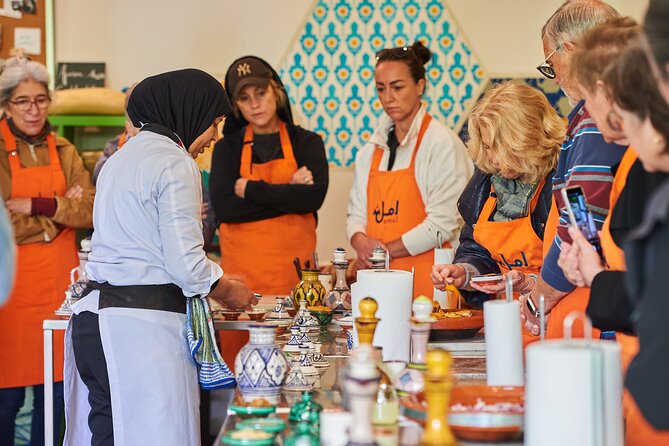
After the cooking, you sample your food and sit down for mint tea and sweets. A traditional tea ceremony is part of the experience, not an afterthought. This slows the morning down and creates room for conversation with the hosts and other people in the group.
I like this ending because Moroccan hospitality is often expressed around the table. The tea service turns the class from a technical lesson into a cultural experience. You can ask questions, hear more about Amal, and get to know the people who run the center.
The staff are frequently praised for being welcoming, inclusive, and encouraging. Ghita is one name associated with a warm reception, though the exact instructor may vary. The friendly atmosphere seems to be a major reason the class works well for couples, families, solo participants, and people meeting for the first time.
There is also a useful lesson in the tea ceremony itself. Moroccan mint tea is served with care and ceremony, and the shared serving ritual helps explain why tea plays such a central role in daily social life. You do not need a long lecture to understand its importance once you are sitting with the staff and enjoying sweets after cooking.
How Much Value Do You Get for $53.65?
At $53.65 per person, the price sits above the cost of an ordinary Moroccan lunch. But comparing this only with a restaurant meal misses the point. You are paying for instruction, ingredients, a cooked meal, tea and sweets, a three-hour activity, and support for Amal’s women’s training program.
The value is strongest if you care about three things:
- You want to learn a dish you can try at home.
- You prefer a small-group activity with local staff.
- You want your spending to support a social mission.
The value is weaker if your main goal is quantity. You may prepare only one principal dish, and the active cooking portion may feel brief to someone expecting a long workshop. You are also responsible for reaching the Targa Center, which adds a little planning.
A 4.8 rating from 41 ratings and a 95 percent recommendation rate suggest that the experience delivers well for most people. I would still read those numbers alongside the format. Most praise centers on the friendly team, tasty food, charitable purpose, and enjoyable atmosphere, not on hours of advanced technical training.
Who Will Enjoy This Class Most?
This is a good match for first-time visitors who want an approachable introduction to Moroccan cuisine. You get cultural context without needing to commit a full day, and the class leaves time for other plans.
It also suits people who enjoy social activities. The group format gives you a chance to meet other participants, and the tea ceremony encourages conversation. Solo participants should find it easy to join in, while couples and families can work on their selected dishes with staff support.
The class may also appeal to repeat visitors. One person who had visited Marrakech six times still found the experience worthwhile, which suggests that familiarity with Moroccan food does not make the lesson redundant.
You may want another option if you are looking for a private chef lesson, advanced culinary instruction, or a guaranteed multi-course workshop. The maximum group size is 16, and the focus is friendly participation rather than formal culinary certification.
Practical Details for a Smooth Morning
Book your tagine choice ahead of time, since the experience asks you to select one. The start time is 9:30 am, and the class ends back at the Amal Targa Center after about three hours.
Keep the address available for your driver: Amal Targa Center, Cooking Classes, Lot Harouchi, Marrakech 40130, Morocco. Taxi drivers may not immediately know the center, so showing the full location is sensible.
A mobile ticket is provided, and booking confirmation is issued at the time of purchase. Service animals are allowed, and the location is near public transportation. The available information does not list a hotel transfer, special equipment requirements, or detailed dietary arrangements, so contact the provider if you need a specific accommodation.
Free cancellation is available up to 24 hours before the start time for a full refund. Changes or cancellations made inside that 24-hour window are not accepted for a refund, and the cut-off follows Marrakech local time.
Should You Book the Amal Cooking Class?
I would book this class if you want a friendly, useful taste of Moroccan cooking with a clear community benefit. The charcoal tagine method, welcoming staff, mint tea ceremony, and chance to support women’s culinary training give it more purpose than a standard cooking demonstration.
Go in expecting an introduction, not a full culinary apprenticeship. You will probably focus on one selected tagine, with other dishes possibly included depending on the day. If you accept that format, the $53.65 price is fair for the meal, instruction, setting, and social mission.
Before booking, confirm which dishes will be prepared and plan your route to Targa. If those details suit you, Amal offers one of the more meaningful ways to spend a Marrakech morning.
FAQ
Where does the Moroccan cooking class begin?
The class begins at Amal Targa Center, Cooking Classes, Lot Harouchi, Marrakech 40130, Morocco.
What time does the class start?
The scheduled start time is 9:30 am.
How long does the cooking class last?
The experience lasts approximately three hours.
Can I choose which tagine to prepare?
Yes. You are asked to select a tagine, with meat, fish, and vegetarian options available.
How many people can join the class?
The activity has a maximum of 16 participants.
Can I cancel for a full refund?
Yes. You can cancel at least 24 hours before the local start time for a full refund. Cancellations or changes made less than 24 hours before the start time are not accepted for a refund.
More 3-Hour Experiences in Marrakech
- Marrakech Monuments & Souks 3-Hour Tour
★ 3.8 · 1,540 reviews - Marrakech: 3H Traditional Hammam & Massage & Hotel Transfer
★ 3.9 · 1,262 reviews - 3h Private Sidecar Ride / Secrets of Marrakech
★ 5.0 · 478 reviews - Marrakech: 3H Traditional Hammam, Massage & Hotel Transfer
★ 4.6 · 133 reviews
More Workshops in Marrakech
- Moroccan Cooking Class & Marrakech Market Visit with Chef Khmisa
★ 5.0 · 1,504 reviews - Half-Day Cooking Class with Local Chef Laila in Marrakech
★ 5.0 · 952 reviews - Marrakech: Pottery Workshop with Moroccan Tea
★ 4.8 · 756 reviews - Marrakech: Moroccan Cooking Class with a Local Family
★ 4.9 · 668 reviews
Just listed around Marrakech
- Zagora: 2-Day Desert Trip from Marrakech★ 4.4 · 31 reviews
- Traditional spa Hammam & Massage with Hotel Transfers★ 4.0 · 24 reviews
- Day trip to OUZOUD waterfall with guide&boat ride from Marrakech★ 5.0 · 172 reviews
- quad bike tour in the palmeraie of Marrakech★ 4.5 · 43 reviews
- Half day quad desert agafay★ 4.5 · 24 reviews
- walking tour★ 5.0 · 46 reviews
- private tour of Marrakech 4 hours with multilingual driver★ 5.0 · 117 reviews
- 3 days tour from Marrakech to Merzouga desert★ 5.0 · 55 reviews
Cooking Classes, compared.
Traditional Moroccan Cooking Class & Market Visit
Read our review →
Moroccan Dishes Cooking Class with a Local Chef
Read our review →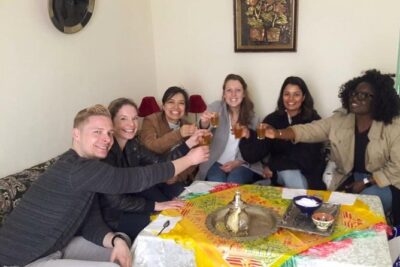
Moroccan Cooking Class & Marrakech Market Visit with Chef Khmisa
Read our review →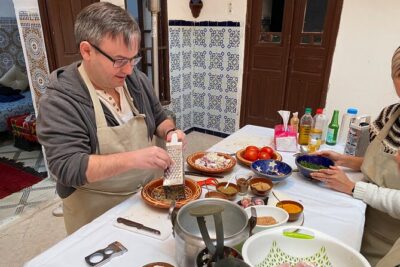
Half-Day Cooking Class with Local Chef Laila in Marrakech
Read our review →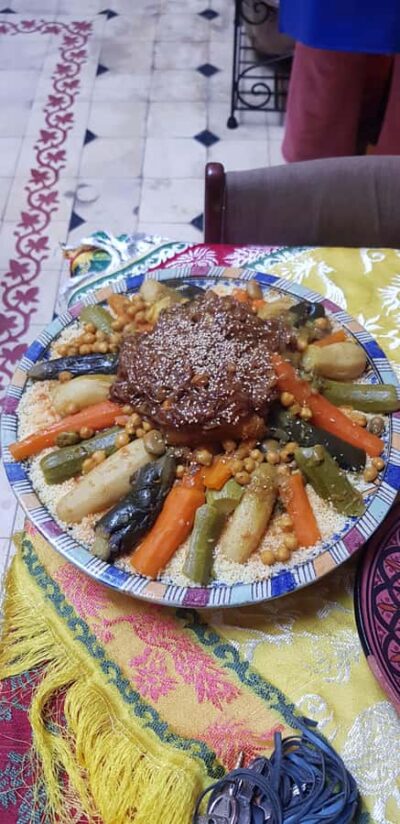
Browse the lists this tour appears in