
Reviewed · FOOD & DRINK
Authentic Moroccan Food Tour in Marrakech with Dinner
Come hungry, and let Marrakech feed you. This three-hour evening tour threads through the medina near Jemaa el-Fna, stopping at about 10 food stalls, shops, and small eateries for tastes that are easy to miss on your own. I like the mix of familiar treats such as mint tea and harira with bolder bites including Moroccan snails and sheep’s head. I also like that the evening ends with a proper three-course dinner on a rooftop, not just a string of samples.
The main consideration is consistency. The route can change with the guide, season, and pace of the group, and the herbalist shop stop can feel like a sales detour rather than part of a food tour. A few people also experienced delays, rushed explanations, or confusion about the dinner. Most rated the experience very highly, but you should arrive ready for a lively, slightly improvised night in the medina.
In This Review
- Key points at a glance
- Starting at Poste du Maroc in the Marrakech medina
- Route one: sweets, soup, snails, and mint tea
- Route two: Moroccan pancakes, street food, and cactus fruit
- The old medina food walk is the real attraction
- The herbalist shop is useful for some, unwanted by others
- Rooftop dinner overlooking Jemaa el-Fna
- What the $54.45 price really covers
- Who will enjoy this Marrakech food tour most
- Should you book it?
- FAQ
- How long does the Moroccan food tour last?
- Where does the tour begin?
- Where does the tour end?
- Is dinner included?
- How many people can join the tour?
- Can vegetarians or people with dietary needs join?
- Is hotel pickup included?
Key points at a glance
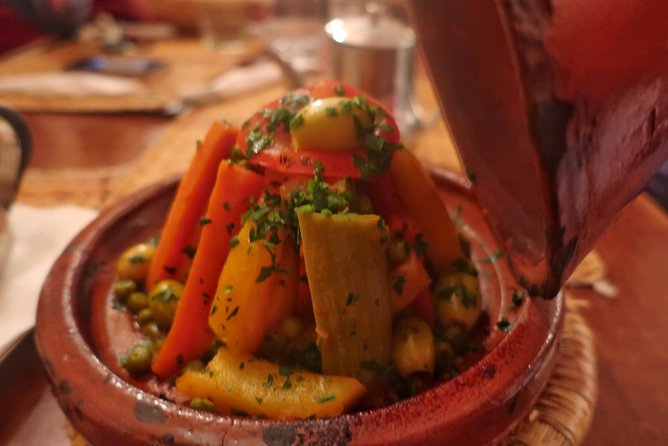
- About 10 tasting stops: Sample Moroccan pastries, olives, soup, pancakes, fruit, street food, and other local specialties around the medina.
- Dinner is included: The tour finishes with a three-course Moroccan meal at a rooftop restaurant, with menu choices available.
- Two possible food routes: Your exact tastings depend on the guide and season, but both routes feature a broad look at Moroccan eating habits.
- A small-group format: The stated maximum is 15 people, with group discounts available.
- Strong guide element: Guides such as Mehdi, Houssaine, Hamza, Ali, Mohamed, and Mo have been praised for warmth and local insight.
- Expect a walking evening: The meeting point is Poste du Maroc, and the tour ends back there. Hotel pickup is not included.
Starting at Poste du Maroc in the Marrakech medina
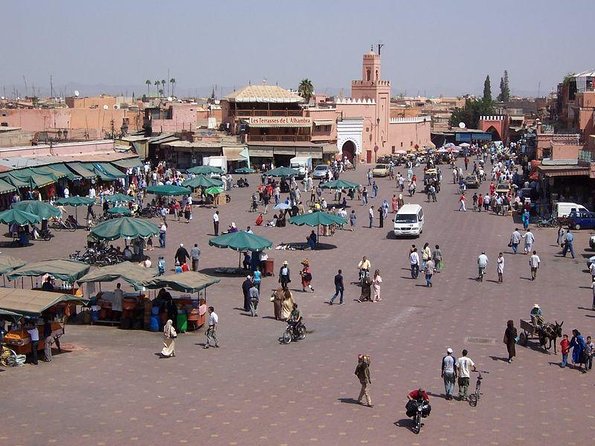
The meeting point is Poste du Maroc on Rue Beni Marine, right in the heart of Marrakech. From there, your guide leads you into the old medina, where the evening unfolds through narrow lanes, food counters, market corners, and small local stops.
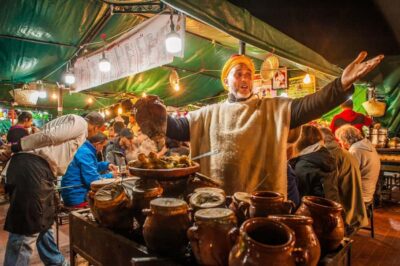
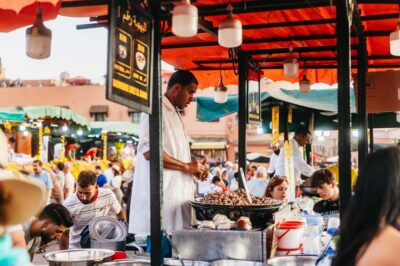
This setting is a major part of the experience. You are not simply seated in one restaurant while dishes arrive in tidy courses. You move through the places where Moroccan snacks are bought, prepared, shared, and eaten. The route near Jemaa el-Fna can be crowded and confusing, so having someone lead the way is useful.
You should wear comfortable shoes and arrive ready to walk and stand. The tour lasts about three hours, but the timing can shift. One group began roughly 30 minutes late after the guide notified participants, while another had a more difficult delay caused by a guide change. It is wise to keep the start of your evening flexible.
The stated group limit is 15 people. That is small enough for questions and conversation, although one dissatisfied participant described a group that felt too large for tiny stalls and cramped eateries. Group size can make a real difference here, so ask about the expected number if space matters to you.
More Food Tours in Marrakech
- From Marrakech: Merzouga 3-Day Desert Safari with Food
★ 4.7 · 12,232 reviews - Marrakech: Street Food Tour with a Local Guide
★ 4.9 · 3,119 reviews - Marrakech: Street Food Tour by Night
★ 4.8 · 2,838 reviews
Route one: sweets, soup, snails, and mint tea
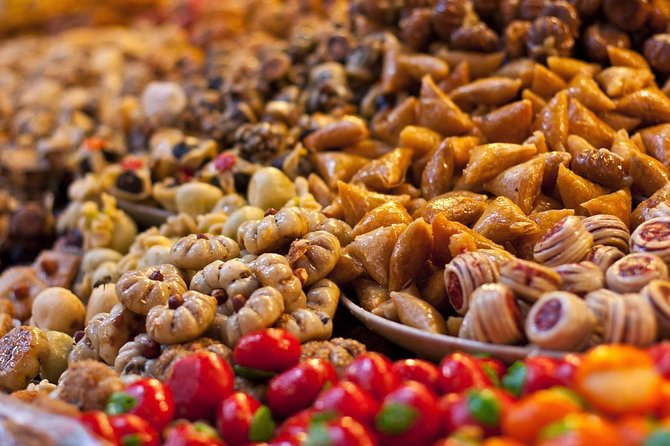
The first possible route begins with Moroccan coconut macaroons. These are a simple, sweet introduction to the country’s snack culture and are especially popular with children.
Next comes kaab ghzal, often translated as gazelle ankles. Despite the name, this is a delicate pastry filled with almond paste and scented with orange blossom water. It gives you an early taste of the floral, nutty flavors that appear often in Moroccan desserts.
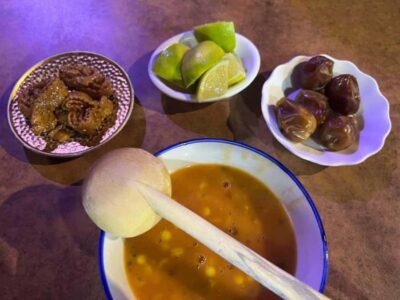
Harira follows, served with dates and chebakia. Harira is a traditional soup, and the combination with sweet, sesame-coated chebakia is closely linked with breaking the fast during Ramadan. Even outside Ramadan, the pairing helps explain how Moroccan food balances savory, sweet, spice, and texture in one sitting.
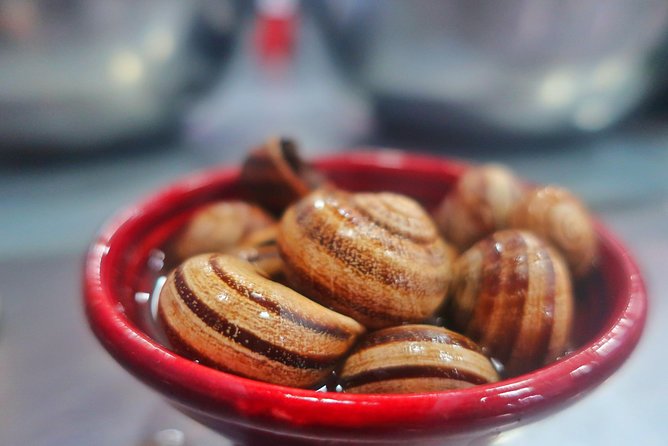
The more adventurous stop is babbouche, Moroccan snails cooked slowly in an aromatic herbal broth. The snails themselves are mild, while the broth carries much of the flavor. This is one of the tastings that makes the tour more than a standard pastry walk. You can try a food with a strong place in local street culture without having to guess which stall to trust.
The route then turns to authentic mint tea and msemmen. Msemmen is a pan-fried Moroccan pancake, often served with honey and cheese. It is crisp and layered, and the sweet and salty additions make it a useful comparison with the pastries you tasted earlier.
Fakya brings another kind of Moroccan food tradition to the table. It is a festive mix of dried fruit and nuts, commonly prepared and shared during celebrations. You may find this stop less dramatic than the snails or soup, but it shows how food in Morocco also marks hospitality, family gatherings, and special occasions.
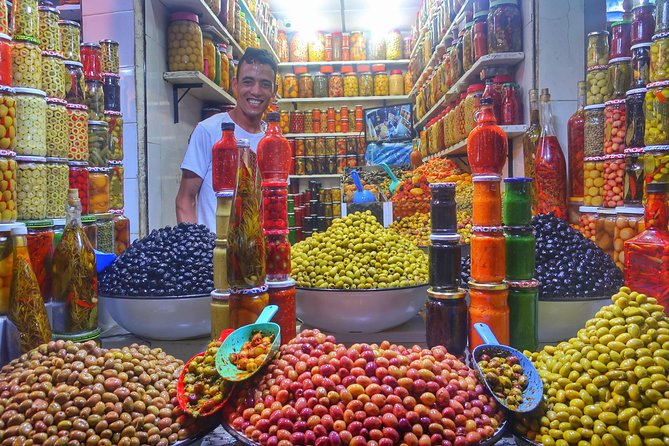
The final listed tastes on this route include Moroccan olives. The country is known for several styles, from green olives with a creamy texture to darker, more seasoned varieties. Olives are not filler here. They are part of daily Moroccan eating and help reset your palate after the sweets.
Route two: Moroccan pancakes, street food, and cactus fruit
The second route begins with msemen amer, a savory version of the Moroccan pancake stuffed with spiced fillings, often vegetables. It is commonly eaten around teatime and gives you a more substantial start than a sweet pastry.
Harira and chebakia appear on this route as well. Tasting the same classic pairing in a different sequence reinforces an important point about Moroccan food: dishes are not isolated menu items. They belong to habits, seasons, religious traditions, and social occasions.
You may also try makkla bel kefta, a Moroccan take on shakshouka. The dish combines eggs and spiced meat in a way that feels familiar to anyone who knows North African cooking, yet still has its own local character.
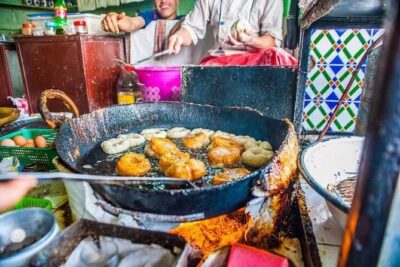
Sfenj is one of the most appealing street snacks on the route. These Moroccan doughnuts are golden and crisp outside, airy and chewy within. They are best understood as an everyday treat rather than a formal dessert, and they offer a good example of how simple dough becomes memorable when cooked fresh.
Lhindiya, or cactus fruit, provides a cool and refreshing change. The fruit is associated with hot weather and is valued for its refreshing quality. It is also a reminder that the medina’s food culture is not only about cooked dishes and heavy meals.
The route may then become more adventurous with rass mbekher, delicately steamed sheep’s head seasoned with cumin. This is not a cautious introduction to Moroccan food, and it will not suit every palate. If you are willing to try it, though, it gives you a direct look at nose-to-tail cooking and local food customs.
A panaché, made from fresh seasonal fruits, offers a sweet drink after the savory foods. Khoudenjal, a hot Moroccan drink, may also appear. Since the route changes, the exact order and availability of these items are not guaranteed.
The old medina food walk is the real attraction
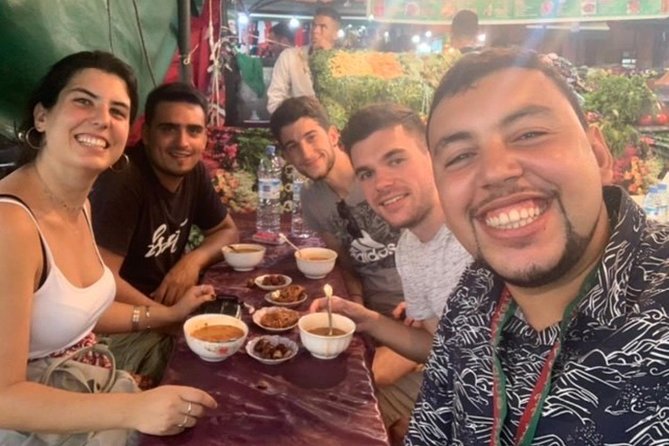
The best part of this experience is the movement between stops. You see the medina at close range, follow your guide through its alleys, and learn what you are eating before you taste it.
Guides have been praised for explaining not only ingredients but also Moroccan culture and history. Hamza, Mo, Ali, Mohamed, Mehdi, and Houssaine are among the guides singled out for being friendly, clear, and attentive. One solo participant particularly appreciated the chance to connect with the group, while another described the guide as making the narrow streets easy to navigate.
That guide quality matters. A food tour can quickly become a checklist of bites if nobody explains the customs behind them. Here, the strongest versions of the experience seem to turn each tasting into a short lesson about Moroccan life.
The pace, however, depends heavily on the person leading the group. One participant felt the tour was rushed and did not receive the expected mint tea. Another praised a guide for allowing the evening to flow without making anyone feel hurried. You should expect a human-led experience rather than a perfectly timed production.
More dinners out in Marrakech:
- Marrakech: Agafay Desert Sunset, Camel Ride, and Dinner Show
★ 4.6 · 35,119 reviews - Marrakech: Agafay Desert Quad & Camel Rides with Dinner Show
★ 4.8 · 27,382 reviews - Marrakech: Agafay Desert Quad Biking Tour with Dinner-Show
★ 4.8 · 16,569 reviews - Marrakech: Agafay Desert Quad & Camel Rides with Dinner Show
★ 4.9 · 10,771 reviews
The herbalist shop is useful for some, unwanted by others
Depending on the route and timing, the group may stop at a traditional herbalist’s shop. You might learn about Moroccan spices, herbs, and teas, sip mint tea, and use the restroom.
For some people, this is a pleasant cultural pause. It adds context to ingredients used in Moroccan cooking, and the tea gives you a break during the walk.
For others, it is the weak link. One account described a 20-minute presentation about herbs and teas for various ailments, with a strong sales feel. Another person found the stop enjoyable but thought too much time was spent there.
I would treat this as a possible extra, not a central reason to book. If the guide takes you there, listen if the subject interests you, but do not assume the stop will feel like a food tasting. A polite question about how long the visit will last can help you manage expectations.
Rooftop dinner overlooking Jemaa el-Fna
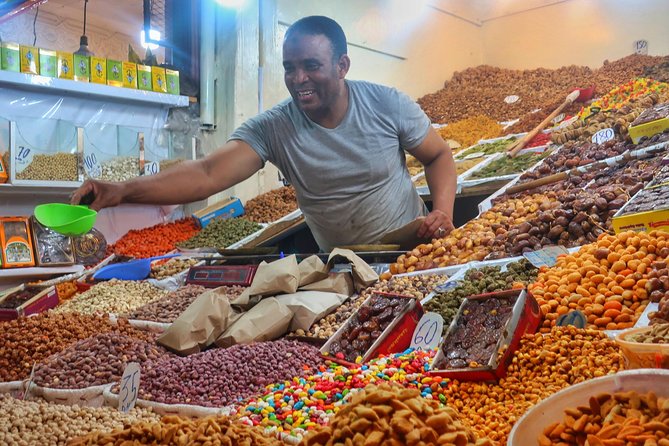
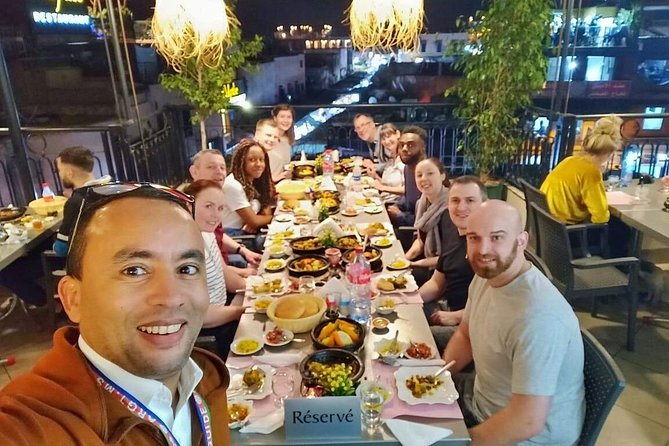
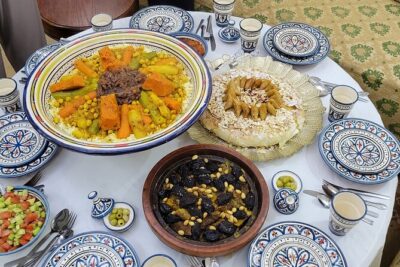
After the tastings, the tour is meant to finish with a sit-down Moroccan dinner. The meal includes three courses, dessert, and menu options, and it takes place at a rooftop restaurant near the meeting area.
This ending is important. Street samples can be fun, but a proper meal gives the evening shape. You have time to sit, compare favorite dishes with the group, and watch the medina from above. The rooftop view over Jemaa el-Fna was one of the most praised parts of the experience, especially as the evening atmosphere settles over the square.
The dinner is not presented as a luxury restaurant experience. It is best viewed as a comfortable final meal after a long series of tastings. Some people found it excellent, while another felt it was merely acceptable compared with other restaurants in Marrakech.
There is also conflicting information about whether dinner was provided on every departure. The advertised experience includes dinner, and several accounts clearly describe a three-course meal with dessert. One dissatisfied participant said the group received only food-stall visits and no dinner. If the dinner is essential to your plans, confirm it at booking and again with the guide at the start.
What the $54.45 price really covers
At $54.45 per person, this is not the cheapest way to eat in Marrakech. You could buy individual snacks in the medina for much less.
The value comes from the combination of food, guidance, navigation, and dinner. You are paying to find a series of stops efficiently, learn what you are tasting, try items you might otherwise skip, and finish with a full restaurant meal. The amount of food can be generous. One participant said there was so much to eat that dessert had to be taken away.
The price makes more sense if you are new to Marrakech or want an organized first evening in the medina. It is also useful for solo visitors who would like company at dinner. For experienced medina regulars who prefer to eat independently, the cost may feel high.
Group discounts are available, and gratuities are optional. Hotel pickup and drop-off are not included, so you need to reach Poste du Maroc yourself and return there at the end.
Who will enjoy this Marrakech food tour most
I would recommend this experience to you if you:
- Want to taste many Moroccan foods in one evening
- Enjoy trying unusual dishes such as snails or sheep’s head
- Prefer local stalls and small eateries to a single polished restaurant
- Want a guide to handle the medina’s narrow streets
- Like learning about food customs while eating
- Are comfortable with a group format and a changing route
- Want a rooftop dinner included after the tastings
Families can participate, and most people can take part. A stroller may be difficult in the narrow lanes and on restaurant stairs, so mention it clearly when booking. Vegetarian diners and people with specific dietary needs are asked to notify the provider after booking, and the company says it will make suitable arrangements.
This may not be the best choice if you need a fixed schedule, dislike crowded food counters, or want a refined restaurant meal from start to finish. It also may disappoint you if you have little patience for an herbalist stop or if you want every dish explained in great detail.
Free cancellation is available up to 24 hours before the start time. After that point, the price is not refunded, and late changes are not accepted.
Should you book it?
Yes, if your priority is variety, local flavor, and a guided route through the Marrakech medina. The strongest version of the evening gives you pastries, soup, olives, mint tea, street food, unusual specialties, and a full rooftop dinner for one price.
Before booking, confirm three things: the dinner is included on your date, the expected group size, and any dietary or mobility needs. Go early in your Marrakech stay, when the guide’s advice can help you understand what to eat for the rest of your visit.
The tour is not perfectly uniform, and the herbalist stop may test your patience. Still, the high rating, repeated praise for guides such as Hamza and Ali, and the generous amount of food make it a strong choice for an adventurous first taste of Marrakech.
FAQ
How long does the Moroccan food tour last?
The experience lasts approximately three hours.
Where does the tour begin?
It begins at Poste du Maroc on Rue Beni Marine in Marrakech.
Where does the tour end?
The activity ends back at the meeting point.
Is dinner included?
Yes. The experience includes a three-course Moroccan dinner with menu options at a rooftop restaurant.
How many people can join the tour?
The stated maximum is 15 participants.
Can vegetarians or people with dietary needs join?
Yes. You should notify the provider after booking so suitable arrangements can be made.
Is hotel pickup included?
No. Hotel pickup and drop-off are not included.
More Places to Eat in Marrakech
- Marrakech: Agafay Desert Quad, Camel Ride & Dinner Show
★ 4.7 · 10,209 reviews - Marrakech: Agafay Desert Retreat, Tent, Dinner, Show & Pool
★ 4.8 · 5,616 reviews - Marrakech: Agafay Desert Dinner Show with Quad Bike & Camel
★ 4.9 · 5,058 reviews - Agafay Desert Package, Quad Bike, Camel Ride and Dinner Show
★ 5.0 · 4,244 reviews
Just listed around Marrakech
- 3 Days Shared Sahara Desert Tour From Marrakech★ 5.0 · 78 reviews
- 3 Days To Merzouga Desert★ 5.0 · 19 reviews
- 1 night Camel Treking in Merzouga Desert Luxury Camp★ 5.0 · 132 reviews
- 3 Days Sahara Desert Trips From Marrakesh★ 5.0 · 176 reviews
- 3 Days Sahara Tour from Marrakech to Merzouga Dunes★ 5.0 · 29 reviews
- trip of your dreams in 3 days and 2 nights in the desert★ 5.0 · 36 reviews
- 3 Days Private Tour to Merzouga Desert from Marrakech★ 5.0 · 77 reviews
- 3 Day Sahara Desert Tour From Marrakech★ 5.0 · 49 reviews
Food & Drink, compared.
3-Day Tour to Merzouga Erg Chebbi with Food & Camel Trek
Read our review →
Cook Moroccan Food & Try on Traditional Clothes like a local
Read our review →Browse the lists this tour appears in