
Reviewed · FOOD & DRINK
Marrakech: Jemma El Fnaa Food Tour with Dinner
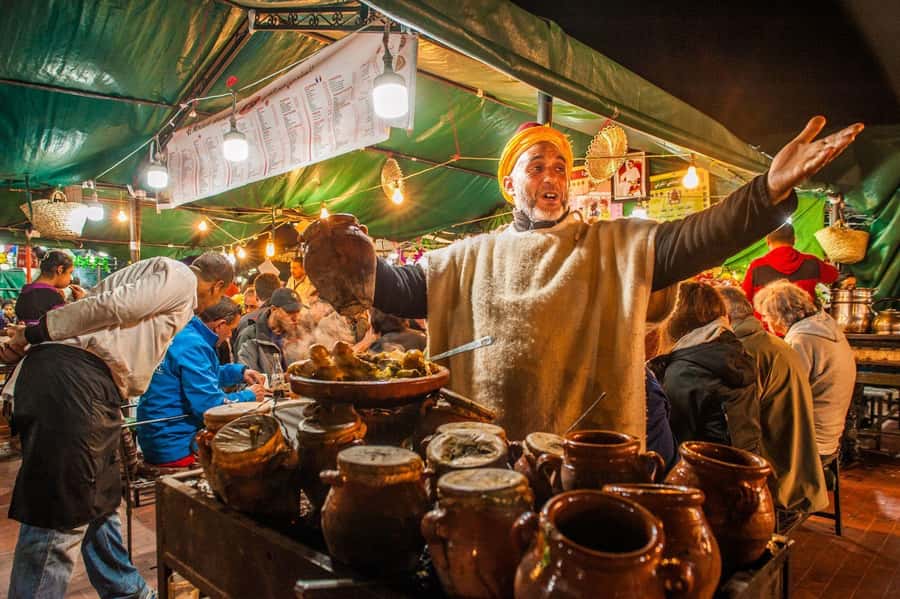
The best meals hide in plain sight. This Marrakech evening walk brings you from Jemaa El Fnaa into narrow souk lanes for olives, pastries, spices, and local dishes you may not spot alone. I like the food-led look at Moroccan customs, and I like the way guides such as Ayoub, Atika, Omar, Brahim, and Youssef have helped visitors move through the Medina with confidence. The small-group limit of 12 also leaves room for questions.
There is a lot of food here, but the exact tastings can change. The published inclusions list three tastings plus dinner, while past outings have included donuts, mint tea, nuts, olives, pastries, harira soup, tagine, tangia, and spiced drinks. Gluten intolerance cannot be accommodated, and the crowded square, open-air stalls, and unusual meats may not suit every diner.
In This Review
- Key points to know before booking
- Why this food walk works so well in Marrakech
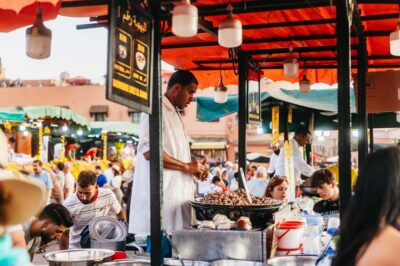
- Starting at Jemaa El Fnaa
- Into Riad Zitoun Jdid and the Mellah
- The spice market and the language of Moroccan cooking
- Bread, ovens, and the less familiar side of the menu
- Dinner at Chez Lamine Hadj Mustapha
- How much food do you actually get?
- Group size, guides, and the pace of the evening
- Dietary needs, clothing, and comfort
- Is $46 a fair price?
- Who should book this evening tour?
- Final verdict: book it if you want a first taste of Marrakech
- FAQ
- How long does the Marrakech food tour last?
- What is the price per person?
- Where does the tour start?
- Where does the tour finish?
- Is dinner included?
- Are extra food and drinks included?
- What language does the guide speak?
- Can vegetarians and vegans join?
- Can the tour accommodate gluten intolerance?
- Is the tour suitable for children?
- What should I wear?
- Can I cancel for a refund?
- Is a private tour available?
- Can I reserve without paying immediately?
Key points to know before booking
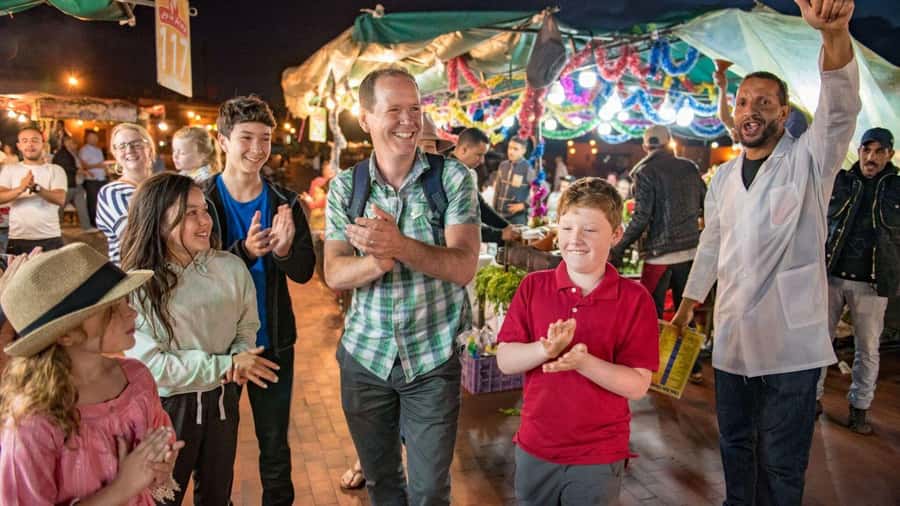
- Jemaa El Fnaa after dark: Finish with Moroccan dinner in Marrakech’s famous UNESCO-listed square when food stalls and evening crowds are at their peak.
- A real souk introduction: Visit the spice market and learn how cumin, saffron, ginger, pepper, and turmeric fit into Moroccan cooking.
- More than tagine: Tastings can include Jewish donuts, olives, nuts, pastries, soup, tangia, and other local foods, so you get a broader look at the cuisine.
- Helpful Medina guidance: Your guide leads you through narrow lanes, busy crossings, and shops you might pass without noticing.
- A generous meal: Several past outings included enough food that arriving hungry was essential, not just a polite suggestion.
- Flexible booking: The three-and-a-half-hour tour costs $46 per person, with free cancellation up to 24 hours before departure and a pay-later option.
Why this food walk works so well in Marrakech
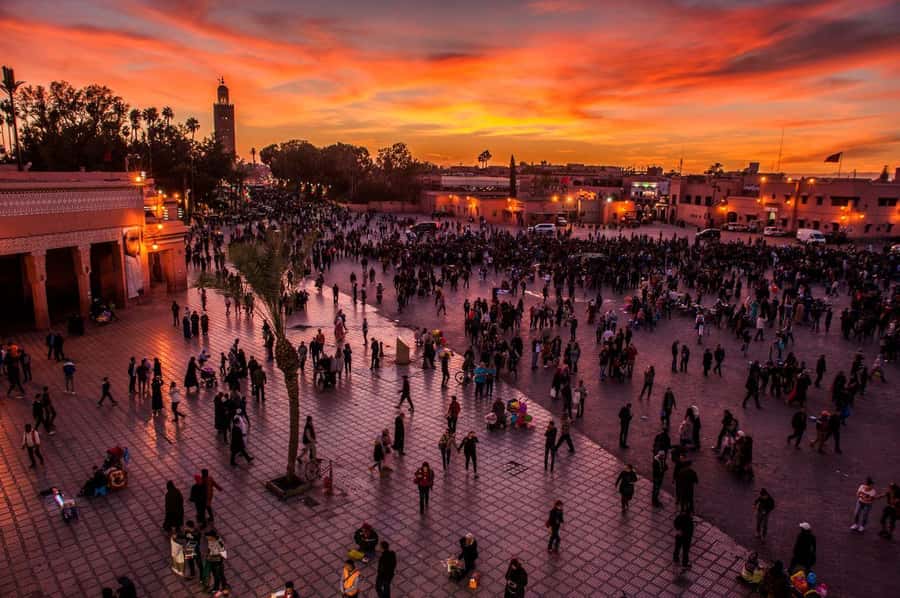
Marrakech can be hard to read on a first evening. Jemaa El Fnaa is loud, crowded, and full of competing smells. The souks branch out in every direction, and a food stall that looks appealing may be aimed at visitors rather than local families.
This tour gives you a guide, a route, and a reason to enter places you might otherwise ignore. You are not simply sitting down for one Moroccan meal. You are walking through the food system of the Medina, from raw spices and preserved olives to bread, sweets, cooked dishes, and dinner in the square.
I especially like the cultural setting. Food is used here as a doorway into daily life. You learn about the trade culture of Jemaa El Fnaa, the ingredients sold in the spice market, the role of communal ovens, and the ways Moroccan dishes are prepared and served.
The guides also add practical value. Omar, Atika, Brahim, Youssef, Ayoub, Mustafa, Anicta, Najib, and Ibrahim have all been praised for explaining food clearly, answering questions, helping with children, and guiding groups safely through the Medina. A good local guide is useful in Marrakech not because the streets are impossible, but because the best stops rarely announce themselves.
More Food Tours in Marrakech
- From Marrakech: Merzouga 3-Day Desert Safari with Food
★ 4.7 · 12,232 reviews - Marrakech: Street Food Tour with a Local Guide
★ 4.9 · 3,119 reviews - Marrakech: Street Food Tour by Night
★ 4.8 · 2,838 reviews
Starting at Jemaa El Fnaa
The tour has two listed starting options at 11 Derb Zaari, though the exact meeting point can vary with the booking option. Check your confirmation carefully. A clear meeting point matters here because Jemaa El Fnaa becomes a sea of people in the evening.
The square itself is the opening lesson. For close to a thousand years, it has been a place for trading, bargaining, eating, and social life. That long use gives the tour a sense of place that a restaurant-only meal cannot match.
At this stage, your guide explains how the square works and helps you get oriented. You may see food stalls preparing for the evening, performers, vendors, and the famous animals associated with the square, including snakes and monkeys. Keep your hands and belongings close, and do not assume an animal photo is free. The guide can help you avoid awkward encounters, one of the small but useful services that makes this a good first-night activity.
The square is not quiet or tidy in the usual sightseeing sense. It is a working public space, with noise, movement, smoke, and persistent sales pitches. If you prefer calm dining and polished service, this setting may feel tiring. If you want to see Marrakech as a lived-in city rather than a backdrop, the commotion is part of the point.
Into Riad Zitoun Jdid and the Mellah
From Jemaa El Fnaa, the route heads through Riad Zitoun Jdid and the Mellah. These areas offer a change from the central square, with narrower streets and a more local rhythm.
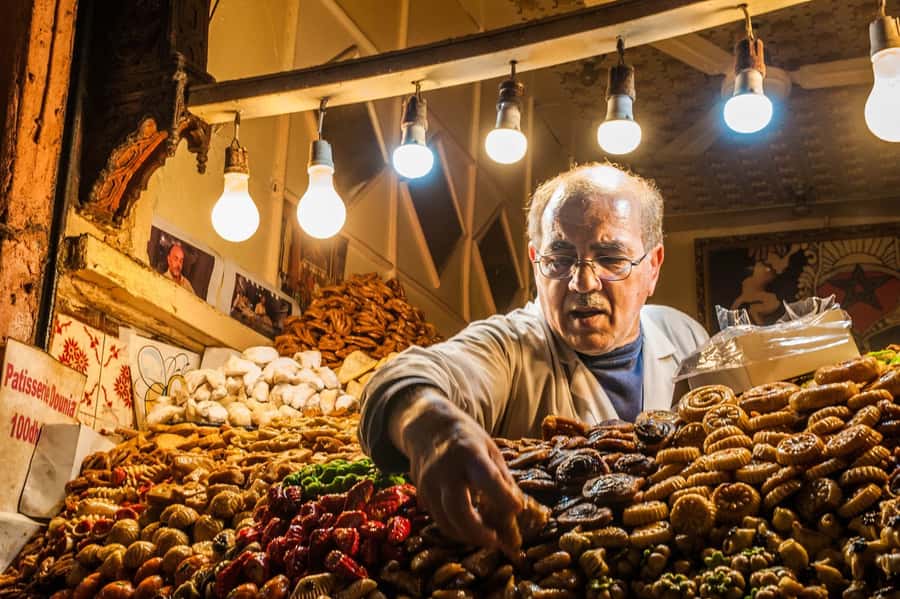
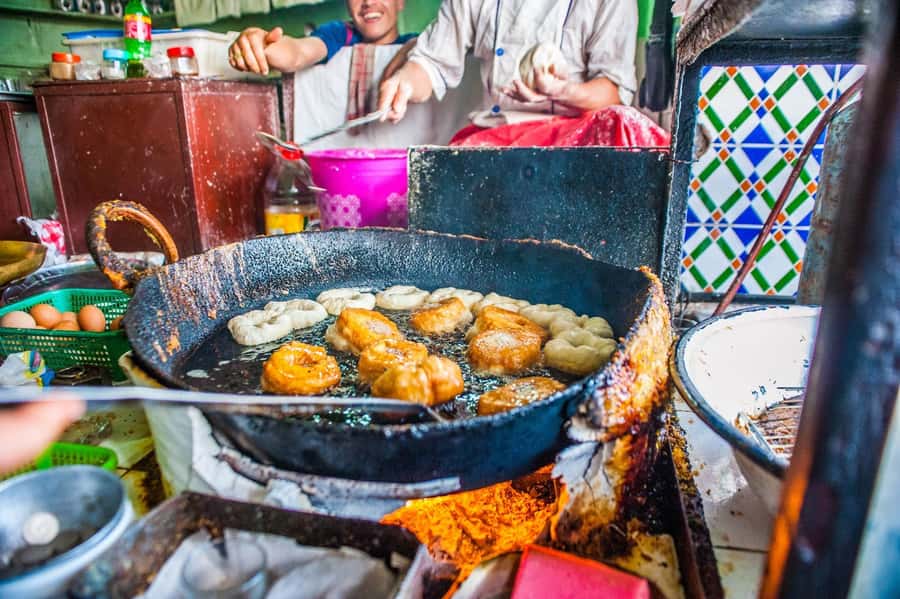
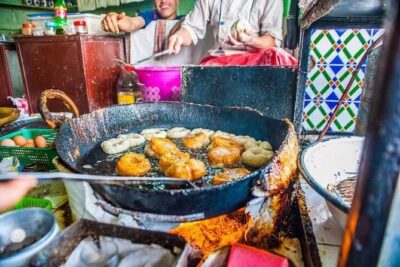
The food stops here are the sort you could easily miss without a guide. Past tours have included a discreet place serving Jewish donuts, along with small shops offering olives, dried fruits, nuts, and Moroccan pastries. The precise selection is not guaranteed, but the pattern is clear: you taste foods in the places where they are bought and made, rather than receiving a generic plate at a hotel.
Olives are a good example of why this part of the tour is worthwhile. You may try several versions, with differences in seasoning, texture, and preparation. Nuts and dried fruit show another side of Moroccan snacking, one that is easy to overlook if you focus only on tagine and couscous.
The pastries add sweetness without turning the whole walk into dessert. Moroccan food balances sweet and savory flavors in ways that may be unfamiliar at first. Your guide explains what you are eating and how it fits into local food habits, which makes each sample more useful than a quick taste with no context.
This is also where the walking matters. The lanes are close, crowded, and sometimes confusing. You should wear comfortable shoes and expect to walk for most of the 210-minute tour. There is no sightseeing vehicle listed, so this is not an easy ride-and-eat outing.
The spice market and the language of Moroccan cooking
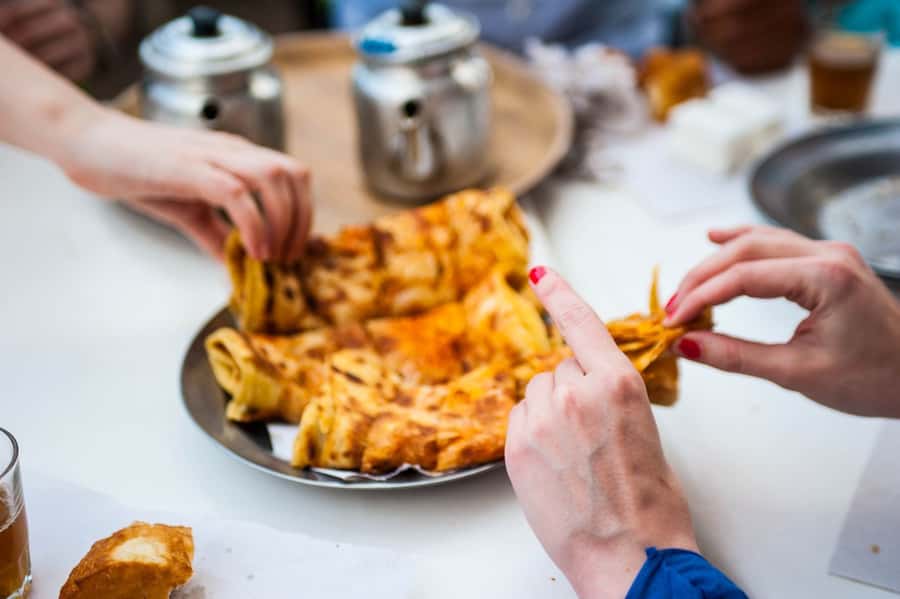
The spice market is one of the tour’s clearest teaching moments. You walk among sacks and displays of cumin, saffron, ginger, pepper, and turmeric, taking in their different colors and smells.
The point is not simply to take photographs of bright powders. You learn which spices are central to Moroccan cooking and how they help shape the country’s bold flavors. A guide can also explain the difference between seeing an ingredient in a market and understanding how it is used in a dish.
This stop suits curious eaters who want more than a list of ingredients. You may begin to notice the connection between the spices in the market and the soups, meats, breads, and stews served later in the evening.
It is still a market, not a quiet classroom. Sellers may be working, customers may be bargaining, and the group must keep moving. If you want time to browse every stall or shop for spices, this tour may not provide enough free time. Its purpose is to connect the market to the meal, not to offer an extended shopping session.
More dinners out in Marrakech:
- Marrakech: Agafay Desert Sunset, Camel Ride, and Dinner Show
★ 4.6 · 35,119 reviews - Marrakech: Agafay Desert Quad & Camel Rides with Dinner Show
★ 4.8 · 27,382 reviews - Marrakech: Agafay Desert Quad Biking Tour with Dinner-Show
★ 4.8 · 16,569 reviews - Marrakech: Agafay Desert Quad & Camel Rides with Dinner Show
★ 4.9 · 10,771 reviews
Bread, ovens, and the less familiar side of the menu
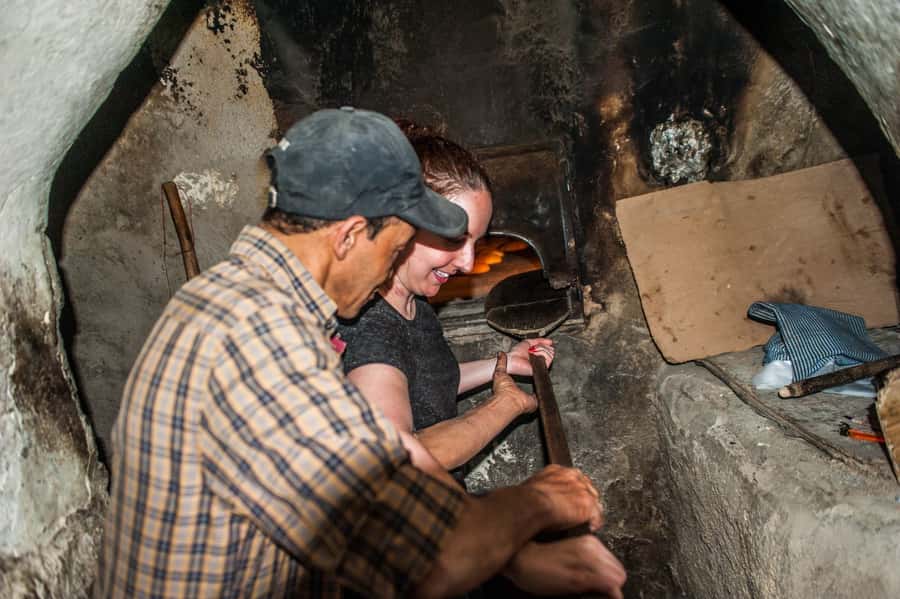
The route continues through the souks, where bread and cooking traditions come into focus. One of the most useful details from past tours is a visit to or explanation of communal ovens. These ovens have served local families for years, and they show how food preparation can be shared across a neighborhood.
This is the kind of detail I value because it changes how you see the Medina. The souk is not only a place selling souvenirs. It also supports ordinary routines: bread preparation, food purchases, snack stops, and meals made for local households.
The menu may also move beyond the familiar. Cow hoof, sheep’s head, snails, and other less common foods can appear along the way, depending on the evening and the group. You are not forced to eat something that makes you uncomfortable, but you should expect the guide to present food traditions that may be outside your normal diet.
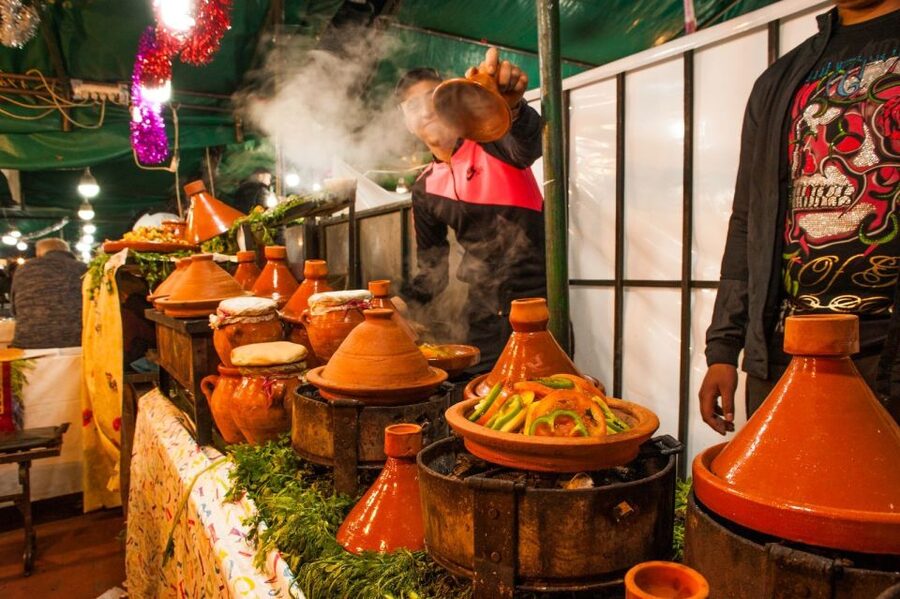
Tangia is another important possibility. It is a Marrakech specialty prepared in a traditional pot and cooked in the heat of a furnace. Past menus have included tangia at a local establishment, and it has been one of the most praised dishes on the route.
Do not confuse this with a standard tagine. Both names are familiar to visitors, but tangia has its own preparation and local identity. Trying it here gives you a better sense of Marrakech’s food culture than ordering the same dish repeatedly at tourist restaurants.
Dinner at Chez Lamine Hadj Mustapha
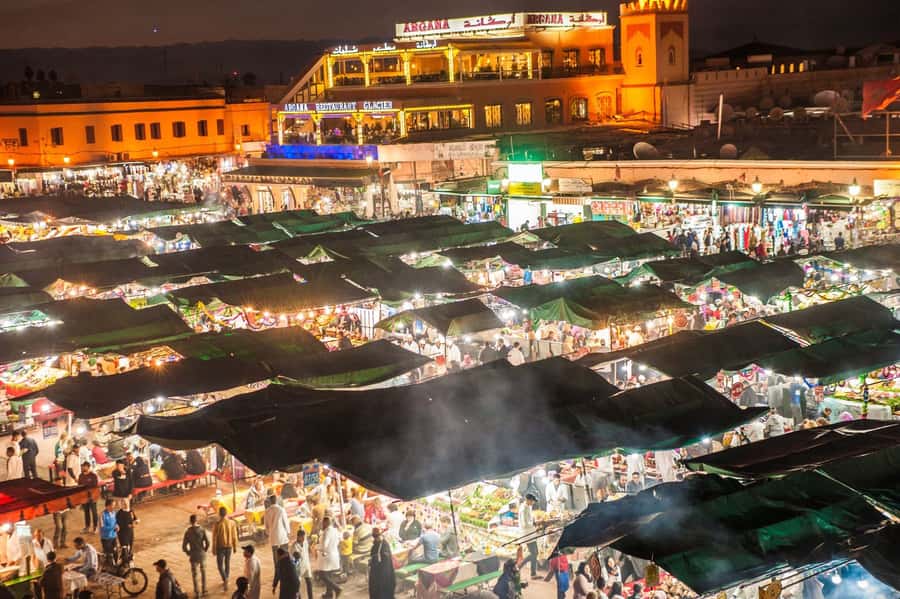
The listed dinner stop is Chez Lamine Hadj Mustapha Jemaa El Fna. It is located in the square, so the meal comes with the full evening atmosphere rather than a quiet escape from it.
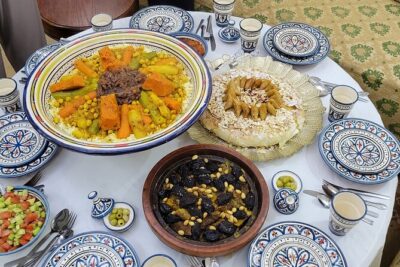
The dinner may include Moroccan soup, tagine, tangia, side dishes, or other food depending on the evening’s arrangement. Harira, a soup made with legumes and spices, has appeared on past outings. Some groups have also finished with a spiced drink made with boiled water, long peppers, and other spices.
The published package includes a Moroccan dinner at a local restaurant, but it does not include additional food beyond the stated amount. Since the exact meal can vary, you should not book this expecting a fixed restaurant menu with a guaranteed list of dishes.
What you can count on is the setting. Jemaa El Fnaa reaches its evening peak around dinner, with food stalls, crowds, smoke, performers, and plenty of movement. Eating here is less about refined presentation and more about participating in one of Marrakech’s great public rituals.
The tradeoff is comfort. A meal in the square may feel less controlled than dinner in a formal dining room. The noise can make conversation harder, and the atmosphere may be too intense for young children who tire easily. Still, the guide’s presence helps the group handle the setting, and several families have found the experience manageable.
How much food do you actually get?
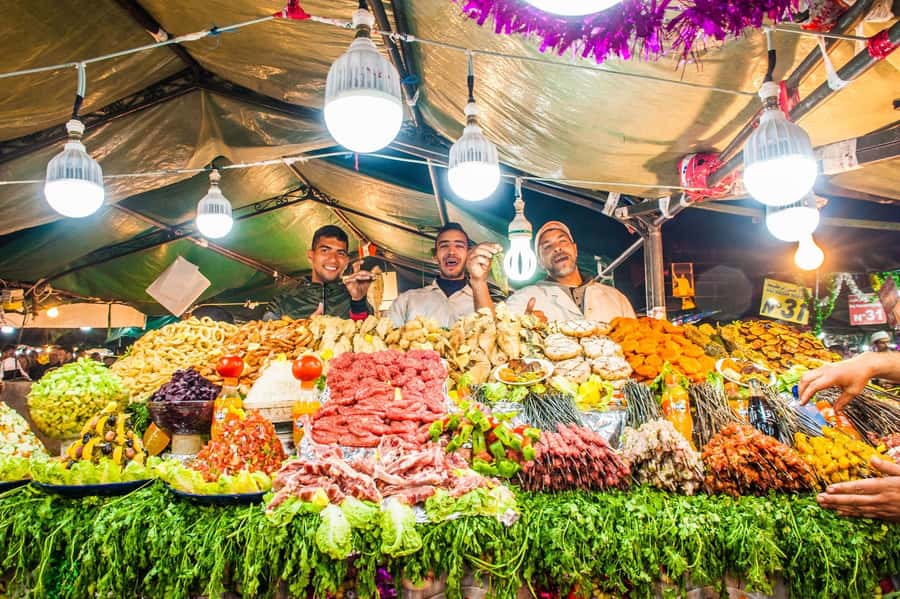
Arrive very hungry. This is the most practical advice I can give.
The official package lists three tastings and dinner. In practice, the evening can include several small stops, and past menus have featured donuts, mint tea, nuts, olives, pastries, soup, tangia, tagine, and sweets. Some groups have described the food as plentiful enough to replace a full meal several times over.
That makes the tour good value for $46, especially if you would otherwise pay separately for dinner and several small tastings. You are also paying for three and a half hours of guiding, local explanations, and access to places that can be difficult to identify alone.
Do not eat a large lunch beforehand. A light midday meal is sensible, but arriving full will limit what you can try. The tour is not a series of tiny samples designed to leave you searching for dinner afterward.
The main value is not the total amount of food. It is the range. You get snacks, sweets, spices, bread traditions, cooked dishes, and the evening square in one outing. That is a useful introduction early in a Marrakech visit.
Group size, guides, and the pace of the evening
The maximum group size is 12, and a private group option is available. A small group is important in the Medina. It is easier to hear explanations, stay together in narrow lanes, and ask questions without stopping the entire street.
The guides work in English. Past guides have included Ayoub, Atika, Omar, Brahim, Youssef, Mustafa, Anicta, Najib, and Ibrahim. The strongest pattern is clear: guides are valued for warmth, humor, food knowledge, cultural explanations, and the ability to keep people together in crowds.
The pace is active but not presented as a race. You walk between food stops, pause to taste, and continue through the souks before returning to the square for dinner. Allow roughly 210 minutes, or three and a half hours, though the evening can feel shorter because it is broken into many stops.
A guide may also offer useful advice about bargaining and general conduct in Marrakech. That is particularly helpful if this is your first evening in the city. The tour is often recommended as an early-trip activity because it gives you a working sense of the Medina before you explore alone.
Dietary needs, clothing, and comfort
Vegetarian and vegan diets can be accommodated. Gluten intolerance cannot be catered for, so this tour is not a safe choice if you need a strictly gluten-free meal.
Tell the operator about dietary needs in advance. The experience can include shared food, bread, pastries, soups, meat dishes, and market tastings, so clear communication is important.
Dress conservatively. Shoulders, cleavage, and knees should be covered. Long trousers, long skirts, and lightweight long-sleeved shirts are practical in Marrakech’s conservative Muslim setting, and they also protect you from the sun.
Bring a jumper because the temperature can drop after dark. Comfortable walking shoes are sensible, even though they are not specifically listed among the required items. The tour is child-friendly, and infants aged 0 to 5 are free, but notify the operator if a child under 12 is joining.
Is $46 a fair price?
For $46 per person, I consider this a fair deal if you want both dinner and orientation in the Medina. The package includes the guide, walking tour, three tastings, and a Moroccan dinner. The food alone may not justify the price for someone who prefers to choose inexpensive stalls independently, but the local route and explanations add real value.
The price works best for first-time visitors, solo visitors, and anyone nervous about ordering from unfamiliar stalls. It is also useful for families who want a guide to help with the crowds and for food fans who want to try dishes beyond the usual restaurant menu.
It is less useful for experienced Marrakech visitors who already know Jemaa El Fnaa, the souks, and the local food scene. You may also prefer another option if you want a private culinary lesson, a market-shopping session, or a quiet seated dinner.
The carbon-neutral operation and B Corp certification may matter to travelers who want their spending to support a company with stated social and environmental commitments. The tour is also covered by free cancellation up to 24 hours before departure, and you can reserve now and pay later.
Who should book this evening tour?
I would book it near the start of a Marrakech stay. You get an introduction to Jemaa El Fnaa, the souks, local snacks, spices, bargaining, and evening food customs in one outing.
It suits adventurous eaters, but you do not need to be an extreme food fan. The guide can explain unfamiliar dishes, and you can choose how much of the more unusual food to try.
It is also a good choice if you are traveling alone. The group provides company, and the guide helps you move through the Medina with less uncertainty.
I would think twice if you have gluten intolerance, dislike crowds, need a quiet meal, or want complete control over the menu. The experience is social, active, and strongly tied to the sounds and smells of the square.
Final verdict: book it if you want a first taste of Marrakech
Book this tour if you want to eat your way through Marrakech with a local guide rather than simply order a tagine at a restaurant. The combination of spice-market lessons, souk snacks, communal food traditions, unusual dishes, and dinner in Jemaa El Fnaa gives you a useful picture of the city.
The strongest reasons to go are the guides, the amount and variety of food, and the access to small local stops you may not find by yourself. Come hungry, dress respectfully, bring a light layer, and keep an open mind.
Skip it if you need gluten-free food, dislike open-air crowds, or prefer a fixed menu and a calm dining room. For most first-time visitors who want practical context and a generous evening meal, $46 is money well spent.
FAQ
How long does the Marrakech food tour last?
The tour lasts 210 minutes, which is about three and a half hours.
What is the price per person?
The listed price is $46 per person.
Where does the tour start?
There are two listed starting options at 11 Derb Zaari. The meeting point may vary depending on the option booked.
Where does the tour finish?
The listed drop-off options are also at 11 Derb Zaari.
Is dinner included?
Yes. A Moroccan dinner at a local restaurant is included, along with the guide, walking tour, and three tastings.
Are extra food and drinks included?
Additional food beyond what is listed in the package is not included.
What language does the guide speak?
The live tour guide operates in English.
Can vegetarians and vegans join?
Yes. The tour can cater to vegetarian and vegan diets.
Can the tour accommodate gluten intolerance?
No. The tour cannot cater to gluten intolerance.
Is the tour suitable for children?
Yes. It is child-friendly, and infants aged 0 to 5 are free. You should notify the operator if a child under 12 is joining.
What should I wear?
Wear clothing that covers your shoulders, cleavage, and knees. Long trousers, long skirts, and lightweight long-sleeved shirts are recommended. Bring a jumper in case it becomes cool after dark.
Can I cancel for a refund?
You can cancel up to 24 hours in advance for a full refund.
Is a private tour available?
Yes. A private group option is available.
Can I reserve without paying immediately?
Yes. The reserve-now, pay-later option lets you book without paying at the time of reservation.
More Places to Eat in Marrakech
- Marrakech: Agafay Desert Quad, Camel Ride & Dinner Show
★ 4.7 · 10,209 reviews - Marrakech: Agafay Desert Retreat, Tent, Dinner, Show & Pool
★ 4.8 · 5,616 reviews - Marrakech: Agafay Desert Dinner Show with Quad Bike & Camel
★ 4.9 · 5,058 reviews - Agafay Desert Package, Quad Bike, Camel Ride and Dinner Show
★ 5.0 · 4,244 reviews
Just listed around Marrakech
- 3 Days To Merzouga Desert★ 5.0 · 19 reviews
- 3 Days Shared Sahara Desert Tour From Marrakech★ 5.0 · 78 reviews
- 1 night Camel Treking in Merzouga Desert Luxury Camp★ 5.0 · 132 reviews
- 3 Days Sahara Desert Trips From Marrakesh★ 5.0 · 176 reviews
- 3 Days Sahara Tour from Marrakech to Merzouga Dunes★ 5.0 · 29 reviews
- trip of your dreams in 3 days and 2 nights in the desert★ 5.0 · 36 reviews
- 3 Days Private Tour to Merzouga Desert from Marrakech★ 5.0 · 77 reviews
- 3 Day Sahara Desert Tour From Marrakech★ 5.0 · 49 reviews
Food & Drink, compared.
3-Day Tour to Merzouga Erg Chebbi with Food & Camel Trek
Read our review →
Authentic Moroccan Food Tour in Marrakech with Dinner
Read our review →
Cook Moroccan Food & Try on Traditional Clothes like a local
Read our review →Browse the lists this tour appears in