
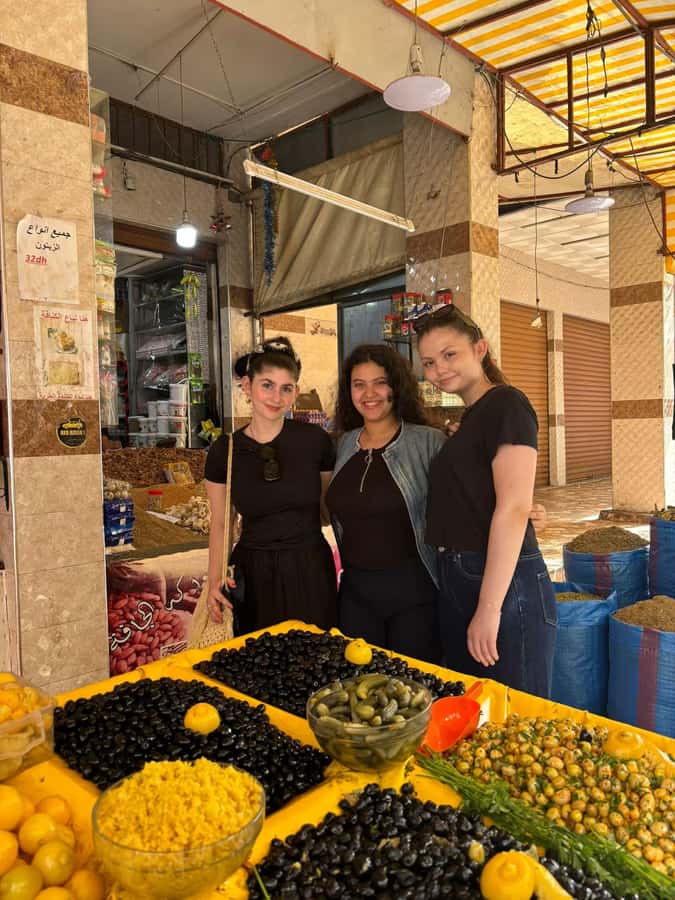
Reviewed · COOKING CLASSES
Casablanca : Traditional Moroccan Cooking Class with Locals
Good food opens doors fast. This four-hour Casablanca cooking class brings you into Inas’s family home, where you learn Moroccan recipes beside the people who cook them every day. The class is less polished kitchen show and more personal introduction to local customs, family stories, and the practical habits behind tagine, couscous, pastilla, and Moroccan salads.
I especially like the small group size, limited to 10 people, and the chance to eat with the family after cooking. I also like that Inas learned from her mother and grandmother, each with more than 40 years of experience. The main thing to consider is that this takes place in a private local home, not a purpose-built cooking studio, so you should expect a domestic setting and a class shaped by the family’s way of cooking.
The meeting point is Résidence El Fath on Abdellah Ibrahim Street, near BIM Attacharok. Transportation is not included, so getting there is your responsibility. At $60 per person, the price is fair if you value personal contact and a shared meal more than a formal culinary lesson.
In This Review
- Key points at a glance
- Entering a Casablanca family kitchen
- Learning recipes passed through three generations
- Tagine, couscous, pastilla, and salads
- Fresh ingredients and old-fashioned methods
- Sitting down for the shared meal
- What the four-hour schedule means for you
- Is $60 a fair price?
- Who will enjoy this most?
- Booking details worth knowing
- Should you book this Casablanca cooking class?
- FAQ
- Where does the cooking class take place?
- How long does the experience last?
- What dishes can I learn to prepare?
- Is a meal included?
- What languages are spoken during the class?
- How many people can join the class?
- Is transportation included?
- Can I cancel for a refund?
Key points at a glance
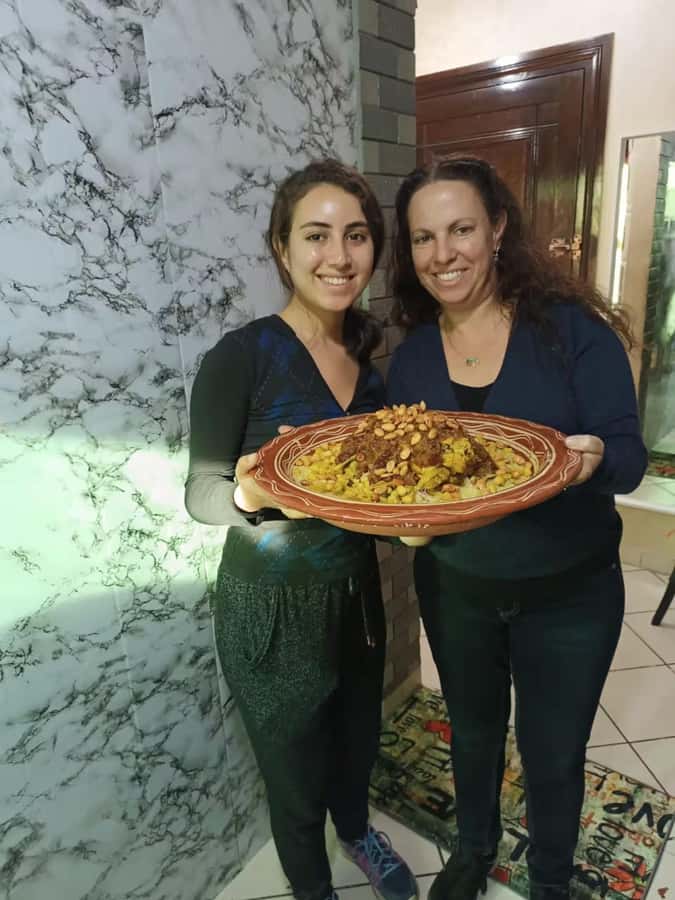
- A real Casablanca family home: You cook in Inas’s home rather than in a commercial classroom.
- Recipes with family roots: Inas learned Moroccan cooking from her mother and grandmother, both with decades of experience.
- Hands-on dishes: The class may include tagine, couscous, pastilla, and Moroccan salads, with the exact preparation shaped by the session.
- A meal at the family table: You eat what you prepare and share time with the household afterward.
- Useful language coverage: Instruction is available in Arabic, French, and English.
- A compact group: With no more than 10 participants, the class should allow for personal help without feeling too private or formal.
Entering a Casablanca family kitchen
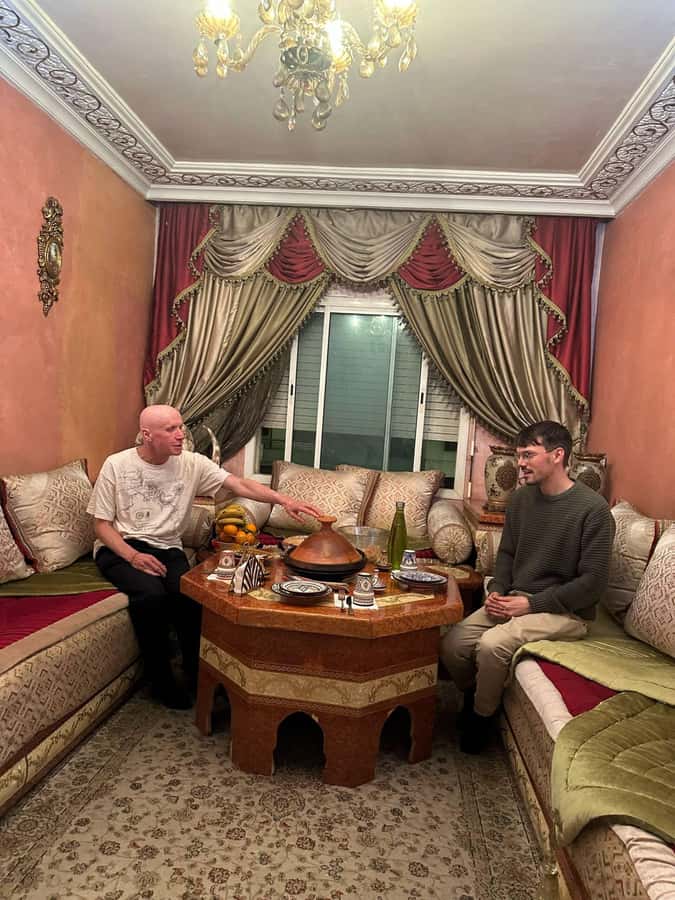
The first part of the class is the arrival at Résidence El Fath, on Abdellah Ibrahim Street at BIM Attacharok. This is a residential meeting point rather than a famous sightseeing landmark, so you should allow time to find the correct building and confirm the details supplied when you book.
That location tells you something important about the day. You are not being brought into a restaurant kitchen designed for tourists. You are visiting a local family in a neighborhood setting, which gives the class its strongest cultural value but also means the surroundings may feel ordinary and residential.
Inas welcomes you into her home and introduces you to the family kitchen. The tone described for the class is warm and relaxed, with conversation alongside the cooking. If you prefer a neat demonstration with every station laid out in advance, this may feel informal. If you want to see how food connects with everyday Moroccan life, the setting is a major advantage.
The experience is offered in Arabic, French, and English. That makes it accessible to a broad range of visitors, though the mood is still social rather than strictly instructional. You will likely spend as much time asking about customs and family cooking as you do measuring ingredients.
More cooking classes in Casablanca:
- Old local Market visit+Moroccan cooking class with a local family
★ 5.0 · 84 reviews - Private Casablanca Market Tour and Cooking Class with Chamsi
★ 5.0 · 33 reviews - Private Market Tour & Cooking Class in Casablanca with Transfers
★ 5.0 · 20 reviews
Learning recipes passed through three generations
Inas’s teaching has a personal foundation. She learned from her mother and grandmother, who each have more than 40 years of experience with Moroccan cuisine. That family link matters because many traditional dishes are less about a fixed written recipe and more about timing, texture, heat, and judgment.
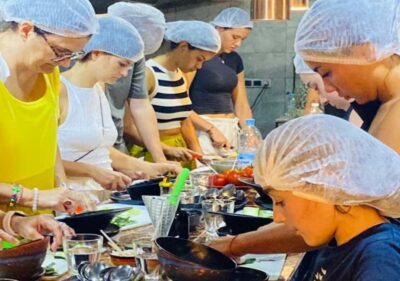
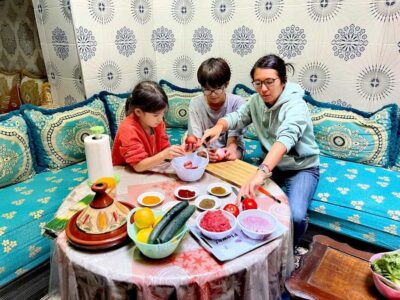
The class is designed to be hands-on. You do not simply watch a cook prepare dinner while someone explains the steps. You take part in preparing the food and learn techniques that have been used in the family over many years.
That can include handling ingredients, building flavor, and understanding how Moroccan dishes come together. The supplied details do not promise a set menu for every date, so you should not assume you will prepare every named dish in one session. Tagine, couscous, pastilla, and Moroccan salads are all given as examples, with the class centered on one or more traditional preparations.
This flexible approach is useful. Moroccan cooking covers a wide range of flavors, from sweet and savory combinations to fragrant vegetables and slow-cooked meats. A class that focuses on a manageable number of dishes gives you more time to understand the method instead of rushing through a long list.
Inas is also described as patient and clear in her teaching. That is valuable for beginners. You do not need to arrive with strong cooking skills, and the class is suitable for people who want both food instruction and cultural contact.
Tagine, couscous, pastilla, and salads
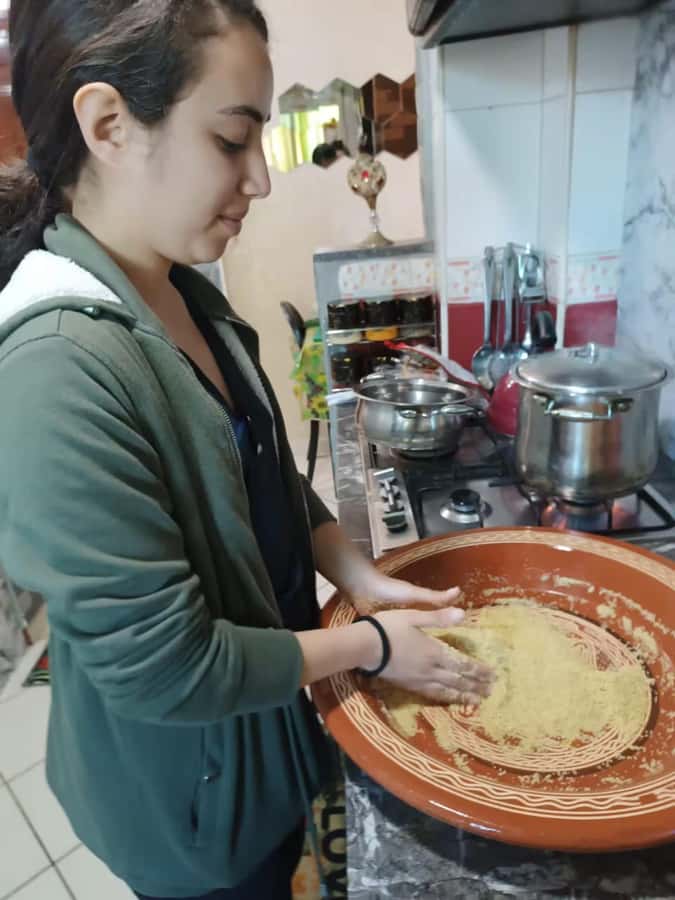
Tagine is one of the likely centerpieces. The name refers both to the dish and to the distinctive cooking vessel used for it. The covered pot allows ingredients to cook slowly while holding in moisture, which helps produce tender food and concentrated flavor.
One session included tagine with preserved lemon. That is a particularly useful dish to learn because preserved lemon gives Moroccan food a sharp, salty citrus flavor that is difficult to copy with ordinary lemon juice. You can ask Inas how the preserved lemon is used and how its intensity is balanced with the other ingredients.
Couscous is another possible focus. It is more than a simple grain side dish in Morocco. The preparation can involve careful steaming and the pairing of vegetables, spices, and sauce. A class gives you the chance to see how the dish is assembled rather than treating it as an instant accompaniment.
The session may also include pastilla, the layered pastry known for its blend of savory and sweet notes. Moroccan salads can round out the meal and show how smaller vegetable dishes fit around a main course.
Do not expect a restaurant tasting menu. The point is to prepare food together and understand the habits behind it. Some steps may take time, especially when traditional methods are used. That is part of the lesson, though it can test the patience of anyone hoping for a quick cooking demonstration.
Fresh ingredients and old-fashioned methods
Fresh, local ingredients are included in the class. The information does not provide a full shopping list, so I would avoid expecting a particular market visit or a detailed explanation of every ingredient’s origin. Still, using fresh produce and traditional methods gives the cooking a strong connection to ordinary Moroccan meals.
The most useful lessons are often the small ones. Inas’s family tips may help you judge when a sauce has reduced enough, how to balance seasoning, or how to work with a dish that does not follow exact Western measurements. These are the details that can make a recipe easier to repeat at home.
A good cooking class should leave you with more than a meal. It should help you understand why the food tastes the way it does. Here, the family connection gives the techniques a clear context. You are learning a way of cooking that has been handed down, not just copying a recipe printed for a visitor.
The class also gives you a window into Moroccan customs. Food is a natural way to discuss family, hospitality, daily routines, and regional habits. Inas shares stories and traditions as you work, so the lesson is not limited to ingredients and cookware.
A few more Casablanca runs to hold up against each other
- Market Tour & Moroccan Cooking Class in Casablanca with Transfers
★ 5.0 · 18 reviews - Marrakech: Moroccan Cooking Class with Pickup
★ 4.6 · 1,862 reviews - Marrakech: Traditional Moroccan Cooking Class & Market Visit
★ 4.8 · 1,861 reviews - Marrakesh: Moroccan Dishes Cooking Class with a Local Chef
★ 5.0 · 1,615 reviews
Sitting down for the shared meal
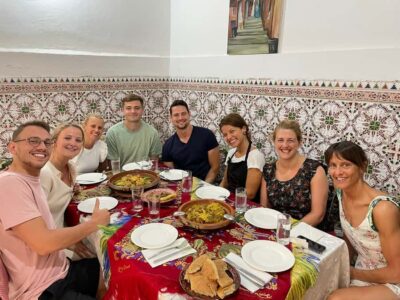
After the cooking session, you sit down with the family to eat what you have prepared. This is one of the most important parts of the afternoon because it changes the class from a practical workshop into a social visit.
You can see the result of your work immediately, which is satisfying for beginners and experienced cooks alike. You also get a chance to ask final questions while the dishes are in front of you. If your tagine needs more time or your couscous turns out differently than expected, the meal gives Inas a natural moment to explain what happened.
The shared table is also where the cultural side becomes most apparent. Moroccan hospitality is expressed through food, conversation, and time spent together. You are not simply handed a plate and sent on your way. The meal is part of the welcome.
Dietary needs may be possible to accommodate. One participant had dietary requests handled during the class, but you should communicate your needs before arrival rather than assuming every request can be managed at the last moment.
What the four-hour schedule means for you
Four hours is a useful length for this kind of activity. It gives you enough time to arrive, cook, talk, and eat without forcing every step into a hurried demonstration.
You should set aside most of an afternoon or evening. The duration includes the social side of the visit, not only the time spent chopping and stirring. That is good news if you want conversation and cultural context, but less ideal if your schedule is packed with Casablanca sightseeing.
The group limit is 10 participants. That is small enough to keep the class personal, while still giving you a chance to meet other people. One session brought together participants from different countries, including Australia, which added a friendly social element.
The exact starting time depends on availability. Check the time offered for your date before making other plans. Since transportation is not included, plan your route to Résidence El Fath carefully and avoid arriving at the last minute.
One practical bonus appeared during a visit when Inas provided protected indoor parking for a car. That is not listed as a standard inclusion, so you should not count on it automatically. If you are driving, ask in advance.
Is $60 a fair price?
At $60 per person, this class costs more than buying a Moroccan meal at a local restaurant. That comparison misses the main point, though. Your fee covers four hours of instruction, food preparation, cultural conversation, and a shared meal in a private home.
The value is strongest if you want a personal connection. You are paying for access to family knowledge and time with a host who teaches from her own household traditions. You are also getting practical ideas you can try again at home.
The value is weaker if your main goal is simply to eat as cheaply as possible or to see major Casablanca sights. This is not a city tour, and it does not include transportation or accommodation. You need to make your own way to the meeting point.
The small group limit helps justify the cost. With no more than 10 people, the activity should feel more attentive than a large demonstration. Still, the home setting means the standard may be informal. There may not be restaurant-style equipment, printed course materials, or a professional teaching kitchen.
For someone who loves Moroccan food, the price is reasonable. For a visitor with only a short stop in Casablanca, it is worth choosing only if you are willing to give the cooking class a substantial part of your day.
Who will enjoy this most?
I would recommend this class to first-time visitors who want a personal introduction to Morocco. It suits people who prefer conversation and participation over sightseeing from a bus window.
It is also a good fit for:
- Beginner cooks: Inas’s patient, clear teaching makes the class approachable.
- Food-focused visitors: You can learn about tagine, couscous, pastilla, salads, and the methods behind them.
- Couples and friends: Cooking together gives you a shared activity, followed by a meal.
- Solo visitors: The group format offers a simple way to meet other people.
- Families interested in culture: The household setting can make Moroccan customs easier to understand.
- People with dietary needs: Requests may be accommodated, but ask before the class.
I would hesitate to recommend it to someone seeking a polished culinary school, a market tour, or a fixed menu with guaranteed preparation of every named dish. The home environment is the attraction, but it also means the format is personal and less standardized.
Booking details worth knowing
You can cancel up to 24 hours before the activity for a full refund. A reserve-now, pay-later option is also available, which helps if your Casablanca schedule is still changing.
The experience is provided by Discover with Inas. Instruction is available in Arabic, French, and English, and the group is limited to 10 people.
Keep the meeting point details handy: Résidence El Fath, Abdellah Ibrahim Street, at BIM Attacharok. Transportation is not included. Accommodation is not included either, so this is a stand-alone activity rather than part of a lodging package.
Should you book this Casablanca cooking class?
Book it if you want to cook in a real home, learn from Inas’s family traditions, and sit down to eat with the people who welcomed you. The strongest parts are the personal teaching, the family stories, the small group size, and the chance to prepare food rather than simply taste it.
Think twice if you need a tightly timed class, a guaranteed menu, or a professional kitchen setup. For most food lovers, though, $60 buys more than lunch. It buys time, instruction, conversation, and a look at Casablanca life that a restaurant meal cannot provide.
FAQ
Where does the cooking class take place?
The class takes place in a local family’s home in Casablanca. The meeting point is Résidence El Fath on Abdellah Ibrahim Street at BIM Attacharok.
How long does the experience last?
The cooking class lasts four hours. Starting times vary, so you need to check availability for your chosen date.
What dishes can I learn to prepare?
The class may include traditional dishes such as tagine, couscous, pastilla, and Moroccan salads. The supplied information does not guarantee that every dish will be prepared during one session.
Is a meal included?
Yes. After the cooking session, you share the meal with the local family.
What languages are spoken during the class?
The instructor can teach in Arabic, French, and English.
How many people can join the class?
The activity is a small-group experience limited to 10 participants.
Is transportation included?
No. You are responsible for getting to and from the meeting point. Accommodation is also not included.
Can I cancel for a refund?
Yes. You can cancel up to 24 hours in advance for a full refund.
Just listed around Casablanca
- Your Private Casablanca Transfer★ 5.0 · 52 reviews
- Casablanca Airport Transfer from hotel in Casablanca★ 5.0 · 18 reviews
- Exclusive tour of Casablanca with access to the Hassan II Mosque★ 5.0 · 205 reviews
- Amazing airport pickup/ drop off in Casablanca/ safe&easy★ 5.0 · 218 reviews
- Sunset Camel Ride in the Palm Grove Of Marrakech★ 5.0 · 34 reviews
- 14 Days From Casablanca- Morocco Grand Tour★ 5.0 · 24 reviews
- Private full day trip to chefchaouen from Casablanca with lunch★ 5.0 · 20 reviews
- Marrakeck City tour from Casablanca all the day around trip★ 5.0 · 35 reviews
Cooking Classes, compared.
Traditional Moroccan Cooking Class & Market Visit
Read our review →
Moroccan Dishes Cooking Class with a Local Chef
Read our review →
Moroccan Cooking Class & Marrakech Market Visit with Chef Khmisa
Read our review →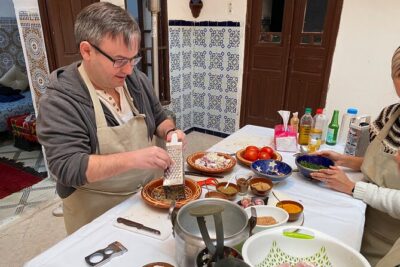
Half-Day Cooking Class with Local Chef Laila in Marrakech
Read our review →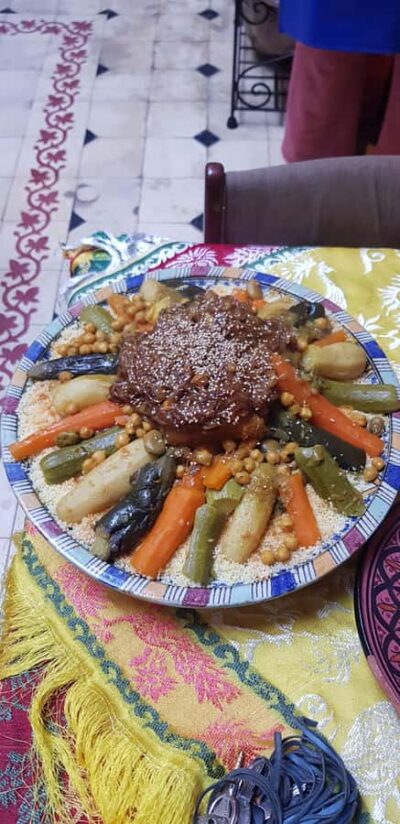
Browse the lists this tour appears in