
Reviewed · COOKING CLASSES
Cooking Class with Bread Workshop and Pastry in Fes
Moroccan cooking starts before the stove. This Fes experience pairs a traditional market visit with a hands-on class, letting you choose ingredients, prepare Moroccan food, and eat the results with your group. I especially like the market-first format, which gives the meal a local setting, and the chance to focus on bread, pastries, or savory dishes rather than follow one fixed menu.
The cooking takes place in a home-style setting, adding a personal touch that a restaurant lesson cannot match. The Moroccan tea preparation and live pastry presentation also make the meal feel like more than a quick class. The main consideration is time: at about two hours, the session is fairly short, and a group of up to 20 could mean less individual attention than the smaller groups suggested in the most personal accounts.
In This Review
- Key points to know before booking
- Starting at the Fes market
- Returning to a home-style kitchen
- Choosing between bread, pastry, and Moroccan dishes
- Learning by preparing the food yourself
- Eating the results with Moroccan tea
- How much can you learn in two hours?
- Group size, setting, and comfort
- Who will enjoy this Fes cooking class?
- Price, booking timing, and cancellation
- FAQ
- Where does the cooking class start?
- Where does the activity end?
- How long does the experience last?
- What kinds of food can I learn to prepare?
- Is Moroccan tea included?
- What happens if I cancel?
- Should you book this Fes cooking experience?
Key points to know before booking
- The market visit comes first: You learn what the ingredients are and how they will be used before returning to cook.
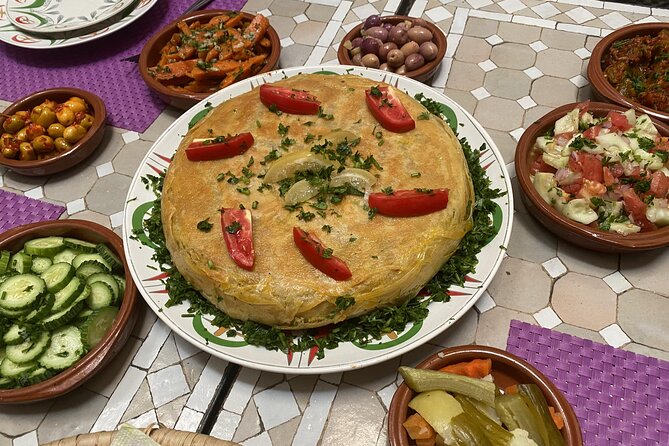
- You can choose your workshop: Options include bread making, traditional Moroccan pastries, chicken tagine, pastilla, and other Moroccan dishes.
- The meal is part of the lesson: You eat what you prepare, with Moroccan tea and a live pastry show.
- Past classes have included home cooking: Bliss Munatas led a bread and pastry session, while Chaimae taught chicken tagine and pastilla.
- The listed price is $46.53 per person: That covers a roughly two-hour experience combining shopping, instruction, cooking, and a shared meal.
- The meeting point is Dhar Richa: The activity returns to the same location, with daily hours listed from 9:00 AM to 11:00 PM.
Starting at the Fes market
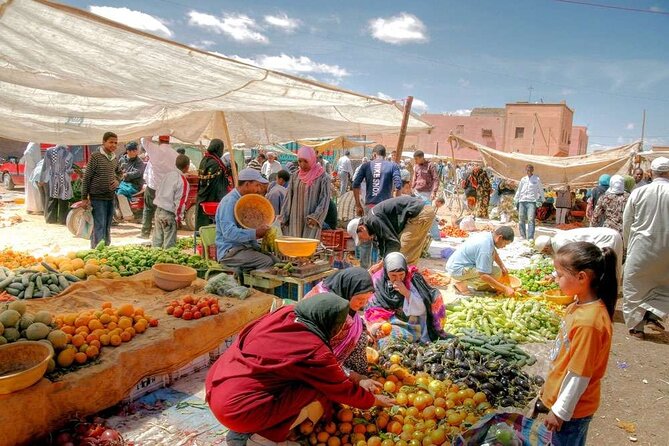
The experience begins at Dhar Richa in Fes, then heads to a traditional Moroccan market to select the ingredients for the class. This opening matters because you are not simply walking into a prepared kitchen and following a recipe. You first see the raw materials and hear what each one is for.
That market stop gives you useful context. Moroccan food often depends on the right combination of spices, vegetables, herbs, dough, and other basic ingredients. Here, the instructor explains the items as you shop, so the cooking lesson starts before any chopping or kneading begins.
I like this order. It helps you connect the finished dish to the ingredients that went into it, and it gives the class a stronger sense of place. You also get a practical look at how food is selected in Fes, rather than only hearing general talk about Moroccan cuisine.
The market portion does require a little flexibility. The exact ingredients depend on the menu you select, and the schedule may move at the pace of the group. If you want a fast, tightly timed cooking demonstration, this may feel less polished than a formal culinary school. If you prefer a local food experience with room for explanation, the market is one of the best parts.
More Cooking Classes in Fez
- Fez: Souk Tour and Traditional Home Cooking Class
★ 4.9 · 186 reviews - Cooking Class – Moroccan cuisine
★ 5.0 · 124 reviews - Flavors of Fez: Market visit, and a hands-on cooking class.
★ 4.6 · 112 reviews
Returning to a home-style kitchen
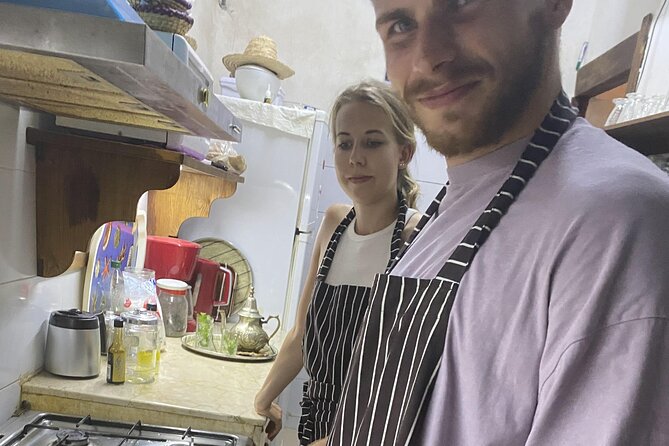
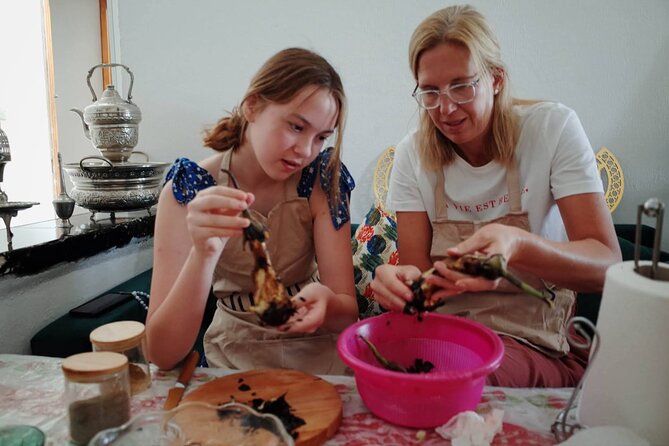
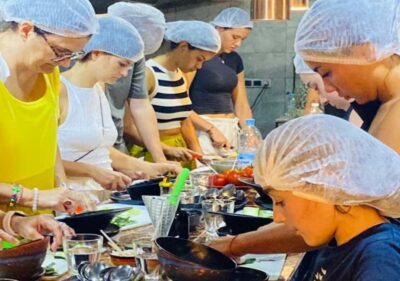
After shopping, you return to the cooking location and begin preparing the menu. The format is hands-on: the instructor gives you directions, explains techniques, and lets you work with the ingredients yourself.
That distinction is important. A demonstration can be pleasant, but it does not always teach you enough to repeat the dish at home. Here, you take part in the preparation, which gives you a better sense of the texture, timing, and small choices behind the food.
The setting has a personal feel. One class was held at a home in Fes, where Bliss Munatas guided the preparation of both bread and pastry. Another session with Chaimae focused on chicken tagine and pastilla. The available examples show that the experience can adapt to different food interests instead of forcing every participant through the same menu.
You should confirm your preferred workshop when booking or before the class begins. The experience offers several choices, but the supplied details do not promise that every dish will be available at every session. Your choice may also affect how much time goes into dough, pastry filling, slow-cooked dishes, or tea preparation.
Choosing between bread, pastry, and Moroccan dishes
The bread workshop is a good fit if you want a simple staple with a clear connection to daily Moroccan cooking. Bread making is hands-on and tactile, so you can expect to spend time working with dough and learning the basic process from the instructor.
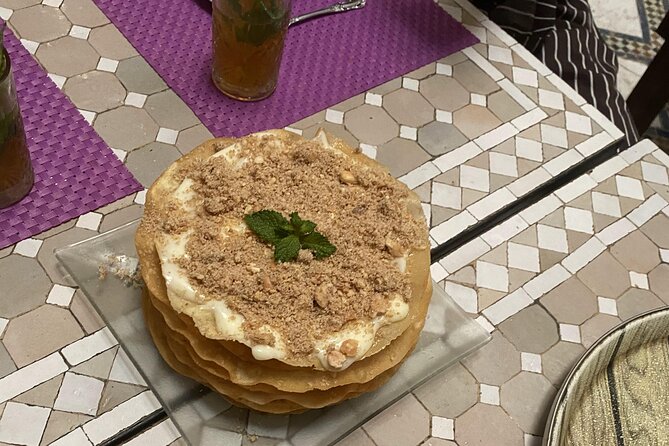
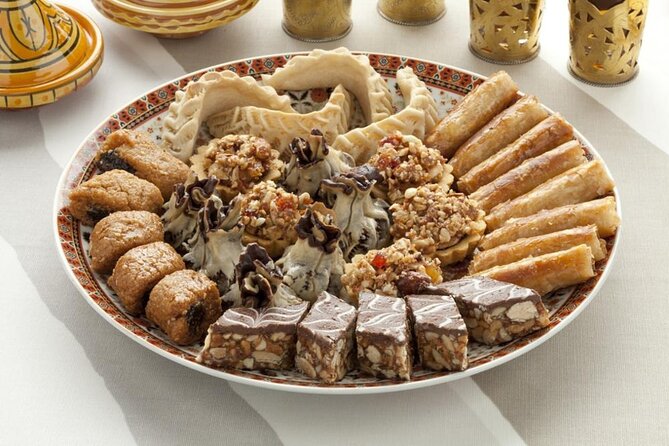
The pastry option focuses on traditional Moroccan sweets. This is especially appealing if you want a finished item that feels distinct from an ordinary cooking class. The class also serves Moroccan pastries during the tea presentation, giving you another chance to see how sweets fit into Moroccan hospitality.
For a savory lesson, chicken tagine and pastilla are named options. A tagine class can introduce you to one of Morocco’s best-known dishes, while pastilla offers a different style of preparation, with its pastry structure and savory filling. These dishes give the session more range than a basic couscous lesson, though the exact menu is chosen according to the workshop option.
I appreciate that the experience lets you shape the lesson around your interests. Someone who already cooks savory food may prefer bread or pastry. Someone who wants a classic Moroccan meal may choose tagine or pastilla. Families and couples should decide together before arriving, since a shared choice will make the short class more satisfying.
Learning by preparing the food yourself
The instructor explains the ingredients and the method while you prepare the dishes. You also speak about different subjects during the cooking, so the session is not only a technical lesson. It has a social side that suits people who like conversation along with their food.
The most useful part is likely the direct correction and guidance. In a cooking class, the difference between a good result and a disappointing one often comes down to small details: how dough feels, how ingredients are combined, or when a dish is ready. Hands-on instruction gives you a chance to ask about those points as you work.
Past sessions received especially strong praise for clear, personal instruction. Bliss Munatas was described as very hands-on and instructive during a bread and pastry class, with both dishes turning out well. Chaimae led a class built around chicken tagine and pastilla, giving the experience a personal home-cooking character.
The maximum group size is 20 people. That is still manageable for a social activity, but it is not the same as a private lesson. The smaller the actual group, the more time you may receive with the instructor. If you need close one-to-one coaching, ask about the expected group size before committing.
Same city gate, a very different afternoon:
- Chefchaouen Day Trip from Fez (Shared Group Tour)
★ 4.6 · 2,394 reviews - Fes: Volubilis Roman Ruins, Mouly Idriss, & Meknes Day Trip
★ 4.6 · 2,375 reviews - Fez Medina Guided Tour
★ 4.6 · 2,079 reviews - Blue City magic: Affordable Day Trip from Fez to Chefchaouen
★ 4.6 · 1,960 reviews
Eating the results with Moroccan tea
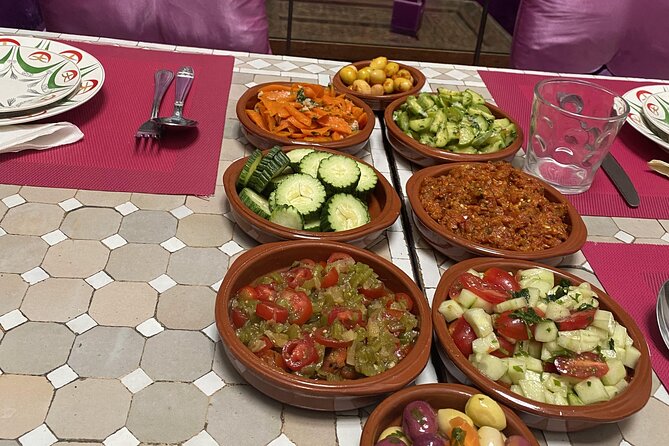
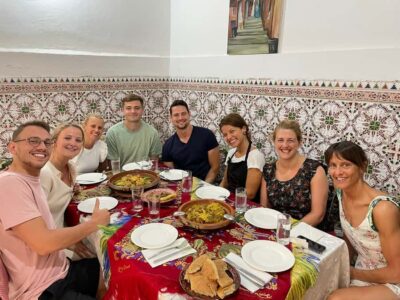
The final meal is not an afterthought. You sit down with your classmates and eat what you have prepared, accompanied by Moroccan tea. This gives the class a natural finish and lets you judge the result while the techniques are still fresh.
The tea element is worth special attention. You learn the art of making Moroccan tea, then enjoy it as part of the meal. Tea is both a drink and a social ritual in Morocco, so this portion adds cultural value that you would miss in a class focused only on recipes.
A live tea and pastry show is also included, with Moroccan pastries served during the presentation. That creates a pleasant contrast with the practical cooking work. You spend part of the session making food, then sit back for a more traditional display of hospitality.
The meal also helps justify the price. You are not paying only for a short demonstration. The experience combines a market visit, instruction, ingredients, food preparation, a shared meal, tea, and pastry service. At $46.53 per person, it offers fair value if you want food, culture, and social time in one compact activity.
How much can you learn in two hours?
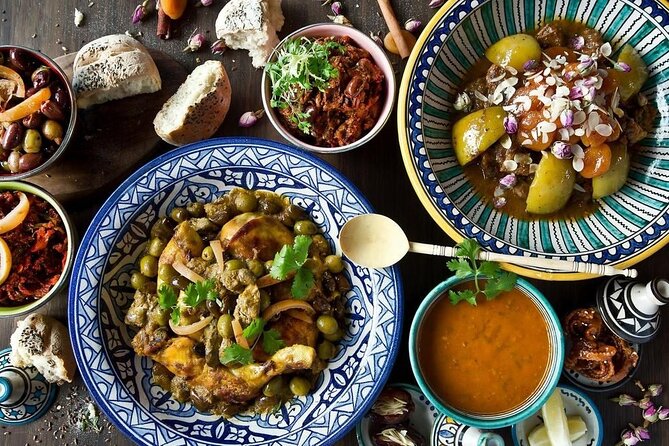
Two hours is enough for an introduction, but you should set your expectations properly. You will not master Moroccan cooking in one session, especially if the class includes a market visit, menu preparation, eating, and tea service.
The short length is useful if your Fes schedule is full. You can fit the experience into a morning, afternoon, or evening without giving up an entire day of sightseeing. The stated opening hours run daily from 9:00 AM to 11:00 PM, so there is broad scheduling flexibility.
The tradeoff is depth. A complex dish such as pastilla may require more explanation and preparation than a simple bread workshop. If your chosen menu involves several dishes, the instructor may need to keep the group moving. You will gain practical exposure, but you should not expect a long professional training course.
I would treat this as a focused cultural activity rather than a full culinary qualification. You will come away with a better understanding of Moroccan ingredients, preparation, tea, and shared dining. The real value is the connection between market, kitchen, and table.
Group size, setting, and comfort
The activity allows a maximum of 20 people, and it is described as a small-group cooking experience. In practice, that wording can cover a range of group sizes, so the personal feel may depend on the date you choose.
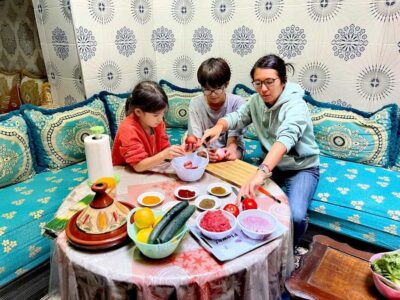
A home setting can make the class warmer and more informal than a commercial kitchen. It may also mean a less standardized setup. If you like polished equipment, printed workstations, and a strict restaurant-school format, you may find the surroundings basic. If you want a more personal introduction to local food, the setting is a strong reason to book.
The meeting point is near public transportation, and the activity ends back at Dhar Richa. A mobile ticket makes entry simple. Service animals are allowed, which is useful for eligible visitors, though the supplied details do not provide broader accessibility information about the kitchen or market route.
Since the activity includes shopping and food preparation, wear clothing you can work in comfortably. The provided details do not state whether aprons or other protective equipment are supplied, so it is sensible not to wear anything precious.
Who will enjoy this Fes cooking class?
I would recommend this experience to you if you want more than a meal in Fes. It suits people who enjoy meeting local hosts, asking questions, and taking part rather than sitting quietly through a demonstration.
It is a good match for:
- Couples looking for a shared activity
- Families who want a practical food lesson
- First-time visitors curious about Moroccan ingredients
- Home cooks interested in bread, pastry, tagine, or pastilla
- Short-stay visitors who cannot spare half a day
- Anyone who enjoys tea rituals and shared meals
It may be less suitable if you dislike group activities, have strict dietary requirements that were not confirmed in advance, or want a highly technical pastry course. The available information does not specify dietary substitutions, so you should ask before booking if allergies or food restrictions matter.
The class is also a reasonable choice for visitors who have already seen Fes medina highlights and want a slower, more personal activity. You get a different view of the city through its food, even though the market portion is relatively brief.
Price, booking timing, and cancellation
The price is $46.53 per person. For a two-hour class, that might seem high if you compare it with the cost of an ordinary meal. The value improves when you count the market tour, ingredient selection, instruction, hands-on cooking, shared meal, tea lesson, and pastry show.
This experience is booked an average of 31 days ahead, so planning early is sensible, especially if you want a particular date or menu. Confirmation is provided when you book, and the mobile ticket makes the meeting process straightforward.
You can cancel for a full refund up to 24 hours before the start time. Cancellations made less than 24 hours ahead are not refunded, and changes inside that window are not accepted. The activity can also be canceled if the minimum number is not reached or if weather affects the experience. In either case, you are offered another date or experience, or a full refund.
FAQ
Where does the cooking class start?
The experience starts at Dhar Richa in Fes, Morocco.
Where does the activity end?
The class ends back at the meeting point at Dhar Richa.
How long does the experience last?
The cooking class and market visit last approximately two hours.
What kinds of food can I learn to prepare?
The available workshops include Moroccan bread, traditional pastries, chicken tagine, pastilla, and other Moroccan dishes. The menu is chosen for the class.
Is Moroccan tea included?
Yes. You learn about making Moroccan tea, share tea with the group, and receive a live tea and pastry presentation.
What happens if I cancel?
You receive a full refund if you cancel at least 24 hours before the start time. Cancellations or changes made within 24 hours are not refunded or accepted.
Should you book this Fes cooking experience?
Book it if you want a short, personal food activity that connects a Fes market with a home-style kitchen. The strongest reasons are the hands-on format, the flexible choice of bread, pastry, tagine, or pastilla, and the shared tea service at the end.
I would skip it if you want a long professional lesson, a guaranteed private class, or detailed information about dietary adaptations before booking. For most visitors, though, $46.53 is a fair price for a compact introduction to Moroccan cooking, especially when the market visit and meal are included. The perfect choice is the workshop that matches your appetite: bread for practical skills, pastry for sweets, or tagine and pastilla for a full Moroccan meal.
More Workshops in Fez
- Pottery and Mosaic Workshop in Fes Led by Local Artisans
★ 5.0 · 89 reviews - Unforgettable Cooking Class in Fez
★ 5.0 · 89 reviews - Moroccan Cuisine Fez Cooking Class
★ 5.0 · 87 reviews - Fez Cooking Class at Palais bab sahra
★ 5.0 · 56 reviews
Just listed around Fez
- Discover the city of Fes on foot with the best guides★ 5.0 · 27 reviews
- VIP TOUR OF FES- Medina by local guide & Rempart by car-FULL Day★ 5.0 · 74 reviews
- day trip from fez to middle atlas mountain★ 5.0 · 17 reviews
- fes medina guided tour★ 4.5 · 60 reviews
- Fes to Volubilis, Moulay Idriss and Meknes Private Day Trip★ 5.0 · 92 reviews
- Fes to Volubilis, Moulay Idriss and Meknes Private Day Trip★ 4.5 · 26 reviews
- Private Fes Medina Walking Tour★ 5.0 · 25 reviews
- Fes to Chefchaouen Day Trip★ 5.0 · 20 reviews
Cooking Classes, compared.
Traditional Moroccan Cooking Class & Market Visit
Read our review →
Moroccan Dishes Cooking Class with a Local Chef
Read our review →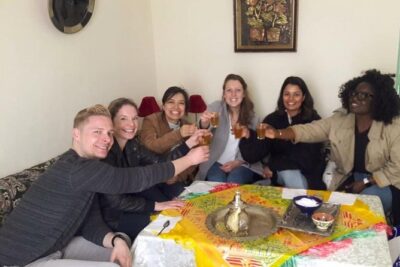
Moroccan Cooking Class & Marrakech Market Visit with Chef Khmisa
Read our review →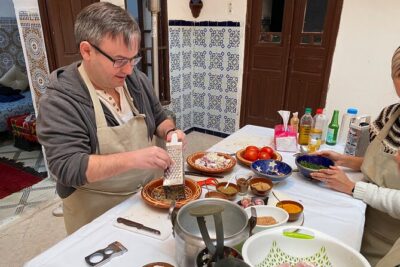
Half-Day Cooking Class with Local Chef Laila in Marrakech
Read our review →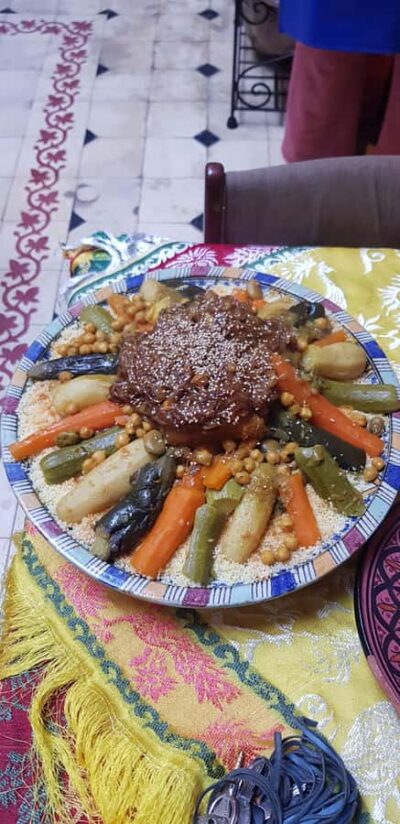
Browse the lists this tour appears in