
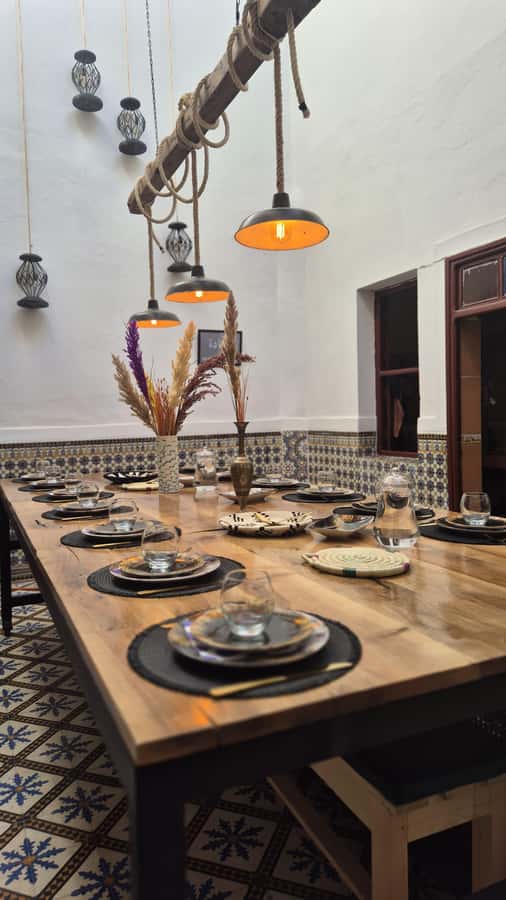
Reviewed · COOKING CLASSES
Marrakech: Moroccan Cooking Class with Amazing Local Chef!
Moroccan food rewards curious cooks. This four-hour class gives you hands-on practice with tagine, salads, m’smen bread, and dessert in a traditional riad or farmhouse setting. I like the warm welcome tea ceremony and the way chefs such as Chafik, Mehdi, Chaima, and Fatima make the class feel social rather than formal. I also like that you eat what you prepare and take recipe cards home.
The main consideration is the final sweet course. Depending on the session, it may be a more substantial Moroccan pastry or a fresh beetroot, orange, lemon, and mint juice. If you expect a complex dessert, ask what is planned. Also, the outside of the building may not have a sign, so look for door number 312 and ring the bell.
In This Review
- Key Points Before You Book
- What the Marrakech Cooking Class Is Really Like
- Starting with Mint Tea and Moroccan Hospitality
- Preparing Two Moroccan Salads
- Building a Tagine, Not Just Eating One
- Learning to Make M’smen Bread
- Sitting Down to Eat What You Made
- The Dessert Question: Pastries or Fresh Juice
- The Chefs and the Teaching Style
- Getting There and Finding Door 312
- Is $45 Good Value?
- Who Should Book This Class?
- Should You Book the Marrakech Cooking Class?
- FAQ
- How long does the Marrakech cooking class last?
- What dishes are included?
- Which languages are spoken?
- Where is the meeting point?
- Is the cooking class wheelchair accessible?
- Can I cancel my booking?
Key Points Before You Book

- Four dishes in four hours: Prepare two Moroccan salads, a tagine, m’smen flatbread, and a sweet course.
- Three languages in one kitchen: The guide can teach in English, French, and Arabic.
- Tea begins the welcome: Arrive 15 minutes early for mint tea, pastries, and introductions.
- A social cooking table: The small-group format encourages you to chop, shape, stir, and eat together.
- Recipes go home with you: Recipe cards make it easier to recreate the meal after Morocco.
- Strong value at $45: Food, equipment, instruction, tea, dining, and cultural explanation are included.
What the Marrakech Cooking Class Is Really Like
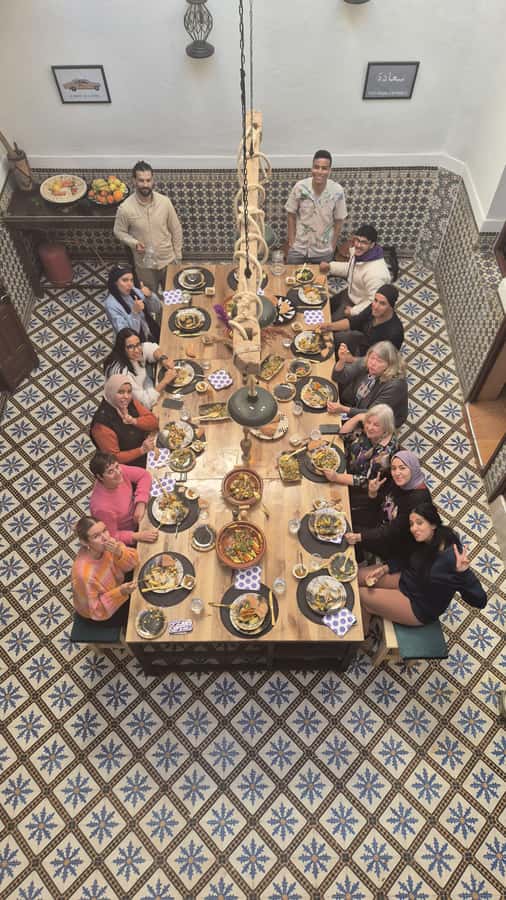
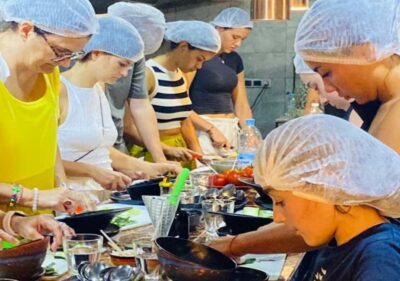
This is not a demonstration where you sit back and watch a chef do everything. You are expected to participate. You help prepare ingredients, work with the tagine, shape bread, and share the finished meal around the table.
That matters because Moroccan food is built on process. The final dish may look simple, but the flavour comes from the order of preparation, the spice balance, the slow cooking, and the way ingredients are handled. A class gives you a better feel for those details than a restaurant meal alone.
The activity lasts four hours, with the morning session running from 10:30am to 2:30pm. That timing works well for a day in Marrakech. You finish in time for an afternoon walk, a hammam, or a quiet rest during the hottest part of the day.
The setting is described as a beautiful traditional riad in Marrakech or a farmhouse. The exact location matters less than the atmosphere: you cook in a designed space rather than a plain classroom. The cooking and meal feel tied to Moroccan home life, not separated from it.
More Cooking Classes in Marrakech
- Marrakech: Moroccan Cooking Class with Pickup
★ 4.6 · 1,862 reviews - Marrakech: Traditional Moroccan Cooking Class & Market Visit
★ 4.8 · 1,861 reviews - Marrakesh: Moroccan Dishes Cooking Class with a Local Chef
★ 5.0 · 1,615 reviews
Starting with Mint Tea and Moroccan Hospitality
Arrive 15 minutes before the official start. This gives you time to find the entrance and settle in before the cooking begins.
The welcome starts with Moroccan mint tea and pastries. Tea is not just a drink here. It is part of the social ritual, and beginning with it gives the class a calmer pace. You meet the chef and the other people at your table before the knives and chopping boards appear.
This opening also helps if you are travelling alone. The class is designed around shared work, so you quickly have a reason to talk with the people beside you. Families, couples, solo visitors, and first-time cooks can all take part without needing advanced skills.
The atmosphere appears to be one of the class’s strongest points. Chefs and assistants are described as friendly, encouraging, and good at making everyone feel included. Chafik is praised for his humour and clear instructions, while Chaima and Fatima are noted for their warmth and careful explanations.
Preparing Two Moroccan Salads
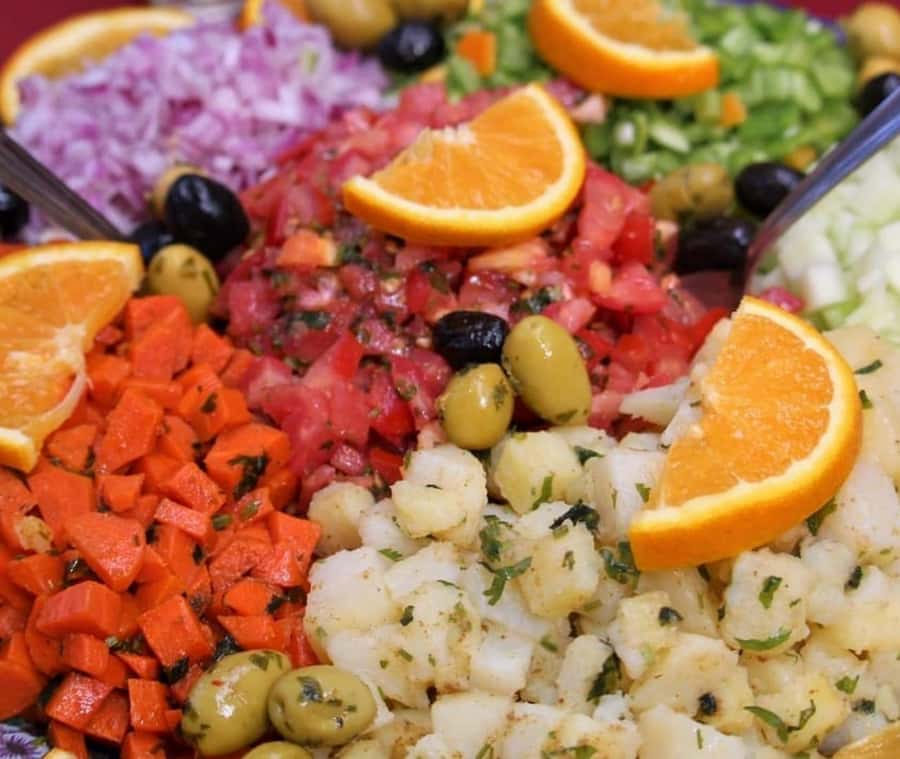
The first food task includes two Moroccan salads. This is a useful introduction because salads in Morocco are often more than a pile of raw leaves. They can include cooked vegetables, herbs, spices, citrus, and carefully balanced seasoning.
You will work with fresh, seasonal ingredients supplied by the cooking team. The exact salads can vary, so do not assume you will prepare the same recipes every time. That flexibility is part of the appeal, but it also means the menu may not be fully fixed before you arrive.
The salad course teaches an important Moroccan habit: bold flavour does not require heavy food. Spices, acidity, sweetness, and fresh herbs can work together in small portions. Pay attention to how the chef seasons and tastes the mixture. That is the kind of practical lesson you can carry into your own kitchen.
One group prepared vegetable salads alongside chicken and vegetable tagines. Fresh beetroot juice also appeared in that session. These details suggest that the meal can include produce in several forms, not just as an accompaniment to meat.
Building a Tagine, Not Just Eating One
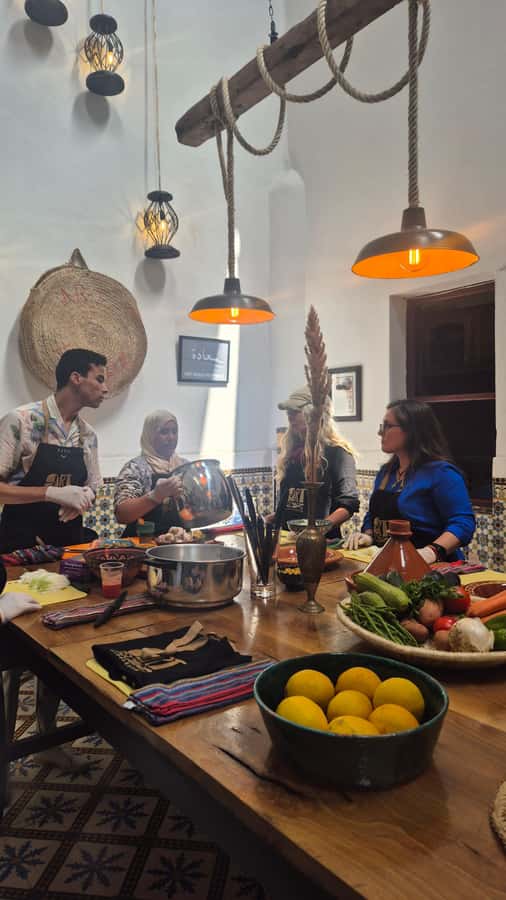
The tagine is the centre of the class. You can choose your tagine, with chicken and vegetable versions included in the dishes prepared by past groups.
The important lesson is how the ingredients are arranged and cooked in the clay pot. The chef shows you how to prepare the tagine before it goes onto the heat, then explains how the slow cooking brings the meat, vegetables, spices, and sauce together.
This is where the class earns its price. At a restaurant, you taste the finished dish. Here, you learn why the tagine develops its familiar aroma and tender texture. You also see that Moroccan cooking is not simply about adding a large amount of spice. It is about using seasoning with control.
The format should suit people who want to ask questions. The teaching is described as clear and unhurried, and you can ask about ingredients, methods, and Moroccan food customs during the preparation. Instructions are available in English, French, and Arabic.
If you eat meat, chicken is one likely option. Vegetarian choices are available, but you should give your dietary requirements, allergies, or special requests when booking. Do not wait until the cooking begins to explain a serious allergy.
Same city gate, a very different afternoon:
- Marrakech: Agafay Desert Sunset, Camel Ride, and Dinner Show
★ 4.6 · 35,119 reviews - From Marrakech: Ouzoud Waterfalls Guided Hike and Boat Trip
★ 4.7 · 33,630 reviews - Marrakech: Agafay Desert Quad & Camel Rides with Dinner Show
★ 4.8 · 27,382 reviews - Marrakech: Agafay Desert Quad Biking Tour with Dinner-Show
★ 4.8 · 16,569 reviews
Learning to Make M’smen Bread
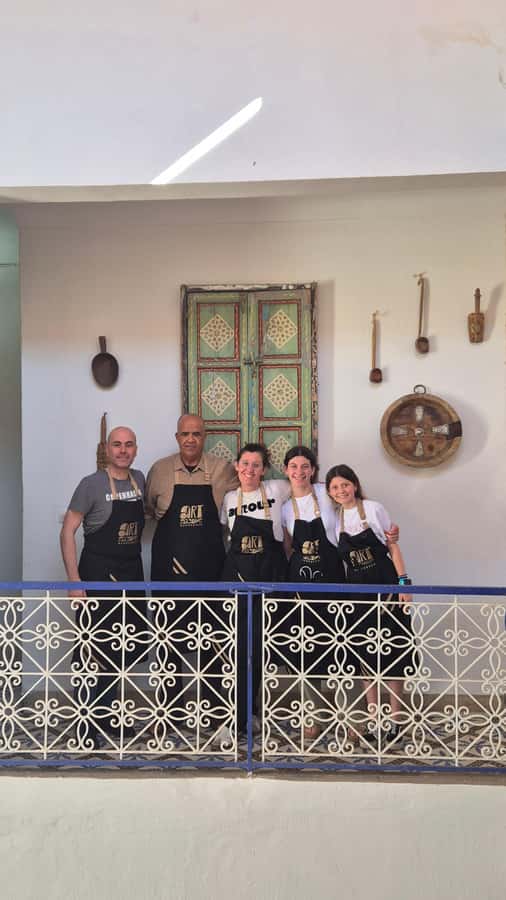
The m’smen bread lesson adds a welcome change of pace. This Moroccan flatbread is made with semolina flour and becomes flaky through the way the dough is handled and folded.
You may prepare one yourself, rather than simply watching the chef make a large batch. That hands-on part is useful because the technique can look easier than it feels. The dough needs care, and the finished bread gives you an immediate reward for trying.
M’smen is also a good example of how Moroccan food fits the social setting. It can be eaten warm with dips such as nut butter, honey, and sunflower oil while the tagines continue to cook. This keeps the class active and gives you something to enjoy before the main meal.
Several people singled out the bread as an unexpected highlight. If you already enjoy baking, you may appreciate the technique. If you do not, you still get a simple lesson with a very satisfying result.
Sitting Down to Eat What You Made
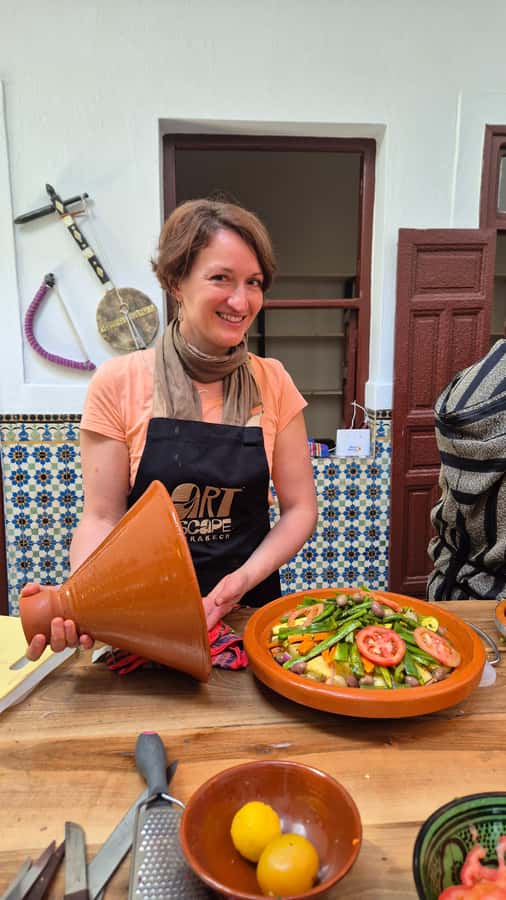
Once the tagines are ready, the group sits down together. This shared meal is the payoff, but it is also part of the lesson.
You taste the food with a better understanding of what went into it. The tender meat, aromatic sauce, vegetables, salads, and warm bread are no longer anonymous dishes on a menu. You have handled the ingredients and watched the cooking develop.
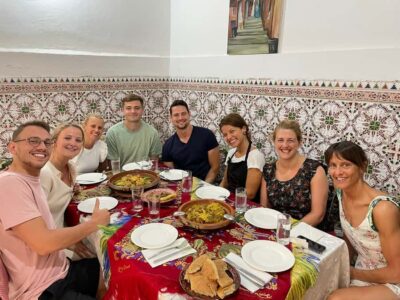
The meal also creates the friendly, communal feeling that people often want from a food activity. You are not rushing through a restaurant course. You eat with the others from the class, compare results, and talk about the food.
The staff take care of washing dishes and utensils during the meal in at least some sessions. That lets you relax once the cooking is finished. It also keeps the experience from feeling like a full afternoon of kitchen chores.
The food receives especially high praise. One participant described it as among the best Moroccan food eaten during a stay in the country. That is subjective, of course, but the repeated approval suggests the cooking is not treated as a token tourist activity.
The Dessert Question: Pastries or Fresh Juice
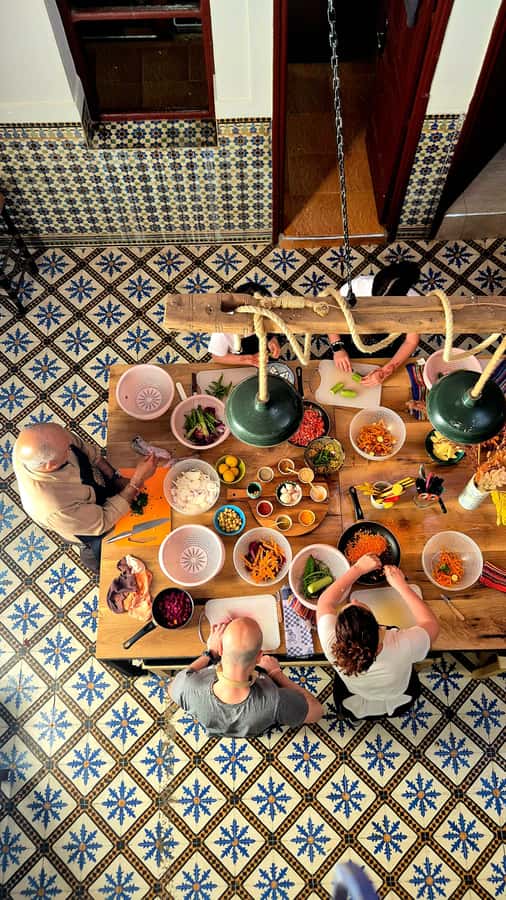
The sweet course is the least predictable part of the class. The advertised format includes dessert, and Moroccan pastries may be served. In another session, the dessert was a blended drink made from beetroot, oranges, lemon, and mint.
That drink sounds fresh and distinctive, but it is not what everyone would call dessert. One person specifically wished for something more complex than juice. I consider this a fair point, especially if you are booking the class partly for Moroccan sweets.
You can treat the final course as a small variable rather than a reason to reject the activity. If pastries are important to you, contact the provider before booking and ask what the dessert will be on your date. The rest of the menu remains the stronger part of the experience.
The Chefs and the Teaching Style
The teaching team changes, but the names that come up include Chafik, Mehdi, Chaima, Fatima, and Laila Fatima. Chafik is described as funny, patient, and good at explaining both food and family customs. Mehdi is praised for making participants feel at home.
The class is not built around a stiff lecture. You learn while working. The chef explains the method, demonstrates the task, and lets you take part. That suits anyone who learns best by doing.
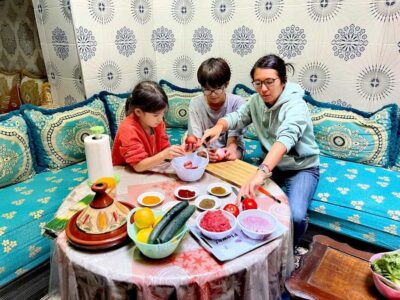
Families can benefit from this style. Two teenagers joined one session, and the shared tasks helped the family cook together rather than split up for separate sightseeing. Children under one year old are not suitable for the activity, but older children and teenagers may enjoy having clear jobs at the table.
The class also works for beginners. The instructions are repeatedly described as easy to follow, and no previous cooking experience is required in the supplied information. You should still expect to stand, chop, shape dough, and handle food for much of the four hours.
Getting There and Finding Door 312
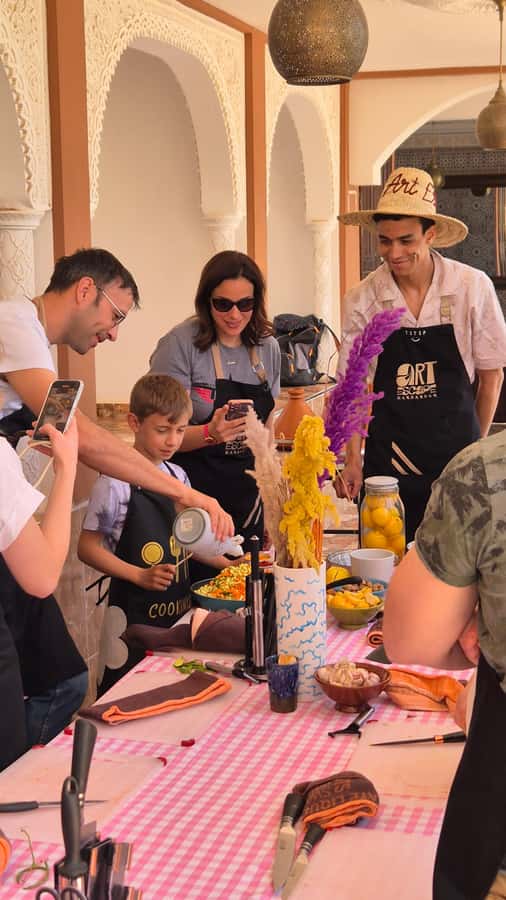
The meeting point is listed through Google Maps under ArtEscape Marrakech. Use that exact name to find the pin, then look for door number 312.
The building may not have a sign outside. This is the most useful arrival tip: if you think you are at the right place but cannot see a business name, ring the bell rather than turning around.
Uber or InDrive is recommended as an easier way to arrive than a standard taxi. One session had transportation problems, while other participants described pickup and drop-off as smooth. That mixed experience means you should confirm any pickup arrangements and allow extra time.
The stated meeting instructions ask you to arrive 15 minutes early. I would take that seriously. You want those minutes for finding the door, not for missing the tea ceremony.
Is $45 Good Value?
At $45 per person, this is a strong value if you want both a meal and an activity. The price includes the welcome tea ceremony, fresh seasonal ingredients, utensils, instruction, cultural storytelling, the shared meal, Moroccan mint tea, and recipe cards.
You are also getting four hours of structured time. Compare that with the cost of a good restaurant meal, then add the value of learning several dishes and having staff guide you through them. The class makes financial sense for people who plan to cook Moroccan food at home.
The recipe cards are a useful extra. They turn the activity from a one-time meal into something you can revisit. You may not find every ingredient easily at home, but the recipes give you a starting point and help preserve the memory of the day.
The value is less clear if you dislike group activities or want a private chef lesson. The class is designed around shared cooking and dining, although one session happened to be private because only one group booked it. You should not count on that level of individual attention.
Who Should Book This Class?
I would recommend it to first-time visitors who want a direct connection with Moroccan food. It gives you more context than simply ordering tagine in the medina, without requiring you to commit to a full food tour.
It suits families with older children, couples, groups of friends, solo visitors, and home cooks. You do not need to be an expert. Curiosity and a willingness to participate matter more.
Vegetarians can take part, provided they explain their needs when booking. People with allergies should do the same. The activity is wheelchair accessible, though you may want to confirm the practical setup of the cooking stations if you have specific mobility requirements.
You may want to skip it if your priority is a long market visit, a restaurant tasting menu, or a highly technical pastry course. The focus is broad Moroccan home cooking, not advanced culinary training.
Wear comfortable shoes and bring a camera. Pets, alcohol, and drugs are not allowed, and babies under one year old are not suitable for the class.
Should You Book the Marrakech Cooking Class?
I would book this class if you want to understand Moroccan food by preparing it yourself. The strongest features are the friendly teaching, the shared table, the tagine lesson, and the chance to make m’smen bread from scratch.
The only real uncertainty is the dessert and the occasional transport issue. Confirm the dessert if sweets matter to you, check your pickup details, and use the ArtEscape Marrakech map pin with door 312 in mind.
At $45, the class gives you a substantial meal, four hours of activity, cultural explanation, and recipes to take home. For a family-friendly and social way to spend a morning in Marrakech, it is an easy recommendation.
FAQ
How long does the Marrakech cooking class last?
The class lasts four hours. The morning session runs from 10:30am to 2:30pm.
What dishes are included?
The class includes two Moroccan salads, a tagine of your choice, Moroccan m’smen bread, and dessert. Chicken and vegetable tagines have been prepared in sessions, and vegetarian options are available.
Which languages are spoken?
The activity is conducted in English, French, and Arabic.
Where is the meeting point?
Use Google Maps and search for ArtEscape Marrakech. The door number is 312. The outside may not have a sign, so ring the bell if you appear to be at the correct location.
Is the cooking class wheelchair accessible?
Yes, the activity is listed as wheelchair accessible.
Can I cancel my booking?
Yes. You can cancel up to 24 hours before the activity for a full refund. You can also reserve now and pay later.
More Workshops in Marrakech
- Moroccan Cooking Class & Marrakech Market Visit with Chef Khmisa
★ 5.0 · 1,504 reviews - Half-Day Cooking Class with Local Chef Laila in Marrakech
★ 5.0 · 952 reviews - Marrakech: Pottery Workshop with Moroccan Tea
★ 4.8 · 756 reviews - Marrakech: Moroccan Cooking Class with a Local Family
★ 4.9 · 668 reviews
Just listed around Marrakech
- 3 Days To Merzouga Desert★ 5.0 · 19 reviews
- 3 Days Shared Sahara Desert Tour From Marrakech★ 5.0 · 78 reviews
- 1 night Camel Treking in Merzouga Desert Luxury Camp★ 5.0 · 132 reviews
- 3 Days Sahara Desert Trips From Marrakesh★ 5.0 · 176 reviews
- 3 Days Sahara Tour from Marrakech to Merzouga Dunes★ 5.0 · 29 reviews
- trip of your dreams in 3 days and 2 nights in the desert★ 5.0 · 36 reviews
- 3 Days Private Tour to Merzouga Desert from Marrakech★ 5.0 · 77 reviews
- 3-Days Private Tour from Marrakech to Fez through Merzouga Desert★ 5.0 · 29 reviews
Cooking Classes, compared.
Traditional Moroccan Cooking Class & Market Visit
Read our review →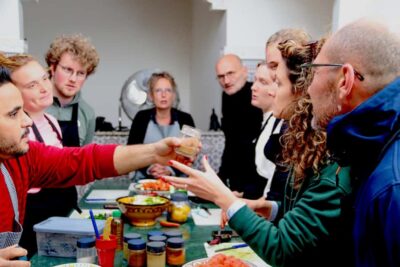
Moroccan Dishes Cooking Class with a Local Chef
Read our review →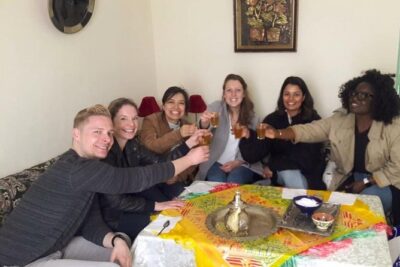
Moroccan Cooking Class & Marrakech Market Visit with Chef Khmisa
Read our review →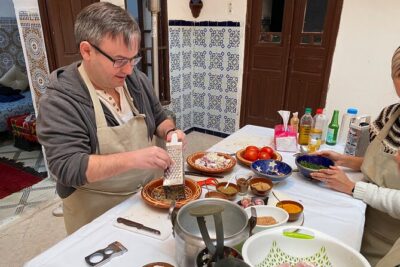
Half-Day Cooking Class with Local Chef Laila in Marrakech
Read our review →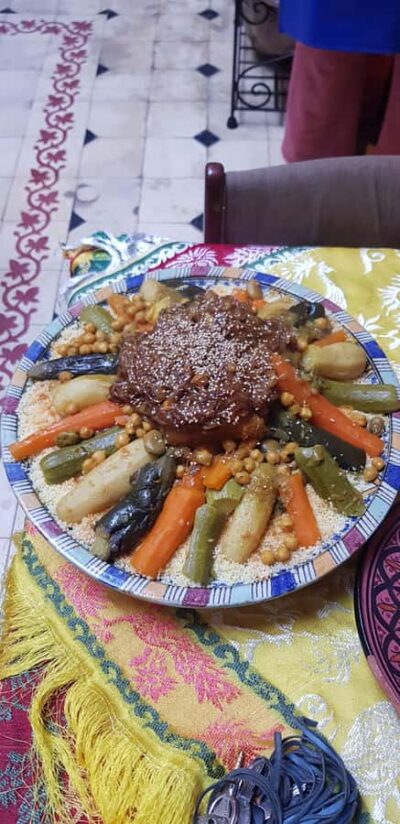
Browse the lists this tour appears in