
Reviewed · COOKING CLASSES
Moroccan Cooking Classes
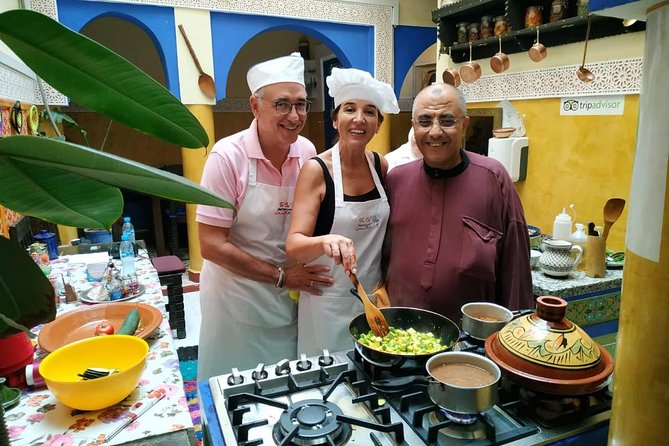
Moroccan food begins at the market. This three-hour Marrakech class takes you from Rue Kennaria into the Old City market, where you select fresh ingredients before cooking with a local family. I like the direct link between shopping and cooking, and I like that Moroccan women guide the meal rather than turning it into a polished stage show. The main consideration is that the exact dishes and market stops are not specified in advance.
The price is $57.27 per person, which feels fair for a small-group class capped at 10 people, especially since it includes the ingredients, instruction, and meal you prepare. I also appreciate the simple morning schedule, 9:30 AM to 12:30 PM, though you will need to reach the Rue Kennaria meeting point on your own.
In This Review
- Quick takeaways from this Marrakech cooking class
- Starting at Rue Kennaria in Marrakech
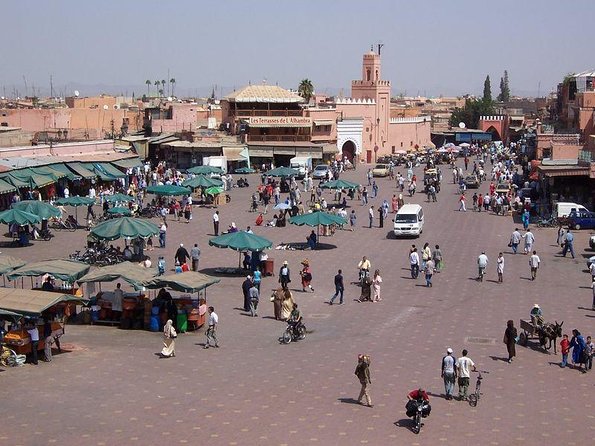
- Choosing ingredients in the Old City market
- Cooking with a Moroccan family
- Understanding Moroccan herbs, spices, and flavors
- Sitting down to enjoy what you made
- Is $57.27 a fair price?
- Who will enjoy this class most?
- Timing, cancellation, and practical planning
- Should you book Moroccan Cooking Classes at Dar Chef?
- FAQ
- Where does the Moroccan cooking class begin?
- Where does the activity end?
- How long does the cooking class last?
- What is included in the cooking experience?
- How many people can join the class?
- Can I cancel for a full refund?
Quick takeaways from this Marrakech cooking class
- Shop before you cook: You select ingredients in a traditional Old City market, then use them in the kitchen.
- Learn from a local family: The setting offers personal contact and a look at how Moroccan food is prepared at home.
- Cook with Moroccan women: Their guidance is a central part of the experience and adds a personal, practical touch.
- Taste the spice cupboard: You learn about Moroccan herbs, spices, and the flavors that shape everyday dishes.
- Small group limit: A maximum of 10 people should allow more room for questions and hands-on work.
- Morning timing: The class runs for about three hours, from 9:30 AM to 12:30 PM, and returns to the starting point.
Starting at Rue Kennaria in Marrakech
The class begins at Rue Kennaria, Marrakesh 40000, in the Old City. This is a useful starting area for a food lesson because the experience connects the streets, market stalls, kitchen, and table in one compact morning.
You should plan to arrive ready to walk and pay attention. The meeting point is given clearly, but the information does not include hotel pickup, private transport, or a detailed route from your accommodation. If you are staying elsewhere in Marrakech, allow enough time to find Rue Kennaria without rushing into the 9:30 AM start.
The activity ends back at the meeting point. That makes the schedule easy to fit into a larger day. You can take a later lunch, visit another part of the medina, or return to your accommodation after the class.
A mobile ticket is provided, so you do not need to print a voucher. Confirmation arrives when you book. The activity also operates near public transportation, though no specific bus or tram instructions are provided.
More Cooking Classes in Marrakech
- Marrakech: Moroccan Cooking Class with Pickup
★ 4.6 · 1,862 reviews - Marrakech: Traditional Moroccan Cooking Class & Market Visit
★ 4.8 · 1,861 reviews - Marrakesh: Moroccan Dishes Cooking Class with a Local Chef
★ 5.0 · 1,615 reviews
Choosing ingredients in the Old City market
The market visit gives this class its strongest sense of place. Instead of receiving a preselected basket of ingredients, you help choose what will become lunch. That small change matters. It lets you see food as a Moroccan cook sees it, starting with the raw materials rather than beginning with a recipe card.
You will learn how to identify fresh local ingredients, then gather what you need for the meal. The exact products depend on the dishes planned for your class, and those dishes are not listed ahead of time. That uncertainty can be a minor drawback if you want to prepare one particular recipe, but it also keeps the experience tied to the market and the season.
The market stop should be especially useful for understanding Moroccan flavor. Herbs and spices are not just decorative extras here. They shape the aroma, color, and balance of the finished food. The lesson includes typical Moroccan herbs, spices, and flavors, so you should leave with a better sense of how these ingredients work together.
I like this part because it gives you a practical way to remember Marrakech. Long after you forget a street name, you may remember the scent of spices, the produce you selected, or the ingredient that changed the whole dish.
The market can also be the least predictable part of the morning. Shopping takes place in the Old City, where conditions may be busy and the route may involve walking through crowded streets. The supplied details do not promise a quiet market or a fixed list of stalls, so come prepared for a lively, sensory stop rather than a slow guided tour.
Cooking with a Moroccan family
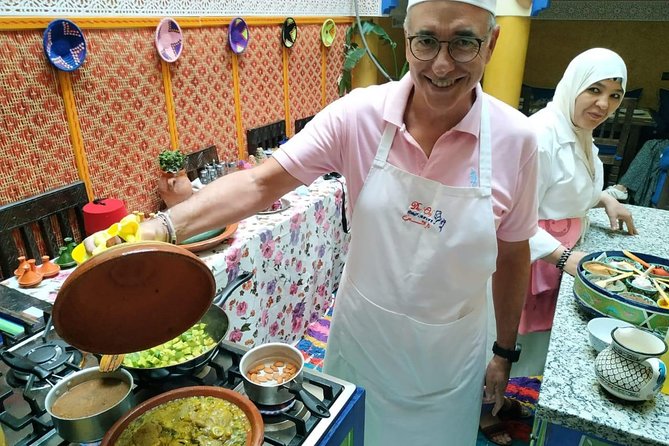
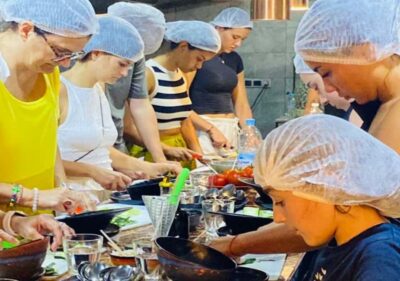
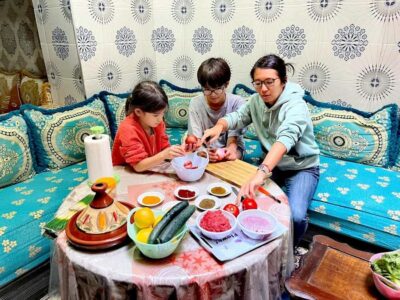
After shopping, you prepare the meal with help from a local family. This is where the class moves beyond food tasting and into ordinary home cooking. You are not simply watching someone make a finished dish. You are using the ingredients you helped select and learning how they become a meal.
The family setting is valuable because it places the food in a human context. Moroccan cooking is often associated with elaborate presentations and famous dishes, but a home kitchen can show you the repeated actions that matter most: combining ingredients, judging seasoning, and working through a recipe step by step.
The experience description emphasizes learning from Moroccan women. Their role is not a small add-on. Cooking with them is presented as one of the most memorable parts of the morning, and it gives the class a personal quality that a large demonstration would struggle to match.
Abdel is named as one of the people thanked for making the experience special. The chef and the person responsible for the class are also praised warmly. Since the full staff lineup is not provided, you should not assume Abdel will personally lead every step, but his name is useful to know when you arrive.
The group limit of 10 people is another practical advantage. A class this size is not private, but it should be more manageable than a large cooking demonstration. You have a better chance to see what is happening, ask questions, and take part in the preparation.
The exact kitchen setup is not described, so you should keep your expectations flexible. This is a hands-on lesson with a local family, not a formal culinary school course. If you want professional equipment, precise written recipes, or advanced chef training, this may not be the right format.
Understanding Moroccan herbs, spices, and flavors
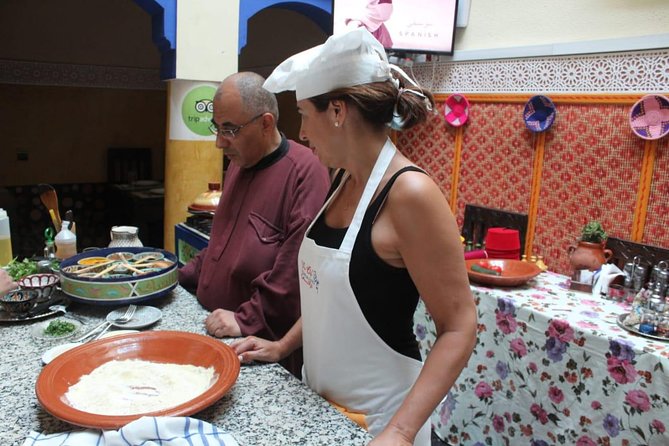
A good cooking class teaches more than a list of ingredients. It helps you understand why the food tastes the way it does. This experience focuses on Moroccan herbs, spices, and flavors while you prepare typical dishes.
That approach can help you make better choices when ordering food later in your trip. Instead of seeing a dish as one mysterious combination, you begin to recognize the ingredients that give it character. You may also gain the confidence to try food you would otherwise skip.
The class does not state which dishes you will prepare. You should not book it expecting a guaranteed tagine, couscous, salad, or pastry unless the provider confirms that directly. The promise is broader: you will make typical Moroccan dishes from the ingredients gathered at the traditional market.
That open format is both a strength and a limitation. It allows the lesson to reflect the available ingredients and the family’s own cooking style. It also means the experience is better suited to people who enjoy discovering what is on the menu than to people following a strict culinary plan.
I would pay close attention to small technique details. Ask how the cooks judge the right amount of spice, how they handle fresh herbs, and which ingredients are essential rather than optional. Those are the details most likely to help you recreate the meal at home.
Same city gate, a very different afternoon:
- Marrakech: Agafay Desert Sunset, Camel Ride, and Dinner Show
★ 4.6 · 35,119 reviews - From Marrakech: Ouzoud Waterfalls Guided Hike and Boat Trip
★ 4.7 · 33,630 reviews - Marrakech: Agafay Desert Quad & Camel Rides with Dinner Show
★ 4.8 · 27,382 reviews - Marrakech: Agafay Desert Quad Biking Tour with Dinner-Show
★ 4.8 · 16,569 reviews
Sitting down to enjoy what you made
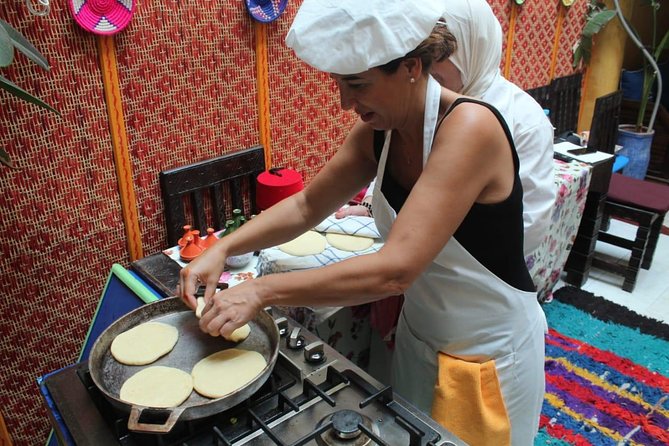
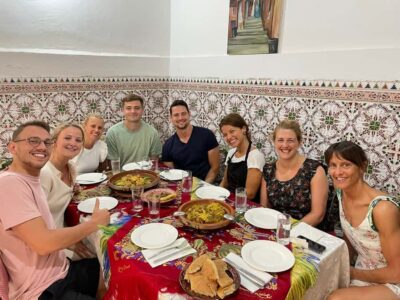
The meal is the payoff, but it is also part of the lesson. You eat the food prepared with the ingredients you selected, which gives the cooking a clear purpose. You can taste the result while the preparation is still fresh in your mind.
That makes the class feel more complete than a short demonstration followed by a sample bite. You spend time shopping, preparing, learning, and eating. At roughly three hours, the experience has enough space for each stage without taking over your entire day.
The available feedback uses strong praise for the food, the teaching, and the people involved. One Spanish-speaking participant described the class as an excellent way to know the products, enjoy the event, and eat well while learning. Another French-language comment called it simply authentic and thanked Abdel, the chef, and the person responsible.
Those comments point to the class’s main appeal: it combines useful instruction with a friendly human exchange. The cooking is important, but so is the welcome. You are likely to get more from the experience if you enjoy asking questions and sharing the meal rather than rushing through each step.
The meal also gives you a chance to judge the class on its own terms. This is not a restaurant tasting menu. You are eating food made during a home-style lesson, so the value comes from the process as much as the plate.
Is $57.27 a fair price?
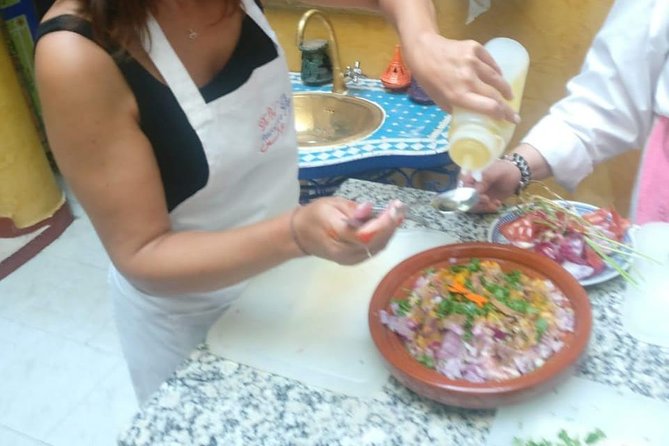
At $57.27 per person, this class sits in a reasonable range for a small-group cultural activity in Marrakech. The price includes access to a local family, market shopping, ingredients, cooking instruction, and the meal you prepare. Those parts would be separate costs and decisions if you tried to arrange the same experience alone.
The strongest value comes from the combination of activities. A market walk by itself might show you ingredients without explaining how to use them. A cooking demonstration might teach technique without showing where the food begins. Here, the market and kitchen are connected.
The 10-person maximum also supports the price. You are paying for more than food. You are paying for time with the people leading the class and for a format that should allow participation. I would see it as good value for a first visit to Marrakech, especially if you want an activity that feels tied to local daily life.
The value is less clear for an experienced cook seeking advanced instruction. The information promises traditional Moroccan meals and basic understanding of local flavors, not specialized culinary training. You should book it for cultural contact and practical learning, not for a professional certificate or a highly technical course.
The morning schedule adds value for itinerary planning. You finish around 12:30 PM, leaving the afternoon free. Since the activity returns to Rue Kennaria, you do not have to solve a second transport arrangement at the end.
Who will enjoy this class most?
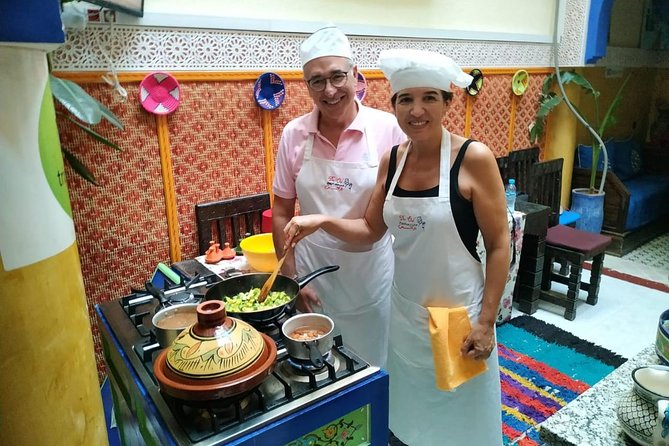
I would recommend this experience to several kinds of visitors:
- First-time Marrakech visitors who want a friendly introduction to Moroccan food and local markets.
- Home cooks who want techniques and flavor ideas they can try after returning home.
- Couples and families looking for a shared activity instead of another sightseeing stop.
- Small groups of friends who enjoy eating as much as cooking.
- Food-curious visitors who want to try unfamiliar ingredients with help from local cooks.
It may be less suitable if you need a guaranteed menu, dislike market walking, or want a quiet private class. The activity is capped at 10 people, but it is still a shared experience rather than a one-on-one lesson.
You should also check any dietary needs before booking if they affect what you can eat. The supplied information does not state whether vegetarian, vegan, allergy-friendly, or religious dietary requests can be accommodated.
Timing, cancellation, and practical planning
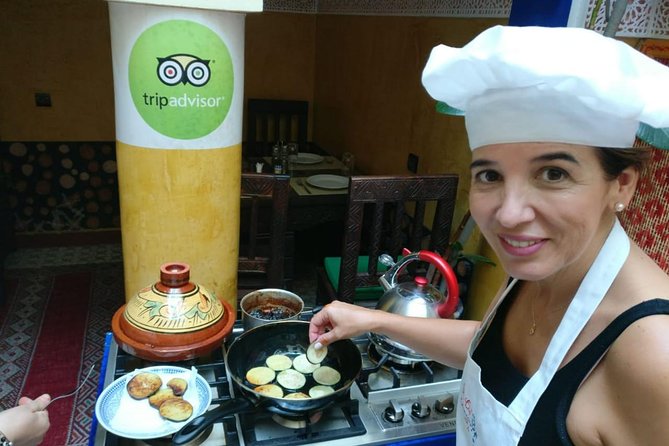
The class operates Monday through Sunday from 9:30 AM to 12:30 PM during the listed operating period, which runs from September 26, 2019 through June 16, 2026. Since the experience is booked about seven days ahead on average, reserving roughly a week before your preferred date is sensible, especially if your Marrakech schedule is tight.
Free cancellation is available if you cancel at least 24 hours before the local start time. Cancellations within 24 hours are not refunded, and changes inside that window are not accepted. Build some breathing room into your plans if you are arriving in Marrakech on the same day.
The class uses a mobile ticket, begins and ends at Rue Kennaria, and has a maximum of 10 participants. Those details are simple, but they matter. You know where the morning starts, where it finishes, and how much time to reserve.
Should you book Moroccan Cooking Classes at Dar Chef?
Book it if you want to understand Moroccan food through people, ingredients, and hands-on work. The market visit, home-style cooking, and meal with a local family create a stronger connection than a standard food sample, while the small group and three-hour schedule keep the experience manageable.
I would hesitate only if you need a fixed menu or a highly technical cooking lesson. For most visitors, the class offers a fair mix of food, culture, and practical instruction at $57.27. It is a particularly good choice for a first Marrakech visit, when a morning of cooking can give you a useful feel for the city beyond its famous sights.
FAQ
Where does the Moroccan cooking class begin?
The class begins at Rue Kennaria, Marrakesh 40000, Morocco.
Where does the activity end?
The activity ends back at the meeting point on Rue Kennaria.
How long does the cooking class last?
The experience lasts approximately three hours, from 9:30 AM to 12:30 PM.
What is included in the cooking experience?
You shop for fresh ingredients in a traditional Old City market, then prepare typical Moroccan dishes with help from a local family and Moroccan women before enjoying the meal.
How many people can join the class?
The activity has a maximum of 10 participants.
Can I cancel for a full refund?
Yes. You can receive a full refund if you cancel at least 24 hours before the experience start time. Cancellations or changes made within 24 hours are not accepted for a refund.
More Workshops in Marrakech
- Moroccan Cooking Class & Marrakech Market Visit with Chef Khmisa
★ 5.0 · 1,504 reviews - Half-Day Cooking Class with Local Chef Laila in Marrakech
★ 5.0 · 952 reviews - Marrakech: Pottery Workshop with Moroccan Tea
★ 4.8 · 756 reviews - Marrakech: Moroccan Cooking Class with a Local Family
★ 4.9 · 668 reviews
Just listed around Marrakech
- Zagora: 2-Day Desert Trip from Marrakech★ 4.4 · 31 reviews
- Traditional spa Hammam & Massage with Hotel Transfers★ 4.0 · 24 reviews
- Day trip to OUZOUD waterfall with guide&boat ride from Marrakech★ 5.0 · 172 reviews
- quad bike tour in the palmeraie of Marrakech★ 4.5 · 43 reviews
- Half day quad desert agafay★ 4.5 · 24 reviews
- walking tour★ 5.0 · 46 reviews
- private tour of Marrakech 4 hours with multilingual driver★ 5.0 · 117 reviews
- 3 days tour from Marrakech to Merzouga desert★ 5.0 · 55 reviews
Cooking Classes, compared.
Traditional Moroccan Cooking Class & Market Visit
Read our review →
Moroccan Dishes Cooking Class with a Local Chef
Read our review →
Moroccan Cooking Class & Marrakech Market Visit with Chef Khmisa
Read our review →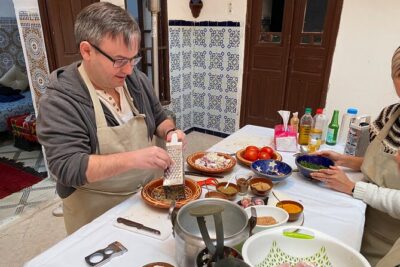
Half-Day Cooking Class with Local Chef Laila in Marrakech
Read our review →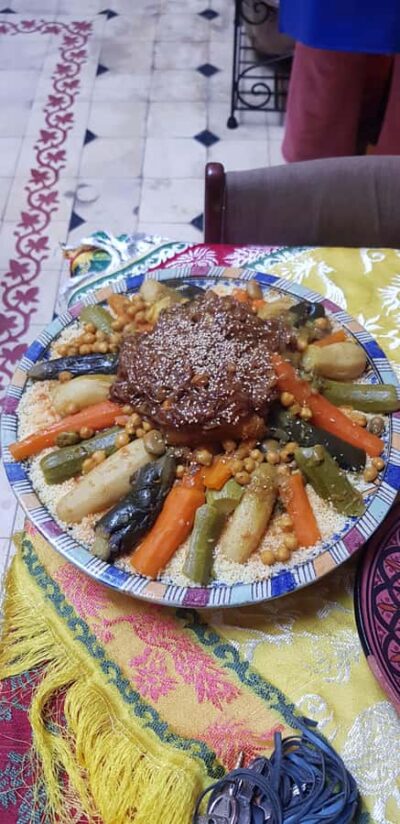
Browse the lists this tour appears in