
Reviewed · FOOD & DRINK
Cook Moroccan Food & Try on Traditional Clothes like a local
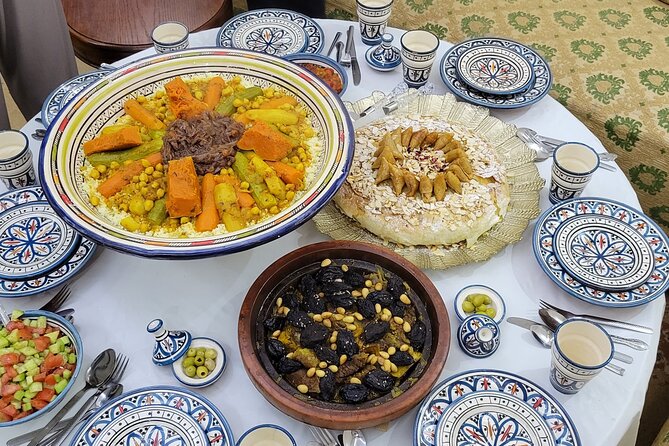
Come hungry, leave with a story. This four-hour private experience brings you into Wissal and her mother’s Casablanca home for hands-on cooking, family recipes, mint tea, local sweets, and a generous look at Moroccan customs. I especially like the mother-daughter format, which gives the class a personal link between generations, and the chance to wear caftans and takchitas adds something beyond the usual kitchen lesson.
The main consideration is that this takes place in a private home, not a restaurant kitchen or purpose-built cooking school. That is the reason it feels personal, but it also means you should arrive ready to respect a family space and accept a more home-style rhythm. The meeting point is listed at the angle of Boulevard Tah and Mohamed 6 in Casablanca, and the activity ends back there.
In This Review
- Key reasons this Casablanca experience works
- Arriving at a Casablanca family home
- Mint tea, cookies, and the first taste of Morocco
- Choosing dishes and cooking grandmother’s recipes
- Why the tagine gets so much attention
- Eating the meal you helped prepare
- Traditional caftans, takchitas, and family customs
- Conversation beyond the kitchen
- What $61.20 buys you
- Lunch or dinner, and who should book
- Practical details before you go
- Should you book this Casablanca cooking class?
- FAQ
- Where does the cooking experience take place?
- What is the meeting point?
- How long does the experience last?
- How much does it cost?
- Can I choose lunch or dinner?
- What Moroccan dishes might I prepare?
- Are vegetarian and vegan options available?
- Can I try traditional Moroccan clothing?
- Is this a private activity?
- Is cancellation allowed?
Key reasons this Casablanca experience works
- Family recipes from Wissal’s grandmother: You learn techniques and dishes connected to a real household tradition, not just a standard demonstration.
- Several dishes in one class: The menu can include tagine, couscous, pastilla, salads, mint tea, virgin mojitos, snacks, and cookies.
- A private setting: Only your group participates, so the pace and food choices can be adapted more easily.
- Traditional clothing included: You can try Moroccan caftans and takchitas and take memorable photographs.
- A welcoming introduction to Casablanca life: Conversation covers food, family, customs, Muslim culture, and everyday Moroccan living.
- Good value at $61.20 per person: Four hours of cooking, eating, drinks, cultural conversation, clothing, and a small local gift make this more than a simple meal.
Arriving at a Casablanca family home
The experience begins at the stated meeting point near Boulevard Tah and Mohamed 6. From there, you are welcomed into Wissal’s home, where the setting is part of the lesson. You are not simply seated at a counter and handed a recipe card. You see traditional Moroccan decoration and get a sense of how food and hospitality fit together in a family environment.
Several people have found it useful to ask Wissal about transportation before the class. She has arranged private taxis for some participants, including pickups from hotels and the cruise terminal. One arranged driver, Abdul, was described as punctual and English-speaking, with the fare known in advance. This transport help appears to be something Wissal may coordinate rather than a stated included feature, so ask before you rely on it.
The meeting information is fairly simple, but the home setting makes clear communication important. Confirm the pickup or meeting details, especially if you are arriving from a cruise ship or staying outside central Casablanca. The cruise terminal can involve a long walk before you reach the proper pickup area.
More food tours in Casablanca:
- Casablanca Food Tour – Moroccan Street Food Tour
★ 5.0 · 86 reviews - Casablanca Food Tour
★ 5.0 · 60 reviews - Night Tour of Casablanca with Street Food Tasting
★ 4.8 · 29 reviews
Mint tea, cookies, and the first taste of Morocco
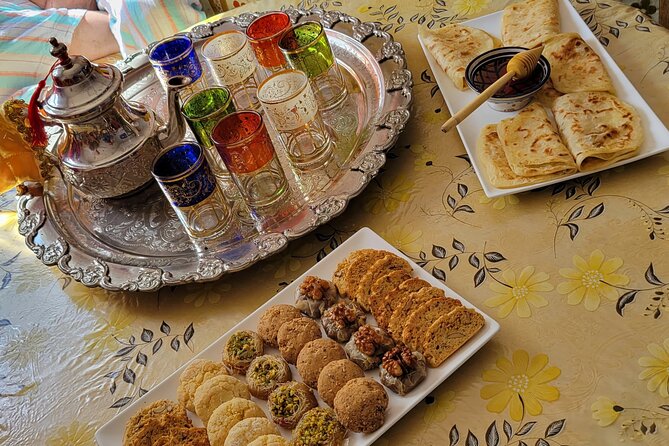
Your welcome starts with traditional mint tea and homemade Moroccan cookies. Depending on the menu and timing, you may also try Moroccan or Arabic coffee, pastries, and a small snack before cooking begins.
This opening matters because Moroccan hospitality is not an afterthought here. Tea gives you time to settle in, meet the family, and begin talking before knives and cutting boards appear. You can ask about spices, family meals, Moroccan customs, or the clothing you will try later.
The food at this point is also a useful preview of the class. Moroccan cooking is not just about a single spice blend. It often brings together herbs, preserved flavors, vegetables, meat, sweet notes, and careful cooking over time. The class gives you a chance to ask why ingredients are used, not merely copy a sequence of steps.
Choosing dishes and cooking grandmother’s recipes
After the welcome, you select from classic Moroccan dishes. The exact menu can be adapted, and Wissal has contacted people before the visit to ask about allergies, dietary preferences, and the food they would most like to learn.
Possible dishes include tagine, couscous, pastilla, local salads, and separate meat and vegetable preparations. Several detailed accounts describe making cucumber and tomato salad, a hot salad, chicken, two kinds of tagine, mint tea, and a virgin mojito. The supplied description also mentions couscous and pastilla, so your menu may differ depending on your choices and the schedule.
That flexibility is one of the best reasons to book a private class. A group focused on tagine can spend more time on that dish. Another group might prefer several smaller preparations. You should not assume every named dish appears at every session, so discuss your priorities with Wissal ahead of time.
Wissal teaches recipes passed down from her grandmother. That family connection gives the cooking a useful sense of place. You hear how knowledge moves from one generation to the next, while also learning practical methods you can repeat at home.
The class is hands-on. You participate in preparing the ingredients and dishes rather than watching the entire meal come together off to the side. The pace may feel less formal than a professional culinary school, but that is part of its appeal. You are cooking with a family, talking as you work, and learning through conversation.
Why the tagine gets so much attention
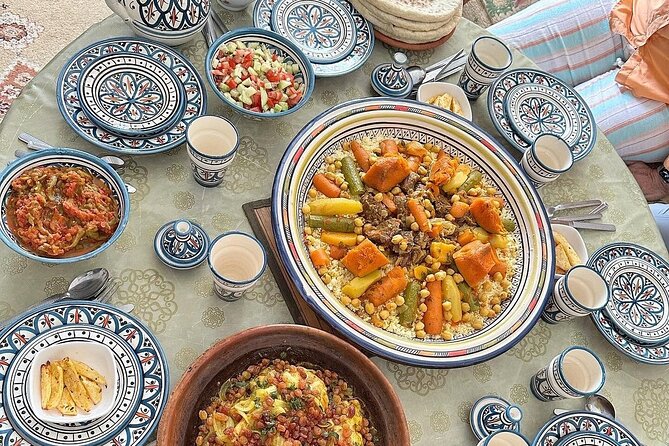
Tagine is the star for many people, and for good reason. The dish is both a meal and a cooking method, with ingredients slowly brought together in the familiar cone-shaped vessel. At this class, you learn a special family recipe and the steps behind it.
You can expect guidance on spices, vegetables, and preparation techniques. The details will depend on the dish you choose, but the aim is to show you how Moroccan cooks build flavor instead of simply presenting a finished tagine.
Several participants singled out the tagine as the best they had eaten during their time in Morocco. That praise should be understood in context: the food is made with fresh ingredients and served immediately after you help prepare it. You are also eating it in a family living room, after spending time with the people who made it. The setting adds to the taste.
If you are a vegetarian or vegan, mention it before arrival. The experience welcomes both, and the private format makes changes more practical. The same applies to allergies and strong dislikes. Do not wait until the cooking starts.
Same city gate, a very different afternoon:
- From Marrakech: Casablanca Tour with Hassan II Mosque Visit
★ 4.7 · 4,756 reviews - Casablanca: Hassan II Mosque Premium Tour with Entry Ticket
★ 4.5 · 2,971 reviews - Casablanca City Tour with Hassan II mosque ticket
★ 5.0 · 2,480 reviews - Casablanca: City Tour with Hassan II Mosque Entry Ticket
★ 4.6 · 1,137 reviews
Eating the meal you helped prepare
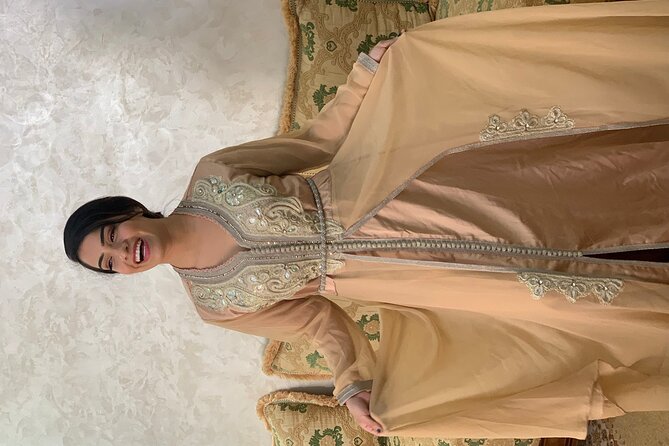
Once the cooking is finished, you sit down and eat the meal in the home. The meal can include the main dishes, local salads, drinks, mint tea, and cookies or other sweets.
This is not a quick tasting stop. The entire experience lasts about four hours, and the food is spread through the visit. You might begin with tea and snacks, prepare several dishes, then enjoy the finished meal with more conversation.
The menu can be broad. Accounts describe chicken tagine, vegetable tagine, salads, hot salad, Moroccan coffee, mint tea, virgin mojitos, pastries, and desserts. The original description also lists couscous and pastilla among the possible Moroccan classics. This variety makes the experience a better introduction to Moroccan food than a class focused on one dish alone.
The phrase come with an empty stomach is practical advice. With snacks, drinks, several preparations, and dessert, you will be eating for much of the four-hour visit. If you book a dinner session, plan to treat this as the evening’s main meal.
Traditional caftans, takchitas, and family customs
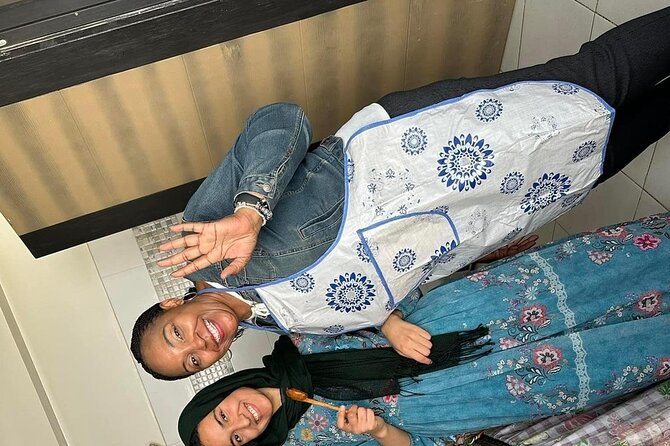
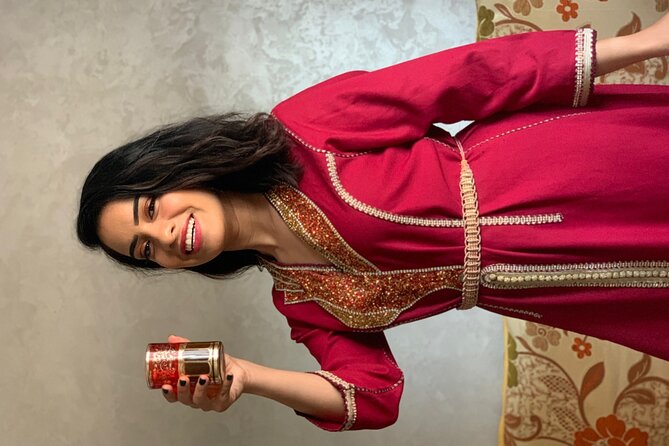
The clothing portion gives the class a second focus. You can try authentic Moroccan garments, including caftans and takchitas, while Wissal explains when these clothes are typically worn.
This is more useful than a quick costume photo. Moroccan clothing carries social and cultural meaning, especially for celebrations and formal occasions. Hearing that context helps you understand what you are wearing and why it matters.
The photographs are a natural part of the experience. If you enjoy taking pictures on a trip, allow time for several outfits or poses. The clothing can be especially appealing for couples, families, and solo visitors who want a personal memory of Casablanca that is not another city-square photograph.
Still, remember that this happens in someone’s home. Treat the garments carefully, ask before moving around or photographing family members, and follow Wissal’s lead. A thoughtful attitude makes this part more comfortable for everyone.
Conversation beyond the kitchen
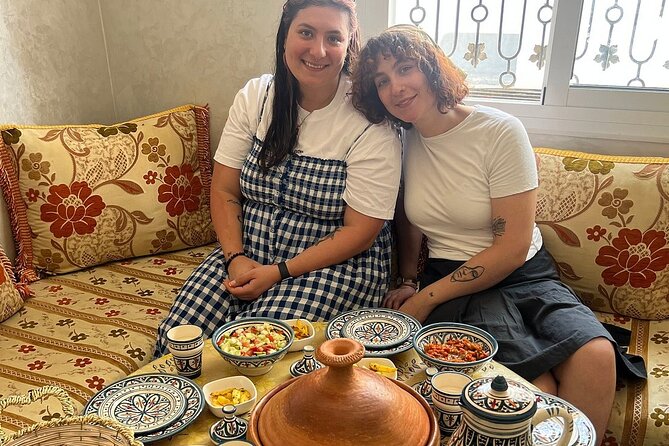
The strongest part of the experience may be the time spent talking. Wissal speaks good English and has discussed Moroccan life, family, food, Casablanca, Muslim culture, and everyday customs with people from many backgrounds.
You can meet members of her family, including her mother and, when present, younger siblings. The mother-daughter partnership gives you two views of Moroccan cooking and family tradition. One person may explain a modern detail while the other carries the older household knowledge.
The atmosphere can include music and dancing as well. One solo visitor described sharing Moroccan music and dancing with Wissal. That does not mean every session follows the same pattern, but it shows how personal the visit can become.
This suits you if you enjoy asking questions and making conversation. It may suit you less if you want a quiet, tightly timed cooking lesson with little social interaction. The class is built around hospitality, so talking is part of what you are paying for.
What $61.20 buys you
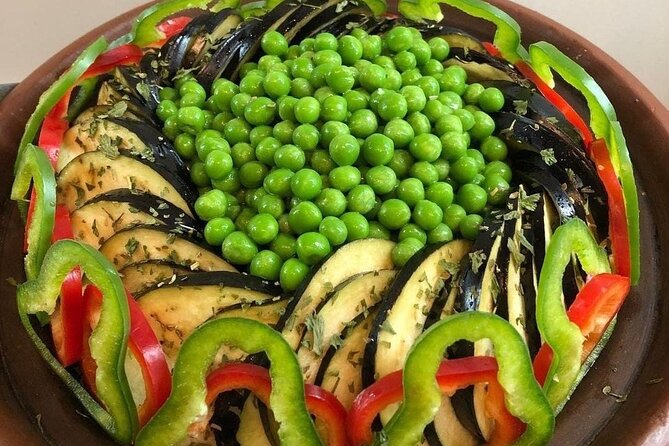
At $61.20 per person, the price is strong for a four-hour private activity. You are not paying only for instruction. The fee covers a meal, snacks, drinks, cultural discussion, access to traditional clothing, and a small local gift to take home.
The private arrangement matters most. Only your group participates, so the class can be adjusted for vegetarian or vegan food and shaped around the dishes you want to learn. A large group class may cost less, but it usually gives you less control and less personal conversation.
You also avoid paying separately for a restaurant meal after the class. If you count the cooking lesson, the food, the tea service, the clothing experience, and the time with a local family, the cost feels reasonable.
Transport is the one point to clarify. Taxi help has been arranged for some people, but transportation is not listed as an included feature. Ask Wissal about the best way to reach the home and the expected taxi cost before you go.
Lunch or dinner, and who should book
You can choose a lunch or dinner option. That simple choice makes the class easy to fit into a Casablanca itinerary, especially if you are using it as your first activity after arriving in Morocco.
A dinner session may work well for couples and solo visitors who want a relaxed evening. A lunch session gives you more room for sightseeing afterward. Since the activity lasts about four hours, avoid placing it immediately before another fixed appointment.
I would recommend it most strongly to:
- First-time visitors to Morocco who want food and cultural context together.
- Families, since the private setup can be more comfortable for children than a formal group class.
- Solo visitors who want a welcoming local connection.
- Vegetarian and vegan diners, provided dietary needs are arranged in advance.
- Home cooks who want recipes they can recreate after returning home.
- Cruise passengers, if they confirm the terminal pickup and return plan carefully.
You may prefer a market tour or restaurant-based class if shopping for ingredients is your main goal. This experience focuses on the home, the kitchen, family conversation, and eating together. It is not presented as a market visit.
Practical details before you go
Confirmation is provided at booking, and free cancellation is available up to 24 hours before the local start time. Changes or cancellations made within 24 hours are not accepted for a refund.
The activity lasts approximately four hours and uses a mobile ticket. Service animals are allowed, and the meeting point is near public transportation.
The most useful preparation is to contact Wissal before the day of the class. Tell her about allergies, dietary needs, preferred dishes, and transport questions. If you hope to cook tagine, couscous, or pastilla, say so early because the private menu can be adapted.
Wear something comfortable for cooking and choose clothing that allows you to try traditional garments without fuss. You do not need to arrive with culinary expertise. The point is to take part, ask questions, and enjoy the meal at the end.
Should you book this Casablanca cooking class?
Book it if you want a personal home visit with food at its center, not simply a cooking demonstration. The combination of grandmother’s recipes, several Moroccan dishes, tea and sweets, traditional clothing, family conversation, and a local gift gives you a full four-hour experience for a fair price.
I would be especially inclined to book it early in a Casablanca stay. It can help you understand Moroccan food and customs from the start, and the lunch or dinner choice makes scheduling easy. The activity is often booked well ahead, with an average booking time of 36 days in advance, so waiting until the last minute may limit your options.
Skip it if you dislike entering private homes, prefer a large professional kitchen, or want a market shopping tour. For everyone else, Wissal and her mother offer a warm, food-filled introduction to Casablanca that reaches well beyond the recipe.
FAQ
Where does the cooking experience take place?
It takes place in Wissal and her mother’s home in Casablanca, Morocco.
What is the meeting point?
The listed meeting point is at the angle of Boulevard Tah and Mohamed 6 in Casablanca. The activity ends back at the meeting point.
How long does the experience last?
The experience lasts approximately four hours.
How much does it cost?
The listed price is $61.20 per person.
Can I choose lunch or dinner?
Yes. The experience offers lunch and dinner options.
What Moroccan dishes might I prepare?
Possible dishes include tagine, couscous, pastilla, local salads, chicken, vegetable preparations, mint tea, and virgin mojitos. The menu can be discussed and adapted.
Are vegetarian and vegan options available?
Yes. Vegetarian and vegan participants are welcome, and dietary needs should be requested in advance.
Can I try traditional Moroccan clothing?
Yes. You can try traditional Moroccan clothes such as caftans and takchitas and take photographs.
Is this a private activity?
Yes. Only your group participates.
Is cancellation allowed?
Free cancellation is available if you cancel at least 24 hours before the experience start time. Cancellations or changes made less than 24 hours before the start time are not accepted for a refund.
Just listed around Casablanca
- Your Private Casablanca Transfer★ 5.0 · 52 reviews
- Casablanca Airport Transfer from hotel in Casablanca★ 5.0 · 18 reviews
- Exclusive tour of Casablanca with access to the Hassan II Mosque★ 5.0 · 205 reviews
- Amazing airport pickup/ drop off in Casablanca/ safe&easy★ 5.0 · 218 reviews
- Sunset Camel Ride in the Palm Grove Of Marrakech★ 5.0 · 34 reviews
- 14 Days From Casablanca- Morocco Grand Tour★ 5.0 · 24 reviews
- Private full day trip to chefchaouen from Casablanca with lunch★ 5.0 · 20 reviews
- Marrakeck City tour from Casablanca all the day around trip★ 5.0 · 35 reviews
Food & Drink, compared.

3-Day Tour to Merzouga Erg Chebbi with Food & Camel Trek
Read our review →
Authentic Moroccan Food Tour in Marrakech with Dinner
Read our review →
Browse the lists this tour appears in