
Reviewed · HISTORICAL TOURS
Discovery of Moroccan Culinary Heritage, History and Secrets
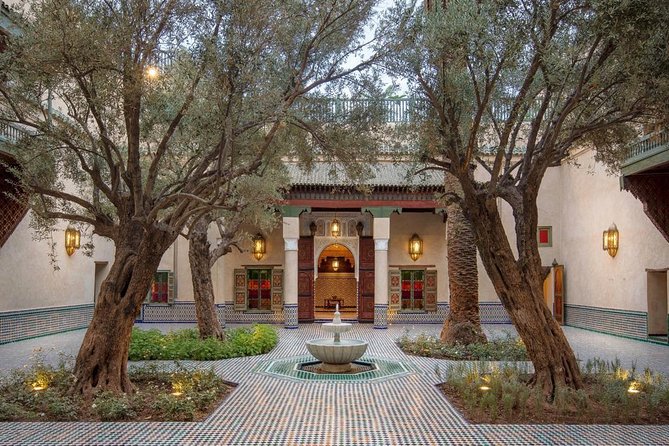
Food tells you a lot about Morocco. This experience puts that lesson on a plate, inside a restored riad near the Bahia Palace in Marrakech. You visit the Moroccan Culinary Arts Museum, learn from a traditional cook called a Dada, and prepare dishes such as tajine, couscous, salads, and dessert.
I especially like the hands-on kitchen, with 34 cooking stations and staff support, and the visit to a neighborhood bread oven and herbalist. Those details connect the meal to everyday Moroccan life, not just restaurant presentation. The main caution is that the advertised duration is about two hours, while the description also calls it a half-day class, so the actual pace may feel brisk.
The experience costs $69.79 per person and ends where it starts, at the museum on Rue Riad Zitoun el Jdid. It suits food lovers, families, and curious first-time visitors to Marrakech. If you want a long, relaxed cooking workshop, confirm the timing and teaching language before booking.
In This Review
- Key Points Before You Book
- Arriving at the Culinary Arts Museum
- What the Museum Adds to the Meal
- Bread Oven and Herbalist Visit
- Cooking With a Traditional Dada
- Eating What You Prepare
- Is $69.79 a Fair Price?
- Timing, Language, and Group Size
- Who Should Book This Experience?
- Booking Advice and Cancellation
- Should You Book the Moroccan Culinary Arts Museum Class?
- FAQ
- Where does the cooking experience start and end?
- How long does the experience last?
- Is the class available in English?
- What food activities are included?
- Is wine included in the price?
- Can I cancel for a full refund?
Key Points Before You Book
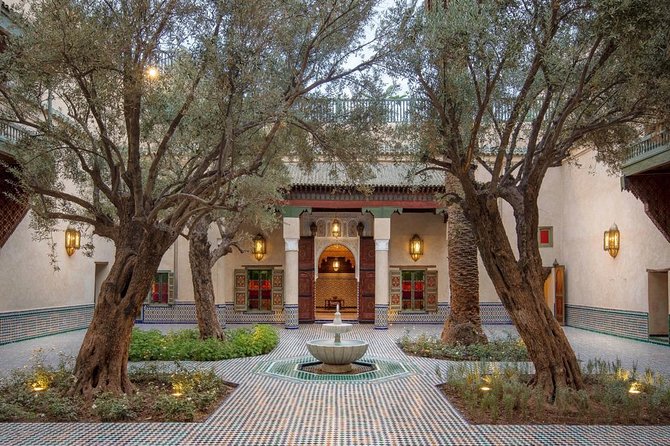
- A restored riad near Bahia Palace: The cooking museum occupies a striking traditional building with courtyards, display rooms, and a terrace.
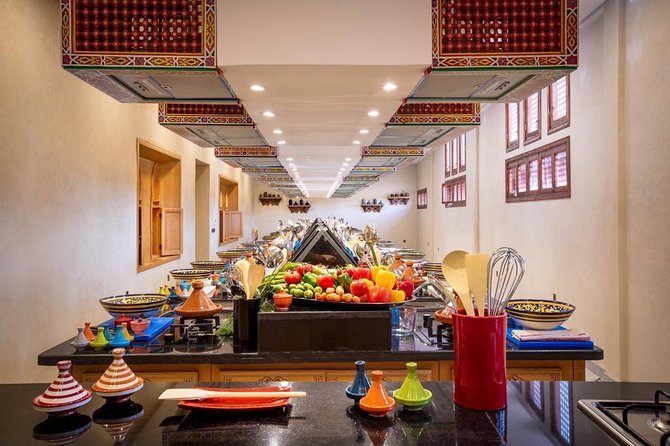
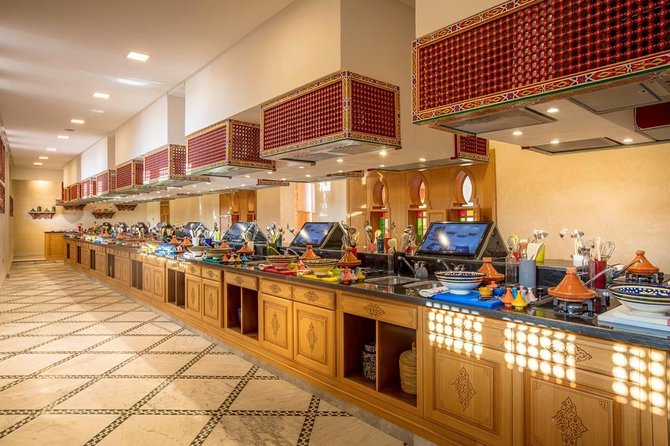
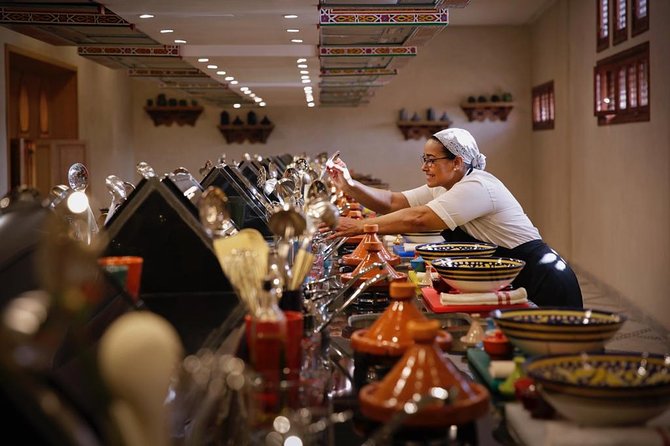
- 34 individual kitchen stations: The teaching kitchen is designed for practical participation rather than simply watching a chef work.
- Bread, spices, and neighborhood food culture: The program includes a bread-making demonstration, a visit to a bread oven, and a stop with a local herbalist.
- A Dada leads the cooking: This traditional Moroccan cook demonstrates how to balance spices, prepare bread, and handle classic dishes.
- Tea and a full tasting: You eat the food prepared during class, with bottled water and coffee or tea listed as included.
- Optional Moroccan wine discovery: Wine may be available with the meal, but alcoholic drinks are not included in the base price.
Arriving at the Culinary Arts Museum
You begin at the Moroccan Culinary Arts Museum on Rue Riad Zitoun el Jdid, in the southern part of Marrakech’s medina. The address places you just a few meters from the Bahia Palace, so it is well positioned for a day in the historic center.
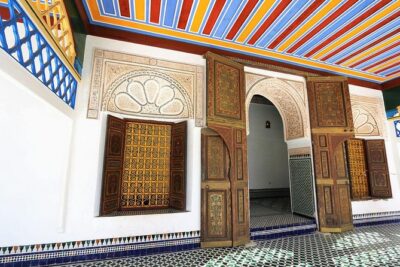
The entrance leads into a traditional riad, a house built around an open courtyard. The setting is one of the strongest parts of the experience. The building has the decorative character you hope for in this part of Marrakech, yet the museum and kitchen are arranged for visitors rather than left as a simple historic shell.
At reception, you receive an introduction to the class and the museum. French or English interpretation is provided according to the booking, though language should be confirmed in advance. One account specifically praised a host named Younes for a warm welcome and clear help. Yasmina, identified as the museum’s general manager, has also been involved in welcoming visitors.
The first moments matter because Moroccan food has a vocabulary of its own. Tajine is both a dish and the cone-shaped cooking vessel. Tangia is different, using a round urn and a slow cooking method. Pastilla combines delicate pastry with a savory filling and sweet-spiced flavors. A short introduction helps you place these dishes before you start chopping or seasoning.
A few more Morocco runs to hold up against each other
- Marrakech Historical and Cultural Tour – Half Day City Tour
★ 4.5 · 1,180 reviews - Fez: Guided Walking Tour of the Historic Medina
★ 5.0 · 359 reviews - Full-day Historical Meknes Volubilis and Moulay Idriss Tour
★ 4.5 · 196 reviews
What the Museum Adds to the Meal
The museum is not simply a waiting room for the cooking class. Its displays explain Moroccan food, cooking methods, serving customs, ingredients, and the history behind the country’s cuisine.
You might see photographs, short videos, utensils, table settings, and demonstrations of food preparation. The museum also explains the way meals are served and the role of bread, tea, spices, and shared dishes. Some displays are more modest than others, so visitors expecting a large national museum may find the exhibition fairly quick to explore.
That is not necessarily a weakness. I see the museum as useful background rather than the main event. It gives you a framework for understanding what comes next. You can learn why a tagine is cooked slowly, how Moroccan bread fits into daily meals, and why herbs and spice mixtures are treated with such care.
The building itself may hold your attention longer than some of the displays. The courtyard and restored rooms provide a calm pause from the crowded lanes near major Marrakech sights. Several accounts describe the museum as quiet and clean, which makes it a good place to slow down after the noise around Bahia Palace.
If you have only a short time, the museum portion will not overwhelm your schedule. If you want detailed written material to take home, the displays may leave you wishing for a guidebook or recipe book. The cooking class supplies the practical part that the museum alone cannot.
Bread Oven and Herbalist Visit
Bread is a central part of Moroccan meals, and this experience gives it more attention than many standard food tours. You watch a demonstration of Moroccan bread making, then visit the bread oven and the herbalist in the district.
The bakery stop helps explain where the food begins. Instead of treating bread as a small item placed beside lunch, the class connects it to neighborhood routines and local food production. You see the setting where bread is baked and learn where some of the spices and herbs come from.
The herbalist visit is also useful for anyone who has wondered what sits inside a Moroccan spice market. You are introduced to ingredients from different Moroccan regions and learn how herbs and spices shape the country’s cooking. The focus is not only on heat. Moroccan seasoning often depends on proportion, fragrance, sweetness, acidity, and slow cooking.
This is where the Dada’s instruction becomes important. A good Moroccan dish is not simply a matter of adding every spice on the shelf. The class focuses on dosing, meaning how much of each ingredient to use and when to add it. That practical judgment is hard to pick up from a recipe alone.
The neighborhood visit may be brief, especially if the class is operating on the shorter two-hour schedule. Still, it adds a sense of place that a kitchen demonstration inside the museum could not provide.
Cooking With a Traditional Dada
The central part of the experience takes place in the teaching kitchen. There are 34 stations, so the room is built for instruction and participation. You are not expected to stand at the back and watch someone else do all the work.
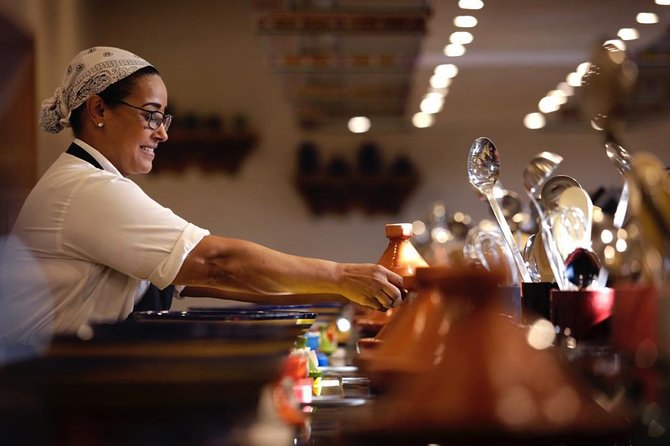
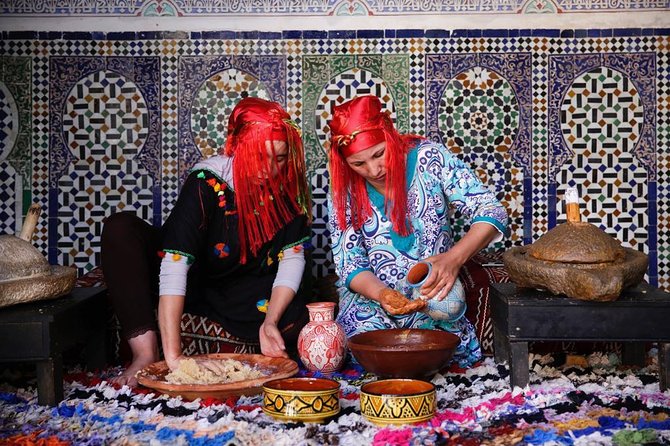
A Dada, the traditional Moroccan term for a household cook, leads the class. She demonstrates techniques for bread, spice mixing, cooking, and baking, while support staff help with instructions and practical tasks. Previous participants have described the kitchen as professional and well organized, with clear explanations and enough assistance for beginners.
The class may cover three courses. Dishes described in connection with the experience include two Moroccan salads, a chicken tajine, couscous, and dessert. The exact menu can vary, so do not assume every dish will appear in every session. The important point is that you work through several parts of a Moroccan meal, rather than preparing one single recipe.
The salads are a good teaching choice because they show how vegetables can be seasoned and cooked in different ways. A tajine demonstrates the slow, layered approach that many people associate with Moroccan food. Couscous introduces another essential part of the cuisine, while dessert gives the meal a sweet finish.
Expect practical help. One family class included a 12-year-old granddaughter, and another account described verbal and hands-on assistance from the teacher and helpers. That suggests the class can work well for beginners and older children, provided they are comfortable following instructions in a group setting.
The group limit is 34 people. That is a reasonable size for a purpose-built kitchen, though it is not an intimate private lesson. If you prefer one-on-one attention or a quiet chef’s table, this may feel busy. The individual stations help offset that drawback by giving participants their own work area.
Same city gate, a very different afternoon:
- Marrakech: Agafay Desert Sunset, Camel Ride, and Dinner Show
★ 4.6 · 35,119 reviews - From Marrakech: Ouzoud Waterfalls Guided Hike and Boat Trip
★ 4.7 · 33,630 reviews - Marrakech: Agafay Desert Quad & Camel Rides with Dinner Show
★ 4.8 · 27,382 reviews - Marrakech: Agafay Desert Quad Biking Tour with Dinner-Show
★ 4.8 · 16,569 reviews
Eating What You Prepare
After the cooking, you eat the dishes you have made. This is the payoff, but it is also part of the lesson. You can taste how the spice balance changes during cooking and compare the finished dishes with what you may have ordered in Marrakech restaurants.
Lunch is included, along with bottled water and coffee or tea according to the stated inclusions. The program also includes a Moroccan tea ceremony, an important cultural moment rather than a quick drink at the end.
Tea preparation is presented with care in Morocco. The pouring, serving, and hospitality around it help explain why tea is offered so often in homes, shops, and riads. Even if you have already had mint tea several times, seeing it as part of the class gives it more meaning.
The meal is served on the terrace when conditions allow, adding a pleasant change from the kitchen. Moroccan wines can be discovered with the meal as an optional extra. Alcoholic beverages are not included in the advertised price, so check the cost before ordering wine.
There is one practical point worth watching. The inclusions list coffee and tea, but one participant reported that tea or coffee was not offered and that bottled water required an extra payment. This may reflect a service issue or a difference in the session, but I would confirm what is covered when you arrive. The base price should not be treated as including wine.
Is $69.79 a Fair Price?
At $69.79 per person, this is not the cheapest food activity in Marrakech. You can eat a simple local meal for far less. The value here comes from combining several parts: museum admission, a guided introduction, bread making, a neighborhood food visit, hands-on cooking, tea, and lunch.
The purpose-built kitchen is important. You are paying for instruction, equipment, ingredients, staff support, and a meal that you help prepare. If you only want to taste Moroccan food, a museum tasting ticket or a restaurant meal may cost less and take less time.
If you want to understand how the dishes are made, the price becomes easier to justify. The experience gives you methods you can repeat at home, especially the handling of spices and the structure of a Moroccan meal. You also get a better sense of why certain ingredients appear together.
The value is strongest for people who enjoy doing, not just seeing. Couples, families with food-curious children, and visitors who want a cultural activity away from the busiest palace interiors should consider it. It is less useful for someone who already knows Moroccan cooking well or wants a market-to-table tour with extensive shopping.
The rating attached to the experience is 4.6 out of 5 from 48 ratings, which supports the view that the overall service is strong. Still, the mixed comments about language, water, and refreshments are worth taking seriously.
Timing, Language, and Group Size
The advertised duration is approximately two hours. The description also refers to a half-day cooking class, so the timing is not perfectly clear. A museum visit, bread demonstration, neighborhood stops, cooking, tea ceremony, and lunch can make for a full schedule in two hours.
I would plan this as a compact experience unless the operator confirms a longer session. Do not place it immediately before a fixed airport transfer or another booking across town.
The class is offered with French or English interpretation. Because one person booked English but received French instruction, confirm the language at the time of booking and again at reception if needed. This is especially important if you are relying on spoken explanations to follow the recipes.
The maximum group size is 34. That sounds large, but the 34 kitchen stations are designed to match that capacity. The format is organized for teaching, not for a private family kitchen. Children may enjoy the practical work, but an adult should help younger participants follow the steps.
The museum is near public transportation. The activity begins and ends at the Moroccan Culinary Arts Museum, so you do not need to arrange a separate transfer between the class and the meal.
Who Should Book This Experience?
I would recommend it to you if Moroccan food is one of the reasons you came to Marrakech. It gives you a useful mix of culture, cooking, architecture, and eating without requiring advanced kitchen skills.
It also works well if you have already visited Bahia Palace and want something close by but quieter. The riad provides a welcome break from the medina’s noise, and the museum helps you understand the food you will see elsewhere in Morocco.
Families can benefit from the hands-on format. The class has welcomed a 12-year-old participant, and the kitchen support should make the work manageable for beginners. Still, the group setting means you should not expect a custom lesson for each child.
I would hesitate if your main goal is an in-depth museum visit. The displays are useful and well presented, but some visitors find them less impressive than the building itself. I would also hesitate if you require guaranteed English instruction and do not confirm it ahead of time.
The experience may not suit anyone avoiding alcohol concerns, either. Wine is optional and not included, but make your preferences clear so the meal remains comfortable.
Booking Advice and Cancellation
You receive confirmation when booking unless you reserve within one day of the activity. Last-minute bookings are confirmed as soon as possible, subject to availability.
Free cancellation is available up to 24 hours before the start time for a full refund. Cancellations or changes made within 24 hours are not refunded or accepted. The deadline follows local Marrakech time.
Because cooking sessions can fill up, booking ahead is sensible, especially if you want a particular language. One person arrived hoping to join the cooking class but found it fully booked. The museum itself may still be available separately, but that is not the same experience.
Should You Book the Moroccan Culinary Arts Museum Class?
Book it if you want to cook, not simply watch. The best parts are the working kitchen, the Dada’s spice guidance, the bread and herbalist visits, and the chance to eat your own tajine, salads, couscous, or dessert in a beautiful riad.
Keep your expectations practical. The class may be shorter than the phrase half-day suggests, the museum displays are not the main reason to come, and you should confirm English instruction and included refreshments. At $69.79, it is a fair choice for a hands-on cultural meal, but less attractive if you only want a quick museum visit or an inexpensive lunch.
FAQ
Where does the cooking experience start and end?
It starts and ends at the Moroccan Culinary Arts Museum on Rue Riad Zitoun el Jdid, Marrakesh 40000, Morocco.
How long does the experience last?
The stated duration is approximately two hours. The description also refers to a half-day cooking class, so you should confirm the expected timing before booking.
Is the class available in English?
French or English interpretation is offered. Since language arrangements may vary, confirm that your session will be conducted in English if that is important to you.
What food activities are included?
The program includes a Moroccan bread demonstration, a visit to a bread oven and neighborhood herbalist, a cooking class with a Dada, a Moroccan tea ceremony, and tasting of the dishes prepared during class.
Is wine included in the price?
No. Moroccan wine discovery is optional, and alcoholic beverages are not included.
Can I cancel for a full refund?
Yes. You can cancel at least 24 hours before the experience start time for a full refund. Cancellations and changes made less than 24 hours before the start time are not accepted or refunded.
Just listed around Morocco
- 3 Days To Merzouga Desert★ 5.0 · 19 reviews
- 3 Days Shared Sahara Desert Tour From Marrakech★ 5.0 · 78 reviews
- 1 night Camel Treking in Merzouga Desert Luxury Camp★ 5.0 · 132 reviews
- 3 Days Sahara Desert Trips From Marrakesh★ 5.0 · 176 reviews
- 3 Days Sahara Tour from Marrakech to Merzouga Dunes★ 5.0 · 29 reviews
- 3 Days Private Tour to Merzouga Desert from Marrakech★ 5.0 · 77 reviews
- trip of your dreams in 3 days and 2 nights in the desert★ 5.0 · 36 reviews
- 3 Day Sahara Desert Tour From Marrakech★ 5.0 · 49 reviews
Historical Tours, compared.
Marrakech Historical and Cultural Tour – Half Day City Tour
Read our review →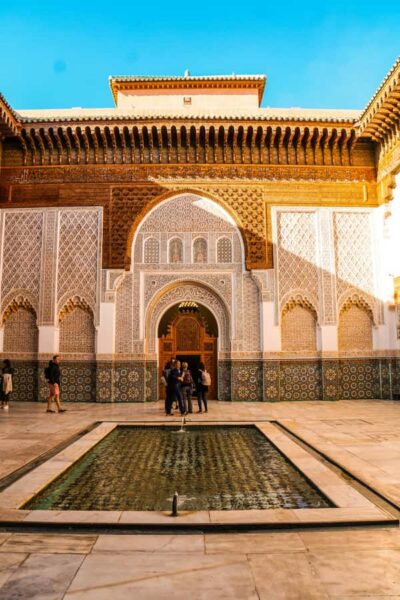
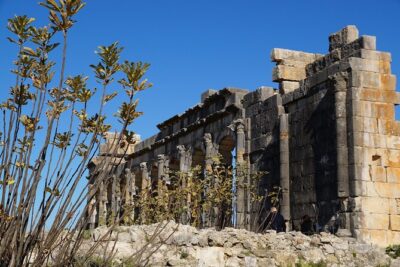
Full-day Historical Meknes Volubilis and Moulay Idriss Tour
Read our review →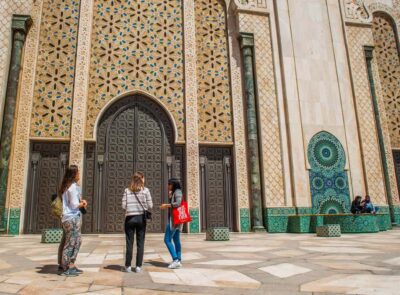
Casablanca Cultural Tour: Medina, Views & Local Delights
Read our review →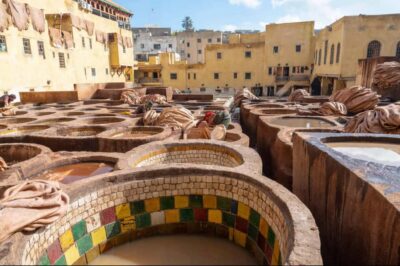
Casablanca to Fez: Scenic & Historical Day Trip with Lunch
Read our review →
A Guided Walking Tour Through the Historic Medina
Read our review →
Discover the secrets of the Medina of Fez: guided cultural tour (private)
Read our review →Browse the lists this tour appears in