
Reviewed · FOOD & DRINK
Marrakech: Local Food Tasting Tour with a Guide
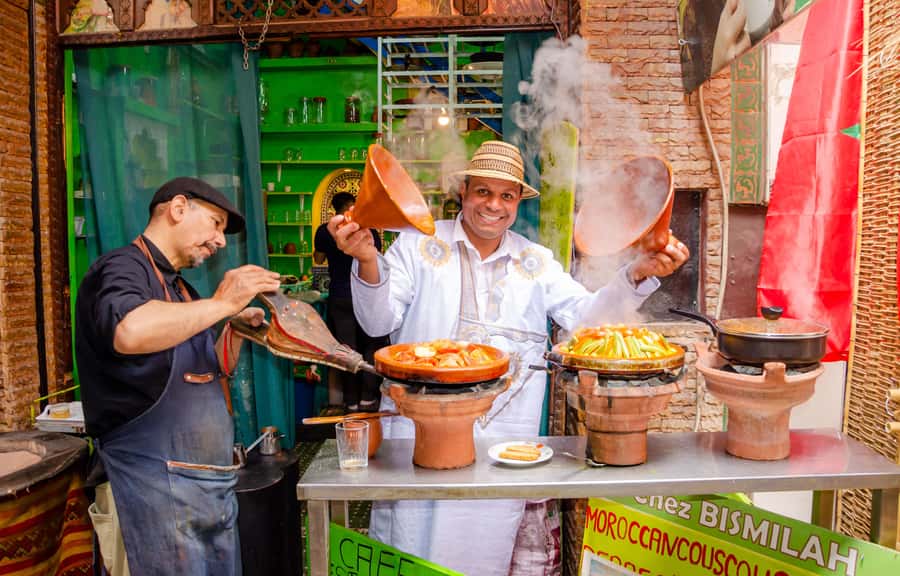
Come hungry, leave happily stuffed. This three-and-a-half-hour food walk takes you through Marrakech’s medina, Mellah, and local eating spots while a guide explains what is on your plate and why it matters. I like the focus on food that locals actually eat, especially specialties such as tanjia, msemen, harira, Moroccan barbecue, and steamed sheep’s head.
I also like the small group limit of eight, which should make it easier to ask questions and keep up in narrow medina lanes. Guides named Mohamed, Muhammad, and Mehdi have received especially warm praise for their friendly approach and for steering people away from the most tourist-focused places. The main consideration is the amount of food: one participant said they were full after the first few tastings, so do not eat a large meal beforehand.
In This Review
- Key points to know before booking
- Starting at Argana Cafe in Jemaa el-Fnaa
- Msemen, harira, dates, and chebakia
- Makkla bel Kefta and Moroccan doughnuts
- The wood-fired farnatchi and smoky tanjia
- Shwa barbecue and the bolder dishes
- Panache, orange juice, and khodnjal
- Through the Mellah and Marrakech Medina
- What the guide adds to the meal
- Is $45 a fair price?
- Who should book this food walk?
- Booking and practical tips
- Should you book this Marrakech food tour?
- FAQ
- Where does the Marrakech food tour begin?
- How long does the experience last?
- How many people can join the group?
- What languages does the guide speak?
- Are vegetarian options available?
- Is transportation included?
Key points to know before booking
- Ten or more food and drink tastings: Expect a full progression of Moroccan dishes, sweets, fruit drinks, tea, and herbal infusions.
- Local eating spots in the medina: The route includes places you might not feel confident choosing on your own.
- A guide who explains the culture: Mohamed and other guides have been praised for discussing Moroccan customs alongside the food.
- A small group of up to eight: This is a better setup for questions, food explanations, and moving through tight streets.
- A serious appetite is useful: The tasting list includes several filling dishes, not just little samples.
- Mellah and old-city walking: The food is the main event, but the route also gives you a look at two important parts of Marrakech.
Starting at Argana Cafe in Jemaa el-Fnaa
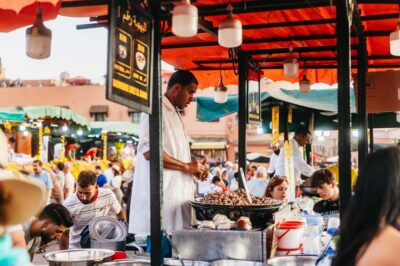
The meeting point is in Jemaa el-Fnaa Square, in front of Argana Cafe. That is a practical place to begin because the square is one of the easiest landmarks to find in central Marrakech, but it can also be crowded and confusing.
Give yourself enough time to locate the cafe and guide. The activity does not include transportation to the meeting point, so you need to make your own way there. Once the guide arrives, the group stays together until returning to Argana.
The tour lasts 210 minutes, or three and a half hours. That is longer than a quick market snack walk and long enough for a proper food-focused route. You will be walking through the medina for much of the experience, so comfortable shoes matter more than stylish ones.
The group is limited to eight people. That size has real value here. A guide can explain a dish without shouting, stop at small food counters without taking over the room, and notice if someone needs a vegetarian alternative or a slower pace.
The tour is offered in English and French. When booking, it is sensible to confirm the guide language you want, especially if both languages are being used that day.
More Food Tours in Marrakech
- From Marrakech: Merzouga 3-Day Desert Safari with Food
★ 4.7 · 12,232 reviews - Marrakech: Street Food Tour with a Local Guide
★ 4.9 · 3,119 reviews - Marrakech: Street Food Tour by Night
★ 4.8 · 2,838 reviews
Msemen, harira, dates, and chebakia
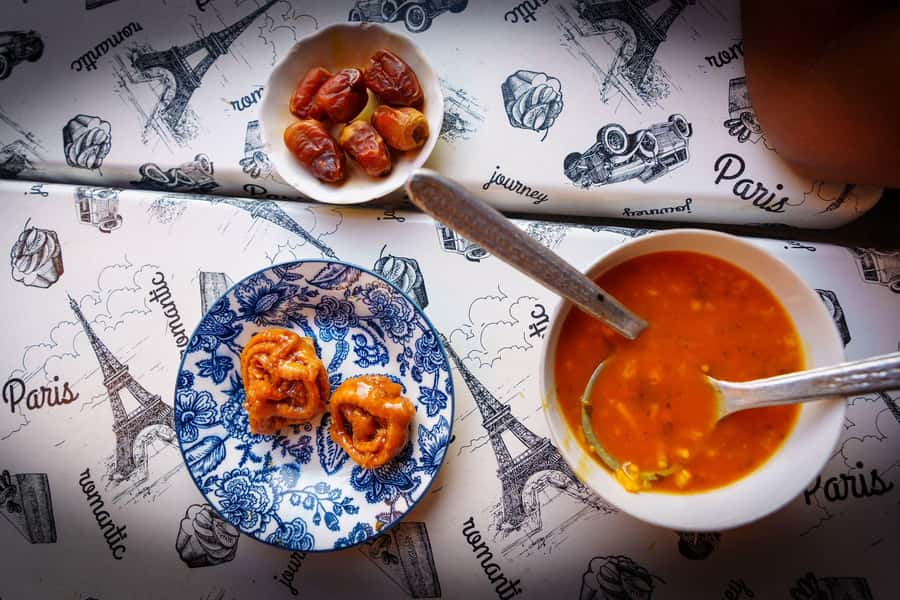
The first food stops introduce some familiar Moroccan basics. Msemen is a folded Moroccan flatbread, here served with tomato sauce, onion, coriander, and spices. It is filling, savory, and a good reminder that Moroccan street food is not limited to tagine and couscous.
You will also try harira, the classic Moroccan soup, served with dates and chebakia. Harira is closely associated with Moroccan home cooking and is often enjoyed during Ramadan, while chebakia is a sweet, sesame-covered pastry with a sticky, spiced finish.
This early part of the tour gives you useful reference points. Later dishes can be intense or unfamiliar, but harira, bread, dates, and pastries help you understand the range of Moroccan flavors before the heavier stops arrive.
Vegetarian options are available. The supplied details do not specify exactly which dishes can be substituted, so tell the guide about your needs at the start rather than waiting until you reach each stop.
Makkla bel Kefta and Moroccan doughnuts
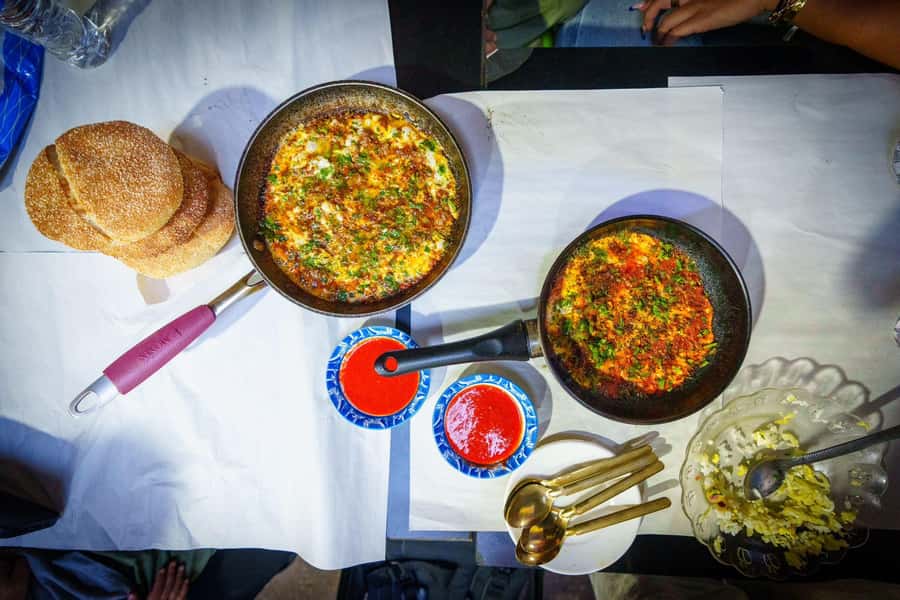
Makkla bel kefta is another stop on the food route. The name refers to a kefta-based Moroccan dish, generally built around seasoned minced meat, though the exact preparation may vary at the restaurant or stall.
This is where having a local guide is useful. A guide can identify the dish, explain its ingredients, and help you understand how it fits into everyday Moroccan cooking. You are not simply being handed food without context.
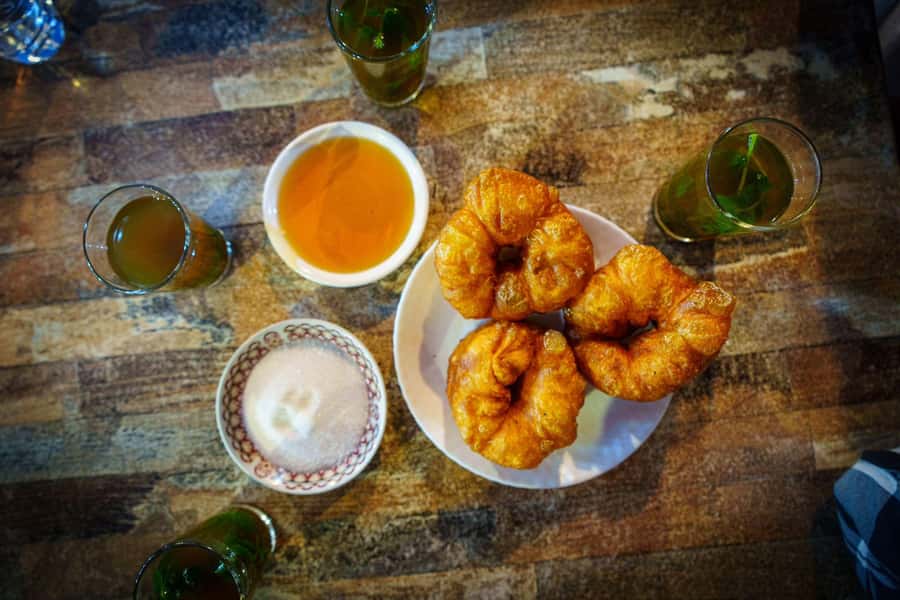
Sfenj comes next, a Moroccan doughnut with a light, airy texture. It is the sort of simple street food that can be easy to miss if you only eat in formal restaurants. It also adds a sweet and fried note to a route that includes soup, bread, meat, fruit, and herbal drinks.
The portions are tastings, but there are many of them. The food is not decorative sampling. You should expect enough to make a full meal, and possibly more than one meal if you are not used to large breakfasts or lunches.
The wood-fired farnatchi and smoky tanjia
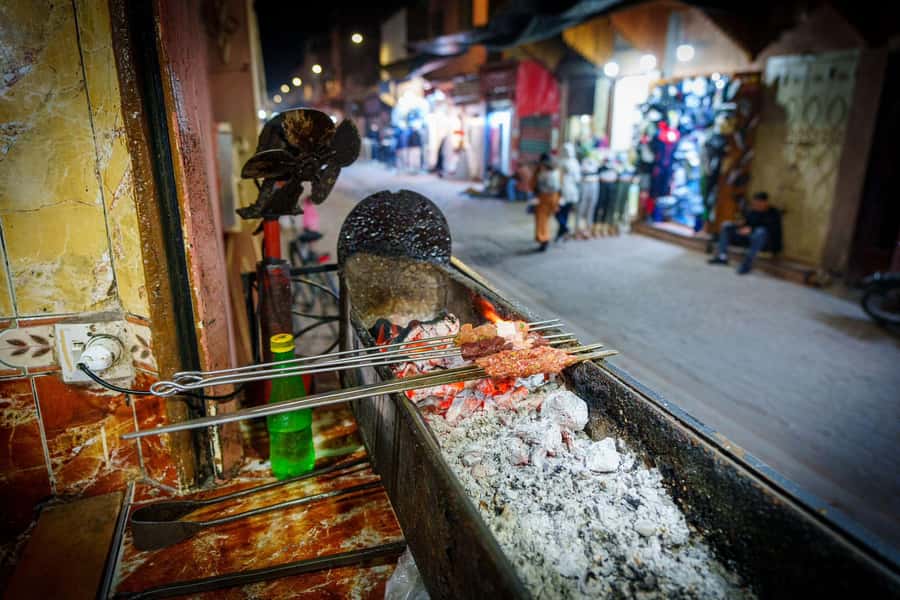
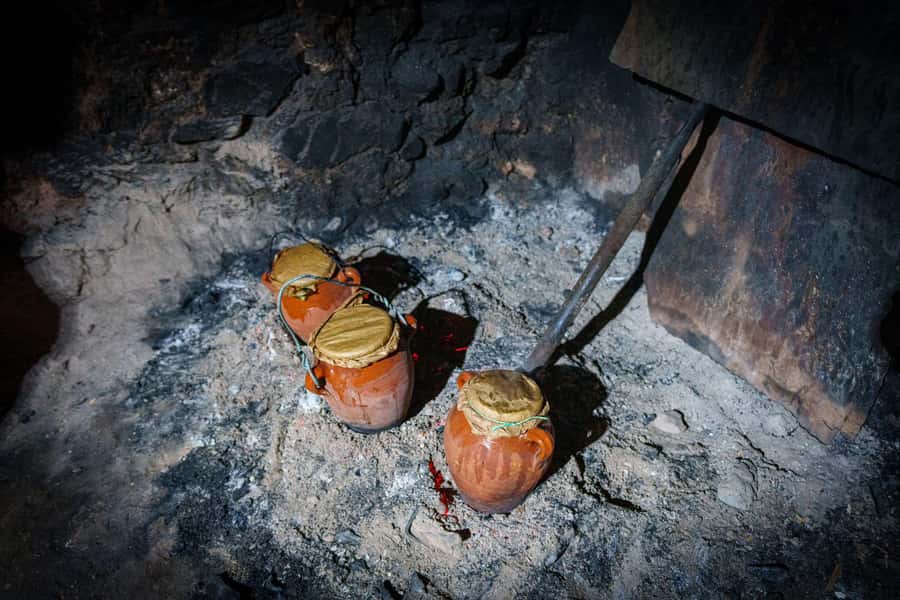
One of the more unusual stops is the visit to a farnatchi, a traditional wood-fire oven and heating space. Here, the same kind of heat used for a hammam is also used to cook tanjia.
Tanjia is a Moroccan clay-pot dish cooked slowly and flavored by smoky heat. It is closely associated with Marrakech, which makes this stop more than another meat tasting. You get a look at an old cooking method and the practical relationship between public ovens, neighborhood life, and local food.
This is likely to be one of the most memorable parts of the route for anyone interested in how food is made. It also adds variety to the day. You are not only moving from one plate to another, you are seeing the place and process behind a dish.
The information provided does not promise a full kitchen demonstration or a chance to handle the cooking pot. Think of it as a visit and explanation connected to the food, rather than a cooking class.
Same city gate, a very different afternoon:
- Marrakech: Agafay Desert Sunset, Camel Ride, and Dinner Show
★ 4.6 · 35,119 reviews - From Marrakech: Ouzoud Waterfalls Guided Hike and Boat Trip
★ 4.7 · 33,630 reviews - Marrakech: Agafay Desert Quad & Camel Rides with Dinner Show
★ 4.8 · 27,382 reviews - Marrakech: Agafay Desert Quad Biking Tour with Dinner-Show
★ 4.8 · 16,569 reviews
Shwa barbecue and the bolder dishes
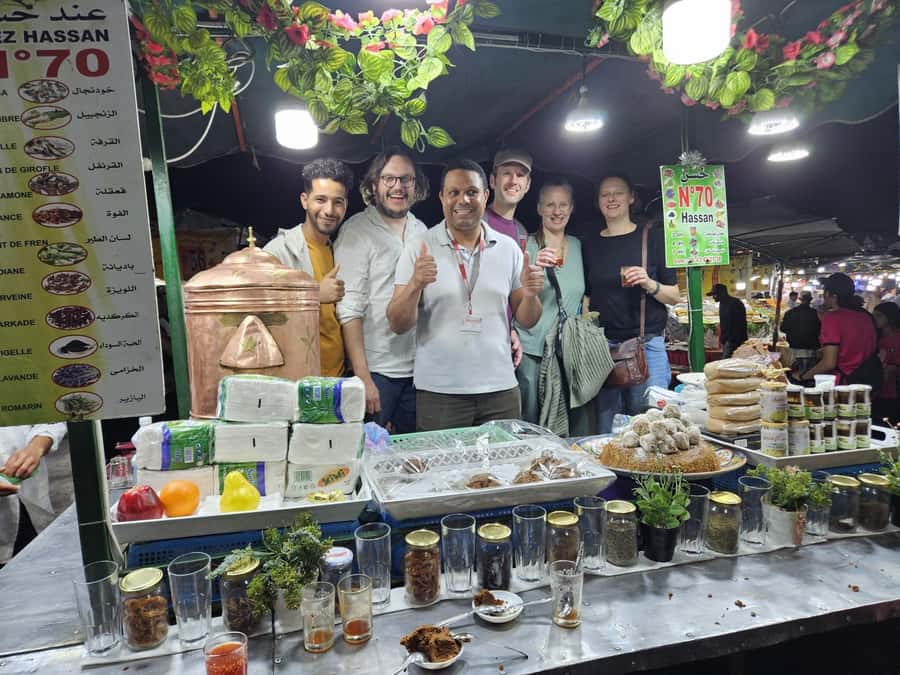
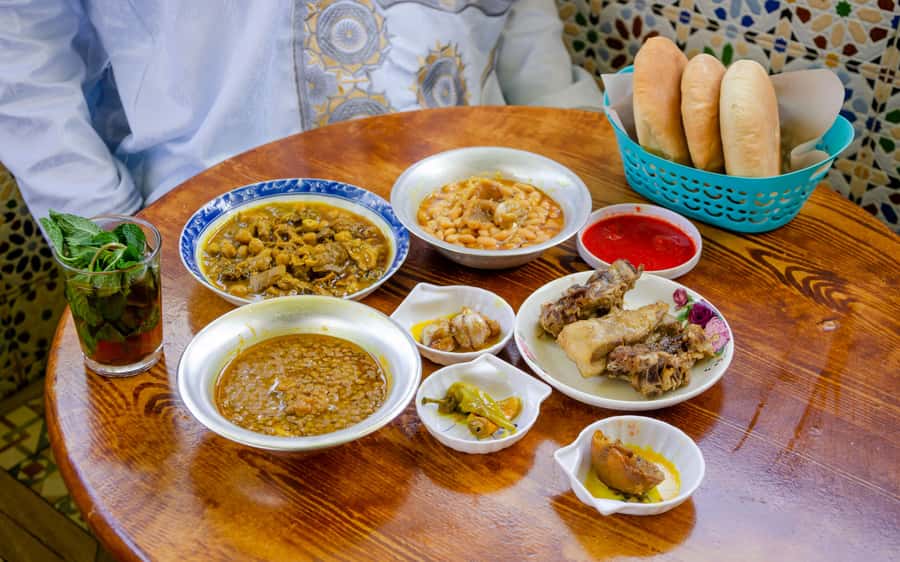
The route includes shwa, Moroccan barbecue, with beef, turkey, and liver. This gives you a chance to compare different meats prepared in a direct, smoky style.
Then comes Rass Lmbkher, steamed sheep’s head served with cumin. This is the most adventurous item on the list and the one most likely to divide appetites. If you enjoy traditional nose-to-tail cooking, it offers a genuine look at local eating habits. If you prefer familiar cuts, you may want to ask the guide what portion is being served and how much you need to try.
The guide’s role is important here. You can ask questions without having to guess what you are ordering at a busy counter. You can also explain dietary limits clearly. The tour is designed around tasting, not forcing anyone to eat something they cannot manage.
Alcohol is not included, and alcohol and drugs are not allowed. That fits the character of the experience, which is centered on Moroccan food, tea, juice, and nonalcoholic drinks.
Panache, orange juice, and khodnjal
After several savory and sweet dishes, the route offers a refreshing break. Panache is a smoothie made with seasonal fruit blended with milk or an orange juice base. Orange juice is also available as an option.
This is a welcome change in texture and flavor, especially after barbecue and fried food. Because the fruit changes with the season, the exact taste of the drink may vary.
You will also try khodnjal, a hot herbal infusion made with ingredients such as eucalyptus. It is described as soothing and useful for clearing the senses and aiding digestion. Whether you love herbal drinks or find them medicinal, it is a good example of the way food and traditional wellness often overlap in Moroccan daily life.
Local sweets and tea are included as well. I appreciate that the drink stops are not treated as an afterthought. Moroccan tea culture is part of the meal, and a food tour feels incomplete without tea or another local infusion.
Through the Mellah and Marrakech Medina
The route includes a stop in the Mellah, the historic Jewish quarter of Marrakech, with about 20 minutes set aside for a visit. You also spend time in the broader medina, including a shorter visit and a longer guided walk.
The food gives the route its purpose, but these neighborhood stops help place the dishes in their city setting. You are moving through old streets and local areas rather than remaining inside a single market hall or restaurant.
A listed stop includes about 30 minutes at a local restaurant, with time for a visit, walking, and photographs. The full medina walk takes about two hours when combined with the other stops. That makes this an active tour, not a sit-down tasting with a few steps between tables.
Marrakech’s medina has narrow lanes, uneven walking surfaces, and plenty of activity. The supplied information calls the tour wheelchair accessible in one section but also lists it as not suitable for wheelchair users. That is a clear contradiction. Anyone using a wheelchair should contact the provider before booking and ask about the exact route, street conditions, and vehicle-free sections.
Sun protection is wise. Bring a hat, sunscreen, and a camera, but keep your hands free enough to walk comfortably and sample food. You may also want water, although the tour includes several drinks.
What the guide adds to the meal
The strongest part of this experience is not simply the number of dishes. It is the help you get in finding and understanding them.
A guide can take you to local tables that you might pass without noticing. Several people specifically praised guides for showing them areas they would not have found alone and for avoiding the most tourist-focused places. That matters in Marrakech, where an unfamiliar food stall can look either exciting or risky depending on your confidence and local knowledge.
Muhammad was praised for staying with the group from beginning to end, explaining Moroccan culture, and creating a relaxed atmosphere. Mohamed received similar praise for his warmth and attention to everyone in the group. Another highly rated visit was led by Mehdi.
The guide names may vary by date, so you should not book solely on the expectation of one particular person. Still, the consistent pattern is useful: this experience depends heavily on the individual guide, and the guide is a major part of the value.
The tour currently has a 5 out of 5 rating from 18 reviews. That is a small sample, so I would not treat it as a guarantee. It does, however, match the main promise of the activity: generous food portions, local stops, and a guide who explains more than the menu.
Is $45 a fair price?
At $45 per person, this is not the cheapest way to buy food in Marrakech. If your only goal is calories, you can spend less by ordering street food on your own.
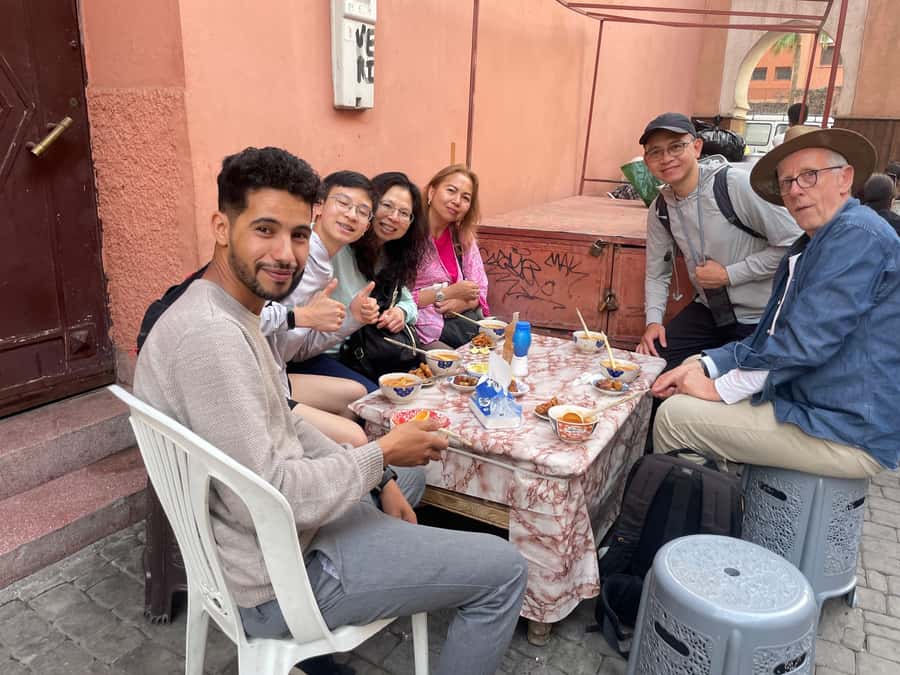
The price makes more sense when you count the full package. You receive a 210-minute guided walk, ten local food and drink tastings, traditional sweets and tea, access to places you might hesitate to try independently, and a small group capped at eight people. You are also paying for orientation in a maze-like old city and for explanations that turn separate snacks into a wider picture of Moroccan cooking.
The value is strongest early in your Marrakech visit. Take the tour near the start of your stay, and you can use what you learn when choosing later meals. You will recognize dishes, understand the difference between a quick snack and a substantial plate, and feel less uncertain about trying local food.
It is less useful for someone who already knows Marrakech well, speaks French or Arabic comfortably, and has plenty of time to eat independently. It may also feel expensive if you dislike guided activities or prefer to select each dish yourself.
Who should book this food walk?
I would recommend it to first-time visitors who want a friendly introduction to Moroccan food without spending hours researching restaurants. It also suits curious eaters who want to try less familiar dishes such as tanjia and steamed sheep’s head.
Small groups, couples, and solo visitors should fit well. The format gives solo participants an easy social setting without the size and noise of a large coach group.
Families may enjoy the variety, but parents should consider the walking time and the strong flavors. The food list includes meat, liver, herbal drinks, fried dough, and filling dishes. Vegetarian participants can join, but should explain their needs before the tasting begins.
You should skip it if you want a short, gentle stroll, if you have serious mobility concerns, or if you need a precisely controlled meal with fully documented ingredients. The accessibility details are inconsistent, and the provider does not list a complete ingredient or allergy guide.
Booking and practical tips
Free cancellation is available up to 24 hours before the activity for a full refund. You can also reserve now and pay later, which helps if your Marrakech plans are still shifting.
Wear shoes you can walk in for several hours. A sun hat and sunscreen are specifically advised, and a camera is worth bringing for the food, streets, and neighborhood stops.
Most important, arrive ready to eat. The best strategy is a light meal beforehand, or no meal at all if your appetite allows. You do not need to finish every item, but starting full could turn a generous tasting into a food endurance test.
Should you book this Marrakech food tour?
Book it if you want food, local context, and a walk through parts of the medina in one outing. The strongest reasons are the small group, the unusual tasting list, and guides who have been praised for taking people beyond the obvious tourist stops.
I would especially book it during your first days in Marrakech, when you need help finding your way and want a useful introduction to local dishes. I would be more cautious if you use a wheelchair because of the conflicting accessibility information, or if you prefer a light tasting with only a few samples.
For $45, you are buying more than ten bites. You are paying for confidence: confidence to enter a local food spot, order something unfamiliar, and understand what you are eating. If that sounds like the kind of first taste of Marrakech you want, this is a strong choice.
FAQ
Where does the Marrakech food tour begin?
It begins in Jemaa el-Fnaa Square, in front of Argana Cafe. The tour returns to Argana at the end.
How long does the experience last?
The tour lasts 210 minutes, or three and a half hours.
How many people can join the group?
The group is limited to eight participants.
What languages does the guide speak?
Live guiding is available in English and French.
Are vegetarian options available?
Yes, vegetarian options are available. Tell the guide about your dietary needs at the start so the tasting plan can be explained clearly.
Is transportation included?
No. Transportation to and from the meeting point is not included. You need to reach Argana Cafe in Jemaa el-Fnaa Square on your own.
Just listed around Marrakech
- 3 Days To Merzouga Desert★ 5.0 · 19 reviews
- 3 Days Shared Sahara Desert Tour From Marrakech★ 5.0 · 78 reviews
- 1 night Camel Treking in Merzouga Desert Luxury Camp★ 5.0 · 132 reviews
- 3 Days Sahara Desert Trips From Marrakesh★ 5.0 · 176 reviews
- 3 Days Sahara Tour from Marrakech to Merzouga Dunes★ 5.0 · 29 reviews
- trip of your dreams in 3 days and 2 nights in the desert★ 5.0 · 36 reviews
- 3 Days Private Tour to Merzouga Desert from Marrakech★ 5.0 · 77 reviews
- 3 Day Sahara Desert Tour From Marrakech★ 5.0 · 49 reviews
Food & Drink, compared.
3-Day Tour to Merzouga Erg Chebbi with Food & Camel Trek
Read our review →
Authentic Moroccan Food Tour in Marrakech with Dinner
Read our review →
Browse the lists this tour appears in