
Reviewed · FOOD & DRINK
Medina Stories Marrakech Food Tour with 15+ Tastings
Come hungry, leave with a new food map. This four-hour walk through Marrakech’s medina links smoky grills, bakeries, pastry shops, olive stalls, and street carts in a way that turns eating into a lesson about daily Moroccan life. I like the small maximum of eight people, and I like that guide Rachid takes you to working food spots rather than simply placing dishes on a restaurant table. The main drawback is simple: the food comes quickly and in large amounts, while vegetarians have four or five fewer tastings.
The $45 price is strong for a four-hour experience with more than 15 tastings, bottled water, and a local guide. You should arrive hungry, wear comfortable shoes, and expect a fair amount of walking on uneven lanes. The tour ends at Jemaa el-Fnaa, which makes it useful early in your stay, when you still need help finding your way around the medina.
In This Review
- Key points before you book
- Starting at Bab Doukkala and entering the medina
- Sardines, bread, and the first tastes
- Charcoal grills and Moroccan street food
- Snails, harira, and flavors outside your comfort zone
- The hammam furnace and slow-cooked tangia
- Markets, olives, sweets, and tea
- Why the eight-person limit matters
- Is $45 good value?
- How to prepare for the four-hour route
- Who should book this Marrakech food tour?
- Should you book Medina Stories?
- FAQ
- How long does the Marrakech food tour last?
- How many food tastings are included?
- Where does the tour start?
- Where does the tour end?
- Is the tour suitable for vegetarians?
- How many people can join the tour?
- Can I cancel for a full refund?
Key points before you book
- More than 15 tastings in four hours: This is a full meal, not a few small samples.
- Working food places: Expect communal ovens, a hammam furnace, bakeries, grill houses, stalls, and carts.
- A group capped at eight: The small size gives you more chances to ask questions and keep up in narrow alleys.
- Guide Rachid’s local introductions: He explains ingredients, cooking methods, customs, and the background of each stop.
- A useful first-day activity: The tour can give you the confidence to try Moroccan street food on your own later.
- Vegetarian choices are limited: You will receive four or five fewer tastings because meat and fish appear often.
Starting at Bab Doukkala and entering the medina
The meeting point is Optma Conseil Plus at D1 Résidence Bab Doukkala, near Bab Doukkala. Check your confirmation carefully before setting out, since the tour does not include hotel pickup. A mobile ticket is accepted, and confirmation arrives when you book.
From there, the route moves into the Medina of Marrakesh, a maze of lanes where food preparation happens in plain view. You may pass street grills, bakeries, carpet sellers, coffee houses, and market stalls while the call to prayer and the smell of charcoal provide the soundtrack.
This is not a sightseeing walk with food added as an afterthought. The food gives the route its shape. You move from one small stop to another, learning how locals buy, bake, grill, simmer, and preserve what they eat.
Rachid, or another member of the Rachid guide team, keeps the pace moving while explaining what is in front of you. The small group matters here. In a crowded alley, eight people are far easier to manage than a large tour party, and you can usually hear the explanation without being left behind.
More Food Tours in Marrakech
- From Marrakech: Merzouga 3-Day Desert Safari with Food
★ 4.7 · 12,232 reviews - Marrakech: Street Food Tour with a Local Guide
★ 4.9 · 3,119 reviews - Marrakech: Street Food Tour by Night
★ 4.8 · 2,838 reviews
Sardines, bread, and the first tastes
One early highlight is a wood-fired bakehouse serving sardines seasoned with cumin. The appeal is not only the fish. You get to see how a simple local ingredient becomes a strongly flavored snack through spice, heat, and the skill of the baker.
The communal bread ovens provide another useful look at neighborhood life. Bread is not merely something bought from a supermarket shelf. These ovens serve local households, and the stop helps you see how food production remains tied to the community.
At a bakery, you may also get a quick chance to shape traditional pastries. That small hands-on moment adds something that a standard tasting lacks. You are not just eating a finished item; you are seeing part of the work behind it.
Expect the first few samples to set the pattern for the rest of the walk: taste something, hear how it is made, learn where it fits into Moroccan food culture, then continue through the medina. If you have already eaten breakfast or lunch, you may regret it before the halfway point.
Charcoal grills and Moroccan street food
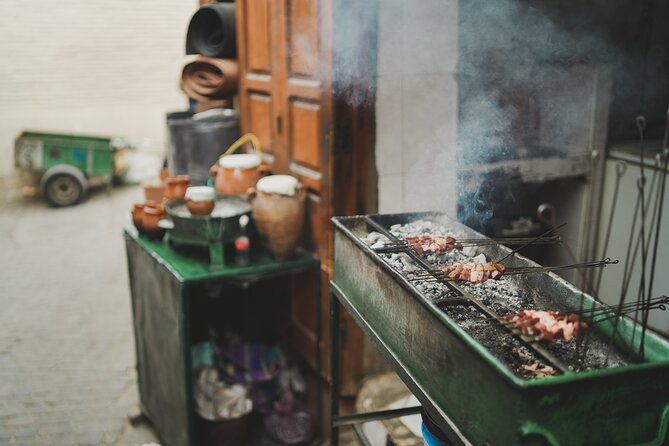
The tour also visits grill houses where chicken skewers cook over charcoal. Smoky meat, warm spices, and quick service show why street food is such a useful way to understand Marrakech. These are everyday foods, prepared for local customers, rather than polished versions designed only for tourists.
Other tastings can include sardine sandwiches, yogurt, strong coffee, nut candies, and beef soaked in oil. The range is one of the tour’s best features. You move from plain and familiar flavors to foods that may be completely new to you.
The guide’s explanation is especially useful if you are unsure how to approach an unfamiliar dish. Rachid can identify ingredients and explain the cooking method, so you are not left guessing at a crowded stall. He also adds cultural background and personal anecdotes, which gives the food a place in the wider life of the city.
The pace is active but not meant to feel like a race. There are chances to sit down, including a coffee stop around the middle of the route. That pause is welcome because the quantity of food can be surprisingly serious.
Snails, harira, and flavors outside your comfort zone
One of the more unusual tastings is Moroccan escargot simmered in a ras el hanout broth. If you have never tried snails, this is the kind of stop that makes a guided food walk useful. You can sample a small portion with an explanation of the spices and cooking style, rather than ordering an unknown bowl on your own.
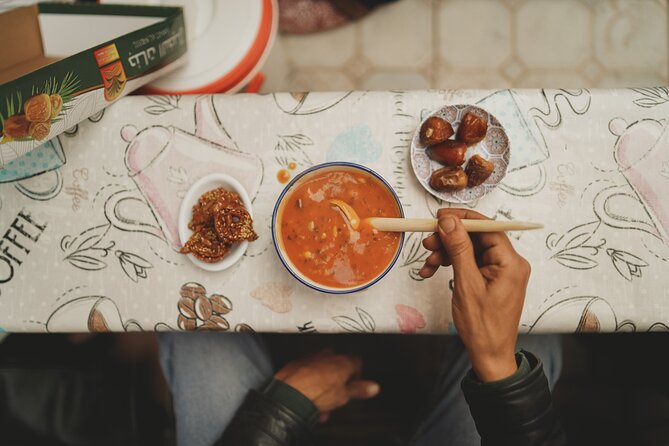
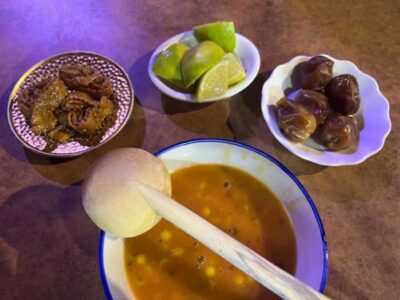
Harira offers a gentler contrast. This soothing soup is commonly associated with Moroccan home cooking and is served with sweet dates on the side. The combination gives you a lesson in balance: warm, savory soup followed by a concentrated burst of sweetness.
The tour is not built only around famous dishes such as tagine. It reaches for less obvious foods and ordinary snacks, which is why it feels more like a food education than a checklist. You might taste items you would never notice while walking alone, including strong coffee, local sweets, or foods sold in corners of the medina that are easy to pass.
There is a mild challenge here. Some foods are rich, salty, oily, or strongly spiced, and not every stop will suit every palate. That is part of the point, but you should come with an open mind and understand that this is not a cautious introduction limited to familiar flavors.
Same city gate, a very different afternoon:
- Marrakech: Agafay Desert Sunset, Camel Ride, and Dinner Show
★ 4.6 · 35,119 reviews - From Marrakech: Ouzoud Waterfalls Guided Hike and Boat Trip
★ 4.7 · 33,630 reviews - Marrakech: Agafay Desert Quad & Camel Rides with Dinner Show
★ 4.8 · 27,382 reviews - Marrakech: Agafay Desert Quad Biking Tour with Dinner-Show
★ 4.8 · 16,569 reviews
The hammam furnace and slow-cooked tangia
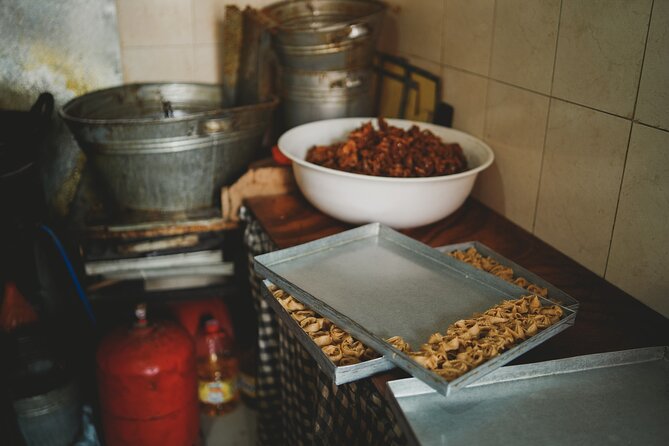
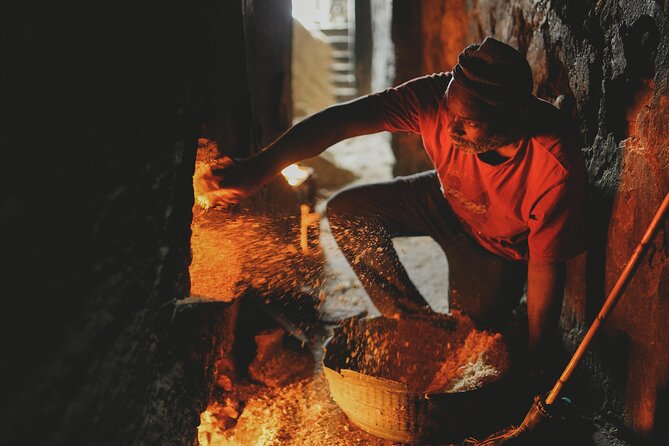
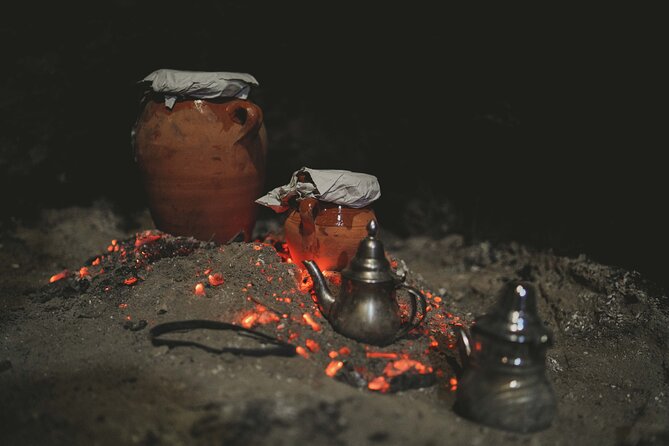
The most memorable cooking detail is the food prepared in the furnace beneath a hammam. Slow-cooked dishes are placed into hot ashes, allowing the heat to work gradually. Seeing this process connects the meal to a real neighborhood institution instead of a staged cooking demonstration.
Tangia is another important taste. The dish cooks slowly until the meat becomes tender and absorbs the seasoning. Learning about the embers, vessels, and timing helps explain why Moroccan food cannot always be judged by a quick glance at the plate.
These stops also show the value of a local guide. You may walk past a hammam or communal oven without realizing that food is being prepared nearby. Rachid points out the connection between public facilities, neighborhood workers, and meals, giving you details that are easy to miss when exploring independently.
The cooking is often slow, but the tour itself is not. You will continue through narrow lanes between tastings, so the route feels like a moving meal. By the time you reach the final stops, you will likely have eaten enough for the tour to replace dinner.
Markets, olives, sweets, and tea
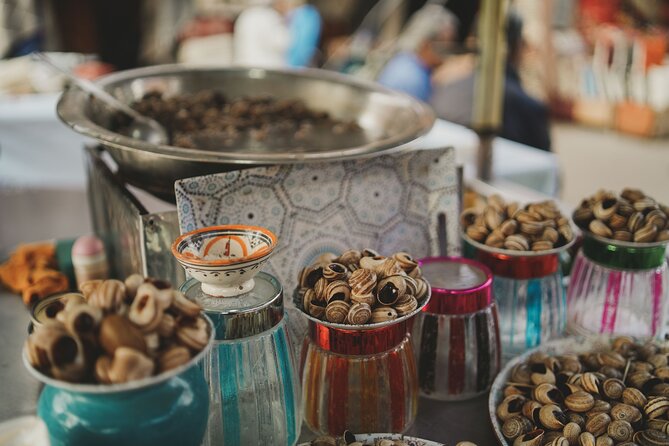
The route includes market areas and olive stalls, where you can compare the look and smell of preserved foods before tasting them. These stops add variety after the grilled and simmered dishes, and they show how Moroccan cooks build meals from preserved, spiced, and fresh ingredients.
Street carts and pastry shops bring another change of pace. Some foods are sweet and nutty, while others are plain, chewy, or intensely flavored. The tour’s appeal comes from this range. You are not eating the same style of dish fifteen times.
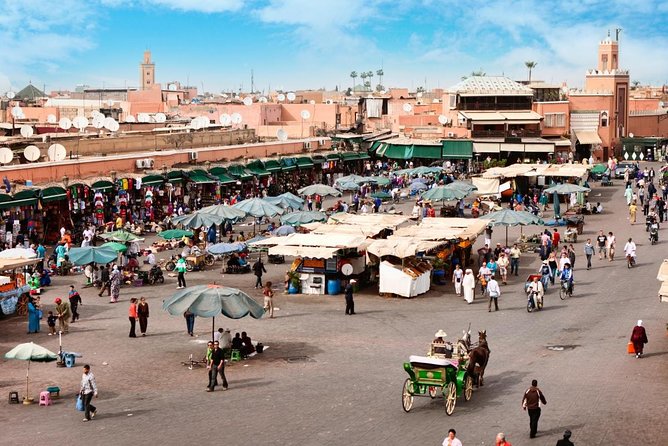
The end may include sunset tea in the main square, Jemaa el-Fnaa. The tour finishes there after roughly three and a half to four hours, depending on the group’s pace. The square is close to many accommodations, and the guide can help you walk back or arrange a taxi.
Ending at Jemaa el-Fnaa is practical as well as atmospheric. You are left in one of the city’s central meeting places, surrounded by food stalls, performers, and routes into different parts of the medina. It is a convenient point for continuing your evening, though you may want nothing more than a slow walk after so much eating.
Why the eight-person limit matters
A maximum of eight people is one of the strongest practical features. Marrakech’s medina is not an easy place for a large group. Lanes can be tight, stalls can be busy, and stopping for an explanation requires everyone to gather close.
With a small group, you can hear Rachid describe the food and ask questions without turning the stop into a public speech. The guide can also keep the pace flexible. A family with a stroller, for example, may need more time through the alleys, and a smaller group makes those pauses easier to handle.
The tour can work for families, too. A very young child has been accommodated with patience, including pauses for a stroller, and a nine-year-old joined successfully. Still, the walk lasts four hours and involves moderate physical activity, so you should judge your own group’s stamina.
The small size also helps create a more social meal. You share unusual tastes, compare reactions, and learn from the questions other people ask. That is more enjoyable than being rushed through a large queue at each stop.
Is $45 good value?
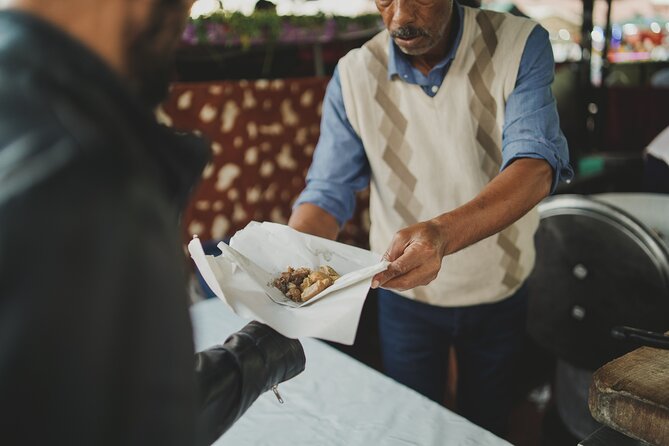
At $45 per person, this tour offers solid value if you want a full food experience rather than a short snack walk. More than 15 tastings over four hours can easily replace a meal, and you also receive bottled water, local guiding, and access to food places you might not identify on your own.
The value is strongest for a first visit. A good food walk can save you from spending several days ordering only the dishes you already recognize. It can also show you where locals eat and give you the confidence to return to certain market areas later.
The price does not include hotel pickup, alcohol, or extra purchases. That keeps the advertised cost fairly clear, but you need to reach Bab Doukkala yourself and plan your return from Jemaa el-Fnaa. Since the tour ends in the center, the lack of drop-off is less troublesome than it would be for an out-of-town excursion.
Vegetarians should think carefully before booking. Four or five of the 15 total options may not be available, because meat and fish are central to several stops. You will still have food to taste, but this particular route is better suited to people who enjoy a broad range of Moroccan dishes.
How to prepare for the four-hour route
Do not eat a full meal beforehand. That advice is more important here than on most food walks. The number of tastings is high, and several samples are substantial rather than tiny decorative bites.
Wear shoes suitable for a long walk through the medina. You should expect uneven surfaces, narrow passages, and time spent standing at stalls or bakeries. A moderate fitness level is recommended, and the route is not designed as a relaxed seated meal.
A morning or early afternoon booking can be useful on the first day of your visit, depending on the available start time. You will get an early orientation to the medina and learn which foods you may want to seek out again. The tour ends at Jemaa el-Fnaa, so you can continue exploring from there.
Book ahead if your dates are fixed. The experience is often reserved about 33 days in advance, and the eight-person limit naturally reduces the number of available places. Free cancellation is available up to 24 hours before the start time, while poor weather may lead to a new date or a full refund.
Who should book this Marrakech food tour?
I would recommend it to first-time visitors who want an immediate introduction to Marrakech’s food culture. It suits curious eaters, home cooks, and anyone who prefers small local establishments to formal restaurant meals.
It is also a good match if you want cultural context with your lunch. The communal ovens, hammam furnace, pastry work, and market stops explain how food fits into neighborhood life, not just how it tastes.
You may want another option if you are vegetarian, have a very restricted diet, dislike strong flavors, or prefer to sit in one restaurant. The route includes many stops, lots of walking, and some ingredients that can surprise you.
Should you book Medina Stories?
Book this tour if you want to eat widely, walk through lesser-seen parts of the medina, and learn how Moroccan food is prepared at street level. The strongest reasons are the small group, the unusual cooking sites, the large number of tastings, and Rachid’s clear explanations.
Skip it if you want a light snack outing or need a fully vegetarian menu. For everyone else, $45 buys a generous introduction to Marrakech, with enough practical food knowledge to make the rest of your stay more adventurous.
FAQ
How long does the Marrakech food tour last?
The tour lasts approximately four hours. The stated duration is about four hours, while the end time can range from roughly three and a half to four hours depending on the group’s pace.
How many food tastings are included?
More than 15 food tastings are included over the four-hour route. The selection can include sardines, chicken skewers, escargot, harira, tangia, pastries, yogurt, sweets, coffee, and other local foods.
Where does the tour start?
The tour starts at Optma Conseil Plus, D1 Résidence Bab Doukala, Entree A, Bab Doukkala, Marrakech 40000, Morocco.
Where does the tour end?
The tour ends at Jemaa el-Fnaa, the main central square in Marrakech. The guide can help with walking directions or assistance getting a taxi.
Is the tour suitable for vegetarians?
Vegetarians have four or five fewer tastings because suitable options are not available at every stop. The tour includes several meat and fish dishes, so it is best for people comfortable with a broad range of Moroccan foods.
How many people can join the tour?
The tour has a maximum of eight people. This small size helps the guide explain the food and move the group through the medina’s narrow alleys.
Can I cancel for a full refund?
You can cancel for a full refund up to 24 hours before the experience’s start time. Cancellations or changes made less than 24 hours before the start time are not refunded, and poor weather may result in a different date or a full refund.
Just listed around Marrakech
- Zagora: 2-Day Desert Trip from Marrakech★ 4.4 · 31 reviews
- Traditional spa Hammam & Massage with Hotel Transfers★ 4.0 · 24 reviews
- Day trip to OUZOUD waterfall with guide&boat ride from Marrakech★ 5.0 · 172 reviews
- quad bike tour in the palmeraie of Marrakech★ 4.5 · 43 reviews
- Half day quad desert agafay★ 4.5 · 24 reviews
- walking tour★ 5.0 · 46 reviews
- private tour of Marrakech 4 hours with multilingual driver★ 5.0 · 117 reviews
- 3 days tour from Marrakech to Merzouga desert★ 5.0 · 55 reviews
Food & Drink, compared.
3-Day Tour to Merzouga Erg Chebbi with Food & Camel Trek
Read our review →
Authentic Moroccan Food Tour in Marrakech with Dinner
Read our review →
Browse the lists this tour appears in